10 Pieces of Relationship Advice for Guys That Actually Work
Tired of generic tips? Get actionable relationship advice for guys, from cycle-aware communication to science-backed ways to deepen your connection.
Let's be honest. Most relationship advice for guys feels like it was written in another century. Clichés like 'happy wife, happy life' and vague tips to 'just listen more' don't actually help you build a stronger connection. You're here because you want more than that. You want to understand your partner on a deeper level, to move past guesswork and build a relationship that feels truly in sync.
This isn't a list of generic platitudes. We've compiled ten specific, actionable strategies backed by relationship science, psychology, and a modern understanding of how your partner's biology can influence her energy, needs, and communication style. Forget surface level tips. We're giving you concrete communication scripts, conflict de-escalation techniques, and daily micro-actions that make a real difference.
You'll learn not just what to do, but why it works and when to do it for the best results, with practical examples you can use tonight. We'll cover everything from practicing intentional listening to timing important conversations with your partner's cycle in mind. This guide is for men who are ready to put in the work to transform their relationship from good to incredible. Let's get into the insights that will help you show up as the partner you want to be.
1. Master the Five Love Languages
One of the most powerful pieces of relationship advice for guys is to stop showing love how you want to receive it and start showing it how she best understands it. This is the core idea behind the Five Love Languages, a framework developed by Dr. Gary Chapman. The concept is simple. Everyone gives and receives love in different primary ways: Words of Affirmation, Acts of Service, Receiving Gifts, Quality Time, and Physical Touch.
Learning your partner’s language is like getting a cheat code for connection. Instead of guessing what makes her feel valued, you know exactly what actions will fill her emotional tank. This isn't about grand, complicated gestures. It’s about making small, consistent efforts that align with what truly matters to her.
How to Speak Her Language
First, you need to identify her primary love language. Don't assume. The best way is to have an open conversation about it. Ask her directly, "When do you feel most loved by me?" Her answer will give you major clues. From there, you can put your knowledge into action.
- If her language is Acts of Service: She feels most loved when you take things off her plate. This isn't just about chores. It’s about anticipating her needs.
- Example: During a high stress work week for her, you take charge of making dinner and packing her lunch without being asked. This action shouts, "I see you're overwhelmed, and I've got your back."
- If her language is Quality Time: She needs your undivided attention. Multitasking is the enemy here.
- Example: You put your phone away, turn off the TV, and make eye contact when she's talking about her day. This makes her feel seen, heard, and prioritized over any distraction.
- If her language is Words of Affirmation: Specific, genuine praise means the world to her.
- Example: Instead of a generic "You look nice," say, "I was so impressed with how you handled that difficult conversation with your boss. You're incredibly smart."
Understanding this concept is foundational. If you want to dive deeper, you can learn more about the five love languages and how they apply to different relationship stages.
2. Practice Intentional Listening Without Problem-Solving
One of the most transformative pieces of relationship advice for guys is to shift from being a fixer to being a listener. When your partner shares a problem or expresses frustration, your instinct might be to jump in with solutions. But more often than not, she's looking for emotional validation, not a five step action plan. The goal is to make her feel heard, understood, and supported.
Intentional listening means you're fully present, absorbing her words, and connecting with the emotion behind them. Research from relationship experts like Dr. John Gottman shows that a huge percentage of conflicts don't come from the issue itself but from one partner feeling dismissed or unheard. By simply listening to understand, you build a powerful foundation of trust and intimacy, showing her she can come to you with anything.
How to Listen Intentionally
The first step is to recognize your own impulse to solve her problem. When you feel yourself mentally drafting solutions, consciously pause and pivot back to just listening. This is a skill that takes practice, but it's one of the most valuable you can develop.
- She's anxious about a work project: Your instinct might be to say, "You should just tell your boss how you feel." Instead, try an empathetic response.
- Example: "Wow, that sounds really stressful. Tell me more about what's bothering you the most." This opens the door for her to share more, rather than shutting it with a quick fix.
- She's upset about a conflict with a friend: Avoid suggesting she distance herself or telling her what she should have said. First, validate her feelings.
- Example: Listen to the entire story, maintain eye contact, and say, "I can see why that was so upsetting. Your feelings are completely valid." This confirms you're on her team.
- She's venting on a high emotion day: Recognize she might just need to release the pressure. Let her talk for a solid 10-20 minutes without interruption.
- Example: Just be there. Nod, use small verbal cues like "I understand" or "that makes sense," and let her get it all out. Your quiet presence is the most powerful support you can offer.
3. Track and Anticipate Her Cycle to Optimize Communication Timing
This piece of relationship advice for guys is a game changer. Understanding her menstrual cycle is about more than just knowing when her period is. Her hormones influence everything from her energy levels and social drive to her emotional sensitivity. By anticipating these shifts, you can support her better, time important conversations, and avoid preventable conflicts. This isn't about blaming her feelings on hormones. It's about honoring the real physiological changes she experiences and meeting her where she is.
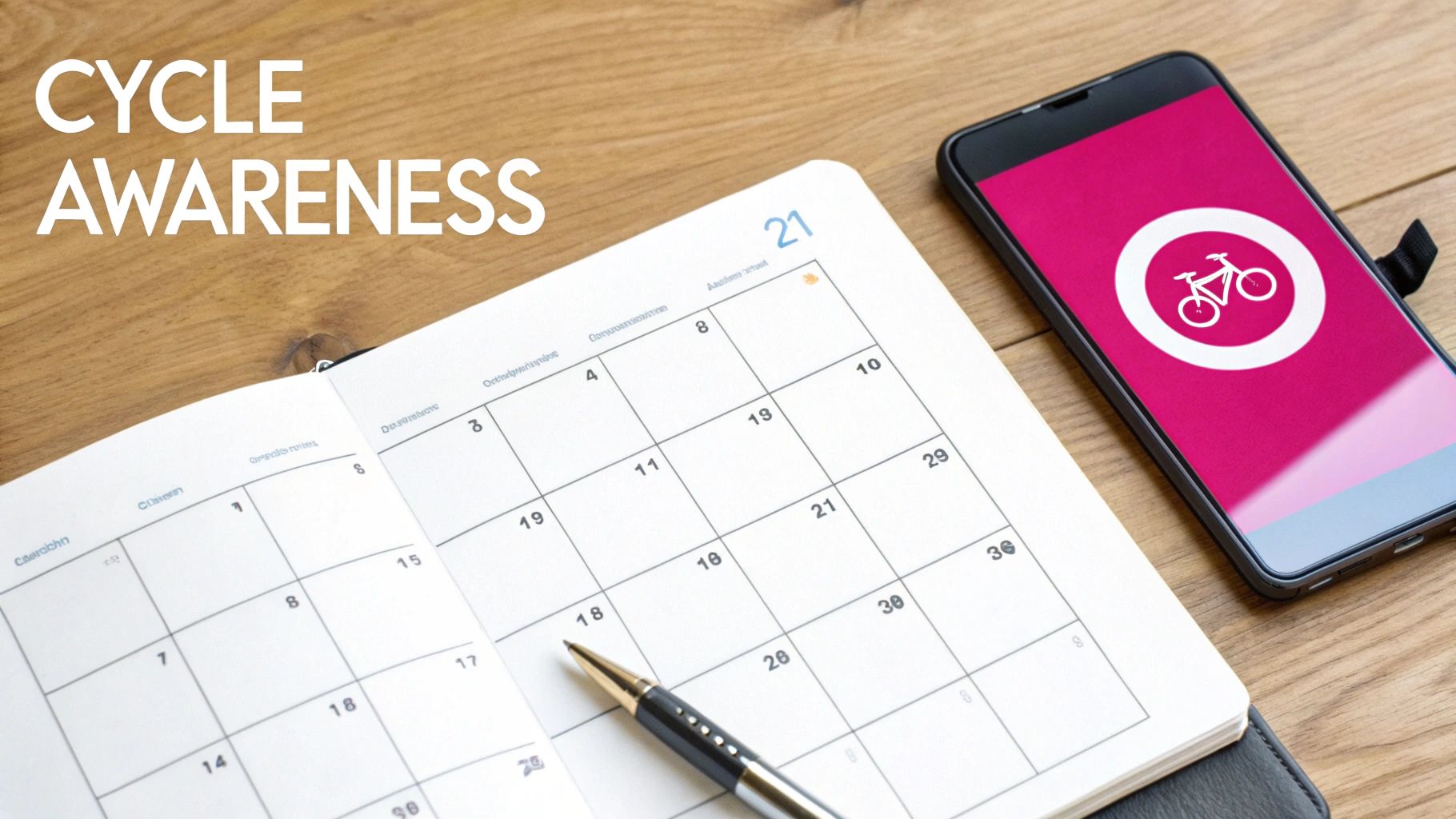
Becoming cycle aware allows you to be a more proactive and empathetic partner. Instead of reacting to changes in her mood or energy, you can anticipate her needs. This leads to significantly fewer arguments and a much higher sense of intimacy and teamwork in your relationship. You're essentially learning the rhythm of her body so you can both stay in sync.
How to Become a Cycle-Aware Partner
The key is to make this a collaborative effort, not a secret tracking mission. Use a shared app or have open conversations about it. Ask her directly, "How does your cycle affect your energy and what you need from me during different weeks?" This shows you care and want to be a supportive partner.
- During her Follicular Phase (the week after her period): Her energy and optimism are rising. This is the perfect time to have important talks or plan that adventure she's been wanting to go on.
- Example: You bring up planning your summer vacation during this week, knowing she’ll have the mental and physical energy to get excited about it.
- During Ovulation (mid-cycle): She's often at her most social, confident, and physically affectionate. This is a great time for date nights, parties, and sexual intimacy.
- Example: You suggest going out with friends or plan a romantic evening, aligning with her natural desire for connection during this phase.
- During her Luteal Phase (the week or two before her period): Her energy starts to wane, and she may feel more inward and sensitive. Patience and support are crucial here.
- Example: Instead of initiating a serious talk about your finances, you proactively ask, "What can I take off your plate this week?" and offer to handle dinner or chores.
Understanding these patterns is about being a smarter, more attuned partner. If you want to better understand the science behind this, you can learn more about what causes mood swings during a period and how it impacts her.
4. Develop Emotional Intelligence and Self-Awareness
Some of the best relationship advice for guys isn't about grand gestures. It's about what happens inside your own head. Emotional intelligence (EI) is your ability to recognize, understand, and manage your own emotions while also tuning into hers. Research by Dr. John Gottman shows that men with higher emotional intelligence have happier, longer lasting relationships. This isn't a personality trait you either have or don't. It's a skill you can intentionally develop.
Learning to be self aware stops you from reacting on autopilot and allows you to respond with intention. It's the difference between lashing out in frustration and being able to pause, identify the real feeling underneath, and communicate it clearly. This skill transforms conflict from a battle into a collaborative problem solving session, building trust and deep intimacy along the way.
How to Build Your Emotional Intelligence
The first step is simply paying attention to your internal world. Instead of ignoring or suppressing feelings, get curious about them. Ask yourself what you're feeling and why. This creates a crucial gap between feeling an emotion and acting on it, giving you the power to choose your response.
- When you’re frustrated about chores: You might feel the urge to snap, "You never help out!" Instead, you pause and recognize you're not just angry, you're overwhelmed and tired.
- Example: You can then say, "I'm feeling really overwhelmed with everything that needs to get done. Can we talk about a better way to manage this together?" This invites teamwork instead of starting a fight.
- When she’s upset about something unrelated: Her distress can feel like an attack, making you defensive. With EI, you recognize her emotion isn't about you.
- Example: Instead of defending yourself, you offer support: "That sounds incredibly frustrating. I'm here for you if you want to talk it through." This shows empathy and strengthens your bond.
- When you feel yourself getting defensive in a conflict: Your body tenses up and your mind starts building a case. This is a signal to pause.
- Example: You can say, "I'm noticing I'm getting defensive, and I don't want to. Can we take a five minute break so I can clear my head?" This prevents escalation and allows for a more productive conversation.
5. Create and Protect Quality Time Without Distractions
In a world full of notifications and endless demands on our attention, one of the most valuable things you can give your partner is your undivided focus. This piece of relationship advice for guys is about more than just being in the same room. True quality time is about creating a sacred, distraction free space where connection can happen. Most couples spend time near each other, not with each other, and this small shift is a game changer.

This concept, heavily supported by the work of researchers like Dr. John Gottman, shows that couples who consistently carve out this time report far higher relationship satisfaction. It signals that you prioritize her and the relationship above everything else. This isn't about grand romantic gestures. It’s about the simple, powerful act of being fully present.
How to Protect Your Time Together
The key is to be intentional. Quality time rarely happens by accident, so you need to schedule and protect it like you would a critical work meeting. Make it a non negotiable part of your weekly routine.
- Make a "No Phone Zone" Rule: During your dedicated time, put phones in another room. Out of sight, out of mind. The simple act of removing the primary source of distraction sends a powerful message that she has 100% of your attention.
- Example: You establish a Sunday morning coffee ritual. For one hour, you both leave your phones on the kitchen counter and just talk on the couch. You ask open ended questions like, "What's been on your mind this week?" instead of just recapping schedules.
- Adapt to Her Energy Levels: Quality time doesn't always have to be an adventurous date. Pay attention to her cycle and energy.
- Example: During her follicular phase, when her energy is high, plan an active date like a hike or trying a new restaurant. During her luteal phase, when she may feel more tired, plan a cozy night in with a movie and her favorite takeout. This shows you're not just present, but also attuned to her needs.
- Go Deeper Than Daily Updates: Use this time to explore her inner world, not just the logistics of your lives.
- Example: Once a month, you have a deeper check in. You ask questions like, "On a scale of 1 to 10, how connected do you feel to me right now?" or "Is there anything you need more of from me?" This builds emotional intimacy and prevents small issues from becoming big ones.
6. Communicate Clearly About Needs, Boundaries, and Expectations
One of the most underrated pieces of relationship advice for guys is that most fights aren't about conflicting needs. They're about unstated, assumed, or misunderstood expectations. Men often struggle to express their needs clearly or assume their partner should just know what they want. This guessing game is a direct path to resentment and breakdown in trust.
Creating a culture of explicit, non judgmental communication is a game changer. It's about preventing problems before they start, especially around common hot topics like household chores, intimacy, and emotional support. When you both know what the other needs, you can work together instead of against each other.
How to Have the Right Conversations
This isn't about having one big, dramatic talk. It’s about building a new habit of clear communication. The key is to use "I" statements, a core concept from Nonviolent Communication, to express your own feelings and needs without blaming her. Frame it as "us versus the problem," not "me versus you."
- About household labor: Instead of letting resentment build over a messy kitchen, be proactive.
- Example: "I'm feeling overwhelmed with managing the cooking and kitchen cleanup lately. Could we figure out a way to split these tasks so it feels more balanced for both of us?"
- About emotional support: It’s okay to need space. The key is communicating that need clearly and kindly.
- Example: "I'd love to hear about your day. I just need about 20 minutes to decompress after work first so I can be fully present and give you my full attention."
- About physical intimacy: Assumptions about intimacy are a major source of conflict. Be direct and curious about her needs too.
- Example: "I feel really connected to you when we're physically intimate. What does an ideal frequency look like for you, and is there anything that would make it feel even better for you?"
These conversations work best during calm moments, not in the middle of a fight. Schedule a time to talk about the "big stuff" so you can both show up ready to listen and compromise. This builds a foundation of respect that makes the entire relationship stronger.
7. Show Appreciation and Gratitude Consistently and Specifically
One of the most powerful, yet simplest, pieces of relationship advice for guys is to stop assuming your partner knows she's valued. Feeling unappreciated is a fast track to resentment and distance. The antidote is consistent, specific gratitude. This isn't about grand romantic gestures. It's about noticing and acknowledging the small, everyday efforts she makes that improve your life.
This practice, championed by relationship researchers like Dr. John Gottman, directly counteracts relationship drift. When you voice appreciation for something specific, you're telling her, "I see you. I see your effort, and it matters to me." This small action reinforces her value, boosts her desire to continue contributing positively, and can dramatically increase overall relationship satisfaction.
How to Show Genuine Appreciation
Making gratitude a habit requires intentionality. The key is to move from generic compliments to specific acknowledgments that highlight both her action and its positive impact on you. It’s about appreciating her character and effort, not just outcomes.
- Be Specific and Explain the Impact: Don't just say, "Thanks for dinner." Instead, try, "I really appreciate that you cooked tonight. It was delicious and it made me feel so cared for after a long day." This connects her action to your positive feeling.
- Acknowledge Character Traits: Instead of a generic "You're great," notice her inner qualities. For example, say, "I really admire how thoughtfully you handled that conflict with your friend. Your emotional maturity is one of the things I love most about you."
- Notice the Small Things: Appreciation shines brightest when it’s for the little things that often go unnoticed. Acknowledge her patience when you were stressed, the way she thoughtfully listened to your work problem, or how she organized the weekend plans.
- Time It for High Stress Moments: During more challenging phases of her cycle, an expression of gratitude can be incredibly powerful. A simple, "I see you're overwhelmed right now and you're still showing up for us. That means everything to me," can make her feel seen and supported when she needs it most.
8. Navigate Conflict With Curiosity Rather Than Defensiveness
One of the most transformative pieces of relationship advice for guys is to change how you handle arguments. Research from experts like Dr. John Gottman shows that how couples argue matters far more than what they argue about. The default male response to conflict can often be defensiveness, withdrawal, or stonewalling. These reactions, while natural, escalate problems and break down trust over time.
The alternative is to approach disagreements with genuine curiosity. Instead of treating her perspective as an attack, treat it as information you need to understand. This shifts the dynamic from a battle to a collaborative problem solving session. Adopting a curious mindset turns arguments into opportunities for deeper connection and understanding, rather than a threat to the relationship.
How to Argue With Curiosity
When you feel yourself getting defensive, pause. Your goal isn't to win the argument. It's to understand your partner's reality. Acknowledge her feelings first, even if you don't agree with her interpretation of the facts. This single act can de-escalate tension immediately and shows you're on the same team.
- When she says: "You never help with the housework."
- Instead of: "That's not true, I just did the dishes."
- Try: "I hear that you feel unsupported. Help me understand what you need. What would feel like a true partnership to you right now?" This validates her feeling and opens a path to a real solution.
- When she says: "You weren't listening when I told you about my day."
- Instead of: "I was listening! I can repeat what you said."
- Try: "You're right, I was distracted and that made you feel unheard. I'm sorry. I want to be present for you. Can you tell me again? I'm listening now." This takes ownership and corrects the behavior.
- When you've made a mistake:
- Instead of: Making excuses or deflecting blame.
- Try: "You're right. I handled that poorly and I can see how it hurt you. Here's what I'll do differently next time." This builds trust and shows you are accountable.
Mastering this skill is crucial for long term success. You can explore more proven relationship conflict resolution strategies to build a stronger foundation for handling disagreements.
9. Prioritize Sexual and Physical Intimacy With Attunement and Consent
Great physical intimacy is a cornerstone of a connected relationship, yet many guys approach sex without understanding the most important factor: her experience. This piece of relationship advice for guys is about shifting the focus from performance or frequency to attunement and consent. It means recognizing that her desire, arousal, and comfort levels change, often in sync with her menstrual cycle.
Prioritizing her pleasure and communicating openly about preferences builds a foundation of trust that leads to better sex for both of you. In fact, research shows that couples with aligned sexual communication and values report being 40% more satisfied with their relationship overall. This isn't about guesswork. It's about being an attentive and present partner.
How to Build Deeper Intimacy
The first step is moving from assumption to communication. Instead of trying to read her mind or relying on what worked last time, you need to check in with her directly. This creates a safe space where she feels comfortable expressing her needs and desires without fear of bruising your ego. Remember, a "no" or "not tonight" is about her state in that moment, not a rejection of you.
- Learn her cycle's rhythm: Her desire isn't static. It fluctuates throughout the month. Ask her how she feels during different phases.
- Example: You might notice she's more interested in sex around the middle of her cycle (ovulation). You can plan an intentional date night then, initiating with confidence because you know she’s likely feeling more receptive.
- Check in before, during, and after: Make consent and pleasure an ongoing conversation. This shows you care about her experience from start to finish.
- Example: Before initiating, ask, "Are you in the mood for anything tonight?" During, you can ask, "Does this feel good?" or "Is there anything you'd like me to do differently?"
- Focus on her arousal: For most women, foreplay is not just a warm up. It’s essential for her pleasure and ability to orgasm. Pay attention to what she responds to.
- Example: In her luteal phase (the week before her period), she might have lower desire or feel more sensitive. This is a perfect time to focus on non-penetrative intimacy like massage or oral sex, asking her what feels best for her body at that moment.
10. Be Intentionally Present and Engaged, Especially During Difficult Phases
One of the most impactful pieces of relationship advice for guys is learning to show up when things are tough. This isn’t about fixing her problems, minimizing her feelings, or finding an escape route. It’s about being a calm, steady presence during her difficult moments, especially during high emotion phases of her cycle like the premenstrual window. True presence is a superpower.
This isn't just a nice idea. It's foundational for trust. Research shows that partners who effectively support each other through stress build significantly stronger, more resilient relationships. Your ability to stay grounded when she's feeling overwhelmed communicates safety, reliability, and deep care more powerfully than almost any other action. It says, "I'm here with you, and we'll get through this together."
How to Be a Grounded Partner
The goal is to become a rock, not another wave in the storm. This requires intentionality, especially when her stress or irritability feels directed at you. Remember, hormonal fluctuations during her luteal phase can amplify emotions. Your calm response is what she needs most.
- When she’s stressed about work: Don't just ask what's wrong. Take action. Say, "I can see you've had a draining day. I'm going to handle dinner and everything else tonight. Your only job is to rest." This proactive support removes a burden without her having to ask.
- During her premenstrual phase: This is when patience is crucial. If she's more irritable, recognize it's likely temporary and not a personal attack. Offer quiet reassurance and give her space if she needs it. Your non reactive stance prevents small issues from escalating.
- When she’s on her period: Comfort becomes key. You can proactively offer a heating pad, make her a cup of tea, or take over household chores that require physical energy. These small, thoughtful acts show you’re paying attention to her physical and emotional needs.
Your presence is the gift. Put your phone away, maintain a calm energy, and just be there. This simple, consistent support during difficult phases builds a level of trust that can weather any storm.
Frequently Asked Questions about Relationship Advice for Men
Here are some common questions men have when trying to improve their relationships, answered directly.
How can I understand my partner better when she won't tell me what's wrong?
Often, "I'm fine" means she doesn't have the energy to explain or she's testing to see if you'll notice something is off. Instead of asking "What's wrong?", try a softer approach. Say, "I'm here for you if you want to talk. Is there anything I can do to make your day a little easier?" This offers support without pressure. Understanding her cycle with an app like VibeCheck can also give you a heads up that she might be in a lower energy phase, allowing you to be more proactively supportive.
Why does she get upset over small things?
What seems like a small thing (e.g., leaving a cup on the counter) might be part of a larger pattern that makes her feel unsupported or unseen. It's usually not about the cup itself, but the feeling that the burden of managing the household falls on her. Hormonal shifts, particularly in the luteal phase before her period, can also lower her tolerance for stress, making these small things feel bigger. Approaching the situation with curiosity ("I can see this upset you, can you help me understand why?") is more effective than dismissing her feelings.
How do I bring up using a period tracker app without it being weird?
Frame it as a way for you to be a better partner. Don't make it about tracking her. Say something like, "I've been reading about how a woman's cycle can affect energy and mood, and I want to be a more supportive partner. Would you be open to us using an app like VibeCheck together so I can understand your rhythm better and know when you might need extra support?" This shows you're taking initiative for the sake of the relationship.
What is the single most important piece of relationship advice for guys?
Shift from being reactive to being proactive. Don't wait for problems to arise. Instead, proactively learn her love language, anticipate her needs based on her cycle, schedule quality time, and initiate conversations about expectations. A proactive partner prevents fires instead of just putting them out. This builds a foundation of security and trust that makes the entire relationship feel safer and more connected.
Is it normal for our sex life to have ups and downs?
Yes, it's completely normal. Libido is affected by stress, health, and hormonal cycles. Her desire is often highest around ovulation and lowest just before her period. Instead of seeing a low-libido phase as a problem, see it as a time to connect in other ways, like with non-sexual physical touch or quality time. Open communication is key. Ask, "What feels good for you this week?" This keeps intimacy alive even when intercourse isn't on the table.
Putting It All Together: Your Path to a Stronger Connection
We’ve covered a lot of ground, from mastering the Five Love Languages to navigating conflict with curiosity instead of defensiveness. It’s easy to look at a list of ten detailed points and feel a bit overwhelmed. But the goal here isn’t to become a perfect partner overnight. That’s an impossible standard. The real goal is to become a more aware partner. This collection of relationship advice for guys is designed to be a toolkit, not a rulebook.
The core theme connecting all these strategies is moving from a reactive stance to a proactive one. Instead of waiting for a misunderstanding to happen, you learn to anticipate needs. Instead of guessing why she’s distant, you understand the rhythms of her hormonal cycle. You stop treating connection as something that just happens and start seeing it as something you can consistently build, day by day. This is the shift from just being in a relationship to actively co-creating a great one.
Think of it this way: a great athlete doesn't just show up on game day. They practice drills, study plays, and understand their own body. The advice in this article is your training plan. It’s about building the muscle memory for empathy, communication, and attunement.
Your Actionable Next Steps
Becoming the partner you want to be starts with a single, manageable step. Don't try to implement all ten tips by tomorrow. Choose one. Just one.
- If communication is a struggle: Focus on Intentional Listening (#2). For the next week, every time your partner shares a problem, your only job is to listen and validate. Bite your tongue on offering solutions unless she explicitly asks.
- If you feel out of sync: Start with Tracking Her Cycle (#3). This single action provides a powerful framework for understanding her energy, mood, and needs throughout the month. It’s the ultimate relationship cheat code.
- If you feel disconnected: Commit to Quality Time (#5). Schedule just 15 minutes of completely undistracted time together each day. No phones, no TV. Just conversation. See what happens.
The most powerful relationship advice for guys is simply this: small, consistent efforts create massive results over time. Showing appreciation with a specific compliment, being present during a tough conversation, or understanding her needs during her luteal phase are not grand, heroic gestures. They are the small, sturdy bricks you use to build a foundation of trust and intimacy. This isn't about "fixing" anything. It's about showing up with a better understanding and a more effective set of tools to love your partner well.
You have the capacity to build an incredible connection. It just requires the right knowledge and the willingness to apply it. You've already taken the first step by reading this. Now, it's time to take the next one.
Ready to stop guessing and start understanding? VibeCheck gives you the science backed insights to support your partner through every phase of her cycle. Join thousands of men who are building stronger, more connected relationships by downloading the VibeCheck app today.
Tags

Related Articles
Continue reading to deepen your understanding

How to Plan Romantic Gestures by Cycle Timing: The Partner’s Tactical Guide
Stop guessing why your date night plans fell flat. This guide explains how to synchronize your romantic efforts with her biological cycle for better intimacy and connection.

How to Tell When Your Girlfriend Is Ovulating: Reading the Biological Signals Your Partner Sends
Understanding your partner’s cycle helps you anticipate her needs and time important conversations. Learn the behavioral signs of ovulation to improve your relationship and connection.

Understanding Your Girlfriend’s Words of Affirmation Cycle: A Partner’s Guide
Ever feel like your compliments land wrong? Her need for words of affirmation isn’t random—it follows a biological rhythm. Learn how to match your support to her internal hormonal seasons.

The Partner’s Guide to the Luteal Phase: What It Is and How to Support Her
Stop walking on eggshells. Understand the biological changes of the luteal phase so you can support your partner through mood shifts and fatigue with empathy.

How to Plan Valentine’s Day Around Your Girlfriend’s Cycle
Does your romantic plan clash with her biological rhythm? Learn how to adjust your date night to her specific cycle phase so she feels comfortable and truly cared for this year.

The Strategic Partner’s Guide to Planning an Engagement Around Her Cycle
Don’t leave your proposal to chance. Learn how her biological rhythm impacts emotional receptivity and how to align your big question with the phase where she feels her best.

How to Plan Weekend Trips Around Your Girlfriend’s Cycle: A Tactical Guide
Stop booking trips that end in friction. Learn how to map weekend travel to her biological phases to reduce friction by 41% and maximize your time together.

How to Plan Engagement Around Girlfriend Cycle Timing
Master how to plan engagement around girlfriend cycle timing to leverage an 800% estrogen spike and ensure a joyous yes with our 4-phase tactical guide.