A Man’s Guide to Better Communication in Relationships
Tired of arguments going nowhere? Learn how to achieve better communication in relationships with real, science-backed advice you can use tonight.
When it comes to better communication in relationships, it’s not about marathon talk sessions. The real secret is quality over quantity. If you’ve ever tried to hash out a problem only to make things ten times worse, you know firsthand that just talking more isn’t the solution.
This guide is for men who care about their partners and want to build a deeper connection, but maybe don't understand the science behind it all. We'll break down practical, science backed tips to help you talk smarter, not harder. This isn't about changing who you are. It’s about adding better tools to your relationship toolkit.
Why Talking More Doesn't Always Fix Things

Let's look at a classic scenario. You can tell something’s off with her, so you hit her with the dreaded, "We need to talk." Instead of opening up, she shuts down. Suddenly, what started as a small issue has spiraled into a major argument, leaving you completely baffled about what went wrong.
Sound familiar? You're not alone. The goal isn't to increase the volume of words but to learn how to talk smarter. It’s about realizing that the right time, tone, and approach matter far more than just forcing a conversation to happen.
It's All About the Approach
Most guys are wired to fix things. We see a problem, and we want to solve it. Immediately. But that can backfire. Men and women often process stress and information differently. While you might be ready to jump in with logic and solutions, she might need to feel heard and emotionally validated first.
Trying to push a solution before she feels understood is like trying to build a house on an unstable foundation. It's just not going to work.
The key takeaway is this: Effective communication starts before you even open your mouth. It begins with being aware of the situation, her mood, and the right moment to actually connect.
This isn’t about changing you. It’s about adding better tools to your relationship toolkit. Think of it less like a lecture and more like getting a cheat sheet for a test you genuinely want to ace. The good news is, the effort pays off big time. Globally, 83% of partnered people report satisfaction with their relationship, a huge leap from the 68% among singles. Investing in how you connect directly boosts your shared happiness. You can read the full research about relationship satisfaction to see the data.
Finding the Right Moment
Seriously, timing is everything. Trying to bring up a heavy topic right after she’s walked in the door, exhausted from a brutal day at work, is a recipe for disaster. On the flip side, trying to have a deep, emotional heart to heart when she’s feeling social and energetic might not land either.
This is where a little bit of insight can make a massive difference. By understanding her natural energy cycles and mood patterns, you can stop guessing and start actually connecting. It’s about being proactive, not just reactive. For example, the VibeCheck app is designed to give you that heads up, helping you pick moments for conversation that are much more likely to build intimacy instead of spark a fight.
The Real Art of Active Listening
You've probably heard it a million times. "You just need to listen more." Easy to say, right? But when you're in the middle of a tense conversation, that advice is about as helpful as being told to "just calm down."
Most of us think listening is just staying quiet while the other person talks. But true active listening is a contact sport.
It’s about making your partner feel seen and truly understood, not just heard. Forget nodding along while you're secretly planning your counter argument or jumping in to solve her problem five seconds in. The real connection happens when you shift your whole focus from fixing to understanding. This is one of the biggest game changers for building better communication in relationships.
From Passive Hearing to Active Understanding
Let's walk through a real world scenario. Your partner gets home from work, and you can tell she's had a rough day. She starts venting about her micromanager boss, a project that's on fire, and a coworker who's dropping the ball.
The old you might have reflexively done one of these things:
- Offer a quick fix: "Why don't you just tell your boss to back off?"
- Downplay her feelings: "It doesn't sound that bad. It'll all blow over."
- Zone out: Just nodding and saying "uh huh" while your mind is already on what's for dinner.
These reactions aren't coming from a bad place, but they shut the conversation down cold. They send a clear signal that you're not actually engaged with what she's feeling.
The goal isn't to agree with her or to solve the problem on the spot. It's to make her think, "He gets it. He's on my team." That feeling of being understood is what builds powerful, lasting trust.
Practical Moves You Can Use Tonight
Active listening isn’t some mystical skill. It really just boils down to a few simple, powerful actions that show you’re locked in. Instead of just hearing the words, you’re engaging with the emotion and meaning behind them.
Here are two techniques you can start using immediately:
- Reflect What You Hear: This is where you gently repeat back the core of what she said, but in your own words. It proves you were paying attention and gives her a chance to clarify or elaborate. Try something like: "Okay, so it sounds like you're feeling completely overwhelmed because you're doing the work of three people and getting zero support."
- Ask Open Ended Questions: Steer clear of questions that can be answered with a simple "yes" or "no." Instead, ask things that invite her to share more. Go with something like, "Wow, that sounds intense. What did your boss actually say?" or "What's the hardest part about all this for you?"
These moves aren't about turning you into her therapist. They're about being a partner who is genuinely curious and fully present.
This focus on deeper understanding is showing up everywhere. In 2023, over 54.2 million people were on dating apps, with a growing number preferring video chats to better read verbal and nonverbal cues before even meeting. This shift toward intentional listening is exactly what strengthens established relationships too.
Get Your Timing Right (It's More Than Just Luck)
Ever feel like you brought up the right topic at the completely wrong time? We've all been there. You're not imagining it. Nailing the timing is a massive part of communicating well, and it often has roots in biology you can actually understand and work with.
This isn't about walking on eggshells. It's about being smart and supportive. Learning the rhythm of your partner's menstrual cycle gives you an incredible advantage. It helps you figure out when to bring up the big stuff and when your best move is to just offer quiet support.
The Science Behind the Vibe
Your partner's body goes through a predictable monthly pattern of hormonal changes. The main players, estrogen and progesterone, don't just affect her physically. They have a huge impact on her mood, energy levels, and even how she processes things.
Think of it like different seasons of the month. Each phase brings a different climate. You wouldn't plan a big hike in the middle of a thunderstorm, right? The same logic applies here. Knowing the "weather report" helps you plan your conversations better.
A big, logical, problem solving conversation might land perfectly when her estrogen is high and she's feeling energetic and optimistic. But that same conversation could feel like an attack when progesterone is dominant and she's feeling more introspective and sensitive.
A Simple Roadmap to Better Listening
This isn't just about her cycle. It's also about how you listen when you finally do talk. Good listening sets the stage for any successful conversation, no matter the timing.
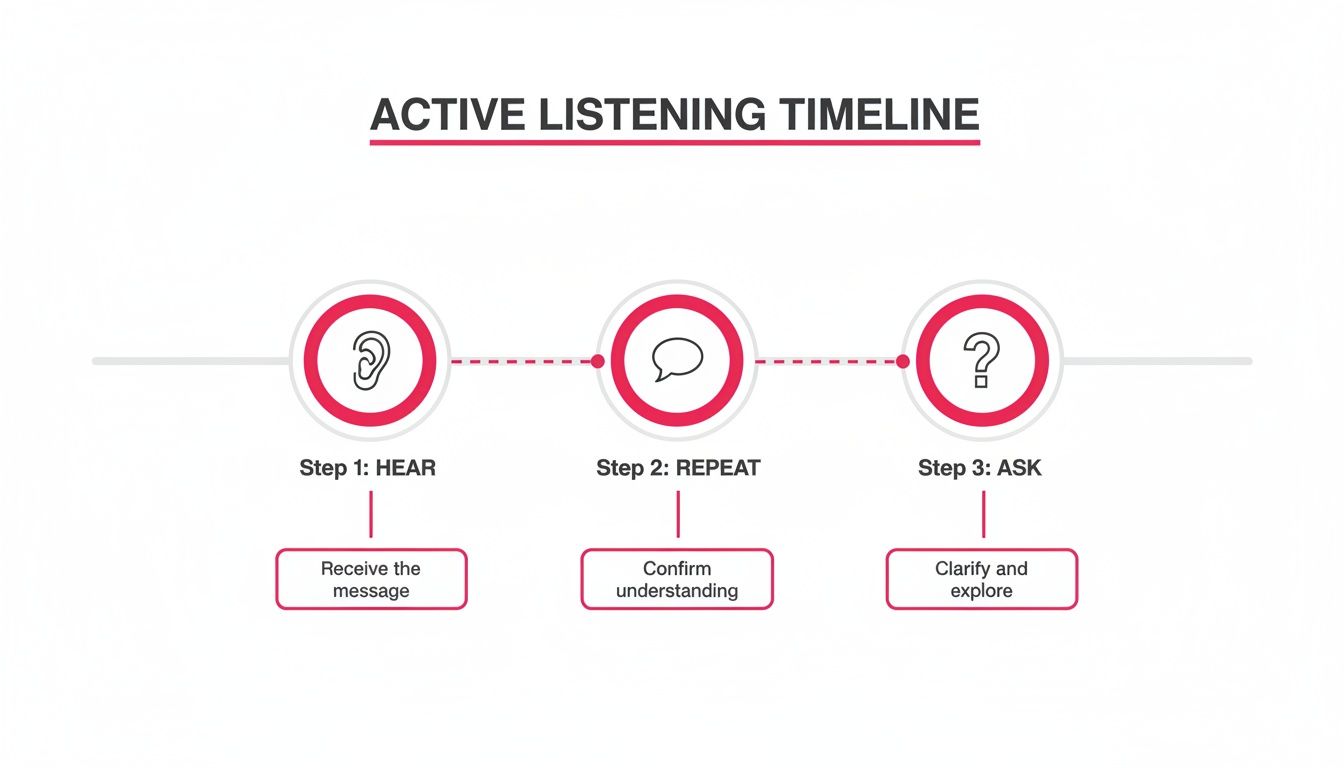
This simple Hear, Repeat, and Ask framework can defuse so many potential arguments before they even start. It shows you're actually engaged, not just waiting for your turn to talk.
Below is a simple guide that breaks down the cycle into conversational do's and don'ts. It’s a game changer for avoiding unnecessary friction.
A Simple Guide to Conversation Timing
Learn how to approach different conversations based on the phases of her menstrual cycle for better, more connected outcomes.
| Cycle Phase | What's Happening Hormonally | Green Light Conversations | Conversations to Handle with Care |
|---|---|---|---|
| Follicular (Post period) | Estrogen is rising. | Planning trips, discussing finances, making big decisions, problem solving. | Avoid piling on too many heavy topics at once. |
| Ovulatory (Mid cycle) | Estrogen and testosterone peak. | Social planning, starting new projects together, passionate discussions. | High energy can sometimes escalate disagreements quickly. |
| Luteal (Pre period) | Progesterone rises and then falls. | Gentle check ins, offering support ("What do you need?"), quiet time. | Avoid complex problem solving, critiques, or major life decisions. |
Remember, this isn't a rigid rulebook. It's a guide to help you be more aware and intentional. The goal is to create a safe space to connect.
Recognizing these patterns isn't about making excuses or stereotyping. According to relationship experts at The Gottman Institute, many partners avoid tough conversations because they feel overwhelmed or paralyzed. By choosing a better time, you reduce that feeling of being ambushed.
Using a shared tool like a period tracker for men can take the guesswork out of it, giving you the insights you need to be the partner who just gets it.
Field Guide to Tough Conversations
Alright, this is where the theory hits the road. Tough conversations are going to happen. That’s a given. But they don't have to turn into a full blown war. If you handle them right, you can actually turn a landmine topic into a moment that brings you closer.
The secret? It’s all about shifting your focus from blame to feeling. You aren't attacking her. You're simply explaining what’s going on inside your own head. This small tweak makes a huge difference, because you’re sharing an emotional fact, not firing an accusation.
Starting Points for Common Scenarios
Instead of just talking about the idea, let's get practical. Here are some word for word starters you can tweak for your own situation. Notice the pattern. They all kick off with "I feel" or from your point of view. This isn't a manipulative trick. It's just honest communication that invites teamwork instead of a fight.
- On Money Stress: "Hey, I was going over our budget, and I'm feeling a bit anxious about our spending lately. Could we find some time this week to look at it together and make a plan? I'd feel a lot better if we were on the same page."
- On Household Chores: "I've been feeling pretty swamped with house stuff recently. I know we're both busy, but I feel like the balance is off. Can we talk about how we can divide things up so it feels more like a team effort?"
- On Mismatched Libidos: "I feel like we haven't been as physically close lately, and I really miss that connection with you. I want to understand what's on your mind and see how we can get back in sync."
See how that works? You’re not kicking the door down. You’re just opening it for a real conversation.
Remember, the goal isn't to "win" the argument. The goal is to solve the problem together and come out of the conversation feeling closer than when you started.
The Power of the "I Feel" Statement
Let's break down exactly why this is so effective.
When you say something like, "You always spend too much money," you're passing judgment. Her brain instantly goes into defense mode. She'll probably fire back with a list of your own recent purchases, and now you’re just in a tennis match of blame.
But watch what happens when you rephrase it. "I feel stressed when I see our credit card bill." That's your internal state. It's not up for debate. She can't argue with how you feel. Instead of getting defensive, she’s much more likely to respond with curiosity or empathy, maybe with something like, "Oh, I didn't realize you were feeling that way. What's worrying you?"
Boom. Suddenly, you're on the same team, looking at the same problem. This is the core of so many proven relationship conflict resolution strategies that actually work. It’s about fighting the problem, not each other. Getting this right builds a foundation of trust that makes every future conversation that much easier.
How VibeCheck Helps You Stay Connected

Think of VibeCheck as your personal playbook for your partner. It's designed to take all the communication strategies we've talked about and turn them from abstract ideas into simple, daily actions you can actually use.
This isn't just another calendar or tracker. It’s a tool that translates the science of her cycle into practical, real world insights, so you can finally nail your timing and offer support that genuinely hits the mark.
From Guesswork to Genuine Connection
How much mental energy do you waste trying to read the room? Is today the right day to bring up finances? Is she in the mood for a quiet night in or is she feeling social? VibeCheck helps you stop guessing.
The app gives you a daily heads up based on where she is in her cycle, her logged preferences, and patterns it learns over time. You get concrete suggestions that just make sense.
For instance, you might see a tip like:
- "Her energy is likely high today. Perfect time to plan that hike you've been talking about."
- "She might be feeling more sensitive. A simple, 'Thinking of you' text could mean the world."
- "This is a great week for problem solving. Consider bringing up that decision you need to make together."
The Power of Proactive Support
Being a great partner is less about reacting to problems and more about being proactive. But it's almost impossible to be proactive when you're flying blind. And let's be honest, this is a real challenge for everyone. Recent research shows that even among professional communicators, only 24% see their relationship management tools as very important. That gap shows just how hard it is for anyone to stay consistently tuned into another person's needs. You can see the data for yourself in the full report.
VibeCheck essentially becomes your personal relationship CRM. It helps you remember the small details that make a huge difference. Her favorite way to de stress, the coffee order that always makes her smile, or the perfect time to suggest a date night.
By putting these insights right at your fingertips, the app helps you build a habit of thoughtful, consistent action. These are the small gestures that prevent misunderstandings and build a stronger, more in sync partnership. It’s the ultimate tool for men who want to intentionally build better communication in relationships. Understanding the 'why' behind her vibe is the first step, and VibeCheck gives you that insight daily.
Ready to understand your partner better? Join 10K+ men on VibeCheck.
Frequently Asked Questions
Look, we get it. The idea of "improving communication" can sound like a massive, vague project. So, let's cut through the noise and get straight to the real questions we hear all the time from men trying to build a stronger connection.
My partner says I don’t listen, but I hear every word. What's going on?
This is probably the most common disconnect there is. It's rarely about your hearing. It’s about making her *feel* heard. She isn't just delivering a report. She's sharing an experience and an emotion. The goal isn't just to download the information. She wants to see that you're in it with her, that you understand the feeling behind the words. Next time she's sharing something, try this small but powerful move. Simply reflect back what you're hearing: "Okay, so it sounds like you're feeling completely wiped out from everything going on at work." It's a game changer. That one sentence shows you’re not just passively receiving data. You're actively connecting with her. We break down more ways to do this in our guide to [communication tips for couples](https://thevibecheck.app/blog/relationship-advice/communication-tips-for-couples).How can I bring up something serious without it blowing up into a fight?
It all comes down to your opener. The key is to start by sharing your own feelings, not by pointing a finger at her. Think about the difference. "You've been so distant lately" feels like an attack and immediately puts her on the defensive. Instead, try framing it from your perspective: "Hey, I've been feeling a little disconnected from you recently, and I really miss us." This is one of the most effective [relationship conflict resolution strategies](https://thevibecheck.app/blog/understanding-partner/relationship-conflict-resolution-strategies) because it's not an accusation. It's just a statement about how *you* feel. It opens the door for a real conversation instead of slamming it shut with blame.Is there actually a “right time” to have a big talk?
Yes. 100%. Timing isn't just a small detail. It's often the whole game. Trying to dive into a heavy topic when one of you is hungry, stressed out, or exhausted is basically setting yourself up for failure. But you can get even smarter about it. Her menstrual cycle has a real, predictable impact on her energy, mood, and even how she processes information. Some days are perfect for tackling logical problems, while other days are better for just offering quiet support and a hug. Knowing the difference gives you a massive advantage. Using a simple [period tracker designed for men](https://thevibecheck.app/period-tracker-for-men) can give you a heads up on where she's at and help you pick the right moment.I'm trying this stuff, but we still seem to be stuck. What now?
First, don't get discouraged. Building better habits isn't a straight line. There will be good days and bad days. The goal isn't to be perfect overnight. It's about being consistent. The effort itself sends a powerful message: "You are important to me, and our connection is worth working for." If you feel like you're consistently hitting a brick wall, it might mean there are deeper issues that would benefit from a professional therapist's help. But for that daily guidance and staying in sync, an app like [VibeCheck](https://www.thevibecheck.app) can be an incredible wingman, helping you build those positive communication patterns one day at a time.What’s the biggest communication mistake men make?
The biggest mistake is often jumping into "fix it" mode too quickly. When your partner shares a problem, her primary need might be to feel understood and validated, not to get a five point action plan. Listening to understand, rather than listening to reply, is a huge shift. Before offering a solution, try saying something like, "That sounds really tough. Tell me more about it." This shows you're on her team first.Conclusion: In Sync, In Tune, In Love
Building better communication in your relationship isn't a one and done task. It’s an ongoing practice. The good news is that small, consistent changes make the biggest difference over time. It’s not about grand gestures. It's about showing up every day with a little more awareness and a genuine desire to connect.
The key takeaways are simple: listen to understand, not just to respond. Pay attention to timing, because context is everything. And approach tough conversations with "I feel" statements to keep you both on the same team. You don't have to be a mind reader. You just need the right tools and a willingness to learn. This is how you move from just coexisting to truly being in sync.
Ready to understand your partner better? Download VibeCheck: The relationship app for men.
Tags

Related Articles
Continue reading to deepen your understanding

How to Understand Your Girlfriend’s Social Battery and Hormones
Does your girlfriend suddenly cancel plans or seem withdrawn? This guide explains how her cycle impacts her energy so you can support her like a pro.

How Your Girlfriend’s Emotional Needs Change During Her Cycle
Does your girlfriend’s mood seem unpredictable? Learn how her emotional needs shift on a biological loop and how to support her through every phase of her cycle.

What to Buy When Your Girlfriend Has Hormone Cravings: A Support Guide
Stop wondering what to pick up at the store. This guide explains the science behind cycle cravings and provides a specific list of foods and comfort items she needs.

Your Girlfriend’s Mood Shifts Throughout the Month, Explained
Ever wonder why her energy and moods change so drastically each week? Understand the four hormonal phases and how to be the partner she needs during every stage of her cycle.

How to Support Your Girlfriend When She’s Crying Because of Hormones
Watching her cry when hormones hit can feel overwhelming. Learn the biological why behind the tears and use these proven scripts to provide the support she actually needs right now.

How to Help Your Girlfriend with Hormonal Mood Swings Without Arguing
Understand her cycle and learn tactical scripts to handle tension. This guide shows you how to support her through hormonal shifts without getting into unnecessary fights.

When to Feed Your Girlfriend: Understanding Hangry Hormones
Does your girlfriend get irritable when she hasn’t eaten? It’s not just in her head. Learn why hormones cause hanger and the specific times her body needs more fuel.

The Boyfriend’s Guide to Supporting Your Partner Through PMS
If your partner is suddenly irritable and exhausted, it’s biology, not you. Learn about the luteal phase and how to provide meaningful support without walking on eggshells.