How to Give Space in a Relationship: A Practical Guide for Men
Discover how to give space in relationship and keep connection strong with practical tips, respectful communication, and real-life examples.
Learning how to give space in a relationship is really about trusting the connection you’ve already built. It's not about creating distance. It’s about offering room for both of you to breathe and recharge. Think of it this way: that simple act shows confidence and respect, turning a potentially anxious moment into a real opportunity for growth. This is a crucial skill for any man who wants to build a lasting, healthy partnership.
Why Space Is a Sign of Strength, Not a Red Flag
Let's be real for a second. When your partner says, "I need some space," it can feel like a punch to the gut. It's easy for your mind to spiral into worst case scenarios, thinking it’s code for “I’m not sure about us anymore.”
But most of the time, that’s just not what’s happening.
The key is to frame it differently. Giving her space isn't a red flag signaling the end. It’s a green light for a healthier, more secure relationship. It’s a sign of strength that shows you trust her and the bond you share.
The Science of Needing Room to Breathe
Every single person needs a sense of autonomy. It’s a fundamental psychological need, right up there with feeling connected to others. When we have room to be ourselves—to process our own thoughts and pursue our own interests—we bring a much more complete and energized version of ourselves back to the relationship.
This need can also be amplified by her hormonal cycle. During the luteal phase (that's the week or so before her period), progesterone levels rise, which can lead to lower energy and a natural desire for more quiet, solo time. It’s not personal. It’s just biology. Acknowledging this isn't about blaming hormones. It's about being aware of the whole picture.
The goal isn't to push her away. It’s to give her the room she needs to recharge so she can come back to you feeling more connected, understood, and appreciated than before.
Turning Anxiety into Confidence
When you understand how to give space in a relationship, you shift from a place of fear to one of confidence. Instead of worrying, you become the partner who gets it. This builds an incredibly powerful foundation of trust and respect. It shows you’re not just a boyfriend or a husband. You're a teammate.
Here’s what this proactive approach really does for your relationship:
- It Prevents Burnout: Constant togetherness, as great as it can be, is draining. Space allows both of you to reset your social and emotional batteries.
- It Fosters Individuality: She gets to maintain her own sense of self, which makes the time you do spend together that much more meaningful.
- It Builds Deeper Trust: Proving you can handle her need for space shows you're secure in the relationship. To learn more, check out our guide on how to be more emotionally available.
Ultimately, this isn’t about playing games or following some rigid set of rules. It’s about becoming a more tuned in, supportive partner who understands what she needs, sometimes even before she says it.
Decoding the Signals That She Needs Space
Let's be real: most of the time, she won’t just come out and say, "Hey, I need some space." It's rarely that direct. Learning to give your partner space is less about waiting for a formal request and more about becoming a skilled detective of her subtle cues. Think of it as learning her unique emotional language so you can be the supportive partner you want to be.
This is your field guide to spotting those signals before they turn into a bigger issue.
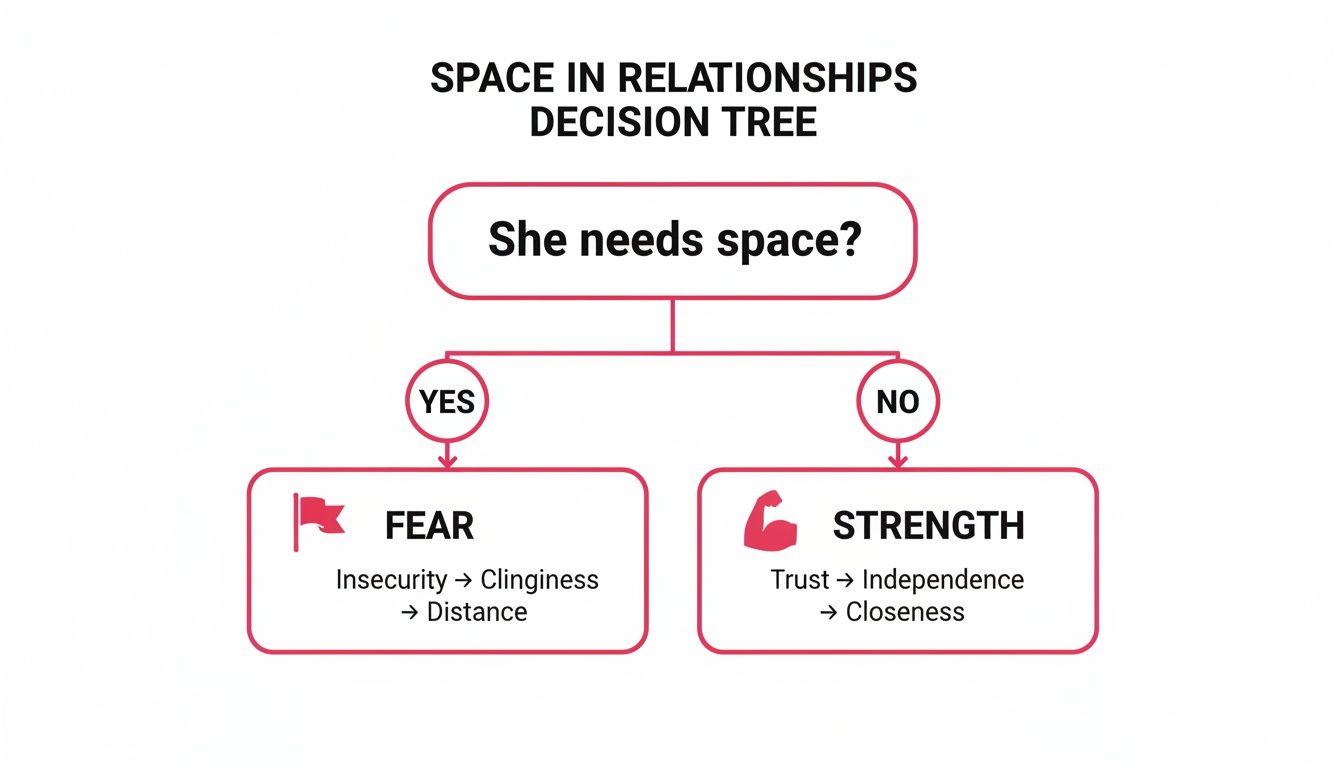
The key takeaway from this? Your reaction is what shapes the outcome. A supportive response can turn her need for solitude into a moment that actually strengthens your connection.
Nonverbal Cues Are Your First Clue
Long before a word is spoken, her body language and actions will tell you a lot. Don't mistake these for signs of rejection. Think of them as an indicator that her internal battery is running low and she needs a moment to recharge.
You might notice small but meaningful shifts in her daily routine:
- Headphones On, World Off: If she’s popping in her earbuds more often at home, it’s a gentle way of creating a personal bubble without having to leave the room.
- Solo Activities Increase: Maybe she’s taking longer walks by herself, getting lost in a hobby in another room, or choosing a long bath over cuddling on the couch.
- A Dip in Physical Touch: It might not be a total freeze out, but maybe she isn't initiating as many of those casual touches, like a hand on your back or leaning in as often.
This isn't just a hunch. It's a global trend. A Preply study on personal space found that the need for it surged worldwide after the pandemic. In some countries, the accepted distance for loved ones grew by over 110%. It’s pretty clear that giving both physical and emotional room is now non negotiable for a healthy relationship.
Listening for the Unspoken Request
Sometimes the clues are verbal, but they're wrapped up in everyday language. She isn't asking you to leave, but she is telling you what's going on inside.
Pay close attention to phrases like, "My brain is just so full today," or "I'm feeling so drained." These aren't complaints. They're status updates on her emotional and mental capacity.
When you hear these, your instinct might be to jump in and try to fix it. But often, the best response is simply to create the space for her to decompress on her own. It's a chance to show you hear what she's really saying without her having to spell it out.
A Quick Guide to Her 'Need for Space' Cues
It can be tough to translate these signals in the moment. Here’s a quick cheat sheet to help you understand what she might be feeling and how you can respond in a way that truly helps.
| What You Notice | What It Could Mean | A Supportive Response |
|---|---|---|
| One word answers | She's mentally overloaded and doesn't have the bandwidth for conversation. | "You seem like you've got a lot on your mind. I'm here if you want to talk, but no pressure." |
| She starts a new solo hobby | She needs a personal outlet for stress or creativity that's just for her. | "That new [hobby] looks really cool. Let me know if you need anything from me so you can have some time for it." |
| "I'm so tired." | It's not just physical fatigue. It's emotional and social exhaustion. | "Why don't you go relax for a bit? I'll handle [dinner/the kids/chores]." |
| She's quieter than usual | She’s processing her own thoughts and doesn't need external input right now. | Give her quiet without demanding to know "what's wrong." Just being present and calm is enough. |
Think of this as a starting point. The more you pay attention, the better you'll get at reading her specific signals.
Connecting the Dots to Her Cycle
Often, these signals for space are tied directly to her menstrual cycle, especially during the luteal phase. That's the week or so before her period. A spike in the hormone progesterone can seriously sap her energy and social battery, making quiet time absolutely essential.
This isn't an excuse. It's just biology.
Tools like VibeCheck can give you a heads up on these predictable patterns. Instead of being caught off guard by her sudden need for quiet, the app helps you anticipate it. Suddenly, you're the intuitive partner who just gets it. Your ability to connect her behavior to her biological needs—without her having to explain a thing—is a massive win for your relationship.
The Best Ways to Actually Give Her Space
Let’s get one thing straight: giving your partner space isn't about storming off or giving her the silent treatment. That’s not space. It’s punishment. And all it does is create more tension and distance.
Knowing how to give space in a relationship the right way is a total game changer. It shows your support comes from a place of love, not resentment, and it builds an incredible amount of trust and respect.
So, let's break down the playbook for doing it right.
The Wrong vs. The Right Approach
There’s a massive difference between a move that self sabotages the relationship and one that supports it. One breeds conflict, while the other builds a stronger connection.
- The Wrong Way: Sighing and saying things like, "Fine, do what you want," or "Whatever, I'll just leave then." This is classic passive aggressive behavior. It makes her feel guilty for needing a minute to herself and turns her need into your problem.
- The Right Way: Using clear, supportive language that validates her need for time alone. This approach removes any pressure or guilt, reinforcing the fact that you're a team, even when you're taking a breather from each other.
A supportive partner doesn't just tolerate her need for space. He actively encourages it. This shows you're secure in the relationship and confident in your connection, which is incredibly attractive.
Actionable Scripts You Can Use Today
You don't need to be a poet to get this right. Just be clear and kind. Having a few go to phrases ready can make all the difference when you sense she needs a breather.
Try one of these next time:
- "Hey, you seem like you could use some downtime. I'm going to go run errands for a bit, but just know I'm here if you need me."
- "I can tell you've had a long day. Why don’t you take some time for yourself? I've got dinner covered."
- "Let's both take a little solo time tonight to recharge. We can connect later."
The key is framing it as a supportive action, not a frustrated reaction. For more inspiration, our guide on supportive text ideas has some great examples.
Understanding the Different Kinds of Space
"Giving space" doesn't always mean leaving the house for a few hours. It's about being tuned in enough to recognize what kind of space she actually needs in that moment.
There are a few different types to keep in mind:
- Physical Space: This is the most obvious one. It means literally being in separate rooms or one of you heading out for a while. It’s perfect for when the energy feels tense or the house just feels too small.
- Mental Space: This is all about easing the pressure to talk, solve problems, or make decisions. It means not peppering her with questions like "What's wrong?" or "Are you mad at me?" Give her the quiet she needs to process her own thoughts without also having to manage yours.
- Digital Space: In our always on world, sometimes she just needs a break from the constant pinging. This means letting a text sit for a bit without a "???" follow up. Trust that she'll get back to you when she has the mental bandwidth.
Recognizing and offering the right kind of space shows a deep level of awareness. It proves you're paying attention to what she truly needs, solidifying your role as a thoughtful, tuned in partner.
How to Handle Space When Things Get Complicated
Giving space is one thing when everything's calm. It's a completely different ballgame when emotions are running high. These are the moments that test your strength as a partner, and handling them well can make all the difference.
Let’s break down how to navigate these tricky situations with a bit more confidence.

After an Argument
The air is thick with tension. Your first instinct might be to fix it immediately. To talk it out until you’re both on the same page. But honestly, the smartest move is often to just hit pause. Pushing for a resolution when you’re both angry is a recipe for saying things you'll regret.
A "cool down" period isn't about ignoring the problem. It’s about giving you both the mental and emotional room to process what just happened without making it worse.
Actionable Tip: Instead of pushing with, "We need to talk about this now," try framing it differently. Say something like, "I really want to solve this, but I think we both need a minute to cool off. How about we take 30 minutes and then come back together?" This shows you're committed to fixing it but also respects the need for a breather.
During Her Period
Her need for space can feel dialed up to eleven during her menstrual cycle, especially in the days leading up to it. It’s not in her head. Hormonal shifts, particularly rising progesterone followed by a sudden drop, can seriously drain her social battery and make her more sensitive. It's a biological reality.
During this time, her need for space is more about conserving energy than it is about pushing you away. Trying to "cheer her up" or planning a big night out might feel supportive to you, but to her, it could feel like a massive burden.
Often, a quiet, supportive presence is the best thing you can offer. If you want to get ahead of this, a tool like VibeCheck can make you look like a mind reader. The app helps you understand her cycle, so you can offer support that’s actually helpful, like suggesting a quiet night in with her favorite movie.
In a Long Distance Relationship
Giving space when you're already physically apart? It sounds totally backward, right? But space in a long distance relationship (LDR) is less about physical distance and more about managing the frequency of communication. Nonstop texting and calling can quickly create pressure, turning connection into an obligation.
It’s a delicate balance. Decades of research show that while proximity helps relationships grow, too much perceived closeness can smother them. Global data shows that while overall partner satisfaction is high at 83%, that number dips significantly when partners feel suffocated. This just highlights how crucial intentional space is. You can dig into the numbers yourself in the full Ipsos report.
To get this right, you have to talk about your communication expectations. Agree on a rhythm that feels good for both of you. One that leaves room for spontaneous check ins but also protects your individual solo time.
How VibeCheck Helps You Become a More Intuitive Partner
Figuring out how to give space in a relationship can feel like you're just guessing. You're left trying to decode whether her quiet mood is about work, something you said, or just her needing to recharge. This is where a little bit of tech can give you a serious edge, turning that guesswork into genuine intuition.
Think of VibeCheck as your personal relationship playbook, not just another app. It’s built to give you a heads up, translating the subtle shifts in her world into insights you can actually use.
From Guesswork to Getting It Right
Instead of wondering why she seems a bit distant, VibeCheck helps you connect the dots. The app's insights, which are based on her cycle, paint a clearer picture of what she might be feeling and needing on any given day.
Imagine getting a quiet tip in the morning that says, "Her energy might be lower today. It could be a great day to suggest she take some time for herself."
That simple piece of information changes everything. You're no longer the guy trying to plan a big night out during her luteal phase. Instead, you're the one suggesting a quiet movie night. It's not a lucky guess. It's a thoughtful, informed move that shows you're paying attention.
VibeCheck is about proactively showing up as the thoughtful, in sync partner she loves. It’s not about fixing her. It’s about understanding her better so you can support her in the way she actually needs.
The Science of Better Timing
This isn't just about being nice. It's backed by some pretty serious data on what makes relationships work. Research tracking nearly 2,000 couples found that divorce risk skyrocketed when both partners were emotionally struggling and couldn't give each other breathing room. Crowding each other only made the tension worse.
Learning when to create that space isn't just a feeling. It’s a critical skill. You can explore the full findings about how emotional adjustment impacts relationships.
With VibeCheck, you get a head start. The app helps you anticipate moments when she might need more support or solitude, letting you be the partner who offers what's needed without her even having to ask. It reduces the mental load for both of you and replaces potential friction with real connection. The app provides relationship insights for men that are practical and easy to apply.
FAQs: Common Questions About Giving Space in a Relationship
Even when you know space is healthy, it can still kick up a lot of questions and insecurities. That’s completely normal. Let's walk through some of the most common worries guys have about this, so you can handle these moments with confidence instead of confusion.
The goal here isn't just to answer questions, but to drive home a core idea: Space is a tool for connection, not a weapon of disconnection.
How much space is too much in a relationship?
This is the big one, and the honest answer is: it depends. There’s no magic number, like "give her exactly three hours of alone time." The right amount of space is whatever she needs to feel recharged and centered, without it feeling like you've both checked out of the relationship. The key is to talk about it. Instead of guessing, try asking supportive questions like, "I can see you need some downtime. Are you thinking you need the afternoon to yourself, or just an hour or so to decompress?" This little shift shows you respect her need and that you're on her team, not just impatiently waiting for the clock to run out. It turns a moment of uncertainty into a collaborative one.
What if I’m worried she won’t come back?
This fear almost always comes from a place of insecurity, not reality. If you have a solid foundation, giving her space to actually miss you is a powerful way to strengthen your bond. When you confidently give her that room, it screams that you trust her and the connection you’ve built. Remember, healthy space is a pause, not a breakup. It’s about her recharging her personal battery so she can bring her best self back to the relationship—and back to you. Clinging tighter usually has the opposite effect. Her need for solitude is almost always about her own internal world, not a rejection of you. For more on this, our guide on relationship advice for men is a great resource for understanding her emotional world.
How do I ask for space for myself without hurting her?
You have needs, too. Asking for space is just as important as giving it. The trick is to frame it in a way that doesn't make her feel rejected or like she's done something wrong. Definitely avoid saying, "I just need to get away from you." That’s blaming and it’s going to hurt. A better approach is: "I’m feeling a little drained and just need some quiet time to recharge my own batteries. How about I take an hour to [go for a run/play a game], and then we can connect later?" See the difference? This makes it about your needs ("I need to recharge") rather than her actions. It's a request, not a criticism, and it sets a clear expectation for reconnecting, which can really ease any anxiety she might feel.
Why does my girlfriend need so much space all of a sudden?
A sudden need for space can feel alarming, but it often has a simple explanation. It could be tied to increased stress at work, family issues, or hormonal shifts in her menstrual cycle. The luteal phase, right before her period, is a common time for women to feel more introverted and require more downtime to conserve energy. Instead of assuming the worst, approach it with gentle curiosity. A simple, "I've noticed you seem to need a bit more solo time lately. Just want you to know I'm here for you," can open the door to a supportive conversation.
Is needing space in a relationship a bad sign?
Absolutely not. In fact, it’s a sign of a healthy, mature relationship. It means you both recognize that you're individuals with your own needs, thoughts, and emotional batteries. Relationships where partners can comfortably ask for and give space are often more resilient and trusting. It only becomes a bad sign if "needing space" is used as a consistent way to avoid problems, intimacy, or communication. But when used to recharge, it’s a powerful tool for connection.
Ready to stop guessing and start connecting on a deeper level? VibeCheck gives you the science backed insights you need to be the intuitive, supportive partner she needs.
Download VibeCheck today and start building a stronger relationship.
Tags

Related Articles
Continue reading to deepen your understanding

How to Understand Your Girlfriend’s Social Battery and Hormones
Does your girlfriend suddenly cancel plans or seem withdrawn? This guide explains how her cycle impacts her energy so you can support her like a pro.

How Your Girlfriend’s Emotional Needs Change During Her Cycle
Does your girlfriend’s mood seem unpredictable? Learn how her emotional needs shift on a biological loop and how to support her through every phase of her cycle.

What to Buy When Your Girlfriend Has Hormone Cravings: A Support Guide
Stop wondering what to pick up at the store. This guide explains the science behind cycle cravings and provides a specific list of foods and comfort items she needs.

Your Girlfriend’s Mood Shifts Throughout the Month, Explained
Ever wonder why her energy and moods change so drastically each week? Understand the four hormonal phases and how to be the partner she needs during every stage of her cycle.

How to Support Your Girlfriend When She’s Crying Because of Hormones
Watching her cry when hormones hit can feel overwhelming. Learn the biological why behind the tears and use these proven scripts to provide the support she actually needs right now.

How to Help Your Girlfriend with Hormonal Mood Swings Without Arguing
Understand her cycle and learn tactical scripts to handle tension. This guide shows you how to support her through hormonal shifts without getting into unnecessary fights.

When to Feed Your Girlfriend: Understanding Hangry Hormones
Does your girlfriend get irritable when she hasn’t eaten? It’s not just in her head. Learn why hormones cause hanger and the specific times her body needs more fuel.

The Boyfriend’s Guide to Supporting Your Partner Through PMS
If your partner is suddenly irritable and exhausted, it’s biology, not you. Learn about the luteal phase and how to provide meaningful support without walking on eggshells.