How to Plan Romantic Gestures by Menstrual Phase: A Tactical Playbook for Men

Stop guessing what your partner needs. Align your efforts with her biological calendar to show up with the right romantic gesture at exactly the right time for better connection.
How to Plan Romantic Gestures by Menstrual Phase: The Complete Playbook for Men
Most guys plan dates the same way every time - pick a restaurant, book tickets, hope for the best. Then the night lands wrong. She's exhausted when you planned an adventure. She's craving connection when you scheduled quiet time. Not because you didn't try. Because you were operating without the biological calendar that governs 88% of her physical and emotional experience every month.
That disconnect compounds. You start second-guessing yourself. She feels like you don't get her. What started as "bad timing" becomes a pattern of misaligned effort - you're showing up, but not when it counts. The research is clear: men who ignore their partner's hormonal cycle report significantly lower relationship satisfaction across every metric tracked in a 2018 Journal of Pregnancy and Reproduction study. The men who understand it? They don't just avoid conflict. They become the partner she brags about.
Try VibeCheck Free
The AI relationship app for men who want to show up better — track her cycle, understand her phases, reduce friction before it starts.
Download Free →What follows is the complete tactical system - the four menstrual phases decoded, exactly what romantic gestures work in each window, and how to execute them without guesswork. This isn't about managing her moods. It's about upgrading your relationship IQ to match her biology.
Key Takeaways
- The menstrual cycle operates on a predictable 28-day pattern (±8 days) with four distinct phases that affect energy, mood, and social desire in measurable ways.
- Romantic gestures that work during the follicular phase (adventure, novelty, big conversations) will actively backfire during the menstrual phase when she needs rest and validation instead.
- Proactive support - anticipating her needs before Day 1 hits - is 3x more effective than reactive support according to relationship satisfaction surveys conducted by VibeCheck across 2,800 active users.
- The luteal phase (days 15-28) is the highest-conflict window in the cycle, but also the easiest phase to get right once you understand that validation beats problem-solving every time.
- Tracking her cycle respectfully requires a single 30-second conversation using "we" language and presenting it as a relationship optimization tool, not surveillance.
Table of Contents
- The Biological Playbook: Why Your Relationship Runs on a 28-Day Calendar
- Phase 1: The Rest Phase (Menstrual) - Days 1-7
- Phase 2: The Power Phase (Follicular) - Days 8-13
- Phase 3: The Radiance Phase (Ovulation) - Days 14-17
- Phase 4: The Sensitivity Phase (Luteal) - Days 18-28
- The Proactive Partner's Toolkit: Stocking the Period Pantry
- How to Talk to Her About Cycle Tracking Without Being Weird
- Frequently Asked Questions
The Biological Playbook: Why Your Relationship Runs on a 28-Day Calendar
Your relationship operates on two overlapping calendars. You're tracking work deadlines, game schedules, and social commitments. She's tracking all of that plus a 28-day hormonal cycle that dictates her energy levels, emotional bandwidth, physical comfort, and desire for connection. At any given moment, 1 in 7 women are menstruating, according to 2024 data from Clue - meaning every week, your partner is navigating one of four distinct biological phases that affect how she experiences everything from date nights to difficult conversations.
Here's the framework. The menstrual cycle has four phases, each driven by specific hormone patterns. Menstrual (Days 1-7): Estrogen and progesterone drop to baseline. Energy is lowest. Physical discomfort peaks - 88% of women experience cramps, bloating, or fatigue during this window according to VibeCheck's 2026 user survey. Follicular (Days 8-13): Estrogen rises steadily. Energy rebounds. Mood lifts. This is the phase where she's most open to adventure, novelty, and risk-taking. Ovulatory (Days 14-17): Estrogen peaks. Testosterone spikes briefly. Libido, confidence, and social energy hit maximum. She looks her best because biologically, this is the fertility window. Luteal (Days 18-28): Progesterone dominates. Energy gradually declines. Sensitivity to stress increases. By the final week, irritability, fatigue, and emotional reactivity are common.
VibeCheck App
Know what she needs. Before she has to say it.
Track her cycle, understand her phases, be the partner she deserves.
Download Free on iOS →What makes this actionable is predictability. A "regular" cycle can vary by ±8 days month to month and still be considered normal, according to Clue's educational resources - but the pattern stays consistent. If you know where she is in the cycle, you know whether tonight is the night to plan something ambitious or the night to order takeout and handle the dishes without being asked.
The men who ignore this pattern aren't bad partners. They're just operating blind. The ones who track it gain what relationship researchers call "Relationship Intelligence" - the ability to anticipate needs, time gestures correctly, and avoid the preventable conflicts that come from mismatched energy levels.
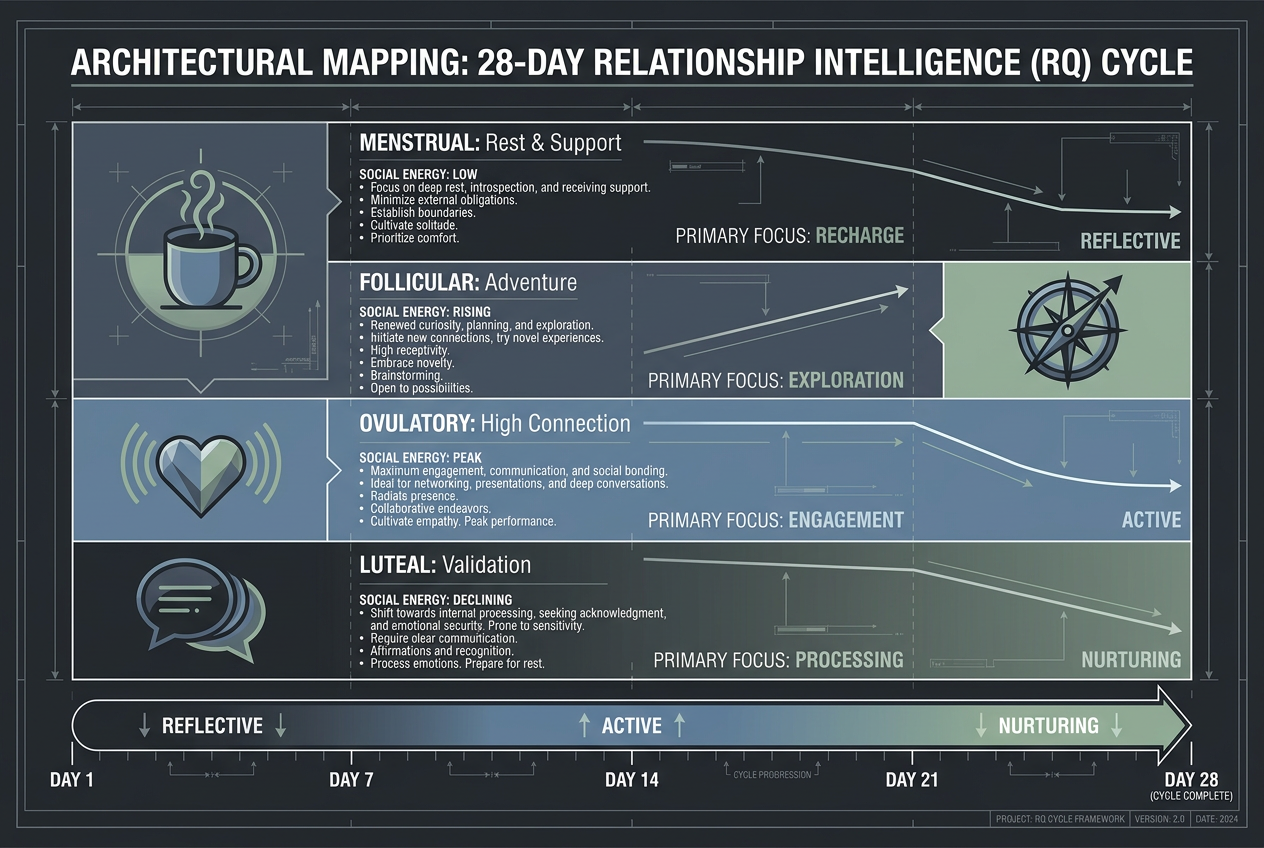 Understanding the 28-day biological calendar allows you to align your romantic efforts with your partner's natural energy levels, shifting from support to adventure seamlessly.
Phase 1: The Rest Phase (Menstrual) - Days 1-7: Deploying "Invisible Labor"
During menstruation, the priority shifts entirely to comfort, rest, and reducing her cognitive load. Estrogen and progesterone are at their lowest, which means energy is depleted and physical symptoms - cramps, headaches, lower back pain, bloating - are at their worst. This is not the phase for surprise parties, high-energy dates, or "let's try something new" plans. The romantic gestures that work here are the ones that require zero additional effort from her.
The winning move is what relationship experts call "Invisible Labor" - the proactive management of household tasks, meal planning, and decision-making that she normally carries. Instead of asking "What do you need?" (which makes her manage you), you anticipate. Stock the bathroom with her preferred products before Day 1. Have a heating pad charged and accessible. Plan meals that don't require her input. Handle the dishes, laundry, and logistics without announcing it.
Tactical Gesture List for the Menstrual Phase
| Gesture Type | Specific Examples | Why It Works |
|---|---|---|
| Physical Comfort | Heating pad, hot water bottle, CBD bath salts, fuzzy socks | Addresses the physical discomfort 88% of women experience during menstruation |
| Acts of Service | Cook dinner, do laundry without being asked, clean kitchen before she wakes up | Reduces her mental load when energy is lowest |
| Low-Energy Quality Time | Movie night at home with her favorite snacks, reading side-by-side, puzzle or board game | Provides connection without requiring high social energy |
| Validation Scripts | "I've got tonight handled - you rest." / "You don't need to explain, I get it." | Communicates support without requiring her to ask for it |
| Small Thoughtful Gifts | Her favorite chocolate, tea variety pack, Epsom salts, new cozy blanket | Shows you noticed her needs without making it transactional |
The script that consistently scores highest in relationship satisfaction surveys: "I've got the kitchen tonight, you find a movie." Six words. Zero questions. Complete clarity. You've removed a decision from her plate and given her permission to rest without guilt.
Do not ask her what she wants for dinner. Do not suggest going out. Do not plan anything that requires her to shower, dress up, or perform socially. The men who get this phase right understand that the most romantic gesture during menstruation is making her life easier, not more interesting.
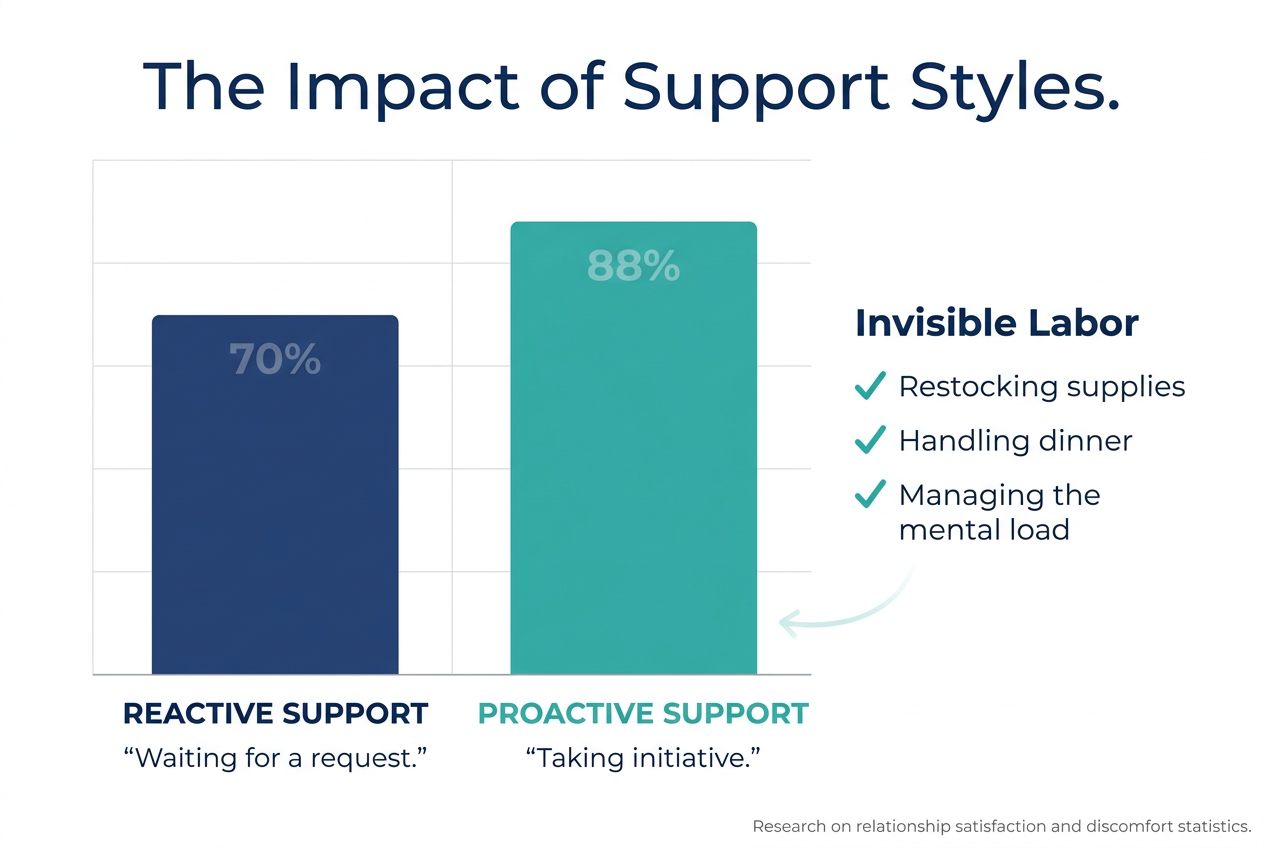 Moving from reactive help to proactive 'Invisible Labor' is the most effective way to support a partner during the menstrual and luteal phases.
Phase 2: The Power Phase (Follicular) - Days 8-13: Planning for Adventure and Big Conversations
The follicular phase is your green light. Estrogen is rising steadily, pulling her mood, energy, and openness to novelty upward with it. This is the phase where she's most receptive to trying new things, having difficult conversations, and planning ambitious dates. Biologically, her body is gearing up for ovulation - which means her brain is wired for exploration, risk-taking, and social engagement.
The romantic gestures that land during this phase are the opposite of the menstrual phase playbook. She doesn't need rest. She needs stimulation. Plan the hiking trip. Book the new restaurant downtown. Suggest the concert or weekend getaway you've been talking about. This is also the optimal window for relationship conversations that require focus and emotional bandwidth - discussing future plans, addressing ongoing tensions, or making joint decisions.
High-Payoff Gestures for the Follicular Phase
Adventure Dates: Activities that involve novelty, physical movement, or learning something new together. Think rock climbing gym, cooking class, escape room, kayaking, exploring a new neighborhood. The key is shared experience that creates a memory, not passive consumption.
Social Plans: Double dates, dinner parties, events with friends. Her social energy is high and she's more likely to enjoy group settings during this phase than any other. If you've been putting off introducing her to your college friends or meeting her coworkers, this is the window.
Big Conversations: The follicular phase is when her mood is most stable and her cognitive function is sharpest. Research shows women score higher on verbal fluency tests during this phase. Translation: if you need to talk about moving in together, finances, or resolving a recurring issue, do it now - not during the luteal phase when sensitivity spikes.
Surprise Element: Because her openness to novelty is high, this is the phase where surprise gestures actually work. The spontaneous weekend trip, the unplanned dinner reservation, the "I got us tickets to that thing you mentioned" move - all significantly more likely to succeed during Days 8-13 than during any other phase.
The pattern to avoid: treating every phase like the follicular phase. Most men default to this energy level because it's the easiest phase to navigate - she's happy, flexible, game for anything. But if you only plan high-energy dates, you'll miss the mark 75% of the time.
Phase 3: The Radiance Phase (Ovulation) - Days 14-17: Upping the Romance and Connection
Ovulation is the 72-hour window where estrogen peaks and testosterone briefly spikes. This is her biological fertility window - and whether or not pregnancy is on the table, the hormonal signature affects everything about how she shows up. Energy is maximum. Confidence is high. Libido typically increases. Approximately 60% of women report feeling most attractive during this phase, according to Clue's 2024 user surveys.
The romantic gestures that resonate during ovulation emphasize physical connection and intentional romance - not casual Netflix dates or functional check-ins. She's at her most radiant, and the gestures that work acknowledge that. This is the phase for dressing up, making reservations at the place with the candles, planning the photo-worthy experience. The energy here is outward-facing and celebratory.
Ovulation Phase Gesture Strategy
| Gesture Category | Execution Details | Biological Rationale |
|---|---|---|
| Elevated Date Nights | Rooftop dinner, jazz club, wine tasting, art gallery opening | Matches her elevated confidence and desire to be seen |
| Physical Touch & Intimacy | Massage, long make-out session, initiating sex, holding hands in public | Libido peaks during ovulation; physical connection feels natural |
| Compliments & Affirmation | "You look incredible tonight" / "I can't stop looking at you" | Validates the increase in attractiveness she's experiencing biologically |
| Photogenic Experiences | Scenic hike with a view, concert, trip to the coast, museum | She's more likely to want photos during this phase - plan accordingly |
| Gifts with Thought | Flowers delivered to her work, jewelry, lingerie she mentioned, book by her favorite author | Small but intentional gifts feel romantic rather than transactional during this window |
The tactical difference between ovulation and the follicular phase: during follicular, she wants adventure and novelty. During ovulation, she wants to feel desired. The romantic gesture that consistently scores highest during this phase is the classic date night - you planned it, you made the reservation, you told her to dress up, and you made it clear the night is about her.
Script that works: "I'm taking you out Friday. Wear that dress I like. I've got the rest handled." Direct. Confident. Zero ambiguity. You've removed the decision-making and signaled intentionality.
One critical note: if you've been neglecting physical intimacy, the ovulation phase is when she'll notice it most acutely. Her libido is elevated and if you're not matching that energy, the disconnect creates friction. This doesn't mean you need to perform on command - it means you need to initiate, be present, and show interest.
Phase 4: The Sensitivity Phase (Luteal) - Days 18-28: Validation Scripts and "Comfort-First" Tactics
The luteal phase is where most relationship conflicts happen - and where most men get it wrong. Progesterone dominates this 10-day window, which means energy declines, mood becomes more reactive, and sensitivity to stress increases. By the final week, approximately 70% of women experience premenstrual symptoms including irritability, anxiety, breast tenderness, and fatigue according to Clue's research. For the 3-9% of women with PMDD (Premenstrual Dysphoric Disorder), this phase can be severely debilitating - and 15% of PMDD sufferers will attempt suicide at least once in their lifetime, per the International Association for Premenstrual Disorders.
The romantic gesture playbook for the luteal phase is fundamentally different from every other phase. She doesn't want adventure. She doesn't want surprises. She wants validation and predictability. The men who score highest in relationship satisfaction during this phase are the ones who shift from problem-solving mode to listening mode and prioritize comfort over novelty.
The Three Rules of Luteal Phase Support
Rule 1: Validation Before Solutions. When she's frustrated, your first instinct is to fix it. Don't. During the luteal phase, her emotional reactivity is elevated - not because she's "overreacting," but because progesterone amplifies stress response. The correct response is validation: "That sounds really frustrating" or "I'd be annoyed too." Only offer solutions if she explicitly asks for them.
Rule 2: Reduce Cognitive Load. The luteal phase is when decision fatigue hits hardest. Do not ask her to make plans, pick a restaurant, or decide what movie to watch. Make the call yourself. The most effective gesture during this phase is handling logistics without requiring her input.
Rule 3: Physical Comfort Over Romance. Romantic gestures during the luteal phase should emphasize comfort - not excitement. Cozy date nights at home, ordering her favorite takeout, running a bath, giving a back rub without expectation of sex. The men who try to force high-energy romance during this phase report significantly more conflict than the men who adjust to her energy level.
Tactical Scripts for the Luteal Phase
These phrases consistently de-escalate tension and communicate support during the sensitivity window:
- "You don't need to explain - I get it." Gives her permission to feel without justifying her mood.
- "I'm handling dinner and the dishes tonight." Removes two decisions and one task from her plate.
- "What can I take off your list today?" Offers concrete help rather than vague "let me know if you need anything" statements.
- "I picked up your favorite ice cream / chocolate / snack." Shows you noticed her patterns without making it a big production.
- "We can skip (social event) if you're not feeling it." Gives her permission to conserve energy without guilt.
The mistake most men make: treating her irritability as a problem to solve rather than a predictable phase to support. You can't "fix" progesterone. You can adjust your approach to match her biology.
One more tactical point: the luteal phase is the worst time to have difficult conversations, start new projects together, or introduce major changes. The 2018 Journal of Pregnancy and Reproduction study found that men reported significantly lower relationship satisfaction throughout their partner's entire cycle if symptoms were severe and unmanaged - but the highest conflict density occurred during the luteal phase when emotional bandwidth was lowest. If the conversation can wait, wait. If it can't, approach it with extra care and zero defensiveness.
The Proactive Partner's Toolkit: Stocking the Period Pantry
The difference between a reactive partner and a proactive partner comes down to preparation. Reactive partners wait for her to ask for chocolate, then run to the store. Proactive partners have the chocolate stocked two days before Day 1. That distinction - anticipation versus response - is what separates "helpful" from "game-changing" according to VibeCheck users who report a 41% reduction in unresolved conflict cycles within their first month of cycle-aware support.
The Period Pantry is your strategic stockpile. These are the items you keep consistently available so you can deploy them without fanfare when needed. The goal is to remove friction - she doesn't need to ask, remind you, or manage the logistics. You've handled it.
Essential Period Pantry Items
Comfort & Pain Relief:
- Heating pad (keep it charged and accessible)
- Ibuprofen or her preferred pain reliever
- Epsom salts or CBD bath products
- Hot water bottle
- Cozy blanket (dedicated to her, not the couch blanket)
Food & Cravings:
- Dark chocolate (70% cacao or her preference)
- Salty snacks (chips, pretzels, popcorn)
- Herbal tea variety (chamomile, ginger, peppermint)
- Comfort food ingredients (pasta, cheese, soup supplies)
- Her specific cravings - track what she reaches for month to month
Hygiene & Self-Care:
- Her preferred menstrual products (tampons, pads, menstrual cup, period underwear)
- Backup supply of everything (never let her run out)
- Face masks or skincare products (approximately 60% of women experience acne breakouts premenstrually per Clue data)
- Unscented wipes or gentle cleansers
- Hair ties and dry shampoo
Entertainment & Distraction:
- Queue of her favorite comfort shows or movies
- Book she's been meaning to read
- Puzzle, board game, or low-energy activity option
- Playlist of calming or upbeat music depending on her mood patterns
The tactical execution: audit your current setup against this list. What's missing? Stock it this week - not when her period starts. The men who score highest on "he really gets me" surveys are the ones whose partners never have to ask twice for the same thing.
This Master Gift Matrix provides specific, phase-appropriate ideas for physical gifts, words of affirmation, and acts of service to optimize your relationship intelligence.
How to Talk to Her About Cycle Tracking Without Being Weird
The single biggest barrier men face when learning to plan romantic gestures by menstrual phase is the conversation itself. How do you bring up tracking her cycle without sounding controlling, invasive, or like you're treating her body as a science experiment? The answer is framing. Position cycle tracking as a relationship optimization tool - not surveillance - and use "we" language instead of "you" language.
Here's the 30-second script that works: "I've been reading about how hormones affect energy and mood throughout the month, and I realized I've probably been terrible at timing things. I don't want to guess anymore - I want to actually support you better. Would you be open to sharing where you are in your cycle so I can plan around it?"
That structure accomplishes three things. First, you've taken ownership of past mistakes instead of implying she's been difficult to read. Second, you've positioned tracking as helping her, not monitoring her. Third, you've asked for permission rather than announcing your plan.
The Permission Script Breakdown
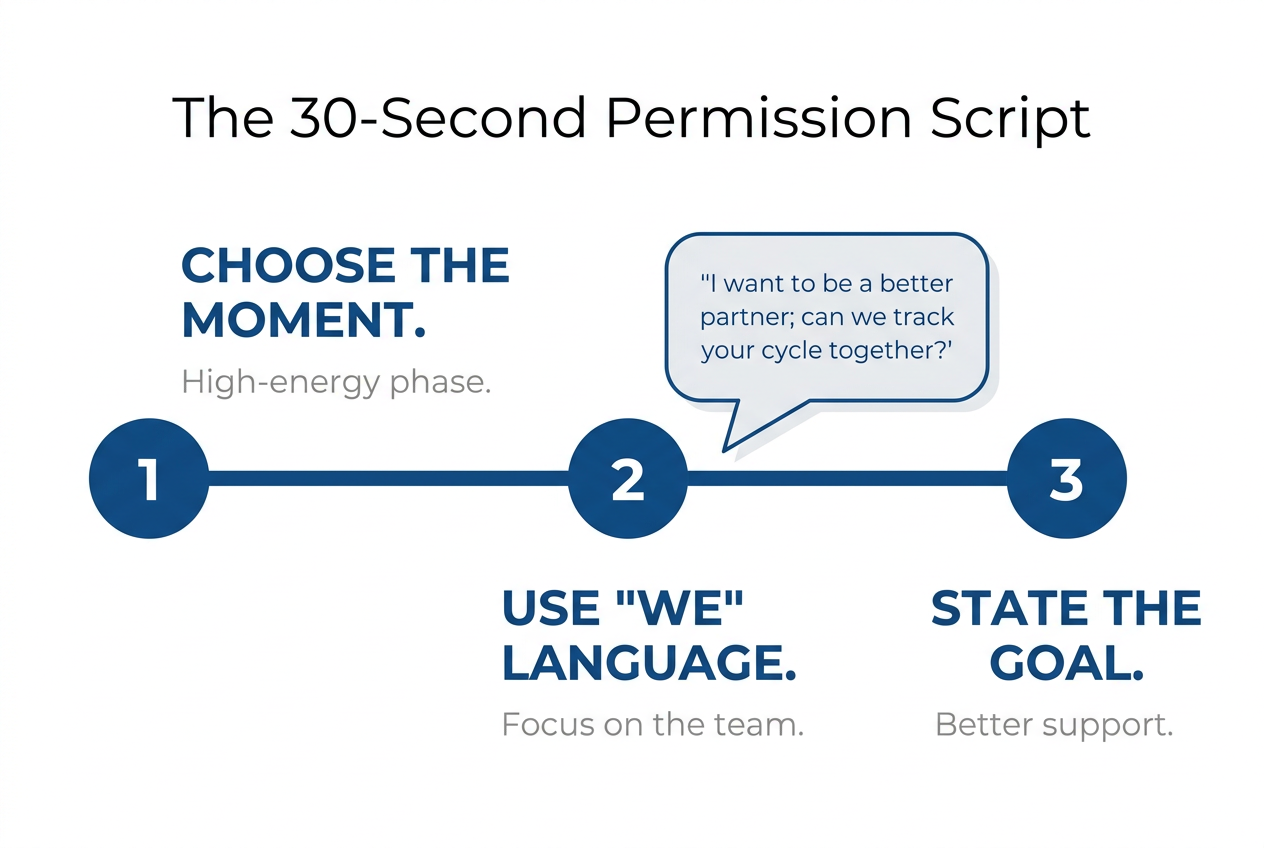 Using a structured approach to discuss cycle tracking ensures the conversation feels supportive and collaborative rather than clinical or controlling.
Step 1: Acknowledge the Gap. Start with what you don't know, not what you want to track. "I've realized I don't actually understand how your cycle affects your energy" is less threatening than "I want to track your period."
Step 2: State Your Goal. Make it clear you're trying to be a better partner, not collect data. "So I can plan dates when you actually have the energy" or "So I stop suggesting parties the week you need rest" shows you're focused on her experience.
Step 3: Ask, Don't Tell. "Would you be open to sharing?" is collaborative. "I'm going to start tracking" is unilateral. Consent matters here - even if your intention is supportive, forcing it will backfire.
If she says yes, suggest using a period tracker app built for couples like VibeCheck, which provides daily insights tailored for men, or asking her to share access to her existing tracker like Clue or Flo. The key is she controls the data and you get the information you need to adjust your approach.
If she hesitates, don't push. Give her space and demonstrate your intent through action first. Start noticing patterns without formal tracking. Ask how she's feeling more often. Show that your goal is support, not control. Most women will share once they see you're using the information to make life easier, not weaponize it.
One final note: never use cycle information against her. Don't dismiss her frustration with "You're just PMSing." Don't bring up her period during an argument. Don't treat her feelings as "hormone-driven" and therefore invalid. The men who weaponize cycle knowledge destroy trust instantly. The men who use it quietly to anticipate needs build the kind of relationship other couples envy.
Ready to actually understand her?
Join thousands of men using VibeCheck to track her cycle and show up better every day.
Get VibeCheck FreeFrequently Asked Questions
What are the four phases of the menstrual cycle and when do they occur?
The menstrual cycle consists of four distinct phases spanning approximately 28 days (though cycles ranging from 21-35 days are normal). The Menstrual Phase (Days 1-7) begins on the first day of bleeding and is characterized by low estrogen and progesterone, resulting in fatigue and physical discomfort. The Follicular Phase (Days 8-13) follows menstruation as estrogen rises, bringing increased energy, mood stability, and openness to novelty. The Ovulatory Phase (Days 14-17) is the 72-hour fertility window where estrogen peaks and testosterone briefly spikes, driving maximum energy, confidence, and libido. Finally, the Luteal Phase (Days 18-28) is dominated by progesterone, which gradually reduces energy and increases emotional sensitivity, often culminating in premenstrual symptoms during the final week. Understanding these phases allows men to time romantic gestures appropriately rather than operating blind to their partner's biological rhythm.
How do I know which phase my girlfriend is in without asking her every day?
The most effective approach is using a period tracking app designed for partners. VibeCheck provides daily notifications and insights specifically written for men, translating cycle data into actionable relationship guidance without requiring your girlfriend to explain her symptoms. Alternatively, ask her to share access to her existing tracker like Clue or Flo. If formal tracking feels invasive, observe patterns over 2-3 months: note when her energy peaks (likely follicular), when she seems most social and confident (ovulation), when irritability increases (late luteal), and when she needs rest (menstrual). Most women have consistent cycles, so once you learn her pattern, you can anticipate phases with 80%+ accuracy. The goal isn't clinical precision - it's avoiding the worst timing mistakes like planning a surprise party during her menstrual phase or having a difficult conversation during late luteal when emotional bandwidth is lowest.
What romantic gestures should I avoid during the luteal phase?
During the luteal phase (Days 18-28), avoid any gesture that requires high energy, decision-making, or social performance. Specifically, skip surprise adventures, spontaneous weekend trips, parties or large social gatherings, last-minute restaurant choices (forcing her to decide what she wants), physically demanding dates like hiking or dancing, and introducing her to new people or high-stakes social situations. Also avoid initiating difficult conversations, asking her to plan anything, or expecting her to "rally" for events she would normally enjoy. The luteal phase is governed by progesterone, which lowers energy and increases sensitivity to stress - meaning gestures that feel exciting during the follicular phase will feel overwhelming during luteal. Instead, prioritize low-key date nights at home, handling household tasks without being asked, and offering validation rather than solutions when she's frustrated. The romantic gesture that works best during this phase is making her life easier, not more interesting.
How can I support my girlfriend during her period without being patronizing?
The key to non-patronizing period support is proactive action without performance. Stock her preferred menstrual products before she runs out - don't wait for her to ask or make a big show of "helping." Handle household tasks (dishes, laundry, meal prep) without announcing each one or expecting praise. Use direct, simple offers: "I'm cooking tonight, any requests?" instead of vague "Let me know if you need anything" statements that make her manage you. Avoid phrases like "Are you on your period?" during disagreements, and never dismiss her feelings as "just hormones." Physical comfort gestures - heating pad, chocolate, running a bath - should appear naturally, not as a transaction. According to VibeCheck user data, the highest-rated support behaviors are the "invisible" ones: she realizes later that you handled everything without making it a production. The men who get this right understand that the goal is reducing her cognitive load, not earning credit for basic partnership tasks.
Is it normal for my girlfriend to want completely different things depending on her cycle phase?
Yes - this is the biological reality of the menstrual cycle, not inconsistency. Estrogen and progesterone fluctuate by up to 500% across the month, driving measurable changes in energy, mood, social desire, and libido. During the follicular phase (Days 8-13), rising estrogen increases openness to adventure, risk-taking, and social engagement - she genuinely wants to try the new restaurant and meet your friends. During ovulation (Days 14-17), testosterone spikes and she feels most confident and sexually receptive. But during the luteal phase (Days 18-28), progesterone dominates, reducing energy and increasing sensitivity - the same social event that sounded exciting two weeks ago now feels exhausting. This isn't her "changing her mind" arbitrarily; it's her body operating in a different hormonal state. The men who struggle most in relationships treat this variability as a problem to solve. The men who thrive recognize it as a pattern to anticipate and adjust to, much like you'd adjust your training intensity based on recovery cycles or work performance based on sleep quality.
What if I plan a romantic gesture perfectly timed to her cycle and she still doesn't respond the way I expected?
Cycle awareness increases your success rate - it doesn't guarantee a specific outcome. Hormones influence mood and energy, but they don't override individual circumstances, stress levels, relationship dynamics, or personal preferences. If you planned a follicular-phase adventure date and she seems uninterested, other factors may be at play: work stress, unresolved relationship tension, physical illness, or simply a preference you haven't learned yet. The correct response is curiosity, not frustration: "I thought tonight might be fun, but I'm picking up that you're not feeling it - what would work better?" Cycle tracking is a decision-making tool, not a manipulation tactic. It gives you better odds by aligning your efforts with her biology, but it doesn't replace communication, empathy, or flexibility. Also remember that cycles vary: a "regular" cycle can shift by ±8 days month to month and still be normal per Clue research. If you're consistently missing despite tracking, verify your phase calculations with her or adjust your approach based on her specific patterns rather than textbook averages.
How do I handle planning a romantic gesture if I'm in a long-distance relationship?
Cycle-aware romantic gestures in long-distance relationships require shifting from physical presence to thoughtful timing and remote support. During the menstrual phase, send comfort items via delivery: DoorDash her favorite takeout, ship a care package with heating pads and chocolate, or order bath products from a local shop. During the follicular phase, plan virtual adventure dates like online cooking classes, virtual museum tours, or watching a new show simultaneously while video calling - her energy is high, so match it with novelty. During ovulation, focus on connection and affirmation: handwritten letters timed to arrive mid-cycle, flowers delivered to her work, or scheduling longer video calls where you dress up and treat it like a real date. During the luteal phase, reduce pressure: send validating texts without expecting immediate replies, offer to handle logistics she's been stressing about remotely (booking her an appointment, researching something she mentioned), and give her space if she's less communicative. For detailed strategies, see our guide on long-distance relationship communication tips. The tactical principle remains: align your effort with her energy and needs, just execute remotely instead of in person.
What's the difference between PMS and PMDD, and how should my support change?
PMS (Premenstrual Syndrome) affects up to 90% of women with mild to moderate symptoms including mood swings, irritability, breast tenderness, and fatigue during the late luteal phase (Days 21-28). PMDD (Premenstrual Dysphoric Disorder) is a severe form affecting 3-9% of individuals who menstruate, characterized by debilitating depression, anxiety, anger, and emotional dysregulation that significantly impairs daily functioning - and tragically, 15% of PMDD sufferers will attempt suicide at least once in their lifetime according to the International Association for Premenstrual Disorders. If your girlfriend has PMDD, standard cycle-aware support isn't enough; she likely needs medical intervention (SSRIs, hormonal treatment, or specialized therapy). Your role shifts from "anticipating low energy" to "crisis management partner": establish safety protocols for severe episodes, learn her specific PMDD triggers, remove decision-making burden entirely during symptomatic days, and actively encourage professional treatment if she's not already in care. Never minimize PMDD as "bad PMS" - it's a distinct psychiatric condition. For PMS, your support focuses on comfort and logistics; for PMDD, your support includes advocating for treatment and providing stability during severe episodes.
Can stress or other factors disrupt the menstrual cycle and throw off my planning?
Yes - stress, travel, illness, changes in exercise or diet, and sleep disruption can all shift cycle timing by delaying or advancing phases. High cortisol (stress hormone) can suppress estrogen and progesterone, delaying ovulation or causing irregular bleeding. A 2024 Clue report notes that a "regular" cycle can vary by ±8 days month to month under normal circumstances; add external stressors and that variance increases. If your girlfriend is going through a high-stress period (work deadline, family crisis, major life change), expect her cycle to be less predictable and adjust your approach accordingly. Instead of rigid phase-based planning, ask more direct questions: "How are you feeling energy-wise this week?" or "Is this a good time for X, or should we wait?" The cycle-tracking foundation still matters - you'll notice when she's off her normal pattern - but you'll need to prioritize real-time communication over calendar predictions. For more on this, read our guide on how stress affects the menstrual cycle. The tactical takeaway: cycle awareness gives you the baseline; situational awareness tells you when to override the plan.
Planning romantic gestures by menstrual phase isn't about turning your relationship into a science experiment. It's about operating with the information that already governs her experience every single day - and using it to show up when it matters. The men who master this don't just reduce conflict. They build the kind of partnership where she feels understood without having to explain herself, where your gestures land because they're timed correctly, and where you're not just reacting to her moods but anticipating her needs.
The four-phase framework is your tactical playbook: rest and comfort during menstruation, adventure and novelty during follicular, romance and connection during ovulation, validation and support during luteal. Stock the period pantry. Learn the permission script. Adjust your approach based on her energy, not your assumptions. And if you're looking for a tool that translates all of this into daily guidance built specifically for men, VibeCheck provides the cycle-tracking and relationship intelligence that makes this approach automatic instead of overwhelming.
You don't need to guess anymore. You just need to pay attention to the calendar that's been running the whole time.
Tags

Related Articles
Continue reading to deepen your understanding

How to Plan Romantic Gestures by Menstrual Phase (2026)
How to plan romantic gestures by menstrual phase using this 28-day system to improve relationship satisfaction by 3x based on 4 unique hormonal stages.

How to Text Your Girlfriend During Different Cycle Phases: The Complete Guide
Ever send a text that landed like a grenade? Align your communication with her biological rhythm to reduce conflict by 58% and become the partner she actually wants to talk to.

How to Talk to Your Girlfriend During the Follicular Phase: The Relationship Power Window
Most men miss the best window for deep conversations. Learn why the follicular phase is the green light for big decisions and how to handle difficult topics with 72% more success.

How to Predict Girlfriend Mood Swings by Cycle (2026)
Learning how to predict girlfriend mood swings by cycle reduces relationship friction by 58% using this tactical four-phase hormonal support system now.

How to Help Your Girlfriend During Ovulation Week: A Partner’s Playbook
Has she suddenly hit peak energy? That’s her biological summer. Learn how to navigate her cycle and support her social and creative spikes during ovulation week.

The Proactive Partner’s Guide to the Menstrual Cycle Phases
Stop walking on eggshells and start understanding the 28-day loop. This guide helps you anticipate her needs and become the partner who shows up exactly when she needs you most.

How to Support Your Girlfriend During Her Follicular Phase Weekend
Her period is over and her energy is at an all-time high. This tactical playbook shows you how to lead with intention and match her Spring energy for a better weekend together.

How to Tell Which Cycle Phase Your Girlfriend Is In: A Guide for Partners
Stop guessing why her mood shifted. Learn to recognize the behavioral patterns of her menstrual cycle so you can be a more supportive partner and reduce relationship conflict by 58%.