Understanding Estrogen Dominance Symptoms In Your Partner
Is your partner struggling? Learn to recognize common estrogen dominance symptoms and discover science-backed ways to offer genuine support. For men who care.
Have you ever felt like your partner is going through more than just a bad week? Maybe her moods seem to swing wider than usual, or she’s complaining about physical issues that just won't quit. If you’re noticing these patterns, you’re picking up on important clues. You're not imagining things, and it's not "just a mood." One possible explanation behind it all is a set of estrogen dominance symptoms, which is just a term for a specific kind of hormonal imbalance.
Understanding this isn't about playing doctor. It's about getting the right intel so you can be the supportive, tuned-in partner she actually needs. When you understand the science behind what she's feeling, you can stop guessing and start connecting. It's about shifting from confusion to compassion, and that's a power move for any relationship.
What Is Estrogen Dominance And Why Does It Matter?
First things first, "estrogen dominance" isn't some scary medical diagnosis. Think of it like a hormonal seesaw that’s gotten stuck. In a woman's body, two key hormones, estrogen and progesterone, are supposed to work in harmony, balancing each other out perfectly. You could say they're in a dance.
But sometimes, the estrogen side of that seesaw gets weighed down while the progesterone side is flying high in the air. That imbalance is what we call estrogen dominance. It’s not necessarily about having "too much" estrogen in absolute terms. It's about having too much estrogen in proportion to progesterone. It’s the ratio that matters.
Why This Imbalance Happens
This kind of hormonal shift can be triggered by a whole host of things, and it’s never anyone's fault. It’s just biology doing its thing. Common culprits include:
- Natural Life Stages: As women enter their 30s and head toward perimenopause, progesterone levels often decline faster than estrogen levels. This naturally tips the scales.
- Lifestyle Factors: High stress, certain dietary choices, or even a chronic lack of sleep can throw the body's delicate hormonal orchestra out of tune.
- Environmental Exposure: We're surrounded by chemicals in everyday products, from plastics to cosmetics, that can act like estrogen in the body. These add to the overall hormonal load.
The goal here isn't to turn you into her endocrinologist. It's about giving you some science backed insight into what she might be experiencing. When you understand the "why" behind her symptoms, it can completely reframe your perspective from one of confusion to one of genuine compassion. It’s a vital piece of the puzzle in learning to understand what's normal for her estradiol levels versus what might signal an imbalance.
This isn't just a niche issue affecting a small number of people. It’s surprisingly common, especially as women get older. Noticing the signs is your first step toward being the supportive, in-tune partner she needs.
It's More Common Than You Think
This isn't a rare condition by any means. In fact, various clinical sources indicate that a huge number of women deal with symptoms related to estrogen dominance. Some clinics even report that nearly 40–50% of women over 35 are affected. As progesterone naturally wanes faster than estrogen, symptoms like breast tenderness, heavy periods, bloating, and intense mood swings often ramp up.
When you start to see these patterns, you’re not just seeing problems. You’re seeing an opportunity. It's a chance to connect on a deeper level, to offer support that actually helps, and to show her you’re paying attention in a way that truly matters. This knowledge helps you become a proactive partner, turning challenging moments into a chance to strengthen your bond. And that’s a total game changer for any relationship.
Recognizing The Physical Signs Of Estrogen Dominance
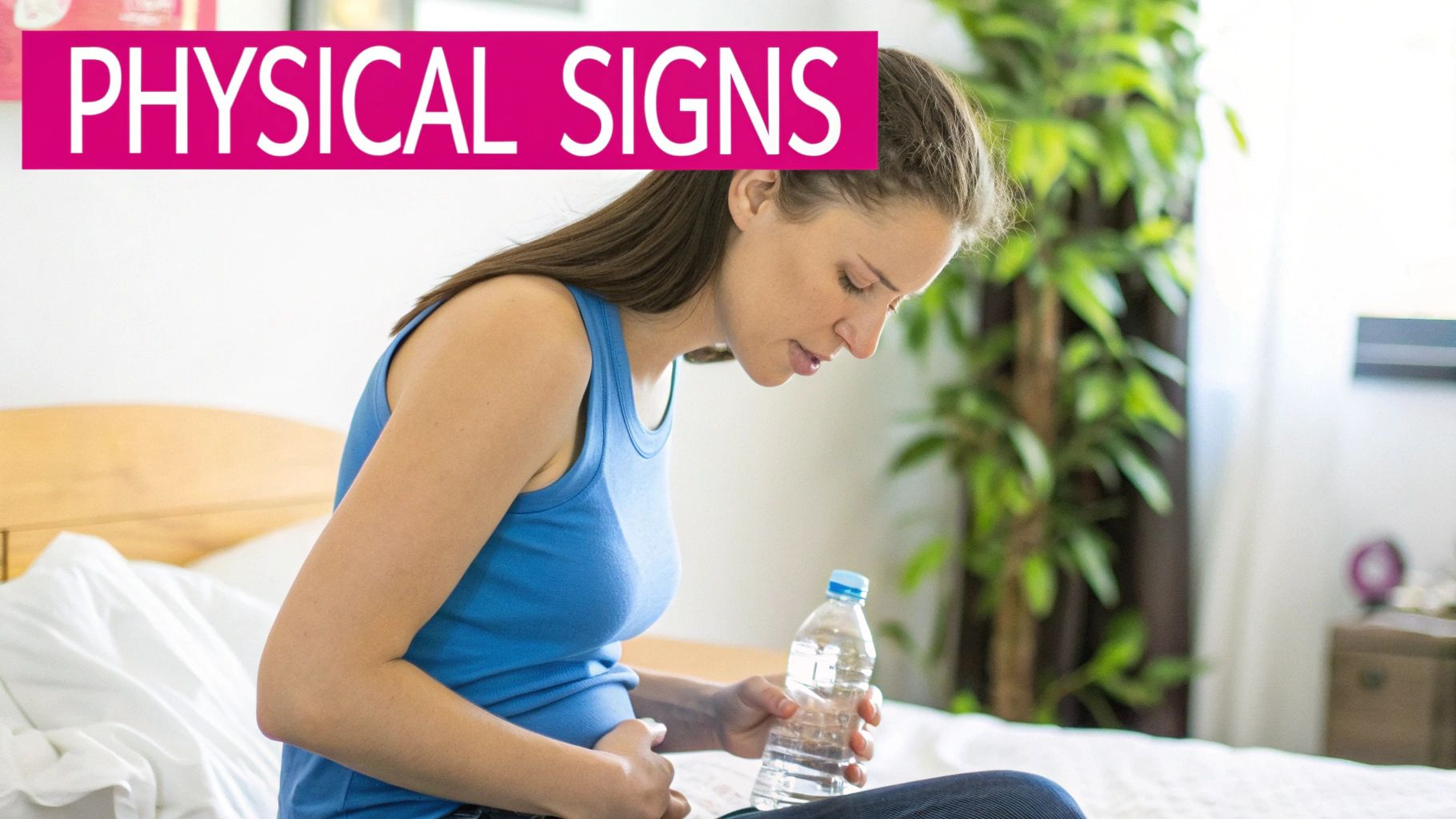
Alright, let's get practical. It’s one thing to know the definition of estrogen dominance, but it's another thing entirely to recognize the physical symptoms when they show up in your partner. How do you connect a medical term to what’s happening right in front of you?
Your role here isn't to play doctor. It's to be an observant, supportive partner. Think of yourself as a compassionate detective, noticing the little clues that might point to a bigger hormonal picture. It’s about seeing her experience for what it is and understanding that there could be a very real, physiological reason behind it.
Persistent Bloating And Digestive Issues
Have you noticed she seems uncomfortable after meals more often than not? Maybe she mentions feeling “puffy” or bloated, even on days when she’s eating clean. This isn't just a random complaint.
Estrogen has a major say in how the body handles fluid retention. When it’s out of balance with progesterone, the body can start holding onto excess water. This leads to that constant, frustrating feeling of being bloated. This is the kind of thing that can make her favorite pair of jeans feel miserably tight for no obvious reason.
Often, this bloating follows a pattern, getting worse at specific times in her cycle. You can learn to spot these trends by reading our guide on understanding bloating during ovulation, which can help you connect the dots between her symptoms and her cycle.
Unexplained Weight Gain
Another classic sign is weight gain that just won't budge, no matter what she tries. This often shows up around the hips, thighs, and midsection. She might be hitting the gym consistently and eating salads every day, yet feeling like she’s getting absolutely nowhere.
This isn’t about a lack of willpower. Estrogen dominance can actually signal fat cells in these areas to store more fat. It's an incredibly disheartening experience to put in so much effort without seeing any results, and your understanding can make all the difference.
When you see her struggling with this, the last thing she needs is diet advice. What she needs is empathy. Something as simple as, "I know how hard you're working, and that must be so frustrating," shows her you’re in her corner.
Heavy Periods And Breast Tenderness
This is a big one. Has she mentioned that her periods seem heavier or more painful than they used to be? Maybe she’s going through pads or tampons much faster or her cramps are debilitating. This can be a direct result of excess estrogen causing the uterine lining to grow thicker than it should.
Along the same lines, pay attention if she complains about her chest being extra sensitive or flinches when you go in for a hug. Breast tenderness is one of the most common physical estrogen dominance symptoms.
To help you connect the dots, here’s a quick reference table of common physical symptoms and what you might see in day to day life.
| Common Physical Symptoms and What They Look Like | |
|---|---|
| Symptom | What You Might Notice |
| Weight Gain | Frustration that diet and exercise aren't working. Clothes feeling tighter around the hips and stomach. |
| Bloating | Frequent complaints of feeling "puffy" or full. Discomfort after eating. |
| Breast Tenderness | Wincing during hugs. Mentioning that her bra feels uncomfortable or her chest is sore. |
| Heavy Periods | Needing to change period products more often. Mentioning severe cramps or large clots. |
| Headaches | An increase in migraines, especially right before her period starts. |
| Sleep Issues | Tossing and turning at night. Complaining about waking up frequently or feeling exhausted in the morning. |
Remember, these symptoms are often intertwined. Research confirms that symptom surveys consistently report breast fullness and tenderness right alongside irregular, heavy bleeding. These signs are also linked to a higher risk of developing estrogen responsive conditions like uterine fibroids, which affect 20–25% of women aged 35–50, and endometriosis.
Headaches and Sleep Problems
Is she suddenly dealing with more frequent headaches, especially migraines that seem to show up like clockwork around her period? Hormonal shifts are a massive trigger for headaches in many women, and an imbalance where estrogen is running the show can easily set one off.
At the same time, this hormonal seesaw can completely disrupt her sleep. Progesterone has a natural calming effect that helps promote rest. When it’s overshadowed by estrogen, she might find it nearly impossible to fall asleep or stay asleep, leaving her exhausted.
You might notice this as:
- Restless nights: Tossing and turning far more than usual.
- Waking up frequently: Complaining that she just can't sleep through the night.
- Daytime fatigue: Seeming completely drained and low on energy, even if she technically got a full night's sleep.
Simply noticing these physical signs is the first, most crucial step toward offering real support. It helps turn her experience from an invisible struggle into something you can both understand and tackle together.
Navigating The Emotional And Mental Symptoms Together
The physical side of estrogen dominance, the bloating, the weight gain, is often what gets noticed first. But the emotional and mental symptoms? That's a whole different ballgame. It can feel like you're walking on eggshells, trying to figure out why the emotional weather just changed from sunny to a full blown thunderstorm in a matter of minutes.
Let me be clear. This isn't her "being dramatic." It's pure biology. When estrogen runs the show without enough progesterone to balance it, her brain's chemistry gets thrown for a loop. Think of progesterone as the calm, steadying force and estrogen as the vibrant, sometimes volatile, energy. When that energy goes unchecked, you get turbulence. Getting this is your first step to turning a potentially frustrating situation into a moment of real connection.
The Mood Swings And Irritability
Have you seen it happen? One moment she's laughing, and the next, she’s deeply upset over something that seems incredibly minor to you. Or maybe it just feels like her fuse has gotten shorter and shorter lately. That's a textbook sign. This hormonal imbalance can make her far more sensitive to stress and strip away her ability to regulate her own emotional responses.
It's not about you. It's her brain chemistry reacting to signals that are completely out of whack.
When she seems on edge for no apparent reason, how you respond is everything. Instead of meeting her frustration with your own, you have a chance to be her anchor. This is a perfect time to work on how to be more emotionally available when she truly needs it.
Even a small tweak in your approach can change the whole dynamic.
- Instead of: "Why are you so upset about this?"
- Try: "I can see this is really frustrating you. I'm here if you want to talk it out."
That simple shift validates what she's feeling without forcing her to defend it. It tells her you're on her team.
Anxiety And Feeling Overwhelmed
Estrogen dominance can also dial up her anxiety to an 11. Progesterone naturally has a calming, almost sedative effect. Without enough of it to counteract estrogen's stimulating nature, her nervous system can feel like it's stuck in "high alert."
You might notice she’s worrying more than usual, overthinking small decisions, or just seems completely overwhelmed by a normal to do list. This isn't a flaw in her character. It's a physiological state that makes it incredibly difficult to feel calm and centered.
Your job isn't to fix her anxiety. It's to create an environment where she feels safe and supported. When she’s feeling swamped, small, thoughtful gestures can make a world of difference.
So what does that look like? It means taking something off her plate without having to be asked.
- Notice the dishes piling up? Just do them.
- See that she's stressed about what to make for dinner? Suggest ordering her favorite takeout.
- Ask the most powerful question you can: "What's one thing I can do right now to make your day a little easier?"
These actions speak louder than words. They show you see her, you see the struggle, and you're right there with her, ready to help carry the load.
That Frustrating Brain Fog
Does she ever stop mid sentence, completely blanking on what she was about to say? Or maybe she complains that her brain just feels "fuzzy" and slow. This is what we call brain fog, and it's one of the most disorienting estrogen dominance symptoms.
When estrogen levels are too high, they can interfere with cognitive function, messing with memory, focus, and overall mental clarity. It's incredibly frustrating for her, and it can make her feel like she’s not as sharp as she used to be. You might see her getting upset with herself for forgetting an appointment or misplacing her keys for the third time this week.
Here’s how you can be a rockstar partner through this:
- Be patient. If she loses her train of thought, just give her a second. Don't rush to finish her sentences for her.
- Be her backup. Help her remember things without making a big deal out of it. Use a shared calendar or leave a gentle sticky note reminder.
- Reassure her. Let her know it’s okay. A simple, "Don't worry about it, that happens to me too," can instantly diffuse her frustration and make her feel less alone.
By facing these emotional and mental challenges together with empathy and understanding, you’re not just helping her get through a tough hormonal patch. You're actively building a stronger, more resilient partnership.
Understanding What's Causing The Imbalance
So, you're starting to see the signs and connect the dots. The next question is obvious. Why is this happening? It’s tempting to think hormonal issues just appear out of thin air, but there are almost always specific triggers working behind the scenes.
Figuring out the root causes of estrogen dominance isn't about assigning blame. It's about gaining clarity so you can have a more supportive and productive conversation. Think of it like hearing a weird noise in your car. You don’t get mad at the car. You pop the hood to figure out what’s going on.
This knowledge gives you both a shared language. It helps you pinpoint areas where small, positive changes could make a world of difference.
The Big Three Drivers
Most of the time, that hormonal seesaw gets tipped by a combination of things, not just one isolated issue. Let's break down the three main categories that are usually at play.
- Lifestyle Factors: The daily grind can have a much bigger impact than we realize.
- Environmental Exposures: The world we live in is filled with sneaky hormone disruptors.
- Natural Body Changes: Her body is designed to change over time, and these shifts can naturally alter her hormonal balance.
By looking at these three areas, you can start to see how different puzzle pieces fit together to create the bigger picture of her hormonal health.
Lifestyle Factors: High Stress and Diet
Modern life is stressful. No surprise there. But chronic stress isn't just a state of mind. It's a physical reality. When she's constantly under pressure, her body churns out the stress hormone, cortisol. To make all that extra cortisol, the body often "steals" the building blocks it would normally use to make progesterone.
What's the result? Cortisol levels go up, and progesterone levels tank. This directly tilts the hormonal seesaw toward estrogen dominance. A demanding job, family pressures, or even just a chronic lack of downtime can kick this process into gear. This is a key reason why suggesting a relaxing evening or actively taking things off her plate is so much more than just a nice gesture.
Diet plays a huge part, too. A diet high in processed foods and sugar can put a heavy load on the liver, which is the body's primary filter for clearing out used up hormones. If the liver is overworked, it can't get rid of excess estrogen efficiently, leaving more of it circulating in her system.
On top of that, excess body fat can become a little estrogen factory of its own. Research shows that adipose (fat) tissue can actually produce its own estrogen, adding to the overall hormonal load. With obesity rates in many high income countries sitting around 30–40%, this has become a major contributor to the rise of estrogen related symptoms. Learn more about the science connecting body composition and estrogen production.
Environmental Exposures And Natural Changes
We are all exposed to chemicals called xenoestrogens every single day. These are compounds found in everyday items like plastics (think water bottles and food containers), pesticides, and even some household cleaning products. The tricky part is that they are shaped just enough like estrogen to fool the body's receptors.
So, while her body is making its own natural estrogen, these outside chemicals sneak in and add to the pile. This creates a surplus that her body wasn't designed to handle.
It’s not about trying to live in a sterile bubble. It's about being aware that the stuff we use daily can have a real hormonal impact. Small swaps, like using glass containers for leftovers instead of plastic, can collectively reduce this exposure over time.
Finally, there are the natural, inevitable shifts her body goes through. As a woman moves into her mid-30s and beyond, her progesterone levels naturally start to decline much more rapidly than her estrogen levels. This stage of life, known as perimenopause, is a prime time for estrogen dominance symptoms to pop up or get worse, simply because the hormonal balance is biologically shifting.
Understanding these causes transforms you from a confused bystander into an informed, proactive partner. It helps you see the full picture. That this isn't just happening to her, but that there are real, understandable reasons behind it.
How to Be Her Best Support System
Alright, you've got the background info. You have a better handle on the physical and emotional roller coaster she might be riding. Now, it's time to put that knowledge into action. This is your chance to step up and be the teammate she needs, turning your understanding of estrogen dominance symptoms into real, practical support.
This isn't about trying to "fix" her. It's about creating an environment where she feels seen, heard, and less alone in what she's going through. The small, consistent things you do can make an incredible difference, often turning a miserable day into a manageable one.
This timeline shows how the root causes of estrogen dominance can shift and pile up through different stages of a woman's life.
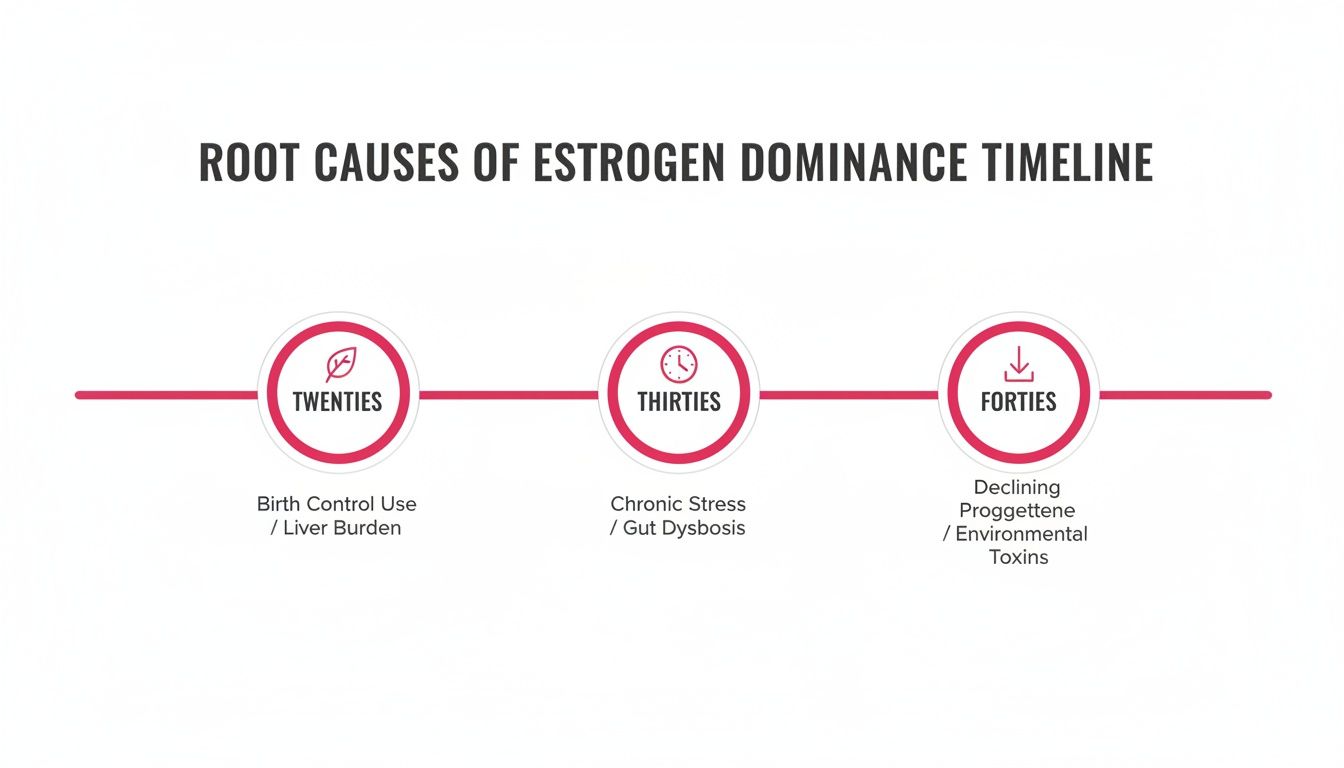
As you can see, things like environmental exposures in her twenties can compound with the natural hormonal shifts of her thirties and forties. That's why your support becomes even more crucial over time.
Master the Art of Listening
When she's venting about feeling bloated, exhausted, or just completely on edge, your first instinct might be to jump in with solutions. I get it. It comes from a good place. But honestly, it's often not what she needs in that moment. More than anything, she needs to feel heard.
Mastering the art of active listening is simple, but not always easy. Just listen. No problem solving. No "have you tried..." Just let her get it all out, and then validate what she’s feeling.
Keep a few of these game changing phrases in your back pocket:
- "That sounds incredibly frustrating."
- "I’m so sorry you’re dealing with that today."
- "Thank you for telling me what's going on."
These simple sentences show her you’re on her side without making her feel like a project you need to solve. They build connection and trust, which is far more powerful than any quick fix you could possibly suggest.
Be Proactive, Not Reactive
Here’s where you can really shine. Instead of waiting for her to hit a wall, you can start anticipating her needs before she even has to voice them. This is where an app like VibeCheck can be your secret weapon. By tracking her cycle together with an app designed for partners, you get a heads up on when her symptoms are most likely to flare up.
Imagine this: a quick glance at VibeCheck shows you she’s entering the part of her cycle where fatigue and headaches usually kick in. Armed with that insight, you can proactively adjust your plans.
Instead of suggesting a big night out, you can say, "Hey, how about we have a chill night in? I'll grab takeout from that place you love." You're not just being nice. You're being attuned to her specific needs right then and there. It shows a level of thoughtfulness that goes way beyond just reacting to problems as they happen.
Take Things Off Her Plate
When someone is feeling physically and emotionally drained, their to do list can feel like an unclimbable mountain. One of the most practical ways to show your support is to lighten her load, without her having to ask.
- Own the Grocery Run: Ask for a list of hormone friendly foods she wants to try (think leafy greens, healthy fats, and cruciferous veggies) and take care of the shopping.
- Create a Low Stress Zone: If you know she's had a rough day, take the initiative. Tidy up the living room, put on some calming music, or just handle dinner.
- Suggest a Gentle Activity: Instead of a high intensity workout, maybe a relaxed walk together is in order. It’s a great way to connect and get some gentle movement, which can genuinely help with hormonal balance.
These actions reduce her stress, which in turn helps her body manage its hormonal load. It's a tangible way of saying, "We're in this together."
Gently Suggest Professional Help
There might come a point where lifestyle support just isn't enough. If her symptoms are seriously impacting her quality of life, gently suggesting she talk to a healthcare professional is a loving and responsible next step.
Timing and tone are everything here. Wait for a calm moment, not in the middle of a conflict.
You could say something like, "I've noticed you've been dealing with so much lately, and it's tough to see you struggling. Have you ever thought about talking to a doctor about it? I’ll be right there with you for the appointment if you want."
This approach frames it as a team effort. It positions you as her supportive partner, not someone who thinks she’s broken. By being her rock through this process, you’re not just helping her manage her health. You’re building an unshakable foundation for your relationship.
Common Questions About Estrogen Dominance Symptoms
You've got the basics down, but it's natural to still have some questions buzzing around. Let's tackle a few of the most common ones to help you feel more confident and ready to be the supportive partner she needs. Think of this as your quick reference guide.
Can Men Experience Estrogen Dominance Too?
Absolutely. While we mostly talk about it in women's health, men can definitely experience estrogen dominance. It just looks a bit different in guys.
The signs usually show up as low libido, persistent fatigue, or even the development of excess breast tissue, a condition called gynecomastia. For men, it all comes down to the delicate ratio of estrogen to testosterone. Things like high body fat, chronic stress, or even exposure to certain environmental toxins can throw that balance out of whack.
Is Estrogen Dominance The Same As PMS?
That's a great question, and while they aren't the same thing, they are very closely related. Think of PMS (Premenstrual Syndrome) as the collection of symptoms that can pop up in the week or two before her period. Estrogen dominance symptoms can make that PMS feel like it's on steroids.
That underlying hormonal imbalance can take all the classic PMS issues—mood swings, bloating, breast tenderness—and amplify them. This makes them far more severe and difficult to manage. So, if it feels like her PMS has gotten dramatically worse out of nowhere, an underlying hormonal imbalance could be the real culprit.
Key Takeaway: Estrogen dominance is the underlying hormonal imbalance, while PMS is the collection of symptoms that this imbalance can intensify. They're connected, but not the same thing.
Can Diet And Lifestyle Really Make A Difference?
Yes, a huge one. And we're talking about more than just eating a few extra salads.
Certain foods, like cruciferous vegetables (think broccoli and cauliflower), contain compounds that actually help the liver process and clear out excess estrogen. On the flip side, a diet high in processed foods and sugar adds to the liver's workload, which means it has less capacity to manage hormones effectively.
Stress plays a massive role, too. Chronic stress pumps out the hormone cortisol, which directly interferes with progesterone production and throws the whole system off balance. Simple things you can do together, like taking evening walks or just making sure she has quiet time to decompress, can have a real physiological impact. Learning how to be a more emotionally available partner can be a powerful way to help lower her stress.
How Can We Know For Sure If This Is The Issue?
Ultimately, the only way to get a definitive answer is through a conversation with a healthcare provider. They can run specific hormone tests to get a clear picture of what's really going on.
Your role here isn't to play doctor, but to be an observant and supportive partner. If you're noticing a consistent pattern of estrogen dominance symptoms, you can gently bring it up. The goal is simply to encourage her to seek professional advice so she can get the clarity and support she deserves. You can even offer to go with her to the appointment.
Knowing her cycle can also provide powerful clues. Using a period tracker designed for men like VibeCheck can help you see these patterns and anticipate when her symptoms might be at their worst.
Ready to stop guessing and start connecting? VibeCheck gives you the science backed insights you need to understand her cycle and be the supportive partner she deserves.
Tags

Related Articles
Continue reading to deepen your understanding

How to Understand Your Girlfriend’s Social Battery and Hormones
Does your girlfriend suddenly cancel plans or seem withdrawn? This guide explains how her cycle impacts her energy so you can support her like a pro.

How Your Girlfriend’s Emotional Needs Change During Her Cycle
Does your girlfriend’s mood seem unpredictable? Learn how her emotional needs shift on a biological loop and how to support her through every phase of her cycle.

What to Buy When Your Girlfriend Has Hormone Cravings: A Support Guide
Stop wondering what to pick up at the store. This guide explains the science behind cycle cravings and provides a specific list of foods and comfort items she needs.

Your Girlfriend’s Mood Shifts Throughout the Month, Explained
Ever wonder why her energy and moods change so drastically each week? Understand the four hormonal phases and how to be the partner she needs during every stage of her cycle.

How to Support Your Girlfriend When She’s Crying Because of Hormones
Watching her cry when hormones hit can feel overwhelming. Learn the biological why behind the tears and use these proven scripts to provide the support she actually needs right now.

How to Help Your Girlfriend with Hormonal Mood Swings Without Arguing
Understand her cycle and learn tactical scripts to handle tension. This guide shows you how to support her through hormonal shifts without getting into unnecessary fights.

When to Feed Your Girlfriend: Understanding Hangry Hormones
Does your girlfriend get irritable when she hasn’t eaten? It’s not just in her head. Learn why hormones cause hanger and the specific times her body needs more fuel.

The Boyfriend’s Guide to Supporting Your Partner Through PMS
If your partner is suddenly irritable and exhausted, it’s biology, not you. Learn about the luteal phase and how to provide meaningful support without walking on eggshells.