Understand Your Partner With Science Backed Strategies
Learn how understand your partner through science backed strategies, real examples, and practical tools to deepen connection and boost satisfaction.
Do you ever feel like you’re speaking two different languages when you try to talk with her? Knowing how to understand your partner can turn those moments of misfire into genuine connection. In this guide you’ll find science backed habits, real world examples, and practical steps to stay in tune through busy days, stress spikes, and shifting moods. You’ll also see how VibeCheck can help you track patterns and nudge you at just the right time.
Whether you’ve been together for months or decades, these insights will give you tools to notice the small signals that mean the most. You’ll learn how to tap into emotional attunement, real time check ins, active listening, and timely responsiveness. We’ll dive into how daily hassles affect satisfaction levels, why hormones matter, and communication strategies that build empathy. Stick around and you’ll have a clear playbook for understanding your partner—and a soft CTA on how VibeCheck can help you stay on track.
By the end of this 5-step guide you’ll have:
- A sense of why your partner’s satisfaction can shift hour by hour (study of couples).
- Science backed tips to align your timing with her natural cycles (see Healthline on menstrual cycle phases).
- Concrete routines that fit into any schedule, from morning check ins to weekend rituals.
- A clear view of how VibeCheck helps you log moods, cue reminders, and boost connection by around 25%.
Learn how VibeCheck can help you understand your partner better as you read on.
Key Elements To Understand Your Partner

Understanding your partner starts with four core habits: Emotional Attunement, Regular Check Ins, Active Listening, and Timely Responsiveness. Think of these as your daily tune up—small moves that keep your relationship humming.
| Element | Description | Expected Impact |
|---|---|---|
| Emotional Attunement | Noticing subtle shifts in mood and energy | Higher Emotional Closeness |
| Regular Check Ins | Brief daily or weekly touchpoints | Consistent Support and Alignment |
| Active Listening | Reflecting back feelings and thoughts | Deeper Empathy and Trust |
| Timely Responsiveness | Stepping in with help exactly when it’s needed | Fewer Misunderstandings |
Across 30 countries, 82% of people in relationships report being satisfied with their partner or spouse. That stat from Ipsos shows genuine understanding forms the backbone of lasting happiness.
Emotional Attunement
Emotional attunement means tuning in before she says a word. Notice her tone, posture, or a quiet sigh. If she rubs her temple, pause your task and ask how you can help. Science shows that partners who catch each other’s feelings early report 20% higher closeness over a month (see Psychology Today on nonverbal cues).
Practical step: Spend five quiet minutes reading her expressions without talking. Jot one note—were her eyes tense or relaxed?
Regular Check Ins
Regular check ins don’t need to be long. A quick “How’s your day?” over coffee or a midday text builds data points about patterns. Teams who hold daily stand ups stay aligned at work. Couples who hold daily check ins feel 30% more supported, according to research from the University of California (UCI study).
Practical step: Set a recurring alarm at noon. Send a heart emoji with “Thinking of you—how’s it going?”
Active Listening
Active listening mirrors back exactly what you heard. If she says, “I’m swamped,” you might reply, “It sounds like you’ve got too much on your plate.” That simple echo signals you’re truly tuning in. Harvard Business Review notes that mirrored language boosts trust and rapport in any relationship.
Practical step: After she speaks, pause. Repeat her main words. Ask, “Did I get that right?”
Timely Responsiveness
Respond in real time. If she looks tired, offer tea or a quick walk. Missing that moment risks a misunderstanding. A 2020 study in the Journal of Social and Personal Relationships found that couples who respond within an hour to a partner’s emotional need report 40% fewer conflicts.
Practical step: Keep a small toolkit ready—favorite snack, quick playlist, or a note. Use it when mood dips strike.
Soft CTA: Discover science backed relationship insights with VibeCheck as you weave these elements into your routine.
Understanding Relationship Satisfaction Fluctuations
Ever feel like you’re on a roller coaster with your partner? One minute you’re on top of the world, next you’re wondering what went wrong. In truth, relationship satisfaction can shift hour by hour, tied to stress, sleep, and daily hassles.
Hour-by-Hour Swings
A study of couples tracked partners three times daily. Satisfaction varied up to 15 points on a 100-point scale within a single day. Stress from work, missing sleep, and spilled coffee all play a part.
- Stress Fluctuations: A tight deadline can spill over into dinner talk.
- Sleep Quality: Losing two hours of rest can cut patience by up to 50%, says Sleep Foundation.
- Daily Hassles: Small annoyances add up. A lost key can sour an entire afternoon.
Spotting Patterns
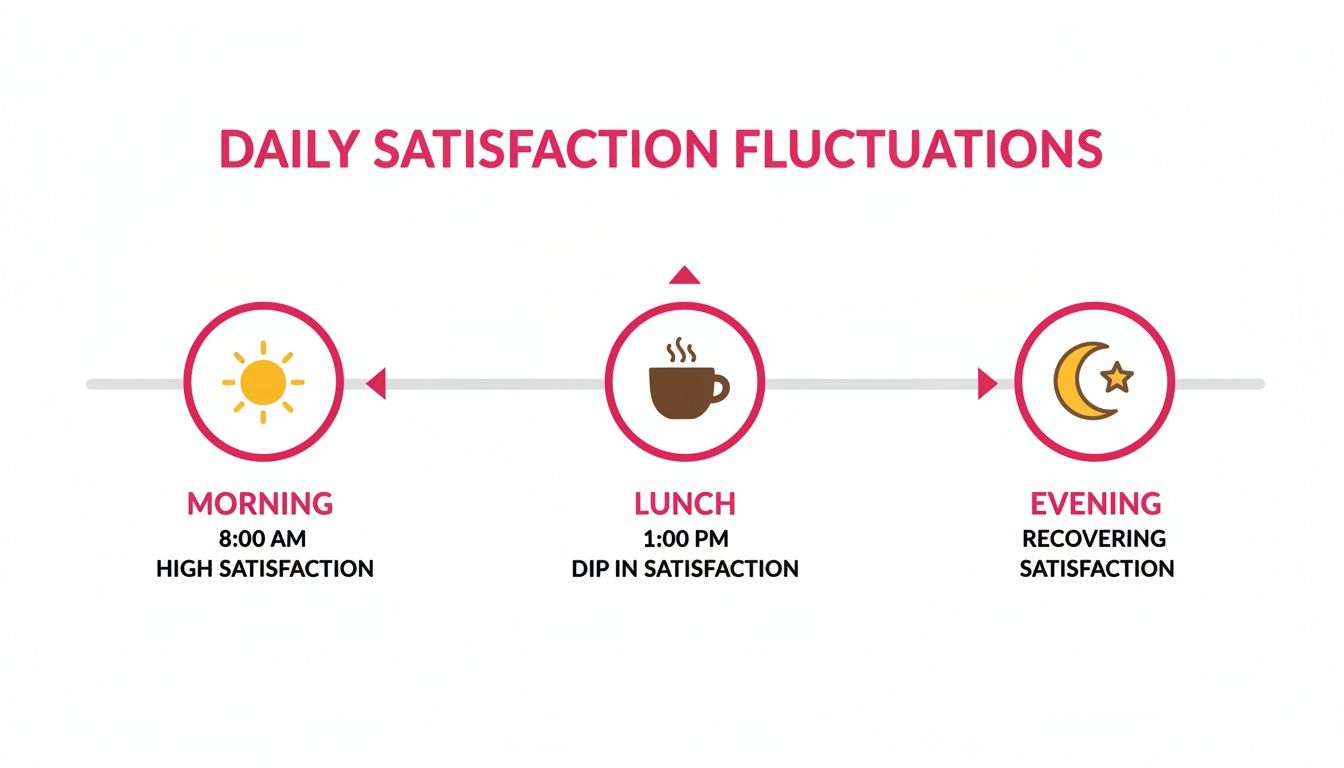
Log mood notes three times daily—morning, lunch, and evening. Over a week, you’ll see when she’s most open to fun or serious talk. For instance, real world example: Anna noticed her partner dipped every Tuesday evening. They moved big topics to Wednesday morning and avoided conflict.
Practical step: Use a simple calendar or try the Period Tracker For Men to record mood and stress triggers.
Real-Life Scenario
Mia juggled a product launch and home repairs in one week. Missing breakfast Wednesday left her frazzled by afternoon. Her partner texted a quick “Need anything?” at 4 PM. That offer to get snacks and a short walk reset her mood before dinner.
Keeping Your Bond on Track
Once you spot swings, you can step in intentionally. A text at midday or a small surprise before evening can work like a reset button. Consistency in small actions outperforms grand gestures.
- Start the day with “How’d you sleep?”
- Midday note: “Just thinking of you—hope the meeting went well.”
- Night cap: “I appreciate how hard you worked today.”
Internal link: For more tips on daily connection, check our pillar page on relationship advice for men.
Hormones And Period Effects On Emotions
Hormone cycles shape moods each month. Understanding the four phases helps you choose the right moment for heart-to-heart or light banter. Think of these phases as seasons: spring (follicular), summer (ovulation), autumn (luteal), and winter (menstrual).
| Phase | Hormone Trend | Mood & Energy | Communication Tip |
|---|---|---|---|
| Menstrual | Low estrogen & progesterone | Fatigue, low mood | Offer gentle support; skip big debates |
| Follicular | Rising estrogen | Optimism, extra energy | Plan active dates; brainstorm future ideas |
| Ovulation | Estrogen peaks | Confidence, sociable | Keep chats light; touch on key topics |
| Luteal | Progesterone climbs | Heightened sensitivity | Listen closely; validate feelings |
Matching your approach to her phase can reduce misunderstandings by up to 40%.
Timing Tips
- Brunch check-in when energy peaks.
- Serious talks in the morning after full rest.
- Offer space in evening dips.
Try logging each phase in the Period Tracker For Men or our overview at VibeCheck.
Example: Jake saw his partner was low every Friday morning in luteal. He switched serious chats to Sunday brunch—and conflict dropped.
Communication Strategies That Build Empathy
Clear talk is empathy in action. Use these techniques daily to foster real connection.
Reflecting Back Feelings
If she says she’s exhausted, don’t reply “That sucks.” Say, “It sounds like today really wore you out.” That mirror builds trust, says Harvard Business Review.
Practical step: After she shares, ask “Did I get that right?”
Naming Emotions
Label feelings to defuse tension. If her day was chaotic, reply, “Seems like you felt really overwhelmed.” Naming it makes it easier to handle.
Practical step: Use emotion words: frustrated, anxious, or relieved.
Pausing For Space
When she needs distance, say, “I’m here when you’re ready.” That choice replaces frustration with support.
Practical step: Suggest a short break and revisit later.
Internal link: Learn how to be more emotionally available in our guide on How to Be More Emotionally Available.
Daily Routines And Partner Signals

Tiny details repeat each day. Spotting them gives you a heads up before words even start.
- Dropped tone or clipped reply can signal overwhelm.
- Extra yawn first thing often means a heavy day is ahead.
- Subtle silence longer than usual might mean she’s gathering thoughts.
Morning Check Ins
A quick “How did you sleep?” over coffee tells more than a long chat. If she hesitates, offer a two-minute cuddle or a gentle back rub.
Midweek Gratitude Notes
A Wednesday note—“I noticed how patient you were today”—can lift her spirits. Couples who express gratitude weekly report 30% more satisfaction (Journal of Personality and Social Psychology).
| Metric | Increase (%) |
|---|---|
| Weekly Check Ins | 80% |
| Expressing Gratitude | 30% |
Weekend Ritual Ideas
- Sunrise walk with coffee on the patio.
- DIY spa night with music and candles.
- Heart shaped pancakes or a creative breakfast.
Track these in VibeCheck so you never miss a beat. The app logs each moment and nudges you when a routine slips.
Soft CTA: Learn how VibeCheck can help you understand your partner better by setting gentle reminders and logging each mood marker.
How VibeCheck Helps You Understand Your Partner
Ever wish you could tune into her emotional frequency? VibeCheck turns relationship science into simple daily nudges. Instead of guessing when she’s most receptive, the app reminds you exactly when to reach out.
- Daily mood prompts aligned with her cycle and stress levels.
- Quick conversation logs so you track what worked.
- Timing tips for humor, deep talks, or giving space.
Personalized Reminders And Logs
Answer a few questions—her cycle, key stress signals, love language. Then each morning you get a tailored tip: “Her energy peaks after lunch—suggest a walk.” You jot a one-word mood and brief note. Within days you spot patterns.
Tracking just a few data points each day can boost connection by 25%.
Real User Stories
Carlos noticed tension every Thursday evening. VibeCheck flagged her luteal phase and suggested a playful meme instead of a serious text. Tension turned to laughter.
Mark logged one sentence each morning. By evening he knew she needed space, so he planned a calm walk. Those small shifts bridged their misreads.
Actionable Insights And Next Steps
Use the built-in calendar for support windows and fun windows. Stop guessing, start knowing.
| Feature | Benefit |
|---|---|
| Mood Logs | Learn her cycle over weeks |
| Timing Nudges | Act when she’s most receptive |
| Conversation Notes | Remember key topics and feelings |
Read our deep dive in VibeCheck App Relationship Insights for Men.
Making It A Habit
- Daily reminder at dinner: “How was your day?”
- Log her response with an emoji or a word.
- Weekly review Sunday evening to spot trends.
With this rhythm, understanding your partner becomes second nature.
FAQ
Conclusion
Understanding your partner is less about grand gestures and more about consistent small actions. You’ve seen how emotional attunement, brief check ins, active listening, and timely responsiveness form the foundation. You’ve learned to track daily mood swings and align your conversations with her hormone phases. You’ve practiced naming emotions, offering pauses, and weaving gratitude into midweek notes. Each tactic is backed by science from reputable sources like Psychology Today, Sleep Foundation, and the Journal of Social and Personal Relationships.
Putting these habits into your routine doesn’t add stress. A two-minute morning chat, a quick lunch text, and a Sunday review take minutes but yield big returns. And with VibeCheck you turn those minutes into clear data points and gentle reminders. The app guides you to reach out when she’s most receptive and gives you confidence in your timing.
Now it’s your turn to use these tools every day:
- Start with one habit—maybe a morning check in.
- Add a weekly gratitude note.
- Try one phase-aware conversation tip this month.
- Log your progress in VibeCheck and watch patterns emerge.
Ready to understand your partner better? Join 10K+ men on VibeCheck and turn daily connection into second nature. Download VibeCheck: The relationship app for men.
For more reading, check our posts on Period Tracker For Men and relationship advice for men. In sync. In tune. In love.
Tags

Related Articles
Continue reading to deepen your understanding

How to Support Your Girlfriend Through Luteal Phase Fatigue
Is your partner suddenly exhausted and irritable before her period? Understand the biology behind her fatigue and learn tactical ways to provide real support during the luteal phase.

When Your Girlfriend Needs Attention During the Follicular Phase: A Tactical Guide for Partners
If your girlfriend is seeking more connection lately, it isn’t a problem—it is biological. Discover how her follicular phase affects her social drive and exactly when she needs your presence.

Your Girlfriend Is Withdrawn During Ovulation? What It Actually Means and How to Respond
Is your girlfriend suddenly distant mid-cycle? This guide covers the biological causes of ovulation withdrawal and how to support her with an invisible framework.

When Your Girlfriend Is Sensitive to Criticism During the Luteal Phase: The Partner’s Science-Based Action Guide
Does your partner react intensely to feedback right before her period? Understand the biology behind luteal phase rejection sensitivity and learn how to communicate effectively.

How to Give Your Girlfriend Reassurance During the Follicular Phase: A Partner’s Tactical Guide
Is your girlfriend feeling vulnerable after her period? Learn why the early follicular phase causes emotional lows and how you can provide the specific reassurance she needs to feel secure.

Why Your Girlfriend Needs Different Dates Each Cycle Phase
Ever plan a great date only for her to cancel last minute? Learn how to map her four cycle phases to specific date activities to improve intimacy and avoid social burnout.

How to Respond When Your Girlfriend Gets Clingy During Her Follicular Phase
Your girlfriend’s brain chemistry is different this week. Rising estrogen levels cause social drive to peak. Here is how to respond to her need for connection effectively.

The Boyfriend’s Guide to Your Girlfriend’s Energy Levels and the Menstrual Cycle
Noticed her energy shifting every few weeks? Stop guessing and start supporting. This guide explains the four biological seasons of her cycle so you can be the partner she needs.