VibeCheq Tactical Relationship Intelligence for Partners
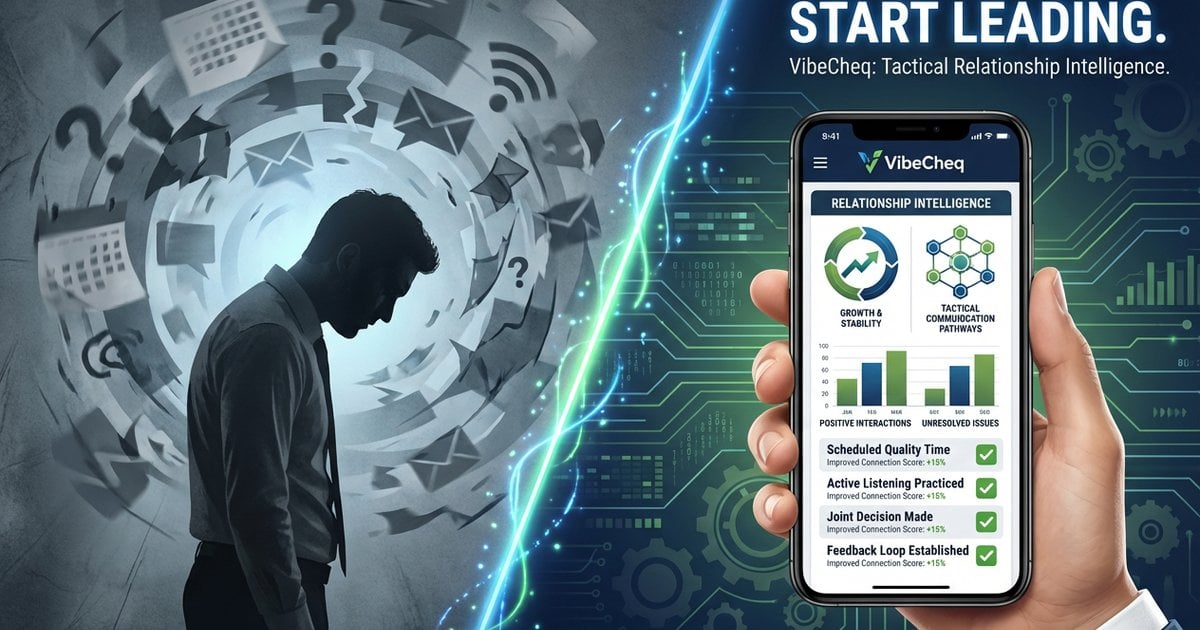
Stop walking on eggshells. VibeCheq translates hormonal cycles into tactical relationship intelligence to reduce conflict. Improve your connection and lead today.
VibeCheq: The Tactical Relationship Intelligence Tool Modern Partners Need
Most men operate their relationships on hard mode without even realizing it. You're navigating invisible forces, reacting to emotional shifts you don't understand, and wondering why the same approach that worked last week bombs spectacularly this week. The biological reality is simple: your partner's hormonal cycle creates predictable patterns that influence mood, energy, communication style, and what she needs from you. VibeCheq translates these complex biological rhythms into a tactical playbook so you can stop guessing and start leading.
Table of Contents
- The Silent Relationship Killer: Why Biology Matters More Than You Think
- The Man's Guide to the Menstrual Cycle
- VibeCheq vs. The Competition: What Sets It Apart
- The Privacy Pillar: How VibeCheq Protects What Matters
- The Translator Angle: From Raw Data to Real Action
- Why Traditional Trackers Fail Men
- Real-World Applications: VibeCheq in Action
- Who Should Use VibeCheq
- FAQ
The Silent Relationship Killer: Why Biology Matters More Than You Think
VibeCheq addresses the fundamental disconnect between her biological reality and your awareness of it, transforming invisible hormonal shifts into specific actions that reduce conflict and deepen connection. No more walking on eggshells or wondering what changed.
Here's what most relationship advice gets wrong: it treats emotional patterns as random events. She's distant on Tuesday, warm on Friday, needs space on Sunday. Without context, you're left spinning, analyzing every text, wondering if you did something wrong. You didn't. What changed was her hormonal environment.
The average menstrual cycle runs 28 days and involves dramatic shifts in estrogen, progesterone, testosterone, and cortisol. During the follicular phase, estrogen climbs and she's energized, adventurous, socially engaged. Two weeks later in the luteal phase, progesterone dominates and her nervous system craves safety, predictability, rest. Same person, completely different neurochemical reality.
This isn't pseudoscience or relationship hacks. This is endocrinology. Research from the National Institutes of Health shows that estrogen directly affects serotonin receptor activity, which influences mood regulation. Progesterone impacts GABA receptors, which control stress response. These aren't subtle effects; they're foundational shifts in how her brain processes the world.
The tragedy is that most men operate completely blind to these patterns. You treat every day the same, apply generic relationship advice, and wonder why your batting average is so inconsistent. You're playing a game with shifting rules but nobody gave you the rulebook. Understanding these cycle dynamics isn't just helpful, it's the foundation of effective partnership support.
VibeCheq solves this by making the invisible visible. Instead of generic calendar dates, you get specific intelligence: "She's in Day 21 of her luteal phase. Energy is lower, stress sensitivity is higher, her nervous system needs grounding. Mission: Take the lead on dinner decisions and minimize scheduling chaos." That's not tracking her; that's understanding the environment and adapting your leadership accordingly.
The Man's Guide to the Menstrual Cycle
The menstrual cycle consists of four distinct phases, each requiring different support strategies. Master these phases and you'll transform from reactive partner to tactical leader who knows exactly what's needed before she asks.
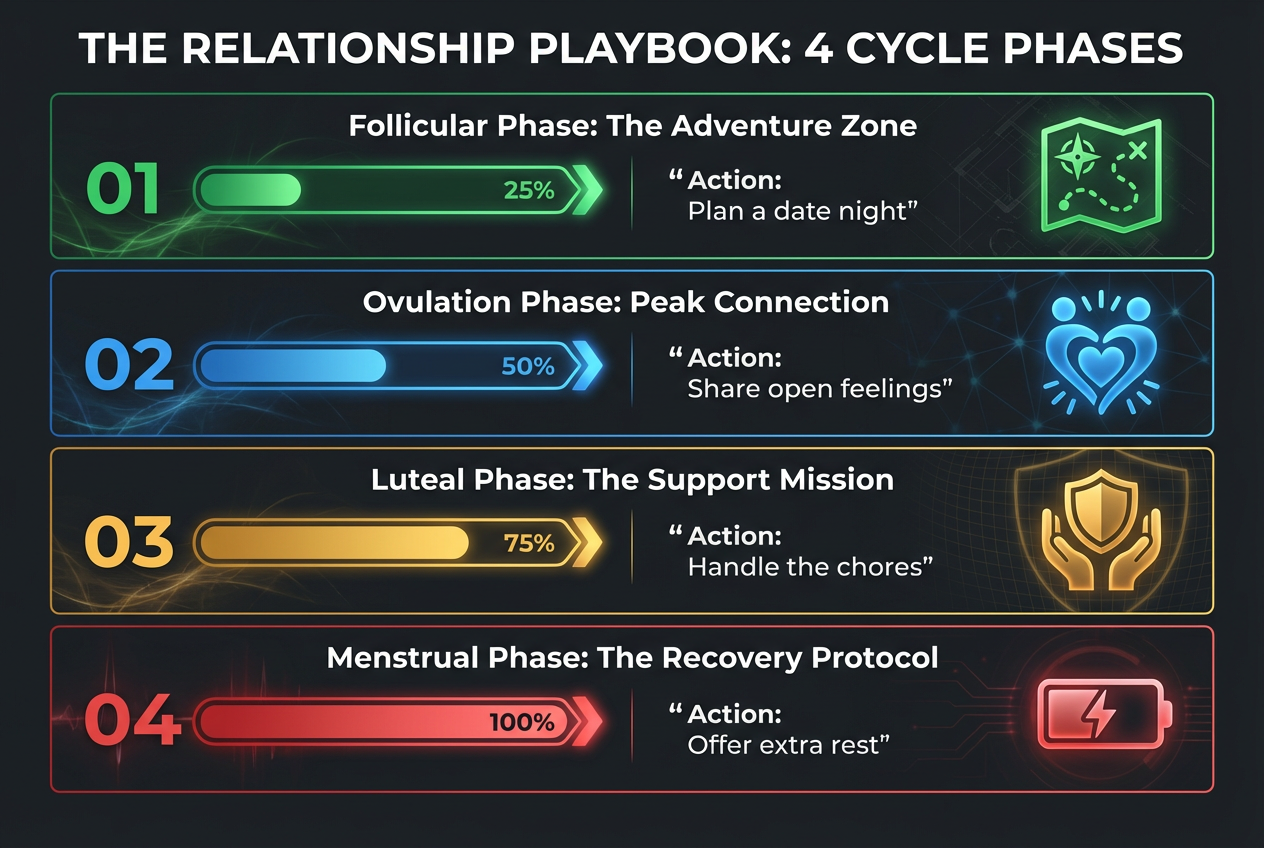
Transform biological data into a tactical relationship playbook. This guide outlines how to adapt your support and leadership based on your partner's current cycle phase.
Follicular Phase: The Adventure Zone (Days 1-13)
Estrogen rises steadily during this phase, bringing increased energy, optimism, and social engagement. Her brain is primed for novelty, learning, and connection. Dopamine sensitivity is higher, making new experiences more rewarding.
Your mission: Plan the adventures she'll remember. This is your window for trying that new restaurant, planning weekend trips, having deeper conversations about future goals. Her capacity for spontaneity is higher, decision-making feels easier, and social activities energize rather than drain.
Practically speaking: suggest the hiking trail you've been talking about, book tickets to that show, initiate conversations about relationship goals or household improvements. Her executive function is operating at peak capacity, making this the ideal time for collaborative planning and problem-solving.
What doesn't work: treating this phase like every other week and defaulting to routine. You're wasting her highest-energy window. She wants engagement, not Netflix autopilot.
Ovulation Phase: The Peak Connection (Days 14-16)
This narrow three-day window marks peak fertility, highest estrogen levels, and maximum confidence. Testosterone also spikes, increasing assertiveness and sex drive. Her communication style becomes more direct, her social confidence peaks, and she radiates the energy that probably attracted you in the first place.
Your mission: Match her energy and lean into connection. This isn't the time to go quiet or pull back because she seems fine without you. She's operating at full capacity and wants you engaged at that level.
Practically speaking: prioritize quality time, be fully present during conversations, match her initiative around intimacy, plan something that requires collaboration rather than passive consumption. Notice her confidence and reflect it back; recognition matters during this phase.
What doesn't work: being passive, distracted, or treating her peak energy as a signal that she doesn't need you. She doesn't need rescuing during ovulation, but she does want partnership at the highest level.
Luteal Phase: The Support Mission (Days 17-28)
Progesterone takes over after ovulation, fundamentally shifting her nervous system toward conservation mode. Think of this as her body preparing for potential pregnancy, whether or not that's the goal. Energy decreases, stress sensitivity increases, and her bandwidth for chaos drops significantly.
Your mission: Reduce her cognitive load and take leadership on logistics. This is where most relationships experience friction because men don't recognize the shift. What worked last week (suggesting five restaurant options, proposing spontaneous plans) now feels overwhelming rather than fun.
Practically speaking: make decisions without requiring her input, handle household tasks proactively, minimize last-minute changes, create predictable routines. If you normally ask "What do you want for dinner?" switch to "I'm ordering from that Thai place you like, want your usual?" Remove the decision-making burden.
Her brain during this phase is scanning for threats and inefficiencies. Anything that creates extra work, requires additional decisions, or introduces uncertainty will trigger stress. Your job is to be the stabilizing force. Learning tactical support strategies for the luteal phase prevents most relationship conflicts.
What doesn't work: treating emotional sensitivity as random moodiness, continuing to operate in high-stimulation mode, requiring her to make decisions about things you could handle yourself.
Menstrual Phase: The Recovery Protocol (Days 1-6)
Hormone levels drop to their lowest point, triggering the shedding of the uterine lining. This isn't just an inconvenience; it's a significant physical process that requires energy and resources. Fatigue is real, pain is common, and her body is literally in recovery mode.
Your mission: Create the conditions for rest and recovery. This is your time to be the quiet leader who handles everything without fanfare or expectation of recognition.
Practically speaking: take over household management completely, bring comfort items without being asked (heating pad, favorite snacks, pain relief), eliminate any activities that require her performance or presence unless absolutely necessary. If she wants solitude, provide it. If she wants company, be present without requiring her to entertain you.
The biggest mistake men make during this phase is taking her low energy personally or treating pain as exaggeration. Dysmenorrhea (period pain) affects roughly 80% of menstruating people at some point, with 10-20% experiencing severe pain. This isn't performance; it's biology.
What doesn't work: expecting normal social engagement, planning activities that require physical energy, minimizing her experience, or making her pain about your inconvenience.
VibeCheq vs. The Competition: What Sets It Apart
VibeCheq translates biology into specific missions while competitors provide raw data or mystical interpretations. If you want actionable intelligence rather than passive information, this comparison shows why most apps fail the tactical test.
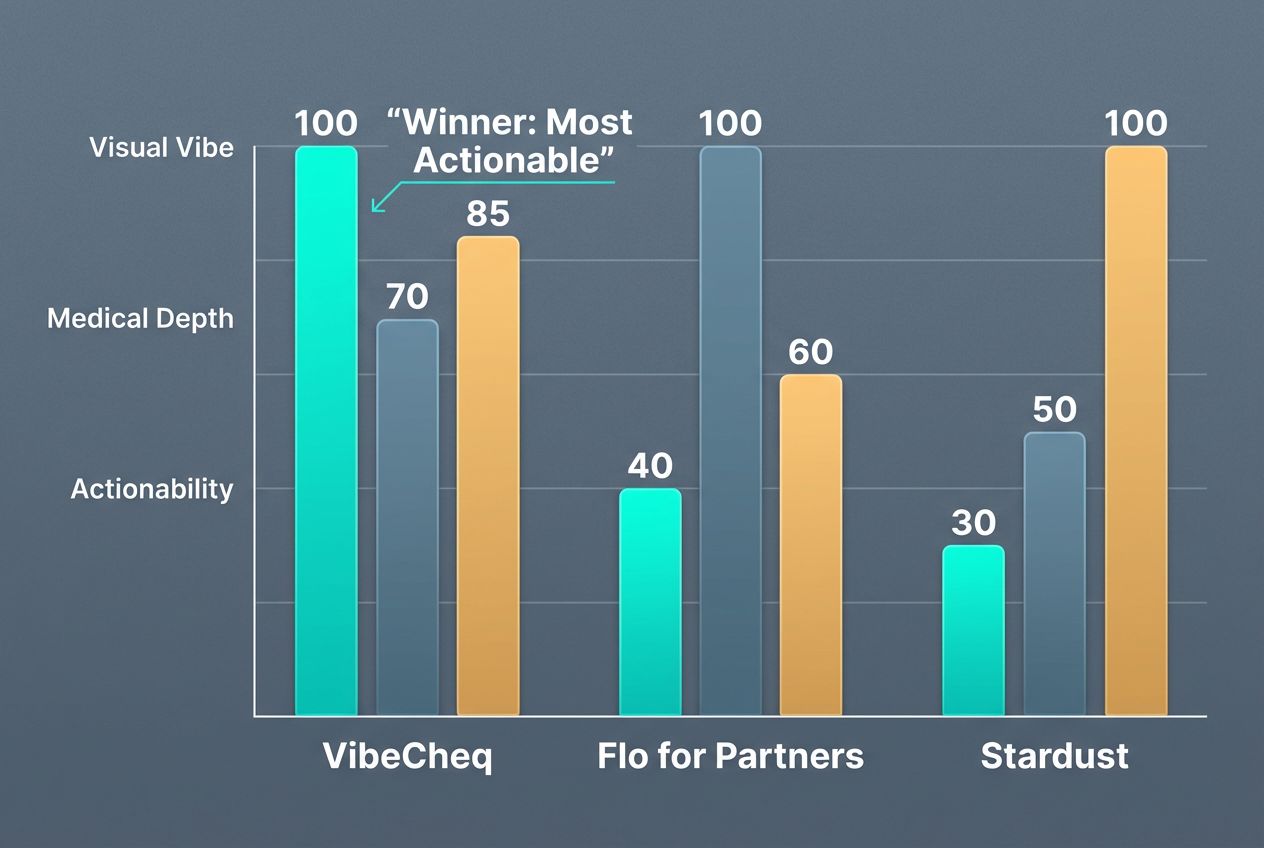
While other apps provide clinical data or mystical vibes, VibeCheq leads the market in providing actionable relationship 'missions' that tell you exactly what to do.
The Competitive Landscape
Flo for Partners dominates the medical credibility space. It's built on a massive database, offers extensive symptom tracking, and provides educational content that's genuinely useful. For women tracking their own cycles, it's exceptional. For partners trying to figure out what to actually do with the information, it falls short.
The problem with Flo from a male perspective is that it's designed for clinical accuracy, not tactical application. You'll know she's in her luteal phase. You'll see charts showing hormone levels. What you won't get is "Order takeout tonight and cancel those evening plans you were about to suggest."
Stardust takes the opposite approach, leaning heavily into astrology and aesthetic design. The app is beautiful, viral on social media, and appeals to partners who connect with mystical frameworks. If you and your partner share that worldview, the integration of cycle tracking with astrological insights can feel meaningful.
The limitation is polarization. Not everyone believes in astrology, and if you're looking for evidence-based biological understanding, Stardust's approach won't resonate. It also lacks the granular daily action items that actually change relationship dynamics.
DuoSync keeps things simple with shared calendar notifications and basic phase tracking. It solves the fundamental problem of "never forgetting when her period is coming" but doesn't go deeper into the strategic implications of each phase.
Paired focuses on broader relationship health through communication exercises, daily questions, and connection-building activities. It's excellent for what it does, but cycle tracking is just one feature among many rather than the core intelligence system.
Where VibeCheq Differentiates
VibeCheq operates as a Biological Intelligence Tool rather than just a tracker. The core innovation is translation: taking complex endocrinology and converting it into specific relationship missions you can execute today.
Here's what that looks like in practice. Instead of "Day 23, Luteal Phase" you get "Her progesterone is peaking and stress sensitivity is high. Mission: Lead with decisiveness today. Handle dinner planning, minimize asks, and create predictable evening routine." That's the difference between information and intelligence.
The app doesn't just tell you what's happening biologically; it tells you what to say, what to avoid, what activities to suggest, and what leadership style will work best. It's the relationship cheat code you didn't know existed.
Privacy is handled seriously. Unlike free apps that monetize your data, VibeCheq uses encrypted storage and doesn't sell information to third parties. Given the sensitivity of cycle data, this isn't a minor feature; it's foundational to trust.
The interface is designed for daily use by people who don't want to become endocrinology experts. Clean dashboard, specific missions, and just enough education to understand the why without drowning in medical terminology.
Three-Way Comparison
| Feature | VibeCheq | Flo for Partners | Stardust |
|---|---|---|---|
| Actionable Missions | Daily specific tasks | Generic tips | Astrology-based guidance |
| Medical Accuracy | Science-backed phases | Clinical-grade tracking | Minimal medical focus |
| Privacy Focus | Encrypted, no data sales | Strong privacy policy | Standard app privacy |
| Learning Curve | Minimal, ready to use | Moderate, medical terms | Low, aesthetic focus |
| Relationship Focus | Core feature | Secondary to tracking | Integrated with mysticism |
| Best For | Men wanting tactical playbook | Medical symptom tracking | Astrology-oriented couples |
The fundamental question is: do you want to understand her cycle academically, or do you want to know what to do about it? If the answer is tactical application, VibeCheq is built for that exact purpose. For partners seeking alternatives to clinical trackers, the shift toward actionable intelligence makes the difference.
The Privacy Pillar: How VibeCheq Protects What Matters
VibeCheq treats cycle data as sacred relationship intelligence, using end-to-end encryption and zero third-party data sharing. Your partner's biological information never becomes a product for advertisers or data brokers.
Let's address the uncomfortable truth: free period tracking apps have historically monetized intimate health data. When you're not paying for the product, you are the product. Cycle data, symptom logs, and intimate health information get packaged and sold to pharmaceutical companies, insurance providers, and data aggregators.
This isn't conspiracy theory. In 2019, Privacy International exposed how multiple period tracking apps shared data with Facebook, including information about when users were trying to conceive or experiencing symptoms. The implications for insurance, employment, and advertising targeting were massive.
VibeCheq operates on a different model entirely. The app uses client-side encryption, meaning data is encrypted on your device before it ever reaches servers. Even VibeCheq's own infrastructure can't access the raw cycle data without your explicit decryption.
No third-party analytics packages. No advertising partners. No data brokers. The business model is straightforward: you pay for the app, you own your data, and the relationship is transparent.
For couples, this matters doubly. You're not just protecting her data; you're protecting the trust foundation of using this tool together. If she discovers that intimate health information is being harvested and sold, the entire premise of collaborative cycle awareness collapses.
The app also includes granular permission controls. She decides what information you see, what gets shared, and what remains private. The goal isn't surveillance; it's synchronized support. Understanding these privacy standards helps partners approach cycle tracking as collaborative wellness rather than monitoring.
Data portability is guaranteed. If you decide to leave VibeCheq, you can export all your data in standard formats. No lock-in, no hostage-taking, no artificial barriers to moving your information elsewhere.
The privacy policy is written in plain language rather than legal obfuscation. You can actually read and understand what happens to data, how long it's stored, and under what circumstances it might be accessed (spoiler: essentially never, unless legally compelled with proper warrant).
For men nervous about the optics of "tracking" a partner's cycle, this privacy architecture provides reassurance. You're not monitoring her; you're being granted access to intelligence that helps you support better. The power dynamic stays where it belongs: with her controlling what information flows and how it's used.
The Translator Angle: From Raw Data to Real Action
VibeCheq converts abstract hormonal shifts into concrete relationship missions, bridging the gap between knowing her cycle phase and knowing what to actually do about it. This translation layer is what separates passive tracking from active partnership.
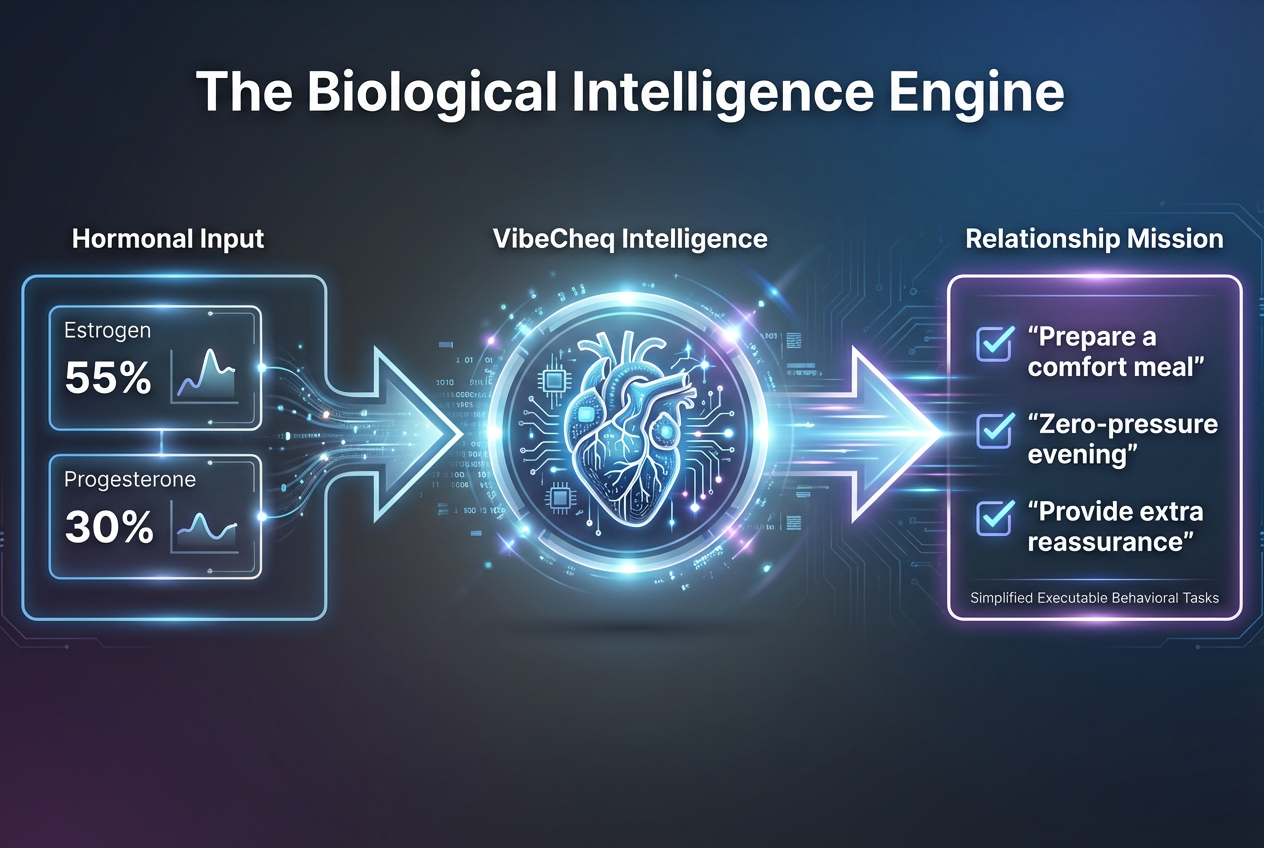
VibeCheq acts as a 'translator' for your relationship, taking complex hormonal shifts and turning them into clear, simple missions that help you support your partner effectively.
Most cycle education stops at explanation. You learn that estrogen peaks during ovulation, progesterone dominates the luteal phase, and both crash during menstruation. Great. Now what?
The translator function is where VibeCheq delivers its core value. The app takes real-time hormonal context and outputs specific behavioral guidance. Not theory, not general tips, but today's mission.
Here's what that looks like across a full cycle:
Day 8 (Follicular Phase): "Estrogen climbing, dopamine sensitivity high, social energy increasing. Mission: Suggest that weekend trip you've been considering. Her capacity for adventure and spontaneity is at monthly peak. Avoid: routine-heavy activities that waste this high-energy window."
Day 14 (Ovulation): "Peak estrogen, confidence maximized, communication direct. Mission: Match her energy with full presence. This is your window for important conversations and deep connection. Avoid: being passive or distracted; she wants engagement at her level."
Day 22 (Luteal Phase): "Progesterone dominant, stress sensitivity elevated, bandwidth for chaos limited. Mission: Take ownership of dinner decisions and evening logistics. Minimize asks and last-minute changes. Avoid: requiring her input on things you can handle independently."
Day 2 (Menstrual Phase): "Hormones at lowest point, physical recovery active, energy conservation necessary. Mission: Handle household management without fanfare. Bring heating pad, favorite snacks, eliminate any activities requiring her performance. Avoid: expecting normal social engagement or minimizing her physical experience."
The intelligence isn't just about what to do; it's about what to avoid. During the follicular phase, suggesting a quiet night in every evening wastes her peak energy. During the luteal phase, proposing five restaurant options and asking her to choose creates decision fatigue.
VibeCheq also adapts based on individual patterns. After tracking a few cycles, the app learns her specific tendencies. Does she experience severe cramping on Day 1 or Day 3? Does her luteal phase sensitivity peak on Day 21 or Day 24? The more data, the more precise the missions become.
This personalization separates generic advice from tactical intelligence. Every woman's cycle is different in timing, symptom severity, and emotional impact. Cookie-cutter recommendations fail because they ignore individual variation. Learning these personalized patterns transforms how effectively you can provide support.
The translation extends to communication style. During the follicular phase, direct problem-solving often works well. During the luteal phase, emotional validation before solutions becomes more important. It's not that she's being illogical; her nervous system is processing differently based on neurochemical environment.
Understanding this removes the frustration of "why won't she just tell me what she needs?" Often she doesn't consciously know what she needs because the hormonal shift is happening below awareness. VibeCheq provides the pattern recognition that makes implicit needs explicit.
Why Traditional Trackers Fail Men
Period trackers designed for women focus on symptom logging and prediction accuracy, not on translating that data into partner action items. The result is information without application, leaving men with data but no playbook.
The fundamental design problem with mainstream trackers is audience mismatch. Apps like Clue, Flo, and Eve are built for the person experiencing the cycle, not for the partner supporting them. The interface, language, and feature set reflect that priority.
From a female user's perspective, detailed symptom tracking makes sense. Logging cervical mucus consistency, basal body temperature, mood fluctuations, and physical symptoms helps with fertility awareness, medical consultations, and personal pattern recognition.
From a male partner's perspective, that level of detail is overwhelming and not actionable. You don't need to know cervical mucus viscosity; you need to know if tonight is a good night to suggest going out or if she'd prefer ordering in.
Traditional trackers also use clinical language that creates distance. Terms like "luteal phase insufficiency" or "anovulatory cycle" are medically accurate but don't translate to relationship strategy. You're left googling endocrinology terms instead of getting clear guidance.
The notification systems reflect this disconnect. A typical tracker might alert you "Period starting in 3 days" but won't explain that this means progesterone is currently spiking and her stress sensitivity is elevated right now, before menstruation begins.
Another failure point is the assumption of medical interest. Most men don't want to become amateur endocrinologists. They want to be better partners. Traditional trackers conflate those goals, burying practical relationship advice under layers of medical education.
The interface design often assumes the user wants granular control and extensive customization. For tracking your own cycle, that's valuable. For partners trying to quickly check today's guidance, it's friction. You want dashboard simplicity: What phase is she in? What's today's mission? That's it.
Educational content in traditional trackers is written for women, by women, about their own experiences. Articles about managing PMS symptoms or optimizing fertility timing are useful for the person experiencing it but don't address the partner's question: "How do I support her through this?"
VibeCheq solves these problems by flipping the audience. Everything is designed for the person not experiencing the cycle but wanting to support the person who is. The language shifts from "managing your symptoms" to "supporting your partner." The features prioritize action over logging. The education focuses on relationship application rather than medical minutiae.
This isn't about dumbing down the science; it's about changing the application layer. The biological foundation remains accurate, but the output is translated into the format that actually helps partners show up better. Finding apps specifically designed for partner support rather than personal tracking makes all the difference.
Real-World Applications: VibeCheq in Action
The difference between theory and practice shows up in daily relationship decisions where VibeCheq turns awareness into action, preventing conflicts before they start and deepening connection through precise timing.
Take a common scenario: Friday evening, you're thinking about weekend plans. Without cycle awareness, you might suggest a packed social schedule, hiking trip, and Sunday brunch with friends. Sounds great, shows initiative, demonstrates you value quality time together.
But if she's on Day 23 of her cycle, deep in the luteal phase with progesterone peaking, that suggestion lands as overwhelming rather than exciting. Her bandwidth for stimulation is lower, social energy is depleted, and the thought of navigating multiple activities triggers stress rather than anticipation.
With VibeCheq, you check the app Friday morning. "Day 23, luteal phase. Energy conservation active, preference for low-stimulation environments high. Mission: Suggest one low-key activity max, prioritize home-based relaxation, avoid packed schedules."
Now you approach the conversation differently. "I was thinking we could order from that Italian place you like, watch something good, and keep the weekend pretty chill. How does that sound?" Same partner, same biological reality, completely different outcome because you matched the suggestion to her current capacity.
Another example: She seems distant on Wednesday evening, less talkative than usual, giving short responses. Your instinct might be to ask what's wrong, if you did something to upset her, or to try harder to engage her in conversation.
Check VibeCheq: "Day 3, menstrual phase. Physical recovery active, fatigue common, preference for solitude elevated. Mission: Provide presence without performance requirements. Handle logistics independently, offer comfort without expectation of engagement."
The distance isn't about you. It's about biology. Instead of creating a conversation about what's wrong (which requires energy she doesn't have), you simply handle dinner, minimize household asks, and let her know you're available if she needs anything. The next morning, she thanks you for giving her space. Crisis averted through awareness.
Or consider planning a difficult conversation about finances, household responsibilities, or future goals. Without cycle awareness, you might initiate this discussion whenever the topic comes to mind, treating timing as irrelevant.
VibeCheq shows you she's on Day 12, mid-follicular phase. "Estrogen rising, executive function optimized, capacity for problem-solving high, stress response balanced. Mission: This is your window for collaborative planning and important discussions. Her decision-making clarity is at monthly peak."
You schedule the conversation for Saturday morning during this window. The discussion is productive, solutions feel achievable, and collaboration flows naturally. Same conversation during Day 24 would require twice the emotional energy and produce half the resolution.
The app also prevents the classic mistake of romantic gestures with bad timing. You decide to surprise her with an elaborate date night: reservations at that new restaurant, tickets to a show, the whole production. Beautiful gesture, terrible timing if she's on Day 2 of her period dealing with cramps and fatigue.
VibeCheq would flag this: "Menstrual phase active. Energy low, physical discomfort common, preference for comfort over stimulation. Mission: Save elaborate plans for next week's follicular phase when her capacity for adventure returns. Tonight's win is heating pad and her favorite takeout."
These aren't hypothetical scenarios; they're the daily decision points where cycle awareness transforms relationship quality. You're not guessing anymore. You're operating with intelligence that lets you meet her where she actually is rather than where you think she should be. Implementing these tactical adjustments based on real biological timing creates the consistency that builds trust.
Who Should Use VibeCheq
VibeCheq serves three distinct user profiles: the optimizer seeking relationship performance improvement, the supportive seeker wanting to eliminate guesswork, and the partner tired of being the hormone educator. Each brings different motivations but shares the same goal of reducing friction.
The Optimizer is typically male, mid-to-late twenties to mid-thirties, treats relationships like systems that can be improved through better information and execution. He consumes productivity content, believes in measurement and tracking, and wants to "level up" his partnership the same way he levels up his career or fitness.
For this profile, VibeCheq appeals because it's a performance tool. The language of missions, intelligence, and tactical execution resonates. He's not satisfied with generic relationship advice; he wants the specific playbook that accounts for biological variables. He'll use the app daily, track patterns, and take pride in getting better at reading and responding to cycle phases.
The risk with this profile is treating it as manipulation rather than support. VibeCheq works when the goal is genuine partnership improvement, not when it becomes a control mechanism. The app is designed to help you show up better, not to outsmart or manage her.
The Supportive Seeker is often slightly older, in long-term relationships or marriages, and frustrated by the recurring pattern of conflict around her cycle. He's tired of the "I don't know what I did wrong" feeling and genuinely wants tools for empathy and understanding.
For this profile, VibeCheq provides the pattern recognition he's been missing. He's noticed that certain weeks are harder than others but couldn't pinpoint why. The app connects dots he's been observing for years but couldn't articulate. This user is less focused on optimization and more focused on connection and reducing pain points.
The value here is validation. He's not crazy for noticing patterns, and her experiences aren't random or unfair. There's a biological explanation, and there are concrete ways he can adapt his support to match her needs across the cycle.
The Mental Load Reducer is often the female partner herself, introducing the app to her boyfriend or husband because she's exhausted from being the hormone educator. Every month she finds herself explaining why she needs different things, managing his confusion about her shifting energy, and carrying the cognitive burden of teaching him about her biology.
For this profile, VibeCheq removes that labor. Instead of explaining for the hundredth time why she doesn't want to go out tonight, the app does it for her. Instead of managing his expectations about her energy levels, the app sets them proactively. She regains bandwidth by offloading the education to a tool designed for that purpose.
This is actually the most common adoption pattern: she discovers VibeCheq, recognizes it solves her "teaching fatigue," and introduces it to her partner as a way to get on the same page without requiring her constant explanation.
All three profiles benefit from the same core functionality, but their entry points and usage patterns differ. The optimizer tracks metrics and optimizes execution. The supportive seeker uses it to build empathy and reduce confusion. The mental load reducer deploys it to reclaim cognitive bandwidth. Understanding which profile you fit helps calibrate expectations and maximize the app's value.
The app isn't for everyone. If you're in a casual dating situation, the level of cycle awareness VibeCheq provides is probably overkill. If your relationship doesn't have consistent contact patterns, daily missions won't apply effectively. And if either partner is uncomfortable with shared cycle tracking, forcing the tool will create tension rather than resolve it.
But for committed partnerships where both people want to reduce biological friction and improve support precision, VibeCheq delivers exactly what traditional relationship advice can't: specific, timely, biological intelligence that turns awareness into action.
FAQ
Is it weird for a man to track his partner's cycle?
Only if you make it weird by treating it as surveillance rather than support. The question of weirdness usually reflects discomfort with acknowledging female biology or fears about the optics of "tracking" a partner. VibeCheq reframes this entirely: you're not tracking her; you're gaining shared access to biological intelligence that helps you provide better support. It's the same principle as knowing her food allergies or stress triggers, just applied to hormonal patterns. The weirdness disappears when both partners understand the tool as collaborative rather than controlling. What's actually weird is operating your relationship completely blind to predictable biological patterns that influence mood, energy, and communication style.
Can I share a Flo account with my partner instead?
Technically yes, but Flo isn't designed for partner collaboration in the way VibeCheq is. Flo excels at personal cycle tracking with medical-grade accuracy and symptom logging, but the interface, language, and features are built for the person experiencing the cycle. You'll have access to raw data without the translation layer that tells you what to do with it. Sharing a Flo account means wading through clinical terminology, symptom logs, and fertility predictions that don't directly answer your question: "What does she need from me today?" If your goal is passive awareness of when her period is coming, Flo sharing works fine. If you want actionable relationship missions based on current cycle phase, VibeCheq is purpose-built for that application.
How accurate are cycle tracking apps?
Accuracy depends on regularity and data quality. For women with consistent 28-30 day cycles, predictive accuracy for period start dates is typically within 1-2 days. Apps use algorithms that improve with more cycle data, so accuracy increases over time as the system learns individual patterns. However, cycle tracking apps can't predict disruptions caused by stress, illness, travel, or hormonal changes. They work best as pattern recognition tools rather than absolute predictors. The key with VibeCheq is that phase-based guidance remains useful even when exact timing shifts slightly; knowing she's in the luteal phase provides value whether that phase started on Day 17 or Day 19. For fertility tracking or medical diagnosis, apps are supplementary tools rather than replacements for medical consultation.
What if my partner doesn't want me tracking her cycle?
Then don't. Seriously. VibeCheq only works as a collaborative tool when both partners consent to the shared awareness. Tracking someone's cycle without their knowledge or against their wishes crosses the line from support into surveillance and violates trust fundamentally. If she's uncomfortable with the concept, the conversation to have is about why. Is it concerns about privacy? Worries about how the information might be used? Discomfort with biology being made explicit? Address those underlying concerns rather than pushing the tool. Often, framing it as "this helps me support you better" and showing her the privacy controls and permission settings resolves hesitation. But if she's still not interested, respect that boundary completely. The app enhances willing partnerships; it can't fix unwilling ones.
Does VibeCheq work for irregular cycles?
Yes, but with adjusted expectations. The app adapts to irregular patterns by tracking actual cycle data rather than assuming standard 28-day timing. After a few months of input, it identifies personal patterns even if they don't match textbook examples. Some women have 25-day cycles, others 35-day cycles, and some fluctuate between 28 and 40 days. VibeCheq accounts for this variability by focusing on phase characteristics rather than fixed calendar dates. However, conditions like PCOS (polycystic ovary syndrome) that cause highly irregular or absent cycles make prediction harder. The app still provides value by tracking when cycles do occur and helping both partners recognize patterns, but it won't magically create regularity where biological irregularity exists. For severe cycle irregularity, medical consultation is recommended alongside any tracking app.
How much does VibeCheq cost?
VibeCheq operates on a paid subscription model rather than offering free ad-supported versions, which is how the app maintains privacy standards and avoids monetizing user data. Pricing typically follows either monthly or annual subscription structures, with annual plans offering significant savings over month-to-month payment. The exact cost varies by region and current promotions, but expect pricing competitive with other premium relationship apps rather than free period trackers. The value proposition is straightforward: you're paying for the translation layer and privacy guarantees that free apps can't provide. For couples serious about reducing relationship friction through biological awareness, the subscription cost is minimal compared to the value of preventing conflicts and improving support precision. Many users report the investment pays for itself within the first month through reduced relationship stress alone.
Will using VibeCheq make me a better partner automatically?
No, because awareness without action changes nothing. VibeCheq provides intelligence and specific missions, but you still have to execute on that guidance. The app can tell you she's in her luteal phase and needs you to take ownership of dinner decisions, but you still have to actually order the food and make the call without asking her to choose. Think of it like a workout plan: the plan tells you exactly what exercises to do, but you still have to lift the weights. Where VibeCheq delivers massive value is removing the guesswork about what actions to take. Instead of operating on assumptions or generic advice, you get specific, timely guidance. The partners who see the biggest relationship improvements are those who check the app daily and consistently implement the suggested missions rather than just passively absorbing information.
Can VibeCheq help with fertility planning?
VibeCheq provides cycle phase tracking that includes ovulation windows, which is relevant for fertility awareness, but it's not specifically designed as a fertility planning tool the way apps like Kindara or Ovia are. If you're actively trying to conceive, you'll want additional features like basal body temperature tracking, cervical mucus monitoring, and integration with ovulation predictor kits that dedicated fertility apps provide. However, VibeCheq's phase awareness helps with the relationship and timing aspects of trying to conceive by identifying optimal windows and helping both partners stay synchronized around fertility goals. Many couples use VibeCheq alongside dedicated fertility trackers: one provides biological awareness for daily relationship support, the other provides medical-grade fertility data for conception planning. They serve complementary rather than identical purposes.
Tags

Related Articles
Continue reading to deepen your understanding

Why Your Girlfriend Wants Space the Week Before Her Period
Does your girlfriend suddenly pull away every month? Discover the biological reasons behind the pre-period space window and how to navigate this phase together.

Why Your Girlfriend Wants Different Kinds of Affection at Different Times in Her Cycle
Ever feel like your girlfriend’s needs change every week? It’s not random. Understand how the four phases of her cycle drive her desire for intimacy so you can support her better.

How to Plan Romantic Gestures by Cycle Timing: The Partner’s Tactical Guide
Stop guessing why your date night plans fell flat. This guide explains how to synchronize your romantic efforts with her biological cycle for better intimacy and connection.

How to Tell When Your Girlfriend Is Ovulating: Reading the Biological Signals Your Partner Sends
Understanding your partner’s cycle helps you anticipate her needs and time important conversations. Learn the behavioral signs of ovulation to improve your relationship and connection.

Understanding Your Girlfriend’s Words of Affirmation Cycle: A Partner’s Guide
Ever feel like your compliments land wrong? Her need for words of affirmation isn’t random—it follows a biological rhythm. Learn how to match your support to her internal hormonal seasons.

The Partner’s Guide to the Luteal Phase: What It Is and How to Support Her
Stop walking on eggshells. Understand the biological changes of the luteal phase so you can support your partner through mood shifts and fatigue with empathy.

How to Plan Valentine’s Day Around Your Girlfriend’s Cycle
Does your romantic plan clash with her biological rhythm? Learn how to adjust your date night to her specific cycle phase so she feels comfortable and truly cared for this year.

The Strategic Partner’s Guide to Planning an Engagement Around Her Cycle
Don’t leave your proposal to chance. Learn how her biological rhythm impacts emotional receptivity and how to align your big question with the phase where she feels her best.