How to Be a Better Boyfriend: A Complete Guide for Modern Men
VibeCheck is the AI relationship app built for men. Stay in sync with her cycle, understand her moods, and be a better partner every day. Available on iOS.
How to Be a Better Boyfriend: A Complete Guide for Modern Men
You want to be the boyfriend she brags about to her friends. The one who just gets it when she’s stressed, knows when to listen versus when to problem-solve, and somehow shows up at the right moment with exactly what she needs.
Here’s what most relationship advice won’t tell you: being a better boyfriend isn’t about grand gestures or memorizing generic tips. It’s about understanding the rhythm of your relationship, recognizing patterns in her emotional needs, and showing up consistently even when it’s not convenient.
The good news? You don’t need to be perfect. You just need to be intentional.
This guide breaks down 15 science-backed strategies that separate good boyfriends from great ones, including the secret most men completely miss: understanding how biological rhythms affect mood, communication needs, and intimacy.
Why Understanding Her Cycle Makes You a Better Boyfriend
Let’s address the elephant in the room that virtually no other relationship advice tackles: her menstrual cycle dramatically affects how she experiences the world, and you’re probably missing the signals.
This isn’t about excusing bad behavior or reducing your partner to her hormones. It’s about recognizing that estrogen, progesterone, testosterone, and other hormones fluctuate throughout the month, creating predictable patterns in mood, energy levels, communication styles, and intimacy preferences.
How Hormones Affect Mood and Communication Needs
During the follicular phase (roughly days 1-14), estrogen gradually rises. Your girlfriend might feel more energetic, social, and open to trying new things. This is when spontaneous date ideas land well and she’s typically more receptive to constructive conversations about the relationship.
As ovulation approaches (around day 14), testosterone peaks alongside estrogen. She might feel particularly confident, attractive, and interested in physical intimacy. Communication tends to be direct and clear during this window.
Then comes the luteal phase (days 15-28), when progesterone dominates. Energy dips. Stress tolerance decreases. The same comment that made her laugh last week might land poorly now. This isn’t irrational - progesterone affects neurotransmitters that regulate mood and stress response.
Right before menstruation, both estrogen and progesterone drop sharply, which can trigger irritability, fatigue, or emotional sensitivity for many women. This is when active listening matters most, not problem-solving.
Syncing Your Support to Her Cycle Phases
You don’t need to become a hormone expert. You just need to notice patterns.
Start by paying attention to when she seems most stressed, when she wants physical closeness versus alone time, and when she’s most excited about social plans. After tracking these patterns for two or three months, you’ll start anticipating her needs before she has to spell them out.
When she’s in her luteal phase and mentions being overwhelmed at work, that’s not your cue to offer solutions. It’s your cue to order her favorite takeout and ask if she wants to talk about it or just watch something mindless together.
When she’s approaching ovulation and suggests a last-minute weekend trip, say yes if you possibly can. She’s operating on high energy and craving adventure - matching that enthusiasm strengthens your bond.
The boyfriends who get this right don’t wait for their partners to explain their shifting needs. They observe, adapt, and show up differently depending on where she is in her cycle.
Master Communication: The Foundation of Being a Great Boyfriend
Every relationship expert agrees on this: communication skills determine relationship survival more than compatibility, attraction, or shared interests.
But here’s the problem. Most guys think they’re good communicators when they’re actually just good talkers. The skill that matters isn’t explaining yourself clearly - it’s making your partner feel heard, understood, and validated.
Practice Active Listening (Not Just Hearing)
Hearing is passive. Your ears work whether you’re paying attention or not.
Active listening requires your full presence. It means putting down your phone, making eye contact, and focusing entirely on what she’s saying - not on what you’ll say next.
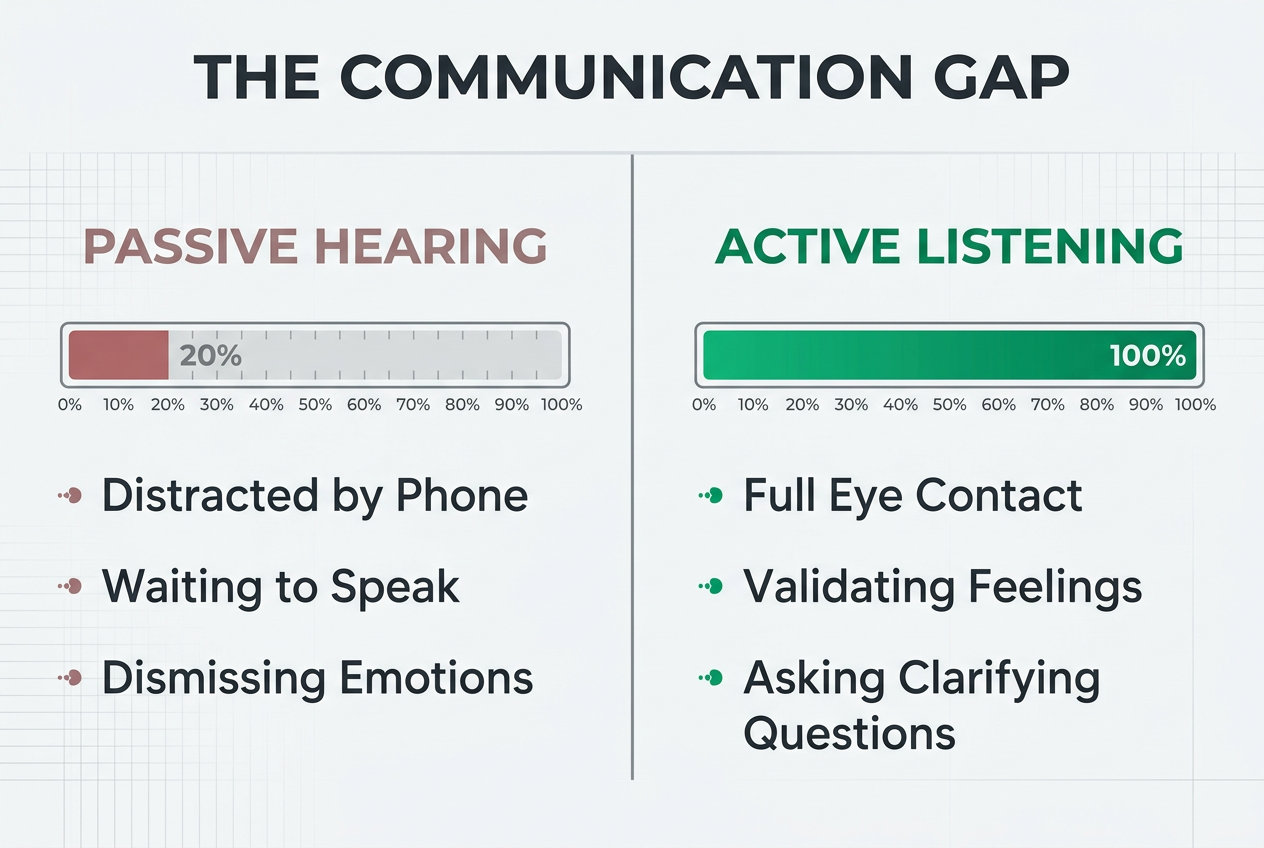
Transitioning from hearing to active listening is the most effective way to validate your partner’s feelings and build the long-term emotional intimacy required for success.
Here’s what active listening actually looks like:
Reflect back what you heard. "So you’re saying your manager gave your project to someone else without asking you first. That must have felt disrespectful."
Ask clarifying questions. "When did you first notice you weren’t being included in those meetings?"
Acknowledge emotions before jumping to solutions. "That sounds incredibly frustrating. I’d be upset too."
The biggest mistake men make? Listening with the goal of fixing the problem rather than understanding the feeling. Sometimes she just needs to vent. Sometimes processing out loud helps her arrive at her own solution. Your job isn’t to rescue her - it’s to witness her experience without judgment.
One practical technique: the 90-second rule. When she’s upset, give her 90 seconds of completely uninterrupted sharing before you respond. Don’t interject with "have you tried..." or "maybe you should..." Just listen. Most guys can’t make it past 30 seconds without offering advice. Try it. You’ll be surprised how much simply being heard defuses tension.
Validate Her Feelings Without Trying to "Fix" Everything
"You’re overreacting" are two words that will sabotage your relationship faster than almost anything else you could say.
Here’s what happens when you tell someone their feelings aren’t valid: they shut down. They stop sharing. They start wondering if you actually understand them at all.
Validation doesn’t mean you agree with her interpretation of events. It means you acknowledge that her emotional response makes sense given how she experienced the situation.
Compare these responses:
Invalidating: "You’re stressing about nothing. Your boss probably just forgot to include you."
Validating: "I can see why that would feel like you’re being sidelined. That would bother me too."
Notice the difference? The second response doesn’t fix anything, but it creates emotional safety. It tells her that her feelings are reasonable, even if you might see the situation differently.
Women aren’t asking you to solve their problems as often as you think. Research from UCLA found that women primarily use conversation to build connection, while men typically use it to exchange information and solve problems. When you default to fixing mode, you’re missing the actual request: she wants connection, not solutions.
Save your problem-solving energy for when she explicitly asks, "What do you think I should do?" Otherwise, default to empathy.
Fair Fighting Rules for Healthy Conflict
Conflict will happen. The quality of your relationship depends on how you handle it.
Healthy couples don’t fight less - they fight better. They’ve established ground rules that keep disagreements productive instead of destructive.
Never use the silent treatment. Stonewalling is emotional manipulation disguised as "needing space." If you’re too upset to talk constructively, say so explicitly: "I’m too angry to have this conversation productively right now. Can we revisit this tonight after I’ve cooled down?"
Stick to the current issue. Don’t pull in past grievances or unrelated complaints. If the argument is about household chores, it’s not the time to bring up that thing she said at your friend’s party three months ago.
Use "I feel" statements instead of "You always" accusations. "I feel unappreciated when dishes pile up in the sink" lands differently than "You never do the dishes."
Take responsibility for your part. Even if you think she’s 80% wrong, own your 20%. "You’re right that I’ve been distracted lately. I should have checked in with you more."
Know when to hit pause. If either person starts yelling, crying uncontrollably, or shutting down completely, the conversation has become counterproductive. Table it and return when you’re both calmer.
The goal of conflict isn’t winning. It’s understanding each other better and finding solutions you can both live with.
Build Unshakeable Trust and Reliability
Trust isn’t built through one grand gesture. It’s built through a thousand small consistencies.
Your girlfriend doesn’t need you to be perfect. She needs you to be predictable in the ways that matter.
Consistency Between Words and Actions
If you say you’ll call at 8pm, call at 8pm. If you promise to pick something up from the store, actually pick it up. If you commit to attending her work event, don’t bail last minute because your friends invited you to a game.
This sounds basic, but most relationship erosion happens through the accumulation of small broken promises, not dramatic betrayals.
Every time your actions align with your words, you make a deposit in the trust bank. Every time there’s a gap between what you said and what you did, you make a withdrawal.
Here’s the standard most men don’t meet: if you wouldn’t cancel on your boss, don’t cancel on your girlfriend. If you’d send a heads-up text to a friend that you’re running late, send one to her too.
She’s watching to see if you treat her with the same respect and reliability you show to other important people in your life.
Being Emotionally Available When She Needs You
Emotional availability doesn’t mean being vulnerable 24/7 or sharing every feeling that crosses your mind. It means being accessible when your partner reaches for connection.
If she’s had a terrible day and wants to talk about it, don’t minimize her experience or rush through the conversation so you can get back to your game. If she asks how you’re feeling about something important, don’t default to "fine" or "I don’t know."
Men often mistake emotional availability for weakness or over-sharing. It’s neither. It’s the willingness to show up fully in emotional moments instead of deflecting, joking, or intellectualizing.
One simple test: when she shares something vulnerable, does your instinct pull you toward her or away from her? Toward means leaning in with curiosity and empathy. Away means changing the subject, minimizing, or physically creating distance.
The boyfriends who build lasting relationships lean in.
Transparency About Your Life and Feelings
You don’t need to provide a minute-by-minute account of your day, but your partner shouldn’t have to wonder what’s going on with you.
If you’re stressed about work, say so. If you’re feeling disconnected from the relationship, bring it up before resentment builds. If you’re planning a guys’ weekend, mention it with reasonable notice - not three days before you leave.
Transparency prevents the kind of mystery that breeds insecurity and suspicion. When you’re an open book about your life, your girlfriend doesn’t have to fill in gaps with anxious assumptions.
This also means being honest when you mess up. Own mistakes quickly and completely. "I’m sorry I was short with you earlier. I was stressed about that presentation, but I took it out on you and that wasn’t fair" goes a long way.
Understand Love Languages and Attachment Styles
You could be showing love perfectly in your language while she feels completely unloved because she speaks a different one.
Dr. Gary Chapman’s framework of love languages and attachment theory (developed by psychologist John Bowlby) explain why couples often talk past each other when expressing affection and addressing needs.
The 5 Love Languages and How to Speak Hers
Everyone gives and receives love through five primary channels:
Words of Affirmation: Verbal expressions of appreciation, encouragement, and affection. For these people, "I’m proud of you" or "You look beautiful" carries tremendous weight.
Quality Time: Undivided attention and shared experiences. Phone-free conversations, planned dates, and being fully present matter more than gifts or compliments.
Physical Touch: Non-sexual affection like holding hands, hugs, cuddling on the couch, or a hand on the small of her back when you’re out together.
Acts of Service: Practical help and thoughtful actions. Doing the dishes without being asked, filling up her gas tank, or handling an errand she’s been dreading.
Receiving Gifts: Thoughtful tokens that show you were thinking about her. Not necessarily expensive - bringing home her favorite candy bar or picking up flowers counts.
Most people have one or two dominant love languages. The problem? You’re probably expressing love in your language, not hers.
If your love language is Acts of Service, you might show affection by fixing things around her apartment. Meanwhile, her love language is Words of Affirmation, so she’s wondering why you never tell her you appreciate her.
Pay attention to how she expresses love to you - that’s often her love language. Also notice what she complains about most. "We never spend time together anymore" suggests Quality Time. "You never tell me you love me" points to Words of Affirmation.
Ask her directly. "What makes you feel most loved - when I tell you I appreciate you, when we spend uninterrupted time together, when I help with something you’re stressed about, physical affection, or when I surprise you with small gifts?"
Then do more of that thing.
Attachment Styles: Anxious, Avoidant, and Secure
Attachment theory explains why some people crave constant reassurance while others pull away when relationships get too close.
Secure attachment (about 50% of adults): Comfortable with intimacy and independence. They can express needs clearly and respond to their partner’s needs without becoming defensive or overwhelmed.
Anxious attachment (about 20%): Craves closeness and reassurance. Worries about being abandoned or unloved. Needs frequent validation that the relationship is solid. Can become clingy or overly sensitive to perceived distance.
Avoidant attachment (about 25%): Values independence highly. Uncomfortable with too much closeness or emotional intensity. May pull away when partners get "too needy" or create distance when things feel too intimate.
Understanding your girlfriend’s attachment style (and your own) explains so many relationship patterns that otherwise seem random or personal.
If she has an anxious attachment style, your sudden need for a weekend alone might trigger fears of abandonment - not because she’s irrational, but because her nervous system genuinely perceives independence as a threat to connection.
If she’s avoidant, your desire to spend every evening together might feel suffocating rather than romantic.
Adapting Your Approach to Her Attachment Style
If she’s anxiously attached:
- Provide extra reassurance during separations ("I’m thinking about you. Can’t wait to see you tonight.")
- Be consistent and reliable with communication
- Don’t withdraw affection during conflicts
- Understand that her need for reassurance isn’t a character flaw
If she’s avoidant:
- Respect her need for independence without taking it personally
- Give her space to process emotions before demanding immediate conversations
- Don’t chase or pressure when she pulls back - create safety for her to return
- Appreciate that commitment is harder for her, not less meaningful
If she’s secure:
- You’ve won the attachment lottery. Don’t mess it up by being inconsistent or playing games
- Match her directness and emotional honesty
- She’ll tell you what she needs - believe her and act on it
The goal isn’t changing her attachment style. It’s adapting your behavior to create security within her nervous system.
Support Her Mental Health and Emotional Wellbeing
One in five women experiences anxiety disorders. One in eight will deal with depression at some point in their lives.
Chances are decent that at some point in your relationship, your girlfriend will struggle with mental health challenges. How you respond will define whether she feels supported or alone.
Supporting a Partner With Anxiety or Depression
First, understand what doesn’t help:
- "Just don’t think about it"
- "You’re being irrational"
- "Other people have it worse"
- "Have you tried exercising/eating better/meditating?"
These responses, however well-intentioned, send the message that her struggle is something she should be able to think or willpower her way out of. That’s not how anxiety or depression works.
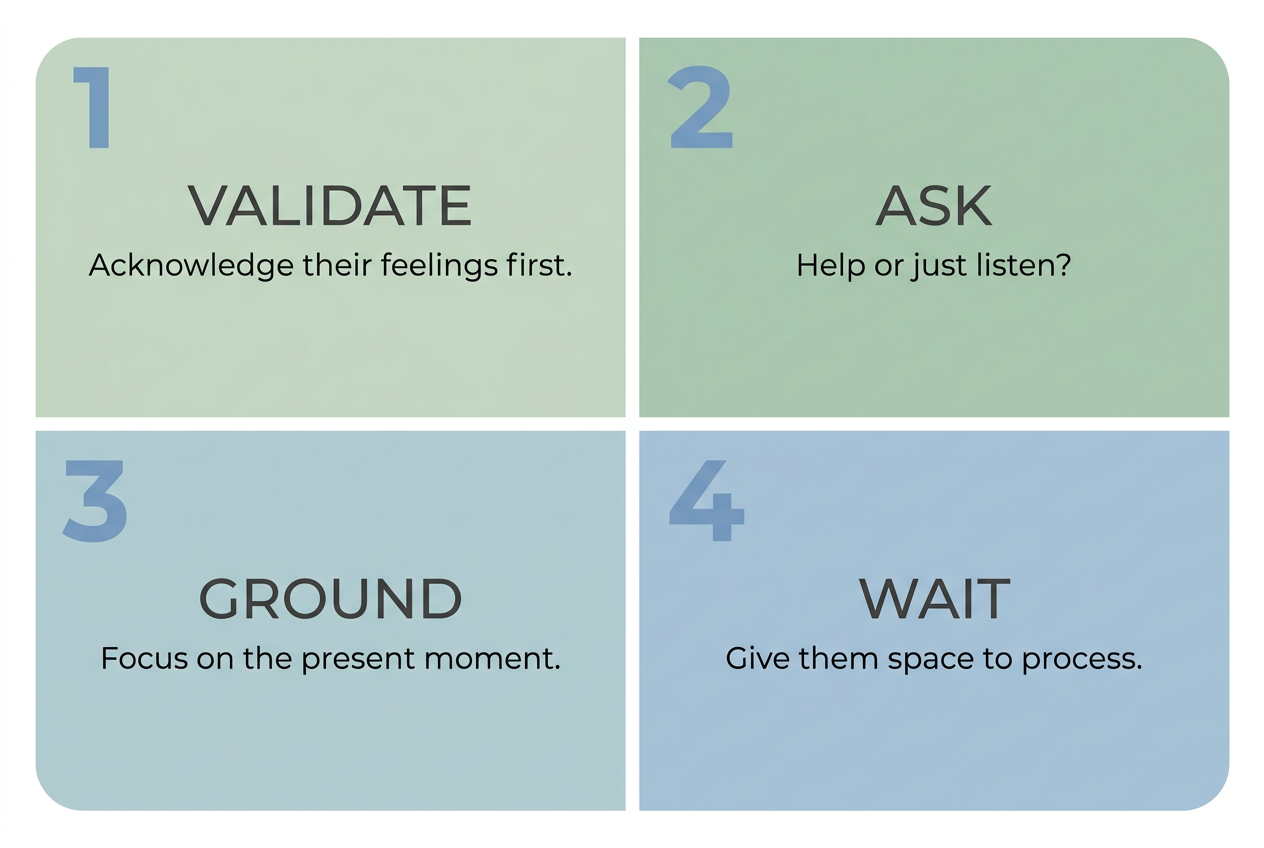
Supporting a partner through anxiety requires a shift from ’fixing’ to ’holding space,’ focusing on validation and grounding techniques over immediate, unsolicited solutions.
Here’s what actually helps:
Validate without trying to fix. "I know this feels overwhelming right now. I’m here with you."
Ask what she needs instead of assuming. "What would be most helpful right now - talking about it, distraction, physical comfort, or just quiet company?"
Learn her specific anxiety triggers and coping strategies. Does she respond well to breathing exercises? Does she need alone time or prefer company? Does talking help or make it worse?
Offer practical support. When depression makes basic tasks feel impossible, offering to handle dinner or do laundry removes pressure without being condescending.
Recognize when professional help is needed. If she’s having suicidal thoughts, experiencing panic attacks regularly, or her symptoms are interfering with daily functioning, gently encourage therapy or medical evaluation.
Be patient. Mental health struggles aren’t linear. She’ll have good days and setbacks. Your job isn’t to cure her - it’s to remain a steady, supportive presence while she does the work of managing her mental health.
When to Encourage Professional Help
You can’t be her therapist, and you shouldn’t try.
If anxiety or depression persists for more than a few weeks, interferes with work or relationships, or she expresses hopelessness about the future, professional support isn’t optional - it’s necessary.
Frame it gently: "I’ve noticed you’ve been really struggling lately, and I hate seeing you in pain. Would you be open to talking to a therapist? I can help you find someone if you want."
Don’t make it an ultimatum. Don’t shame her for needing help. Mental health treatment is healthcare, not a character failing.
If she resists, don’t push too hard in the moment. Revisit the conversation later. Sometimes people need time to accept that they need support beyond what a partner can provide.
Creating a Safe Space for Vulnerability
Your girlfriend will only share her deepest fears, insecurities, and struggles if she trusts that you won’t use them against her.
That means when she tells you she’s scared about something, you don’t mock her for being afraid. When she shares an insecurity, you don’t weaponize it during arguments. When she opens up about past trauma, you don’t pressure her for details or make it about you.
Vulnerability requires safety. Safety comes from knowing that opening up won’t result in judgment, dismissal, or having your words thrown back at you later.
Create that safety, and she’ll let you see all of her - not just the easy, cheerful parts.
Maintain Your Independence While Being Present
Here’s a paradox that confuses a lot of men: the best boyfriends maintain their own lives outside the relationship.
Your girlfriend doesn’t need you to abandon your friends, hobbies, or personal goals to prove your commitment. In fact, doing so often makes you less attractive and the relationship less healthy.
Why She Needs You to Have Your Own Life
A partner who has no identity outside the relationship is exhausting to date.
When you give up your friendships, stop pursuing your interests, and make her your entire social world, several things happen - none of them good:
You become boring. The person she fell for had passions, hobbies, and stories from his own life. That guy disappears when your entire existence revolves around her.
You create pressure. If she’s your only source of social connection and emotional support, that’s an unreasonable burden. No single person can meet all your needs.
You breed resentment. Eventually you’ll resent that you gave up everything for her, even though she never asked you to.
You lose yourself. The relationship becomes your identity instead of one important part of a well-rounded life.
Healthy relationships require two whole people choosing to build something together - not two halves desperately clinging to each other to feel complete.
Balancing Couple Time With Personal Growth
The best boyfriends invest in themselves and the relationship simultaneously.
That means maintaining your workout routine, seeing your friends regularly, pursuing career goals, and dedicating time to hobbies you care about. It also means prioritizing quality time with your girlfriend and being present when you’re together.
This isn’t a zero-sum equation where time spent on yourself takes away from her. Your personal growth makes you a more interesting, fulfilled, and emotionally stable partner.
Set clear expectations. If Tuesday and Thursday nights are gym nights and Saturday mornings are for your weekend basketball game, communicate that early. Don’t spring it on her that you’re unavailable when she tries to make plans.
Protect couple time with the same dedication. If Friday nights are date nights, don’t blow them off because your friends invited you to something more exciting. The commitment goes both ways.
The Danger of Codependency
Codependency occurs when your sense of self-worth becomes entirely dependent on your partner’s happiness and approval.
Red flags you’ve crossed into codependent territory:
- You can’t make decisions without checking with her first
- Her bad mood ruins your entire day
- You feel responsible for managing her emotions
- You’ve isolated yourself from friends and family
- You ignore your own needs to keep her happy
- You stay in the relationship primarily because you fear being alone
Codependency feels like love, but it’s actually fear wearing a convincing disguise.
Healthy interdependence looks different. You support each other without losing yourselves. You can be happy even when your partner is having a bad day. You maintain friendships and interests outside the relationship. You make independent decisions about your career, health, and personal growth while considering your partner’s input.
If you recognize codependent patterns, therapy can help. Individual counseling (not just couples counseling) gives you space to rebuild your sense of self separate from the relationship.
Modern Dating Rules Every Boyfriend Should Know
Relationship advice hasn’t fully caught up to how modern couples actually navigate dating, social media, and technology.
These frameworks help you build relationship momentum while avoiding common pitfalls that previous generations didn’t have to worry about.
The 3-3-3 Rule: Dating Milestones Explained
The 3-3-3 rule outlines natural relationship checkpoints:
After the third date: You should know if there’s genuine compatibility and mutual interest. This is when casual dating either progresses toward something more serious or fizzles out.
After three weeks: The initial excitement stabilizes. You’re starting to see beyond best-behavior first impressions. This is when you decide if you’re interested in exclusivity or if you’re just enjoying the moment.
After three months: The honeymoon phase fades. You’ve seen each other in a variety of contexts - stressed, tired, annoyed, sick. This is when you determine if the relationship has long-term potential or if you were just high on neurochemicals.
These aren’t hard rules. Every relationship moves at its own pace. But they’re useful markers for checking in with yourself about where things stand and whether you’re on the same page as your partner.
The 7-7-7 Rule: Keeping Romance Alive Weekly
The 7-7-7 rule creates a sustainable rhythm for long-term relationships:
Every 7 days: Have a proper date night. Not Netflix on the couch (though that counts for quality time). An intentional activity where you’re focused on each other - dinner out, a hike, cooking together, mini golf, anything that requires presence and creates new memories.
Every 7 weeks: Take a mini trip or plan a bigger experience. This doesn’t have to mean expensive vacations. A weekend camping trip, a night in a hotel one town over, or a day trip to somewhere you’ve never been all count. The point is breaking routine and having an adventure together.
Every 7 months: Plan something significant. A real vacation, a major experience you’ll remember, or an investment in the relationship like couples therapy or a relationship workshop.
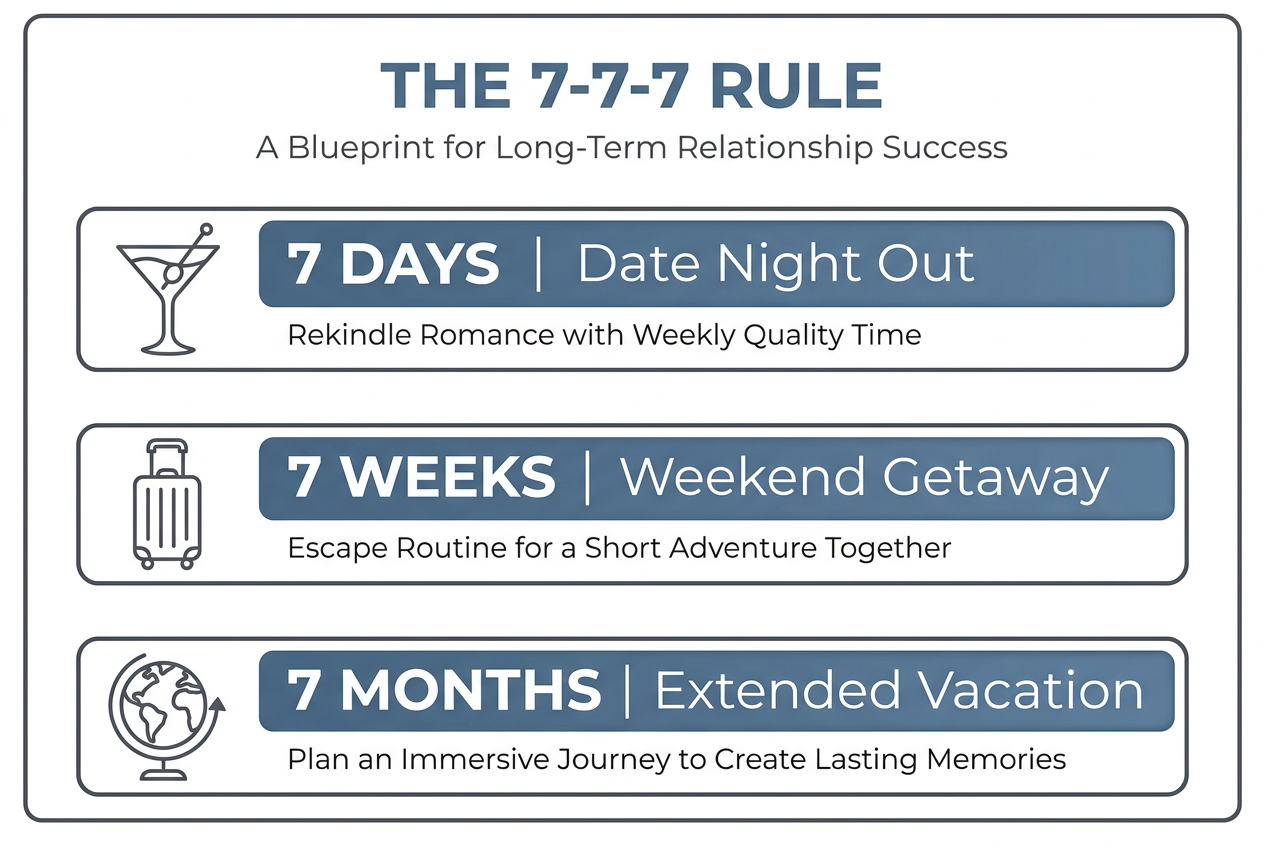
The 7-7-7 rule provides a structured rhythm for maintaining connection, ensuring that quality time is scheduled and prioritized throughout the year to prevent stagnation.
This rhythm prevents relationships from becoming stale. It ensures you’re consistently investing in new experiences together instead of letting months pass in a blur of routine.
Digital Boundaries and Social Media Etiquette
Modern relationships require navigating territory that didn’t exist a decade ago.
Social media boundaries you should discuss early:
Are you comfortable with your relationship being posted publicly? Some people are private; others love sharing couples content. Neither is wrong, but mismatched expectations create tension.
How do you both feel about liking or commenting on exes’ posts? This varies wildly between couples. Establish your boundaries before someone gets hurt.
What about following attractive strangers, liking thirst traps, or sliding into DMs? Again, what feels like harmless scrolling to you might feel disrespectful to her.
Phone etiquette that strengthens relationships:
Create phone-free zones. During meals, the first 30 minutes after you’re both home, and during serious conversations, phones should be away - not just face-down on the table.
Don’t text during in-person hangouts with her. If you’re together, be together. Scrolling Instagram while she’s talking sends a clear message about your priorities.
Respond to her texts with reasonable consistency. You don’t need to reply instantly, but leaving messages on read for hours (while posting on social media) tells her she’s not a priority.
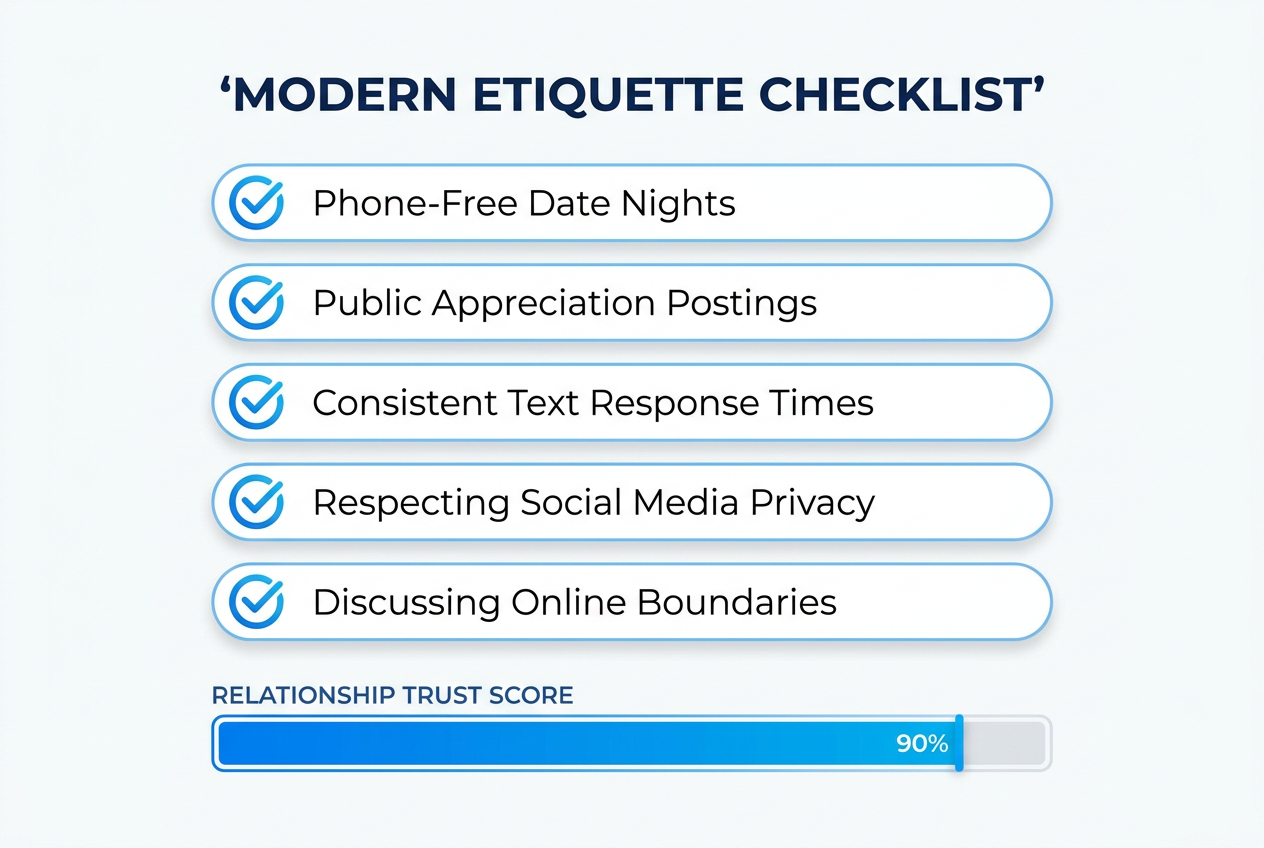
Modern relationships often face digital friction; establishing clear social media and phone-use boundaries prevents misunderstandings and builds mutual trust in a connected world.
Privacy respect:
Don’t share private information about your relationship on social media without permission. Don’t post unflattering photos of her. Don’t discuss relationship conflicts publicly or vent about her to your followers.
What happens between you stays between you unless you’ve both agreed otherwise.
Physical and Emotional Intimacy
Physical chemistry brings couples together. Emotional intimacy keeps them together.
Great boyfriends understand that both matter, and that they’re deeply interconnected in ways most men don’t recognize.
Moving From Passionate to Companionate Love
In the early months, your brain floods with dopamine, norepinephrine, and phenylethylamine - neurochemicals that create the intense excitement and obsession we call "falling in love." Everything feels electric. You can’t get enough of each other.
This doesn’t last. It’s biologically impossible.
Typically between months 18-36, passionate love transitions to companionate love. The intensity fades. You don’t think about her every waking moment. Sex becomes less frequent. You’ve seen her at her worst and the mystery has worn off.
This transition kills relationships when people mistake it for falling out of love.
Companionate love is deeper and more stable. It’s built on genuine intimacy, shared history, trust, and commitment rather than neurochemical fireworks. It’s choosing your partner daily instead of being swept away by biology.
The best long-term relationships don’t cling desperately to the passionate love phase. They embrace companionate love while intentionally keeping elements of passion alive through novelty, adventure, and consistent physical affection.
Initiating Intimacy With Emotional Intelligence
Many men treat physical intimacy like a switch that’s either on or off. Either you’re being sexual or you’re not.
Women typically experience desire more responsively. Arousal builds through emotional connection, feeling safe, being relaxed, and physical affection that isn’t immediately goal-oriented.
Translation: you can’t ignore her all day, fail to help with household tasks, skip meaningful conversation, then expect enthusiasm when you initiate sex at 11pm.
Foreplay doesn’t start in the bedroom. It starts when you send a thoughtful text during her stressful workday. It continues when you handle dinner without being asked. It builds when you listen to her talk about her day without trying to fix everything.
When initiating physical intimacy, read the room. If she’s exhausted, stressed, or has been expressing that she feels disconnected from you, pushing for sex will backfire. Sometimes what’s needed is non-sexual physical affection - cuddling, massage, holding hands - that rebuilds connection without pressure.
Understanding Her Intimacy Needs Throughout Her Cycle
Just as mood and energy fluctuate throughout the menstrual cycle, so do libido and physical sensitivity.
Around ovulation (mid-cycle), testosterone and estrogen peak. Most women experience their highest sex drive during this window. Physical touch feels good. Spontaneity works better. Her body is literally designed to be more interested in sex when pregnancy is most likely.
During the luteal phase (the two weeks before menstruation), progesterone dominates and libido often decreases. Some women experience increased breast tenderness that makes certain touches uncomfortable. Energy dips, so elaborate sexual choreography might feel like too much work.
During menstruation, some women want to avoid physical intimacy entirely. Others find that orgasms actually help with cramping and appreciate sexual connection. Ask rather than assuming.
The week after menstruation often brings renewed energy and interest as estrogen begins climbing again.
Pay attention to these patterns over several months. You’ll start noticing when she initiates more frequently, when she seems more receptive, and when she needs extra patience and non-sexual affection instead.
This isn’t about scheduling sex like a business meeting. It’s about developing the awareness to recognize when your partner is most open to intimacy versus when she needs a different kind of support.
Personal Growth: Becoming a Better Man Makes You a Better Boyfriend
The most attractive thing you can do for your relationship is invest in yourself.
Your girlfriend fell for someone with goals, discipline, and a life outside the relationship. Don’t let that person disappear just because you’re in a relationship now.
Physical Health and Fitness
Taking care of your body isn’t vanity. It’s about having the energy and longevity to build a life with someone.
You don’t need to be shredded with 8% body fat. But you should be able to keep up on a hike without being winded. You should have enough energy to plan and enjoy dates rather than collapsing on the couch every night. You should feel good in your body.
Regular exercise also regulates mood, reduces anxiety, and improves sleep - all of which make you a more emotionally stable partner.
Plus, making your health a priority demonstrates self-respect. It shows you value yourself enough to invest in your wellbeing, which makes you more attractive on every level.
Therapy and Emotional Work
The best boyfriends work on their emotional baggage instead of making it their partner’s problem.
If you have unresolved trauma, anxiety, anger management issues, or persistent relationship patterns that sabotage intimacy, therapy isn’t a luxury - it’s necessary.
Individual therapy gives you space to process your own stuff without burdening your relationship. It helps you develop emotional intelligence, recognize your triggers, and learn healthier coping mechanisms.
Couples therapy isn’t just for relationships in crisis. Many strong couples use it proactively to improve communication, navigate major life transitions, or strengthen their foundation before problems become unmanageable.
Working on yourself emotionally doesn’t make you weak. It makes you capable of the vulnerability and growth that healthy relationships require.
Building Your Career and Purpose
Ambition is attractive - not because women are gold-diggers, but because drive and purpose make you more interesting and fulfilled.
You don’t need to be a CEO or make six figures. But you should care about something beyond your relationship. You should have goals you’re actively working toward. You should be building skills and pursuing growth in your career or craft.
Stagnation is relationship poison. When you stop growing, you stop bringing new energy and experiences into the relationship.
Your girlfriend wants a partner who’s building something meaningful - whether that’s a career, a business, creative work, community involvement, or mastery of a skill. That sense of purpose makes you more attractive and gives you something interesting to talk about beyond your relationship itself.
Show Daily Appreciation and Thoughtfulness
Relationships don’t fail because of dramatic betrayals as often as they die from a thousand small moments of being taken for granted.
The most common complaint in long-term relationships? "They stopped trying."
Small Gestures That Make a Big Impact
Grand gestures are nice. Consistent small gestures build lasting relationships.
Text her something kind in the middle of the day. "Thinking about you. Hope your presentation went well."
Bring home her favorite snack unprompted. Stopping for her favorite candy or coffee shows you were thinking about her.
Handle one task she’s been dreading. Making that phone call she’s been putting off, scheduling the car maintenance, or dealing with customer service on her behalf removes mental load.
Leave notes. Old school, but effective. A sticky note on the mirror saying "You’re going to crush today" costs nothing and means everything.
Cook her favorite meal. Or at least order it and have it waiting when she gets home.
Compliment her on something non-physical. "I love how patient you are with your mom" or "You’re really good at making people feel comfortable" registers deeper than "You look hot."
The pattern? Small, thoughtful actions that show you pay attention and you care.
Remembering the Details She Shares
Your girlfriend mentions her big meeting on Thursday. She tells you her best friend is going through a breakup. She casually mentions she’s been wanting to try that new restaurant.
Write this stuff down if you need to. Set phone reminders. Use whatever system works for your brain.
Then follow up. Ask how the meeting went. Check in about her friend. Suggest that restaurant next time you’re planning a date.
Remembering what she tells you proves you’re actually listening when she talks. It demonstrates that her life matters to you, not just how her life intersects with yours.
This is especially important with people in her life who matter to her. Remembering her mom’s surgery date, her sister’s promotion, or her best friend’s name shows respect for her relationships and her world.
Celebrating Her Wins (Not Just Supporting Her Struggles)
Most boyfriends are decent at showing up during hard times. The great ones celebrate victories with equal enthusiasm.
When she gets promoted, lands a big client, finishes a tough project, hits a personal goal, or achieves something she’s been working toward - match her energy.
Don’t minimize her accomplishment. Don’t make it about you. Don’t immediately shift focus to your day.
Celebrate. Make dinner reservations. Buy champagne. Tell her you’re proud of her and mean it.
Women notice whether their partners genuinely celebrate their success or feel threatened by it. Be the boyfriend who’s your girlfriend’s biggest cheerleader when good things happen.
Scenario-Specific Advice
Different relationship contexts require different strategies. Here’s how to be a better boyfriend in specific situations most generic advice doesn’t address.
Being a Better Long-Distance Boyfriend
Long-distance relationships fail when physical separation creates emotional distance.
Schedule video calls with the same consistency you’d schedule in-person dates. Tuesday and Friday night video dates create rhythm and something to look forward to. Phone calls while you’re each doing mundane tasks (cooking dinner, running errands) maintain everyday intimacy.
Send physical surprises occasionally. Delivery services make this easy. Send flowers, her favorite cookies, or a care package. Physical objects bridge the distance in a way digital communication can’t.
Create shared experiences despite distance. Watch the same movie simultaneously while on video chat. Play online games together. Read the same book and discuss it. These create connection points beyond just talking about your days.
Maintain transparency about your social life. She can’t see what you’re doing, which means anxiety fills in gaps. Volunteering information about where you went and who you were with prevents her imagination from running wild.
Have a concrete plan for the distance to end. Long-distance only works when there’s an end date. If you can’t answer "When will we live in the same place?" the relationship is already on borrowed time.
Relationship Tips When Living Together
Moving in together is a relationship accelerant. Minor annoyances become major conflicts when you can’t escape to separate spaces.
Establish clear chore division early. Don’t assume she’ll handle cooking and laundry while you handle trash and yard work. Discuss expectations explicitly and adjust when the division feels unfair.
Respect her need for space in a shared home. Just because you live together doesn’t mean she wants to spend every moment together. Create zones or times when you’re both home but doing your own thing.
Continue dating each other. The biggest relationship killer after moving in together is treating your home like a waiting room for life. Schedule regular dates. Leave the house together. Create experiences beyond just existing in the same space.
Don’t let household stress replace intimacy. It’s easy to become roommates who argue about dishes and forget to connect emotionally and physically. Protect time for non-transactional interaction.
Communicate about money clearly. How are you splitting rent and utilities? What about groceries and household items? Who pays when you go out? Establish this early before resentment builds.
Supporting Her During High-Stress Periods
Finals week. Major work deadlines. Family crises. Everyone goes through periods when stress consumes bandwidth for the relationship.
Reduce her cognitive load. Don’t ask "What do you want for dinner?" when she’s overwhelmed. Just handle dinner. Don’t create more decisions for her to make.
Anticipate needs before she has to ask. Stock her favorite comfort foods. Fill up her gas tank. Handle laundry. Make her life easier in tangible ways.
Be okay with being temporarily deprioritized. During high-stress periods, she might not have energy for long conversations, date nights, or physical intimacy. Don’t take it personally. Be patient. The stress will pass.
Offer specific help, not vague availability. "Let me know if you need anything" puts the burden on her. "I’m going to pick up groceries - text me if there’s anything specific you want" is actionable.
Create pockets of calm. Even 20 minutes of completely unplugging - a walk around the block, watching something mindless together, or just sitting quietly - helps reset her nervous system.
Frequently Asked Questions
How can I be a better boyfriend every day?
Focus on three core practices: active listening when she talks (put down your phone and be fully present), small consistent gestures of appreciation (texts, compliments, help with tasks), and maintaining your own life outside the relationship so you stay interesting and fulfilled. The best boyfriends make their partners feel heard, valued, and respected through daily actions, not just occasional grand gestures.
What is the 3-3-3 rule in dating?
The 3-3-3 rule outlines natural relationship checkpoints. After three dates, you should know if there’s genuine compatibility. After three weeks, you’re deciding if you want exclusivity. After three months, the initial honeymoon phase fades and you’re determining if the relationship has long-term potential. These aren’t rigid timelines, but they’re useful markers for checking in about where things stand.
What is the 7-7-7 rule for relationships?
The 7-7-7 rule creates sustainable rhythm for long-term couples: every 7 days have an intentional date night, every 7 weeks plan a mini trip or bigger experience together, and every 7 months invest in something significant like a real vacation or major shared experience. This prevents relationships from becoming stale by ensuring consistent quality time and new memories.
How do I support my girlfriend during her period?
Understand that hormone fluctuations (specifically dropping estrogen and progesterone) cause real physical and emotional symptoms. Don’t dismiss her discomfort or tell her she’s overreacting. Practical support works best: have pain medication and heating pads available, offer comfort foods, handle household tasks without being asked, and give her space if she needs it. Ask what she needs rather than assuming. Some women want extra physical affection; others prefer to be left alone.
What are the qualities of a good boyfriend?
The most important qualities are emotional availability (being present and vulnerable when it matters), reliability (following through on commitments), active listening (making her feel heard without always trying to fix things), respect for her independence, self-awareness about your own emotional patterns, and willingness to grow. Good boyfriends balance being supportive with maintaining their own identity and goals outside the relationship.
How do I know if I’m emotionally available enough?
Ask yourself: when your partner reaches for emotional connection, do you lean in or pull away? Do you share your feelings when asked, or default to "fine" or "I don’t know"? Can you be present during her vulnerable moments without deflecting or intellectualizing? Emotional availability means being accessible during important moments and willing to engage with difficult feelings rather than avoiding them.
What’s the difference between being supportive and being codependent?
Supportive partners help without losing themselves. Codependent partners make their self-worth entirely dependent on their partner’s happiness. If you can’t make decisions without her approval, if her bad mood ruins your entire day, if you’ve abandoned all friendships and interests for the relationship, or if you stay primarily because you fear being alone, you’ve crossed into codependency. Healthy relationships involve two whole people choosing each other, not two halves desperately clinging together.
How much independence should I maintain in a relationship?
Enough that you remain interesting, fulfilled, and emotionally stable. Continue seeing friends regularly, pursuing hobbies, maintaining your fitness routine, and working toward career goals. Your girlfriend doesn’t need you to abandon your life to prove commitment. She needs a partner who brings new experiences and energy into the relationship because he’s actively growing and living outside of it.
Become the Boyfriend She Deserves
Being a better boyfriend isn’t about perfection. It’s about consistent effort, genuine curiosity about your partner’s inner world, and willingness to grow through the inevitable challenges every relationship faces.
The men who build lasting, deeply connected relationships master three fundamentals: they make their partners feel heard and valued through active listening, they show up consistently in small ways that demonstrate reliability, and they understand that timing matters - recognizing when she needs solutions versus empathy, when she needs closeness versus space, and how her biological rhythms affect mood and communication needs.
You don’t need to implement everything in this guide tomorrow. Pick two or three areas where you know you’re falling short. Focus there. Master those. Then expand.
Your relationship will transform not through dramatic change, but through the accumulation of better choices in a thousand small moments.
If you’re ready to take this seriously, tools exist that can help. Apps that track cycle phases, remind you about important dates, and provide personalized suggestions based on where your partner is in her cycle take the guesswork out of timing your support perfectly. The boyfriends who understand this rhythm - who know when to plan adventures versus quiet nights in, when to problem-solve versus just listen, when she’ll be most receptive to intimacy versus when she needs extra patience - create relationships that feel effortlessly in sync.
Start small. Listen more. Remember what she tells you. Show up when you say you will. Maintain your own growth while investing in hers. Understand her patterns and adapt your approach accordingly.
That’s how you become the boyfriend she brags about.
Tags

Related Articles
Continue reading to deepen your understanding

How to Understand Your Girlfriend’s Social Battery and Hormones
Does your girlfriend suddenly cancel plans or seem withdrawn? This guide explains how her cycle impacts her energy so you can support her like a pro.

How Your Girlfriend’s Emotional Needs Change During Her Cycle
Does your girlfriend’s mood seem unpredictable? Learn how her emotional needs shift on a biological loop and how to support her through every phase of her cycle.

What to Buy When Your Girlfriend Has Hormone Cravings: A Support Guide
Stop wondering what to pick up at the store. This guide explains the science behind cycle cravings and provides a specific list of foods and comfort items she needs.

Your Girlfriend’s Mood Shifts Throughout the Month, Explained
Ever wonder why her energy and moods change so drastically each week? Understand the four hormonal phases and how to be the partner she needs during every stage of her cycle.

How to Support Your Girlfriend When She’s Crying Because of Hormones
Watching her cry when hormones hit can feel overwhelming. Learn the biological why behind the tears and use these proven scripts to provide the support she actually needs right now.

How to Help Your Girlfriend with Hormonal Mood Swings Without Arguing
Understand her cycle and learn tactical scripts to handle tension. This guide shows you how to support her through hormonal shifts without getting into unnecessary fights.

When to Feed Your Girlfriend: Understanding Hangry Hormones
Does your girlfriend get irritable when she hasn’t eaten? It’s not just in her head. Learn why hormones cause hanger and the specific times her body needs more fuel.

The Boyfriend’s Guide to Supporting Your Partner Through PMS
If your partner is suddenly irritable and exhausted, it’s biology, not you. Learn about the luteal phase and how to provide meaningful support without walking on eggshells.