How to Be a Better Boyfriend: Science Backed Tips for a Stronger Relationship
Learn how to be a better boyfriend with practical, science backed advice on communication, support, and building a stronger connection.
So you want to know how to be a better boyfriend? Let's cut right to it. It’s not about grand, movie style gestures or trying to read her mind. The real secret is much simpler and far more powerful. It's all about the small, consistent things you do every day that show you're paying attention and you’ve got her back.
This is your playbook for building a stronger, happier relationship. It's one based on what actually works, according to science. We're going to give you practical, no nonsense advice that you can start using today. Being a better partner is a skill, and like any skill, you can get better at it with the right tools and a little practice. You'll learn how to communicate better, understand her on a deeper level, and build a connection that lasts.
Understanding your partner is the key. And tools like a period tracker for partners can give you insights you've never had before. It's about being proactive, not reactive. It’s about being the man you want to be in the relationship. You're in the right place to figure out exactly how to do that. Let's get into it.
What a Strong Partnership is Really Built On

Most relationship advice is vague, leaving you guessing what your partner really wants. But the science of human connection, and my own experience, points to one core skill that changes everything. Responsiveness.
Responsiveness simply means showing up for your partner emotionally. Consistently.
It’s noticing she had a tough day and pulling her in for a hug instead of immediately launching into solutions. It’s hearing her talk about an annoying coworker and saying, "Wow, that sounds so frustrating," instead of telling her exactly what she should do about it.
You don't have to be a mind reader. You just have to be a detective of her world.
The Power of Being Present, Not a Problem Solver
Look, most of us guys are wired to be problem solvers. It's our default setting. When someone we care about is hurting, our first instinct is to jump in and fix it. We give advice, brainstorm solutions, and try to logic our way out of the bad feeling.
But here’s the thing. She doesn't always need a fixer. More often than not, she just needs a witness. Someone to validate her feelings and confirm that what she's experiencing is real and that you're on her team, no matter what.
Trying to 'fix' a problem often feels dismissive, as if you're trying to rush past the emotion. Offering genuine support, on the other hand, builds a rock solid bond. It says, "I'm here with you in this feeling, and we'll get through it together."
This small shift in your approach can completely change the dynamic of your relationship. You move from being an opponent of the problem to being her number one ally.
Your Secret Weapon: Understanding Her Cycle
So, how do you get better at this? One of the most powerful and overlooked tools is understanding the rhythm of her energy and moods, which are often tied to her hormonal cycle. This isn't about tired old PMS jokes. It's just biology.
Her body goes through predictable hormonal shifts every month, impacting everything from her energy levels and social battery to how she communicates.
- Follicular Phase (Post Period): Estrogen is rising. She might feel more energetic, social, and optimistic. This is a great time for adventurous dates or tackling big conversations.
- Luteal Phase (Pre Period): Progesterone rises as estrogen falls. She may need more downtime, feel more inward, or have less patience for small talk. This is the perfect time to offer a cozy night in.
Knowing this gives you an incredible advantage. You can anticipate her needs and show up with the right kind of support at the right time. It’s like having an inside scoop that helps you be the thoughtful, intuitive partner you want to be. An app like VibeCheck is designed to give you this exact kind of insight, making it way easier to stay in sync.
The good news? Most couples are already doing pretty well. Globally, 82% of partnered people say they're satisfied with their relationship. But a 2025 study highlighted that daily satisfaction stays high when partners consistently meet each other's emotional needs. You can dive into the full findings from the Ipsos love and life satisfaction index.
This consistent responsiveness is what separates a good relationship from a great one. For more ideas, you can check out our main page on relationship advice for men.
To get started, let’s look at the core ideas we'll be working with. Think of these as the foundation for everything that follows.
Three Core Pillars of a Great Partnership
| Pillar | Common Misstep | Better Boyfriend Approach |
|---|---|---|
| Responsiveness | Jumping to solutions or offering unsolicited advice. | Listening to understand, validating her feelings first. |
| Awareness | Reacting to mood shifts without understanding the context. | Proactively understanding her cycle to anticipate her needs. |
| Support | Trying to "fix" her bad day. | Asking "What do you need from me right now?" |
Mastering these three pillars will fundamentally change how you show up in your relationship, turning good intentions into meaningful action.
Mastering Communication Without the Guesswork
Great relationships aren't built on mind reading. They're built on clear, supportive communication that cuts through the noise and gets right to what actually matters. We're going to move past vague advice like "just listen more" and get into the practical skills you can start using tonight. These will turn potential arguments into moments of real connection. This is how you learn to be a better partner, one conversation at a time.
The Validation and Inquiry Method
When your partner is upset, your gut instinct is probably to fix the problem. I get it. We're wired to be problem solvers. But jumping straight into solutions can feel dismissive, almost like you're trying to rush past her feelings to get to the "right" answer.
A much better approach is what I call the Validation + Inquiry method. It’s a simple, two step combo that guarantees she feels heard before you do anything else.
First, you validate her emotion. This is key. It doesn't mean you have to agree with her logic or her side of the story. It just means you're acknowledging that what she's feeling is real and valid from her point of view.
Then, you follow up with an inquiry. A gentle, open ended question that invites her to tell you more.
Let’s see it in action:
- She says: "My boss completely dismissed my idea in the meeting today. I feel so defeated."
- Your old response (Problem Solving): "You should set up a one on one with her and present the data again. Or maybe talk to HR."
- Your new response (Validation + Inquiry): "Wow, that sounds incredibly frustrating. I'm sorry that happened. What was your idea?"
See the difference? The first response puts the burden of solving it right back on her shoulders. The second one puts you on her team. You’re not trying to fix it. You’re sitting with her in that feeling, which, more often than not, is all she really needs.
Voicing Your Own Needs Without Starting a Fight
Of course, communication is a two way street. Being a great partner also means knowing how to bring up your own needs and feelings without putting her on the defensive. The secret here is using "I feel" statements, a technique that frames the issue around your experience, not her actions.
This simple switch in language is an absolute game changer. It shifts the entire dynamic from blame to collaboration.
Instead of saying, "You never help me clean up," which immediately sounds like an attack, try this: "I feel overwhelmed when I'm cleaning the kitchen by myself after a long day."
This approach invites empathy instead of a counter attack. It opens the door for a productive conversation about how you can tackle things together as a team. Learning how to express your own feelings is a huge part of becoming more emotionally available for your partner.
Reading the Room: Non Verbal Cues
Sometimes, what you don't say is way more powerful than what you do. Your body language can either calm a tense situation or pour gasoline on the fire. When you're in a tough conversation, your non verbal cues are sending a loud message.
Are you turning toward her or angling your body away? Are you making eye contact, or are you glancing at your phone or the TV? Are your arms crossed defensively, or are they relaxed and open at your sides? These small signals tell her whether you’re truly present and engaged or just waiting for it all to be over.
Making a conscious effort to physically show you're listening can deescalate tension before it even starts. Put your phone down. Turn your body to face her. Give her your full attention. This simple act of respect shows that she is your priority in that moment. It's one of the most powerful messages you can send. It’s a small adjustment that leads to massive improvements in how connected you both feel.
Discover science backed relationship insights with VibeCheck and start communicating better today.
Understanding Your Partner's Cycle
Alright, let's get into something that is a complete game changer for your relationship: her menstrual cycle. This isn't about becoming a biologist or trying to explain away her feelings. Far from it. This is about becoming a more intuitive, supportive partner who understands the rhythm of her life.
Think of it like this. Her hormones create a predictable internal weather pattern. Knowing whether it’s likely to be sunny or stormy gives you the power to be a better teammate. You can plan important conversations, offer the right kind of support, and stop getting caught off guard by shifts in her mood or energy.
This is one of the most powerful and overlooked tools a man can have in his relationship toolkit.
The Four Phases Made Simple
Her cycle is much more than just "her period" and "not her period." It’s a continuous loop of four distinct phases. Knowing the basics will put you miles ahead.
-
The Menstrual Phase (Days 1-7, roughly): This is day one of her cycle, when her period starts. Her key hormones, estrogen and progesterone, are at their lowest. This usually translates to low energy, a need for comfort, and a desire to turn inward. Think of it as a time for rest and recovery.
-
The Follicular Phase (Days 1-13, roughly): This phase overlaps with her period but continues after it ends. Estrogen starts to climb, which typically brings a boost in energy, mood, and confidence. She’ll likely feel more optimistic, social, and ready to tackle new projects.
-
The Ovulatory Phase (Around Day 14): This is the main event. Estrogen hits its peak, and she might feel her most confident, outgoing, and communicative. Her physical and social energy is often at its highest, making it an amazing time for connection and big dates.
-
The Luteal Phase (Days 15-28, roughly): After ovulation, estrogen drops, and progesterone rises. This hormonal shift, especially in the later part of this phase, is what often brings on common PMS symptoms. Energy levels can dip, and she may feel more sensitive, irritable, or just need some quiet time.
A simple lack of awareness can turn a small moment of frustration into a three day argument. This is a pattern I’ve seen countless times.
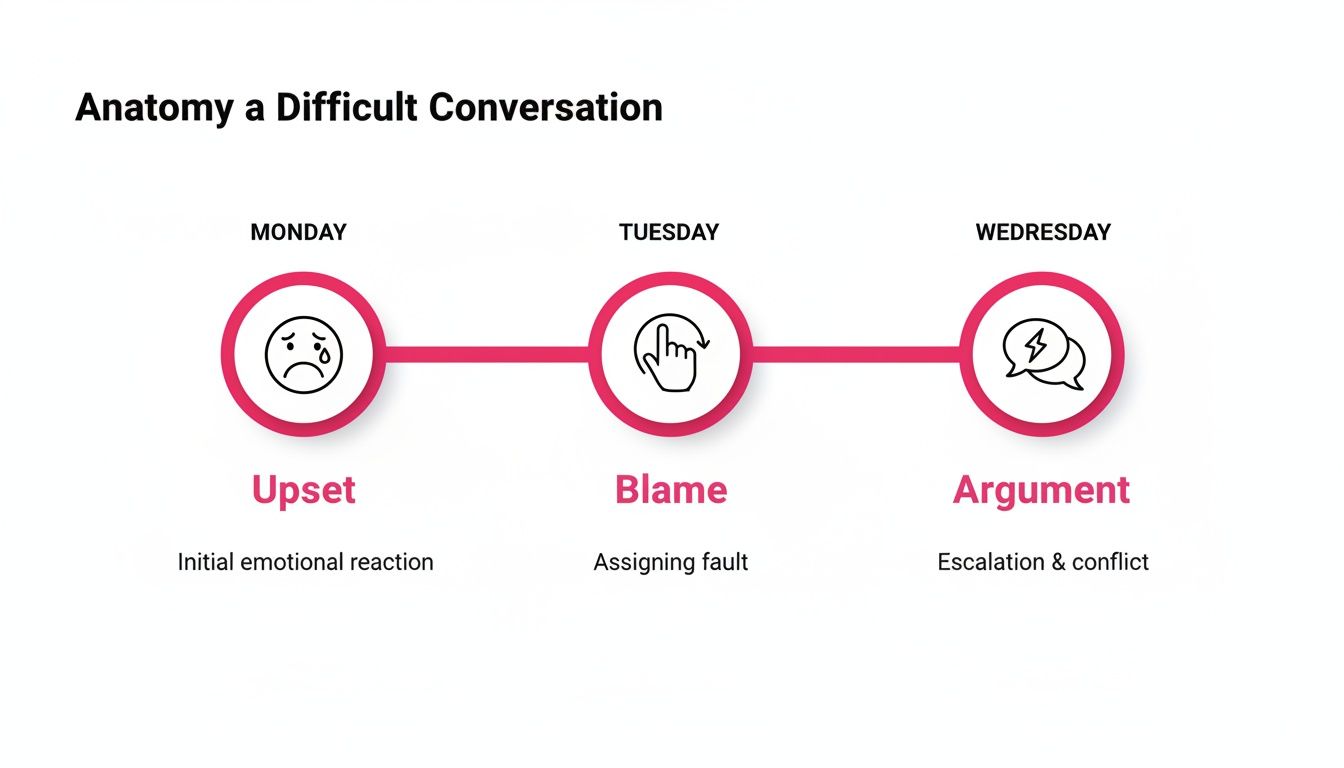
When you understand the context behind her mood, you can intercept that cycle with support instead of defensiveness. You stop taking it personally and start seeing it as an opportunity to show up for her.
Turning Knowledge Into Action
So, how do you actually use this information? It's all about tailoring your approach to match her internal climate.
For example, during her follicular and ovulatory phases, when she’s likely feeling on top of her game, that’s your green light. Plan that adventurous date. Bring up that big conversation about the future. She’ll have the mental and emotional bandwidth for it.
Conversely, during the late luteal phase, when her energy is low and her patience might be thin, that's not the time to push for a big night out with your friends. Instead, suggesting a quiet night in with her favorite takeout is a brilliant, proactive move. You’re meeting her where she is, not forcing her to be where you are.
This isn't about walking on eggshells. It's about being smart with your energy and hers. Your efforts to connect will be far more impactful when they’re timed correctly.
And the research backs this up. A study of 593 couples revealed that a partner's responsiveness is the key to smoothing out the daily ups and downs in relationship satisfaction. The study also highlighted that a man's own emotional stability can help buffer these dips, making your calm, informed support even more crucial.
The VibeCheck Advantage
Trying to remember these phases and what they mean can feel like a lot to juggle. That's where a tool built specifically for you comes into play. A period tracker for men might sound a little strange at first, but it's really just a powerful relationship tool.
VibeCheck takes the guesswork out of the equation. It gives you a simple, daily heads up about where she is in her cycle and what that might mean for her day. More importantly, it gives you practical, actionable tips to help you be the thoughtful, in sync partner you want to be.
It’s the difference between asking, “What’s wrong?” and proactively saying, “Hey, I know this can be a tiring week. How about I handle dinner tonight?” That one small, informed gesture can completely change the vibe of your evening. It proves you're paying attention on a whole different level.
How VibeCheck Helps You Stay in Sync
Look, understanding the science behind communication and hormonal cycles is a massive leap forward. But let's be real. Remembering all that theory in the heat of the moment is tough. Knowing what to do is one thing. Having a practical tool that makes it easy and natural is another.
This is where you stop guessing and start connecting with real confidence.
VibeCheck takes all those complex, science backed insights and turns them into a simple, daily advantage. Think of it as your personal relationship playbook, giving you a clear heads up so you can consistently be the partner you actually want to be.
From Reactive to Proactive
Most guys operate in reactive mode. You react to a bad mood, a misunderstanding, or a sudden need for space. This constantly puts you on the back foot, trying to piece together what went wrong after it already happened. Being a great partner means flipping that script from reactive to proactive.
VibeCheck is built to make that shift feel effortless. Instead of getting blindsided by a change in her energy, you get a quick morning insight that helps you get ahead of it.
- No more guesswork: You'll know if it’s a day where her energy might be lower, so you can offer support before she even has to ask.
- Better timing: Get a heads up on the best days to bring up big conversations or plan an adventurous date, aligning your plans with her natural rhythm.
- Daily support tips: Receive concrete, actionable suggestions on how to best show up for her each day, tailored to her cycle and your unique relationship.
This isn't about changing who you are. It’s about using a smart tool to amplify your own intuition and make your best intentions count.
Real Scenarios, Made Simple
Let's pull this out of the clouds and into a real life situation.
Picture a Tuesday night. You both get home from work, fried and a little stressed. The old way might involve a minor disagreement over dinner plans spiraling into a tense, silent evening. You're left wondering why she seems so distant, and she's feeling like you're just not getting it.
Now, imagine this instead. You check VibeCheck in the morning and see a tip: "Her energy might be dipping as she enters her luteal phase. A quiet, comforting evening could be exactly what she needs."
That small piece of information changes everything. Armed with that insight, you shoot her a text in the afternoon: "Hey, how about we skip cooking tonight? I'll grab your favorite takeout on my way home."
That simple, proactive gesture completely transforms the evening. You’ve shown her you’re thinking of her, you’ve anticipated her needs, and you’ve turned a potential moment of stress into one of connection and care. That's the power of being in sync. Many guys have found that getting specific, actionable relationship insights from VibeCheck is the key to breaking old, frustrating patterns.
Building Confidence Through Consistency
One of the biggest hurdles for any guy trying to be a better partner is that feeling of uncertainty. Am I doing the right thing? Is this what she actually needs right now? This self doubt often leads to doing nothing at all, just to avoid doing the wrong thing.
VibeCheck helps build your confidence by giving you a steady stream of small wins. Every time you use an insight, offer the right kind of support, and see it land well, you're reinforcing a new, better pattern.
- It learns what works: The app gets smarter over time, noticing which tips and gestures resonate most with your partner. It becomes a personalized playbook just for you.
- It kickstarts communication: VibeCheck often acts as a natural conversation starter, helping you and your partner talk more openly about her needs and experiences.
- It makes you a team: By using the app, you’re sending a clear message: "Your well being matters to me, and I'm actively working to be the best partner I can be for you."
Ultimately, this is about using technology not as a crutch, but as a bridge to deeper understanding and empathy. It gives you the confidence that you’re not just trying to be a better partner. You have a smart, supportive tool helping you succeed, day in and day out.
Small Daily Actions That Build a Stronger Bond

Grand, movie style gestures don't build lasting relationships. Real, unbreakable bonds are forged in the small, seemingly insignificant moments that fill your everyday life. Being a better boyfriend is a game of inches, won by paying close attention to the details most guys miss.
This is how you go from being a decent partner to being an irreplaceable one.
Spotting and Answering Her "Bids for Connection"
Dr. John Gottman, a legend in relationship research, gave us the concept of “emotional bids.” A bid is any small attempt one partner makes to connect with the other. For attention, affection, or just a shared moment. The catch? They almost never sound like a big deal.
When she tells you about a boring meeting at work or points out a funny looking dog on the street, it’s not just small talk. She’s reaching out. That’s a bid for connection.
How you respond in that split second is everything. You can either “turn toward” her bid or “turn away.”
- Turning Away: You keep scrolling on your phone and mumble an “uh huh.”
- Turning Toward: You look up and say, “That sounds annoying. What happened next?”
That simple act of turning toward her validates the bid and strengthens your connection. Gottman's research is crystal clear on this. Couples who stay together turn toward each other 86% of the time. Those who divorce? Only 33% of the time. That's a massive difference built entirely on tiny interactions.
Get Specific with Her Love Language
You've probably heard about the five love languages, but the real magic is in the details. Moving beyond the generic advice is how you show you're not just reading a manual. You're actually paying attention to her.
Think of it as upgrading from a template to a custom built plan.
- Is her language Acts of Service? It’s not just taking out the trash. It’s noticing she’s almost out of her favorite coffee and grabbing it on your way home, without being asked.
- Is it Words of Affirmation? Don't just say, "You look nice." Say, "I love how confident you look when you wear that color."
- Is it Quality Time? It’s not just sitting on the same couch while on your phones. It’s putting both devices away for an hour to just talk, with no distractions.
Specificity is your superpower here. It proves you see her as a unique individual, not just a partner who fits into a convenient box.
Being a better boyfriend isn't about a massive personality overhaul. It’s about a series of small, intentional choices you make every single day. It’s a commitment to paying closer attention.
While 82% of coupled adults say they’re satisfied in their relationship, one study found a major happiness gap for couples who met online. This shows just how vital it is to build these connections through small, intentional actions, especially when a relationship doesn't have the foundation of pre existing social ties. You can see the full breakdown in the Love Life Satisfaction Survey 2025.
How VibeCheck Sharpens Your Focus
Trying to remember all of this in the middle of a packed week is tough. That’s where a tool like VibeCheck can make a real difference. It cuts through the mental clutter with daily, personalized reminders and suggestions that help make these small actions feel like second nature.
For example, if the app knows she's in a phase where she might be feeling more sensitive (like the late luteal phase), it might prompt you with a specific compliment to give her or suggest a small act of service. It takes the abstract goal of "be more supportive" and turns it into a concrete, actionable to do. This is how you build a real habit of thoughtfulness, one small, informed gesture at a time.
FAQ: Your Questions on How to Be a Better Boyfriend, Answered
Look, wanting to be a better partner is the first and most important step. If you're asking these questions, you're already on the right track. Let's get straight to some real answers for the stuff guys often wonder about.
What's the one thing I can do that makes the biggest difference?
Forget the grand, movie style gestures. The single most powerful thing you can do is what researchers call **active responsiveness**. It’s a fancy term for a simple concept: paying attention and showing up. It means really listening when she talks, with your phone down and eyes up. It's about validating how she feels *before* you jump in with a solution. Consistently showing that you see her, hear her, and are on her team is what builds a rock solid, happy relationship. Seriously, the science on this is crystal clear.How can I support my girlfriend during her period without making it weird?
Great question. The awkwardness usually comes from feeling like you have to have some magic solution. You don't. The goal is comfort and understanding, not "fixing" anything. Keep it simple and proactive. Think of it as just being a considerate human. A few low key offers go a long way: "Hey, I'm running to the store, need me to grab you anything? Snacks, Advil, anything?", "Would you rather just have a chill night in tonight?", or "Let me know if you need anything at all. A hot water bottle? A back rub?". It’s not about making a big production of it. It's about showing you’re thinking of her comfort. That’s a huge win.She says I don't listen. How do I actually fix that?
This is a classic, and it's totally fixable. Right now, you probably listen with the goal of forming your reply or solving the problem. We all do it. The trick is to shift your goal: **listen to understand the *feeling* behind her words.** Next time she's talking about something important, give her your full attention. No distractions. When she pauses, don't immediately offer advice. Instead, try to reflect the emotion back to her. Something as simple as, "Wow, that sounds incredibly frustrating," or "I get why you'd be upset about that" can completely change the energy of the conversation. It shows you're on her side, not just waiting for your turn to speak.How do I bring up an issue without it blowing up into a fight?
Timing and your opening line are everything here. First rule: never ambush her with a serious talk when one of you is hungry, exhausted, or stressed. Find a calm, neutral moment when you can both actually think clearly. Second, start your sentences with "I" instead of "You." The difference is huge. Instead of, "You never make time for me," which immediately sounds like an attack, try framing it from your perspective: "Lately, I've been feeling a little disconnected, and I miss getting quality time with you." This isn't an accusation. It's an invitation to solve a problem *together*. It keeps her from immediately getting defensive and opens the door for a real conversation.What are some good long distance boyfriend tips?
Long distance is all about communication and creative connection. Schedule regular video "date nights" where you're both focused on each other. Send small, unexpected gifts or even just a surprise food delivery. Communication is key, so make sure you're not just texting about your day but also sharing how you feel. Using an app like VibeCheck can be even more helpful long distance, as it helps you stay tuned in to her emotional world even when you're physically apart.Your Next Step to Becoming a Better Boyfriend
We've covered a lot, from the science of responsiveness to the practical power of understanding her cycle. The bottom line is this: becoming a better boyfriend isn't a one time fix. It's a daily practice of paying attention, communicating with empathy, and choosing to be a supportive partner.
The key takeaways are simple but powerful. Be a listener before you're a problem solver. Learn the basic rhythm of her hormonal cycle to better anticipate her needs. And focus on the small, consistent actions that build trust and connection over time. You don't have to be perfect, but you do have to be present.
It's about swapping guesswork for genuine understanding. Instead of reacting to difficult moments, you can learn to navigate them together, as a team. This journey of learning how to be a better boyfriend will not only transform your relationship but will also make you a more aware and empathetic person.
Ready to stop guessing and start connecting with confidence? VibeCheck gives you the daily insights you need to be the supportive, in sync partner she deserves. Download the app today and see what a difference a little insight can make.
Tags

Related Articles
Continue reading to deepen your understanding

How to Understand Your Girlfriend’s Social Battery and Hormones
Does your girlfriend suddenly cancel plans or seem withdrawn? This guide explains how her cycle impacts her energy so you can support her like a pro.

How Your Girlfriend’s Emotional Needs Change During Her Cycle
Does your girlfriend’s mood seem unpredictable? Learn how her emotional needs shift on a biological loop and how to support her through every phase of her cycle.

What to Buy When Your Girlfriend Has Hormone Cravings: A Support Guide
Stop wondering what to pick up at the store. This guide explains the science behind cycle cravings and provides a specific list of foods and comfort items she needs.

Your Girlfriend’s Mood Shifts Throughout the Month, Explained
Ever wonder why her energy and moods change so drastically each week? Understand the four hormonal phases and how to be the partner she needs during every stage of her cycle.

How to Support Your Girlfriend When She’s Crying Because of Hormones
Watching her cry when hormones hit can feel overwhelming. Learn the biological why behind the tears and use these proven scripts to provide the support she actually needs right now.

How to Help Your Girlfriend with Hormonal Mood Swings Without Arguing
Understand her cycle and learn tactical scripts to handle tension. This guide shows you how to support her through hormonal shifts without getting into unnecessary fights.

When to Feed Your Girlfriend: Understanding Hangry Hormones
Does your girlfriend get irritable when she hasn’t eaten? It’s not just in her head. Learn why hormones cause hanger and the specific times her body needs more fuel.

The Boyfriend’s Guide to Supporting Your Partner Through PMS
If your partner is suddenly irritable and exhausted, it’s biology, not you. Learn about the luteal phase and how to provide meaningful support without walking on eggshells.