How to Help Girlfriend During Menstruation Phase (2026)
Master how to help girlfriend during menstruation phase with this 10-day support window strategy proven to reduce symptom severity for 72% of couples.
How to Help Your Girlfriend During Her Menstrual Phase: The Ultimate Partner Guide
Most men don't realize that the menstrual phase isn't just about the period itself - it's the final stage of a 9-10 day biological marathon where your partner's body has crashed from peak hormone levels to near-zero, triggering physical pain, emotional exhaustion, and a system-wide energy deficit. Not because anything is broken. Because her body is literally shedding uterine lining while running on fumes.
That discomfort compounds. Research from the Global Journal of Health Science shows that 72% of women report PMS has a negative effect on the quality of the relationship with their spouse - and most of that friction happens because partners don't understand what's happening biologically or how to help. By the time most couples address it, the same patterns have repeated dozens of times, and what started as a communication gap has become a trust problem.
Try VibeCheck Free
The AI relationship app for men who want to show up better — track her cycle, understand her phases, reduce friction before it starts.
What follows is the complete picture - what's actually driving her symptoms during the menstrual phase, why the standard "buy chocolate and heating pads" advice is incomplete, and what works instead. You're about to learn the science, the strategy, and the exact actions that turn you from a bystander into the support crew she needs.
Key Takeaways
- The menstrual phase is the final stage of a 9-10 day "support window" that begins in the late luteal phase, when estrogen and progesterone drop sharply 3-4 days before bleeding starts.
- Educational intervention for spouses significantly decreased both physical and psychological-behavioral symptoms in women after 3 months, according to 2015 research published in the Global Journal of Health Science.
- Normal period blood loss is only 2 to 3 tablespoons (30-45ml) per cycle, but more than 50% of women report painful periods (dysmenorrhea) at some point in their lives.
- Clinical evidence shows Saffron (Crocus sativus) significantly improves both physical pain and mood symptoms during menstruation, according to a 2025 study in the Korean Journal of Family Medicine.
- Partner support isn't just emotional - it's medicine, with studies proving that spousal support actually reduces the severity of physical and behavioral symptoms during the menstrual phase.
Table of Contents
- Beyond the Bleed: Understanding the "Support Window"
- Physical Support: Being the Chief Comfort Officer
- The Period Pantry: Science-Backed Nutrition
- Communication Pivot: What to Say (and Never Say)
- Tracking Together: How to Be Proactive, Not Reactive
- When to Encourage Professional Help
- Frequently Asked Questions
Beyond the Bleed: Understanding the "Support Window"
The menstrual phase is when estrogen and progesterone levels hit their lowest point after dropping sharply 3-4 days before the period begins, triggering the cascade of mood shifts, fatigue, and physical pain your partner experiences. But here's what most men miss: the menstrual phase isn't when support starts - it's when the second half of your support window begins.
The actual "support window" lasts approximately 9-10 days, spanning the late luteal phase (the 5-7 days before bleeding) and the menstrual phase itself (the 2-7 days of active bleeding). According to Hormona's research, this window represents the biological transition where your partner's system moves from peak hormone production to complete withdrawal, and that's where friction and misunderstanding multiply.
VibeCheck App
Know what she needs. Before she has to say it.
Track her cycle, understand her phases, be the partner she deserves.
Download Free on iOS →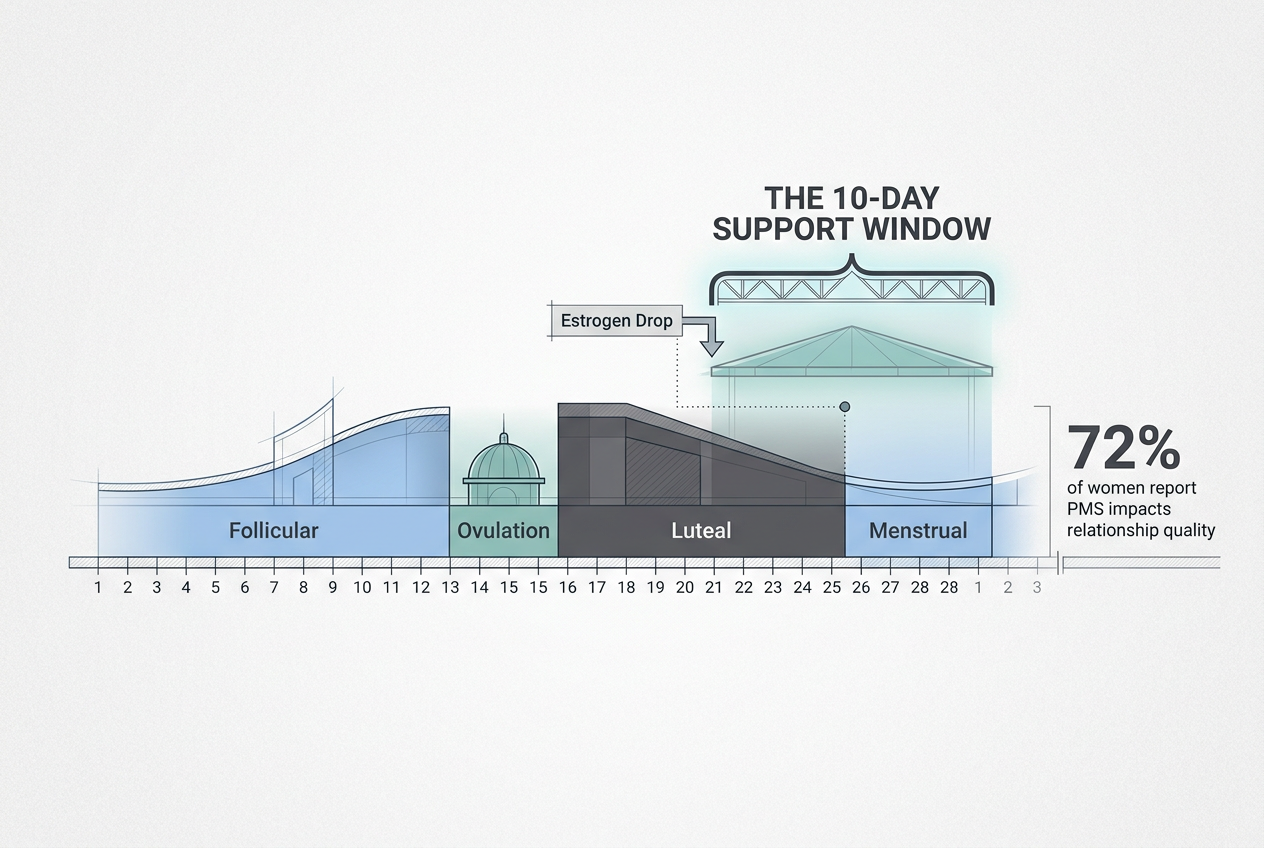 Understanding the 10-day support window is crucial for proactive partners, as it identifies the exact hormonal transition where emotional and physical support becomes most impactful.
The Luteal vs. Menstrual Phase Difference
The luteal phase comes first - this is when progesterone levels peak and then crash, creating the mood swings, irritability, and fatigue that characterize PMS. She's not "overreacting" - her serotonin levels are dropping alongside progesterone, creating a biochemical mood shift. Then comes the menstrual phase, when bleeding begins and prostaglandins (hormone-like chemicals that trigger uterine contractions) cause cramping and physical discomfort.
Understanding this sequence means you can anticipate her needs. The luteal phase requires emotional validation and space. The menstrual phase requires physical comfort and presence. They're different biological events requiring different support strategies.
A normal menstrual cycle ranges from 21 to 35 days, with the period lasting 2 to 7 days, according to the American College of Obstetricians and Gynecologists (ACOG). That means the menstrual phase is only one part of a larger hormonal loop - and the partners who understand the full cycle provide better, more proactive support.
If you want to dig deeper into how your girlfriend's cycle affects mood and behavior throughout the month, tracking the full 28-day pattern gives you predictive power instead of reactive guesswork.
Physical Support: Being the Chief Comfort Officer
Your girlfriend's body is running a biological marathon during her period, and physical support is not optional - it's the foundation of proactive partnership. More than 50% of women report painful periods (dysmenorrhea) at some point in their lives, according to ACOG, and your actions can directly reduce the severity of those symptoms.
Heat and Massage: Why They Work
Heat therapy works because it relaxes uterine muscles and increases blood flow to the pelvic area, reducing cramping intensity. A heating pad, hot water bottle, or even a warm bath can provide immediate relief. Place the heat source on her lower abdomen or lower back - those are the two primary pain zones during menstruation.
Massage targets the same mechanism. Light, circular pressure on her lower back or abdomen can ease muscle tension and reduce pain signals. You don't need professional technique - just ask where it hurts and apply gentle, sustained pressure. The act of touch also releases oxytocin, which has a mild analgesic (pain-reducing) effect.
The "Period Kit": Stashing Products
Keep a dedicated "period kit" stocked with organic tampons, pads, panty liners, and pain relief options. This removes the mental load of her having to ask or scramble when bleeding starts. Store it somewhere accessible - bathroom cabinet, bedside drawer, or travel bag if you're on the go.
Include NSAIDs (ibuprofen or naproxen) or paracetamol in the kit. NSAIDs work by blocking prostaglandins, the chemicals that cause uterine contractions and cramping. Paracetamol doesn't block prostaglandins but can reduce pain perception. Ibuprofen is typically more effective for menstrual cramps specifically.
Medication Management: NSAIDs vs. Paracetamol
NSAIDs (Non-Steroidal Anti-Inflammatory Drugs) like ibuprofen or naproxen are the gold standard for menstrual pain because they directly target the prostaglandin pathway. They reduce inflammation, cramping, and pain intensity. Recommended dosage is 200-400mg of ibuprofen every 4-6 hours, or 220-440mg of naproxen every 8-12 hours - but always follow the label and consult a doctor if pain persists.
Paracetamol (acetaminophen) is a pain reliever but not an anti-inflammatory. It's a good alternative if she can't take NSAIDs due to stomach sensitivity or other contraindications. Typical dosage is 500-1000mg every 4-6 hours, with a maximum of 4000mg per day.
The key is timing: NSAIDs work best when taken at the first sign of cramping, not after pain has already peaked. Encourage her to take medication early, and keep the kit stocked so she never has to hunt for it.
For more on how to support your girlfriend during period mood swings, understanding the physical side is only half the equation - emotional validation matters just as much.
The Period Pantry: Science-Backed Nutrition
What she eats during her period isn't just comfort food - it's biochemistry. The right nutrients can reduce cramping, stabilize mood, and ease bloating, while the wrong foods amplify inflammation and discomfort. Here's the science-backed breakdown of what to stock and why.
Magnesium: Dark Chocolate and Beyond
Magnesium is a muscle relaxant, and uterine cramping is caused by involuntary muscle contractions. That's why dark chocolate (70% cacao or higher) is a period staple - it's rich in magnesium and provides a mood-boosting serotonin bump. One ounce of dark chocolate contains about 64mg of magnesium, roughly 15-20% of the daily recommended intake for women.
Other magnesium-rich options: leafy greens (spinach, kale), almonds, avocados, and bananas. If she's experiencing severe cramping, magnesium supplementation (200-400mg daily) can help, but consult a healthcare provider first.
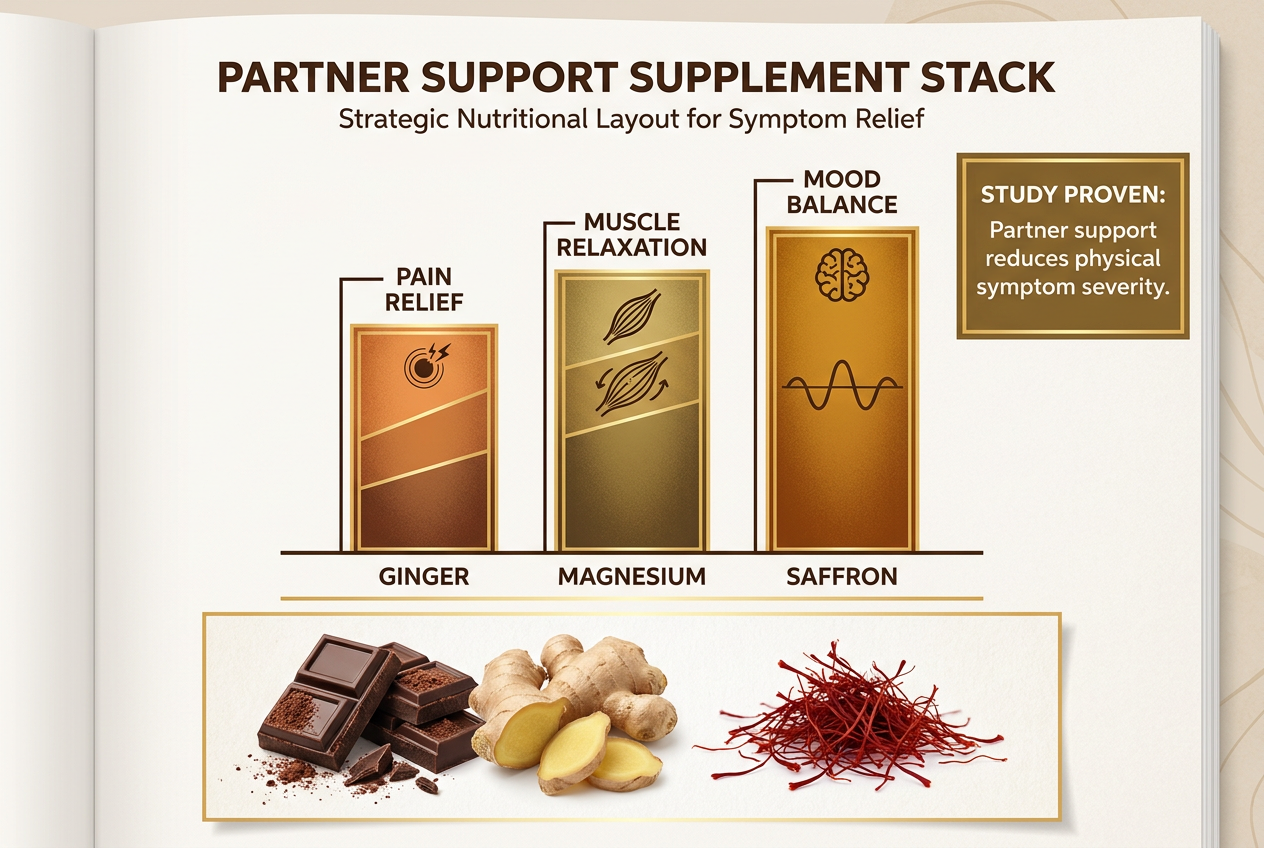 Providing science-backed snacks like dark chocolate for magnesium and ginger for pain relief demonstrates proactive care that goes beyond just buying generic sweets.
Ginger and Saffron: Clinical Evidence
Ginger is an anti-inflammatory powerhouse. Studies show that ginger extract reduces menstrual pain as effectively as ibuprofen by blocking prostaglandin production. You can brew fresh ginger tea (slice a 1-inch piece of ginger root, steep in hot water for 10 minutes) or use ginger capsules (500-1000mg per day, divided into doses).
Saffron (Crocus sativus) goes even further. A 2025 study published in the Korean Journal of Family Medicine found that saffron significantly improves both physical pain and mood symptoms during menstruation. The recommended dosage is 30mg of saffron extract per day, taken as a supplement or steeped as tea. Saffron works by modulating serotonin levels, which explains its dual effect on pain and mood.
The Bloating Trap: Healthy Meals vs. Junk Food
She'll crave salty, fatty, or sugary foods - those cravings are real, driven by fluctuating blood sugar and serotonin dips. But junk food amplifies bloating and inflammation, making her feel worse 2-3 hours later. The better play: cook a nutrient-dense meal that satisfies the craving without the crash.
High-sodium foods (chips, fast food) cause water retention and worsen bloating. Refined carbs (white bread, pastry) spike insulin and increase inflammation. Instead, offer:
- Protein-rich meals: Grilled chicken, salmon, or tofu stabilize blood sugar and reduce cravings.
- Complex carbs: Sweet potatoes, quinoa, or whole-grain pasta provide sustained energy without the crash.
- Hydration: Water with lemon or herbal tea (peppermint, chamomile) reduces bloating and supports digestion.
If you're not sure what she needs at any given moment, learning how to tell which cycle phase your girlfriend is in gives you the timing cues to stock the right foods before cravings hit.
Communication Pivot: What to Say (and Never Say)
The menstrual phase is not the time for solutions - it's the time for validation. Your girlfriend's serotonin levels are at their lowest point of the cycle, which means her emotional resilience is reduced and her sensitivity to criticism is heightened. What you say and how you say it determines whether you reduce friction or escalate conflict.
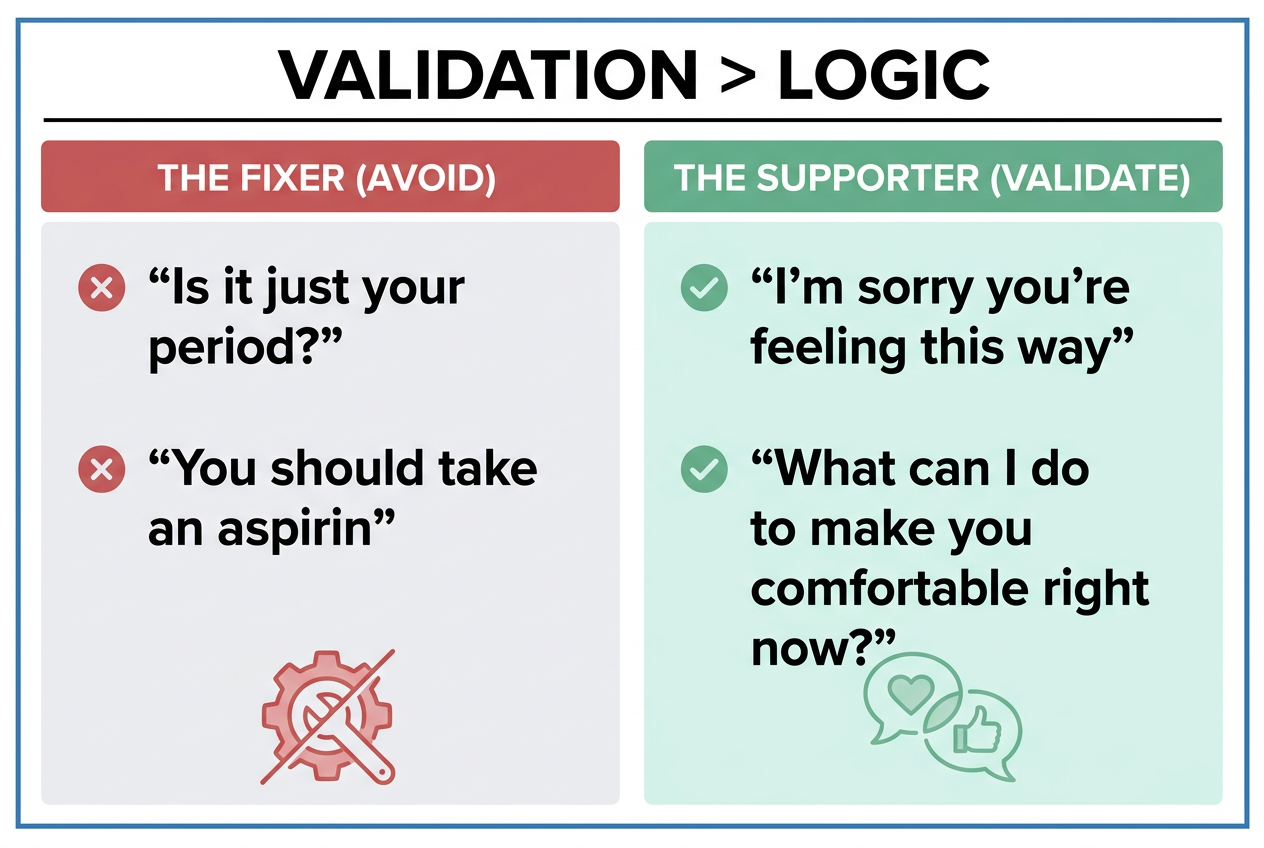 Switching from a 'fixer' mindset to a validation-first approach can significantly reduce relationship friction and help your partner feel heard and supported during hormonal shifts.
The "Golden Rule": Validate the Feeling, Don't Fix the Hormone
When she's upset, your instinct is to solve the problem. Resist that instinct. She doesn't need you to fix her hormones - she needs you to acknowledge that what she's feeling is real and valid. The difference between these two approaches determines whether the conversation de-escalates or explodes.
| If She Says... | Don't Say This | Say This Instead |
|---|---|---|
| "I'm so tired I can barely function." | "You should get more sleep." / "Everyone gets tired." | "That sounds exhausting. What can I take off your plate today?" |
| "Everything is irritating me today." | "You're overreacting." / "It's just your hormones." | "I can see you're dealing with a lot right now. How can I help?" |
| "I feel awful and I don't know why." | "You're fine, it'll pass." / "It's not that bad." | "That sounds really hard. I'm here if you need anything." |
| "I don't want to do anything social this weekend." | "You always cancel plans." / "You need to get out more." | "Got it. Let's stay in. Want me to grab takeout?" |
| "I'm cramping really badly." | "Have you tried taking medicine?" (as first response) | "That sounds painful. Do you need heat, meds, or both?" |
Scripts for Success: The Minnerva Clinic Model
The Minnerva Clinic provides specific dialogue scripts for partners, and their model works because it prioritizes acknowledgment over advice. Here's the core framework:
Step 1: Name what you observe. "You seem quieter today" / "I noticed you're not feeling great."
Step 2: Validate without judgment. "That makes sense - your period just started" / "I know this week is tough for you."
Step 3: Offer support without assuming what she needs. "What would help right now?" / "Do you want company or space?"
This three-step pattern shifts the conversation from reactive (defending yourself or offering unsolicited advice) to proactive (creating space for her to name what she needs).
What Never to Say - Ever
Certain phrases are relationship landmines during the menstrual phase. Avoid these completely:
- "Are you on your period?" (Dismisses her feelings as hormone-driven, not legitimate)
- "You're being crazy." (Invalidates her experience and attacks her character)
- "It's just your hormones." (Reduces her to biology, ignoring the real discomfort)
- "Other women handle this better." (Comparison is not support - it's criticism)
- "You need to calm down." (Commands escalate tension; they don't defuse it)
If you want a deeper dive into how to talk to your girlfriend during PMS, the same validation-first framework applies throughout the luteal phase, not just during active bleeding.
Tracking Together: How to Be Proactive, Not Reactive
The difference between a reactive partner and a proactive partner is information. Reactive partners wait until she's already in pain, irritable, or exhausted - then scramble to respond. Proactive partners track her cycle, anticipate her needs, and show up with the right support before she has to ask.
Benefits of Shared Tracking Apps
Shared cycle-tracking apps like Flo for Partners, Hormona, or VibeCheck allow you to see where she is in her cycle and what symptoms or mood shifts to expect. This isn't surveillance - it's strategic partnership. When you know she's entering the luteal phase, you can stock the kitchen with magnesium-rich snacks, clear your weekend schedule for low-key plans, and prepare emotionally for potential friction.
Research from the Global Journal of Health Science shows that educational intervention for spouses significantly decreased both physical and psychological-behavioral symptoms in women after 3 months. Translation: when partners understand the cycle and adjust their behavior accordingly, women report less severe PMS symptoms and improved relationship quality.
Tracking apps provide three core benefits:
- Predictive alerts: You get notifications when her period is about to start or when she's entering a high-symptom phase.
- Symptom logging: She can log mood, pain, energy levels, and cravings - giving you real-time data on what she needs.
- Pattern recognition: Over 2-3 months, you'll start seeing patterns (e.g., she always wants space on Day 24, or she's always social on Day 12). That's when you stop guessing and start leading.
How to "Predict" Her Needs Before She Knows She Has Them
Once you've tracked 2-3 full cycles, you'll notice recurring patterns. Use those patterns to anticipate her needs:
- Luteal phase (Days 15-28): Stock comfort snacks, prepare for emotional sensitivity, avoid scheduling high-pressure events.
- Menstrual phase (Days 1-7): Have heating pads ready, clear her schedule where possible, offer low-key companionship or space - whichever she prefers.
- Follicular phase (Days 8-14): This is her energy peak - plan adventures, deep conversations, or social events during this window.
- Ovulation (Around Day 14): Her confidence and libido peak here - lean into connection and physical intimacy.
Proactive partners don't wait for her to say "I need help." They notice the calendar and act first. That's the difference between being a good boyfriend and being an elite partner.
If you're serious about leveling up, check out our guide on how to track your girlfriend's cycle as a boyfriend - it covers app selection, privacy considerations, and how to have the "let's track together" conversation without making it weird.
When to Encourage Professional Help
Your support is valuable - but it has limits. Some menstrual symptoms exceed the "normal" range and require medical evaluation. Recognizing when to encourage professional help is a vital partner skill that protects her health and demonstrates that you take her pain seriously.
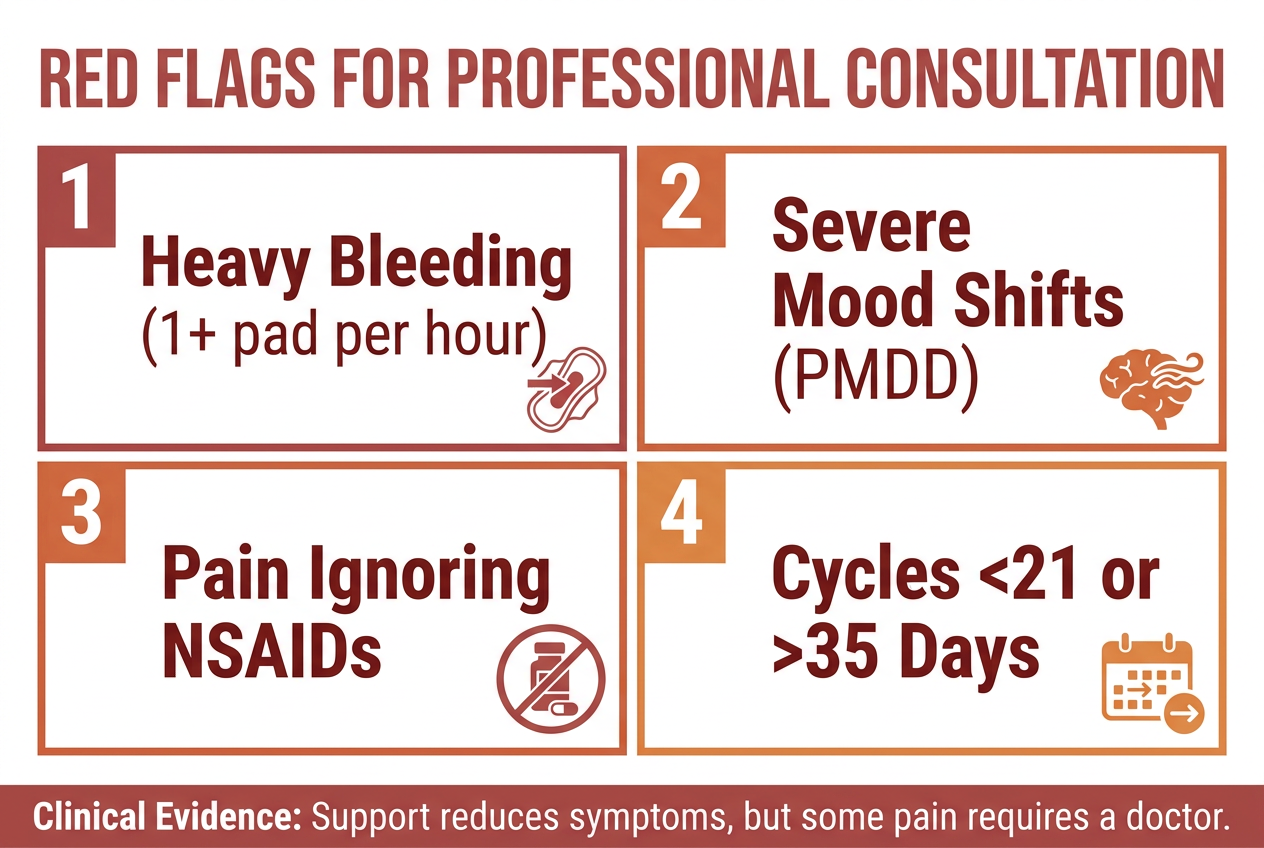 Recognizing when menstrual symptoms exceed the 'normal' range is a vital partner skill, ensuring she receives professional medical attention when home care isn't enough.
Red Flags: Heavy Bleeding, Severe Pain, PMDD
Watch for these warning signs and encourage her to see a healthcare provider if any occur:
Heavy bleeding (Menorrhagia):
- Soaking through one pad or tampon per hour for several consecutive hours
- Bleeding lasting longer than 7 days
- Passing blood clots larger than a quarter
- Symptoms of anemia (fatigue, dizziness, shortness of breath)
Normal period blood loss is only 2 to 3 tablespoons (30-45ml) per cycle, according to Bodyform research. If her bleeding significantly exceeds that, it's not normal - it's a medical issue.
Severe pain unresponsive to NSAIDs:
- Cramping so intense it interferes with daily activities (work, school, movement)
- Pain that doesn't improve with ibuprofen or naproxen taken at recommended doses
- Pain that radiates to the legs, lower back, or rectum
- Painful bowel movements or urination during menstruation
These symptoms may indicate endometriosis, fibroids, or other conditions that require diagnosis and treatment.
Premenstrual Dysphoric Disorder (PMDD): PMDD is PMS on steroids - severe mood shifts, depression, anxiety, irritability, or rage that disrupt her ability to function. About 3-8% of menstruating women have PMDD, and it's a clinical diagnosis that requires treatment (often SSRIs or hormonal therapy). If her mood symptoms are severe enough to interfere with work, relationships, or daily life, encourage her to see a mental health professional or gynecologist who specializes in PMDD.
The Conversation: How to Bring It Up
Suggesting she see a doctor can feel like you're dismissing her pain or implying she's "broken." Frame it as advocacy, not criticism:
Don't say: "You should really see a doctor about this." Say instead: "I've noticed your pain is getting worse, and I'm worried. Would it help if I helped you find a specialist or came with you to an appointment?"
Don't say: "Your mood swings are out of control." Say instead: "I can see how much you're struggling during this part of your cycle. Have you thought about talking to someone who specializes in PMDD? I'll support you however you need."
Your role is not to diagnose - it's to notice patterns, validate her experience, and remove barriers to care. Offer to research providers, schedule the appointment, or go with her if she wants support.
For more on understanding the full cycle and how to support your girlfriend during different cycle phases, the menstrual phase is just one part of a 28-day loop - and mastering the full pattern makes you a more effective partner year-round.
Ready to actually understand her?
Join thousands of men using VibeCheck to track her cycle and show up better every day.
Frequently Asked Questions
What is the 7-2-1 rule for menstruation?
The 7-2-1 rule is a social media trend suggesting that partners should provide extra support 7 days before the period, 2 days during, and 1 day after. While the intent is good, the framework is oversimplified. Research from Hormona identifies a 9-10 day "support window" that spans the late luteal phase through the menstrual phase, which is more biologically accurate. The 7-2-1 rule works as a rough guideline, but a better approach is tracking her actual cycle and adjusting support based on her individual symptom patterns rather than a generic formula.
How can a man help a woman on her period?
A man can help by providing three categories of support: physical comfort (heating pads, NSAIDs, massage), logistical support (taking tasks off her plate, stocking period products, preparing meals), and emotional validation (listening without offering unsolicited advice, validating her feelings, avoiding dismissive language). Research from the Global Journal of Health Science shows that educational intervention for spouses significantly decreased both physical and psychological-behavioral symptoms in women after 3 months, meaning that learning about her cycle and adjusting your behavior accordingly has measurable clinical benefits - not just for the relationship, but for her symptom severity.
Does having a partner affect your period?
Yes - spousal support has been clinically shown to reduce the severity of menstrual symptoms. A 2015 study published in the Global Journal of Health Science found that women whose partners received education on the menstrual cycle reported lower physical and psychological-behavioral symptoms after 3 months compared to women whose partners did not. The mechanism is both biological (reduced stress lowers cortisol and inflammation, which can worsen cramping) and psychological (feeling supported improves pain tolerance and mood stability). In short: your actions as a partner don't just help her cope - they actually reduce her pain.
How to support a partner during the luteal phase?
The luteal phase (roughly Days 15-28 of her cycle) is when progesterone peaks and then crashes, triggering PMS symptoms like irritability, fatigue, bloating, and mood swings. Support her by offering emotional validation instead of solutions, giving her space when she needs it, stocking comfort foods (dark chocolate, ginger tea, magnesium-rich snacks), and avoiding high-conflict conversations or scheduling high-pressure events during this phase. The luteal phase is the "storm week" before the period arrives - your job is to be a stabilizing force, not an additional stressor. For a full breakdown, see our guide on how to support your girlfriend during the luteal phase.
What should I avoid saying to my girlfriend during her period?
Never say: "Are you on your period?" (dismissive), "You're being crazy" (invalidating), "It's just your hormones" (reductive), "Other women handle this better" (comparison is not support), or "You need to calm down" (escalates conflict). These phrases invalidate her experience and attack her character rather than acknowledging the biological reality she's navigating. Instead, use validation-first language: "That sounds really hard," "How can I help?" or "I'm here if you need anything." The goal is to acknowledge her discomfort without dismissing it or making it about you.
How do I know if my girlfriend's period symptoms are abnormal?
Watch for these red flags: soaking through one pad or tampon per hour for several consecutive hours, bleeding lasting longer than 7 days, passing blood clots larger than a quarter, cramping so severe that NSAIDs don't help, pain that interferes with daily activities, or severe mood shifts that disrupt her ability to function (potential PMDD). Normal period blood loss is only 2-3 tablespoons per cycle, and more than 50% of women report painful periods at some point - but "common" doesn't mean "untreatable." If her symptoms exceed what heating pads and ibuprofen can manage, encourage her to see a gynecologist or specialist who can diagnose underlying conditions like endometriosis or fibroids.
Should I track my girlfriend's cycle without telling her?
No - tracking her cycle without her knowledge crosses into surveillance, not partnership. Instead, have an open conversation: "I want to understand your cycle so I can support you better. Would it help if we used a shared tracking app?" Consent and transparency are non-negotiable. Apps like Flo for Partners, Hormona, or VibeCheck allow her to share cycle data with you voluntarily, and she controls what you see. The goal is mutual understanding, not secret monitoring. If she's uncomfortable with tracking, respect that boundary and focus on observing her mood and energy patterns in real time instead.
Can I do anything to reduce my girlfriend's period pain?
Yes - partner support has been clinically shown to reduce symptom severity. Provide heat therapy (heating pad or hot water bottle on her lower abdomen or back), encourage her to take NSAIDs early (before pain peaks), prepare anti-inflammatory meals (ginger tea, dark chocolate, leafy greens), offer massage (light pressure on her lower back or abdomen), and reduce her stress load by taking tasks off her plate. Studies show that educational intervention for spouses reduces both physical and psychological symptoms, meaning that your understanding of her cycle and proactive support literally reduces her pain - not just emotionally, but physiologically.
Ready to stop guessing and start leading? Download VibeCheck to track her cycle, get daily insights on her mood and energy, and receive actionable missions that turn you from a reactive partner into the support crew she didn't know she needed. Join 10,000+ men who've reduced relationship friction by 58% by understanding the biological rhythm behind the woman they love.
Tags

Related Articles
Continue reading to deepen your understanding

Your Girlfriend Is Withdrawn During Ovulation? What It Actually Means and How to Respond
Is your girlfriend suddenly distant mid-cycle? This guide covers the biological causes of ovulation withdrawal and how to support her with an invisible framework.

When Your Girlfriend Is Sensitive to Criticism During the Luteal Phase: The Partner’s Science-Based Action Guide
Does your partner react intensely to feedback right before her period? Understand the biology behind luteal phase rejection sensitivity and learn how to communicate effectively.

How to Give Your Girlfriend Reassurance During the Follicular Phase: A Partner’s Tactical Guide
Is your girlfriend feeling vulnerable after her period? Learn why the early follicular phase causes emotional lows and how you can provide the specific reassurance she needs to feel secure.

Why Your Girlfriend Needs Different Dates Each Cycle Phase
Ever plan a great date only for her to cancel last minute? Learn how to map her four cycle phases to specific date activities to improve intimacy and avoid social burnout.

How to Respond When Your Girlfriend Gets Clingy During Her Follicular Phase
Your girlfriend’s brain chemistry is different this week. Rising estrogen levels cause social drive to peak. Here is how to respond to her need for connection effectively.

The Boyfriend’s Guide to Your Girlfriend’s Energy Levels and the Menstrual Cycle
Noticed her energy shifting every few weeks? Stop guessing and start supporting. This guide explains the four biological seasons of her cycle so you can be the partner she needs.

Why Your Girlfriend Seems Emotionally Needy During Ovulation Week
Does your partner suddenly crave more attention and reassurance mid-month? It is not insecurity—it is biology. Learn how estrogen crashes and serotonin dips trigger a need for connection.

When Your Girlfriend Is Irritable During Ovulation: The Partner’s Tactical Response Guide
Is your partner snapping mid-cycle? Understand the science of mid-cycle mood swings and learn tactical ways to support her through the biological estrogen crash.