Best Time to Approach for Sex: Menstrual Timing Guide (2026)
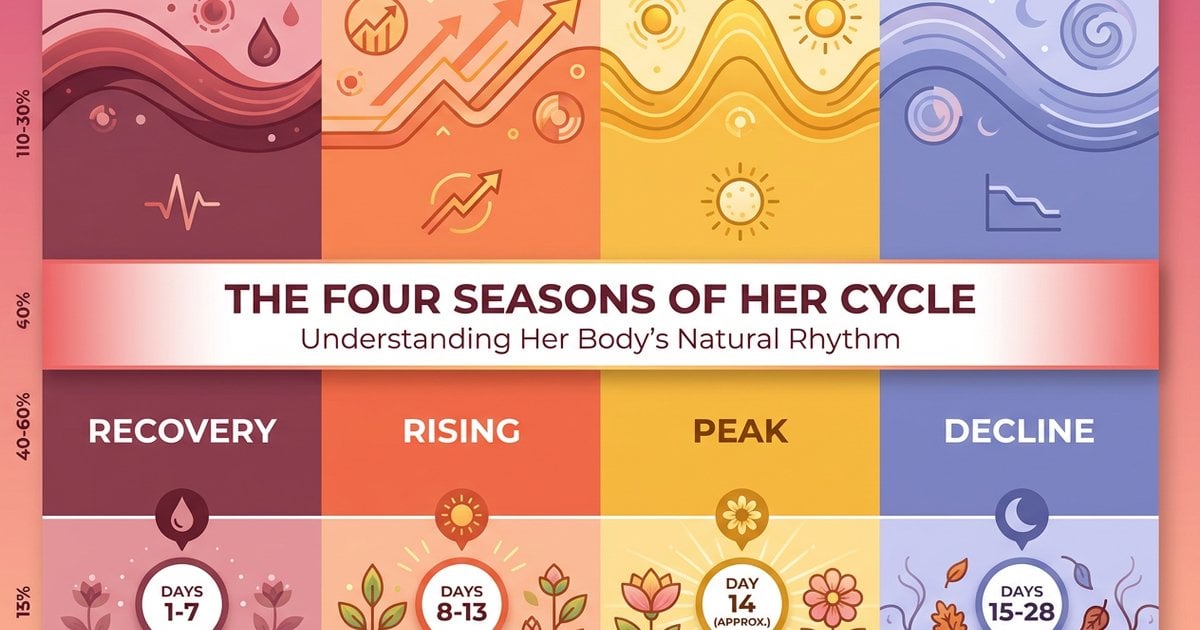
Stop getting rejected and learn her biological rhythm. Discover the best time to approach for sex by understanding her menstrual cycle phases and timing window.
The Partner’s Playbook: When to Approach Your Partner for Intimacy
You’re not imagining it. Some weeks she lights up when you initiate. Other weeks, the same approach gets you shut down before you finish the sentence.
The difference isn’t you. It’s timing.
Her menstrual cycle creates a biological rhythm that affects energy, confidence, and desire in predictable patterns. Most men treat this rhythm like random weather. The smart ones learn to read it like a map.
This guide shows you how to identify the natural "yes window" in her cycle, reduce rejection, and build a deeper connection by syncing with her biology instead of fighting it.
VibeCheck App
Know what she needs. Before she has to say it.
Track her cycle, understand her phases, be the partner she deserves.
Download Free on iOS →Table of Contents
- Understanding the Four Seasons of Her Cycle
- The Science of the "Yes" Window
- The Phase-by-Phase Approach Manual
- How to Track Without Being Weird About It
- Common Mistakes That Kill the Moment
- Beyond Biology: The 24-Hour Rule
- Frequently Asked Questions
Understanding the Four Seasons of Her Cycle
BLUF: Her cycle has four distinct phases that affect energy, mood, and libido in predictable patterns. Learn these seasons to stop guessing and start connecting.
Think of her menstrual cycle as four biological seasons. Each one shifts her energy, confidence, and receptivity in specific ways. When you learn to recognize these patterns, you move from guessing to strategic support.
The 28-day cycle (though it varies from 21-35 days for many women) breaks down into four phases, each with its own hormonal signature.
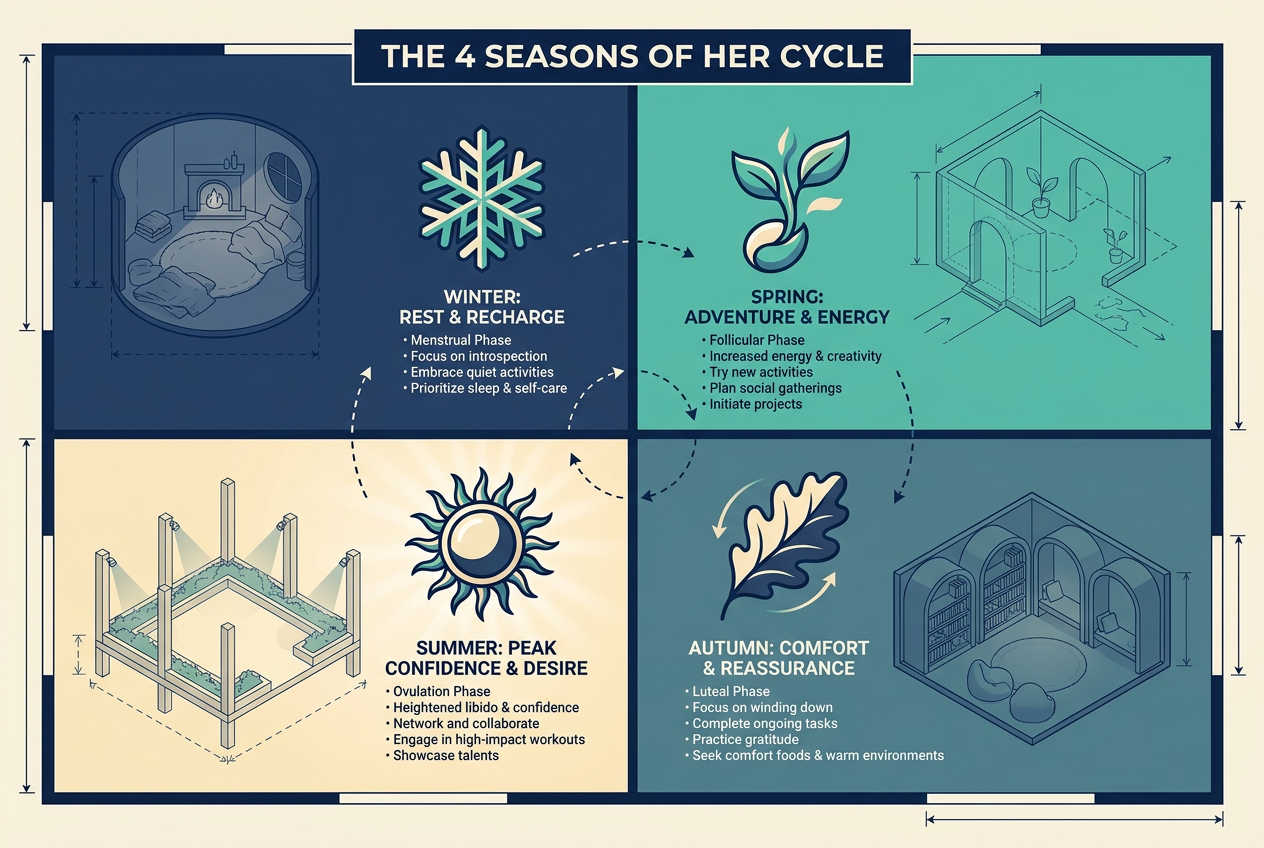 Understanding the four biological seasons helps you move away from guesswork and toward a more empathetic, synchronized rhythm with your partner’s natural energy levels.
| Phase | Duration | Hormones | Her Energy | Intimacy Focus |
|---|---|---|---|---|
| Winter (Menstrual) | Days 1-5 | Low estrogen, low progesterone | Lowest, needs rest | Non-sexual touch, acts of service |
| Spring (Follicular) | Days 6-13 | Rising estrogen | Building energy | New experiences, playful connection |
| Summer (Ovulation) | Days 14-16 | Peak estrogen + testosterone surge | Highest confidence and energy | Direct initiation, high receptivity |
| Autumn (Luteal) | Days 17-28 | Progesterone rises, then drops | Declining, more sensitive | Emotional connection first, reassurance |
These aren’t arbitrary labels. Estrogen literally affects neurotransmitter production in her brain. When it’s high, she produces more dopamine and serotonin. When it crashes before her period, those feel-good chemicals drop too.
Understanding this pattern means you can anticipate her needs instead of reacting to her mood after you’ve already messed up. You’re learning to understand your partner’s cycle as a strength, not a mystery.
The Science of the "Yes" Window
BLUF: Ovulation creates a 2-3 day window where biology stacks the deck in your favor. Estrogen and testosterone peak together, creating natural confidence and higher libido.
The "yes window" is real, and it’s backed by decades of research. During ovulation, your partner’s body releases a surge of estrogen and testosterone. This combination creates the biological conditions for peak receptivity.
Here’s what’s happening in her body:
Estrogen peaks around ovulation, which increases blood flow to her entire body (including all the places that matter for intimacy). It also boosts dopamine production in her brain, making her feel more confident and social.
Testosterone surges at the same time. Yes, women produce testosterone too, and it’s directly linked to libido. This surge typically happens 24-48 hours before ovulation and creates the highest natural sex drive of her entire cycle.
LH (Luteinizing Hormone) spikes to trigger egg release. This hormonal cascade doesn’t just affect fertility. It affects mood, energy, confidence, and desire all at once.
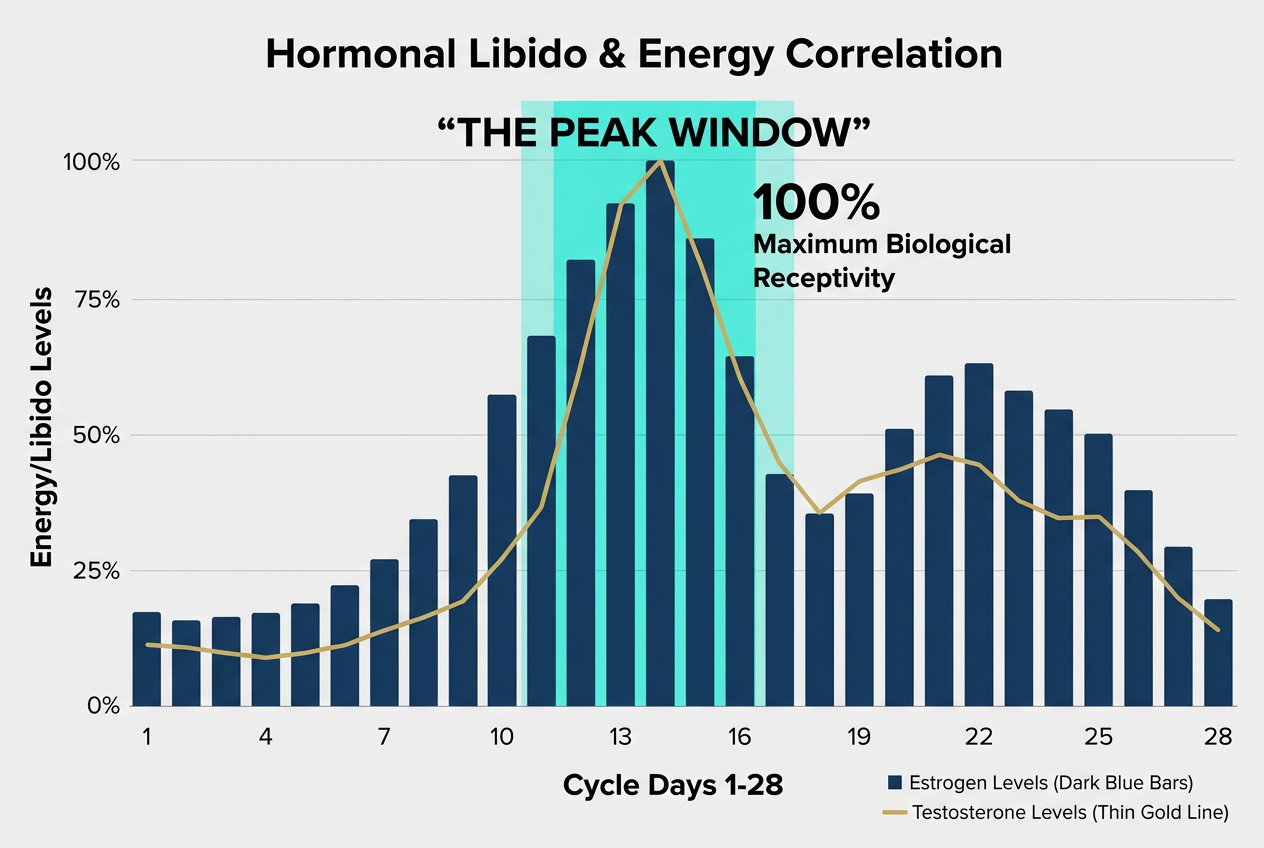 Science-powered empathy: By understanding the surge of Estrogen and Testosterone, you can identify the window where biological receptivity and confidence are at their highest.
Research published in the journal Hormones and Behavior found that women report significantly higher sexual desire during the ovulatory phase compared to all other phases. Another study in Evolution and Human Behavior showed that women choose more form-fitting clothing and report feeling more attractive during this window.
Translation: She’s biologically primed to feel confident, attractive, and receptive. Your job is to match that energy with the right approach.
But here’s the catch: The approach starts 24 hours before the bedroom.
Ovulation might create the biological conditions for a "yes," but emotional disconnection will override biology every time. If you’ve been distant all week and suddenly turn on the charm during her peak window, you’ll still get shut down.
The science of the sex window shows that timing matters, but connection matters more.
The Phase-by-Phase Approach Manual
BLUF: Each phase requires a different strategy. Match your approach to her current biological season to increase receptivity and reduce friction.
Forget the one-size-fits-all approach. What works during ovulation falls flat during her menstrual phase. Here’s your tactical playbook for each season.
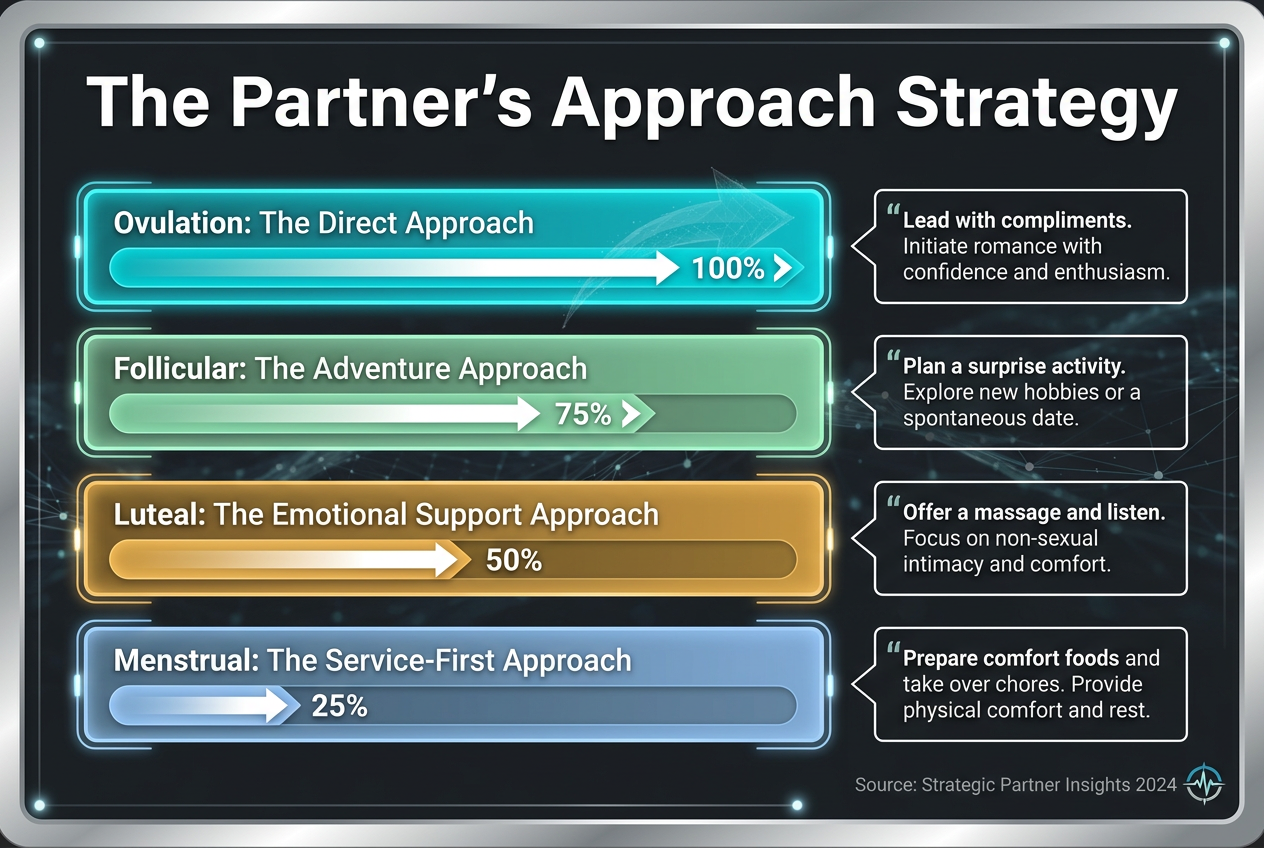 Adjusting your approach strategy based on the current phase of her cycle reduces friction and demonstrates a high level of emotional intelligence and care.
Winter: The Menstrual Phase (Days 1-5)
Her Reality: Cramping, fatigue, brain fog. Estrogen and progesterone are at their lowest. Her body is literally shedding tissue and rebuilding. Energy is scarce.
Your Strategy: Acts of service, not seduction.
This is not the time to initiate. Full stop. But it’s the perfect time to bank emotional capital that pays dividends later.
What to say:
- "I picked up dinner so you don’t have to think about cooking."
- "I’ll handle the dishes. You rest."
- "Do you want a heating pad or a foot rub?"
What NOT to say:
- "Are you on your period?" (Never ask this. Ever.)
- "Let me know when you’re back to normal."
- Anything that implies her needs are an inconvenience.
Physical touch during this phase should be about comfort, not arousal. Think: back rubs, holding her while you watch TV, running her a bath. Zero-pressure cuddling builds connection without creating obligation.
If you want detailed strategies for this phase, read our guide on how to help your girlfriend during her menstrual phase.
Spring: The Follicular Phase (Days 6-13)
Her Reality: Energy is rebuilding. Estrogen is climbing steadily. She’s starting to feel more social, creative, and open to new experiences.
Your Strategy: Suggest novelty and adventure.
This is the phase for trying that new restaurant, planning a weekend trip, or suggesting something you’ve never done together. Her brain is primed for dopamine, and new experiences deliver it.
What to say:
- "I saw this hiking trail we’ve never tried. Want to check it out this weekend?"
- "Let’s try making that recipe you saved a while back."
- "What if we did something spontaneous on Saturday?"
What NOT to say:
- "Let’s just stay in and watch the same show again."
- Anything that sounds routine or predictable.
Physical intimacy during this phase benefits from creativity. She’s more open to trying new things in the bedroom too. This is when you suggest that position you’ve been thinking about or introduce a playful element you’ve discussed before.
The key is matching her rising energy with your own. Don’t approach her like she’s fragile. She’s not. She’s building momentum.
Learn more about this phase in our guide on how to help your girlfriend during the follicular phase.
Summer: The Ovulation Phase (Days 14-16)
Her Reality: Peak confidence. Peak energy. Peak libido. Estrogen and testosterone are both surging. She feels attractive, social, and sexually confident.
Your Strategy: Be direct, flirtatious, and complimentary.
This is your window. Biology is on your side. But you still have to show up properly.
What to say:
- "You look incredible today." (Say this even if she’s wearing sweatpants.)
- "I can’t stop thinking about you."
- "I love the way you [specific thing she did recently]."
What NOT to say:
- Anything that sounds needy or uncertain.
- "Are you in the mood?" (Just show your interest. Don’t poll her.)
Physical approach during this phase can be direct. She’s not guessing about your interest, and she doesn’t want you to guess about hers. Match her confidence with your own.
This is also the phase where spontaneous intimacy is most likely to work. The "surprise her when she gets home" move that feels risky during other phases? This is when it lands.
But remember: Direct doesn’t mean aggressive. Confidence isn’t pressure. You’re making your interest clear, not demanding a response.
For more on capitalizing on this window, check out support your girlfriend during the ovulation phase.
Autumn: The Luteal Phase (Days 17-28)
Her Reality: Progesterone rises, then crashes. Energy declines. Mood becomes more sensitive. She might feel bloated, irritable, or anxious as her period approaches.
Your Strategy: Lead with emotional support, then gauge physical interest.
This phase is tricky because it’s long (nearly two weeks) and changes as it progresses. Early luteal phase (days 17-21) can still have good energy. Late luteal phase (days 22-28) is when PMS symptoms typically appear.
What to say (early luteal):
- "What do you need tonight? I’m flexible."
- "I’m here if you want to talk, or we can just hang out."
What to say (late luteal):
- "You’ve had a rough week. Let me take care of dinner."
- "Do you want space, or do you want company?"
- "I’m not going anywhere. Just tell me what helps."
What NOT to say:
- "Why are you being so sensitive?"
- "It’s not that big of a deal."
- "Are you PMSing?" (This is relationship arson.)
Physical intimacy during this phase needs to start with emotional connection. The direct approach that worked during ovulation will backfire here. Instead, create a low-pressure environment where she feels safe and supported.
If she initiates during this phase, great. Follow her lead. If she doesn’t, don’t push. You’re banking goodwill for the next cycle.
For tactical communication during this phase, read what to say when your girlfriend has PMS.
How to Track Without Being Weird About It
BLUF: Use a shared tracking app that positions you as a support system, not a surveillance operation. Frame it as wanting to understand her rhythm to be a better partner.
Let’s address the elephant in the room: Tracking your partner’s cycle can sound creepy if you do it wrong.
The difference between supportive and stalker-ish comes down to consent, communication, and framing.
Start the Conversation Right
Don’t surprise her with "I’ve been tracking your period." That’s a fast track to a fight.
Instead, try this script:
"I’ve been reading about how the menstrual cycle affects energy and mood. I want to understand your rhythm better so I can be more supportive. Would you be open to sharing your cycle info with me so I know when to step up?"
Notice what this script does:
- Acknowledges you’ve been learning (not guessing)
- Focuses on support, not sex
- Asks permission, doesn’t assume
- Makes it about helping her, not "hacking" her
Choose the Right Tool
Not all period trackers are built for partners. Some are medical-focused. Others are pregnancy-focused. You need one designed for relationship support.
Look for apps with partner view features that let you:
- See her current phase without intimate medical details
- Get daily tips on how to support her
- Track her mood patterns over time
- Set reminders for support actions (not intimacy requests)
VibeCheck was built specifically for this. It translates her cycle into actionable relationship intelligence without turning you into a biologist.
Other options worth exploring are covered in our comparison of the best period tracker apps for men.
Make It Collaborative, Not Covert
The goal is shared tracking, not solo surveillance.
Suggest using an app together where she inputs her data and you both see the insights. This keeps you on the same team instead of making her feel monitored.
Some couples use period trackers for couples to share this information transparently. The key is mutual visibility and mutual benefit.
What to Track (and What to Ignore)
Track:
- Current cycle phase
- General energy trends (high, medium, low)
- Mood patterns over time
- Symptoms she wants support with
Don’t track:
- Specific medical symptoms without her knowledge
- Sexual activity frequency (this creates pressure)
- Weight or body changes
- Anything she hasn’t explicitly shared
If she says "I don’t want you tracking this," respect it. Full stop. The goal is connection, not control.
Common Mistakes That Kill the Moment
BLUF: Timing is only part of the equation. Poor execution will override perfect timing every single time.
You can approach during her peak ovulation window and still get rejected if you make one of these critical errors.
Mistake 1: Treating Her Cycle Like a Vending Machine
The Error: Thinking "It’s day 14, so she should be down."
Why It Fails: Biology creates conditions, not guarantees. Stress, exhaustion, relationship tension, or a bad day at work will override hormones every time.
The Fix: Use cycle knowledge as a baseline, not a script. If she’s in her peak window but visibly stressed, read the room. Lead with support, not seduction.
Mistake 2: Only Showing Up During the "Yes Window"
The Error: Disappearing during her menstrual and late luteal phases, then magically reappearing during ovulation with flowers and compliments.
Why It Fails: She’s not stupid. She’ll recognize the pattern and feel used.
The Fix: Show up consistently across all four phases. The support you provide during Winter and Autumn is what makes your Summer approach land.
Mistake 3: Using Her Cycle as an Excuse
The Error: "You’re just upset because you’re about to start your period."
Why It Fails: Even if you’re technically right, you just invalidated her feelings. You’ve turned cycle awareness into a weapon, not a bridge.
The Fix: Never use cycle knowledge to dismiss her emotions. Instead, use it to anticipate needs. If she’s upset during late luteal, respond to the emotion without blaming hormones.
The difference between these two responses:
- Wrong: "You’re just hormonal."
- Right: "You’ve had a hard week. What do you need from me?"
Mistake 4: Ignoring Verbal and Non-Verbal Cues
The Error: Pushing forward because "the app says it’s her ovulation phase."
Why It Fails: Your app doesn’t know she had a fight with her boss today or that she feels bloated and unsexy.
The Fix: Learn to read female body language and verbal cues. If she’s giving you closed-off signals (crossed arms, one-word answers, pulling away from touch), back off regardless of what day of her cycle it is.
Mistake 5: Making It Transactional
The Error: Keeping a mental scorecard of "I did X during her period, so she owes me Y during ovulation."
Why It Fails: Intimacy built on obligation isn’t intimacy. It’s duty, and it kills desire faster than anything else.
The Fix: Provide support because you care, not because you expect a payoff. The connection you build by supporting her without expectation is what creates genuine desire later.
Beyond Biology: The 24-Hour Rule
BLUF: Successful intimacy starts 24 hours before the bedroom. Emotional disconnection overrides perfect biological timing every time.
Here’s the truth nobody tells you: The "best time to approach" starts the day before.
You can’t ignore her all week, show up during ovulation, and expect enthusiasm. Her body might be biologically primed, but her mind isn’t.
The research is clear. A study in Archives of Sexual Behavior found that relationship satisfaction was a stronger predictor of sexual desire than any hormonal factor. Translation: If she’s frustrated with you, biology won’t save you.
Pre-Heat the Emotional Connection
Think of intimacy like starting a fire. You don’t throw a match at a log and expect flames. You build up kindling first.
24 Hours Before:
- Have a real conversation (not logistics about who’s picking up groceries)
- Make her laugh
- Touch her non-sexually (hand on her back, kiss on the forehead, hold her hand)
- Do something thoughtful without being asked
12 Hours Before:
- Send a text that shows you’re thinking about her (not a "u up?" text)
- Take something off her plate without making a big deal about it
- Create space for her to relax
The Moment:
- Read her energy before making a move
- Start with affection, not seduction
- Let her response guide your next step
This isn’t manipulation. It’s emotional intelligence. You’re creating the conditions where she feels connected, valued, and safe. Those conditions matter more than estrogen levels.
The Role of Stress
Stress is the silent killer of the yes window. Even during peak ovulation, if her cortisol is elevated, her libido will be suppressed.
Cortisol (the stress hormone) literally blocks the receptors for estrogen and testosterone. When she’s stressed about work, money, family drama, or the fact that you haven’t cleaned the kitchen in three days, her body shifts into survival mode. Intimacy becomes a non-priority.
Your job is to reduce her stress load, not add to it. This means:
- Handling household tasks without being asked
- Listening when she vents (without trying to "fix" everything)
- Creating moments of peace in her day
For more on how to be this kind of partner, check out our guide on how to be a better boyfriend.
Consistency Over Intensity
One grand gesture during ovulation doesn’t offset three weeks of emotional absence.
She’s tracking your patterns just like you’re learning to track hers. If you only show up physically during her peak window, she’ll notice. And she’ll start to protect herself by pulling back emotionally.
The men who succeed at building lasting intimacy are the ones who show up consistently across all four phases. They don’t disappear during Winter and Autumn. They lean in harder.
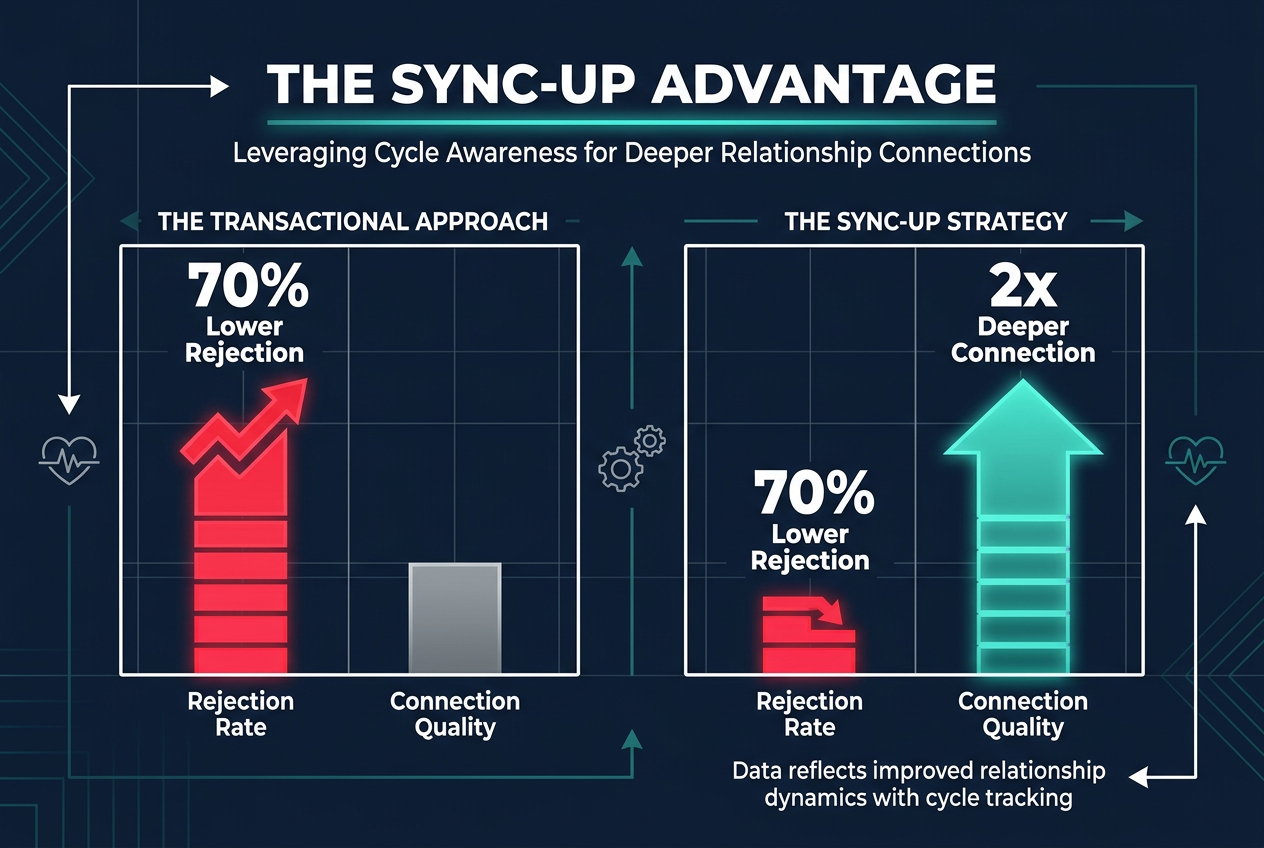 The Sync-Up Strategy isn’t just about timing; it’s about transforming your relationship from a series of transactional moments into a deeply connected, synchronized partnership.
Ready to actually understand her?
Join thousands of men using VibeCheck to track her cycle and show up better every day.
Frequently Asked Questions
When is the best time to approach my partner for sex based on her cycle?
The ovulation phase (typically days 14-16 of a 28-day cycle) offers the highest biological receptivity due to peak estrogen and testosterone levels. However, emotional connection matters more than timing. A direct approach during ovulation works if you’ve been supportive throughout her entire cycle. Without that foundation, even perfect timing will fail.
How do I know when my partner is ovulating?
Physical signs include increased energy, clearer skin, slightly higher body temperature, and sometimes increased cervical mucus. However, the most reliable method is using a period tracker for partners that she shares with you. These apps calculate ovulation based on her cycle data and give you advance notice of her peak window.
Is it wrong to track my partner’s cycle to time intimacy?
It depends entirely on your intent and her consent. Tracking to be a better support system and reduce friction is healthy. Tracking to manipulate her into sex is exploitative. Always have an open conversation about cycle tracking and make it collaborative. The goal should be understanding her needs, not "hacking" her biology for your benefit.
What if my partner’s sex drive doesn’t match the ovulation pattern?
Biological patterns create tendencies, not guarantees. Stress, medication (especially hormonal birth control), health conditions, and relationship dynamics can all override the expected pattern. If her libido doesn’t peak during ovulation, have a conversation about what factors affect her desire. Don’t assume the pattern applies universally without checking in with her.
Can I still initiate during other phases of her cycle?
Absolutely. Intimacy isn’t restricted to ovulation. Many women experience desire during other phases, especially early follicular (days 6-10) when energy is building. The key is reading her cues and matching your approach to her current energy level. Be direct during high-energy phases and emotionally supportive during low-energy phases.
How do I bring up cycle tracking without sounding creepy?
Frame it as wanting to understand her better and provide better support. Try saying: "I’ve been learning about how the menstrual cycle affects energy and mood. I want to understand your rhythm so I can be a better partner. Would you be open to sharing that information with me?" Focus on support, ask for consent, and make it collaborative rather than covert.
What should I do if she rejects my advances during her ovulation phase?
Respect the "no" without making her feel guilty. Biology creates conditions, not obligations. She might be stressed, tired, or dealing with something you don’t know about. Your response matters more than the rejection itself. Say something like "No problem, I’m here if you need anything" and drop it. Don’t pout, pressure, or bring it up later as evidence of a problem.
Does hormonal birth control change the cycle patterns?
Yes, significantly. Hormonal birth control suppresses natural ovulation and creates an artificial cycle. Women on the pill, implant, or hormonal IUD won’t experience the same estrogen and testosterone surges during what would normally be ovulation. Their libido patterns may be completely different. Have a conversation with your partner about how her specific birth control affects her cycle and desire.
The best time to approach your partner for intimacy is when you’ve been consistently showing up across all four phases of her cycle. Biology creates windows of opportunity, but emotional connection is what makes those windows open.
Stop treating her menstrual cycle like a mystery you need to crack and start treating it like a rhythm you can sync with. Learn the four seasons. Track the patterns. Show up when she needs support, not just when you want sex.
The men who master this don’t get rejected less because they time their advances better. They get rejected less because they’ve built the kind of connection where "yes" becomes the natural response.
Want daily tips on exactly how to support your partner based on where she is in her cycle? VibeCheck translates biological patterns into actionable relationship intelligence. No guesswork. No awkward conversations. Just clear guidance on how to be the partner she needs, every single day.
Tags

Related Articles
Continue reading to deepen your understanding

How to Support Your Girlfriend Through Luteal Phase Fatigue
Is your partner suddenly exhausted and irritable before her period? Understand the biology behind her fatigue and learn tactical ways to provide real support during the luteal phase.

When Your Girlfriend Needs Attention During the Follicular Phase: A Tactical Guide for Partners
If your girlfriend is seeking more connection lately, it isn’t a problem—it is biological. Discover how her follicular phase affects her social drive and exactly when she needs your presence.

Your Girlfriend Is Withdrawn During Ovulation? What It Actually Means and How to Respond
Is your girlfriend suddenly distant mid-cycle? This guide covers the biological causes of ovulation withdrawal and how to support her with an invisible framework.

When Your Girlfriend Is Sensitive to Criticism During the Luteal Phase: The Partner’s Science-Based Action Guide
Does your partner react intensely to feedback right before her period? Understand the biology behind luteal phase rejection sensitivity and learn how to communicate effectively.

How to Give Your Girlfriend Reassurance During the Follicular Phase: A Partner’s Tactical Guide
Is your girlfriend feeling vulnerable after her period? Learn why the early follicular phase causes emotional lows and how you can provide the specific reassurance she needs to feel secure.

Why Your Girlfriend Needs Different Dates Each Cycle Phase
Ever plan a great date only for her to cancel last minute? Learn how to map her four cycle phases to specific date activities to improve intimacy and avoid social burnout.

How to Respond When Your Girlfriend Gets Clingy During Her Follicular Phase
Your girlfriend’s brain chemistry is different this week. Rising estrogen levels cause social drive to peak. Here is how to respond to her need for connection effectively.

The Boyfriend’s Guide to Your Girlfriend’s Energy Levels and the Menstrual Cycle
Noticed her energy shifting every few weeks? Stop guessing and start supporting. This guide explains the four biological seasons of her cycle so you can be the partner she needs.