Boyfriend Guide to Girlfriend Luteal Phase Mood (2026)

End the confusion during storm week. This boyfriend guide to the luteal phase covers biological shifts and offers a Say This, Not That matrix for better harmony.
The Boyfriend’s Field Manual: Navigating Your Girlfriend’s Luteal Phase Mood
Most men don’t realize that the 10-14 days before their partner’s period aren’t just "random bad days." This window is the luteal phase, a biological transition as real as the energy drop you feel after lifting heavy or staying up late. Her body is managing a massive hormonal shift - progesterone rises then crashes, dragging down serotonin (mood stabilizer) and GABA (natural calm). The irritability, the tears over minor things, the sudden exhaustion - it’s not drama. It’s neurochemistry.
This guide gives you the tactical protocol to navigate the luteal phase without escalating conflict, building resentment, or feeling helpless. You’ll learn the biology behind the shift, get concrete "if-then" response strategies, and walk away with a proactive plan that turns confusion into connection.
Want the app that tells you which phase she is in before you need this guide? Start with our shortlist of the best period trackers for boyfriends, then come back for the phase-by-phase playbook.
Table of Contents
- The Biology of the Shift: Why Her Mood Changes During the Luteal Phase
- The Luteal Phase: Understanding the Storm Week
- The Say This, Not That Matrix
- The 7-2-1 Rule: The Hero Check
- The Luteal Plan: Proactive Strategy
- Protecting Your Own Peace: Setting Kind Boundaries
- Frequently Asked Questions
VibeCheck App
Know what she needs. Before she has to say it.
Track her cycle, understand her phases, be the partner she deserves.
Download Free on iOS →The Biology of the Shift: Why Her Mood Changes During the Luteal Phase
The menstrual cycle isn’t one flat line. It’s four distinct biological seasons, each with its own hormonal profile and energy signature. Understanding this rhythm is the difference between reacting defensively to her mood and responding strategically.
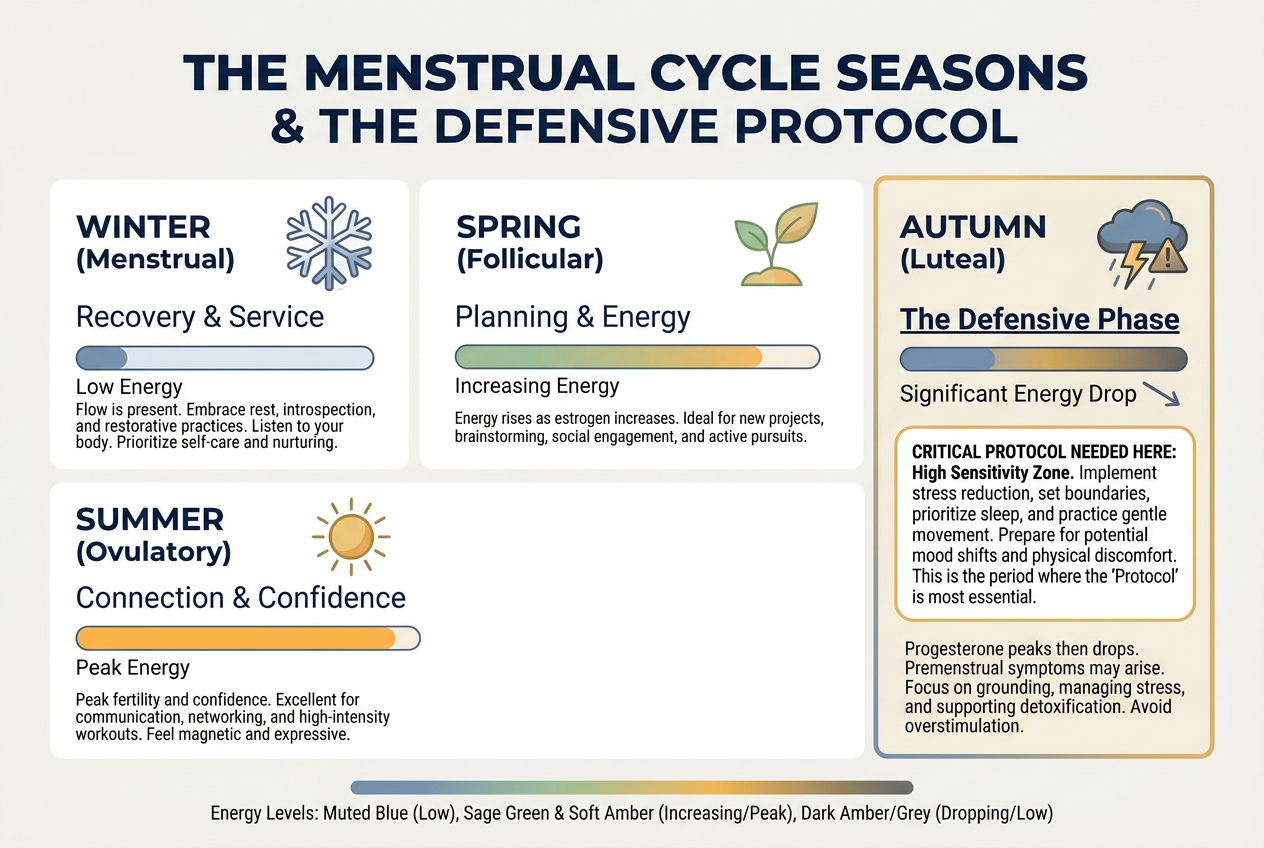 Understanding the four seasons of her cycle helps you predict changes and offer the right support at the right time for relationship harmony.
Here’s the biological foundation you need to grasp:
The Four Seasons Framework:
- Winter (Menstrual Phase, Days 1-5): Her period. Progesterone and estrogen are both low. Think recovery mode - she needs rest, warmth, and low-demand support.
- Spring (Follicular Phase, Days 6-14): Estrogen rises. Energy peaks, mood stabilizes, confidence climbs. This is her most productive and optimistic window.
- Summer (Ovulatory Phase, Days 15-17): Peak estrogen and a testosterone spike. High social energy, increased libido, maximum confidence. She’s in her power.
- Autumn (Luteal Phase, Days 18-28): Progesterone rises sharply, then crashes. Estrogen drops. Serotonin (mood) and GABA (calm) plummet. This is the storm.
The luteal phase is where most relationship friction happens because you’re dealing with a biological withdrawal. Her brain chemistry is shifting under her feet. You wouldn’t expect a car to run smoothly without oil - don’t expect her to "power through" a hormonal crash without understanding and support.
Key Hormonal Players:
- Progesterone: Rises to prepare the body for potential pregnancy, then crashes hard when it doesn’t happen. This drop triggers mood instability, anxiety, and irritability.
- Estrogen: Declines alongside progesterone, reducing serotonin production. Lower serotonin means lower mood regulation.
- Serotonin: The neurotransmitter that keeps mood stable and anxiety low. When it drops, she’s more reactive, more sensitive, and less able to brush off minor stressors.
- GABA: The brain’s natural calming agent. When progesterone metabolizes into allopregnanolone (which mimics GABA), then suddenly disappears, she loses that buffer against stress.
This isn’t about excusing poor behavior. It’s about recognizing that her emotional baseline has shifted, and your communication needs to adapt accordingly. When you understand the biology, you stop taking her reactions personally and start responding like a teammate.
For a deeper dive into how these hormonal shifts affect your relationship throughout the entire month, read our guide on understanding your partner’s cycle.
The Luteal Phase: Understanding the Storm Week
The luteal phase is your girlfriend’s autumn season - the transition from high energy to introspection, from confidence to vulnerability. This is the 10-14 day window after ovulation and before her period starts. Hormonally, it’s a withdrawal state. Practically, it’s when most couples experience conflict.
The Vibe Shift
Here’s what you need to recognize during this phase:
High Sensitivity: Minor irritations feel major. A dish left in the sink isn’t just a dish - it’s evidence of a pattern. Her brain is primed to detect threats and problems, not because she’s being difficult, but because progesterone withdrawal amplifies stress responses.
Low Energy: She’s physically and mentally drained. Tasks that felt easy during her follicular phase now feel overwhelming. Her body is working overtime to manage hormonal fluctuations, and that burns energy.
Forever Language: She’ll use absolutes like "always" and "never." ("You always forget to text me back." "We never do anything fun anymore.") This isn’t accurate, but it reflects how intensely she’s feeling things in the moment. The emotional lens is distorted by neurochemistry.
Emotional Reactivity: Small disappointments trigger big reactions. She might cry over a canceled dinner reservation or get angry about a minor scheduling conflict. This isn’t manipulation - it’s a reduced capacity to regulate emotional responses.
Physical Symptoms: Bloating, breast tenderness, headaches, food cravings, and disrupted sleep are common. These physical discomforts amplify emotional volatility.
The If-Then Protocol Table
Stop guessing how to respond. Use this tactical decision tree:
| If she is... | Then you should... |
|---|---|
| Irritable or snapping at small things | Do not take it personally. Respond with curiosity, not defense. ("I hear you’re frustrated. What would help right now?") |
| Overwhelmed by tasks | Remove one chore from her plate immediately without asking. (Take over dinner prep. Do the laundry. Handle the errand she mentioned.) |
| Venting about work, friends, or life | Ask: "Do you want comfort, space, or a solution?" Most of the time, she wants validation, not fixing. |
| Crying or emotionally raw | Offer physical presence without demands. ("I’m right here. Take your time.") Don’t rush her to "feel better." |
| Withdrawing or quiet | Give her permission to retreat. ("I’m here if you need me, but I get it if you need space.") Check in gently later. |
| Using "always/never" language | Don’t argue the facts. Address the feeling. ("I hear that you’re feeling unheard right now.") |
| Craving specific foods | Stock the snacks she likes in advance. Dark chocolate, salty carbs, and comfort foods are common cravings driven by serotonin dips. |
| Complaining about physical symptoms | Be proactive with comfort measures: heating pad, pain relievers, a warm bath. Offer to handle whatever she was planning to do. |
The goal isn’t to "fix" her luteal phase. The goal is to create a low-friction environment where she doesn’t have to explain herself or defend her needs.
If you’re new to tracking her cycle phases to anticipate these patterns, start with a period tracker for partners designed to give you actionable daily insights.
The Say This, Not That Matrix
Language matters during the luteal phase. The wrong phrase escalates tension; the right one de-escalates and builds trust. Your default communication style might work fine during her follicular phase but backfire spectacularly during the luteal storm.
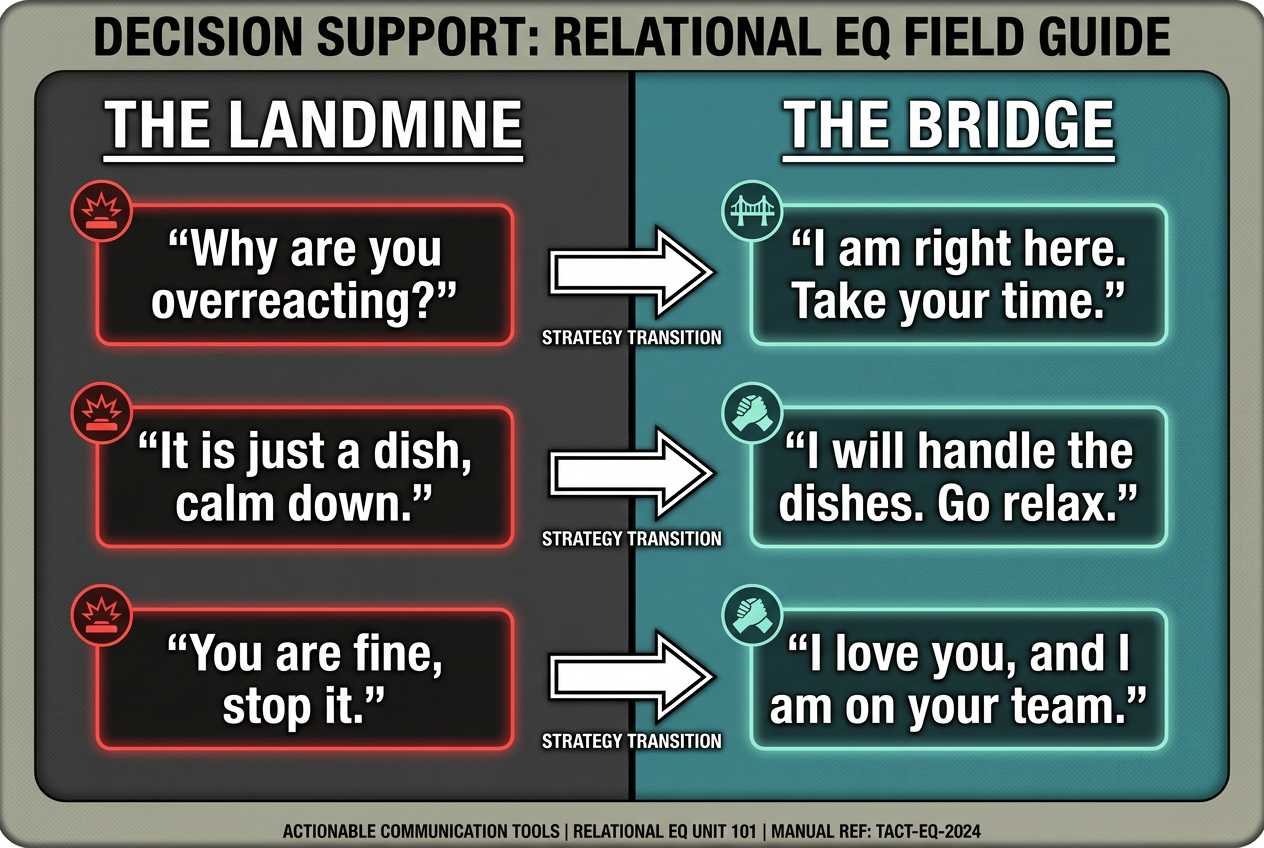 Small changes in your phrasing can de-escalate tension and make your partner feel safe and supported during her most vulnerable hormonal shifts.
Here’s your tactical communication matrix for high-friction moments:
| Situation | Don’t Say (The Landmine) | Do Say (The Bridge) |
|---|---|---|
| She’s crying over something minor. | "Why are you overreacting?" or "It’s not that big of a deal." | "I’m right here. Take your time." or "I see this really matters to you." |
| She’s angry about a dish, laundry, or small task. | "It’s just a dish, calm down." or "I’ll do it later." | "I’ll handle it right now. Go relax." (Then actually do it immediately.) |
| She’s feeling insecure about her body or attractiveness. | "You’re fine, stop it." or "You look the same to me." | "I love you, and I’m on your team." or "You’re beautiful. What can I do to help you feel better?" |
| She’s venting about a friend or coworker. | "Just stop talking to them." or "That’s not a big deal." | "That sounds frustrating. Do you want to vent, or do you want my take?" |
| She’s exhausted and overwhelmed. | "Everyone’s tired." or "I’m tired too." | "What’s one thing I can take off your plate right now?" |
| She’s using "always/never" language. | "That’s not true. I did it last week." | "I hear that you’re feeling [hurt/unheard/frustrated]. Let’s talk about it." |
| She’s withdrawn and quiet. | "What’s wrong with you?" or "Why are you being like this?" | "I’m here if you want to talk, but I get it if you need space." |
| She’s upset about plans changing. | "It’s not a big deal, we can go next week." | "I know you were looking forward to this. I’m sorry it didn’t work out. What would make tonight better?" |
Why These Phrases Work:
- They validate her feelings instead of dismissing them. During the luteal phase, she needs emotional validation, not logical arguments.
- They offer agency. Phrases like "What would help right now?" give her control instead of making her feel managed.
- They show effort. Actions speak louder than words, but the right words create safety for her to be vulnerable.
- They avoid defensiveness. When you don’t take her mood personally, you stop escalating conflict.
The bridge phrases aren’t manipulation tactics. They’re relationship intelligence. They reflect an understanding that her emotional baseline has shifted and your communication needs to shift with it.
For more tactical advice on navigating PMS specifically, see our guide on what to do when your girlfriend has PMS.
The 7-2-1 Rule: The Hero Check
This isn’t about managing her mood. This is about protecting her health. The luteal phase often comes with physical symptoms, but some symptoms are medical red flags, not just "bad periods." As her partner, you’re in a unique position to help her monitor patterns she might dismiss or normalize.
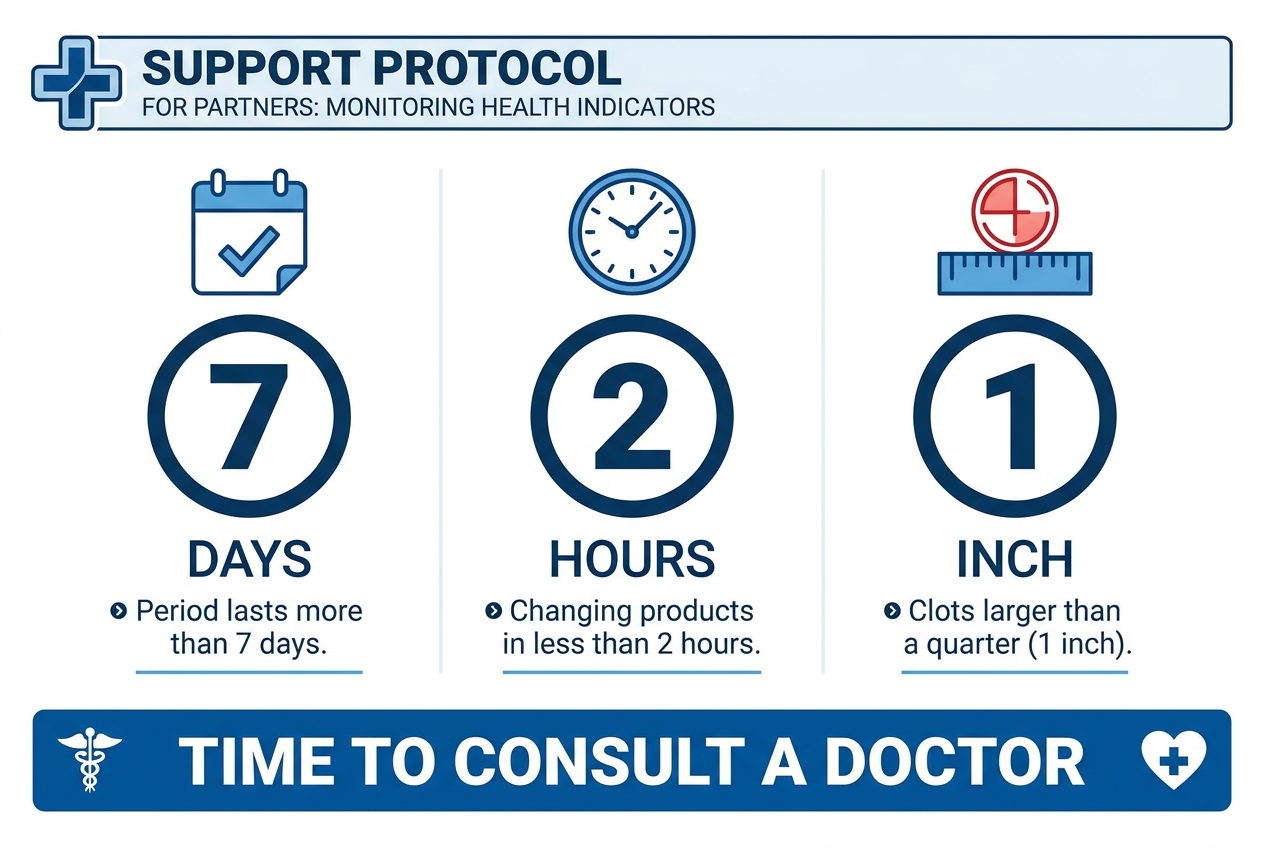 Being a hero means knowing the data. Use the 7-2-1 rule to help your partner monitor her health and identify when professional medical advice is needed.
The 7-2-1 Rule Explained:
7 Days: Her period lasts longer than 7 days consistently.
- Why it matters: Extended bleeding can indicate hormonal imbalances, fibroids, or endometriosis.
- Your role: "I’ve noticed your period’s been going longer than usual. Have you mentioned that to your doctor?"
2 Hours: She’s changing a pad or tampon more frequently than every 2 hours due to heavy flow.
- Why it matters: This is considered heavy menstrual bleeding (menorrhagia) and can lead to anemia or signal underlying conditions.
- Your role: "That sounds exhausting. Have you talked to a doctor about how heavy it’s been?"
1 Inch: She’s passing blood clots larger than 1 inch (roughly quarter-sized).
- Why it matters: Large clots can indicate hormonal imbalances, polyps, or other uterine issues.
- Your role: "I know this is uncomfortable to talk about, but clots that size aren’t normal. Let’s get you an appointment."
Additional Red Flags to Watch For:
- Severe pain that doesn’t respond to over-the-counter pain relievers.
- Bleeding between periods or spotting that lasts more than a day or two.
- Extreme mood swings, suicidal thoughts, or rage that feel disproportionate to normal PMS (this could be PMDD - premenstrual dysphoric disorder).
- Physical symptoms like dizziness, fainting, or shortness of breath (signs of anemia).
How to Bring It Up:
Women are often conditioned to minimize their pain or dismiss their symptoms as "just part of being a woman." You can help her advocate for herself by gently flagging patterns.
Don’t say: "You need to see a doctor." (This feels parental and controlling.)
Do say: "I’ve been tracking your cycle with you, and I’ve noticed [specific symptom]. That doesn’t seem normal. Would it help if I went to the appointment with you?"
The best way to support her health is to track her cycle together. When you’re both aware of patterns, you catch problems early. Apps like VibeCheck help you monitor symptoms and timing so you’re not just guessing.
The Luteal Plan: Proactive Strategy
Reactive support is exhausting. Proactive support is powerful. The best time to create a luteal phase plan is during her follicular phase (Spring) - when her mood is stable, her energy is high, and she can think clearly about what she needs.
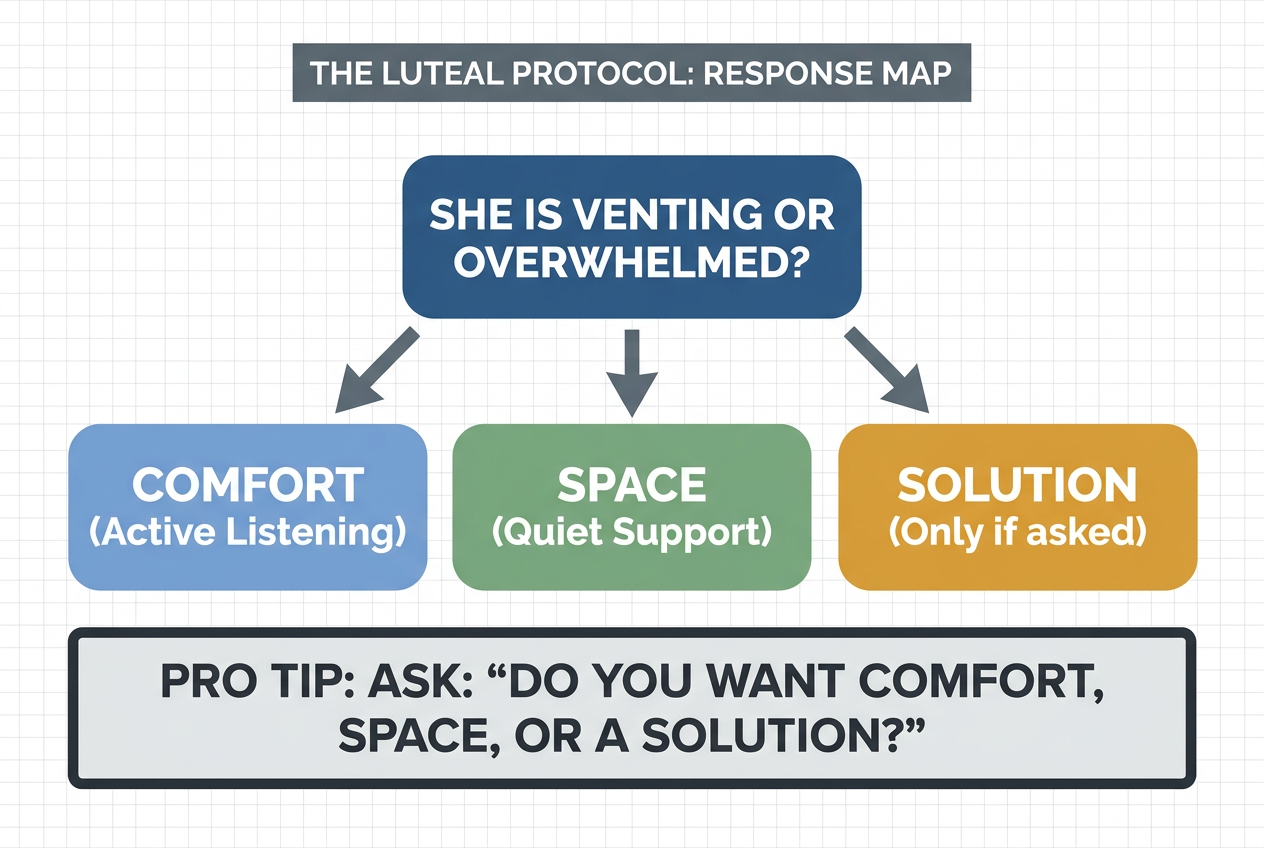 Avoid the mistake of jumping to solutions. Use this simple response map to identify exactly what kind of support your partner needs in the moment.
Here’s how to build your plan:
Step 1: Have the Conversation
Pick a calm, positive moment during her follicular phase (roughly Days 6-14). Frame it as teamwork, not as "managing her mood."
Script: "I’ve been learning about how your cycle affects your energy and mood, and I want to be a better partner during the harder weeks. Can we talk about what support looks like for you during your luteal phase?"
Step 2: Identify Her Specific Needs
Every woman’s experience is different. Don’t assume - ask. Here are questions to guide the conversation:
- Comfort preferences: "What physical things help you feel better? (Heating pad, back rubs, warm bath, specific foods?)"
- Communication preferences: "When you’re feeling irritable or overwhelmed, do you want space first, or do you want me to check in?"
- Task relief: "What’s the one chore or task that stresses you out the most during this time? Can I take that over automatically?"
- Conflict management: "If we start to argue during your luteal phase, what’s a good way to pause and come back to it?"
- Social energy: "Do you still want to do social plans during this time, or should we default to low-key nights at home?"
Step 3: Create a Shared "Red Zone" Code Word
Sometimes she won’t realize she’s in her luteal phase until she’s already irritable or overwhelmed. A code word lets her signal "I’m in the storm" without having to explain herself.
Examples:
- "Luteal mode"
- "Storm week"
- "Low battery"
When she uses the code word, you know to shift into high-support, low-demand mode automatically.
Step 4: Stock the Essentials
Create a luteal phase toolkit and keep it stocked. This shows effort and removes decision fatigue during a time when her brain is already overloaded.
Suggested Items:
- Her preferred comfort snacks (dark chocolate, chips, ice cream - whatever she craves).
- Pain relievers (ibuprofen or her preferred option).
- Heating pad or hot water bottle.
- Cozy blankets or her favorite sweatshirt.
- Herbal teas (chamomile, peppermint, ginger).
- Entertainment ready to go (downloaded shows, comfort movies, books).
Step 5: Postpone Big Decisions
The luteal phase is not the time to have high-stakes conversations about moving in together, finances, or long-term life plans. Her emotional lens is distorted by neurochemistry, and you’re more likely to trigger conflict than reach resolution.
Add "No Big Talks" to your luteal phase protocol. Save those conversations for her follicular phase when her mood is stable and her cognitive function is at its peak.
Step 6: Build in Low-Demand Time
During the luteal phase, her social battery drains faster. Proactively plan low-key activities that don’t require performance or energy.
Good Luteal Phase Date Ideas:
- Movie night at home with takeout.
- Gentle walk in nature (not a hike - just a stroll).
- Cook together (if she’s up for it) or order from her favorite spot.
- Board games or puzzles that don’t require competition.
- Early bedtime with a book or show.
Bad Luteal Phase Date Ideas:
- Parties or large social gatherings.
- High-energy activities like concerts or sporting events.
- Surprise plans that require her to be "on."
- Activities that involve tight schedules or pressure.
The goal is to match your energy demands to her capacity, not force her to "push through" when her body is begging for rest.
For more tactical advice on planning dates around her cycle, read our guide on how to plan dates around your girlfriend’s cycle phases.
Protecting Your Own Peace: Setting Kind Boundaries
Supporting your partner during her luteal phase doesn’t mean becoming her emotional punching bag. You’re allowed to have limits. You’re allowed to protect your own mental health. The key is setting boundaries with compassion, not resentment.
Recognize When You’re Triggered
If you grew up in a household where emotional volatility felt dangerous, her luteal phase mood swings might activate your own trauma responses. That’s valid. Your job is to recognize when your reaction is about your history, not about her current behavior.
Signs you’re triggered:
- You feel a surge of anger or defensiveness that feels disproportionate.
- You shut down emotionally and go cold.
- You start catastrophizing ("This relationship is doomed").
- You feel an urge to escape or withdraw completely.
What to do: Take space before you respond. Say: "I need 20 minutes to reset. I’ll be back." Then step outside, go for a walk, or do something that regulates your nervous system. Return to the conversation when you’re calm.
Set Boundaries Around Tone and Behavior
Understanding her biology doesn’t mean tolerating abuse. If she’s name-calling, belittling you, or being verbally aggressive, that’s not acceptable regardless of hormones.
How to set the boundary: "I know you’re having a hard time right now, and I want to support you. But I can’t continue this conversation when [specific behavior]. Let’s take a break and come back to this later."
Then follow through. Leave the room. Don’t engage in circular arguments.
Use "I" Statements to Express Your Limits
"I" statements let you communicate your needs without blaming her.
Examples:
- "I feel overwhelmed when we argue late at night. Can we table this until tomorrow?"
- "I need some alone time tonight to recharge. Let’s reconnect in the morning."
- "I’m struggling to support you when you use that tone. Can we pause and try again?"
Recharge Your Own Battery
You can’t pour from an empty cup. During her luteal phase, you’re giving more emotional labor than usual. Make sure you’re actively replenishing your energy.
Self-Care During the Luteal Storm:
- Exercise or physical movement to regulate your stress.
- Time with friends (don’t isolate yourself).
- Hobbies or activities that bring you joy.
- Therapy or journaling if you’re processing complex emotions.
- Sleep (don’t sacrifice rest to keep up with her needs).
Remember: This Is Temporary
The luteal phase lasts 10-14 days. It’s not permanent. When you’re in the thick of it, it can feel endless, but the storm always passes. Her follicular phase will return, and so will the version of her you recognize.
For more strategies on maintaining your emotional health while being a supportive partner, explore our guide on how to give space in a relationship.
Ready to actually understand her?
Join thousands of men using VibeCheck to track her cycle and show up better every day.
If you would rather be told what is coming than work it out after the fact, our comparison of the best relationship advice apps for men shows which ones give you the heads-up.
Frequently Asked Questions
What is the luteal phase and why does it affect my girlfriend’s mood?
The luteal phase is the 10-14 day period after ovulation and before menstruation begins. During this time, progesterone rises sharply to prepare the body for potential pregnancy, then crashes when pregnancy doesn’t occur. This hormonal withdrawal reduces serotonin (mood stabilizer) and GABA (natural calming agent), making her more emotionally reactive, anxious, and irritable. It’s a biological shift, not a personality flaw.
How can I tell when my girlfriend is in her luteal phase?
The luteal phase starts right after ovulation (typically Day 15-17 of her cycle) and lasts until her period begins. Physical signs include bloating, breast tenderness, fatigue, and food cravings. Emotional signs include increased sensitivity, irritability, use of "always/never" language, and lower social energy. The most reliable way to track it is by using a period tracker for men that shows you which phase she’s in and what to expect.
Is it okay to bring up her cycle when she’s upset?
Timing and framing matter. Don’t weaponize her cycle as an excuse to dismiss her feelings ("You’re just on your period"). Instead, acknowledge both the emotion and the biology: "I know you’re really frustrated right now, and I also know your cycle might be making things feel more intense. How can I help?" This validates her experience while showing you understand the context.
What’s the difference between PMS and PMDD?
PMS (premenstrual syndrome) involves mild to moderate mood swings, irritability, and physical discomfort during the luteal phase. PMDD (premenstrual dysphoric disorder) is a severe form that includes debilitating depression, anxiety, rage, or suicidal thoughts. If her symptoms interfere with daily life, relationships, or work, she should talk to a doctor. PMDD affects 3-8% of menstruating women and is treatable with therapy, medication, or lifestyle changes.
Can I do anything to help with her physical symptoms during the luteal phase?
Absolutely. Proactive comfort measures include keeping a heating pad on hand for cramps, stocking her preferred pain relievers, running a warm bath, and offering gentle back or foot rubs. Nutritionally, magnesium and vitamin B6 supplements can help with mood and bloating (but she should check with her doctor first). Exercise, even light walking, can boost endorphins and reduce symptoms. Your job isn’t to fix it, but to remove barriers to her comfort.
Should we avoid all conflict during her luteal phase?
Not all conflict, but avoid high-stakes conversations and big life decisions. Minor disagreements are normal and can be handled if you’re both calm and using good communication. But topics like finances, moving in together, or relationship problems should be postponed until her follicular phase (Days 6-14) when her mood is stable and her cognitive function is clearer. Use a code word or signal to table big talks until the storm passes.
What if I mess up and say the wrong thing during her luteal phase?
Apologize quickly and specifically. "I’m sorry I said [specific thing]. That wasn’t supportive. What I meant was [better version]." Don’t over-explain or get defensive. Acknowledge the impact, then adjust your approach. She’ll remember that you tried and corrected course, not that you were perfect. Effort beats perfection every time.
How do I take care of myself while supporting her through the luteal phase?
Set kind boundaries, communicate your limits with "I" statements, and recharge your own battery. Take space when you’re triggered (tell her you need 20 minutes to reset, then come back). Maintain your exercise routine, social connections, and hobbies. Therapy or journaling can help you process complex emotions. Remember: supporting her doesn’t mean sacrificing your own mental health. You’re a partner, not a martyr.
Final Word:
The luteal phase doesn’t have to be a relationship landmine. When you understand the biology, communicate strategically, and build a proactive plan, you transform confusion into connection. This isn’t about managing her - it’s about becoming the kind of partner who shows up with knowledge, patience, and effort when she needs it most.
Stop walking on eggshells. Start leading with intelligence. Download VibeCheck to track her cycle, get daily missions, and turn hormonal awareness into relationship strength.
Tags

Related Articles
Continue reading to deepen your understanding

Your Girlfriend Is Withdrawn During Ovulation? What It Actually Means and How to Respond
Is your girlfriend suddenly distant mid-cycle? This guide covers the biological causes of ovulation withdrawal and how to support her with an invisible framework.

When Your Girlfriend Is Sensitive to Criticism During the Luteal Phase: The Partner’s Science-Based Action Guide
Does your partner react intensely to feedback right before her period? Understand the biology behind luteal phase rejection sensitivity and learn how to communicate effectively.

How to Give Your Girlfriend Reassurance During the Follicular Phase: A Partner’s Tactical Guide
Is your girlfriend feeling vulnerable after her period? Learn why the early follicular phase causes emotional lows and how you can provide the specific reassurance she needs to feel secure.

Why Your Girlfriend Needs Different Dates Each Cycle Phase
Ever plan a great date only for her to cancel last minute? Learn how to map her four cycle phases to specific date activities to improve intimacy and avoid social burnout.

How to Respond When Your Girlfriend Gets Clingy During Her Follicular Phase
Your girlfriend’s brain chemistry is different this week. Rising estrogen levels cause social drive to peak. Here is how to respond to her need for connection effectively.

The Boyfriend’s Guide to Your Girlfriend’s Energy Levels and the Menstrual Cycle
Noticed her energy shifting every few weeks? Stop guessing and start supporting. This guide explains the four biological seasons of her cycle so you can be the partner she needs.

Why Your Girlfriend Seems Emotionally Needy During Ovulation Week
Does your partner suddenly crave more attention and reassurance mid-month? It is not insecurity—it is biology. Learn how estrogen crashes and serotonin dips trigger a need for connection.

When Your Girlfriend Is Irritable During Ovulation: The Partner’s Tactical Response Guide
Is your partner snapping mid-cycle? Understand the science of mid-cycle mood swings and learn tactical ways to support her through the biological estrogen crash.