Blood for Couples: The Period Tracking App That Translates Hormones Into Action

Stop guessing and start supporting. Discover how the Blood for Couples app translates hormonal shifts into actionable steps to help you show up for your partner exactly when they need it.
Blood for Couples: The Period Tracking App That Translates Hormones Into Action
Most relationship apps tell you to "communicate better" without explaining what that actually means. Blood for Couples takes a different approach: it translates your partner’s hormonal shifts into specific actions you can take - before she has to ask.
The difference between checking a calendar and actually understanding what Tuesday’s hormonal surge means for your dinner plans is massive. This guide breaks down how Blood for Couples works, why it stands out from competitors like Mayday and Stardust, and exactly how to use cycle tracking to reduce friction in your relationship.
Table of Contents
- What Blood for Couples Actually Does (And Why It Matters)
- How Blood for Couples Works: Real-Time Sync Without the Medical Jargon
- The Four-Phase Field Manual: Translating Her Cycle Into Your Playbook
- The Care Messages Feature: Automated Support That Doesn’t Feel Robotic
- Blood vs. Mayday vs. Stardust: Which App Actually Helps You Take Action
- The Conversation Script: How to Ask Her to Track Together
- Privacy and Data Security: What You Need to Know
- Frequently Asked Questions
What Blood for Couples Actually Does (And Why It Matters)
Your partner’s cycle isn’t just about predicting period dates. It’s a 28-day biological rhythm that affects her energy, mood, pain threshold, social battery, and how she processes stress. Understanding this pattern is the difference between walking on eggshells and actually knowing what she needs.
Blood for Couples is designed specifically for partners who want to provide proactive support. Unlike Flo or Clue, which treat partner features as add-ons, Blood builds its entire interface around real-time symptom syncing and automated care prompts. When she logs that she’s experiencing cramps or low energy, you get a notification - not just with the data, but with suggestions on what to actually do about it.
VibeCheck App
Know what she needs. Before she has to say it.
Track her cycle, understand her phases, be the partner she deserves.
Download Free on iOS →The three core reasons couples use Blood:
- Strategic conflict avoidance - You notice monthly "storm periods" and want a heads-up to exercise more patience before small disagreements escalate
- Proactive caretaking - You want to handle the dishes, buy the chocolate, or suggest a quiet night in before she has to explain why she needs it
- Hormonal intelligence - You view cycle tracking as a relationship optimization tool for planning dates, intimacy, and important conversations based on biological energy peaks
Blood addresses all three by turning abstract cycle phases into concrete relationship actions.
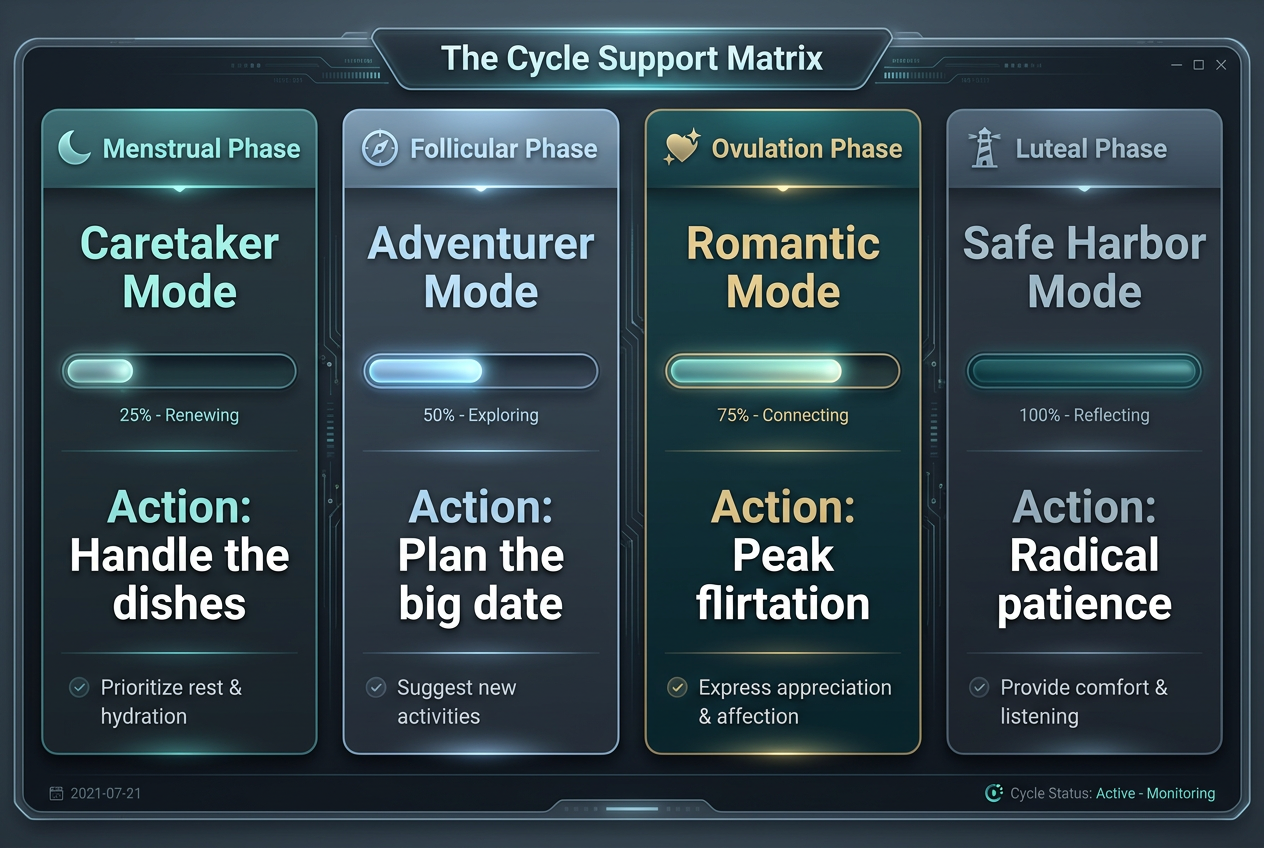 This Cycle Support Matrix helps partners translate hormonal data into actionable relationship roles, reducing friction and fostering proactive care throughout the month.
How Blood for Couples Works: Real-Time Sync Without the Medical Jargon
Blood’s interface is built around simplicity. Here’s what happens when you both download the app:
Her Dashboard:
- Logs period dates, symptoms (cramps, fatigue, mood), and energy levels
- Tracks cycle length and predicts upcoming phases
- Can share as much or as little data as she wants
Your Dashboard:
- Shows a simplified view of where she is in her cycle
- Displays current energy and mood trends (not raw medical data)
- Sends push notifications when she logs symptoms that benefit from partner support
- Provides pre-written care message suggestions based on what she’s experiencing
The sync happens automatically. If she logs "experiencing cramps" or "feeling low energy," you get a notification with context. No more texting back and forth to figure out if tonight’s the night for a big conversation or a quiet movie.
The genius of Blood is the translation layer. You don’t need to memorize what "luteal phase" means. The app tells you: "This is Safe Harbor Mode - she needs predictability and lower social demands right now."
For men who want to support their partner’s cycle without becoming amateur endocrinologists, this approach removes the friction between wanting to help and knowing how.
The Four-Phase Field Manual: Translating Her Cycle Into Your Playbook
Every menstrual cycle has four distinct phases. Each one creates different energy levels, mood patterns, and needs. Blood for Couples maps these phases to specific relationship roles so you know exactly what mode to operate in.
Phase 1: Menstrual Phase (Days 1-5) - The Caretaker Mode
What’s happening biologically: Estrogen and progesterone are at their lowest. Her body is shedding the uterine lining, which often causes cramps, fatigue, and heightened pain sensitivity.
What this means for you:
- Her social battery is low - cancel plans that require high energy
- Physical discomfort is real - offer heating pads, pain relief, and comfort food
- She needs support, not problem-solving - listen without trying to fix
Your action items:
- Handle the dishes and chores without being asked
- Stock her favorite snacks (chocolate, salty foods, whatever she craves)
- Suggest low-key activities: movie nights, takeout, quiet time
- Use the scripts from our guide on what to text your girlfriend during her period
Blood’s care messages during this phase might suggest: "She logged cramps. Grab a heating pad and ask if she wants to skip tonight’s dinner plans."
Phase 2: Follicular Phase (Days 6-14) - The Adventurer Mode
What’s happening biologically: Estrogen is rising steadily. Energy rebounds, mood improves, and she’s more open to trying new things.
What this means for you:
- Her social battery is recharging - this is the time for active dates
- She’s more open to spontaneity and adventure
- Communication flows more easily - tackle relationship topics if needed
Your action items:
- Plan the weekend trip or outdoor activity you’ve been discussing
- Try that new restaurant or take a cooking class together
- Initiate deeper conversations - she’s more receptive to connection right now
- Match her energy level instead of suggesting Netflix marathons
Blood’s prompts might say: "She’s in Adventurer Mode. Perfect time to book that hiking trip."
For tactical advice on matching your dates to her energy levels, check out our detailed guide on planning dates around the menstrual cycle.
Phase 3: Ovulation Phase (Days 15-17) - The Romantic Mode
What’s happening biologically: Estrogen peaks. Libido typically increases, and she’s at her most socially confident and outgoing.
What this means for you:
- Peak connection window - intimacy and flirtation are well-received
- She’s likely feeling her best physically and emotionally
- This is her biological "yes window" for intimacy and social activities
Your action items:
- Plan romantic dates - fancy dinners, spontaneous weekend getaways
- Initiate physical intimacy (she’s more likely to be receptive)
- Compliment her appearance - she’s feeling confident and attractive
- Use this window for important relationship discussions that require optimism
Blood’s notifications during ovulation often highlight: "Peak energy and connection - great time for date night."
Our guide on when to approach your partner for intimacy breaks down the biological timing in more detail.
Phase 4: Luteal Phase (Days 18-28) - The Safe Harbor Mode
What’s happening biologically: Progesterone rises and then drops sharply before menstruation. This hormonal crash causes PMS symptoms: irritability, anxiety, fatigue, and food cravings.
What this means for you:
- Her stress tolerance is lower - small annoyances feel bigger
- She needs predictability and low social demands
- Emotional sensitivity increases - choose your words carefully
Your action items:
- Practice radical patience - don’t take irritability personally
- Reduce decision fatigue by taking initiative on dinner plans and household tasks
- Avoid starting heavy conversations or relationship debates
- Validate her feelings without dismissing them as "hormonal"
Blood’s care messages might suggest: "She’s in Safe Harbor Mode. Keep plans simple and offer to handle dinner."
For tactical scripts on what to say when your girlfriend has PMS, we’ve created a field-tested communication guide.
Understanding these four phases transforms your relationship from reactive (scrambling to figure out what went wrong) to proactive (anticipating her needs before friction occurs). Blood’s interface simplifies this by showing you which mode she’s in - no memorization required.
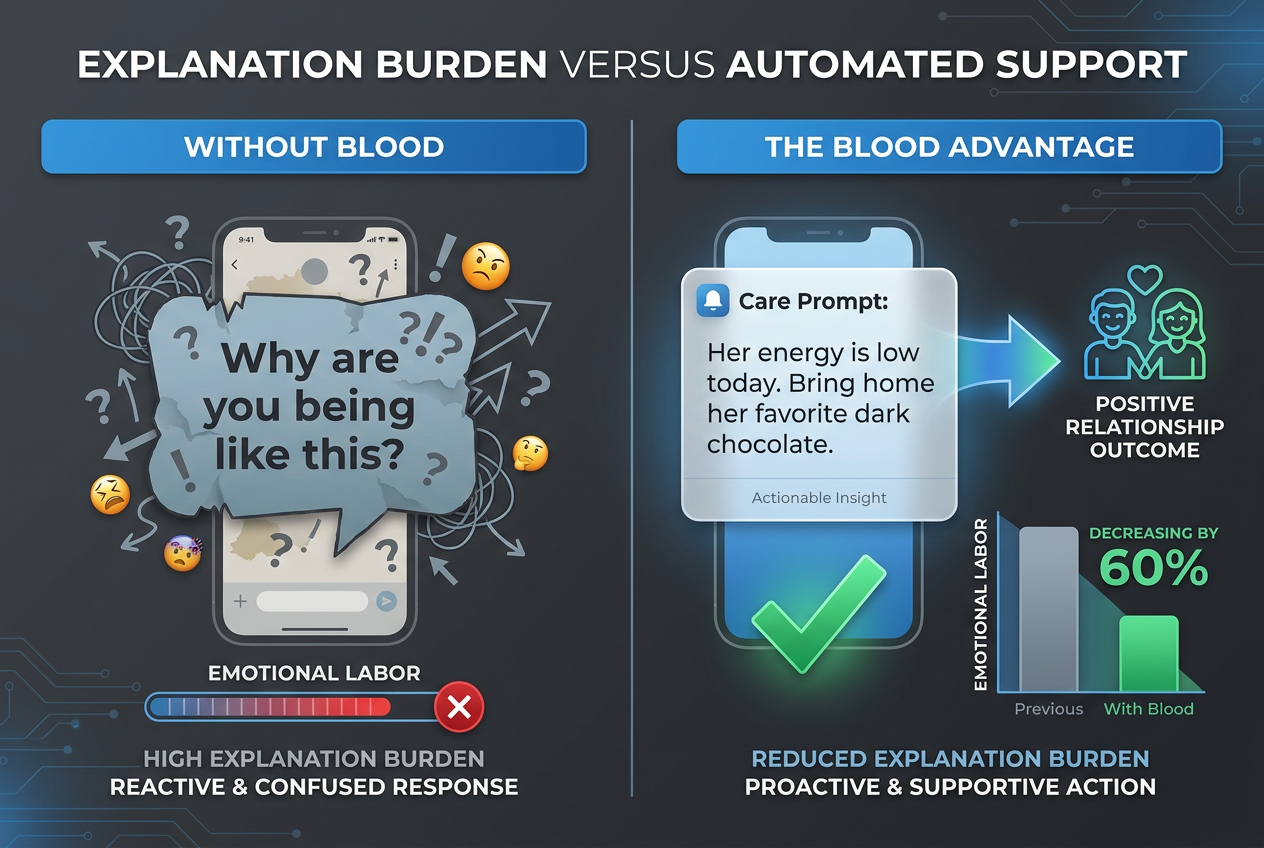 By automating care prompts, the Blood app removes the emotional labor of communication, allowing men to provide support without their partner needing to ask.
The Care Messages Feature: Automated Support That Doesn’t Feel Robotic
The single biggest differentiator between Blood for Couples and every other period tracker is the Care Messages feature. This is where Blood stops being a calendar and becomes a relationship assistant.
Here’s how it works:
- Your partner logs a symptom (cramps, fatigue, mood shift)
- Blood analyzes where she is in her cycle and what she logged
- You receive a push notification with a pre-written care message you can send directly through the app
Example scenario: She logs "feeling exhausted and anxious" during her luteal phase. Blood suggests:
"Hey, I know you’re dealing with a lot right now. I’m grabbing takeout on the way home so you don’t have to think about dinner. Want to watch something light tonight?"
You can send it as-is, customize it, or use it as inspiration for your own message. The point is you’re not starting from scratch trying to figure out what to say.
Why this matters: Most relationship friction during hormonal shifts isn’t caused by lack of care - it’s caused by the mental load of having to explain what you need. When she’s already exhausted and her progesterone is crashing, the last thing she wants to do is walk you through why she needs you to handle dinner.
Blood removes that burden by:
- Identifying the moment support is needed
- Translating the symptom into an actionable response
- Providing the exact words to use
This isn’t about replacing genuine connection. It’s about reducing the friction between wanting to help and knowing how.
For more actionable scripts, our guide to reducing PMS mood swings provides additional communication strategies.
Blood vs. Mayday vs. Stardust: Which App Actually Helps You Take Action
Three apps dominate the "period tracking for partners" space: Blood for Couples, Mayday, and Stardust. Here’s how they stack up.
| Feature | Blood for Couples | Mayday | Stardust |
|---|---|---|---|
| Target Audience | High-sync couples who want automated support | Minimalist men who want data without fluff | Gen Z/Millennials who want wit and personality |
| Key USP | Real-time symptom syncing + automated care messages | No-signup dark mode, "making men better" | Astrology-meets-science approach |
| Interface Tone | Supportive, practical, data-driven | Direct, bro-friendly, no medical jargon | Irreverent, funny, cosmic |
| Sync Accuracy | Automatic real-time updates | Manual entry only | Automatic sync with some astrology overlays |
| Communication Automation | Pre-written care messages based on symptoms | None - you interpret the data yourself | General mood insights, no specific prompts |
| Unique Features | Dashboard for him with simplified cycle view | Calendar widget, dark mode, privacy-first | Cosmic cycle insights, humor-driven interface |
| Weakness | Lower brand awareness in US vs. Flo/Clue | No interactive sync; requires manual updates | Astrology focus can alienate clinical users |
| Best For | Partners who want to be told what to do | Men who want raw data without hand-holding | Couples who value personality and humor |
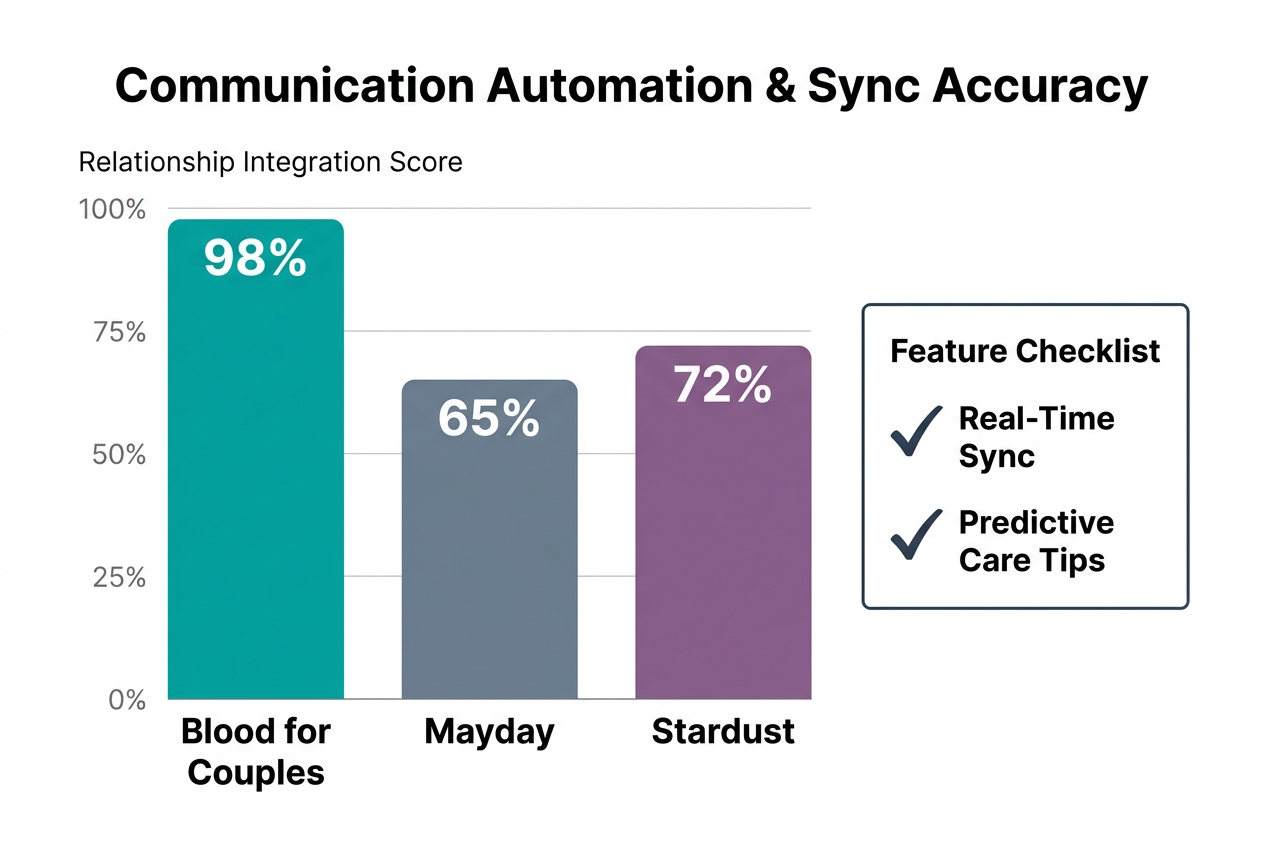 When compared to competitors, Blood for Couples leads in automation and sync accuracy, providing the most seamless experience for partners tracking together.
Our verdict:
- Choose Blood if you want the app to tell you exactly what to do and when
- Choose Mayday if you prefer minimalism and interpreting data yourself
- Choose Stardust if you want personality and don’t mind the astrology angle
For a deeper dive into all available options, our best period tracker apps for men comparison covers eight platforms in detail.
If you’re also evaluating broader relationship coaching tools, compare Blood against VibeCheck, which offers cycle tracking plus relationship missions and personalized coaching.
The Conversation Script: How to Ask Her to Track Together
The biggest obstacle to using Blood for Couples isn’t the technology - it’s starting the conversation. Here’s a field-tested script that frames cycle tracking as a partnership tool, not surveillance.
The setup: Pick a calm moment when you’re both relaxed (not during an argument or when she’s stressed). Follicular or ovulation phases are ideal timing.
The script:
"Hey, I’ve been thinking about how I can be better at supporting you. I know your energy and mood shift throughout the month, and I don’t always pick up on when you need more space or more help. I came across this app called Blood for Couples that’s designed for partners to track cycles together - not so I can monitor you, but so I can be more proactive about helping without you having to explain everything.
It would let me know when you’re dealing with cramps or low energy so I can handle dinner or suggest we stay in instead of going out. I’m not trying to fix anything or tell you how to feel - I just want to understand your patterns better so I can be more supportive. Would you be open to trying it?"
Key elements:
- Lead with your intention to support, not to "fix" or "track"
- Acknowledge that she already knows her body - you’re asking to learn
- Frame it as reducing her mental load, not adding to it
- Make it clear she controls what she shares
If she’s hesitant:
"I get it. You can control exactly what you share, and we can stop anytime if it feels weird. I just want to stop guessing and start getting it right more often."
Most women appreciate partners who want to understand their cycle - as long as the motivation is support, not control. For additional communication strategies, our relationship advice for men guide covers foundational conversation skills.
Privacy and Data Security: What You Need to Know
Period tracking apps handle sensitive health data. Here’s what Blood for Couples does to protect privacy:
Data encryption: All cycle data is encrypted in transit and at rest. Blood uses industry-standard AES-256 encryption.
Sharing controls: She decides exactly what you can see. Blood allows granular privacy settings - she can share cycle phases without sharing specific symptoms, or vice versa.
No third-party data selling: Blood’s privacy policy explicitly states they don’t sell user data to advertisers or third-party health companies.
Account independence: You and your partner have separate accounts. If the relationship ends, you can disconnect accounts without losing individual data.
Location tracking: Blood doesn’t track location or require access to other phone data beyond push notifications.
HIPAA considerations: Blood isn’t a medical device and doesn’t claim HIPAA compliance. If she’s using cycle data for fertility tracking with a doctor, she should verify whether Blood’s data export format works with her healthcare provider.
For couples using cycle tracking in states with restrictive reproductive health laws, consider using a privacy-focused alternative like Stardust, which explicitly positions itself as a privacy-first platform.
Ready to actually understand her?
Join thousands of men using VibeCheck to track her cycle and show up better every day.
Get VibeCheck FreeFrequently Asked Questions
What is Blood for Couples and how is it different from other period trackers?
Blood for Couples is a period tracking app specifically designed for partners who want to provide proactive support. Unlike Flo or Clue, which treat partner features as add-ons, Blood builds its entire interface around real-time symptom syncing and automated care prompts. When your partner logs symptoms like cramps or low energy, you receive notifications with actionable suggestions - not just data. The app translates hormonal phases into specific relationship roles (Caretaker Mode, Adventurer Mode, Safe Harbor Mode) so you know exactly what support she needs without her having to explain.
Do both partners need to pay for Blood for Couples?
Blood for Couples operates on a freemium model. The basic version includes cycle tracking and phase notifications. The premium version unlocks care message automation, detailed symptom insights, and advanced cycle predictions. Typically, one partner subscribes and shares access through the partner sync feature. Check the app store listing for current pricing - subscription models can vary by region.
Can I use Blood for Couples if my partner doesn’t want me tracking her cycle?
No. Blood for Couples requires mutual consent and active participation from both partners. She controls exactly what data you can see through granular privacy settings. If your partner isn’t comfortable with cycle tracking, respect that boundary. You can still learn about cycle phases through educational resources like our boyfriend’s field manual to the menstrual cycle without tracking her specific data.
How accurate is Blood for Couples at predicting cycle phases?
Blood for Couples uses the same prediction algorithms as major period trackers like Flo and Clue. Accuracy improves over time as it learns your partner’s specific cycle length and patterns. For women with regular cycles (consistent 25-35 day patterns), prediction accuracy is typically 85-90% after three months of tracking. Women with irregular cycles, PCOS, or perimenopause may see lower accuracy. The app should be used for relationship support, not medical decisions or fertility planning.
What if my partner’s cycle is irregular or she has PCOS?
Blood for Couples can still provide value for irregular cycles, but the predictive features will be less accurate. The app excels at tracking real-time symptoms and providing care prompts based on what she logs - regardless of cycle regularity. If your partner has PCOS, endometriosis, or other conditions affecting her cycle, focus on the symptom tracking and communication features rather than the phase predictions. Our guide on supporting your partner during hormonal changes covers irregular cycles in detail.
Is Blood for Couples safe to use in states with restrictive reproductive health laws?
Blood for Couples encrypts data and doesn’t sell information to third parties. However, if your partner lives in a state with restrictive reproductive health laws, consider whether period tracking data could be subpoenaed by law enforcement. Privacy-focused alternatives like Stardust explicitly position themselves as protecting user data from government access. Consult your partner’s preferences and legal concerns before choosing a tracking app. Blood’s privacy policy should be reviewed for the most current data handling practices.
Can Blood for Couples replace medical advice or fertility planning tools?
No. Blood for Couples is a relationship support tool, not a medical device. It’s designed to help partners understand cycle patterns for better communication and support - not for diagnosing medical conditions or planning pregnancy. If your partner is trying to conceive or has concerns about cycle irregularities, she should consult a healthcare provider and use dedicated fertility tracking tools like Ava or Tempdrop, which measure basal body temperature and other clinical markers.
How do I handle care messages without sounding like I’m reading from a script?
Blood’s pre-written care messages are templates, not mandatory scripts. Use them as starting points and customize based on your relationship dynamic. If sending a pre-written message feels robotic, take the core idea and rephrase it in your own voice. The goal isn’t perfect wording - it’s demonstrating you noticed what she’s dealing with and you’re taking action. Authenticity matters more than polish. Our tactical guide to texting during her period includes 50+ customizable scripts you can adapt.
Blood for Couples turns hormonal intelligence from theory into action. By translating your partner’s cycle into specific relationship modes, the app removes the guesswork from support and reduces the friction of explaining what she needs. Whether you choose Blood, Mayday, or another tracking tool, the core principle remains: understanding her biological rhythm makes you a better partner.
For broader relationship strategies beyond cycle tracking, explore our period tracker guide for men or compare all relationship coaching apps for men.
Tags

Related Articles
Continue reading to deepen your understanding
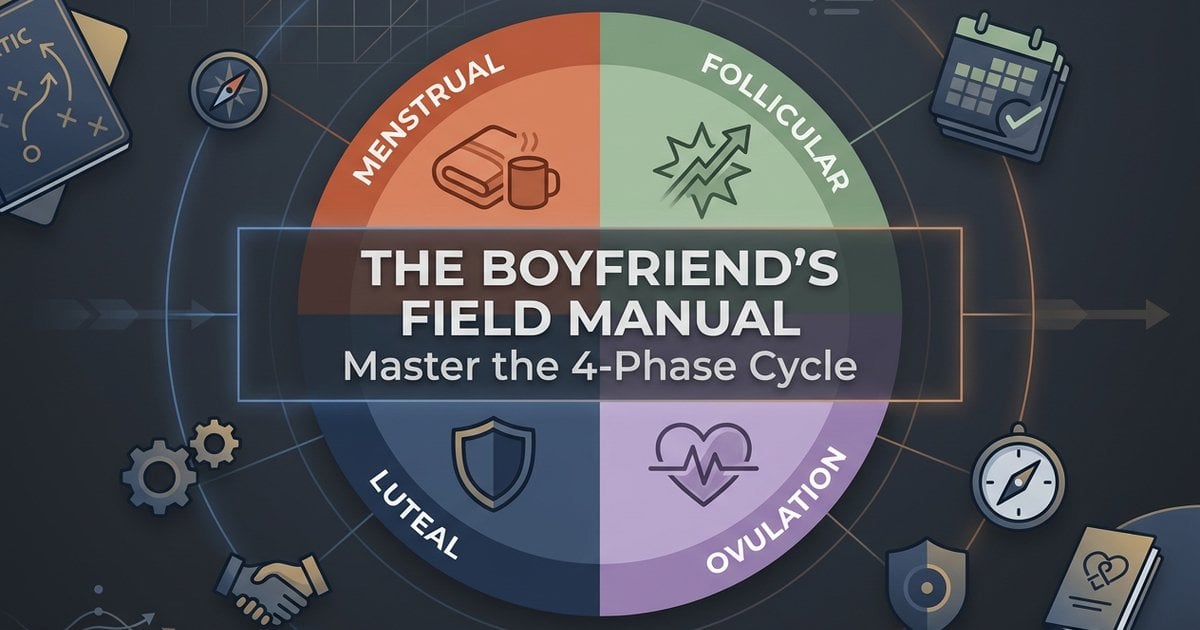
The Boyfriend’s Field Manual: Mastering Your Partner’s Four Cycle Phases
Understanding your partner’s 28-day biological calendar changes everything. Stop walking on eggshells and learn how to provide the exact support she needs during every cycle phase.

How to Reduce Girlfriend PMS Mood Swings: Tactical Guide
Master how to reduce girlfriend PMS mood swings with science-based tactics. Learn the best communication scripts and practical ways to support her every month.
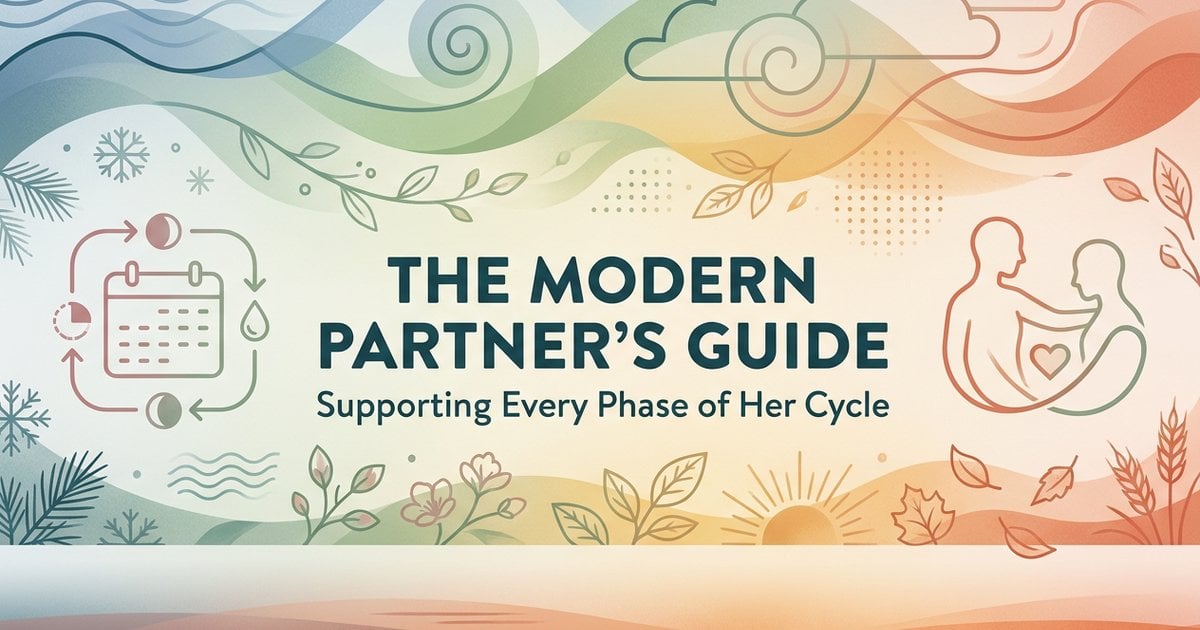
Boyfriend Guide to Menstrual Cycle Phases & Support
Learn how to navigate the four menstrual cycle phases with this essential guide for men. Improve communication, reduce friction, and provide proactive support.

The Partner’s Cheat Sheet: How to Plan Dates Based on Her Menstrual Cycle
Stop guessing why date night went wrong. Learn how to use the Four Seasons framework to sync your plans with her biological rhythm for more connection and fewer fights.

The Partner’s Playbook: When to Approach Your Partner for Intimacy
Stop guessing when to initiate. Learn how your partner’s menstrual cycle creates a natural yes window so you can improve your timing, reduce rejection, and connect more deeply.
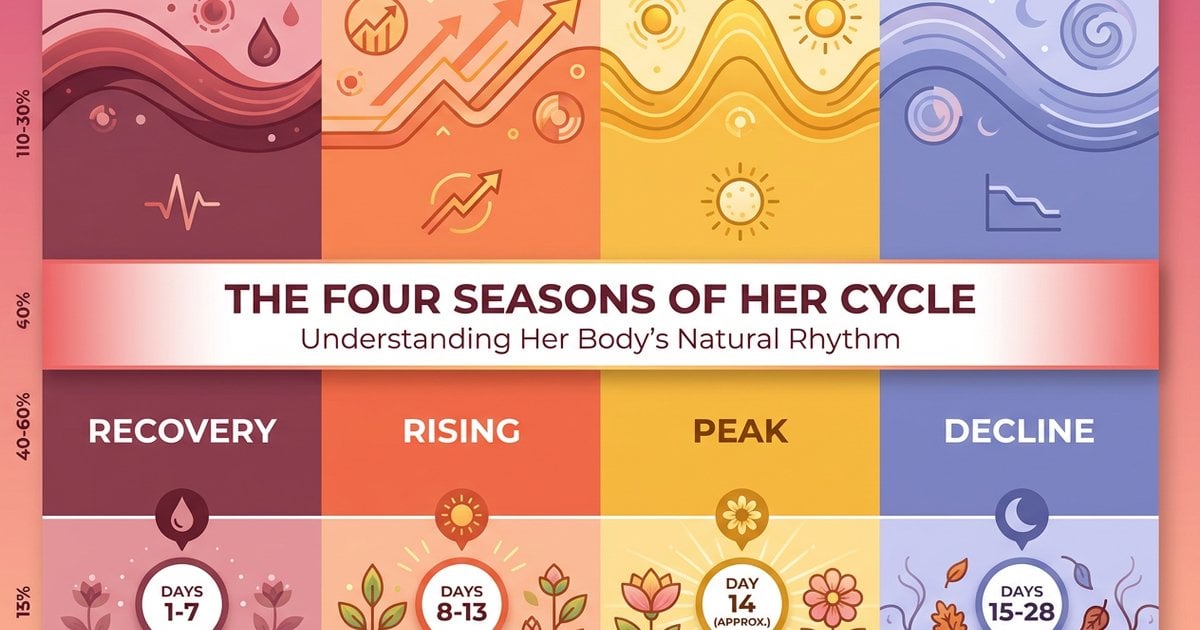
Best Time to Approach for Sex: Menstrual Timing Guide (2026)
Stop getting rejected and learn her biological rhythm. Discover the best time to approach for sex by understanding her menstrual cycle phases and timing window.

How to Plan Dates Based on Menstrual Cycle (2026)
Improve your relationship by matching dates to her cycle. Learn the Four Seasons framework to sync with her energy, mood, and social battery every month.
Boyfriend Guide to Girlfriend Luteal Phase Mood (2026)
End the confusion during storm week. This boyfriend guide to the luteal phase covers biological shifts and offers a Say This, Not That matrix for better harmony.