What to Do When Your Girlfriend Has PMS: The Proactive Partner’s Playbook

Stop walking on eggshells and start providing the support your partner actually needs. Learn the science behind her symptoms and how to reduce her mental load during her cycle.
What to Do When Your Girlfriend Has PMS: The Proactive Partner’s Playbook
Your girlfriend is stressed. She snapped at you over something small. She’s exhausted, craving salt and chocolate, and you’re wondering if you did something wrong. The answer is probably no. She’s navigating a biological storm that happens every single month, and you’re standing there with no manual.
This isn’t about "surviving" PMS or walking on eggshells. It’s about becoming a proactive partner who understands the biology behind her mood shifts and knows exactly how to help. PMS is a chemical reality, not a personality flaw. When you understand that her brain’s serotonin levels are literally dropping in the days before her period, you stop taking her irritability personally and start providing the support she actually needs.
This guide will teach you the science, the communication scripts, and the tactical actions that separate reactive boyfriends from proactive partners.
VibeCheck App
Know what she needs. Before she has to say it.
Track her cycle, understand her phases, be the partner she deserves.
Download Free on iOS →Table of Contents
- The 3-Minute Biology Refresher: Why This Happens
- The Proactive Support Matrix: What to Do
- The Communication Masterclass: What to Say
- When It’s More Than PMS: The PMDD Warning Signs
- The PMS Care Kit: Your Tactical Checklist
- Tracking Her Cycle: The Partner’s Secret Weapon
- Frequently Asked Questions
The 3-Minute Biology Refresher: Why This Happens
BLUF: PMS happens because estrogen and progesterone levels drop sharply in the week before her period, causing serotonin (the mood-stabilizing neurotransmitter) to plummet. Her emotional shift isn’t voluntary.
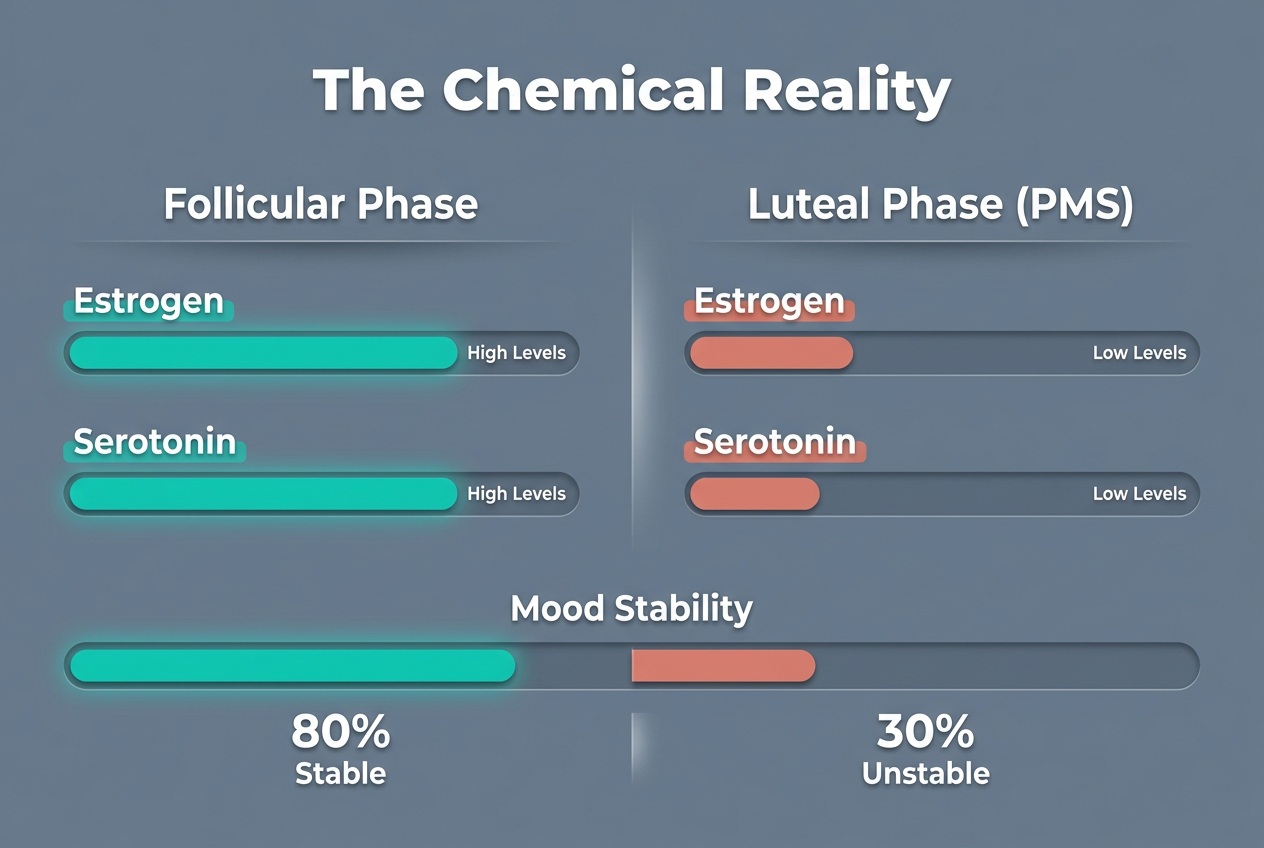
The luteal phase (the two weeks between ovulation and her period) is when hormonal changes trigger PMS. Around day 21-28 of her cycle, estrogen and progesterone crash. When estrogen drops, so does serotonin, the brain chemical responsible for mood regulation, sleep, and appetite. Her body is preparing for menstruation, but her brain is dealing with a chemical withdrawal.
This isn’t just "feeling moody." It’s a measurable biological event. Studies show that serotonin levels can drop by 20-30% during the late luteal phase, which is why she might feel anxious, irritable, or suddenly sad without a clear reason.
Physical vs. Emotional Symptoms
| Physical Symptoms | Emotional Symptoms |
|---|---|
| Bloating and water retention | Irritability and mood swings |
| Breast tenderness | Anxiety and restlessness |
| Headaches and migraines | Sadness or crying spells |
| Fatigue and low energy | Difficulty concentrating |
| Cravings (especially salt and sugar) | Social withdrawal |
| Acne and skin changes | Feeling overwhelmed |
Understanding these symptoms helps you recognize PMS as a pattern, not a random personality change. When you know the "why," you can provide better support.
The Proactive Support Matrix: What to Do
BLUF: Don’t ask "What do you need?" when her brain is already overloaded. Take charge of the environment, reduce her mental load, and provide physical comfort without making her manage your help.
The mistake most guys make is asking "What can I do?" or "What do you want for dinner?" during PMS. Her decision-making capacity is already taxed by the hormonal shift. Asking her to manage your support adds to her mental load.
The winning move is invisible support: taking action without requiring her input.
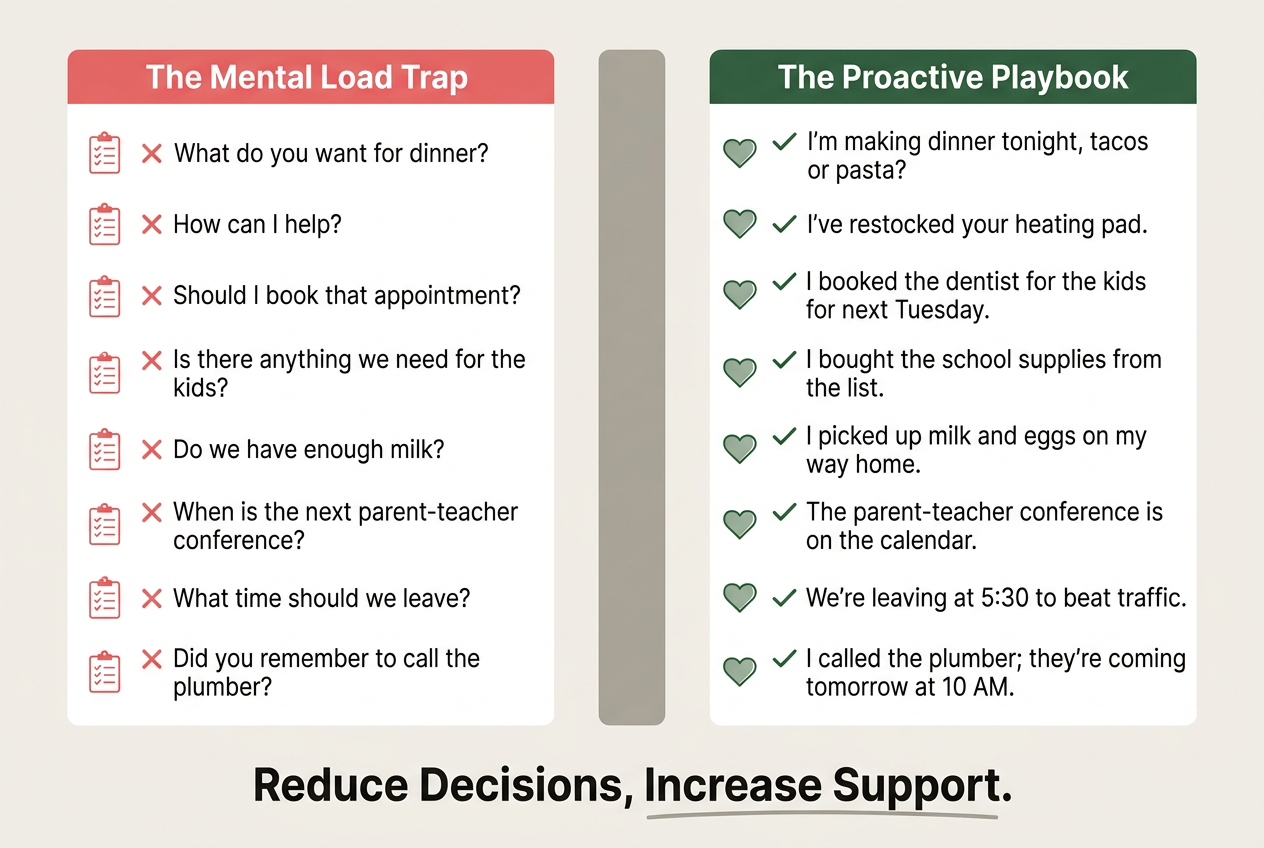
The Proactive Support Matrix
| Category | Reactive Approach (Don’t Do This) | Proactive Approach (Do This) |
|---|---|---|
| Physical Comfort | "Do you need a heating pad?" | Have a heating pad ready without asking. Set it up on the couch before she gets home. |
| Food & Nutrition | "What do you want to eat?" | Make dinner or order from her favorite place. Stock dark chocolate, nuts, and complex carbs. |
| Environment | Leave the lights bright and the TV loud. | Dim the lights, create a calm space, and minimize noise. |
| Mental Load | Ask if she wants help with chores. | Do the dishes, take out the trash, and clean the kitchen without announcing it. |
| Social Calendar | Plan a big outing with friends. | Suggest a quiet night in or cancel plans on her behalf if needed. |
Specific Tactical Actions
1. Physical Support
Keep these items stocked and ready:
- Extra-long heating pad or hot water bottle
- Ibuprofen or naproxen (both reduce prostaglandins, the chemicals that cause cramping)
- Magnesium-rich foods: 70% dark chocolate, almonds, spinach
- Hydration: Water bottles within easy reach
2. Nutritional Support
Her cravings aren’t random. Low serotonin drives cravings for carbs and sugar because these foods temporarily boost serotonin production. Instead of judging her for wanting fries and chocolate, support her body’s actual needs:
- Complex carbs: Whole grain pasta, oatmeal, sweet potatoes
- Magnesium: Dark leafy greens, pumpkin seeds, dark chocolate
- Omega-3s: Salmon, walnuts, flaxseed
- Avoid: Excess caffeine and alcohol, which can worsen anxiety and bloating
3. Environmental Support
Small environmental changes reduce overstimulation:
- Lower the lights or use warm-toned lamps
- Keep the temperature slightly warmer (her body’s thermoregulation can be off)
- Minimize loud noises or chaotic spaces
- Choose calm, low-energy activities over high-stimulation plans
4. Taking Charge of the Mental Load
This is where most guys fail. The "invisible labor" of running a household doesn’t pause during PMS. Taking initiative here makes the biggest difference:
- Do the laundry without being asked
- Plan and cook meals for the next few days
- Handle grocery shopping and errands
- Make the decision about what to watch, where to eat, or what to do
- Don’t ask her to manage your schedule or remind you of tasks
For more guidance on supporting your partner through different cycle phases, read our complete guide on how to support your girlfriend during every cycle phase.
The Communication Masterclass: What to Say
BLUF: Never ask "Are you on your period?" Replace reactive questions with supportive statements. Validate her feelings without dismissing them as "just hormones."
Words matter during PMS. The wrong phrase can turn a small frustration into a full argument. The right phrase can de-escalate tension and build trust.
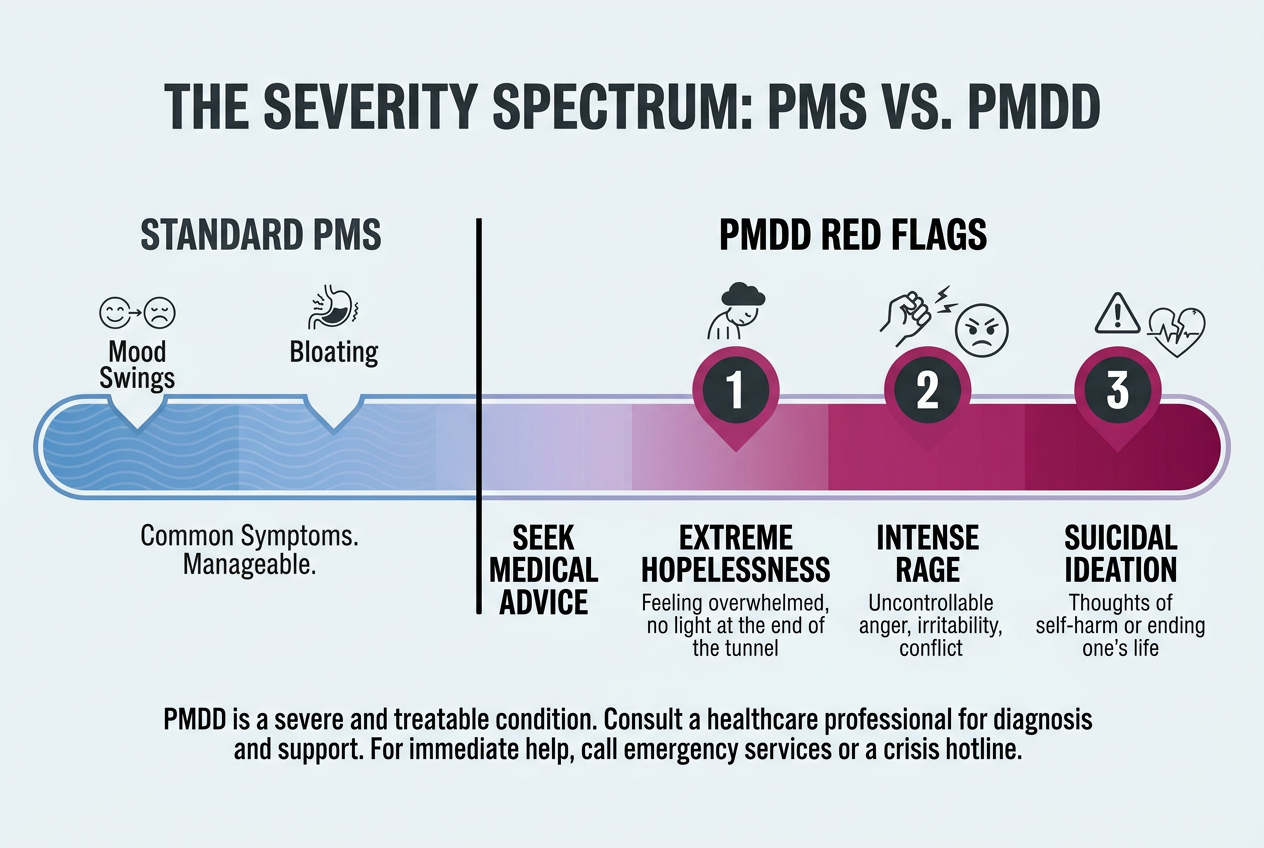
The Golden Rules
Never ask "Are you on your period?" This is the fastest way to invalidate her feelings. Even if PMS is the cause, dismissing her emotions as "just hormones" tells her that her feelings don’t matter.
Don’t try to "fix" her emotions. She doesn’t need you to solve the problem. She needs you to acknowledge that what she’s feeling is real.
Use statements, not questions. Questions require decisions. Statements provide support.
Communication Scripts for Success
| Instead of... | Try This... |
|---|---|
| "What do you want for dinner?" | "I’m making tacos tonight, and I’ve got the heating pad ready for later." |
| "Are you okay?" | "I’m here if you need anything. No pressure to talk." |
| "You’re overreacting." | "That sounds really frustrating. I hear you." |
| "Is it your period?" | Say nothing. Provide support without labeling her emotions. |
| "Why are you so upset about this?" | "I can see this really matters to you. Tell me more." |
The "Partner Dismissal" Trap
Dismissing her feelings as "just the hormones" is relationship poison. Yes, hormones are influencing her emotional state. But that doesn’t make her feelings less real. Pain is pain. Stress is stress. Frustration is frustration.
When you say "It’s just your period," you’re telling her:
- Her emotions don’t matter
- Her experience isn’t valid
- She’s irrational and can’t be trusted
Instead, validate first: "I know you’re going through a lot right now. How can I help?"
For more communication strategies, check out our guide on what to say when your girlfriend has PMS.
When It’s More Than PMS: The PMDD Warning Signs
BLUF: If her symptoms are severe, include suicidal thoughts, or interfere with daily functioning, it’s not standard PMS. It could be PMDD, a serious condition that requires medical intervention.
Premenstrual Dysphoric Disorder (PMDD) affects 3-8% of menstruating women. It’s not just "bad PMS." It’s a debilitating condition that can include severe depression, panic attacks, and suicidal ideation.
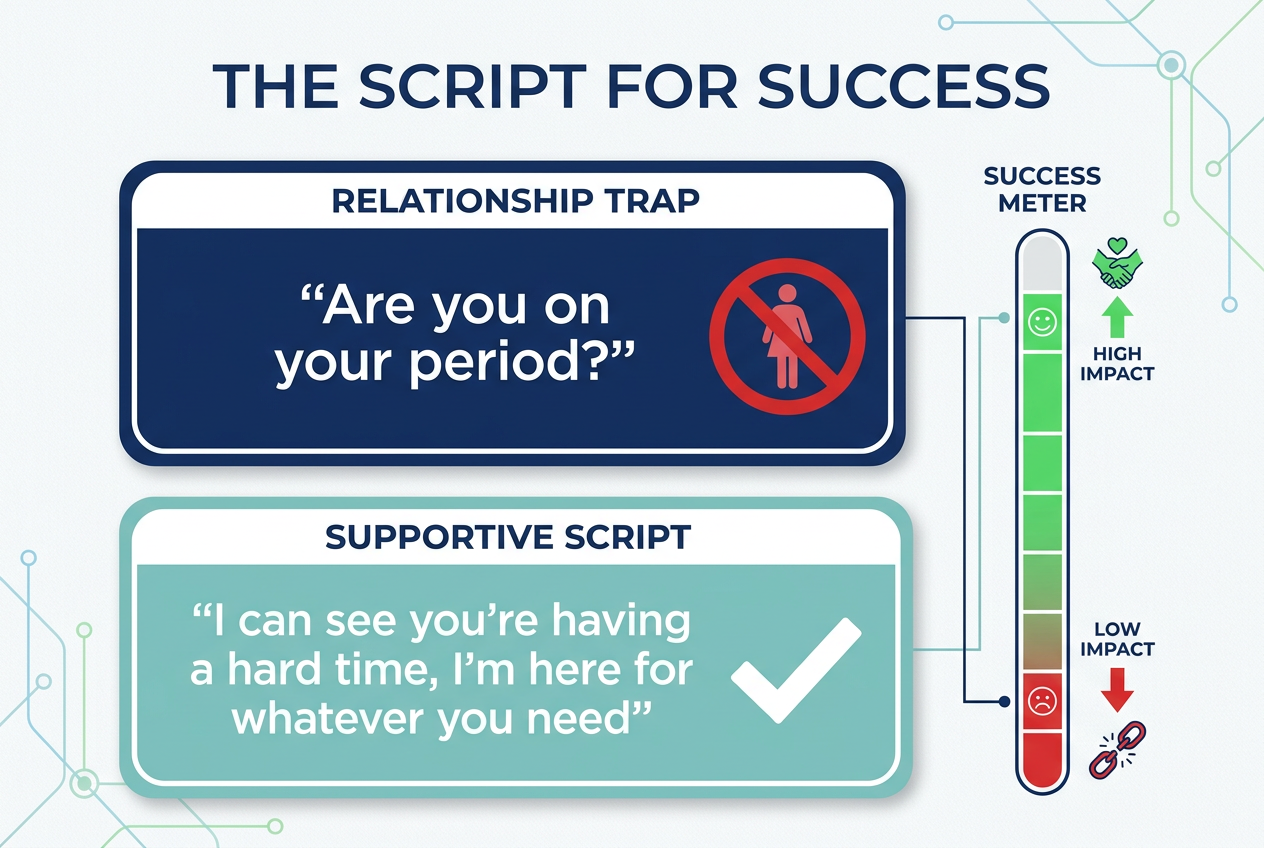
PMDD Red Flags
Watch for these symptoms during the luteal phase (week before her period):
Emotional:
- Severe depression or hopelessness
- Intense anxiety or panic attacks
- Extreme rage or anger
- Suicidal thoughts or self-harm urges
- Feeling out of control or overwhelmed
Physical:
- Severe fatigue that interferes with work or daily activities
- Physical pain that isn’t manageable with over-the-counter medication
- Insomnia or excessive sleeping
How to Approach the Conversation
If you suspect PMDD, timing matters. Never bring this up during the luteal phase when symptoms are active. Wait until the follicular phase (the week after her period ends), when she feels good and has emotional bandwidth for a serious conversation.
Script: "I’ve noticed that you’re really struggling in the week before your period, and it seems like it’s getting worse. I did some reading, and I think it might be worth talking to a doctor about PMDD. I’m worried about you, and I want to support you in getting help if you need it."
Offer to:
- Help her track her symptoms using an app like VibeCheck or Clue
- Find a doctor who specializes in hormonal health
- Go to the appointment with her if she wants support
PMDD is treatable. Options include hormonal birth control, SSRIs, lifestyle changes, and cognitive behavioral therapy. But she needs a diagnosis first.
For a deeper understanding of the menstrual cycle and how to support your partner, read understanding your partner’s cycle for a better relationship.
The PMS Care Kit: Your Tactical Checklist
BLUF: Keep a dedicated PMS care kit stocked at your place so you’re always prepared. This removes the mental load of asking what she needs and shows that you planned ahead.
The difference between a reactive partner and a proactive partner is preparation. Having these items ready at your home shows that you’ve thought about her needs before she has to ask.
The Essential PMS Care Kit
Pain & Comfort:
- Extra-long heating pad or microwavable heat pack
- Ibuprofen (200-400mg) or Naproxen (220mg)
- Hot water bottle
- Soft blanket or weighted blanket
Nutrition & Hydration:
- 70%+ dark chocolate (magnesium-rich)
- Mixed nuts (almonds, cashews, walnuts)
- Herbal tea (ginger, chamomile, peppermint)
- Electrolyte drinks or coconut water
- Complex carb snacks (whole grain crackers, oatmeal)
Period Products:
- Her preferred brand of pads or tampons
- Backup underwear (keep a pair of her comfortable underwear at your place)
- Panty liners
- Wet wipes or gentle cleansing wipes
Self-Care:
- Unscented or lightly scented face masks
- Gentle skincare products (hormonal acne is real)
- Extra phone charger for the bedside
- Cozy socks
Entertainment:
- Queue up her favorite low-stress shows or movies
- Have a playlist of calming music ready
- Keep a book or magazine she’s been wanting to read
This isn’t about "buying her off" with gifts. It’s about removing friction and showing that you planned ahead to support her.
Tracking Her Cycle: The Partner’s Secret Weapon
BLUF: Use a period tracking app with partner mode to get alerts about when PMS is likely. You’ll never be blindsided again, and you’ll be able to adjust your behavior proactively.
The biggest complaint women have about their partners during PMS is that guys are completely surprised every single month. "How did he not see this coming?" It comes at the same time every cycle.
Tracking her cycle isn’t about control or surveillance. It’s about awareness. When you know the pattern, you can prepare.
The Best Tracking Apps for Partners
VibeCheck Built specifically for men who want to understand and support their partners. VibeCheck translates her cycle into actionable daily missions and mood alerts.
Flo for Partners Flo’s partner mode allows you to connect with her account and receive notifications about her cycle phases. Compare VibeCheck and Flo here.
Clue Connect Clue’s partner feature lets you see her cycle predictions and symptoms. Learn more about VibeCheck vs Clue.
How to Use Tracking Data
Once you have access to her cycle data, you can:
- Anticipate PMS symptoms 5-7 days before her period
- Plan low-energy activities during the luteal phase
- Avoid scheduling stressful conversations or big decisions during this time
- Stock up on supplies before symptoms start
- Adjust your communication style to be more patient and validating
For more on how to track and support your partner, read our guide on how to track your girlfriend’s cycle.
Ready to actually understand her?
Join thousands of men using VibeCheck to track her cycle and show up better every day.
Frequently Asked Questions
What is PMS and why does it happen?
PMS (premenstrual syndrome) is a collection of physical and emotional symptoms that occur during the luteal phase of the menstrual cycle, typically 5-7 days before her period starts. It happens because estrogen and progesterone levels drop sharply, causing serotonin (the mood-regulating neurotransmitter) to plummet. This hormonal shift creates measurable changes in brain chemistry that affect mood, energy, appetite, and pain sensitivity.
How long does PMS last?
PMS symptoms typically begin 5-7 days before menstruation and end within a few days after her period starts. The severity and duration vary from person to person. Some women experience mild symptoms for 2-3 days, while others deal with more intense symptoms for up to two weeks. Tracking her cycle helps you identify her specific pattern.
What should I never say to my girlfriend during PMS?
Never ask "Are you on your period?" or dismiss her feelings by saying "It’s just your hormones" or "You’re overreacting." These phrases invalidate her emotions and tell her that what she’s feeling doesn’t matter. Avoid trying to "fix" her mood or offering unsolicited advice. Instead, validate her feelings with phrases like "That sounds really frustrating" or "I’m here if you need anything."
How can I tell if it’s PMS or PMDD?
PMS causes discomfort and mood changes but doesn’t interfere with daily functioning. PMDD (premenstrual dysphoric disorder) is a severe form of PMS that includes debilitating symptoms like severe depression, panic attacks, suicidal thoughts, or extreme rage. If her symptoms prevent her from going to work, maintaining relationships, or functioning normally, or if she expresses thoughts of self-harm, she needs to see a doctor. PMDD requires medical treatment, not just lifestyle changes.
What foods help with PMS symptoms?
Foods rich in magnesium, complex carbohydrates, and omega-3 fatty acids help stabilize mood and reduce physical symptoms. Stock dark chocolate (70%+ cacao), leafy greens, nuts, salmon, whole grains, and sweet potatoes. Avoid excess caffeine, alcohol, and high-sodium processed foods, which can worsen bloating, anxiety, and irritability. Her cravings for carbs and sugar are real because these foods temporarily boost serotonin, but complex carbs provide longer-lasting benefits than simple sugars.
Should I bring up her PMS symptoms?
Only if you’re concerned about PMDD or if she brings it up first. Never label her emotions as PMS during an argument or when she’s upset. If you want to discuss tracking her cycle or getting medical help, wait until the follicular phase (the week after her period ends) when she feels good and has emotional bandwidth for a serious conversation. Approach it from a place of support, not criticism.
Can stress make PMS worse?
Yes. High cortisol levels from chronic stress can worsen PMS symptoms by disrupting hormone balance and lowering serotonin even further. Help reduce her stress by taking tasks off her plate, creating a calm environment, and avoiding unnecessary conflict during the luteal phase. For more on how stress affects her cycle, read can stress delay your period.
What’s the best way to support my girlfriend during PMS?
Be proactive, not reactive. Take charge of household tasks without being asked, provide physical comfort (heating pad, favorite foods, calm environment), and validate her emotions without trying to fix them. Use statements instead of questions to reduce her mental load. Track her cycle so you’re never surprised by PMS symptoms. Most importantly, don’t take her irritability personally. Her brain chemistry is changing, and she needs your patience and support, not your defensiveness.
The Bottom Line
PMS is a biological reality that happens every month. The more you understand the science behind it, the better partner you can be. This isn’t about "surviving" her mood swings. It’s about recognizing that her body is going through measurable hormonal changes and responding with proactive support.
The best partners don’t wait to be told what to do. They learn the pattern, prepare ahead of time, and take charge of the environment so she doesn’t have to manage everything herself. They validate her emotions without dismissing them. They provide physical comfort without making it a production. They adjust their communication style to reduce conflict.
You’re not powerless during PMS. You just need the right strategy.
Want to take the guesswork out of supporting your partner? Try VibeCheck for daily insights, mood alerts, and actionable missions tailored to her cycle phase. Stop walking on eggshells and start being the partner she needs.
For more relationship advice grounded in biology and psychology, explore our complete library of relationship advice for men.
Tags

Related Articles
Continue reading to deepen your understanding

Your Girlfriend’s Mood Shifts Throughout the Month, Explained
Ever wonder why her energy and moods change so drastically each week? Understand the four hormonal phases and how to be the partner she needs during every stage of her cycle.

How to Support Your Girlfriend When She’s Crying Because of Hormones
Watching her cry when hormones hit can feel overwhelming. Learn the biological why behind the tears and use these proven scripts to provide the support she actually needs right now.

How to Help Your Girlfriend with Hormonal Mood Swings Without Arguing
Understand her cycle and learn tactical scripts to handle tension. This guide shows you how to support her through hormonal shifts without getting into unnecessary fights.

When to Feed Your Girlfriend: Understanding Hangry Hormones
Does your girlfriend get irritable when she hasn’t eaten? It’s not just in her head. Learn why hormones cause hanger and the specific times her body needs more fuel.

The Boyfriend’s Guide to Supporting Your Partner Through PMS
If your partner is suddenly irritable and exhausted, it’s biology, not you. Learn about the luteal phase and how to provide meaningful support without walking on eggshells.

Why Your Girlfriend Wants Different Things Each Week: The Biological Roadmap
Does your partner seem like a different person every seven days? Understand how her 28-day biological cycle impacts her energy and mood so you can provide the support she actually needs.

How to Help Your Girlfriend When She’s Irritable Before Her Period: The Partner’s Playbook
Is your partner snapping at small things right before her cycle? It’s not you—it’s biology. Learn how to navigate the serotonin crash and provide the support she actually needs.

How to Tell Your Girlfriend Is Overwhelmed by Hormones
Is she snapping or withdrawing for no reason? Identify the behavioral tells of hormonal overwhelm and learn how to support her during the luteal phase without triggering a fight.