Can Progesterone Make You Hungry And Affect Her Appetite
Ever wonder 'can progesterone make you hungry?' We break down the science behind her cravings and how understanding her cycle can transform your relationship.
Yes, progesterone can absolutely make her hungry. This isn’t a feeling she’s just inventing. It’s a powerful biological response hardwired into her system. Grasping this simple fact is a game changer for any partner. It turns what might seem like confusing behavior into a chance to connect and show you really get it.
The Short Answer To Why She Gets So Hungry

If you've ever been mystified by a sudden, dramatic shift in your partner's appetite, you’re not alone. One week she’s perfectly happy with a light salad for dinner. The next, she’s on a mission to find every last carb in the house. The main culprit behind this change is almost always a hormone called progesterone.
Think of her monthly cycle as a story with two acts. In the second half, right after ovulation, her progesterone levels climb dramatically. This hormone's primary mission is to get her body ready for a potential pregnancy. That massive undertaking requires a lot of extra fuel. So, can progesterone make you hungry? Without a doubt. It’s essentially sending a memo to her brain that says, "Hey, we might have a big project coming up. Time to stock up on energy, just in case."
Progesterone's Impact on Cravings
This hormonal surge doesn't just dial up her general hunger. It often triggers very specific cravings for high energy foods. That sudden, intense desire for pasta, bread, chocolate, or salty chips isn't a sign of weak willpower. It's a direct response to her body's chemistry shifting gears.
Her body is incredibly smart. It knows that these kinds of foods deliver a quick, efficient energy boost, which is exactly what progesterone is demanding. During the luteal phase of her cycle (the two-ish weeks between ovulation and her period), her metabolism can even speed up a bit. This means she’s literally burning more calories just by resting.
This isn't just anecdotal, either. It’s a well documented biological reality. Research consistently shows that as progesterone peaks, so do food cravings. A 2023 study revealed that women experiencing PMS symptoms had significantly higher scores on food craving questionnaires during this specific phase of their cycle. You can find more details about these hormonal effects on appetite from the National Library of Medicine.
What This Means For You
Understanding this connection is your superpower. It reframes the entire situation. You move from a place of questioning her choices to supporting her needs. You're not dealing with random moodiness or inexplicable hunger. You're witnessing a predictable, biological process unfold.
This simple insight helps you offer genuine empathy when she needs it most. It's a key piece of the puzzle that allows you to stay in sync with her, strengthening your bond instead of letting hormones create distance.
The Science Behind Her Progesterone Cravings
So, what’s actually happening inside her body to trigger these intense cravings? It’s not just a passing whim. There's a powerful biological process at play, and it all comes back to one key hormone.
Think of progesterone as the body's ultimate "nesting" hormone. Its primary job is to get her body ready for a potential pregnancy each month. This means her system goes into a "stock up" phase. It’s loading the pantry, gathering extra energy and resources just in case they're needed. Her biology is preparing for a huge task, and that requires more fuel.
The Brain on Progesterone
Here’s where it gets really interesting. Progesterone doesn't just work on her uterus. It has a direct line to her brain. It influences neurotransmitters, which are basically chemical messengers that control everything from mood to hunger.
Two of the main ones to know are:
- Serotonin: You've probably heard of this one. It’s the "feel good" chemical that helps keep our moods stable and happy. When progesterone levels change, it can cause serotonin to dip.
- GABA: This is the brain’s primary calming signal. It's what helps us feel relaxed and reduces anxiety. Progesterone actually has a soothing, GABA like effect.
When her body is flooded with progesterone, her brain starts looking for other ways to boost those feel good chemicals, especially if serotonin is running low. This is why she's suddenly craving a warm bowl of pasta or a rich chocolate bar instead of a salad. Those comforting, carb heavy foods give her brain a quick shot of serotonin, delivering exactly what it's asking for.
The Hunger Hormones Get Involved
It's not just about her mood, either. Progesterone directly messes with the hormones that manage her hunger signals. While the relationship between estrogen and progesterone can get complicated, the key is that they need to be in balance. When progesterone surges, it can sometimes create a state of estrogen dominance if things get out of whack. If you want to learn more, check out our guide on the signs of estrogen dominance and what they mean.
Progesterone essentially flips a switch in the brain's appetite command center. It tells her body to eat more because her metabolism is running slightly higher and her body is working harder.
This isn’t just a guess. Science backs it up. Animal studies, which often give us clues about our own biology, found that giving progesterone to female rats made them eat significantly more. The hormone literally changed the signals in their hypothalamus, the part of the brain in charge of hunger, telling it to release more appetite stimulating chemicals. You can dive into the full research on progesterone's effect on appetite to see just how deep this connection goes.
So when she tells you she's absolutely starving, believe her. Her entire biological system is driving her toward the fridge. It’s all part of a completely natural, monthly rhythm.
Mapping Her Hunger on the Progesterone Timeline
Timing is everything, especially when it comes to her appetite. If you can get a handle on when these cravings are likely to strike, you'll feel less like you're caught off guard. You'll feel more like you're one step ahead, ready to support her. So, let’s break down a practical timeline you can actually follow.
Think of her typical 28 day cycle as a story with two distinct halves. The first half is usually pretty calm. It's the second half where all the action happens. The big switch flips right after ovulation, which typically lands around day 14. This is the moment her body starts pumping out progesterone, kicking off what’s known as the luteal phase.
Pinpointing the Peak Hunger Zone
For the first few days after ovulation (let's say days 15 to 19), progesterone levels are climbing steadily. She might notice her appetite picking up a little, but it's usually nothing too dramatic. The real main event happens in the week leading up to her period.
This is the mid luteal phase, which generally falls between day 20 and day 24. During this window, progesterone hits its absolute peak. Her body is working overtime, burning more calories at rest, and sending powerful signals to her brain demanding more fuel. This is prime time for those intense, can’t be ignored cravings for pizza, chocolate, or anything that delivers a quick hit of energy and comfort.
By understanding this cycle, you can better anticipate and support her needs. The following table provides a quick reference for what to expect as her progesterone levels fluctuate.
Her Monthly Cycle and Progesterone's Hunger Cues
This table breaks down a typical 28 day cycle, highlighting progesterone levels and the expected impact on her appetite.
| Cycle Days | Phase | Progesterone Level | Likely Hunger Impact |
|---|---|---|---|
| 1-14 | Follicular & Ovulation | Low | Appetite is generally stable and predictable. |
| 15-19 | Early Luteal | Rising | A slight, gradual increase in hunger may begin. |
| 20-24 | Mid-Luteal (Peak) | Highest | Peak cravings and intense hunger are most common. |
| 25-28 | Late Luteal | Falling | Hunger signals start to fade as her period approaches. |
This pattern shows that the sudden spike in her appetite isn't random. It's a direct, predictable response to her hormones peaking.
After this peak, progesterone levels begin to drop off sharply. As the hormone recedes, the intense hunger cues usually start to fade. Her appetite often returns to its normal baseline just before or as her period begins. For a deeper dive into tailoring nutrition to these phases, our guide on eating for your cycle has some great tips.
This flowchart shows how the rise in progesterone can directly influence her mood and hunger signals, creating a predictable pattern of cravings.
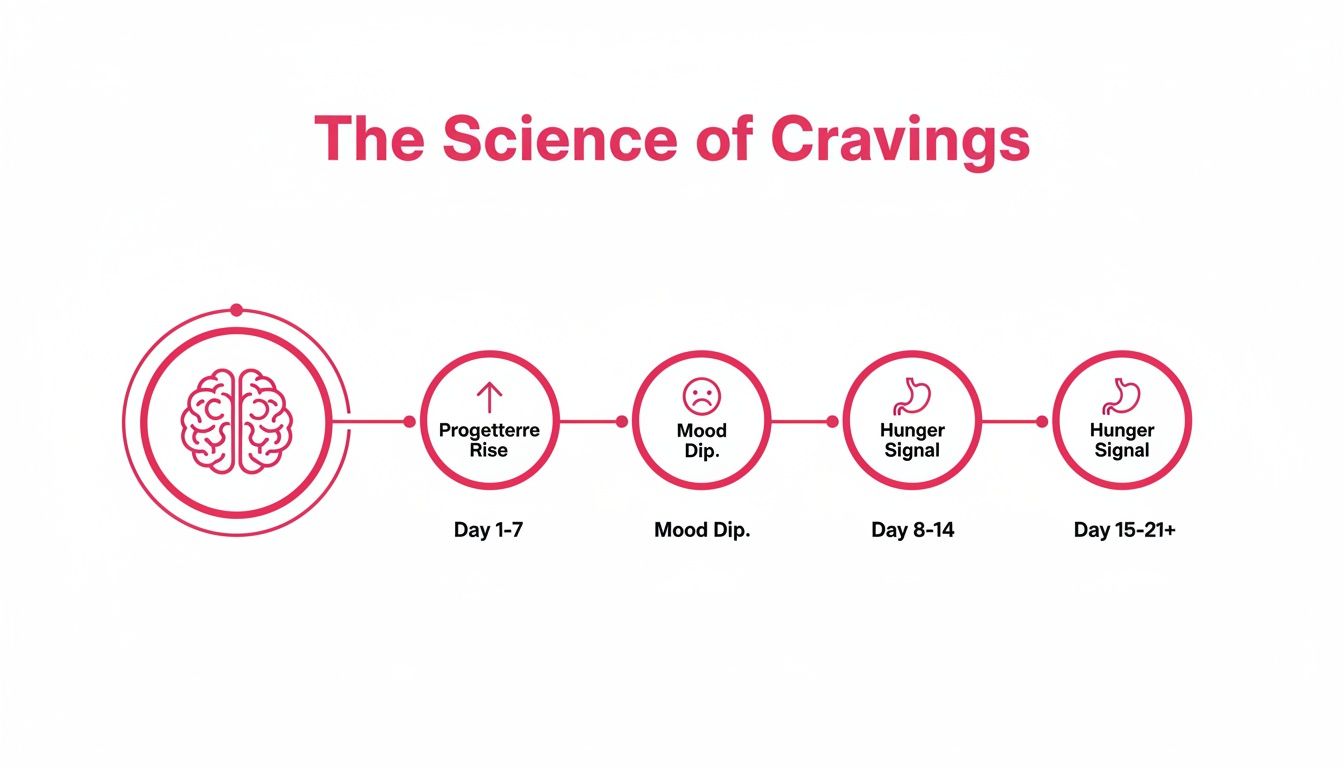
The key takeaway is that rising progesterone often lines up with a dip in mood regulating chemicals and a spike in hunger cues. This makes cravings a completely natural, biological response. When you can connect the day of her cycle to a sudden craving, these abstract hormonal shifts start to feel concrete and predictable. This helps you stay in sync and show up as the supportive partner you want to be.
How to Be the Partner Who Truly Gets It

So, you’ve got the science down. You understand that the answer to "can progesterone make you hungry" is a resounding "yes." But now for the part that really matters: turning that knowledge into action. This is how you level up from the person who knows the facts to the partner who truly gets it.
It really boils down to showing empathy through small, thoughtful gestures. This isn't about trying to "fix" her hunger or suddenly becoming a personal chef. It's about supporting her through a completely normal biological process and showing her you're in her corner. Believe me, these simple moves can make all the difference in how connected she feels.
Anticipate Her Needs Before She Asks
The real pro move? Getting ahead of the cravings. Since you know progesterone peaks in the week or so before her period, you can start to anticipate her needs instead of just reacting to them.
Think of yourself as the team's logistics manager. Your mission is just to make sure the right supplies are on hand when they're needed most. A little prep work shows you’re paying attention in a way that words alone can’t.
Here are a few practical ideas:
- Stock the Snack Cabinet: Take a quick look around. Is she a fiend for salty chips? Does she always go for dark chocolate? Maybe there’s a specific brand of ice cream she loves. Having her favorites ready and waiting is a simple but powerful way to say, "I was thinking of you."
- Plan a Comfort Meal: Suggest a cozy night in with her go to comfort food. It could be ordering her favorite pizza or making that pasta dish she loves. Either way, it shows you’re tuned into her need for both fuel and comfort.
- Offer a Snack Unprompted: If you notice her energy dipping in the afternoon, don’t just ask if she’s hungry. Try something like, "Hey, I'm grabbing a snack, want one?" or just bring her a small treat. It takes the mental load off of her having to ask.
Focus on Support, Not Solutions
Your goal isn’t to solve her hunger. It’s to support her through it. This means steering clear of comments that could sound like you’re judging her choices, even if your intentions are good. Phrases like, "Are you sure you want to eat that?" can land completely wrong when her body is sending out powerful craving signals.
Being a great partner here means creating an environment where her body's natural processes are accepted and understood, not questioned. It’s about validating her experience, not trying to manage it.
This approach builds a ton of trust and reinforces that you see her and accept her exactly as she is, cravings and all. It’s a small shift in mindset that can lead to a massive improvement in your connection. Being the partner who gets it is less about having all the answers and more about just being present with thoughtful support.
How VibeCheck Helps You Stay A Step Ahead
Alright, so the science makes sense, and you have a rough timeline of when these hunger surges might hit. But let's be realistic. Remembering where she is in her cycle on top of work, bills, and everything else is a tall order. No one expects you to keep a color coded hormonal calendar in your head.
This is where you can stop guessing. VibeCheck is designed to do the heavy lifting. It turns all this science into simple, actionable insights. You don't need a degree in endocrinology. You just need a reliable heads up.
Your Daily Playbook for Connection
The app takes the cycle information your partner shares and translates it into practical, everyday advice for you. Think of it like having a coach in your pocket who already knows the game plan.
So, instead of wracking your brain trying to remember if it’s day 22 or 25, you might get a simple notification that says:
"Heads up: Her progesterone is peaking today, so cravings might be strong. Suggesting her favorite takeout tonight could be a big win."
That one little tip can change the entire dynamic of an evening. It reframes a moment of potential confusion ("Why is she suddenly starving?") into a golden opportunity to connect. You’re not just reacting to her hunger. You’re anticipating her needs. This shows her you're paying attention and that you’re on her team, which is a powerful way to build trust and intimacy.
From Confusion to Confidence
This isn't about "managing" her experience. It’s about genuinely understanding it. VibeCheck gives you the context behind what she’s feeling, so you can respond with empathy instead of frustration.
- It takes the mental load off you. No more tracking days or guessing about hormones.
- It cuts down on misunderstandings. You’ll know that a sudden appetite spike isn’t random but a predictable part of her biology.
- It opens up more opportunities to connect. Every insight is a chance to show you care with small, thoughtful actions.
Ultimately, it helps you shift from feeling like you're constantly trying to catch up to feeling confidently one step ahead. You’ll feel more secure in your ability to be the supportive partner you want to be. To see exactly how this works, we break down how the VibeCheck app delivers relationship insights for men in our detailed guide. It's all about making support feel easy and natural, so you can focus on what really matters: each other.
Your Questions Answered: Progesterone, Hunger, and Your Partner
We've unpacked the science and the emotional rollercoaster that can come with progesterone driven hunger. But let's be real. This is probably new territory for you, and it's totally normal to have questions. Here are a few of the most common ones we get, answered straight up.
Does Every Woman Get Super Hungry From Progesterone?
Not exactly, and that's a key thing to understand. While the hormonal process is the same for pretty much every woman, how it feels is incredibly personal. Think of it like a sound system. The song is the same, but the volume can be turned way up for one person and be a quiet background hum for another.
For a lot of women, that progesterone spike during the second half of her cycle triggers a major, undeniable increase in appetite. For others, it's much more subtle. Things like her stress levels, sleep quality, and even what she's been eating can all play a role in how intense those hunger signals get. The real game changer is learning her specific pattern, which is where a tool like VibeCheck can make a huge difference.
Is She Only Going to Crave Junk Food?
It often seems that way, right? There's actually a solid biological reason she’s suddenly eyeing the entire snack aisle. When progesterone is high, it can make her body slightly less responsive to insulin, leading to little dips in blood sugar. Her brain, sensing this dip, sends out an urgent memo: "Get energy, and get it now!" Carbs and sugar are the fastest way to answer that call.
There's a comfort seeking element, too. Progesterone influences mood regulating brain chemicals like serotonin. This makes those classic "comfort foods" feel incredibly rewarding on a chemical level. It's not a lack of willpower. It's her brain seeking a specific kind of satisfaction to feel better.
How Can I Suggest Healthier Food Without Sounding Like I'm Judging Her?
This is such a great question because your delivery is everything. You want to be her teammate, not the food police. Criticizing her choices with a comment like, “Are you sure you want to eat that?” is a fast track to an argument. The key is to frame it as a joint effort.
Try a supportive swap instead:
- Plan ahead and offer a better version: “I know you’ve been getting snacky, so I picked up some of that fancy dark chocolate you like and some berries.”
- Make it a fun, shared activity: “I’ve been thinking about that amazing pasta dish you make. What if we cook it together tonight? My treat on cleanup duty.”
This shows you're not just paying attention, but you're also on her side, looking out for her well being. It’s a powerful way to connect. For more ideas like this, check out our guide on relationship advice for men.
What Else Should I Look Out For Besides Hunger?
Increased appetite is a big sign of high progesterone, but it rarely travels alone. Think of it as the lead singer of a band. There are usually a few other players on stage. When her progesterone is high during the luteal phase, you might notice other things happening at the same time.
Keep an eye out for these common signs:
- Bloating or complaining about water retention
- Breast tenderness or soreness
- Serious fatigue or just having less energy than usual
- Noticeable mood shifts, from irritable to more withdrawn
When you see these symptoms pop up alongside her hunger, you can start connecting the dots. It’s not just a random craving. It’s all part of a predictable hormonal pattern. Recognizing that big picture is your first step to providing support that actually helps.
Ready to stop guessing and start truly connecting? VibeCheck is the period tracker for men designed to give you the insights you need to be the partner she deserves. Join thousands of other men who are learning to stay in sync and build stronger, happier relationships.
Tags

Related Articles
Continue reading to deepen your understanding

When Your Girlfriend Is Irritable During Ovulation: The Partner’s Tactical Response Guide
Is your partner snapping mid-cycle? Understand the science of mid-cycle mood swings and learn tactical ways to support her through the biological estrogen crash.

Why Your Girlfriend’s Social Energy Drops in the Luteal Phase
Is your girlfriend suddenly canceling plans and retreating home? It isn’t personal; it’s biology. Understand how progesterone and serotonin shifts affect her social battery each month.

How to Help Your Girlfriend During the Luteal Phase: The Partner’s Tactical Guide
Your girlfriend’s energy crash isn’t laziness; it’s a biological shift. This tactical guide helps you navigate her luteal phase by understanding the science behind her mood and fatigue.

Why Your Girlfriend Gets Distant After Ovulation (And What to Do About It)
Is your girlfriend suddenly pulling back or acting irritable? It might be her cycle. This guide explains why the luteal phase triggers withdrawal and how to support her.

Supporting Your Girlfriend Through the Luteal Phase
When hormone levels crash before her period, your partner’s brain enters a high-alert state. Learn how to provide the security she needs with tactical scripts and empathy.

How to Give Your Girlfriend Reassurance During Ovulation Week
Is your girlfriend suddenly questioning everything during her cycle? Understand the estrogen crash and learn how to provide the tactical support she needs to feel secure and loved.

When to Give Her Space vs. When to Stay Close: Your Phase-by-Phase Guide
Your girlfriend’s need for closeness isn’t random. Understanding how her 28-day biological rhythm affects her energy helps you time your support perfectly across all four phases.

Your Girlfriend’s 28-Day Relationship Manual: How to Support Her Through Every Phase
Understanding her menstrual cycle transforms you from a guy walking on eggshells into a strategic partner who knows exactly what support to offer and when.