How Progesterone Effects on Mood Impact Your Relationship
VibeCheck is the AI relationship app built for men. Stay in sync with her cycle, understand her moods, and be a better partner every day. Available on iOS.
How Progesterone Effects on Mood Impact Your Relationship
You’ve probably noticed the pattern. Some weeks, she’s calm, steady, sleeping soundly. Other weeks? Anxiety spikes, irritability creeps in, and emotional reactions feel amplified. While multiple factors influence mood, one hormone plays an outsized role in creating those "calm weeks" - progesterone.
Understanding progesterone effects on mood isn’t just biochemistry trivia. It’s relationship intelligence. When you grasp how this hormone shapes her emotional landscape throughout her cycle, you can stop taking mood swings personally and start responding with the support she actually needs.
Here’s what you’ll learn: the brain science behind progesterone’s calming effects, when it peaks and crashes during her cycle, why low levels trigger anxiety and insomnia, and - most importantly - how to recognize the patterns and be the partner who "gets it."
What Is Progesterone? (The Basics)
Progesterone is one of two primary female sex hormones, alongside estrogen. While estrogen tends to energize and stimulate, progesterone does the opposite - it calms, soothes, and stabilizes. Think of it as your brain’s natural sedative.
The ovaries produce progesterone primarily during the second half of the menstrual cycle (days 14-28, known as the luteal phase). After ovulation, progesterone levels rise significantly. If pregnancy doesn’t occur, levels crash right before menstruation, triggering that familiar pre-period mood dip.
Here’s why this matters for you: when progesterone is abundant, she’s likely to feel more relaxed, sleep better, and handle stress more easily. When it drops - whether before her period, due to stress, or from hormonal imbalances - anxiety, irritability, and emotional sensitivity typically increase.
Progesterone vs. Progestins: A Critical Difference
Not all "progesterone" is created equal, and this distinction explains a lot of confusion about whether progesterone helps or hurts mood.
Natural progesterone is the identical molecule her body produces. It’s what we’re discussing in this article - the hormone with calming, anti-anxiety properties.
Progestins are synthetic versions found in most birth control pills, IUDs, and some hormone replacement therapies. Despite similar names, progestins have dramatically different effects on the brain. While natural progesterone typically improves mood, many progestins are associated with depression, anxiety, and emotional blunting.
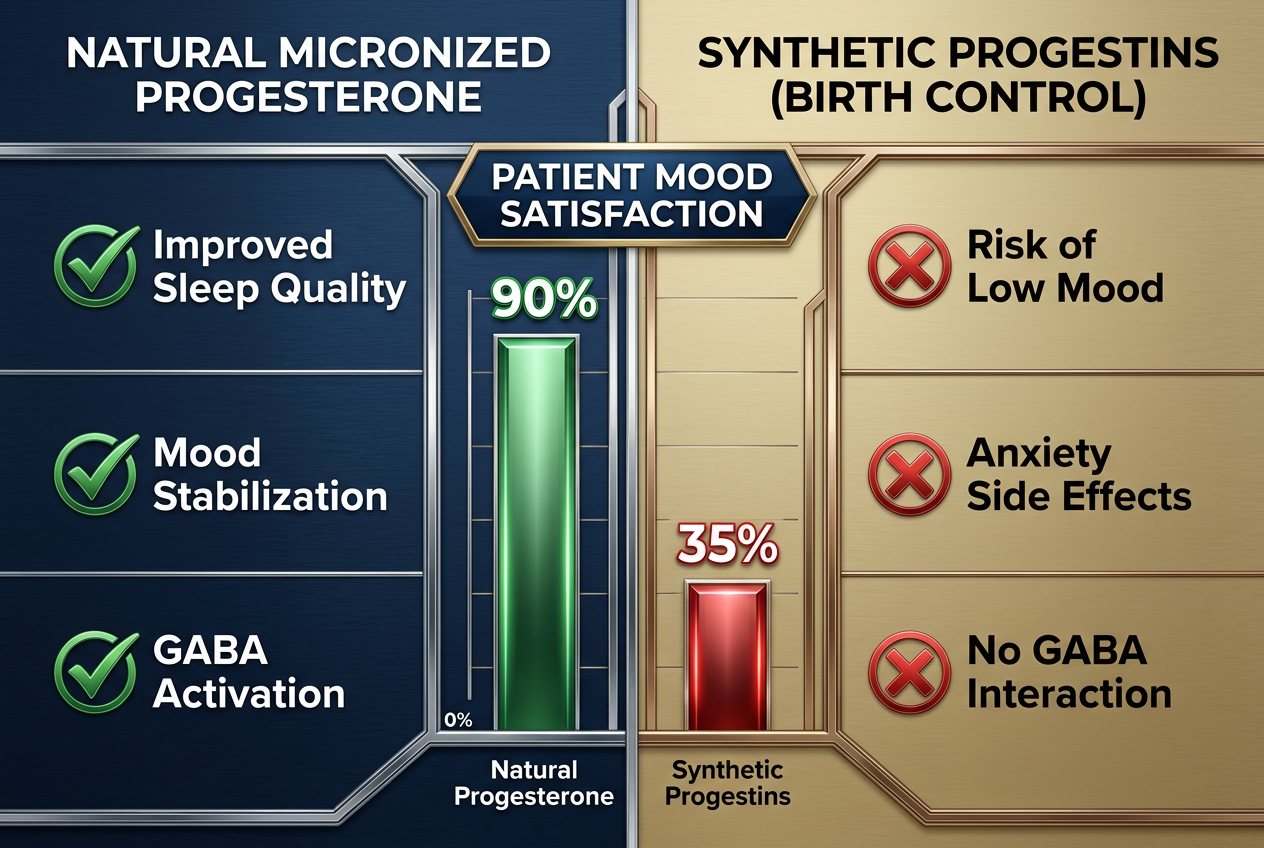
Not all ’progesterone’ is the same; while natural micronized progesterone supports mood through GABA pathways, synthetic progestins can often lead to depressive symptoms and emotional instability.
If she’s on birth control and experiencing mood issues, the progestin component might be the culprit - not natural progesterone. This is why some women feel emotionally better after stopping hormonal birth control, while others improve with natural progesterone supplementation. They’re entirely different chemical compounds with opposite effects.
Partner Tip: If she mentions feeling "off" since starting a new birth control, don’t dismiss it. Synthetic hormones genuinely impact brain chemistry differently than natural ones. Supporting her in exploring this with her doctor shows you’re paying attention.
How Progesterone Effects on Mood Actually Work
The calming effect of progesterone isn’t psychological - it’s deeply biochemical. Let’s explore the mechanism that turns this hormone into your brain’s natural anti-anxiety medication.
The GABA Connection: Your Brain’s Natural Calming System
Here’s where the science gets fascinating. Progesterone doesn’t directly create calmness. Instead, your body converts it into a metabolite called allopregnanolone. This compound acts on GABA receptors in the brain - the same receptors targeted by anti-anxiety medications like Valium and Xanax.
GABA (gamma-aminobutyric acid) is your brain’s primary inhibitory neurotransmitter. It slows down neural activity, creating feelings of calm and relaxation. When allopregnanolone activates GABA receptors, it produces a natural sedative and anti-anxiety effect without the need for pharmaceutical intervention.
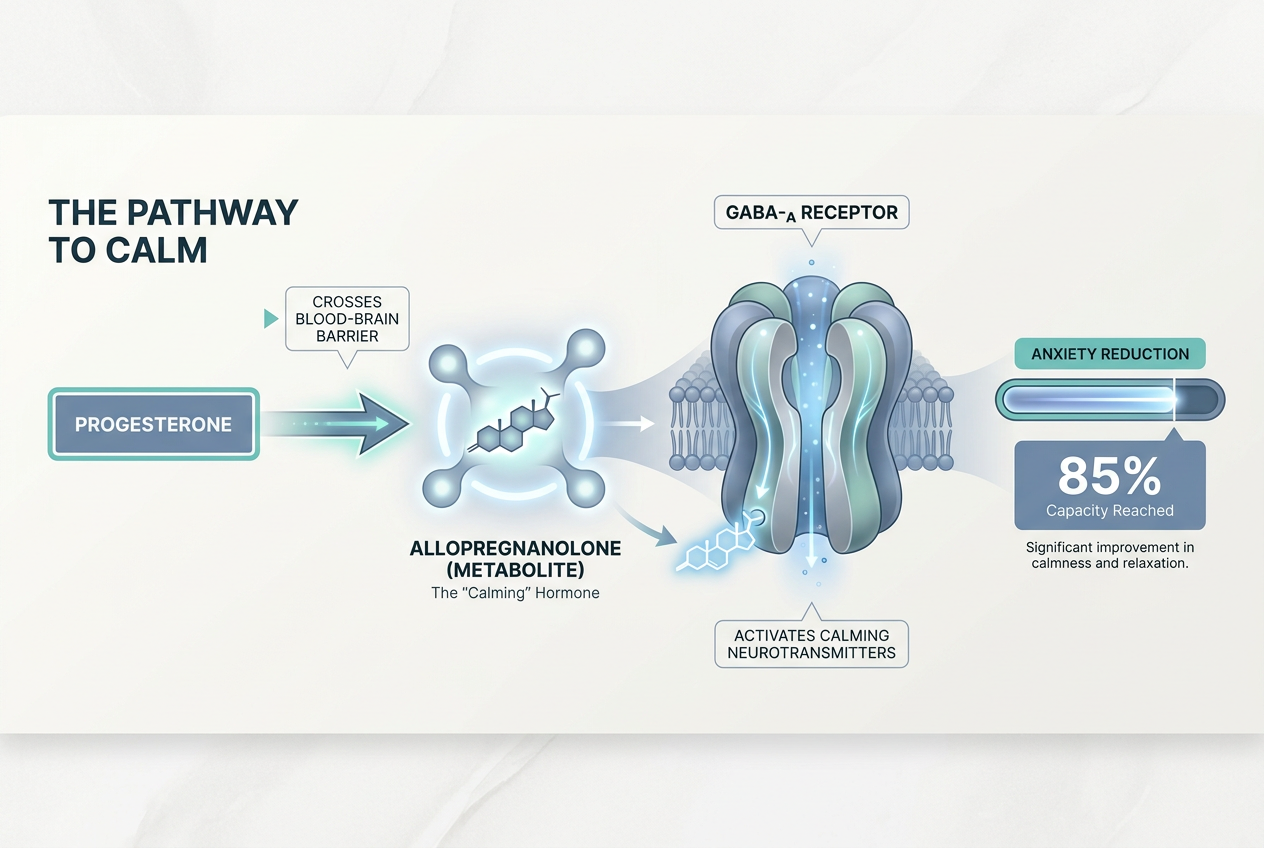
Understanding the biochemical conversion of progesterone into allopregnanolone, which directly interacts with GABA receptors to produce a natural sedative and anti-anxiety effect on the brain.
This is why progesterone is often called the "calming hormone" or the "hormone of peace." It literally dampens overactive neural circuits that generate anxiety, racing thoughts, and emotional reactivity.
Here’s the thing: not everyone metabolizes progesterone into allopregnanolone at the same rate. Some women have variations in the enzymes responsible for this conversion, or differences in GABA receptor sensitivity. This explains why progesterone supplementation dramatically helps some women while leaving others feeling worse - it’s not one-size-fits-all.
Partner Tip: If she describes feeling anxious or "wired" during the second half of her cycle when progesterone should be calming her down, she might be among the 10-15% of women who have GABA receptor sensitivity issues. Suggesting she explore this with a hormone-savvy practitioner shows you’re engaged in solving the puzzle together.
When Progesterone Peaks During Her Cycle
Timing is everything. Progesterone follows a predictable pattern across the menstrual cycle:
Days 1-14 (Follicular Phase): Progesterone levels are low. Estrogen is the dominant hormone, creating more energy, sociability, and confidence. Mood tends to be stable.
Day 14 (Ovulation): Progesterone begins rising as the corpus luteum (the follicle that released the egg) starts producing it.
Days 15-28 (Luteal Phase): Progesterone peaks around days 19-21, creating the maximum calming effect. She might notice feeling more introverted, prioritizing rest, and craving comfort. This isn’t weakness - it’s biology.
Days 25-28 (Pre-Menstrual): If pregnancy doesn’t occur, progesterone crashes rapidly. This sudden drop - not just low levels, but the steep decline - triggers the mood symptoms associated with PMS: irritability, anxiety, tearfulness, and emotional sensitivity.
Understanding this timeline transforms how you interpret behavior. When she’s quieter or needs more sleep during days 15-24, it’s not disinterest. When she’s more reactive during days 25-28, it’s not an overreaction. Her brain chemistry is literally changing week by week.
What This Means for You: The apps that track her cycle aren’t just predicting when her period starts. They’re mapping when progesterone peaks (calming weeks) and crashes (vulnerable weeks). Paying attention to these patterns helps you anticipate needs before conflicts arise.
Positive Progesterone Effects on Mood
When progesterone levels are optimal, the benefits extend far beyond just "not feeling anxious." Here’s what adequate progesterone does for emotional wellbeing.
The "Calming Hormone" Effect
High progesterone creates what researchers describe as a "neurochemical brake." It reduces the fight-or-flight response, lowers cortisol reactivity, and makes stressors feel more manageable. Women with optimal progesterone levels consistently report:
- Reduced generalized anxiety
- Less rumination and obsessive thinking
- Improved stress resilience
- Decreased emotional reactivity to triggers
- A sense of "emotional buffer" against daily irritations
This isn’t about numbing emotions. It’s about regulation - the ability to feel feelings without being overwhelmed by them.
Better Sleep, Better Mood
One of progesterone’s most pronounced effects is on sleep architecture. The hormone has sedative properties, particularly when taken orally as micronized progesterone. It helps with:
- Faster sleep onset (falling asleep more quickly)
- Deeper slow-wave sleep (the restorative stages)
- Reduced middle-of-the-night wakings
- Improved total sleep duration
Better sleep directly translates to better mood. Studies consistently show that progesterone’s mood benefits are partially mediated through improved sleep quality. When she’s sleeping deeply through the night, anxiety and irritability naturally decrease.
Partner Tip: If she mentions suddenly sleeping more soundly during certain weeks, that’s peak progesterone at work. If she’s experiencing insomnia before her period, that’s the progesterone crash. Recognizing this pattern prevents you from attributing sleep changes to external factors when it’s hormonal.
Reduced Anxiety and Stress
Multiple clinical studies demonstrate progesterone’s anxiolytic (anti-anxiety) effects. In one notable trial, women with premenstrual anxiety disorder who received natural progesterone showed 70% reduction in anxiety symptoms compared to placebo.
The mechanism extends beyond GABA. Progesterone also:
- Reduces activity in the amygdala (the brain’s fear center)
- Modulates the HPA axis (your stress response system)
- Counterbalances estrogen’s stimulating effects
- Provides neuroprotection against stress-induced brain inflammation
For women with generalized anxiety disorder, appropriate progesterone levels can be as effective as low-dose SSRIs - without the sexual side effects or emotional flattening those medications sometimes cause.
Why Low Progesterone Causes Mood Issues
When progesterone drops below optimal levels - whether from stress, perimenopause, anovulatory cycles, or hormonal imbalances - the mood consequences are predictable and significant.
Common Symptoms to Recognize
Low progesterone creates a distinctive symptom cluster. If several of these sound familiar, progesterone deficiency might be a factor:
- Anxiety and panic attacks, especially worsening pre-menstrually
- Insomnia or disrupted sleep, particularly difficulty staying asleep
- Irritability and rage that feels disproportionate to triggers
- Emotional sensitivity, feeling easily hurt or overwhelmed
- Brain fog and difficulty concentrating
- Irregular or heavy menstrual periods
- PMS symptoms that disrupt daily functioning
- Tearfulness without clear cause
- Low libido (progesterone is a precursor to testosterone)
- Bloating and breast tenderness
The key distinguishing feature of progesterone-related mood issues: they follow a cyclical pattern, worsening during the luteal phase and often improving once menstruation begins (when the hormonal slate is wiped clean, so to speak).
Partner Tip: If you notice these symptoms cluster during the same time each month - typically the week or two before her period - hormones are almost certainly involved. Suggesting she track symptoms alongside her cycle can reveal patterns that aren’t obvious in the moment.
The Cortisol Connection
Here’s where stress enters the picture. Progesterone and cortisol (your stress hormone) are made from the same precursor: pregnenolone. When you’re under chronic stress, your body prioritizes cortisol production at the expense of progesterone. This is called "pregnenolone steal."
High stress → More cortisol → Less progesterone → Worsening anxiety
It’s a vicious cycle. Stress depletes the calming hormone you need most when you’re stressed. This is why women often notice their cycles becoming irregular during high-pressure periods - their bodies are literally stealing progesterone to manage stress.
The cortisol-progesterone relationship also explains why stress management techniques (meditation, exercise, therapy) can improve cycle-related mood symptoms. You’re not just "relaxing" - you’re biochemically redirecting hormone synthesis back toward progesterone production.
What This Means for You: When she’s going through a stressful period - work deadline, family crisis, major life change - her progesterone is taking a hit. The mood symptoms you might attribute to the stress itself are often amplified by the hormonal disruption stress causes. Extra support during these times isn’t coddling; it’s acknowledging the compound effect.
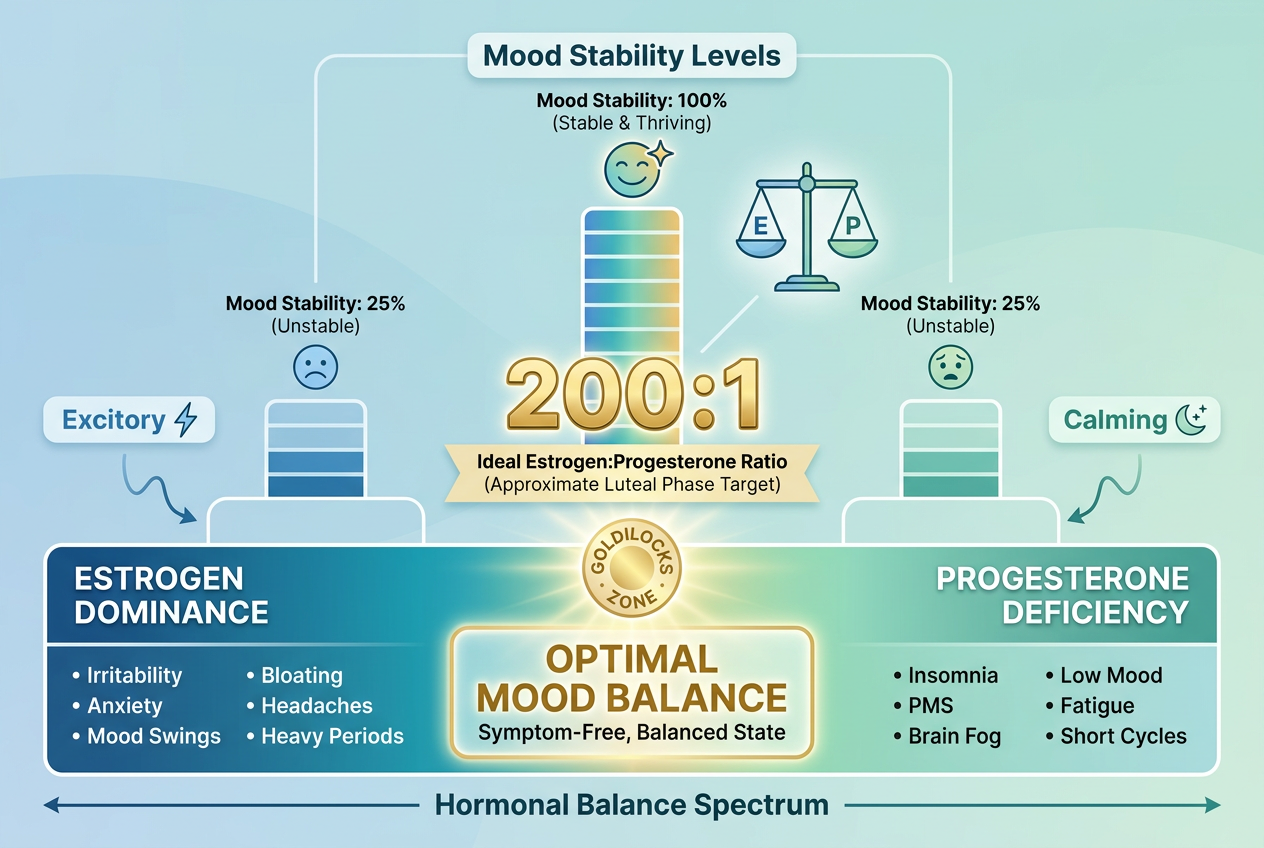
Achieving the ’Goldilocks Zone’ of hormonal health requires a specific balance between stimulating estrogen and calming progesterone to prevent irritability and emotional swings.
When Progesterone Can Make Mood Worse
Here’s the nuance most articles skip: progesterone isn’t universally beneficial. For some women, in certain situations, it actually worsens mood. Understanding this prevents the oversimplified "just take progesterone" approach.
The Goldilocks Effect (Too Much or Too Little)
Hormone specialist Dr. Lara Briden describes progesterone’s mood effects as a "Goldilocks" situation - you need just the right amount. Too little creates anxiety and insomnia. But too much can cause:
- Depression and low mood
- Emotional flattening or apathy
- Excessive sleepiness during the day
- Reduced motivation
- Social withdrawal
This typically happens with progesterone supplementation doses that are too high, or with progesterone taken at the wrong time of the cycle. The optimal dose for mood is highly individual - what calms one woman might sedate another.
PMDD and Progesterone Sensitivity
About 5-8% of women have PMDD (premenstrual dysphoric disorder) - a severe form of PMS that significantly impairs functioning. Paradoxically, many women with PMDD have normal progesterone levels. Their issue is sensitivity to progesterone’s metabolites.
In PMDD, the brain appears to have altered GABA receptor function. The same allopregnanolone that calms most women can trigger severe depression, suicidal ideation, and rage in women with PMDD. It’s not about too much or too little progesterone - it’s about how their brain receptors respond to it.
For these women, standard progesterone supplementation can backfire. Treatment often involves SSRIs (which specifically target luteal phase symptoms) or hormonal suppression to prevent the progesterone surge entirely.
Partner Tip: If she experiences severe mood changes pre-menstrually - not just irritability, but depression, hopelessness, or uncharacteristic anger - PMDD should be on the differential. Encouraging her to see a specialist who understands this condition (not all OB-GYNs do) could be life-changing. This isn’t regular PMS.
How to Support Her Hormonal Balance
While you can’t control her hormones, you can support the lifestyle factors and interventions that optimize progesterone levels and improve how her brain responds to it.
Lifestyle Factors That Matter
Stress Management Is Non-Negotiable
Given the cortisol-progesterone relationship, chronic stress is progesterone’s enemy. Supporting her stress reduction isn’t soft - it’s biochemical strategy:
- Protect her sleep (progesterone production peaks during deep sleep)
- Encourage breaks during high-stress periods
- Don’t add to her mental load with logistics she’s already managing
- Recognize that rest isn’t laziness, especially during high-progesterone weeks
Nutritional Support
Certain nutrients are cofactors in progesterone metabolism and GABA function:
- Magnesium glycinate (300-400mg daily): Supports GABA receptor function and sleep. Most people are deficient. This is the single most impactful supplement for cycle-related anxiety.
- Vitamin B6 (50-100mg daily): Required for progesterone production and metabolism. Particularly helpful for PMS mood symptoms.
- Omega-3 fatty acids: Reduce inflammation that interferes with hormone receptor sensitivity.
- Reduce histamine-rich foods during luteal phase: Histamine and progesterone have an antagonistic relationship. High-histamine foods (aged cheese, alcohol, fermented foods) can worsen mood symptoms in sensitive women.
Regular Movement
Moderate exercise improves progesterone sensitivity and helps metabolize excess cortisol. High-intensity exercise during the luteal phase, however, can worsen symptoms by further stressing the HPA axis. Suggesting gentler activities during pre-menstrual weeks shows cycle awareness.
Partner Tip: Stock magnesium glycinate. Seriously. When she’s anxious before her period, "Have you taken your magnesium today?" is infinitely more helpful than "Just calm down." It addresses the biochemical root.
When to Suggest Professional Help
While lifestyle optimization helps, some situations require medical intervention:
Red flags that warrant seeing a doctor:
- Mood symptoms that significantly impair work, relationships, or daily functioning
- Suicidal thoughts or self-harm urges during any phase of the cycle
- Complete loss of ability to manage emotions pre-menstrually
- Insomnia lasting multiple weeks
- Irregular cycles (shorter than 21 days or longer than 35 days)
- Suspicion of PMDD based on symptom severity
Treatment options a hormone-savvy practitioner might recommend:
- Micronized progesterone (Prometrium): Bioidentical progesterone in 100mg, 200mg, or 300mg doses. Typically taken days 14-28 of the cycle. Clinical studies show significant improvements in anxiety and sleep within 2-4 weeks.
- Hormone testing: Serum progesterone on day 21 of cycle, or DUTCH testing for comprehensive hormone metabolite analysis.
- Targeted supplementation: Medical-grade vitamins at therapeutic doses.
- Thyroid evaluation: Low thyroid function mimics and exacerbates low progesterone symptoms.
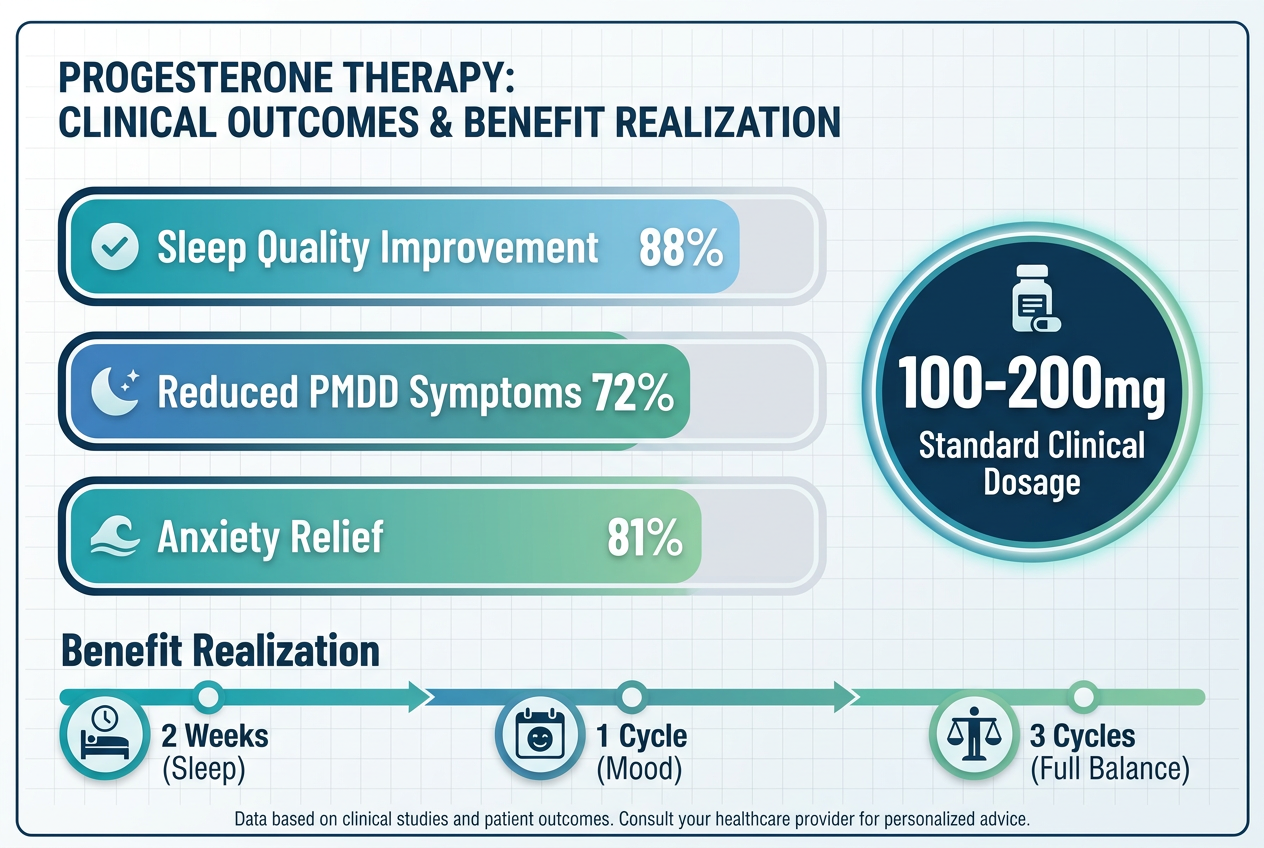
Clinical data indicates significant improvements in sleep and mood within the first two weeks of progesterone therapy, with full emotional stabilization typically occurring within three cycles.
The right practitioner makes all the difference. Look for functional medicine doctors, naturopaths, or OB-GYNs who specifically mention hormone balancing in their practice. Standard gynecologists often default to birth control for every menstrual complaint, which doesn’t address underlying progesterone issues.
What This Means for You: Suggesting she see a specialist isn’t implying something is "wrong" with her. It’s recognizing that hormonal optimization is healthcare, not weakness. The conversation might start with, "I’ve noticed a pattern with your anxiety and sleep. Would you be open to talking to someone who specializes in hormone balance?"
Tools for Understanding Her Cycle
Knowledge is relationship currency. When you understand her hormonal patterns, you can shift from reactive (responding to mood changes after they happen) to proactive (adjusting your approach based on where she is in her cycle).
VibeCheck provides exactly this intelligence. The app tracks her cycle phase and translates hormonal changes into practical guidance: when progesterone peaks and she needs more downtime, when it crashes and she needs extra patience, what actually helps during each phase versus what backfires.
Rather than guessing why this week feels different than last week, you get daily insights that explain the biochemistry and suggest specific supportive actions. The goal isn’t to "manage" her moods - it’s to stop being confused by them.
Frequently Asked Questions
Why does progesterone make her emotional?
Progesterone doesn’t typically make women emotional - the sudden drop in progesterone does. When levels crash right before menstruation, it’s the rapid withdrawal of the calming, mood-stabilizing effects that creates emotional reactivity. Think of it like coming off a low-dose anti-anxiety medication all at once. The hormone isn’t causing the emotions; the absence of it removes the buffer that usually helps manage them. This is why premenstrual mood symptoms are so predictable - they’re tied to the progesterone withdrawal window.
Which is the happy hormone: estrogen or progesterone?
This is the wrong question - it’s not an either/or. Estrogen tends to create energized, confident, sociable feelings (particularly mid-cycle). Progesterone creates calm, grounded, peaceful feelings (particularly post-ovulation). You need both, in the right balance, for optimal mood. Problems arise with imbalance: estrogen dominance (too much estrogen relative to progesterone) causes anxiety, irritability, and mood swings. Low progesterone causes the same symptoms. The "happiest" state is adequate levels of both, properly timed to your cycle phase.
Does progesterone help with anxiety?
Yes, when levels are optimal and the person has normal GABA receptor sensitivity. Clinical trials show progesterone supplementation reduces anxiety symptoms by 60-70% in women with premenstrual anxiety. The mechanism is progesterone’s conversion to allopregnanolone, which activates calming GABA receptors. However, this doesn’t work for everyone - roughly 10-15% of women have paradoxical responses where progesterone worsens anxiety, particularly those with PMDD. The only way to know is trial under medical supervision.
What are signs of low progesterone?
The classic triad is: anxiety (especially pre-menstrual), insomnia (difficulty staying asleep), and irregular or heavy periods. Other common signs include: severe PMS, irritability, brain fog, low libido, breast tenderness, bloating, short luteal phase (less than 10 days between ovulation and period), spotting before period starts, and difficulty getting or staying pregnant. If multiple symptoms cluster during the second half of your cycle, progesterone deficiency is likely. Confirming requires blood testing on day 21 of a 28-day cycle, when progesterone should peak.
Can too much progesterone cause depression?
Yes. While adequate progesterone improves mood, excessive progesterone can cause depression, emotional flattening, extreme fatigue, and social withdrawal. This typically occurs with supplementation doses that are too high. The therapeutic window is narrow - what calms one woman might sedate another. This is why progesterone therapy requires careful titration and monitoring. Symptoms of too much progesterone include sleeping 10+ hours but still feeling tired, loss of motivation, apathy, and feeling emotionally "numb."
How long does it take for progesterone to improve mood?
Most women notice initial improvements in sleep within 3-7 days of starting micronized progesterone. Anxiety reduction typically begins within 1-2 weeks. Full mood stabilization often takes 2-3 complete menstrual cycles as your body adjusts to the new hormonal pattern. The timeline varies based on dosage, delivery method (oral absorbs differently than topical), and individual metabolism. If you’re trying progesterone supplementation and see zero improvement after 6-8 weeks, either the dose is wrong or progesterone isn’t the primary issue.
Should she avoid progesterone if she has depression?
Not necessarily. Natural progesterone often helps depression, particularly when it’s cycle-related or co-occurs with anxiety. The confusion comes from research on synthetic progestins (in birth control), which do increase depression risk. Natural progesterone has the opposite mechanism. However, women with a history of severe depression should start progesterone under psychiatric supervision, as a small subset experience worsening symptoms. The key is distinguishing between progesterone sensitivity (rare) and progesterone deficiency causing depressive symptoms (common).
Can men benefit from understanding progesterone?
Absolutely - and not just for supporting female partners. Men produce small amounts of progesterone, and it plays a role in male mood regulation and neuroprotection. But the primary benefit for men is relationship intelligence. When you understand that her irritability on day 27 isn’t about you, her increased need for sleep during week three isn’t disinterest, and her anxiety before her period has a biochemical trigger - you stop personalizing normal hormonal fluctuations. This knowledge prevents probably 60% of cycle-related conflicts before they start.
Understanding progesterone effects on mood transforms how you show up in your relationship. What seemed like unpredictable emotional shifts becomes a recognizable pattern. What felt like walking on eggshells becomes responding with informed support.
The women who feel most understood aren’t with partners who ignore their hormones - they’re with partners who get curious about them. The more you understand the biochemical reality she’s navigating every month, the better teammate you become.
Want to translate this knowledge into daily action? VibeCheck tracks her cycle phases and delivers specific guidance on what to say, when to plan, and how to support her based on where she is hormonally. Stop guessing. Start knowing.
Tags

Related Articles
Continue reading to deepen your understanding

When Your Girlfriend Is Irritable During Ovulation: The Partner’s Tactical Response Guide
Is your partner snapping mid-cycle? Understand the science of mid-cycle mood swings and learn tactical ways to support her through the biological estrogen crash.

Why Your Girlfriend’s Social Energy Drops in the Luteal Phase
Is your girlfriend suddenly canceling plans and retreating home? It isn’t personal; it’s biology. Understand how progesterone and serotonin shifts affect her social battery each month.

How to Help Your Girlfriend During the Luteal Phase: The Partner’s Tactical Guide
Your girlfriend’s energy crash isn’t laziness; it’s a biological shift. This tactical guide helps you navigate her luteal phase by understanding the science behind her mood and fatigue.

Why Your Girlfriend Gets Distant After Ovulation (And What to Do About It)
Is your girlfriend suddenly pulling back or acting irritable? It might be her cycle. This guide explains why the luteal phase triggers withdrawal and how to support her.

Supporting Your Girlfriend Through the Luteal Phase
When hormone levels crash before her period, your partner’s brain enters a high-alert state. Learn how to provide the security she needs with tactical scripts and empathy.

How to Give Your Girlfriend Reassurance During Ovulation Week
Is your girlfriend suddenly questioning everything during her cycle? Understand the estrogen crash and learn how to provide the tactical support she needs to feel secure and loved.

When to Give Her Space vs. When to Stay Close: Your Phase-by-Phase Guide
Your girlfriend’s need for closeness isn’t random. Understanding how her 28-day biological rhythm affects her energy helps you time your support perfectly across all four phases.

Your Girlfriend’s 28-Day Relationship Manual: How to Support Her Through Every Phase
Understanding her menstrual cycle transforms you from a guy walking on eggshells into a strategic partner who knows exactly what support to offer and when.