The Boyfriend’s Guide to Her Cycle: Navigating Mood Swings and Energy Shifts

Understand the 28-day pattern behind her moods. This guide explains the four hormonal phases so you can stop walking on eggshells and start being the partner she actually needs.
The Boyfriend’s Guide to Her Cycle: Navigating Mood Swings & Energy Shifts
Most men don’t realize their partner’s mood shifts follow a 28-day biological pattern. You’re not imagining the unpredictability - you just haven’t been given the map. The same woman who wants to plan a weekend getaway one week might want complete silence the next. That’s not randomness. That’s her hormonal cycle creating four distinct phases with different energy levels, moods, and needs. Understanding this pattern is the difference between walking on eggshells and being the partner who genuinely gets it.
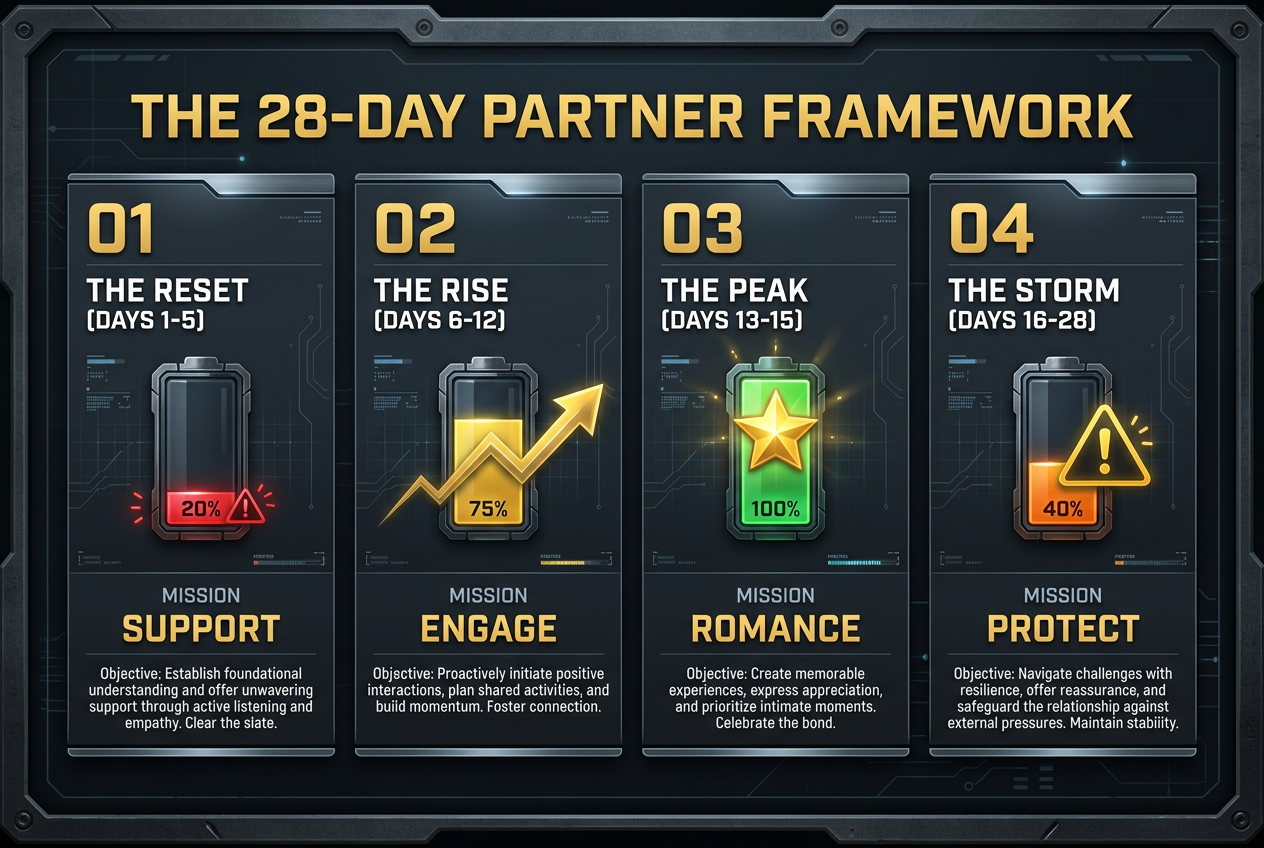 Approaching her cycle as a 28-day mission allows you to anticipate energy shifts and adjust your support level before tension arises.
The menstrual cycle isn’t just about the period. It’s a complete hormonal weather system affecting everything from her physical energy to how she processes emotions. When you understand the four phases, you can anticipate her needs before she asks, reduce unnecessary conflict, and show up as the partner who actually understands what she’s experiencing.
This guide breaks down each phase with specific biological explanations and tactical advice. You’ll learn what’s happening in her body, what she’s likely feeling, and exactly what moves make you the hero versus the guy who says the wrong thing at the wrong time.
Table of Contents
- Understanding the 28-Day Cycle Framework
- Phase 1: The Reset (Menstruation - Days 1-5)
- Phase 2: The Rise (Follicular Phase - Days 6-12)
- Phase 3: The Peak (Ovulation - Days 13-15)
- Phase 4: The Storm (Luteal Phase - Days 16-28)
- When Mood Swings Signal Something Bigger: PMDD
- The Communication Cheat Sheet: What to Say (and Never Say)
- Using Cycle Awareness as Your Relationship Upgrade
- Frequently Asked Questions
Understanding the 28-Day Cycle Framework
The average menstrual cycle lasts 28 days, though anywhere from 21 to 35 days is considered normal. Think of it as four distinct seasons, each lasting about a week. Her energy, mood, social battery, and even physical symptoms shift as two main hormones - estrogen and progesterone - rise and fall throughout the month.
VibeCheck App
Know what she needs. Before she has to say it.
Track her cycle, understand her phases, be the partner she deserves.
Download Free on iOS →Estrogen is your ally. When it’s high, she feels confident, social, and energized. Progesterone can be more complicated. When it rises, she might feel calm and introspective. When it crashes, that’s when irritability and mood swings typically show up. The cycle isn’t linear. It’s a pattern of peaks and valleys, and understanding where she is in that pattern changes everything about how you communicate and support her.
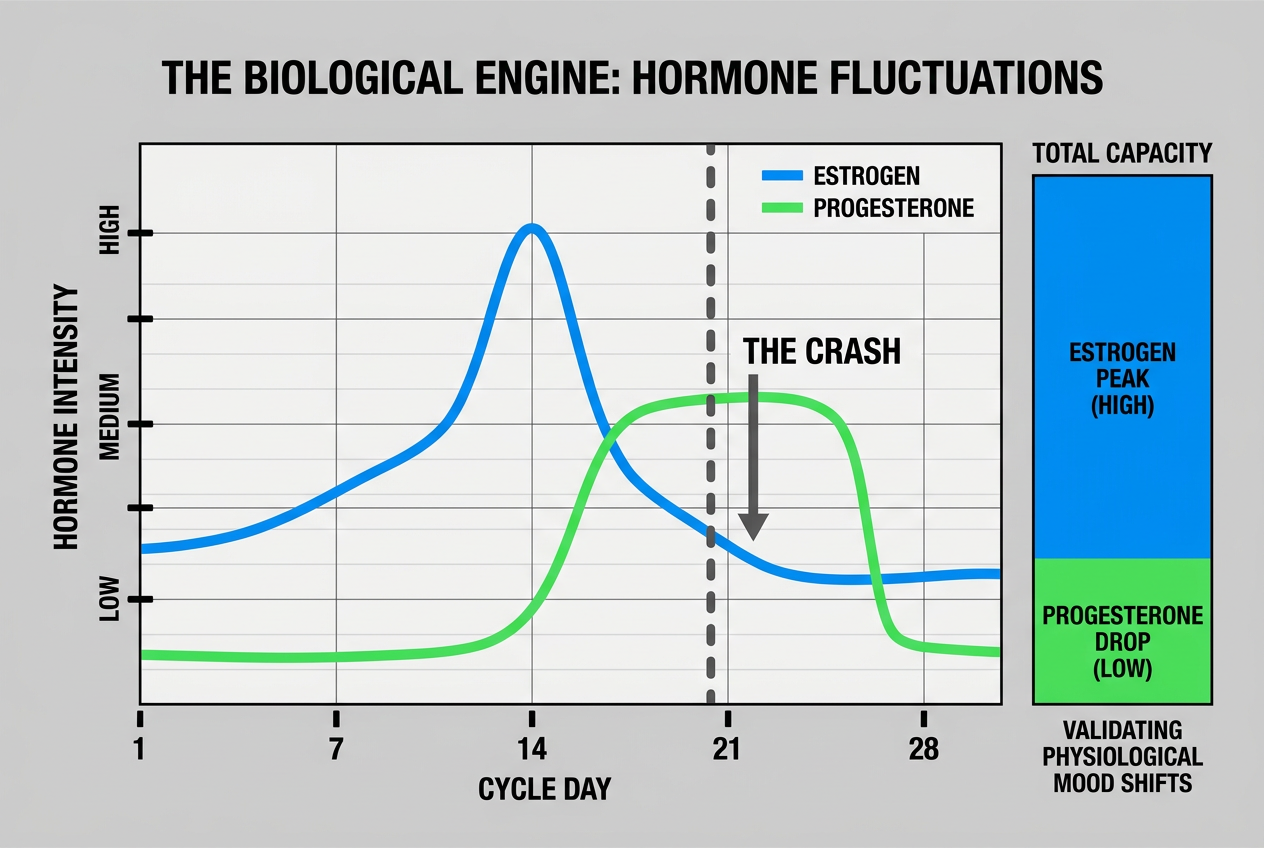 Visualizing the sudden drop in estrogen and progesterone helps clarify why ’mood swings’ are a physical reaction to shifting internal chemistry.
Here’s the framework you need to memorize:
Phase 1 (Days 1-5): The Reset Her period arrives. Energy is low, physical discomfort is high. This is recovery mode.
Phase 2 (Days 6-12): The Rise Estrogen climbs. She feels energized, confident, and optimistic. This is her spring season.
Phase 3 (Days 13-15): The Peak Ovulation happens. This is her biological and emotional high point. Confidence and libido peak.
Phase 4 (Days 16-28): The Storm Progesterone rises, then crashes. This is where mood swings, irritability, and physical symptoms like bloating appear. The final 5-7 days (PMS week) are typically the toughest.
Once you understand this pattern, you stop reacting to her moods and start anticipating her needs. That’s the difference between a reactive partner and a strategic one. If you want to dive deeper into applying this framework to your relationship, check out our boyfriend’s field manual on mastering the four cycle phases.
Phase 1: The Reset (Menstruation - Days 1-5)
Her period starts, and her body is doing the biological equivalent of a system reboot. Estrogen and progesterone are both at their lowest levels. She’s bleeding, which means she might be dealing with cramps, fatigue, and a general "blah" mood. This isn’t the week to ask her to plan your next vacation or help you move furniture.
What She’s Feeling
Physically, her uterus is shedding its lining. That process is driven by chemicals called prostaglandins, which cause the muscle contractions we call cramps. Higher prostaglandin levels mean more painful cramps. She might also feel bloated, tired, or mentally foggy. Emotionally, she’s likely feeling low-energy and introverted. This is a recovery phase, not a performance phase.
The Hero Move: The Comfort Protocol
Your job this week is simple: reduce her physical and emotional load. Don’t ask what’s for dinner. Don’t start a conversation about serious relationship topics. Don’t suggest she "push through" the fatigue.
Tactical Actions:
- Offer a heating pad or hot water bottle without being asked
- Take over household chores she normally handles
- Stock up on her preferred pain relief medication
- Bring her favorite comfort foods (chocolate, salty snacks, whatever she typically craves)
- Create a low-pressure environment where she can rest
Communication Strategy: Less talk, more presence. She doesn’t need you to fix anything. She needs you to show up consistently and make her life easier. "I’m handling dinner tonight" beats "What do you want for dinner?" by a mile. For specific texting scripts that work during this phase, see our guide on what to text your girlfriend during her period.
What Not to Do
Never minimize her pain. "It’s just cramps" or "Other women handle it fine" will land you in the doghouse. Don’t suggest she should be more active or social. Don’t initiate serious conversations or conflicts. This is maintenance mode, not growth mode.
Phase 2: The Rise (Follicular Phase - Days 6-12)
Welcome to her spring season. Estrogen is climbing, and with it comes a surge in energy, optimism, and social confidence. Her skin might look clearer, she’s more interested in trying new things, and her overall mood is lighter. This is the phase where she’s most likely to say yes to spontaneous plans, deep conversations, or tackling big projects together.
What She’s Feeling
Estrogen is the brain’s feel-good chemical. As it rises, it boosts serotonin and dopamine levels, which translates to improved mood, sharper focus, and higher motivation. She feels like her best self. Her physical energy is up, and she’s more resilient to stress. This is the biological window where she’s most open to connection and new experiences.
The Hero Move: Capitalize on Her Energy
This is your relationship ROI week. She’s energized and open, so use this window to strengthen your connection. Plan the big date nights, have the deep conversations you’ve been putting off, or tackle home improvement projects together. She’s got the mental and physical bandwidth to engage fully.
Tactical Actions:
- Plan an adventurous date (hiking, trying a new restaurant, exploring a new part of town)
- Initiate meaningful conversations about your future or relationship goals
- Suggest collaborative projects (meal planning, weekend trips, shared hobbies)
- Match her social energy - this is the week she might want to double-date or hang with friends
Communication Strategy: Ask open-ended questions and actually listen to her answers. She’s got the mental clarity to articulate what she’s thinking and feeling, so this is prime time for understanding her perspective. "What’s been on your mind lately?" or "What would make this month amazing for you?" will get you genuine, thoughtful responses.
What Not to Do
Don’t waste this week being passive or disengaged. This is her high-energy window, and if you’re not matching it, you’re missing the relationship sweet spot. Don’t overbook her calendar without checking first - just because she has energy doesn’t mean she wants to spend it all on your priorities.
For a deeper dive into the follicular phase and specific symptoms to watch for, see our guy’s guide to follicular phase symptoms.
Phase 3: The Peak (Ovulation - Days 13-15)
This is her biological high point. Around day 13-15, she ovulates, meaning her body releases an egg. Estrogen hits its peak right before ovulation, and testosterone also gets a brief boost. The result? She feels attractive, confident, and her libido is at its monthly high. This is the phase where she’s most likely to initiate intimacy and feel genuinely interested in physical connection.
What She’s Feeling
Biologically, this is when her body is primed for reproduction. Even if pregnancy isn’t on the agenda, the hormonal shifts create real changes in how she feels and acts. She might dress up more, seek validation, and feel more socially and sexually confident. Her sense of smell sharpens, and she’s subconsciously more attracted to masculine traits. This phase typically lasts 2-3 days, and it’s your narrow window to capitalize on her peak energy and interest.
The Hero Move: Romance and Affirmation
Tell her she looks incredible. Plan romantic gestures. Create opportunities for intimacy. She feels most attractive during this phase, so your validation lands harder than usual. This is the week to take her seriously when she says she wants to try something new in the bedroom or go out somewhere special.
Tactical Actions:
- Compliment her appearance and energy (be specific, not generic)
- Plan a romantic evening - candles, good food, no distractions
- Be physically affectionate - this is when touch is most welcome
- If you’re sexually active, prioritize her pleasure and connection
Communication Strategy: Be direct and confident. She’s not looking for you to be passive during this phase. "You look amazing tonight" or "I’ve been thinking about you all day" will resonate more than usual. Match her confidence and energy level.
What Not to Do
Don’t ignore the window. If you’re not paying attention during her peak phase, she’ll notice. Don’t assume her interest in intimacy is just about sex - it’s about feeling desired and connected. And if you’re not trying to conceive, double down on contraception. Ovulation is peak fertility, and biology is working hard to make pregnancy happen.
For more tactical advice on recognizing and responding to this phase, check out our partner’s playbook on when to approach for intimacy.
Phase 4: The Storm (Luteal Phase - Days 16-28)
Here’s where most relationship friction happens. After ovulation, progesterone rises to prepare her body for a potential pregnancy. When pregnancy doesn’t happen, both estrogen and progesterone crash around day 21-24. That hormonal nosedive is what causes PMS - premenstrual syndrome. She might feel irritable, anxious, bloated, fatigued, and emotionally raw. This isn’t a character flaw. It’s a chemical reaction.
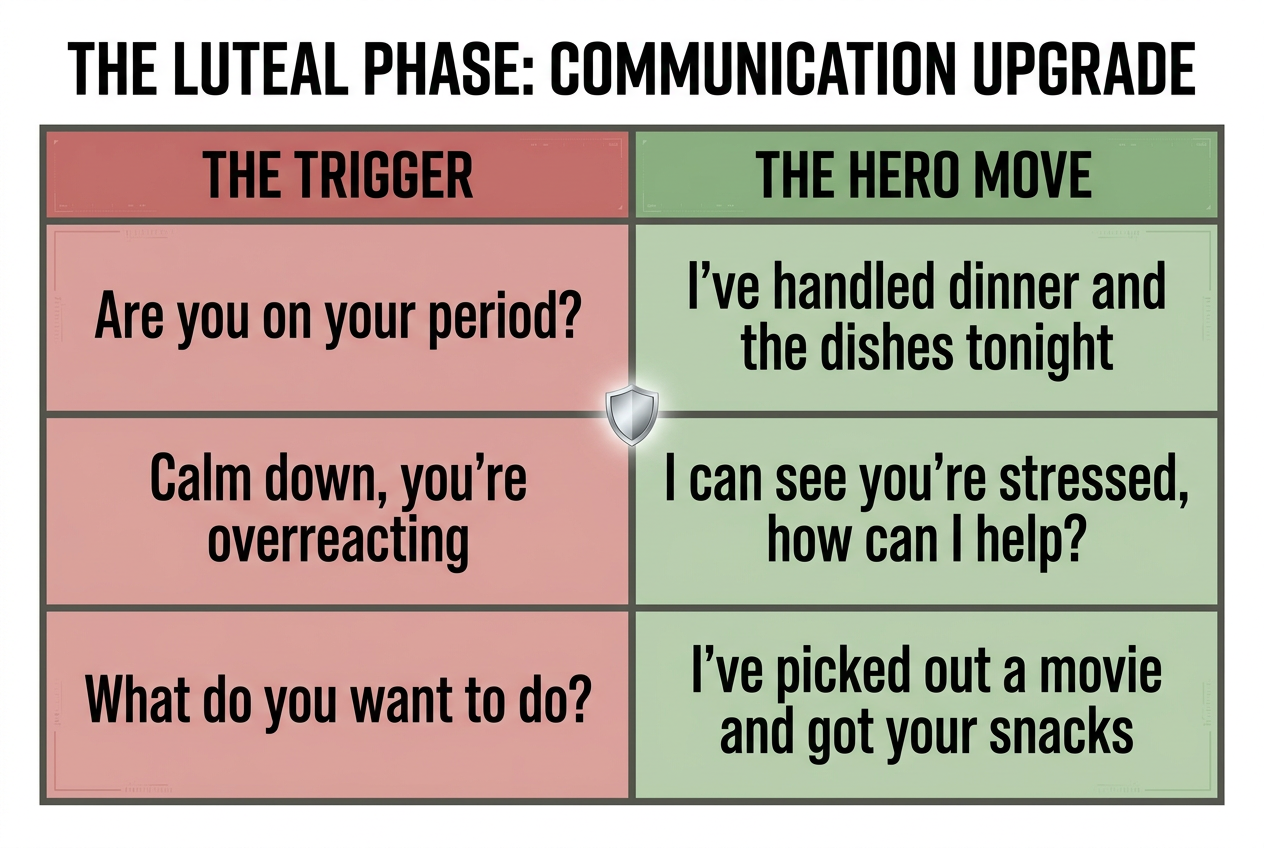 During the Luteal phase, shifting from questioning to active decision-making reduces her cognitive load and prevents unnecessary relationship friction.
What She’s Feeling
The progesterone crash doesn’t just affect mood. It can cause physical symptoms like breast tenderness, bloating, headaches, and fatigue. Emotionally, she might feel overwhelmed by small problems, more sensitive to criticism, and less able to regulate stress. Her brain is processing information differently during this phase - she’s more attuned to negative stimuli and less patient with ambiguity or indecision.
The Hero Move: The Patience Protocol
Your goal during this phase is to reduce her cognitive and emotional load. Stop asking open-ended questions that require her to make decisions. Don’t start arguments or bring up unresolved conflicts. Show up with solutions, not questions.
Tactical Actions:
- Stock her favorite snacks before she asks (chocolate, salty foods, whatever she typically craves)
- Handle small decisions for her ("I’m ordering dinner - Thai or pizza?")
- Take over household tasks without making a big deal about it
- Give her physical space if she’s withdrawing, but stay emotionally available
- Validate her feelings without trying to fix them ("I can see you’re stressed - that makes sense")
Communication Strategy: This is not the week to debate or defend yourself. If she’s irritable, don’t take it personally. "You seem stressed. What do you need from me right now?" is infinitely better than "Why are you being so moody?" Avoid asking if she’s on her period - even if you’re right, it will backfire.
What Not to Do
Don’t dismiss her feelings as "just hormones." Even if biology is amplifying her emotions, the underlying concerns are real. Don’t expect her to have the same energy level as the follicular phase - this is the biological equivalent of running on low battery. Don’t initiate major relationship conversations or conflicts.
For a complete tactical breakdown of the luteal phase, including what to say and what never to say, read our boyfriend guide to the luteal phase mood.
When Mood Swings Signal Something Bigger: PMDD
For most women, PMS is uncomfortable but manageable. For 5-8% of women, premenstrual symptoms cross into territory called PMDD - Premenstrual Dysphoric Disorder. This is not just bad PMS. PMDD is a diagnosable condition that causes severe depression, anxiety, rage, or thoughts of self-harm during the luteal phase. If your partner’s symptoms are consistently interfering with her work, relationships, or daily functioning, it’s time to consider professional help.
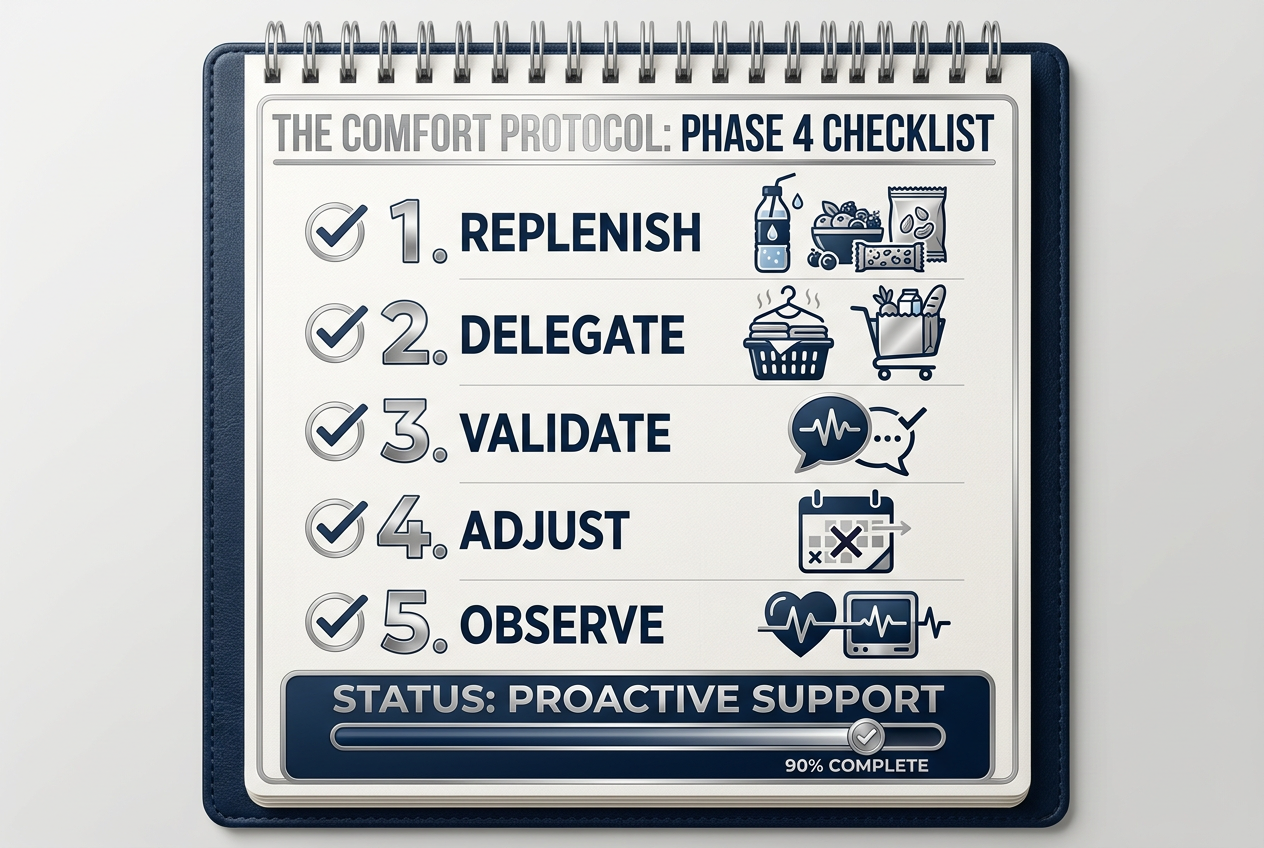 Implementing a standard protocol during her most difficult days ensures you are providing the specific physical and emotional support she needs most.
Recognizing PMDD
PMDD symptoms typically appear during the luteal phase and resolve within a few days after her period starts. Key warning signs include:
- Severe depression or feelings of hopelessness
- Extreme anxiety or panic attacks
- Intense irritability or anger that feels out of control
- Difficulty concentrating or brain fog that affects work performance
- Physical symptoms like bloating, breast tenderness, or joint pain that are debilitating
- Thoughts of self-harm or suicide
How to Support Her
If you suspect PMDD, approach the conversation during a symptom-free week (follicular or ovulation phase). Don’t bring it up during the luteal phase when she’s already struggling. Use language that focuses on symptoms, not character judgments: "I’ve noticed the week before your period is really tough for you. Have you thought about talking to a doctor?"
PMDD is treated with a combination of lifestyle changes, therapy, and sometimes medication (often SSRIs or birth control). Your role is to encourage professional support and be patient during the process. This isn’t something you can fix with snacks and heating pads.
For men dealing with severe PMS or PMDD in their relationship, we’ve built resources specifically to help you navigate this territory. Check out our guide on reducing girlfriend PMS mood swings for tactical scripts and strategies.
The Communication Cheat Sheet: What to Say (and Never Say)
The difference between being a supportive partner and starting an unnecessary fight often comes down to a single sentence. Here’s your tactical communication guide for each phase, with specific scripts that work and common mistakes that backfire.
What to Say During Menstruation (Days 1-5)
Say:
- "I’m handling dinner tonight - any cravings?"
- "Do you need anything from the store?"
- "I’ve got the dishes. You rest."
Never Say:
- "It’s just cramps."
- "You seem fine to me."
- "Can’t you just push through it?"
What to Say During Follicular Phase (Days 6-12)
Say:
- "Want to try that new restaurant this weekend?"
- "What’s been on your mind lately?"
- "I’d love to plan something fun together."
Never Say:
- "You’re being too much."
- "Why are you so hyper?"
- "Can you just relax?"
What to Say During Ovulation (Days 13-15)
Say:
- "You look incredible."
- "I’ve been thinking about you all day."
- "Let’s do something special tonight."
Never Say:
- "You’re being clingy."
- "Not tonight - I’m tired."
- "Why are you dressed up?"
What to Say During Luteal Phase (Days 16-28)
Say:
- "I can see you’re stressed. What do you need?"
- "I’m ordering dinner. Thai or pizza?"
- "You don’t have to do anything tonight. I’ve got it."
Never Say:
- "Are you on your period?"
- "You’re overreacting."
- "Why are you being so moody?"
The pattern here is simple: be proactive instead of reactive, validate her experience instead of questioning it, and reduce her decision-making load during the toughest phases. For more tactical communication scripts across every phase, see our decoder ring guide on when your girlfriend wants attention.
Using Cycle Awareness as Your Relationship Upgrade
Understanding your partner’s cycle isn’t about tracking her period like a weather app. It’s about recognizing the biological patterns that influence her energy, mood, and needs so you can show up as the partner who genuinely gets it. This knowledge gives you an unfair advantage - you can anticipate her needs before she asks, reduce unnecessary conflict, and strengthen your connection by matching your support to her biological reality.
Practical Tools for Tracking
If you’re serious about using cycle awareness to improve your relationship, you need a system. That means either tracking her cycle yourself (with her permission) or using an app designed for partners. The goal isn’t to surveil her - it’s to give yourself a framework for understanding the biological patterns influencing your day-to-day relationship.
Most period tracker apps for men focus on cycle dates. VibeCheck goes further by translating those dates into actionable relationship advice. You get daily missions tailored to her phase, mood insights, and communication scripts that actually work. Think of it as having a relationship coach in your pocket who knows exactly where she is in her cycle.
The Four Seasons Framework in Action
Here’s how cycle-aware partners use this knowledge strategically:
Week 1 (Menstruation): Cancel unnecessary plans. Stock the fridge with comfort foods. Take over household tasks. This is your week to be the logistics guy who makes her life easier.
Week 2 (Follicular): Plan the big dates. Have the deep conversations. Tackle shared projects. She’s got the energy and openness to engage fully, so capitalize on this window.
Week 3 (Ovulation): Prioritize romance and physical connection. Tell her she looks amazing. Create opportunities for intimacy. This is her peak confidence window - match it.
Week 4 (Luteal): Reduce her decision-making load. Validate her feelings without trying to fix them. Give space when needed, but stay emotionally available. This is the patience week.
By matching your behavior to her biological season, you stop reacting to her moods and start anticipating her needs. That shift from reactive to proactive is what separates average partners from the ones who actually understand what she’s going through. For a deeper dive into applying this framework to date planning, see our guide on planning dates based on her menstrual cycle.
Privacy and Consent
Before you start tracking her cycle, have a conversation. Explain why you want to understand her patterns and how you plan to use that information to support her better. Some women will find it thoughtful and considerate. Others might feel uncomfortable with the idea of being "tracked." Respect her boundaries. If she’s not interested in sharing cycle data, you can still use general cycle awareness to improve your communication and support - you just won’t have the precision of knowing exactly which phase she’s in.
Most relationship-focused period tracking apps include partner mode or partner features that require mutual consent. VibeCheck, for example, requires her to invite you before you can see any cycle data. That built-in consent mechanism protects her privacy while giving you the insights you need to be a better partner.
Ready to actually understand her?
Join thousands of men using VibeCheck to track her cycle and show up better every day.
Frequently Asked Questions
How long does the average menstrual cycle last?
The average menstrual cycle is 28 days, but anywhere from 21 to 35 days is considered medically normal. Your partner’s cycle might be shorter or longer, and it can vary slightly month to month due to stress, diet changes, or other factors. The key phases (menstruation, follicular, ovulation, luteal) happen in the same order, but the timing and length of each phase can differ between women.
Why does my girlfriend get mood swings before her period?
Mood swings before her period are caused by the sudden drop in estrogen and progesterone during the luteal phase. These hormones don’t just regulate her reproductive system - they also affect neurotransmitters like serotonin and dopamine, which control mood. When those hormones crash, her brain chemistry shifts, making her more sensitive to stress, more irritable, and less able to regulate emotions. It’s not a personality flaw. It’s a chemical reaction.
What’s the difference between PMS and PMDD?
PMS (premenstrual syndrome) causes uncomfortable but manageable symptoms like mild mood swings, bloating, and fatigue during the luteal phase. PMDD (premenstrual dysphoric disorder) is a severe form of PMS that causes debilitating symptoms like major depression, extreme anxiety, rage, or thoughts of self-harm. PMDD symptoms are intense enough to interfere with work, relationships, and daily functioning. If your partner’s symptoms consistently disrupt her life every month, she should talk to a healthcare provider about PMDD treatment options.
When is my partner most likely to want intimacy during her cycle?
Ovulation (around days 13-15) is when her libido typically peaks. Estrogen and testosterone are both elevated during this phase, which increases sexual desire and confidence. She’s also more likely to feel attractive and seek validation during this window. The follicular phase (days 6-12) is also a good window for intimacy since her energy and mood are high. The luteal phase, especially the final week before her period, is when she’s least interested in physical connection due to fatigue, bloating, and mood changes.
Can I ask my girlfriend where she is in her cycle?
You can, but timing and phrasing matter. Never ask "Are you on your period?" when she’s upset or irritable - it will backfire every time. Instead, have a conversation during a neutral time (follicular or ovulation phase) about whether she’s comfortable sharing cycle information. Frame it as wanting to understand and support her better, not as trying to explain away her emotions. If she’s not comfortable discussing it, respect that boundary and use general cycle awareness instead of specific tracking.
How can I support my partner if she has severe PMS symptoms?
First, validate her experience. Even if you don’t understand what she’s feeling physically, acknowledge that it’s real and difficult. Second, reduce her physical and emotional load during the luteal phase - take over chores, handle decisions, and create a low-pressure environment. Third, encourage her to talk to a healthcare provider if symptoms are consistently severe. Treatments range from lifestyle changes (diet, exercise, stress management) to medical interventions (hormonal birth control, SSRIs, or other medications). Your role is to be patient, supportive, and non-judgmental while she figures out what works.
What’s the best period tracker app for partners?
The best period tracker app for partners depends on what you’re looking for. VibeCheck is designed specifically for men in relationships and translates cycle data into daily missions and communication scripts. Apps like Clue and Flo offer partner modes but are primarily built for women. If you want a tool that gives you actionable relationship advice based on her cycle, VibeCheck is your best option. If you just want to see her cycle dates, most mainstream period trackers have partner features.
Should I tell my partner I’m tracking her cycle?
Absolutely. Tracking her cycle without her knowledge crosses a major privacy boundary. Before you use any period tracker or start monitoring her phases, have an open conversation about why you want to understand her cycle and how you plan to use that information. Most women will appreciate that you’re taking the effort to understand her better, but only if you approach it respectfully and get her explicit consent first.
Understanding your partner’s menstrual cycle isn’t about becoming an expert on female biology. It’s about recognizing the patterns that influence her energy, mood, and needs so you can show up consistently as the partner who actually gets it. When you stop reacting to her moods and start anticipating her needs, you transform your relationship from reactive damage control into proactive support. That’s the difference between a good partner and a great one.
If you’re ready to move from guessing to knowing, try VibeCheck - the relationship app built specifically for men who want to understand and support their partner better.
Tags

Related Articles
Continue reading to deepen your understanding

How to Understand Your Girlfriend’s Social Battery and Hormones
Does your girlfriend suddenly cancel plans or seem withdrawn? This guide explains how her cycle impacts her energy so you can support her like a pro.

How Your Girlfriend’s Emotional Needs Change During Her Cycle
Does your girlfriend’s mood seem unpredictable? Learn how her emotional needs shift on a biological loop and how to support her through every phase of her cycle.

What to Buy When Your Girlfriend Has Hormone Cravings: A Support Guide
Stop wondering what to pick up at the store. This guide explains the science behind cycle cravings and provides a specific list of foods and comfort items she needs.

Your Girlfriend’s Mood Shifts Throughout the Month, Explained
Ever wonder why her energy and moods change so drastically each week? Understand the four hormonal phases and how to be the partner she needs during every stage of her cycle.

How to Support Your Girlfriend When She’s Crying Because of Hormones
Watching her cry when hormones hit can feel overwhelming. Learn the biological why behind the tears and use these proven scripts to provide the support she actually needs right now.

How to Help Your Girlfriend with Hormonal Mood Swings Without Arguing
Understand her cycle and learn tactical scripts to handle tension. This guide shows you how to support her through hormonal shifts without getting into unnecessary fights.

When to Feed Your Girlfriend: Understanding Hangry Hormones
Does your girlfriend get irritable when she hasn’t eaten? It’s not just in her head. Learn why hormones cause hanger and the specific times her body needs more fuel.

The Boyfriend’s Guide to Supporting Your Partner Through PMS
If your partner is suddenly irritable and exhausted, it’s biology, not you. Learn about the luteal phase and how to provide meaningful support without walking on eggshells.