When Your Girlfriend Is Irritable During Ovulation: The Partner’s Tactical Response Guide

Is your partner snapping mid-cycle? Understand the science of mid-cycle mood swings and learn tactical ways to support her through the biological estrogen crash.
When Your Girlfriend Is Irritable During Ovulation: The Partner's Tactical Response Guide
You've probably heard that ovulation is supposed to be the "biological summer" - high energy, positive vibes, peak confidence. So why is your girlfriend snapping at small things, restless, or withdrawing mid-cycle?
Here's what's actually happening: about 20% to 30% of women notice feeling more sensitive, energized, or emotionally reactive specifically during ovulation. For some women, that surge in energy comes with a side of friction - heightened emotions, low patience, and a biological "mini-crash" that nobody warned you about.
This guide explains the biology behind mid-cycle irritability and gives you a tactical framework for responding without making things worse.
Table of Contents
- Why Mid-Cycle Irritability Happens (The Biological Reality)
- Can Ovulation Make a Woman Irritable?
- The Estrogen Rollercoaster: Why Her Mood Drops After the Surge
- What Is Mittelschmerz?
- How to Deal with Ovulation Mood Swings: The Partner Playbook
- Scripts: What to Say When She's Snapping
- When It's More Than Just Ovulation: Red Flags to Watch For
- Frequently Asked Questions
Why Mid-Cycle Irritability Happens (The Biological Reality)
Ovulation occurs when a surge in luteinizing hormone (LH) causes the ovary to release an egg, typically around day 14 of a 28-day cycle. In the days leading up to this event, estrogen levels are highest, which can boost mood, focus, and energy.
But here's the part nobody talks about: immediately after the egg is released, estrogen crashes. That hormonal drop can create a brief window of irritability, fatigue, or emotional sensitivity - even though she's technically in the "high energy" phase of her cycle.
Add to that the possibility of physical discomfort. Approximately 40% of people experience "Mittelschmerz" (ovulation pain), which can directly increase irritability. When she's dealing with one-sided pelvic cramping or bloating on top of a hormone shift, her patience for small annoyances drops substantially.
VibeCheck App
Download Free on iOS →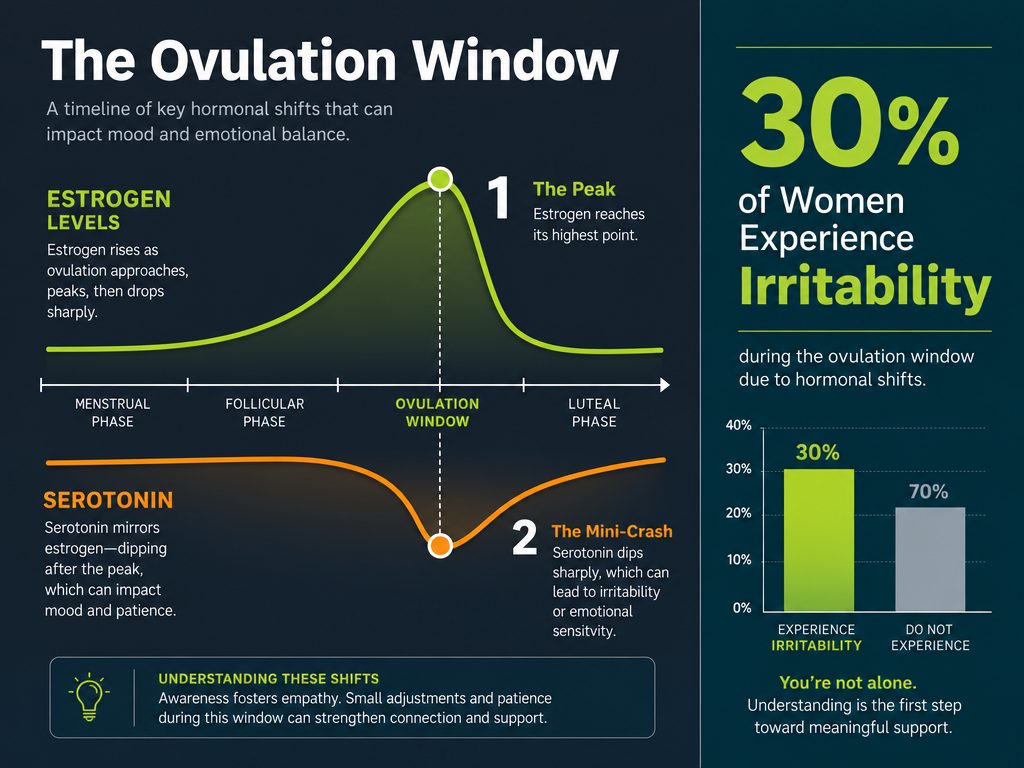
Understanding the biological 'mini-crash' helps partners realize that mid-cycle irritability is a physiological response to rapid hormonal shifts rather than a personal conflict.
Can Ovulation Make a Woman Irritable?
Yes. While many sources focus on the "glow" of ovulation, a meaningful subset of women experience the opposite.
Around ovulation, many women notice symptoms such as increased sex drive, mild pelvic or abdominal pain, tender breasts, bloating, and mood changes - but these vary a lot person to person. For some, those mood changes tilt toward irritability rather than euphoria.
Research also suggests that women in long-term relationships may feel more critical of their partners during peak fertility. In studies of women in stable relationships, closeness scores dropped by roughly 1 point on a 7-point scale during high fertility if the partner was perceived as "stable but less sexually attractive". This doesn't mean she's falling out of love - it's a biological sensitivity spike that affects how she evaluates stability versus novelty during a narrow fertility window.
The takeaway: if she's suddenly more critical or short-tempered mid-cycle, don't personalize it. Her brain is responding to hormone fluctuations, not making a verdict about your relationship.
The Estrogen Rollercoaster: Why Her Mood Drops After the Surge
During the follicular phase, estrogen rises as an egg-containing follicle develops in the ovary; this rising estrogen also thickens the uterine lining. That build-up typically creates a sense of optimism and energy.
But once ovulation happens, estrogen drops sharply before it begins to rise again in the luteal phase. Estrogen affects many body systems, including brain function and the ability to focus, and levels are highest in the days leading up to ovulation. When it suddenly declines, many women experience a brief mood dip - sometimes described as a "mini PMS" moment.
This isn't the same as the progesterone-driven mood shifts that happen later in the luteal phase. It's a shorter, sharper adjustment that can catch both of you off guard because it happens during what's supposed to be her "best" week.
What Is Mittelschmerz?
Mittelschmerz - one-sided lower abdominal pain around the time of ovulation - is a real, documented phenomenon. The name comes from German: "mittel" (middle) and "schmerz" (pain).
How often mittelschmerz happens varies a lot: some women get it almost every cycle, others only occasionally or never. The pain can last anywhere from a few minutes to a couple of days, and while it's generally harmless, it's uncomfortable enough to affect mood and energy.
If your girlfriend is dealing with mittelschmerz on top of the estrogen crash, her irritability isn't irrational - she's managing real physical discomfort during a time when her body is already hormonally volatile. Understanding this helps you frame her mood as a biological event, not a personal attack.
For more on how to support her through ovulation mood changes, see our tactical playbook.
How to Deal with Ovulation Mood Swings: The Partner Playbook
When she's irritable mid-cycle, your instinct might be to give space, crack a joke, or offer solutions. None of those land reliably during this window. Here's what does.
Take the Lead on Low-Stakes Decisions
She has energy, but her patience for decision fatigue is low. Instead of asking "Where do you want to eat?" or "What should we do this weekend?", make the call.
Try:
- "I booked the table at 7."
- "Let's do the farmers market, then grab coffee."
- "I'm ordering Thai - want your usual?"
This isn't about being controlling. It's about reducing the cognitive load during a phase when her mental bandwidth is stretched. She'll appreciate not having to manage one more thing.
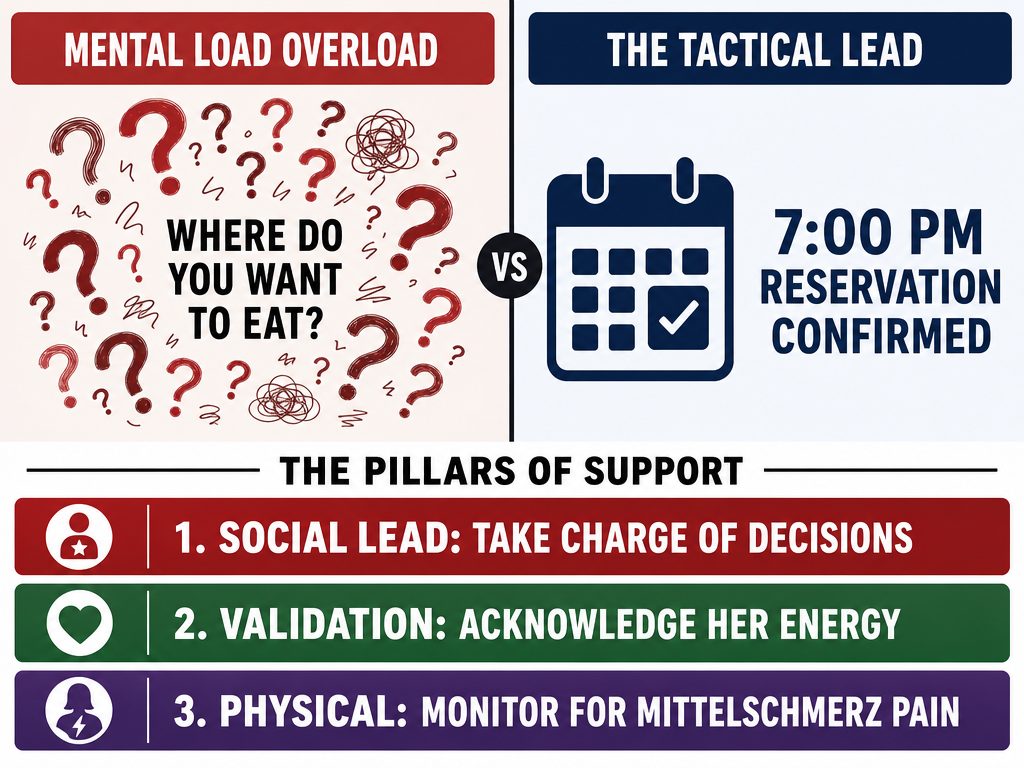
Moving from open-ended questions to proactive decision-making can significantly reduce friction when your partner is experiencing high energy but low patience.
Validate Her Output, Not Just Her Appearance
During ovulation, she's often in "get things done" mode. If she's organizing, planning, or crushing a work project, notice it.
Try:
- "You've been on fire with that project."
- "The apartment looks great - you put in work today."
- "You handled that meeting like a pro."
Skip the appearance-only compliments during this window. She's less interested in hearing "You look amazing" when she's executing at a high level and wants acknowledgment for what she's accomplishing.
Use Physical Touch Strategically
Some women want more closeness during ovulation; others need breathing room. If she's restless or snapping, don't force cuddles or initiate sex transactionally.
Instead, offer low-pressure physical connection:
- A hand on her back when you walk past
- Sitting next to her without demanding conversation
- A quick shoulder squeeze when she's stressed
When a partner is struggling emotionally, responding with genuine empathy - listening without judgment, focusing on their feelings rather than debating facts, and validating that their reaction makes sense - tends to help more than trying to "fix" the problem. This applies to physical touch too: presence without pressure communicates support better than grand gestures.
Never Say "You're Just Ovulating"
Even if you've tracked her cycle and you're certain the irritability is hormone-driven, don't diagnose her mood out loud. It will sound dismissive, no matter how gently you phrase it.
Keep your biological insight internal. Use it to adjust your approach, not to explain her feelings back to her.
If you're looking for more ways to support your girlfriend during her cycle, our week-by-week guide breaks down what works at each phase.
Scripts: What to Say When She's Snapping
When she's irritable, your words matter more than usual. Here are tested responses that defuse tension instead of escalating it.
When she's frustrated or overwhelmed:
"I can tell you're frustrated. What's the one thing I can take off your plate right now?"
When she's restless or keyed up:
"You've been crushing it today. Want to go for a walk or do something active?"
When she's snapping at small things:
"I hear you. Let me handle [specific task]. You've got enough going on."
When she seems withdrawn:
"I'm here if you want to talk, or if you just want company while you do your thing."
Notice what these scripts have in common: they validate her state without analyzing it, and they offer specific support rather than vague reassurances. She doesn't need you to tell her she's overreacting - she needs you to help reduce the load while her body recalibrates.
For more on how to respond to mood changes throughout her cycle, check out our full tactical guide.
When It's More Than Just Ovulation: Red Flags to Watch For
Mild irritability around ovulation is common. But if her mood shifts are severe enough to disrupt daily life, it may signal an underlying condition.
PMDD (Premenstrual Dysphoric Disorder)
PMDD is a real, clinically recognized condition - it's listed in the DSM-5 as a depressive disorder. It affects roughly 1 in 10 people who menstruate.
If her irritability:
- Prevents her from going to work or social events
- Leads to thoughts of self-harm
- Causes severe relationship conflict every cycle
- Doesn't improve with basic self-care
...it's time to suggest she talk to a healthcare provider. PMDD is treatable, but it requires medical intervention - not just lifestyle adjustments.
Endometriosis
Endometriosis can cause severe pelvic pain that coincides with ovulation, which may amplify irritability. If her mid-cycle pain is intense, lasts longer than a couple of days, or worsens over time, encourage her to see a doctor.
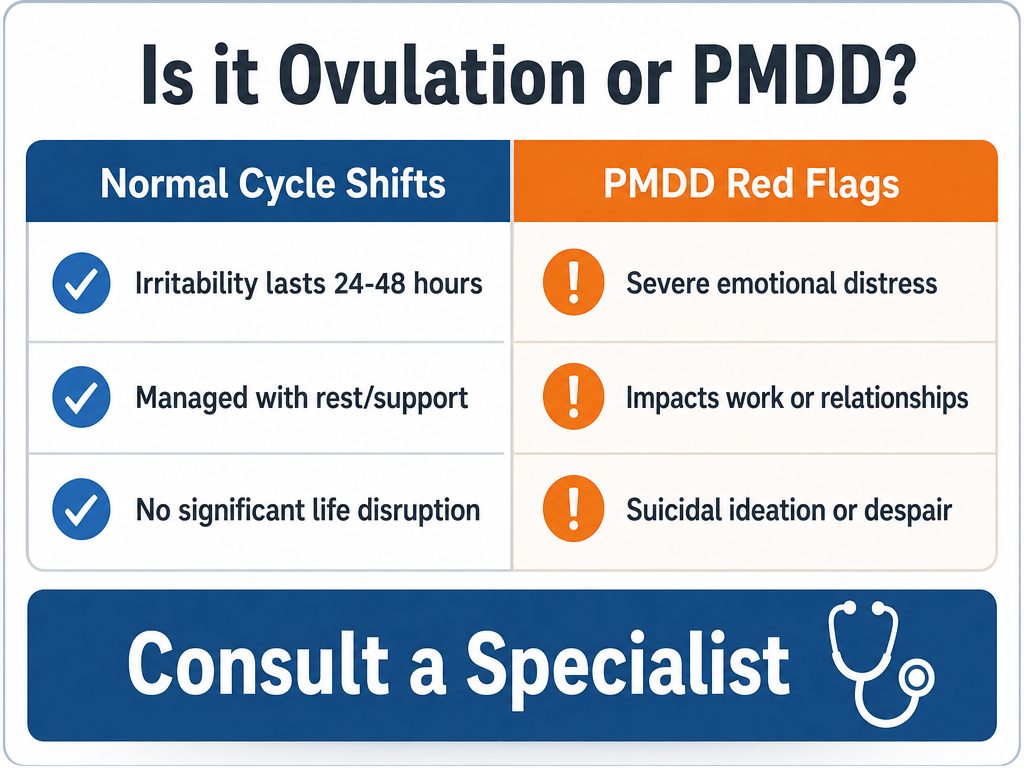
While mild irritability is common, life-disrupting emotional shifts may indicate underlying conditions like PMDD that require professional medical support and specialized care.
Tracking Can Help Identify Patterns
If she's open to it, suggest logging her moods and symptoms for three months. If the irritability happens consistently around ovulation and interferes with her quality of life, that's actionable data she can take to a healthcare provider.
For more on understanding the full menstrual cycle, our boyfriend's guide covers all four phases in detail.
Frequently Asked Questions
How to deal with an ovulating girlfriend?
Take the lead on low-stakes decisions to reduce her mental load, validate her output and energy rather than just her appearance, and offer low-pressure physical connection without forcing intimacy. Understand that her irritability is a biological response to hormone fluctuations, not a critique of your relationship. Never tell her "You're just ovulating" - keep your cycle awareness internal and use it to adjust your approach.
Is it normal to get mood swings during ovulation?
Yes. While many sources emphasize the "high energy" phase of ovulation, some women experience increased emotional reactivity or sensitivity mid-cycle. The estrogen drop immediately following ovulation can create a brief mood dip similar to a "mini PMS" moment. This is especially common if she also experiences mittelschmerz (ovulation pain), which can noticeably increase irritability.
Can PMS be mistaken for ovulation?
Not exactly, though the timing can be confusing. PMS symptoms - which can include mood swings, irritability, bloating, breast tenderness, and fatigue - typically show up one to two weeks before a period. Ovulation happens roughly two weeks before a period in a typical cycle, so the very end of the ovulation window can overlap with the start of the luteal phase, when PMS-type symptoms begin. If she's experiencing irritability around day 14-16, it's likely the post-ovulation estrogen crash, not full PMS yet.
Why do I feel annoyed with my partner during the luteal phase?
This question often comes up because people confuse ovulation with the luteal phase. After ovulation, the luteal phase begins: progesterone rises to help prepare the uterine lining for a possible pregnancy. If pregnancy doesn't happen, both progesterone and estrogen drop before the next period, which can trigger mood shifts, irritability, and social withdrawal. If you're feeling annoyed with your partner consistently before your period, that's likely luteal-phase biology. Our guide on supporting your girlfriend through the luteal phase covers this in detail.
How to stop mood swings during ovulation?
You can't "stop" them - they're driven by rapid hormonal shifts - but you can reduce their impact. Lifestyle approaches that can help ease cycle-related symptoms include regular aerobic exercise, smaller/more frequent meals, less salt/caffeine/alcohol, adequate sleep, and stress-reduction practices like deep breathing or yoga. As a partner, your job is to reduce external stressors during this window: take tasks off her plate, avoid unnecessary conflict, and give her space to recalibrate without judgment.
Why am I so angry while ovulating?
If you're experiencing intense anger specifically during ovulation, there are a few possible explanations. The estrogen drop after the egg is released can create a brief emotional sensitivity window. Physical pain from mittelschmerz can amplify irritability. And for some women, the testosterone surge that accompanies ovulation increases assertiveness in ways that feel like aggression. If the anger is severe or disruptive, consider tracking your symptoms for three months and discussing them with a healthcare provider to rule out conditions like PMDD.
Are you more moody when ovulating?
It depends. Some women feel energized and confident during ovulation; others experience increased emotional reactivity. Some women notice heightened sensitivity mid-cycle, often due to the estrogen crash that follows the LH surge. If you're consistently more moody during ovulation, you're not imagining it - it's a recognized pattern, though it's less common than the mood shifts that occur in the luteal phase before your period.
Looking for more tactical relationship support? VibeCheck is the relationship app built for men who want to understand their partner's cycle without the guesswork. Track her phases, get daily insights on her mood and energy, and learn exactly when to lean in or give space. Download now and stop walking on eggshells.
Tags

Related Articles
Continue reading to deepen your understanding

Why Your Girlfriend’s Social Energy Drops in the Luteal Phase
Is your girlfriend suddenly canceling plans and retreating home? It isn’t personal; it’s biology. Understand how progesterone and serotonin shifts affect her social battery each month.

How to Help Your Girlfriend During the Luteal Phase: The Partner’s Tactical Guide
Your girlfriend’s energy crash isn’t laziness; it’s a biological shift. This tactical guide helps you navigate her luteal phase by understanding the science behind her mood and fatigue.

Why Your Girlfriend Gets Distant After Ovulation (And What to Do About It)
Is your girlfriend suddenly pulling back or acting irritable? It might be her cycle. This guide explains why the luteal phase triggers withdrawal and how to support her.

Supporting Your Girlfriend Through the Luteal Phase
When hormone levels crash before her period, your partner’s brain enters a high-alert state. Learn how to provide the security she needs with tactical scripts and empathy.

How to Give Your Girlfriend Reassurance During Ovulation Week
Is your girlfriend suddenly questioning everything during her cycle? Understand the estrogen crash and learn how to provide the tactical support she needs to feel secure and loved.

When to Give Her Space vs. When to Stay Close: Your Phase-by-Phase Guide
Your girlfriend’s need for closeness isn’t random. Understanding how her 28-day biological rhythm affects her energy helps you time your support perfectly across all four phases.

Your Girlfriend’s 28-Day Relationship Manual: How to Support Her Through Every Phase
Understanding her menstrual cycle transforms you from a guy walking on eggshells into a strategic partner who knows exactly what support to offer and when.

When Your Girlfriend Goes Distant During the Luteal Phase: The Partner’s Tactical Guide
Does your girlfriend pull away or go quiet right before her period? Understand the biological reason for her withdrawal and how you can support her without making it worse.