How to Respond When Your Girlfriend Gets Clingy During Her Follicular Phase

Your girlfriend’s brain chemistry is different this week. Rising estrogen levels cause social drive to peak. Here is how to respond to her need for connection effectively.
When Your Girlfriend Gets Clingy During the Follicular Phase: The Science-Backed Response Guide
Your girlfriend went from independent to constantly asking when you'll be home. She's texting you every hour, suggesting spontaneous plans, and wanting to spend every evening together. You're confused because this isn't the irritable PMS behavior you've heard about - this is something different.
Here's what's happening: she's in her follicular phase, and her brain chemistry is fundamentally different this week. Her estrogen has surged, dopamine is elevated, and her reward-seeking behavior is at its peak. You aren't dealing with clinginess in the relationship sense - you're seeing approach behavior, a biological drive to connect and bond.
This guide explains the science behind her sudden need for attention and gives you tactical scripts to respond without triggering rejection or burning yourself out.
Table of Contents
- What Is the Follicular Phase?
- Why Does She Seem So Clingy Right Now?
- Follicular "Clinginess" vs. Luteal "Neediness": What's the Difference?
- How to Respond: The "Yes-And" Method
- Strategic Date Planning for High-Energy Weeks
- Setting Boundaries Without Triggering Rejection
- Why Am I Emotional During the Follicular Phase?
- Does Estrogen Increase in the Follicular Phase?
- Summary for the Busy Partner
- Frequently Asked Questions
What Is the Follicular Phase?
The follicular phase is the portion of the menstrual cycle that begins on day 1 of menstruation and continues until ovulation. During the follicular phase, estrogen rises as an egg-containing follicle develops in the ovary; this rising estrogen also thickens the uterine lining. Near the end of this phase, high estrogen triggers a surge in luteinizing hormone (LH), which sets off ovulation.
The "clingy" behavior you're noticing doesn't happen during the bleeding days. It typically appears during the post-menstrual follicular window - roughly days 6 to 14 - when estrogen is climbing toward its peak.
This is when her energy is highest, her mood is most positive, and her social drive is at maximum capacity. Unlike the luteal phase (the week before her period), when progesterone causes withdrawal and fatigue, the follicular phase is characterized by outward-facing energy and a desire to engage.
VibeCheck App
Download Free on iOS →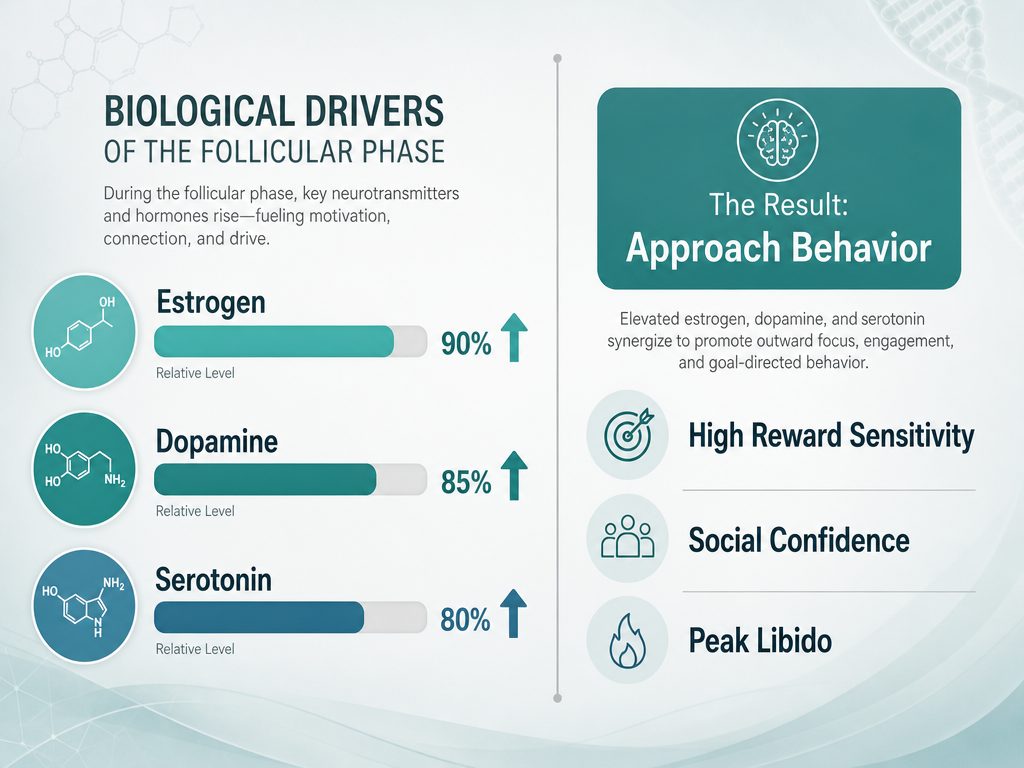 Rising estrogen levels during the follicular phase trigger 'approach behavior,' making your partner more socially proactive and physically affectionate as her reward sensitivity peaks.
Why Does She Seem So Clingy Right Now?
She's not insecure. She's biologically motivated to seek reward, and you are the reward.
Here's what's happening in her brain: rising estrogen during the follicular phase increases social confidence, assertiveness, and libido. During this window, the brain exhibits higher reward responsivity and improved cognitive function.
Research shows that women in the late follicular phase approach positive stimuli more quickly than those in the mid-luteal phase. This means her brain is primed to seek out connection, pleasure, and shared experiences - not because she's anxious or needy, but because her neurochemistry is optimized for bonding.
Estrogen secreted shortly before ovulation influences increased confidence and feelings of attractiveness. She feels good in her body, she feels socially capable, and she wants to share that energy with you.
This is fundamentally different from the attention-seeking behavior you might see during the luteal phase, which is often driven by anxiety and fear of rejection. Right now, she's approaching you from a place of abundance, not scarcity.
Follicular "Clinginess" vs. Luteal "Neediness": What's the Difference?
Understanding the difference between these two phases will save you from responding to her incorrectly and making things worse.
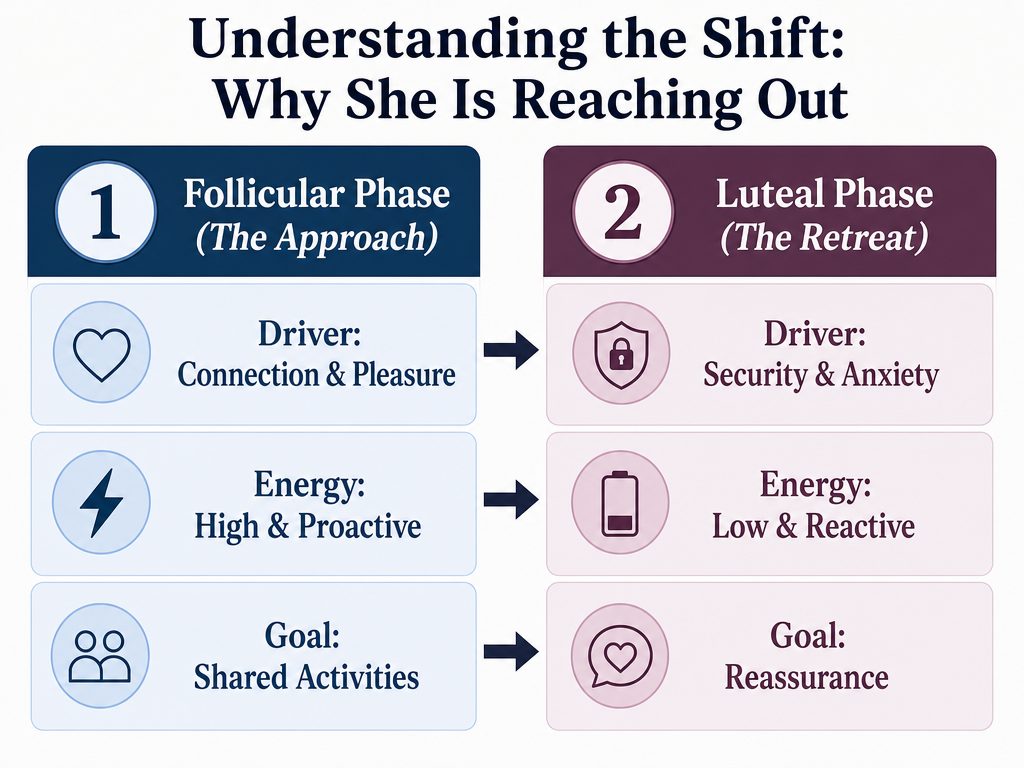 Distinguishing between 'The Approach' and 'The Retreat' helps you provide the right support, whether she is seeking shared fun or emotional reassurance.
| Feature | Follicular Phase (The "Approach") | Luteal Phase (The "Retreat") |
|---|---|---|
| Primary Driver | Desire for connection and pleasure | Fear of rejection and anxiety |
| Energy Level | High, social, proactive | Low, withdrawn, reactive |
| Response Type | "Let's do something together!" | "Why don't you love me?" |
| Libido | Peak high | Usually lower or pain-related |
| Social Battery | Fully charged, seeking activities | Drained, canceling plans |
| Emotional Tone | Optimistic, confident, playful | Irritable, sensitive, tearful |
During the follicular phase, she's initiating plans, suggesting dates, and physically reaching for you. She wants to be around you because being with you feels rewarding. Her serotonin and dopamine are elevated, so connection feels chemically satisfying.
During the luteal phase, her progesterone rises and then crashes before her period. Many women notice PMS-like symptoms in this phase - mood shifts, breast tenderness, bloating, acne, and appetite changes - though not everyone does. Her neediness during this window is defensive, not exploratory. She's seeking reassurance because her brain is scanning for threats to the relationship.
If you treat her follicular "clinginess" like luteal anxiety - by pulling back or telling her to calm down - you'll miss the biological window where your relationship can build the most capital.
How to Respond: The "Yes-And" Method
Your girlfriend's high-energy approach behavior during the follicular phase isn't a problem to solve. It's an opportunity to deepen your connection during the biological window when she's most receptive to bonding.
The "Yes-And" method is about matching her energy instead of resisting it. Here's how it works:
Match the Energy
This is the phase to say yes to spontaneous plans, social outings, and physical intimacy. Her social battery is fully charged, and she wants to use it with you. If you've been putting off a concert, a new restaurant, or a weekend trip, this is your window.
When estrogen affects many body systems, including brain function and the ability to focus, and levels are highest in the days leading up to ovulation, she's cognitively sharp and emotionally open. This is the time for deep conversations about your future, shared goals, or relationship planning.
Proactive Initiation
Here's the tactical shortcut: if you initiate touch, plans, or quality time before she asks, the "clingy" feeling often disappears entirely. Her connection tank is being filled before it hits empty.
Text her first. Suggest the date night before she has to hint at it. Reach for her hand when you're walking. The biological drive is there - meet it halfway and you'll stop the cycle before it starts.
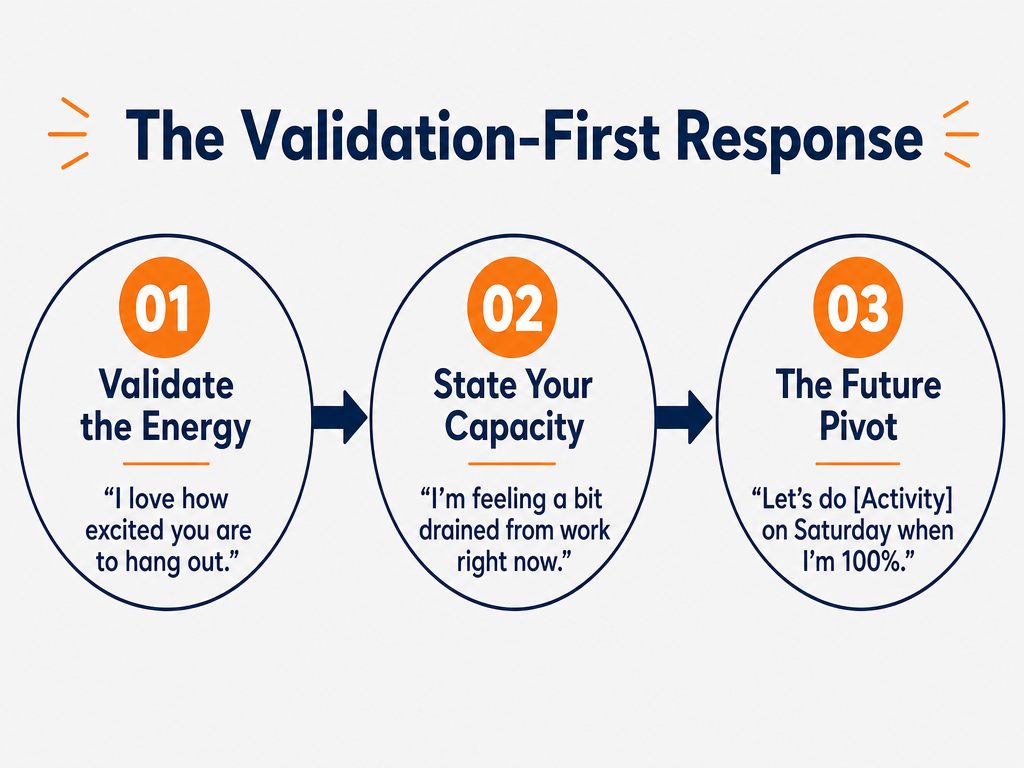 The 'Validation-First' method allows you to set healthy boundaries without triggering a rejection response during her high-connection follicular window.
The "Validation-First" Boundary
If her energy is genuinely too high and you're burned out, use this script framework:
Validation: "I love that you're so excited to hang out."
Capacity: "I'm feeling a bit drained from work today."
Future Pivot: "Let's do [high-energy activity] on Saturday, and tonight let's just [low-energy activity] together."
This approach acknowledges her need without rejecting it. You're saying yes to connection, just on a slightly different timeline or intensity level.
When a partner is struggling emotionally, responding with genuine empathy - listening without judgment, focusing on their feelings rather than debating facts, and validating that their reaction makes sense - tends to help more than trying to "fix" the problem. The same principle applies here: validate first, then negotiate.
Strategic Date Planning for High-Energy Weeks
Since her social confidence is at its peak during this phase, use the follicular window for activities that require energy, novelty, and social engagement.
High-Impact Date Ideas for the Follicular Phase
- Social gatherings: Parties, double dates, or group dinners. She'll be at her most socially confident.
- Physical adventures: Hiking, rock climbing, dancing, or intense workouts together. Her energy is high and her body feels capable.
- New experiences: Try a new restaurant, visit a new city, or take a class together. Her brain is primed for novelty and reward.
- Future planning conversations: Discuss big life decisions, financial goals, or relationship milestones. Her cognitive function is at its peak, and she's optimistic about the future.
Around ovulation, many women notice symptoms such as increased sex drive, mild pelvic or abdominal pain, tender breasts, bloating, and mood changes - but these vary a lot person to person, and not everyone notices them. If she's in the days leading up to ovulation, her libido is likely at its monthly high. This is the biological window for physical intimacy.
Avoid scheduling low-key "Netflix and chill" dates during this phase unless she explicitly asks for them. You're wasting her peak energy week if you're sitting on the couch when she wants to be out in the world.
If you're looking for more guidance on how to support her throughout her entire cycle, check out our menstrual cycle guide for boyfriends.
Setting Boundaries Without Triggering Rejection
Here's the truth: you can't match her energy every single day of the follicular phase. You have work, friends, hobbies, and your own need for downtime. The goal isn't to become her full-time social coordinator - it's to understand why she's showing up this way so you can respond intentionally instead of defensively.
When to Say No (and How to Say It)
If you're genuinely depleted and can't meet her social or physical needs right now, use the validation-first framework from earlier. But add one additional layer: the future pivot needs to be specific and soon.
Bad response:
"I'm too tired. Maybe this weekend."
Better response:
"I love that you want to go out tonight. I'm running on fumes from work, so let's do a low-key dinner at home tonight, and then on Friday let's go to that new cocktail bar you mentioned."
The first response feels like a rejection because it's vague and indefinite. The second response acknowledges her need, sets a boundary, and offers a concrete alternative that shows you're still invested.
The Red-Zone Rule
If she's asking for connection and you're repeatedly saying no without offering an alternative, you're training her to stop asking. During the follicular phase, her brain is wired to approach. If you consistently shut down that approach behavior, she'll either become anxious (thinking you don't want her) or stop initiating altogether.
The red-zone rule: you can say no twice, but the third time you need to say yes or proactively offer a plan.
Why Am I Emotional During the Follicular Phase?
If you're noticing that your girlfriend seems unusually emotional during the follicular phase, you might be seeing elevated confidence and optimism - not sadness or anxiety. The follicular phase is typically characterized by improved mood, higher energy, and increased social confidence.
However, emotional expression during this phase can feel intense because she's more likely to initiate difficult conversations or express enthusiasm that feels overwhelming if you're not prepared for it. Estrogen affects many body systems, including brain function and the ability to focus, and levels are highest in the days leading up to ovulation. This cognitive sharpness means she's more articulate and assertive about her needs.
If she's crying or showing signs of anxiety during what should be her high-energy phase, it may be a sign of something else - like stress, relationship tension, or a hormonal imbalance that's worth discussing with a healthcare provider.
For most women, though, the follicular phase is when they feel most emotionally stable and capable. If you're interpreting her proactive energy as "too emotional," it might be worth examining whether you're used to a more withdrawn or passive communication style from her during other phases.
Does Estrogen Increase in the Follicular Phase?
Yes. During the follicular phase, estrogen rises as an egg-containing follicle develops in the ovary; this rising estrogen also thickens the uterine lining. Near the end of this phase, high estrogen triggers a surge in luteinizing hormone (LH), which sets off ovulation.
This estrogen surge is directly responsible for the behavioral changes you're noticing. Rising estrogen during the follicular phase increases social confidence, assertiveness, and libido. It also improves mood, cognitive function, and reward-seeking behavior.
The "clingy" feeling you're experiencing from your girlfriend is her brain responding to elevated estrogen by seeking connection, pleasure, and bonding opportunities. This is a feature, not a bug.
If you want to better understand how hormones affect your girlfriend's mood and energy throughout the month, read our guide on how hormones affect mood.
Summary for the Busy Partner
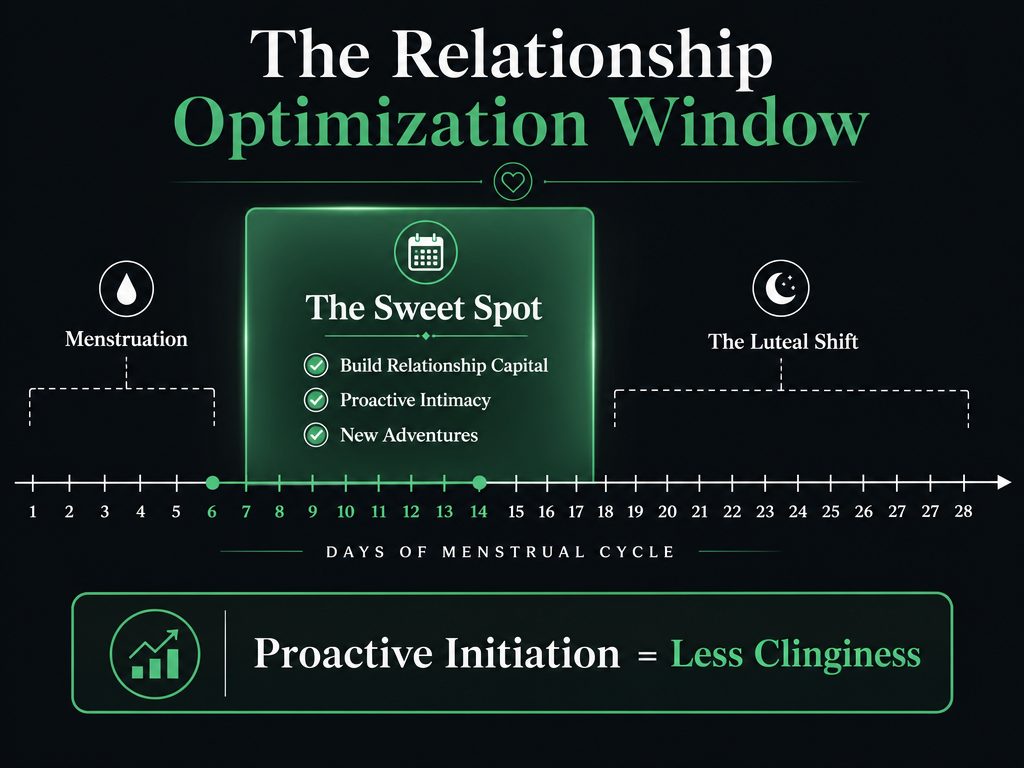 Focusing your energy on the Days 6-14 'sweet spot' helps build the relationship capital needed to navigate the more challenging luteal phase later in the month.
If you take nothing else from this guide, remember these three tactical points:
Don't hide; lean in. Her "clinginess" during the follicular phase is actually her being her most attracted-to-you self. This is when her brain chemistry is optimized for bonding. If you pull back now, you're rejecting her during the biological window when rejection hurts most.
Initiate before she has to ask. The fastest way to stop feeling like she's "too clingy" is to proactively offer connection before her tank runs empty. Text first, plan the date, reach for her hand. You'll eliminate the need for her to chase you.
Use this window to build relationship capital. The 7-10 days of the follicular phase are your chance to create positive memories and strengthen your bond. The goodwill you build now will help you both navigate the tougher luteal phase later in the month.
If you're looking for a tool that helps you track her cycle and gives you daily guidance on how to support her, check out VibeCheck, the relationship app built for men who want to stop guessing and start understanding their partner's biological rhythm.
For more guidance on navigating her cycle, explore our partner's guide to the menstrual cycle phases.
Frequently Asked Questions
How long does the follicular phase last?
The follicular phase typically spans from days 6 to 14 of the menstrual cycle, beginning after menstruation ends. However, cycle length varies significantly between women. A "normal" cycle can range from every 24 to every 38 days, so the exact timing of this high-energy window will differ from person to person. A "normal" cycle varies a lot between women - menstrual bleeding can start anywhere from every 24 to every 38 days and last up to 8 days. There is no single universal 28-day cycle, so exact day-by-day predictions for any specific woman should be treated as approximate.
What should I do if my girlfriend is in her luteal phase?
The luteal phase is the biological opposite of the follicular phase. After ovulation, progesterone rises to help prepare the uterine lining for a possible pregnancy. If pregnancy doesn't happen, both progesterone and estrogen drop before the next period. This hormonal crash is what causes PMS symptoms like mood shifts, fatigue, and irritability. During this phase, she needs rest, validation, and low-pressure connection. Read our guide on how to comfort your girlfriend during PMS for tactical scripts and support strategies.
Can stress cause her follicular phase to feel different?
Yes. While the follicular phase is typically characterized by high energy and positive mood, external stressors can dampen these effects. Chronic stress affects hormone production and can suppress estrogen levels, which may reduce the cognitive and mood benefits normally associated with this phase. If your girlfriend is dealing with work pressure, family issues, or relationship tension, she may not experience the typical follicular phase energy boost. Supporting her with lifestyle approaches that can help ease stress - such as regular aerobic exercise, adequate sleep, and stress-reduction practices like deep breathing or yoga - can help her body regulate more effectively.
Is it normal for her to want more sex during the follicular phase?
Yes. Around ovulation, many women notice symptoms such as increased sex drive, along with other physical and mood changes. The biological purpose of this libido surge is to increase the likelihood of conception during the fertile window. If your girlfriend is initiating physical intimacy more frequently during this phase, it's a normal response to elevated estrogen and testosterone levels. This is the best time to prioritize physical connection in your relationship. For more on how to navigate her cycle phases, check out our support guide for ovulation mood changes.
How can I tell which phase she's in without asking?
You can learn to recognize the behavioral and physical cues associated with each phase by observing patterns over a few months. Tracking your own (or a partner's, with her participation) symptoms and mood changes across the cycle for a few months is a legitimate, medically endorsed way to identify real patterns and timing - rather than assuming based on stereotypes or a single cycle. During the follicular phase, look for increased social energy, proactive planning, optimistic mood, and physical affection. During the luteal phase, notice withdrawal, cancellations of plans, irritability, or requests for reassurance. Tools like VibeCheck can help you track these patterns and receive daily guidance on how to support her.
Tags

Related Articles
Continue reading to deepen your understanding

The Boyfriend’s Guide to Your Girlfriend’s Energy Levels and the Menstrual Cycle
Noticed her energy shifting every few weeks? Stop guessing and start supporting. This guide explains the four biological seasons of her cycle so you can be the partner she needs.

Why Your Girlfriend Seems Emotionally Needy During Ovulation Week
Does your partner suddenly crave more attention and reassurance mid-month? It is not insecurity—it is biology. Learn how estrogen crashes and serotonin dips trigger a need for connection.

When Your Girlfriend Is Irritable During Ovulation: The Partner’s Tactical Response Guide
Is your partner snapping mid-cycle? Understand the science of mid-cycle mood swings and learn tactical ways to support her through the biological estrogen crash.

Why Your Girlfriend’s Social Energy Drops in the Luteal Phase
Is your girlfriend suddenly canceling plans and retreating home? It isn’t personal; it’s biology. Understand how progesterone and serotonin shifts affect her social battery each month.

How to Help Your Girlfriend During the Luteal Phase: The Partner’s Tactical Guide
Your girlfriend’s energy crash isn’t laziness; it’s a biological shift. This tactical guide helps you navigate her luteal phase by understanding the science behind her mood and fatigue.

Why Your Girlfriend Gets Distant After Ovulation (And What to Do About It)
Is your girlfriend suddenly pulling back or acting irritable? It might be her cycle. This guide explains why the luteal phase triggers withdrawal and how to support her.

Supporting Your Girlfriend Through the Luteal Phase
When hormone levels crash before her period, your partner’s brain enters a high-alert state. Learn how to provide the security she needs with tactical scripts and empathy.

How to Give Your Girlfriend Reassurance During Ovulation Week
Is your girlfriend suddenly questioning everything during her cycle? Understand the estrogen crash and learn how to provide the tactical support she needs to feel secure and loved.