The Boyfriend’s Guide to Your Girlfriend’s Energy Levels and the Menstrual Cycle

Noticed her energy shifting every few weeks? Stop guessing and start supporting. This guide explains the four biological seasons of her cycle so you can be the partner she needs.
The Boyfriend's Guide to Your Girlfriend's Energy Levels and the Menstrual Cycle
Table of Contents
- The Four Energy Seasons of Her Cycle
- Phase 1: Menstrual (Days 1-7) - The Reset
- Phase 2: Follicular (Days 8-13) - The Peak
- Phase 3: Ovulation (Days 14-15) - The High
- Phase 4: Luteal (Days 16-28) - The Wind-Down
- Understanding the Social Battery Concept
- What NOT to Say (Ever)
- Your Phase-by-Phase Action Plan
- When Normal Becomes a Red Flag
- Frequently Asked Questions
You've probably noticed a pattern. Some weeks, she's up for spontaneous road trips and late-night dinners. Other weeks, the same invitation gets a tired "maybe next time." You're not imagining it, and it's not personal. Her energy, mood, and social drive follow a biological rhythm that repeats roughly every 28 days.
This isn't about excusing bad behavior or walking on eggshells. It's about understanding the science so you can stop guessing, reduce friction, and actually be helpful when it matters. Think of this as a tactical manual for the 28-day loop your relationship runs on.
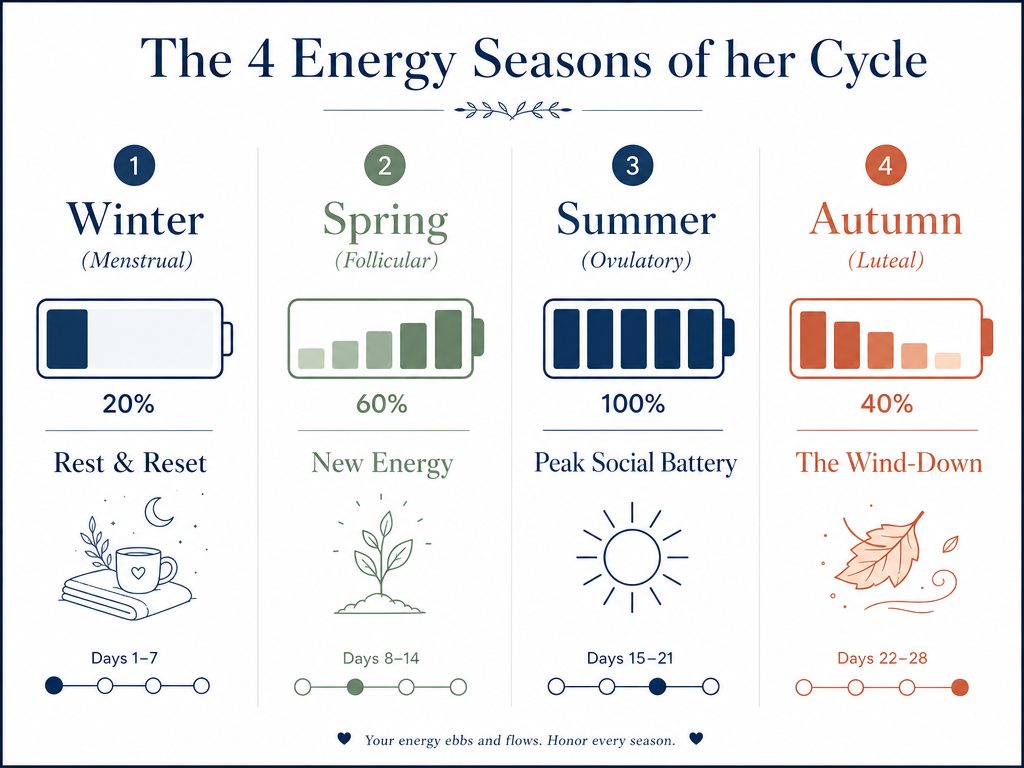 Understanding the 'Energy Seasons' helps you predict when your partner will feel most social versus when she will need extra downtime and recovery.
The Four Energy Seasons of Her Cycle
The menstrual cycle has four phases: menstrual (bleeding), follicular (energy building), ovulation (peak), and luteal (wind-down). Each phase is driven by shifting levels of estrogen and progesterone, and those hormones don't just affect her reproductive system. Estrogen affects many body systems, including brain function and the ability to focus, and levels are highest in the days leading up to ovulation.
Here's the critical part: a "normal" cycle varies a lot between women. Menstrual bleeding can start anywhere from every 24 to every 38 days and last up to 8 days. The textbook 28-day cycle is just an average. Your girlfriend's pattern is the only one that matters.
Phase 1: Menstrual (Days 1-7) - The Reset
What's Happening Biologically
Day 1 is the first day of bleeding. Hormone levels (both estrogen and progesterone) are at their lowest. Her uterus is shedding its lining, which causes cramping, fatigue, and sometimes nausea or headaches. Blood loss can contribute to feeling physically drained.
VibeCheck App
Download Free on iOS →What You'll See
Low physical energy. She might sleep more, skip the gym, or cancel evening plans. Pain levels vary wildly - some women barely notice, others are bedridden. Her social battery is charging, not discharging. She's resetting, not avoiding you.
Your Playbook
Take over the physical chores. Vacuuming, dishes, grocery runs - these aren't "helping out," they're removing friction when her body is already working overtime. Provide heat: a hot water bottle, heating pad, or even a warm bath can ease cramping more effectively than you hovering and asking "are you okay?"
Don't push for high-energy dates. If she says she wants to stay in, believe her. Offer to bring takeout and watch something together on the couch. The goal is low-effort presence.
Phase 2: Follicular (Days 8-13) - The Peak
What's Happening Biologically
During the follicular phase, estrogen rises as an egg-containing follicle develops in the ovary. This rising estrogen also thickens the uterine lining. Near the end of this phase, high estrogen triggers a surge in luteinizing hormone (LH), which sets off ovulation. Estrogen's brain effects mean better focus, higher energy, and more optimism.
What You'll See
High social energy. She's willing to try new things, meet your friends, plan trips. Her confidence is up. She's more likely to initiate plans or say yes to activities she'd normally consider "too much effort." This is her high-performance window.
Your Playbook
Plan the "big" dates now. Concert tickets, weekend trips, dinner parties - schedule them during this phase if you can. She'll have the stamina and the mood for it. This is also a good time for important conversations that require energy and optimism (not conflict, just planning or decision-making).
Don't waste this window on low-effort hangouts. If you've been wanting to introduce her to your college friends or finally try that new restaurant, do it now. Her social battery is full.
Phase 3: Ovulation (Days 14-15) - The High
What's Happening Biologically
Ovulation is when a surge in luteinizing hormone (LH) causes the ovary to release an egg, typically around day 14 of a 28-day cycle. In the days just before ovulation, cervical mucus becomes clear and slippery, which is the most fertile window of the cycle. Estrogen peaks right before ovulation, then drops slightly afterward.
What You'll See
Peak libido, high confidence, potentially the most social she'll be all month. Around ovulation, many women notice symptoms such as increased sex drive, mild pelvic or abdominal pain, tender breasts, bloating, and mood changes - but these vary a lot person to person, and not everyone notices them.
Some women experience mittelschmerz - one-sided lower abdominal pain around the time of ovulation. It's real, documented, generally harmless, and usually lasts minutes to a couple of days.
Your Playbook
Be present. This is often the "easiest" phase for partners because her energy and mood are naturally elevated, but don't take it for granted. If she's initiating physical affection or suggesting plans, match that energy. This isn't the time to be glued to your phone or checked out.
If she's suddenly withdrawn or irritable after ovulation (when estrogen crashes), don't panic. That's the transition into the next phase, not a referendum on your relationship.
Phase 4: Luteal (Days 16-28) - The Wind-Down
What's Happening Biologically
After ovulation, the luteal phase begins: progesterone rises to help prepare the uterine lining for a possible pregnancy. If pregnancy doesn't happen, both progesterone and estrogen drop before the next period. This hormonal crash affects serotonin and other neurotransmitters, which is why mood shifts happen.
Many women notice PMS-like symptoms in this phase - mood shifts, breast tenderness, bloating, acne, and appetite changes - though not everyone does. The severity varies wildly.
Approximately 47.8% of women of reproductive age globally experience Premenstrual Syndrome (PMS), though up to 75-80% of women report experiencing at least one premenstrual symptom. Clinically significant PMS (meeting strict criteria) affects approximately 30% to 40% of the reproductive female population. That more disruptive tier is a meaningfully different experience than "typical" PMS.
Your Playbook
This is the crucial phase. Don't take short answers personally. She's not mad at you; her brain chemistry is in flux. Prioritize blood sugar stability - offer snacks, suggest meals with protein and complex carbs. Low blood sugar + hormonal shifts = the "hangry" you've definitely experienced.
Validate, don't fix. When a partner is struggling emotionally, responding with genuine empathy - listening without judgment, focusing on their feelings rather than debating facts, and validating that their reaction makes sense - tends to help more than trying to "fix" the problem. Feeling understood, not corrected, is what tends to defuse tension.
Reduce her cognitive load. Don't ask "what do you want for dinner?" when she's already mentally exhausted. Say "I'm handling dinner tonight, you just relax." Decision fatigue is real, and the luteal phase amplifies it.
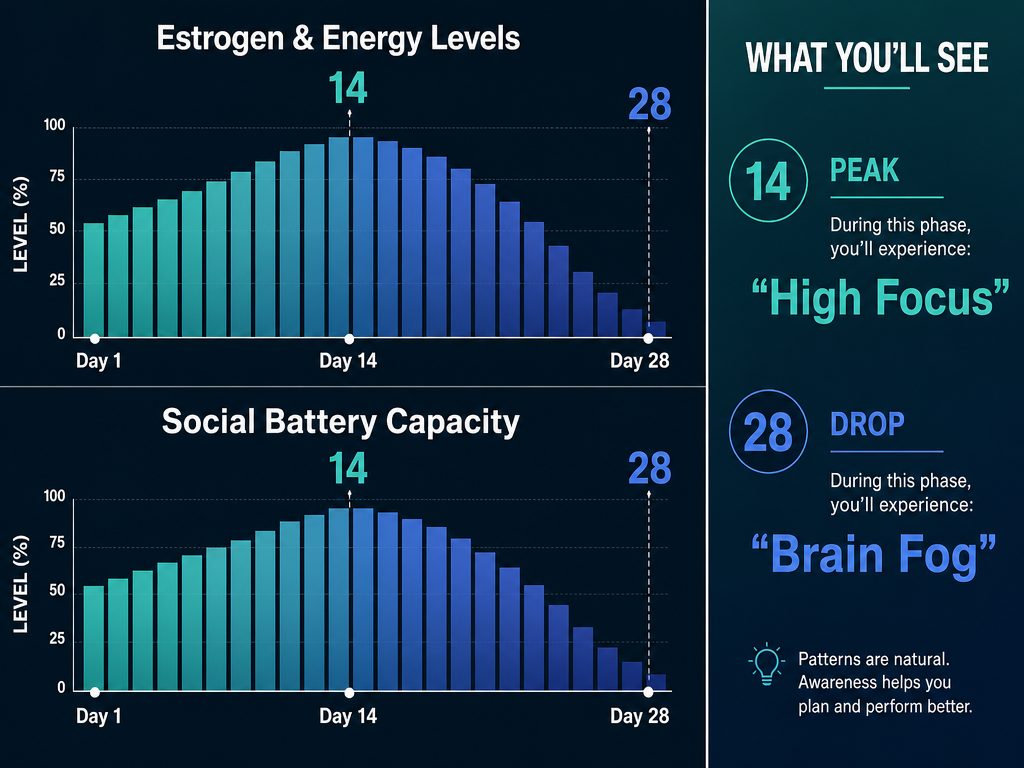 Hormonal shifts directly impact cognitive focus and social stamina. This chart shows why her 'social battery' may suddenly drain during the final week of her cycle.
Understanding the Social Battery Concept
Think of her energy like a phone battery. During the follicular and ovulation phases, she's running at high capacity. She can handle social events, long conversations, spontaneous plans. During the luteal phase, especially the final week, that battery drains considerably faster. Every interaction - even positive ones - costs more energy than usual.
This isn't about her being an introvert or extrovert. It's about biological capacity. A text thread that would've been fun last week now feels like homework. A dinner with your parents that she'd normally enjoy now requires more energy than she has to give.
Your job isn't to force her to push through. It's to recognize when the battery is low and adjust your expectations accordingly. If you want to learn more about how to support your girlfriend during different cycle phases, check out our comprehensive guide to menstrual cycle support.
What NOT to Say (Ever)
"Is it that time of the month?"
Even if it is, this invalidates whatever she's feeling right now. Her irritation or sadness might be amplified by hormones, but the underlying issue is still real. This phrase is dismissive and will immediately escalate the situation.
"You're being hormonal."
Hormones are the reason, not the excuse. Yes, her serotonin levels are lower during the luteal phase. That doesn't mean her feelings are fabricated or unworthy of your attention.
"What can I do?"
This sounds helpful, but it puts the burden back on her to manage your response. She's already exhausted. Instead, try: "I'm going to handle dinner tonight, you just relax" or "I picked up your favorite snacks." Remove the mental load of deciding.
"You're overreacting."
Her emotional response might be more intense because of where she is in her cycle, but telling her she's overreacting guarantees a fight. If you think the reaction is disproportionate to the trigger, that's a separate conversation to have later - not in the moment.
"Calm down."
Has this ever worked? In the history of humanity? No. Skip it.
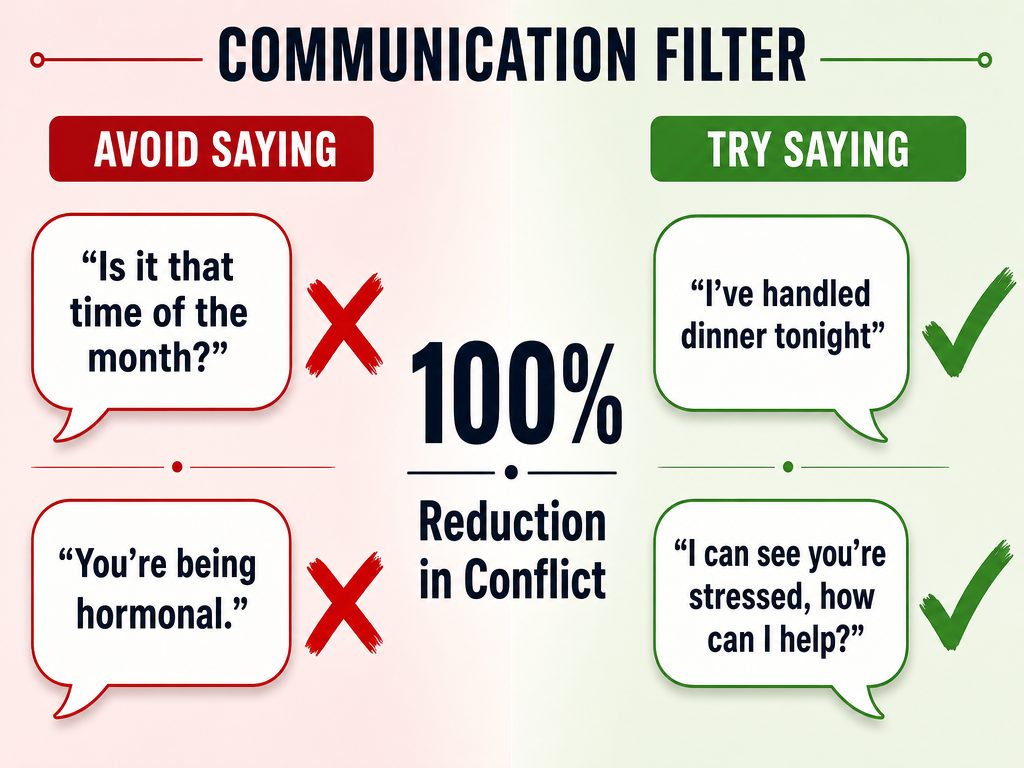 Small changes in phrasing can prevent major conflicts. Shifting from 'fixing' the problem to 'reducing' her load is the most effective way to show support.
Your Phase-by-Phase Action Plan
Here's a condensed reference table for when you need quick answers:
| Phase | Energy Level | What She Needs | What to Do | What to Avoid |
|---|---|---|---|---|
| Menstrual (Days 1-7) | Low | Physical rest, heat, low-effort presence | Take over chores, provide heating pad, offer couch time | Pushing for high-energy activities, asking if she's "okay" repeatedly |
| Follicular (Days 8-13) | High | New experiences, social connection, adventure | Plan big dates, introduce her to friends, book trips | Wasting this window on low-effort hangouts |
| Ovulation (Days 14-15) | Peak | Presence, matching her energy | Be attentive, initiate physical affection if she does | Being checked out or distracted |
| Luteal (Days 16-28) | Declining to Low | Validation, reduced cognitive load, blood sugar stability | Offer snacks, make decisions for her, validate feelings | Taking irritability personally, asking open-ended questions |
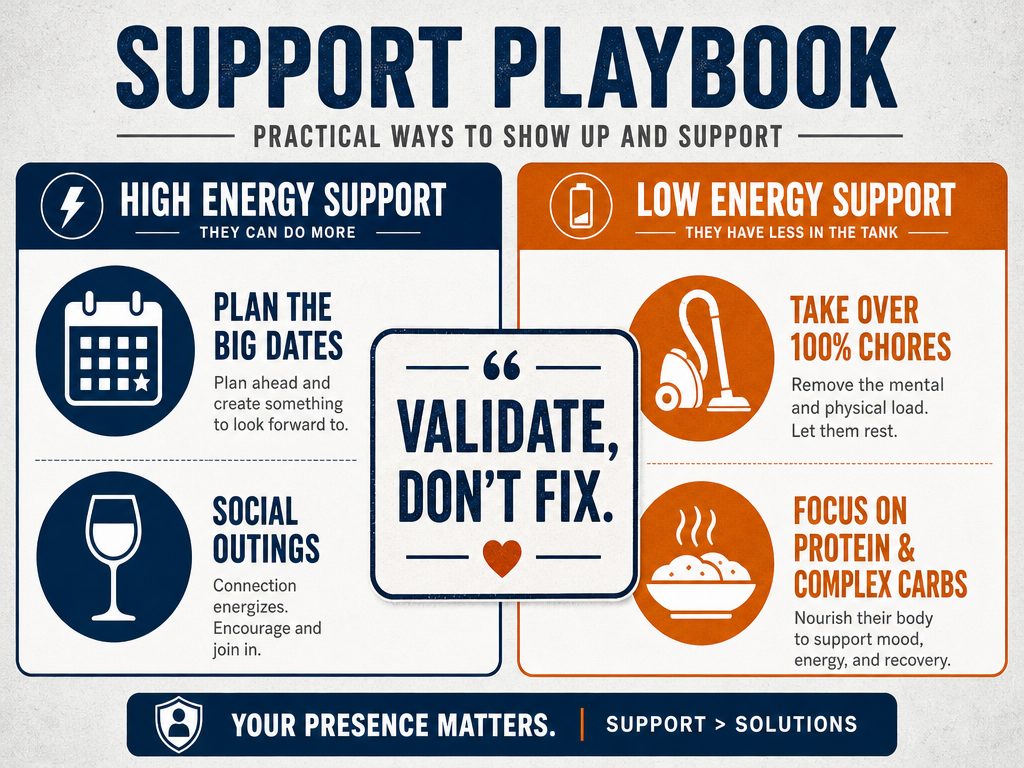 Transform your approach with this phase-specific playbook, focusing on reducing her mental load and providing physical support when her energy levels are lowest.
For a deeper understanding of how to support your partner during mood changes before her period, read our guide on helping your girlfriend during period mood swings.
When Normal Becomes a Red Flag
Most of what's described here is normal variation. But PMDD (premenstrual dysphoric disorder) is a real, clinically recognized condition - it's listed in the DSM-5 as a depressive disorder, not something people are "making up" or simply failing to cope with. It affects roughly 1 in 10 people who menstruate.
PMDD is a more severe, sometimes disabling extension of PMS. Both happen on a similar timeline (about 7-10 days before a period) and can share physical symptoms like bloating and fatigue, but PMDD specifically involves extreme mood symptoms - such as marked irritability, anxiety, or hopelessness - intense enough to disrupt daily life and strain relationships.
If she's experiencing severe mood swings, thoughts of self-harm, or symptoms that make it impossible to function at work or in relationships, that's beyond "normal PMS." Encourage her (gently, not as an accusation) to talk to her doctor. PMDD is treatable with therapy, lifestyle changes, and sometimes medication.
Similarly, if pain is severe enough that over-the-counter medication doesn't touch it, or if bleeding is so heavy she's soaking through pads/tampons every hour, that's worth medical attention. You're not a doctor, but you can be the person who says "this seems like more than it should be - maybe talk to your OB-GYN?"
Frequently Asked Questions
Is it okay to ask her where she is in her cycle?
It depends on how you ask and why. If you're trying to time a conversation or plan support, that's thoughtful. If you're using it as ammunition ("you're only upset because you're about to get your period"), that's dismissive.
A better approach: ask her once if she's comfortable sharing cycle information with you (some women use apps and can give you general heads-ups), and then use that information to be proactive, not accusatory. If you're interested in learning how to tell which phase she's in without asking, check out our guide on reading behavioral cues.
What if she says she doesn't have PMS or doesn't notice patterns?
Believe her. Not everyone experiences significant symptoms. Roughly half of people who menstruate report having at least one PMS symptom, but only about 1 in 5 have symptoms severe enough to disrupt their daily life. If she's in the group that doesn't notice much, don't impose a framework on her that doesn't fit her experience.
Can I suggest she track her cycle if she doesn't already?
Yes, but frame it as a tool for her benefit, not yours. Tracking symptoms and mood changes across the cycle for a few months is a legitimate, medically endorsed way to identify real patterns and timing - rather than assuming based on stereotypes or a single cycle. If she's struggling with unpredictable symptoms or mood shifts, tracking can help her (and her doctor) see patterns. For more on this, see our article on period tracker apps built for partners.
What's the difference between PMS and just having a bad day?
PMS symptoms typically show up one to two weeks before a period and resolve within a few days after it starts. If the mood shift or physical discomfort follows that timeline consistently, it's likely cycle-related. If it's random and doesn't correlate with her cycle at all, it's probably unrelated.
Should I bring up her cycle during an argument?
No. Never. Even if you're right about the timing, bringing it up mid-conflict will only make things worse. If you think her cycle is amplifying the intensity of her reaction, note it privately and revisit the conversation later when she's in a different phase.
How do I support her without being patronizing?
Listen more than you talk. Don't explain her own body to her. Don't assume you know what she needs better than she does. Offer specific help ("I'm going to pick up groceries on my way home - text me if you need anything") rather than vague offers ("let me know if I can help"). Respect her autonomy. If she says she's fine, believe her unless her behavior suggests otherwise.
What if understanding her cycle doesn't fix our relationship problems?
This guide isn't a magic bullet. If you have fundamental communication issues, trust problems, or incompatibilities, understanding her cycle won't solve them. But it can reduce a specific type of friction - the kind that comes from misreading her energy or mood as a personal rejection when it's actually biological.
Think of it as one tool in the toolbox, not the whole toolkit. If you're looking for more ways to improve communication, check out our relationship communication guide for men.
Your girlfriend's energy and mood aren't random. They follow a biological pattern that repeats roughly every 28 days. Understanding that pattern doesn't mean excusing bad behavior or tiptoeing around her. It means giving you a framework to anticipate her needs, reduce friction, and show up as a better partner.
Lifestyle approaches that can help ease PMS symptoms include regular aerobic exercise, smaller/more frequent meals, less salt/caffeine/alcohol, adequate sleep, and stress-reduction practices like deep breathing or yoga. A partner who understands these and is patient/supportive around them (rather than dismissive of symptoms) is aligning with medically recommended self-care, not indulging an excuse.
You can't control her hormones, but you can control your response to them. Start paying attention to the patterns, adjust your expectations accordingly, and watch how much smoother your relationship runs when you stop fighting biology and start working with it.
Tags

Related Articles
Continue reading to deepen your understanding

Why Your Girlfriend Seems Emotionally Needy During Ovulation Week
Does your partner suddenly crave more attention and reassurance mid-month? It is not insecurity—it is biology. Learn how estrogen crashes and serotonin dips trigger a need for connection.

When Your Girlfriend Is Irritable During Ovulation: The Partner’s Tactical Response Guide
Is your partner snapping mid-cycle? Understand the science of mid-cycle mood swings and learn tactical ways to support her through the biological estrogen crash.

Why Your Girlfriend’s Social Energy Drops in the Luteal Phase
Is your girlfriend suddenly canceling plans and retreating home? It isn’t personal; it’s biology. Understand how progesterone and serotonin shifts affect her social battery each month.

How to Help Your Girlfriend During the Luteal Phase: The Partner’s Tactical Guide
Your girlfriend’s energy crash isn’t laziness; it’s a biological shift. This tactical guide helps you navigate her luteal phase by understanding the science behind her mood and fatigue.

Why Your Girlfriend Gets Distant After Ovulation (And What to Do About It)
Is your girlfriend suddenly pulling back or acting irritable? It might be her cycle. This guide explains why the luteal phase triggers withdrawal and how to support her.

Supporting Your Girlfriend Through the Luteal Phase
When hormone levels crash before her period, your partner’s brain enters a high-alert state. Learn how to provide the security she needs with tactical scripts and empathy.

How to Give Your Girlfriend Reassurance During Ovulation Week
Is your girlfriend suddenly questioning everything during her cycle? Understand the estrogen crash and learn how to provide the tactical support she needs to feel secure and loved.

When to Give Her Space vs. When to Stay Close: Your Phase-by-Phase Guide
Your girlfriend’s need for closeness isn’t random. Understanding how her 28-day biological rhythm affects her energy helps you time your support perfectly across all four phases.