What to Expect: Understanding Your Girlfriend’s Emotional Changes During Ovulation

Ever wonder why your girlfriend’s energy shifts mid-cycle? Her mood, confidence, and social drive are driven by hormonal surges that you can track to provide better support.
Girlfriend Emotional Changes During Ovulation Explained
You've noticed something shift in your girlfriend's energy mid-cycle. Maybe she's suddenly more social, more confident, or maybe she's unexpectedly irritable. You're not imagining it - and it's not random.
Ovulation triggers one of the most dramatic hormonal surges of the menstrual cycle, and those hormones don't just affect her body. They reshape her mood, her energy, and even how she experiences the world around her. Understanding what's happening - and why - helps you support her better and reduces friction in your relationship.
This guide breaks down the science behind ovulation's emotional effects, explains what you're actually seeing when her mood shifts, and gives you tactical tools to navigate this phase without guessing.
Table of Contents
- What Happens to a Girl's Emotions When She's Ovulating?
- The Science of the 'High': Why Ovulation Boosts Mood
- The Science of the 'Low': The Post-Ovulation Crash
- Mittelschmerz: When Ovulation Causes Physical Pain
- Do You Like Your Partner More When She's Ovulating?
- The Partner Cheat Sheet: How to Support Her During Ovulation
- The Birth Control Factor: Does the Pill Cancel These Changes?
- Frequently Asked Questions
What Happens to a Girl's Emotions When She's Ovulating?
Short answer: Many women experience a noticeable mood boost during ovulation - more energy, more confidence, more social drive. But the emotional changes aren't universal, and they don't end when the egg is released.
During the days leading up to ovulation, estrogen rises as an egg-containing follicle develops in the ovary. This surge doesn't just prepare her body for potential pregnancy - it fundamentally alters her brain chemistry.
Estrogen peaks are linked to increased serotonin production, the brain's "happy hormone." That's why so many women report feeling their best during this window. She might be more outgoing, more interested in social plans, more optimistic about the future.
VibeCheck App
Download Free on iOS →But here's what most guides miss: the emotional experience of ovulation isn't just about the peak. It's about what happens immediately after.
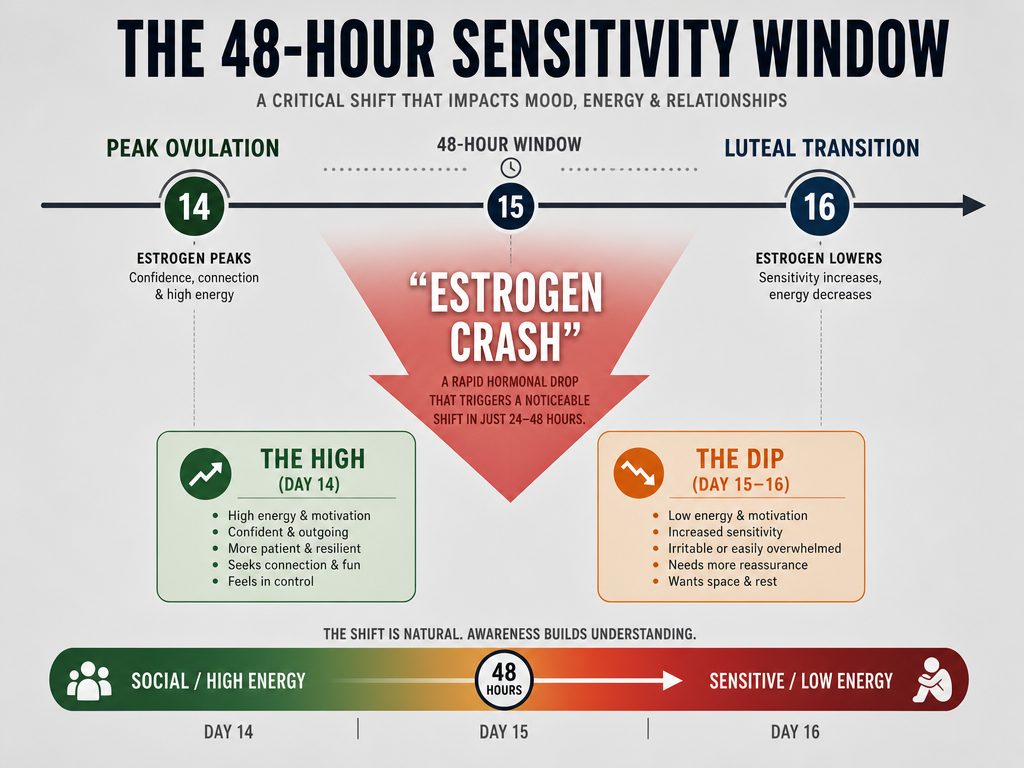
When the egg is released - typically around day 14 of a 28-day cycle - estrogen drops sharply. That sudden crash can trigger irritability, emotional sensitivity, or even anxiety within 24 to 48 hours. This isn't PMS (which happens later in the cycle). It's the biological comedown from the highest hormonal peak of the month.
About 20-30% of women notice clear mood changes or increased emotional sensitivity during ovulation, but the specific experience varies widely. Some women feel almost nothing. Others experience the full arc: the high, the drop, and everything in between.
The Science of the 'High': Why Ovulation Boosts Mood
The ovulatory phase isn't just about reproduction. It's the biological equivalent of peak performance mode.
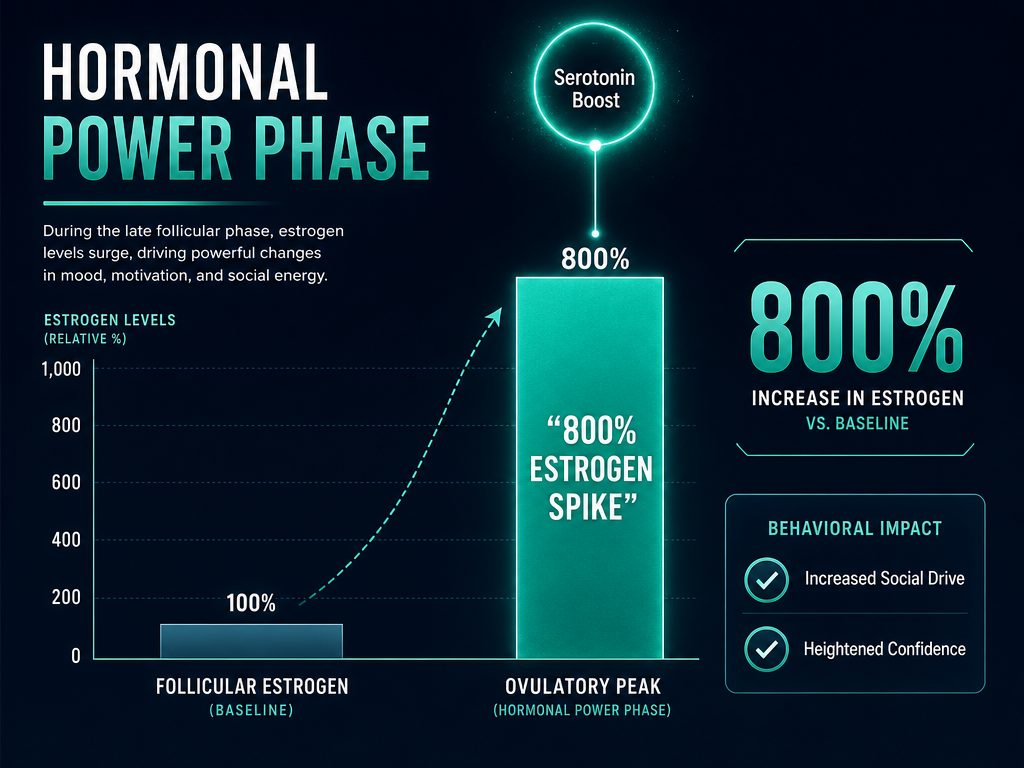
Here's what's happening under the hood: During the follicular phase, estrogen rises as an egg-containing follicle develops in the ovary. Near the end of this phase, high estrogen triggers a surge in luteinizing hormone (LH), which sets off ovulation. Estrogen can spike significantly during the ovulatory phase - in some women, by as much as several hundred percent from baseline.
That surge doesn't just affect her reproductive system. Estrogen affects many body systems, including brain function and the ability to focus, and levels are highest in the days leading up to ovulation. The link to mood is direct: estrogen peaks are linked to increased serotonin production, which is why she may feel more alert, more energized, and more socially engaged during this window.
Research backs this up. Naturally cycling women score significantly higher in Positive Affect (PA) during the ovulatory phase compared to women on hormonal contraceptives. That's not just "feeling good" - it's a measurable increase in excitement, alertness, and enthusiasm.
This is the window where she's most likely to:
- Initiate plans with friends or family
- Suggest ambitious projects or big conversations
- Express optimism about the future
- Show increased interest in physical intimacy
It's not personality - it's biology creating a window of opportunity.
The Sensory Shift You Might Not Notice
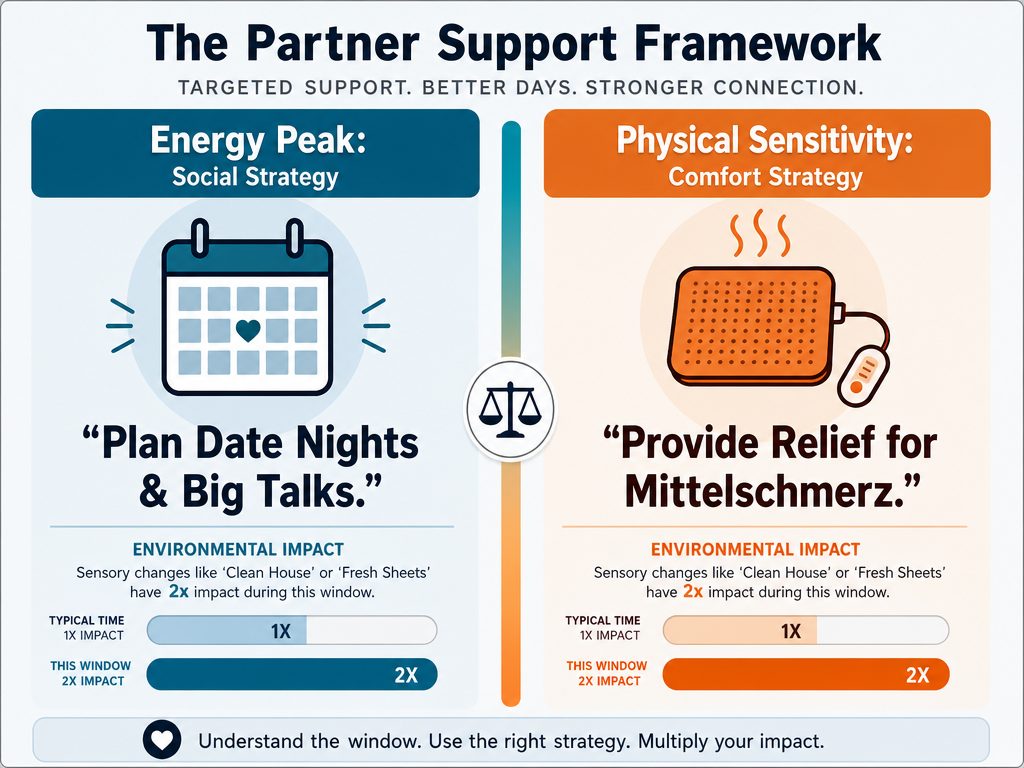
Here's something most men don't know: her sense of smell is sharper during ovulation. That means environmental details you might not register - clean sheets, fresh air, or even your cologne - have a bigger impact on her experience right now.
Small changes to your shared space during this phase aren't just thoughtful. They're biologically amplified.
The Science of the 'Low': The Post-Ovulation Crash
This is the part most relationship guides skip, and it's the one that causes the most confusion.
The "mood boost" of ovulation doesn't gently taper off. It ends abruptly.
When the egg is released - ovulation is when a surge in luteinizing hormone (LH) causes the ovary to release an egg - estrogen plummets. Serotonin, which was riding high on that estrogen wave, drops with it. This creates a 24- to 48-hour window where she may feel:
- Suddenly irritable or "on edge"
- Emotionally sensitive to things that didn't bother her yesterday
- Physically drained or socially tapped out
This isn't early PMS. It's the post-ovulation drop, and it happens roughly a week before PMS symptoms would typically show up.
The confusion is understandable. Both phases involve a hormone crash, but they're driven by different biological events. After ovulation, the luteal phase begins: progesterone rises to help prepare the uterine lining for a possible pregnancy. If pregnancy doesn't happen, both progesterone and estrogen drop before the next period, which is when PMS symptoms - mood shifts, breast tenderness, bloating - are most likely to appear.
The post-ovulation crash is shorter, sharper, and happens earlier. It's the hidden mood swing that men often mistake for randomness.
Mittelschmerz: When Ovulation Causes Physical Pain
Not every woman experiences ovulation as a mood shift. Some experience it as sharp, one-sided pain.
Mittelschmerz - one-sided lower abdominal pain around the time of ovulation - is a real, documented phenomenon, not something imagined. It's generally harmless, usually lasts minutes to a couple of days, and typically doesn't require medical treatment.
Approximately 40% of women experience mittelschmerz, though the intensity varies. For some, it's a dull ache. For others, it's a sharp, noticeable sensation on one side of the lower abdomen. How often mittelschmerz happens varies a lot: some women get it almost every cycle, others only occasionally or never.
If she mentions pain mid-cycle, she's not exaggerating. Here's what actually helps:
- A heating pad on her lower abdomen
- Over-the-counter pain relief (ibuprofen or acetaminophen)
- Rest - physical activity can make it worse
- Validation that it's real and not "all in her head"
The pain is temporary, but your response to it matters. Dismissing it as minor creates friction. Acknowledging it and offering practical support builds trust.
Do You Like Your Partner More When She's Ovulating?
Short answer: Maybe. Research suggests men may respond to biological cues during ovulation, but it's subtle and not universal.
There's some evidence that women's voices may shift slightly during ovulation - becoming marginally higher-pitched or more "attractive" to male listeners in controlled studies. Similarly, some research has explored whether facial symmetry or scent changes during this phase, though these findings are debated and not well-established in modern evolutionary psychology.
What's less debatable: around ovulation, many women notice symptoms such as increased sex drive, which can create a natural alignment in physical intimacy. If she's more interested, you're more likely to notice and respond.
But attraction during this phase isn't just about biology. It's also about energy. When she's in a better mood, more social, and more engaged, that shift is inherently attractive. You're responding to her confidence and presence, not just pheromones.
The flip side: if you notice yourself feeling more drawn to her during this window, it's worth recognizing that her post-ovulation crash can create the opposite effect. Sudden withdrawal or irritability can feel like rejection if you don't understand the hormonal context.
Understanding the pattern helps you separate biology from relationship health. If she's pulling away mid-cycle, it's likely the estrogen drop, not a sign that something is wrong between you.
The Partner Cheat Sheet: How to Support Her During Ovulation
Here's the tactical playbook: what to do during the peak, and how to pivot when the crash hits.
During the Estrogen Peak (Days 10-14)
This is her biological summer. She's energized, social, and optimistic. Match that energy.
Plan high-intensity activities. This is the window for:
- Dinner parties, group hangouts, or social events
- Adventure dates (hiking, concerts, travel)
- Big conversations about the future (moving in, finances, long-term plans)
Her serotonin is elevated, which makes her more receptive to ambitious ideas and less likely to fixate on potential downsides. If you've been waiting to bring up a serious topic, this is the biological green light.
Optimize the sensory environment. Her sense of smell is sharper right now. Small upgrades to your shared space - clean sheets, fresh air, a tidy living room - have an outsized impact. This isn't about grand gestures. It's about recognizing that details matter more during this phase.
Understand the fertile window. The "fertile window" spans 6 days: 5 days of sperm survival plus 1 day of egg viability. If you're not actively trying to get pregnant, don't assume "safe" sex on Tuesday is biologically neutral just because ovulation happens Friday. Sperm can survive in the reproductive tract for up to five days, which means the window of risk is longer than you think.
During the Post-Peak Crash (24-48 Hours After Ovulation)
This is when estrogen plummets. Energy drops. Irritability spikes. Your job is to pivot from high-intensity support to low-key presence.
Lower the social demand. If you planned a group dinner two days ago when she was excited, don't be surprised if she's suddenly unenthused. Offer an out without making her feel guilty. "Want to cancel and do something low-key instead?" gives her permission to rest.
Validate without fixing. If she's irritable, responding with genuine empathy - listening without judgment, focusing on their feelings rather than debating facts, and validating that their reaction makes sense - tends to help more than trying to "fix" the problem. "You seem stressed - what do you need?" is more effective than "You're overreacting."
Physical support for mittelschmerz. If she mentions pain, offer heat (a heating pad or hot water bottle) and space. Don't push for physical intimacy if she's uncomfortable.
The Birth Control Factor: Does the Pill Cancel These Changes?
Short answer: Yes, mostly.
Hormonal birth control - the pill, hormonal IUDs, the patch, or the ring - works by suppressing ovulation. No ovulation means no LH surge, no estrogen spike, and no post-peak crash.
Naturally cycling women score significantly higher in Positive Affect during the ovulatory phase compared to women on hormonal contraceptives. That's because hormonal contraceptives flatten the hormonal roller coaster. She won't experience the same mood boost, but she also won't experience the same post-ovulation irritability.
If your girlfriend is on hormonal birth control, the patterns described in this guide may not apply to her. Her cycle is chemically managed, which means the biological "seasons" are less pronounced.
That doesn't mean her mood is flat or predictable. It just means the shifts aren't driven by the same hormonal arcs. If she's still experiencing mood changes, they may be related to other factors - stress, sleep, diet, or the specific formulation of her birth control.
If you're not sure whether she's on hormonal contraception, this is worth asking about. Understanding her baseline helps you interpret her mood shifts more accurately.
Frequently Asked Questions
Is it normal to feel angry while ovulating?
Yes, for some women. The post-ovulation estrogen crash can trigger irritability or heightened emotional sensitivity within 24 to 48 hours after the egg is released. This isn't the same as PMS (which happens later in the cycle), and it's not a personality flaw. It's a biological response to a sharp drop in serotonin.
If she's consistently angry during ovulation itself (not after), it may be worth tracking symptoms and mood changes across the cycle for a few months to identify real patterns rather than assuming based on a single cycle.
Can ovulation cause anxiety?
Yes. The hormonal shifts around ovulation - particularly the post-peak estrogen drop - can trigger anxiety in some women. Serotonin regulates mood and anxiety, so when estrogen crashes and serotonin drops with it, feelings of unease or nervousness can surface.
If anxiety is severe or disruptive, it's worth encouraging her to talk to a healthcare provider. This may be a sign of a more significant hormonal imbalance or a condition like PMDD, which requires medical support.
Is it normal to feel worse during ovulation than during my period?
For some women, yes. Not everyone experiences ovulation as a "high." The combination of mittelschmerz (physical pain), the post-ovulation mood crash, and heightened sensory sensitivity can make this phase more uncomfortable than menstruation itself.
Every woman's cycle is different. A "normal" cycle varies a lot between women - menstrual bleeding can start anywhere from every 24 to every 38 days and last up to 8 days. The same goes for how symptoms are distributed across the month. Some women find their period easier to manage than ovulation. That's not abnormal.
Is it normal to cry emotionally during ovulation?
Yes, particularly during the post-ovulation crash. The sudden drop in estrogen and serotonin can make her feel more emotionally vulnerable or tearful, even without an obvious external trigger.
If crying happens consistently and is accompanied by feelings of hopelessness or despair, it may be worth investigating whether this is part of a larger pattern. PMDD is a more severe, sometimes disabling extension of PMS, and it can include extreme mood symptoms intense enough to disrupt daily life. A healthcare provider can help distinguish between typical cycle-related emotions and a more serious condition.
What are the 7 signs of ovulation mood?
This question assumes there's a fixed list of mood symptoms, but that's not how ovulation works for most women. The emotional experience is highly individual.
That said, common signs include:
- Increased energy or alertness
- Greater interest in social plans
- Elevated confidence or optimism
- Heightened sex drive
- Irritability or emotional sensitivity (post-peak)
- Sudden fatigue or social withdrawal (post-peak)
- Physical discomfort or pain (mittelschmerz)
Not every woman experiences all of these, and some experience none. The best way to understand her specific pattern is to track her symptoms and mood changes across the cycle for a few months, ideally with her participation.
Does ovulation mess with your emotions?
Yes, for many women - but not in the way you might assume.
Ovulation doesn't just cause "moodiness." It creates a two-part arc: a mood boost driven by rising estrogen and serotonin, followed by a sharp crash when the egg is released and those hormones drop. The emotional experience is different in each phase.
The confusion happens when men (and women) assume ovulation only affects mood in one direction. The reality is more nuanced: the high is real, the crash is real, and both are driven by measurable biological changes.
Understanding this arc - and recognizing that the crash happens 24 to 48 hours after ovulation, not during PMS - helps you interpret her mood shifts more accurately and respond with the right kind of support.
Ovulation isn't random, and it isn't just about reproduction. It's a predictable biological event with real emotional consequences. When you understand the pattern - the estrogen surge, the serotonin boost, the post-peak crash - you stop guessing and start supporting her with precision.
That's the difference between walking on eggshells and becoming a proactive partner. If you want to go deeper into how her cycle affects your relationship, start tracking the phases and learning the signals. The biology doesn't change, but your response to it can.
Tags

Related Articles
Continue reading to deepen your understanding

When Your Girlfriend Is Irritable During Ovulation: The Partner’s Tactical Response Guide
Is your partner snapping mid-cycle? Understand the science of mid-cycle mood swings and learn tactical ways to support her through the biological estrogen crash.

Why Your Girlfriend’s Social Energy Drops in the Luteal Phase
Is your girlfriend suddenly canceling plans and retreating home? It isn’t personal; it’s biology. Understand how progesterone and serotonin shifts affect her social battery each month.

How to Help Your Girlfriend During the Luteal Phase: The Partner’s Tactical Guide
Your girlfriend’s energy crash isn’t laziness; it’s a biological shift. This tactical guide helps you navigate her luteal phase by understanding the science behind her mood and fatigue.

Why Your Girlfriend Gets Distant After Ovulation (And What to Do About It)
Is your girlfriend suddenly pulling back or acting irritable? It might be her cycle. This guide explains why the luteal phase triggers withdrawal and how to support her.

Supporting Your Girlfriend Through the Luteal Phase
When hormone levels crash before her period, your partner’s brain enters a high-alert state. Learn how to provide the security she needs with tactical scripts and empathy.

How to Give Your Girlfriend Reassurance During Ovulation Week
Is your girlfriend suddenly questioning everything during her cycle? Understand the estrogen crash and learn how to provide the tactical support she needs to feel secure and loved.

When to Give Her Space vs. When to Stay Close: Your Phase-by-Phase Guide
Your girlfriend’s need for closeness isn’t random. Understanding how her 28-day biological rhythm affects her energy helps you time your support perfectly across all four phases.

Your Girlfriend’s 28-Day Relationship Manual: How to Support Her Through Every Phase
Understanding her menstrual cycle transforms you from a guy walking on eggshells into a strategic partner who knows exactly what support to offer and when.