Why Your Girlfriend’s Social Energy Drops in the Luteal Phase

Is your girlfriend suddenly canceling plans and retreating home? It isn’t personal; it’s biology. Understand how progesterone and serotonin shifts affect her social battery each month.
Why Your Girlfriend's Social Energy Drops in the Luteal Phase: The Partner's Field Guide
Last week, your girlfriend was booking trips and organizing group dinners. This week, she canceled plans and hasn't left the apartment. You're confused, maybe a little hurt, and definitely wondering if you did something wrong.
You didn't. It's biology.
Her social battery isn't draining randomly - it's following a predictable 28-day loop controlled by progesterone, serotonin, and a brain chemical called GABA. Understanding this pattern transforms you from a partner walking on eggshells into someone who knows exactly when to book the hiking trip and when to cancel brunch without asking twice.
Table of Contents
- What Is the Luteal Phase and Why Does It Matter?
- The Biological Operating System: Why Her Social Battery Short-Circuits
- What You'll Actually See: The Social Battery Crash
- The Field Manual: Tactical Support During the Luteal Phase
- When Normal PMS Becomes Something More Serious
- Frequently Asked Questions
What Is the Luteal Phase and Why Does It Matter?
The luteal phase is the two-week window between ovulation and her next period. After ovulation, progesterone rises to help prepare the uterine lining for a possible pregnancy. If pregnancy doesn't happen, both progesterone and estrogen drop before the next period. Many women notice PMS-like symptoms in this phase - mood shifts, breast tenderness, bloating, acne, and appetite changes - though not everyone does.
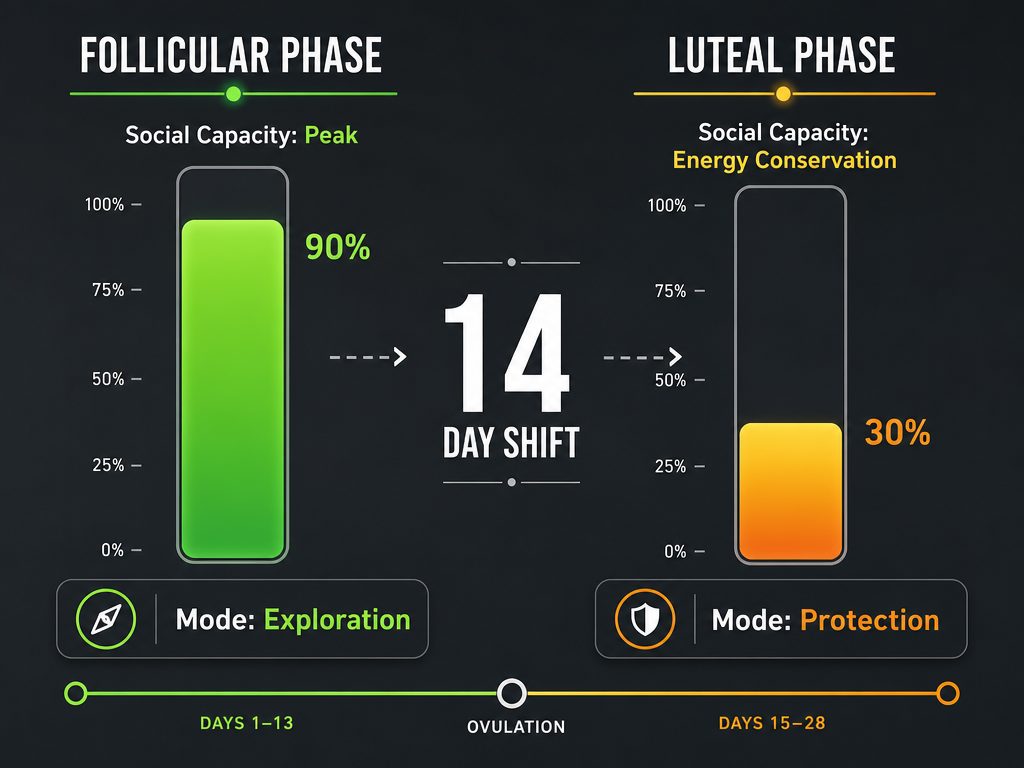
Here's what matters for your relationship: her brain is literally wired differently right now. The same social event that felt exciting last week can feel physically overwhelming during the luteal phase. It's not rejection. It's a biological shift from exploration mode to protection mode.
Only 13% of women have a "textbook" 28-day cycle, so the exact timing varies. Some women have a luteal phase that lasts 10 days, others 16. But the pattern - high energy before ovulation, lower energy after - is consistent across cycles.
VibeCheck App
Download Free on iOS →The Biological Operating System: Why Her Social Battery Short-Circuits
The Progesterone Peak and Crash
Think of progesterone as the body's "nesting" hormone. When it rises after ovulation, it's preparing her system for potential pregnancy by prioritizing rest and energy conservation. Her body is literally telling her to slow down, avoid unnecessary risks, and retreat to safety.
This isn't a character flaw. It's an evolutionary survival mechanism. Women who conserved energy during the luteal phase - when pregnancy was possible - had better outcomes. Your girlfriend's brain is running ancient software that says "protect resources, minimize threats, stay close to home."
The GABA Connection: When the Brain's Volume Knob Breaks
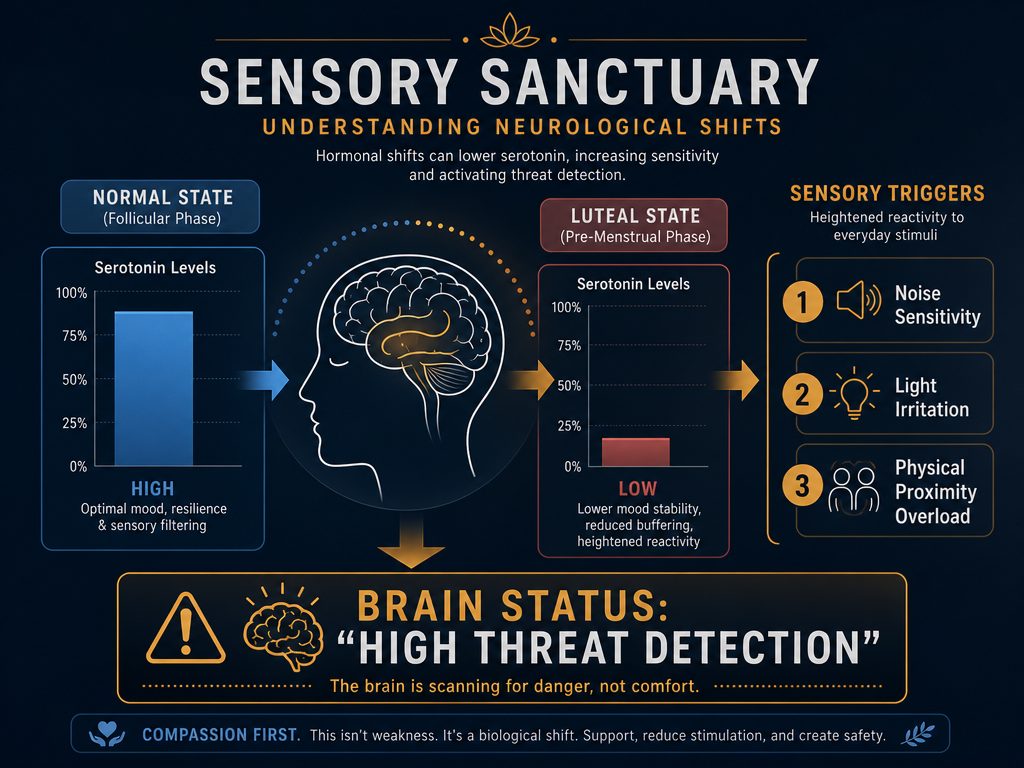
Here's where it gets neurologically interesting. Progesterone produces a metabolite called allopregnanolone, which normally calms the brain by activating GABA receptors - think of GABA as the brain's dimmer switch for anxiety and sensory input.
During the luteal phase, some women's GABA receptors become less responsive. The dimmer switch stops working. Suddenly, the restaurant that felt cozy last week feels too loud. The group chat that was funny feels annoying. Her boyfriend's presence in the same room - which felt comforting during the follicular phase - now feels like sensory overload.
This isn't about you. Her brain's threshold for stimulation has physically lowered.
The Serotonin Dip: The Mood and Motivation Drop
When estrogen and progesterone drop before her period, serotonin drops with them. Serotonin regulates mood, motivation, and the desire to engage socially. As many as 3 in 4 women report experiencing PMS symptoms at some point in their life, and irritability, mood swings, and fatigue are among the most common.
Lower serotonin means:
- Less motivation to see people
- Less patience for small talk
- Less interest in activities that felt fun last week
- More need for quiet, rest, and predictability
This is a chemical shift, not a choice.
What You'll Actually See: The Social Battery Crash
Sensory Overload: Why Everything Feels "Too Much"
During the follicular phase, her brain could handle loud bars, crowded events, and last-minute plans. Now, in the luteal phase, the same environment feels physically overwhelming.
You'll notice:
- She asks you to turn the TV down
- She wants the lights dimmed
- She's suddenly "over" a party after 20 minutes
- She cancels plans that require too much social energy
- She needs more time alone to recharge
This isn't antisocial behavior. Her nervous system is hypersensitive right now, and she's protecting herself from overstimulation.
The "Inward" Shift: From Explorer to Guardian
The follicular phase is her exploration season - high energy, high curiosity, high social drive. Energy tends to be lower during the period and can build through the follicular phase toward ovulation, with PMS-type symptoms more likely in the luteal phase.
The luteal phase flips that script. Her brain shifts from exploration to protection. She's less interested in new experiences and more focused on managing her immediate environment. Social events feel like work instead of fun.
If you've been planning a big trip or a surprise party, this is the wrong week. She'll appreciate the thought, but her body is asking for predictability, not adventure.
The "Breakup Urge": Why She Questions Everything
Here's the part that can save your relationship: during the luteal phase, her brain is biologically wired to scan for stressors and eliminate them. If the relationship feels like effort right now - if you've been arguing, if she's overwhelmed by work, if life feels chaotic - her brain might suggest quitting as a survival mechanism.
This is not rational decision-making. This is her nervous system trying to reduce load.
The fix? Never make major relationship decisions during the week before her period. If she's suddenly questioning the relationship, acknowledge her feelings, but table the big conversation until her cycle shifts. The same issue will look different in a week.
The Field Manual: Tactical Support During the Luteal Phase
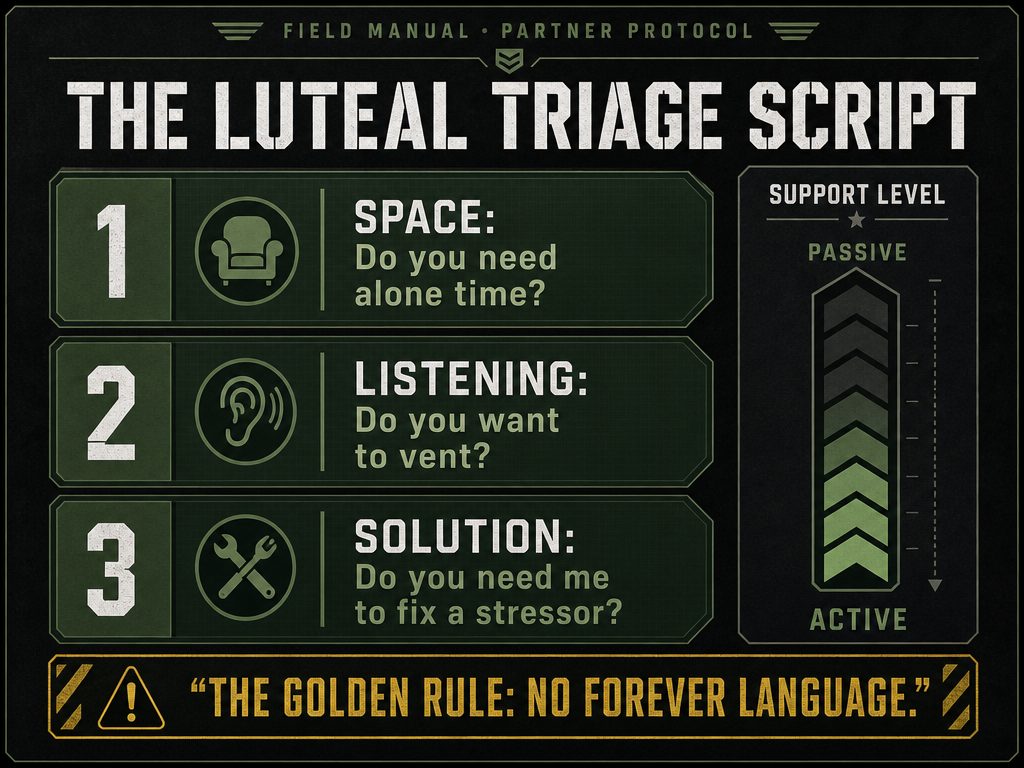
The Triage Script: Ask Once, Get It Right
When she's visibly stressed or withdrawn, don't guess. Ask:
"Do you want me to listen, give you space, or help find a solution?"
This simple script does three things:
- It shows you're paying attention
- It gives her control over the type of support she receives
- It prevents you from offering the wrong kind of help
Most of the time during the luteal phase, the answer will be "listen" or "space." Resist the urge to fix unless she explicitly asks for solutions.
The Sensory Sanctuary: Control the Environment
Her brain is hypersensitive right now. Small environmental changes make a big difference:
- Dim the lights. Bright overhead lighting feels harsh during the luteal phase.
- Lower the noise. Turn down the TV, close the windows, limit background chatter.
- Handle the invisible labor. Do the dishes without being asked. Make dinner. Take out the trash. One less decision for her to manage.
- Minimize social obligations. If you've got plans with friends, offer to go solo. She'll appreciate the option to stay home.
- Respect her physical space. If she's sitting alone on the couch, don't immediately sit next to her. Let her initiate closeness.
The "No Forever Language" Rule
If she says:
- "I'm not happy in this relationship"
- "I don't think this is working"
- "I need space"
- "Maybe we should break up"
...during the seven days before her period, do NOT react as if this is a permanent decision.
Instead, say:
"I hear you. This sounds important. Can we revisit this conversation in a week when you're not dealing with the luteal phase?"
If the issue is still there a week later, it's real. If it disappears, it was biology, not a relationship crisis.
What Actually Helps: The Do's and Don'ts
Do:
- Validate her feelings without judgment
- Offer low-effort date options (movie at home, takeout, a walk)
- Give her space without making her feel abandoned
- Handle tasks proactively so she doesn't have to ask
- Stay calm when she's irritable - her nervous system is already on edge
Don't:
- Say "Are you on your period?" (She knows. It doesn't help.)
- Take her withdrawal personally
- Push her to socialize when she's clearly drained
- Start a serious relationship conversation right now
- Argue with her feelings or tell her she's overreacting
When Normal PMS Becomes Something More Serious
PMS vs. PMDD: Knowing the Difference
PMS (premenstrual syndrome) is very common: as many as 3 in 4 women report experiencing PMS symptoms at some point in their life, though severity varies widely. Roughly half of people who menstruate report having at least one PMS symptom, but only about 1 in 5 have symptoms severe enough to disrupt their daily life.
PMDD (premenstrual dysphoric disorder) is a real, clinically recognized condition - it's listed in the DSM-5 as a depressive disorder. PMDD affects approximately 5-8% of menstruating women.
Red Flags That Require Professional Help
If your girlfriend experiences any of these during the luteal phase, it's time to talk to a doctor:
- Suicidal thoughts or self-harm ideation
- Rage that feels uncontrollable or frightening
- Inability to function at work or maintain daily responsibilities
- Severe anxiety or panic attacks
- Depression that doesn't lift when her period starts
Married or cohabiting women with PMDD have a 21% increased risk of relationship disruption. If her symptoms are this severe, they're affecting both of you. Encourage her to seek help - and offer to go with her to the appointment if she wants support.
How to Bring It Up
If you think her symptoms might be PMDD, don't diagnose her. Instead, share what you've noticed:
"I've been tracking some patterns, and it seems like you're really struggling the week before your period. I read about PMDD, and some of what I'm seeing sounds similar. Would it be worth talking to your doctor about it?"
Frame it as concern, not criticism. You're not saying she's broken - you're saying there might be help available.
Frequently Asked Questions
Is it normal to not like your partner during the luteal phase?
Yes, and it's more common than most people talk about. When serotonin drops and your nervous system becomes hypersensitive, even a supportive partner can feel like too much. Small habits that you normally ignore - the way he chews, the volume of his voice, how much space he takes up on the couch - can suddenly feel unbearable.
This doesn't mean the relationship is failing. It means your brain is in protection mode and scanning for threats. The fix is recognizing the pattern, not acting on every irritation you feel during the luteal phase.
How do I explain the luteal phase to my boyfriend?
Be direct and specific. Most men don't learn about the menstrual cycle beyond "period = bleeding," so start with the basics:
"My cycle has four phases, and each one affects my energy and mood differently. The luteal phase is the two weeks before my period. During that time, my serotonin drops and my brain becomes more sensitive to noise, stress, and stimulation. I'm not mad at you - I'm just running on a different operating system right now. Here's what helps: [specific actions]. Here's what doesn't: [specific things to avoid]."
Give him data, not guesswork. Tracking your own (or a partner's, with her participation) symptoms and mood changes across the cycle for a few months is a legitimate, medically endorsed way to identify real patterns and timing.
What to do for a partner during the luteal phase?
The best support is invisible labor:
- Handle the dishes, laundry, and meal prep without being asked
- Lower environmental stimulation (dim lights, quiet space)
- Cancel or postpone non-essential social plans
- Offer low-effort connection (watch a show together, order takeout)
- Don't take withdrawal personally
Lifestyle approaches that can help ease PMS symptoms include regular aerobic exercise, smaller/more frequent meals, less salt/caffeine/alcohol, adequate sleep, and stress-reduction practices like deep breathing or yoga. A partner who understands these and is patient around them is aligning with medically recommended self-care.
How does the luteal phase affect relationships?
The luteal phase creates a temporary mismatch in energy, mood, and social needs. You're ready to plan trips and host dinners; she's ready to cancel everything and stay home. If you don't understand the biological cause, this feels like rejection or a relationship problem.
When you understand the pattern, you can plan around it. Book the big trip during her follicular phase. Schedule date nights when her energy is high. Give her space during the luteal phase without making her feel guilty.
For men who want to understand this rhythm and get daily guidance on how to support their partner, tools like VibeCheck translate cycle data into actionable advice - so you're not guessing which version of her you're dealing with today.
How can I tell she's in the luteal phase without asking directly?
Look for behavioral cues:
- She cancels plans or asks to stay in instead of going out
- She's quieter, less chatty, or needs more alone time
- She's more irritable or sensitive to noise, mess, or disruption
- She craves specific foods (salt, carbs, chocolate)
- She's tired even after a full night's sleep
If you've been tracking patterns for a few cycles, you'll start recognizing the signs before she has to explain. That's when you stop reacting to symptoms and start anticipating needs.
Your girlfriend's social battery isn't draining randomly. It's following a biological script that's been running for thousands of years. Once you understand the script, you stop walking on eggshells and start anticipating her needs before she has to ask.
The luteal phase isn't the enemy. Ignorance is. Now you know better.
Tags

Related Articles
Continue reading to deepen your understanding

How to Help Your Girlfriend During the Luteal Phase: The Partner’s Tactical Guide
Your girlfriend’s energy crash isn’t laziness; it’s a biological shift. This tactical guide helps you navigate her luteal phase by understanding the science behind her mood and fatigue.

Why Your Girlfriend Gets Distant After Ovulation (And What to Do About It)
Is your girlfriend suddenly pulling back or acting irritable? It might be her cycle. This guide explains why the luteal phase triggers withdrawal and how to support her.

Supporting Your Girlfriend Through the Luteal Phase
When hormone levels crash before her period, your partner’s brain enters a high-alert state. Learn how to provide the security she needs with tactical scripts and empathy.

How to Give Your Girlfriend Reassurance During Ovulation Week
Is your girlfriend suddenly questioning everything during her cycle? Understand the estrogen crash and learn how to provide the tactical support she needs to feel secure and loved.

When to Give Her Space vs. When to Stay Close: Your Phase-by-Phase Guide
Your girlfriend’s need for closeness isn’t random. Understanding how her 28-day biological rhythm affects her energy helps you time your support perfectly across all four phases.

Your Girlfriend’s 28-Day Relationship Manual: How to Support Her Through Every Phase
Understanding her menstrual cycle transforms you from a guy walking on eggshells into a strategic partner who knows exactly what support to offer and when.

When Your Girlfriend Goes Distant During the Luteal Phase: The Partner’s Tactical Guide
Does your girlfriend pull away or go quiet right before her period? Understand the biological reason for her withdrawal and how you can support her without making it worse.

The Strategic Partner’s Guide to Ovulation Energy Surge Date Ideas
Is your girlfriend suddenly full of energy and ready for adventure? It’s likely her ovulation surge. Use this guide to plan dates that match her peak confidence and social drive.