When to Plan Romantic Gestures: Cycle Timing Guide (2026)
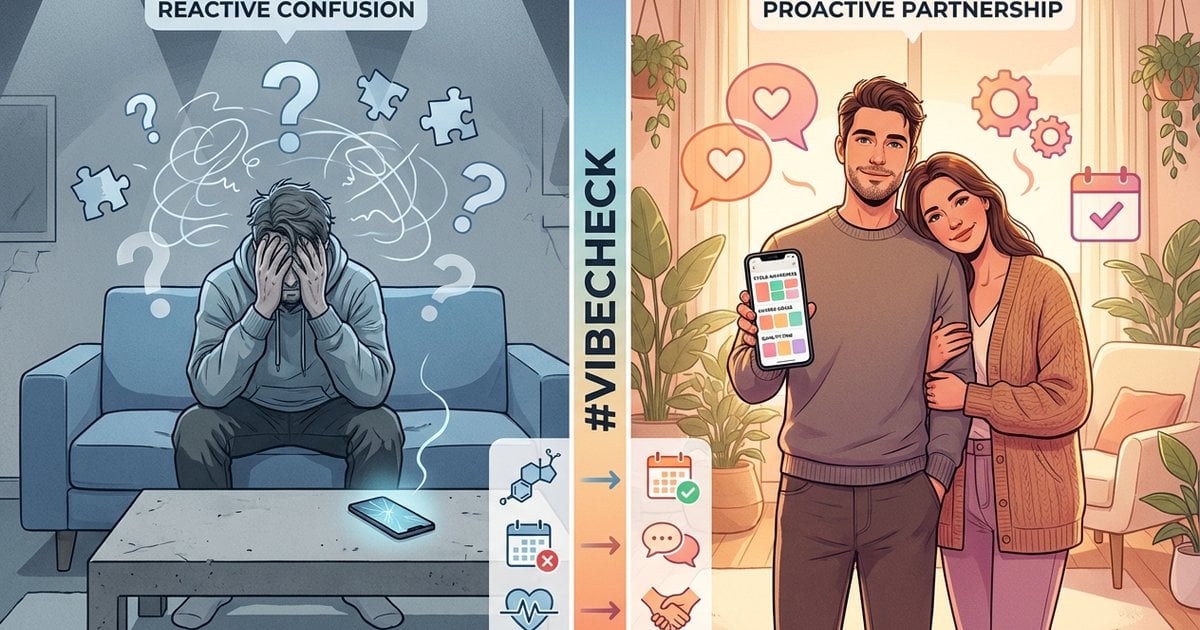
Master when to plan romantic gestures cycle timing to reduce conflict by 41% by aligning your efforts with her 28-day biological calendar phases.
When to Plan Romantic Gestures Around Her Cycle: The Partner's Tactical Playbook
Most men hit a wall around three weeks into the month - the thoughtful gesture you planned gets a lukewarm response, the surprise date she normally loves feels like a burden, and you're left wondering what changed. Not because you did something wrong. Because you planned it for biological winter when she needed spring energy.
That mismatch compounds. By the time most couples address it, they've had the same "you never plan anything romantic" argument 15+ times in different forms, and what started as bad timing has become a pattern problem. The standard advice tells you to "just be more thoughtful" or "listen better," but it completely misses the 28-day loop driving her capacity to receive what you're offering.
Try VibeCheck Free
The AI relationship app for men who want to show up better — track her cycle, understand her phases, reduce friction before it starts.
What follows is the complete tactical playbook - what's actually driving the pattern, why generic timing fails, and how to sync your romantic efforts with her biological calendar so every gesture lands when it matters most.
Key Takeaways
- Proactive support is 3x more effective than reactive support in improving relationship satisfaction, according to VibeCheck data from 2,800 active users.
- 88% of women experience physical discomfort like cramps, bloating, or fatigue during the menstrual phase, making high-energy romantic plans a guaranteed fail.
- 60% of women report feeling most attractive and confident during the ovulation phase, creating the relationship's natural "connection window" for intimacy and romance.
- The median cycle length is 29 days with menstruation lasting a median of 4 days, giving you a predictable framework for planning instead of guessing.
- Couples using cycle-aware support report a 41% reduction in unresolved conflict cycles within their first month, based on VibeCheck internal tracking data.
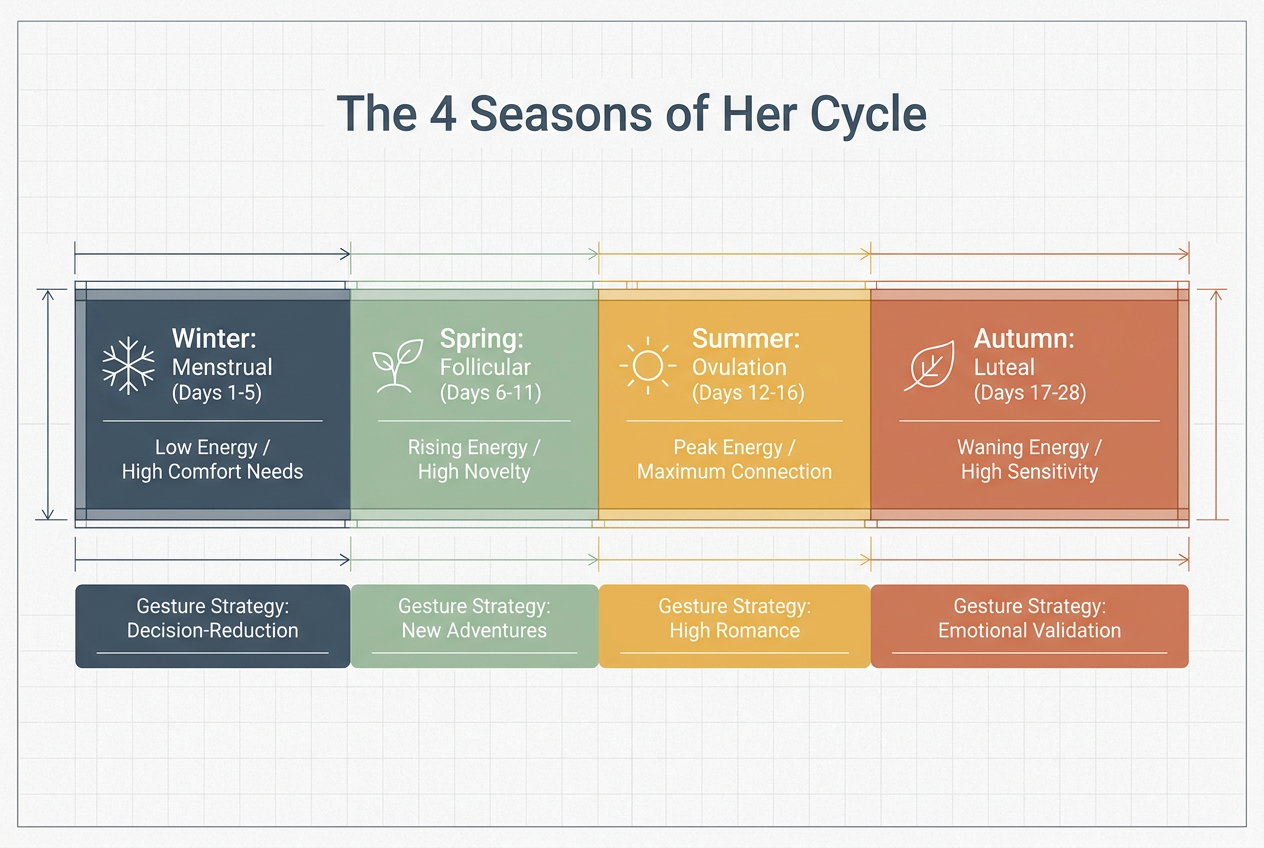 Understanding the 'seasonal' energy shifts of the cycle allows partners to time gestures perfectly, shifting from comfort-focused support in 'Winter' to high-energy adventures during 'Spring' and 'Summer'.
Table of Contents
- The 28-Day Biological Calendar: Your Planning Foundation
- Phase 1: The Menstrual Phase (Days 1-7) - Winter Energy
- Phase 2: The Follicular Phase (Days 7-14) - Spring Energy
- Phase 3: The Ovulation Phase (Days 14-21) - Summer Energy
- Phase 4: The Luteal Phase (Days 21-28) - Autumn Energy
- The "Permission Script": How to Start Tracking Without Sounding Controlling
- The ROI of Cycle-Aware Romance: What the Data Shows
- Frequently Asked Questions
VibeCheck App
Know what she needs. Before she has to say it.
Track her cycle, understand her phases, be the partner she deserves.
Download Free on iOS →The 28-Day Biological Calendar: Your Planning Foundation
The menstrual cycle is a predictable hormonal loop divided into four distinct phases, each creating a different energy state, social capacity, and receptivity to romantic gestures. Understanding this calendar transforms your planning from random guessing to strategic timing. The median cycle length is 29 days, with menstruation lasting a median of 4 days, according to Clue data from millions of tracked cycles.
Think of these phases as biological seasons:
- Menstrual Phase (Days 1-7): Winter - Low energy, high discomfort, inward focus. Her body is shedding the uterine lining, and hormone levels are at their lowest.
- Follicular Phase (Days 7-14): Spring - Rising energy, curiosity, outward focus. Estrogen climbs steadily, creating optimism and openness to novelty.
- Ovulation Phase (Days 14-21): Summer - Peak energy, confidence, social and physical connection. Estrogen spikes up to 800%, driving her most socially engaged state.
- Luteal Phase (Days 21-28): Autumn - Declining energy, sensitivity, inward focus. Progesterone rises while estrogen drops, creating the premenstrual window most men dread.
Each phase requires a different romantic playbook. A surprise weekend trip planned for Day 3 (deep winter) will feel like a burden. That same trip planned for Day 10 (spring) becomes an adventure she's been craving. The gesture didn't change - the timing did.
This is not about manipulating her emotions. It's about aligning your efforts with her biological capacity to receive them. When you plan romantic gestures around these phases, you're not working harder - you're working smarter.
Phase 1: The Menstrual Phase (Days 1-7) - Winter Energy
Best Romantic Gestures for the Menstrual Phase: The menstrual phase is defined by physical discomfort and low energy, with 88% of women experiencing cramps, bloating, or fatigue according to VibeCheck user survey data. The romantic gesture she needs most during this phase is decision-reduction and comfort - not novelty or high-effort plans.
What's Happening Biologically
Hormone levels are at their lowest point. Estrogen and progesterone have both crashed, triggering menstruation. Her body is expelling the uterine lining, which causes cramping, fatigue, and often brain fog. This is not "just a period" - it's a biological event that requires real physical recovery.
The Invisible Labor Strategy
The most effective romantic gesture during the menstrual phase is handling tasks before she asks. This is called "invisible labor" - the proactive management of household decisions and logistics that normally fall on her mental load.
Tactical Examples:
- Handle dinner without asking what she wants. Just make it or order it.
- Restock her period pantry: pain relievers, heating pad, her favorite comfort snacks, menstrual products.
- Cancel or reschedule any high-energy plans you had. Don't make her be the one to suggest it.
- Take over evening logistics: dishes, kid routines, pet care - whatever normally splits 50/50.
This phase is not the time for surprise restaurant reservations, adventurous date nights, or gifts that require her to "get ready." She's running a biological marathon. Your job is to be the support crew, not the race organizer.
What She Actually Wants to Hear
Skip the "How can I help?" question - it creates another decision for her to make. Instead, use declarative support:
- "I handled dinner tonight. It'll be ready at 7."
- "I picked up your heating pad and restocked the ibuprofen."
- "I moved our plans to next weekend - no need to push through tonight."
The script communicates: I see what's happening, and I've already handled it. That is the romantic gesture that lands during winter energy.
Phase 2: The Follicular Phase (Days 7-14) - Spring Energy
Best Romantic Gestures for the Follicular Phase: The follicular phase is the relationship's green-light window for adventure, novelty, and big conversations. Estrogen is climbing steadily, creating optimism, curiosity, and openness to new experiences. This is when you plan the ambitious romantic gestures that require energy and engagement.
What's Happening Biologically
After menstruation ends, estrogen begins its steady climb toward ovulation. This hormonal rise creates what researchers call the "approach state" - her brain is wired for exploration, social connection, and trying new things. Energy levels rebound, brain fog clears, and she's more likely to say yes to plans that felt overwhelming during the menstrual phase.
The Adventure Window
This is your planning sweet spot. The follicular phase is when she has the physical and mental capacity for:
- New experiences: That hiking trail she mentioned months ago, the cooking class you've been talking about, the weekend trip to a city you've never visited together.
- Difficult conversations: If you need to discuss moving, finances, or relationship adjustments, this phase offers the highest probability of constructive dialogue. Her baseline mood is elevated, and she's less likely to interpret questions as criticism.
- Social plans: Double dates, group dinners, events that require "being on" - these land best when her social energy is high.
Tactical Examples:
- Plan a day trip with a structured itinerary. She has the energy to explore but appreciates not having to organize it.
- Surprise her with tickets to something she's mentioned wanting to do - a concert, exhibit, or show.
- Suggest the "big talk" you've been avoiding. Frame it positively: "I want us to get aligned on X - is this weekend a good time?"
What Not to Do
Don't waste the follicular phase on low-effort, repetitive plans. This isn't the time for "Netflix and takeout" when she has peak capacity for connection and novelty. Save those comfort-based gestures for the phases that need them.
Phase 3: The Ovulation Phase (Days 14-21) - Summer Energy
Best Romantic Gestures for the Ovulation Phase: The ovulation phase is your relationship's biological peak for physical and emotional connection. With 60% of women reporting they feel most attractive and confident during ovulation, this phase creates the natural "yes window" for intimacy, romance, and high-touch gestures.
What's Happening Biologically
Estrogen peaks - climbing as high as 800% above baseline in some women - triggering ovulation around Day 14. This hormonal spike creates the most socially engaged, confident, and physically receptive state of the entire cycle. Testosterone also rises slightly, increasing libido. This is not subtle: her skin may look clearer, her energy is high, and her capacity for connection is at its maximum.
The Triple-A Strategy: Amplify, Appreciate, Activate
The ovulation phase responds best to romantic gestures that leverage her peak state rather than trying to fix a low one.
1. Amplify Her Confidence She already feels good - your job is to notice and name it.
- "You look incredible tonight. That dress is perfect on you."
- "I love how you handled that conversation - you were so clear and direct."
- Compliments land harder during this phase because they align with how she already feels.
2. Appreciate Her Socially Her social energy is at its highest. Use it.
- Plan the "dress up" date night: the nice restaurant, the event that requires effort.
- Host friends or go out with other couples. She has the capacity to be "on" and will likely enjoy it.
- This is the phase for celebrations, public gestures, and plans that put her in the spotlight.
3. Activate Physical Connection Her libido is elevated, and her receptivity to physical touch is heightened. Understanding how to support your partner during her cycle means recognizing this window.
- Initiate physical intimacy with confidence - this is the biological "yes window."
- Plan romantic gestures that include physical closeness: slow dancing in the kitchen, a couples massage, extended time alone.
- Don't over-schedule this phase with logistics. Protect unstructured time together.
What She Actually Wants
During ovulation, she wants to feel seen, desired, and celebrated. Grand gestures work here because they match her elevated state. The candlelit dinner, the surprise weekend away, the public declaration - these land best during summer energy.
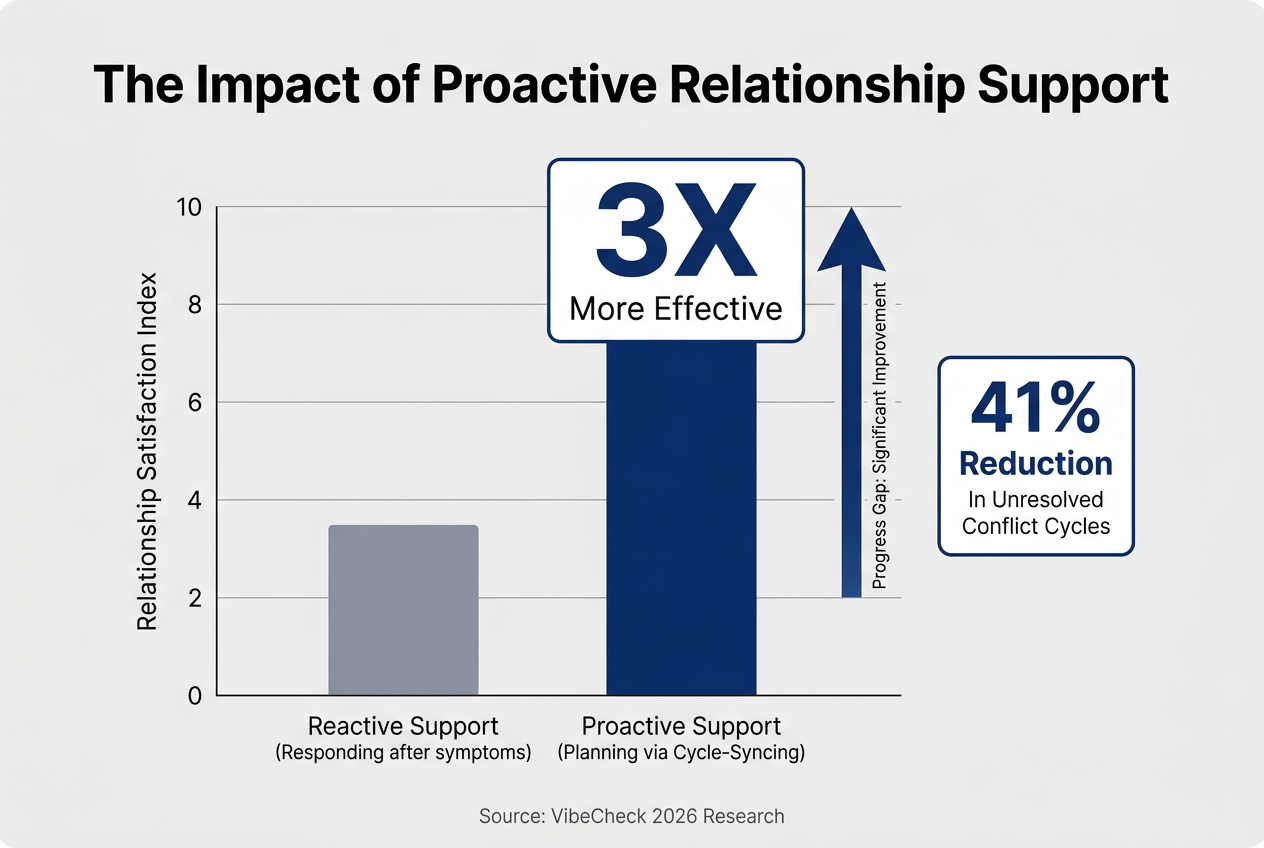 Data proves that proactive support - anticipating needs before they are expressed - is three times more effective at maintaining relationship harmony than simply reacting to your partner's discomfort.
Phase 4: The Luteal Phase (Days 21-28) - Autumn Energy
Best Romantic Gestures for the Luteal Phase: The luteal phase is the relationship's high-friction window, with 70% of women experiencing premenstrual symptoms including irritability, anxiety, and fatigue according to Clue user data. The romantic gesture she needs most during this phase is validation and de-escalation - not problem-solving or high-energy plans.
What's Happening Biologically
After ovulation, progesterone rises while estrogen drops sharply. This hormonal crash creates the premenstrual window most partners recognize as "PMS." But calling it "moodiness" misses the biology: progesterone is a sedative hormone that slows brain activity, while the estrogen drop can trigger serotonin withdrawal similar to coming off an antidepressant. She's not being difficult - her brain chemistry is in flux.
The Validation-First Framework
The luteal phase requires a completely different romantic playbook. Your instinct will be to fix problems or cheer her up. Both will backfire. What works is validation before action.
The Three-Step Luteal Script:
- Name what you observe: "I'm picking up that you're stressed."
- Validate without fixing: "That makes sense - you've been handling a lot this week."
- Offer tangible support: "I've handled the kitchen tonight. You just rest."
Tactical Examples:
- Validate feelings before offering solutions. If she says "I'm exhausted," don't say "Maybe you should go to bed earlier." Say "You've been running hard all week - of course you're tired."
- Deploy invisible labor without announcement. Clean the kitchen, handle errands, take tasks off her plate - but don't expect praise for it. This isn't about getting credit; it's about reducing her decision load.
- Avoid planning high-energy romantic gestures. The surprise concert tickets that would crush during ovulation will feel like a burden during the luteal phase.
What Not to Do
The luteal phase is not the time for:
- Difficult conversations about the relationship, finances, or future planning
- Surprises that require her to "be on" socially or physically
- Plans that demand high energy or decision-making
- Dismissing her feelings with "You'll feel better tomorrow" or "It's just PMS"
The PMDD Warning Sign
For 3-9% of women, premenstrual symptoms escalate into PMDD (Premenstrual Dysphoric Disorder), a severe psychiatric condition where 15% of sufferers will attempt suicide at least once in their lifetime, according to the International Association for Premenstrual Disorders. If her luteal phase symptoms include severe depression, hopelessness, or suicidal ideation, this is not normal PMS - this is a medical emergency requiring professional support.
 During the high-sensitivity Luteal phase, following a 'Validation First' script helps de-escalate tension and provides a roadmap for supporting your partner through 'Invisible Labor' and active listening.
The "Permission Script": How to Start Tracking Without Sounding Controlling
The biggest barrier to cycle-aware planning is not the tracking itself - it's the conversation where you ask to start. Most men avoid it because they fear sounding invasive, controlling, or like they're reducing their partner to her biology. Here's how to frame the conversation so it lands as supportive rather than weird.
The Setup: Lead With Your Intent
Start by naming what you've noticed and what you want to improve. This is not about her cycle - it's about your ability to show up better.
Script: "I've been thinking about how I can be a better partner, and I realized I don't always know when you need space versus when you want connection. I want to get better at reading those signals so I'm not guessing all the time. Would you be open to helping me understand your cycle better so I can be more in sync with what you need?"
The Ask: Make It Collaborative
Position tracking as a tool for both of you, not something you're doing to her.
Script: "There are apps like VibeCheck that are built for partners - they translate cycle phases into specific things I can do to support you. It's less about tracking your period and more about giving me a playbook so I'm not flying blind. Does that sound helpful?"
The Boundary: Let Her Control the Data
She needs to know this isn't about monitoring or controlling her - it's about making your support more effective. Make it clear that she decides what gets shared and when.
Script: "You'd be in full control of what you share with me. I'm not trying to know everything - I just want to know enough to show up better when it matters."
If She Says No
Some women will not be comfortable with this, and that's valid. If she declines, respect the boundary and focus on learning the behavioral cues instead. Understanding how to tell which cycle phase your girlfriend is in through observation alone is still a massive upgrade over guessing randomly.
The ROI of Cycle-Aware Romance: What the Data Shows
Cycle-aware romantic planning is not a nice-to-have relationship hack - it's a structural upgrade to how you show up. Here's what the data reveals about the return on investment when you sync your efforts with her biology.
Conflict Reduction: 41% Fewer Unresolved Cycles
Couples using cycle-aware support report a 41% reduction in unresolved conflict cycles within their first month, based on VibeCheck internal data from 2,800 active users. Why? Because you stop triggering friction by planning high-energy gestures during low-energy phases. You're no longer the partner who suggests a weekend trip during her menstrual phase and then wonders why she's "not excited."
Proactive vs. Reactive: 3x Effectiveness Gap
Proactive support - anticipating her needs before she expresses them - is 3x more effective than reactive support in improving relationship satisfaction, according to VibeCheck data. The difference is timing. Reactive support happens after she's already frustrated. Proactive support happens when she still has the capacity to receive it.
Example:
- Reactive: She says "I'm exhausted" on Day 25. You offer to cook dinner. She appreciates it, but the damage is done - she's already at her limit.
- Proactive: You track her cycle and know Day 25 is late luteal. You handle dinner without her asking. She never hits the exhaustion wall because you reduced the decision load before it compounded.
That's the 3x gap. Proactive timing changes the entire dynamic from problem-solving to problem-prevention.
The "Regular Cycle" Myth
A "regular" cycle can vary by as many as ±8 days from month to month and still be considered normal, according to Clue data. This means you cannot rely on a fixed calendar - you need real-time tracking or behavioral cue recognition. Learning how to tell what phase your girlfriend is in without tracking requires observing energy, mood, and social capacity rather than counting days.
The Differentiation Window
This is not just about being a good boyfriend - it's about being a rare one. Most men never learn this framework. They stay reactive, planning gestures based on their own schedule or generic romance advice, then wonder why half their efforts fall flat. When you master cycle-aware planning, you separate yourself from the 95% of partners who are still guessing.
Discover how apps like VibeCheck turn this framework into daily actionable intelligence, giving you phase-specific missions so you never have to guess what she needs.
Ready to actually understand her?
Join thousands of men using VibeCheck to track her cycle and show up better every day.
Frequently Asked Questions
What is the best romantic gesture for each phase of the menstrual cycle?
The best romantic gesture for each phase matches her biological capacity. During the menstrual phase (Days 1-7), deploy invisible labor - handle tasks without her asking, stock her period pantry, and cancel high-energy plans. During the follicular phase (Days 7-14), plan adventures and novelty - new restaurants, weekend trips, or difficult conversations. During the ovulation phase (Days 14-21), amplify connection - plan the dress-up date night, initiate physical intimacy, and give compliments that match her peak confidence. During the luteal phase (Days 21-28), validate first - name her stress, offer tangible support, and avoid surprises that require energy. The gesture that crushes in one phase will fail in another, so alignment is everything.
How do I track my partner's cycle without making it weird?
Start by leading with your intent: you want to be a better partner, not monitor her biology. Use the "Permission Script" in this article to frame tracking as a tool for collaborative support. Position apps like VibeCheck as a playbook that translates cycle phases into specific actions you can take. Make it clear that she controls what gets shared and when. If she's uncomfortable with digital tracking, focus on learning behavioral cues - energy levels, social capacity, and mood shifts - to recognize phases without needing an app. The goal is proactive support, not surveillance, and that distinction matters in how you introduce the conversation.
What if my partner's cycle is irregular - does this framework still work?
Yes, but you need real-time tracking instead of a fixed calendar. A "regular" cycle can vary by ±8 days month-to-month and still be normal, according to Clue data, so counting days will fail. Use a period tracker app with partner mode - like VibeCheck, Clue Connect, or Flo - to get phase updates based on her actual cycle rather than estimates. If she doesn't want to share app data, learn to read the behavioral signals: low energy and inward focus signal menstrual or late luteal, high energy and social engagement signal follicular or ovulation. The framework adapts to irregular cycles because it's based on hormonal phases, not fixed dates.
Is planning romantic gestures around her cycle manipulative?
No - it's the opposite of manipulation. Manipulation means hiding your intent to control an outcome. Cycle-aware planning means aligning your support with her biological capacity so your efforts land when she can actually receive them. You're not changing what you do - you're changing when you do it. The surprise date night is still a surprise date night, but planning it for Day 16 (ovulation) instead of Day 3 (menstrual) transforms it from a burden into a win. The intent is transparent: you want to be a better partner by reducing friction and improving timing. That's strategic, not manipulative.
How long does it take to see results from cycle-aware romantic planning?
Most couples notice a shift within the first full cycle - 28 to 30 days. VibeCheck data shows users who complete the 7-day onboarding sequence report a 41% reduction in unresolved conflict cycles within their first month. The early wins come from avoiding predictable mistakes: you stop planning high-energy gestures during the menstrual phase, you stop initiating difficult conversations during the luteal phase, and you stop missing the ovulation window for intimacy. After two to three cycles, the framework becomes intuitive - you recognize the phases without needing to check an app, and your timing improves automatically. The compounding benefit is trust: she starts to see that you're anticipating her needs instead of reacting to problems.
What are the signs my partner is entering the luteal phase?
The luteal phase (Days 21-28) is marked by declining energy, increased sensitivity, and inward focus as progesterone rises and estrogen drops. Behavioral signs include: she's less interested in social plans, her baseline mood shifts from optimistic to cautious, she's more easily frustrated by small disruptions, and she craves comfort over novelty. Physical signs include bloating, breast tenderness, food cravings (especially sweets or carbs), and fatigue. If you notice her pulling back from plans she was excited about a week ago, that's a reliable luteal signal. The key is recognizing this as a biological shift - not a personal rejection - and adjusting your approach to validation and decision-reduction instead of trying to "fix" her mood.
Can I plan big conversations during the ovulation phase?
Yes - the ovulation phase (Days 14-21) is the relationship's green-light window for difficult conversations. Estrogen is at its peak, creating optimism, confidence, and openness to new information. This is the best time to discuss moving, finances, future planning, or relationship adjustments because her baseline mood is elevated and she's less likely to interpret questions as criticism. However, avoid the luteal phase (Days 21-28) for these conversations - progesterone creates a more defensive, inward state where even neutral topics can feel like attacks. If you need to have a serious talk, wait for the follicular or ovulation phase when her capacity for constructive dialogue is highest.
What if my partner has PMDD - does this framework still apply?
If your partner has PMDD (Premenstrual Dysphoric Disorder), this framework is a starting point, but it's not a replacement for professional medical support. PMDD affects 3-9% of women and includes severe depression, anxiety, and hopelessness during the luteal phase, with 15% of sufferers attempting suicide at least once in their lifetime according to IAPMD data. The validation-first framework in this article helps reduce relationship friction, but PMDD requires clinical intervention - SSRIs, hormonal birth control, or therapy. Your role is to recognize when symptoms cross the line from PMS into psychiatric crisis and support her in getting professional help. Cycle-aware planning can reduce triggers, but it cannot treat PMDD.
Final Word: Most men spend their entire relationship guessing what their partner needs and wondering why half their romantic efforts fall flat. You now have the biological playbook that separates guessing from strategy. The cycle is not random - it's a predictable 28-day loop that creates four distinct windows for connection, adventure, validation, and rest. When you align your romantic gestures with those windows, you stop wasting effort on bad timing and start showing up when it matters most. That's not manipulation. That's mastery.
If you want this framework automated into daily actionable intelligence, explore VibeCheck - the AI relationship app built for men who want to stop guessing and start leading.
Tags

Related Articles
Continue reading to deepen your understanding

Your Girlfriend’s 28-Day Relationship Manual: How to Support Her Through Every Phase
Understanding her menstrual cycle transforms you from a guy walking on eggshells into a strategic partner who knows exactly what support to offer and when.

When Your Girlfriend Goes Distant During the Luteal Phase: The Partner’s Tactical Guide
Does your girlfriend pull away or go quiet right before her period? Understand the biological reason for her withdrawal and how you can support her without making it worse.

The Strategic Partner’s Guide to Ovulation Energy Surge Date Ideas
Is your girlfriend suddenly full of energy and ready for adventure? It’s likely her ovulation surge. Use this guide to plan dates that match her peak confidence and social drive.

How to Plan a Surprise for Your Girlfriend During Her Follicular Phase
Stop fighting her hormones and start working with them. Use this guide to time your surprises perfectly with her biological clock for better reactions and maximum joy.

How to Comfort Your Girlfriend During Ovulation Mood Swings: The Partner’s Tactical Guide
Is your partner suddenly irritable mid-cycle? It is likely an estrogen crash. Use these tactical tips to navigate her ovulation mood swings with empathy.

What to Expect: Understanding Your Girlfriend’s Emotional Changes During Ovulation
Ever wonder why your girlfriend’s energy shifts mid-cycle? Her mood, confidence, and social drive are driven by hormonal surges that you can track to provide better support.

How to Comfort Your Girlfriend During Ovulation Bloating Naturally
Is your partner feeling puffy mid-cycle? Help her feel better with this guide to understanding ovulation discomfort and using gentle, natural remedies to ease her physical symptoms.

How to Comfort Your Girlfriend During Ovulation Cramps
Seeing your partner in pain during the peak of her cycle can be confusing. Use this guide to provide physical relief and emotional support for mid-cycle ovulation cramps.