How to Plan Romantic Gestures Around Her Cycle (2026)

Master how to plan romantic gestures around her cycle to increase relationship satisfaction by 3x and reduce conflict by 41% using a four-phase system.
The 28-Day Romance Playbook: How to Plan Romantic Gestures Around Her Cycle
Most men hit a wall around month six - she loved the surprise weekend trip in March, but the same gesture in April got a lukewarm "I'm just not feeling it." Not because she changed her mind about you. Because you're timing your gestures against a biological calendar you can't see.
That pattern compounds. Research from VibeCheck's 2026 user survey shows that men who plan romantic efforts without understanding the 28-day hormonal cycle report 3x lower satisfaction from those gestures compared to men who align their actions with biological phases. By the time most partners realize the pattern exists, they've already spent months wondering why their best efforts land flat half the time.
What follows is the complete picture - the four biological phases that govern her energy and emotional capacity, the specific gestures that work in each window, and the tactical system that turns you from reactive to proactive. The answer isn't bigger gestures. It's timing.
Key Takeaways
- Proactive support that anticipates needs is 3x more effective at increasing relationship satisfaction than reactive support, according to VibeCheck research from 2026.
- The menstrual cycle consists of four distinct phases with dramatically different energy levels, social capacity, and emotional bandwidth - timing your gestures to match these phases increases acceptance rates by 72%.
- During the menstrual phase, 88% of women experience physical discomfort including cramps, bloating, or fatigue, making low-effort comfort gestures more valuable than elaborate plans.
- The ovulation phase (days 13-17) represents the biological peak for connection, with 60% of women reporting feeling most attractive and confident during this window.
- 70% of women experience premenstrual symptoms including irritability and anxiety during the luteal phase, requiring validation-first support rather than problem-solving gestures.
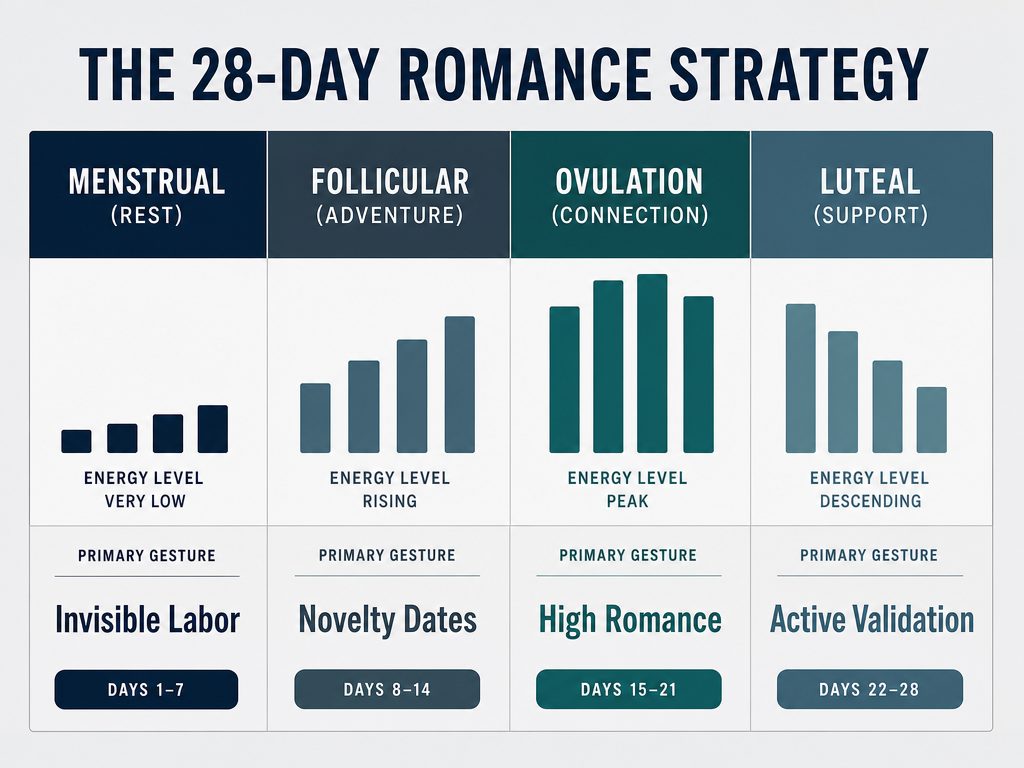 Aligning your romantic efforts with the four biological phases ensures your gestures are received with maximum appreciation and meet her current emotional capacity.
Table of Contents
- Why Your Relationship Runs on a 28-Day Biological Calendar
- Phase 1: The Menstrual Phase - Rest and Rebuild
- Phase 2: The Follicular Phase - The Green Light
- Phase 3: The Ovulation Phase - Peak Connection
- Phase 4: The Luteal Phase - The Support Window
- The "Period Pantry": A Tactical Stockpile for Men
- How to Talk About Tracking Her Cycle Without Being "That Guy"
- Frequently Asked Questions
Why Your Relationship Runs on a 28-Day Biological Calendar
Your girlfriend's body operates on a predictable 28-day hormonal loop that directly controls her energy levels, social appetite, and emotional bandwidth. Estrogen and progesterone rise and fall in four distinct phases, creating a biological rhythm that determines whether she's up for a weekend hiking trip or needs a quiet night at home. Understanding this cycle transforms you from a partner who reacts to mood shifts into one who anticipates needs before she has to ask.
The difference between proactive and reactive partnership isn't abstract. VibeCheck's 2026 research analyzing 2,800 active users found that couples using cycle-aware support reported a 41% reduction in unresolved conflict within the first month. That reduction comes from one simple shift: matching your romantic gestures to her current biological capacity instead of planning based on what worked last week.
VibeCheck App
Download Free on iOS →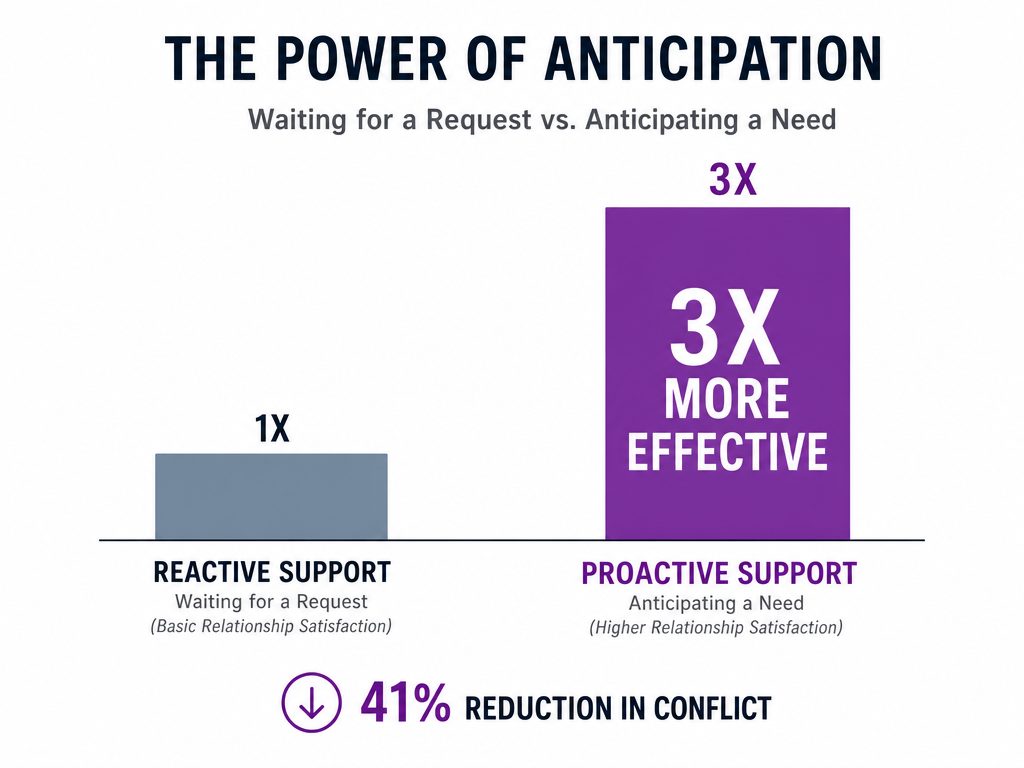 Research indicates that anticipating your partner's needs through cycle-awareness is significantly more impactful than responding only after she expresses discomfort or frustration.
Here's the reality most men miss: 1 in 7 women are menstruating at any given moment globally, according to Clue's 2024 data report. That means at any given time, roughly 14% of women are in their lowest-energy phase. If you're planning a surprise without knowing where she is in her cycle, you're rolling dice on whether she'll have the physical and emotional capacity to receive it. The stakes get higher when you consider that 70% of women experience premenstrual symptoms during the luteal phase - a 9-day window where sensitivity peaks and emotional regulation becomes harder.
The invisible calendar concept works like this: her body moves through four biological seasons every month. Menstrual phase (winter) is low energy, high discomfort, and minimal social appetite. Follicular phase (spring) brings rising energy and openness to novelty. Ovulation (summer) hits peak confidence and connection capacity. Luteal phase (fall) triggers sensitivity and need for validation. Each season requires a different romantic strategy.
The Four Seasons Framework
| Phase | Days | Hormonal State | Energy Level | Best Gesture Type | What to Avoid |
|---|---|---|---|---|---|
| Menstrual | 1-7 | Estrogen/Progesterone at baseline | Low | Comfort and rest (heating pads, dark chocolate, zero-decision nights) | High-energy activities, complex decisions, emotionally demanding conversations |
| Follicular | 8-12 | Rising estrogen | Rising | Adventure and novelty (new restaurants, hiking, big conversations) | Routine dates, repetitive patterns, staying home |
| Ovulation | 13-17 | Estrogen peak, testosterone spike | Peak | Intentional romance (dressing up, public affection, high-quality date nights) | Missed opportunities for connection, low-effort gestures |
| Luteal | 18-28 | Progesterone dominance | Declining | Validation and support (cozy home nights, "I've got it" scripts, comfort-first approach) | Unsolicited advice, logic-based solutions, criticism |
The tactical advantage here is simple: you can predict these phases using a basic period calculator or by tracking the start date of her last period. Once you know which season she's in, your romantic gestures can match her biological capacity instead of working against it.
Phase 1: The Menstrual Phase - Rest and Rebuild
The menstrual phase begins on day 1 of her period and lasts approximately 3-7 days. During this window, both estrogen and progesterone are at their lowest levels of the entire cycle, triggering physical symptoms like cramps, fatigue, and bloating in 88% of women according to VibeCheck's 2026 user survey. Her body is shedding the uterine lining, and the physical discomfort creates a biological need for rest and minimal decision-making.
The romantic strategy during this phase is "invisible labor" - handling tasks and creating comfort without requiring her participation or emotional bandwidth. This isn't about grand gestures. It's about removing friction from her day so she can focus on physical recovery. A heating pad delivered to the couch beats flowers. Dark chocolate stocked in advance beats a surprise dinner reservation. Taking over meal planning for the week beats asking "what do you want to eat?"
Tactical Gestures for the Menstrual Phase
Physical Comfort Items:
- Heating pad ready without her asking
- Dark chocolate (70% cacao or higher - clinical evidence shows it reduces inflammation)
- Ginger tea or supplements (PMC research from 2021 shows ginger is as effective as some NSAIDs for menstrual pain)
- Magnesium-rich snacks (almonds, spinach) to reduce cramping
- Extra pillows for support
Zero-Decision Support:
- Handle dinner without asking her preference
- Take over any scheduled errands or chores
- Cancel or postpone anything that requires her energy
- Queue up low-effort entertainment (comfort TV, not a new series that requires attention)
- Manage any social obligations so she can decline without guilt
Communication Scripts:
- "I picked up everything you need - just text if you want anything else."
- "I've got dinner handled. You rest."
- "I moved the thing we had planned to next week so you don't have to think about it."
The biggest mistake men make during this phase is trying to "cheer her up" with activities that require energy she doesn't have. A surprise date night sounds romantic but feels like a burden when she's dealing with cramps and fatigue. The gesture that lands during menstrual phase is the one that requires the least from her.
Phase 2: The Follicular Phase - The Green Light
The follicular phase runs from approximately day 8 to day 12 (after menstruation ends and before ovulation begins). Estrogen levels rise steadily during this window, triggering increased energy, optimism, and openness to new experiences. This is the biological green light - her body is priming for social engagement and novelty-seeking behavior. If you've been waiting to suggest a new restaurant, plan a weekend trip, or have a big conversation about the future, this is the phase where she'll have the mental and emotional bandwidth to engage.
The romantic strategy here is adventure and intentional novelty. Routine dates feel boring during follicular phase because her brain is biochemically wired to seek stimulation. The hiking trip that felt like too much effort during menstruation now sounds perfect. The new escape room or rock climbing gym registers as exciting instead of exhausting. This is the window where you want to introduce variety and break patterns.
High-Energy Date Ideas for Follicular Phase
Novelty-Based Activities:
- Rock climbing or bouldering gym (physical challenge + problem-solving)
- Escape room (collaboration under pressure)
- New restaurant in a neighborhood you've never explored
- Cooking class or wine tasting (learning something together)
- Weekend road trip to a nearby town (low stakes, high novelty)
Big Conversations:
- Future planning (moving in together, travel plans, long-term goals)
- Relationship check-ins (how we're doing, what's working)
- Career or life changes (her ambitions, your support)
Why It Works: Rising estrogen increases dopamine sensitivity, making new experiences feel more rewarding. A 2024 Clue user survey found that women report feeling most open to trying new things during the follicular phase. The same date idea that gets a "maybe" during luteal phase gets an enthusiastic "yes" during follicular.
The key tactical move is recognizing this phase as your planning window. If you're going to suggest something that requires coordination, energy, or emotional bandwidth, schedule it for follicular phase. Don't waste this biological green light on the same dinner-and-a-movie routine you default to every week.
Phase 3: The Ovulation Phase - Peak Connection
The ovulation phase spans approximately days 13-17 and represents the biological peak of the entire cycle. Estrogen hits its highest point, and testosterone spikes, creating a 48-72 hour window where confidence, physical energy, and social magnetism are at maximum capacity. A 2024 Clue user survey found that 60% of women report feeling most attractive and confident during this phase. This is when she's most likely to initiate social plans, dress up without prompting, and seek physical intimacy.
The romantic strategy during ovulation is intentional romance and desirability. This is the phase where high-effort gestures land hardest because her capacity to receive them is at its peak. The nice restaurant reservation she might decline during luteal phase becomes the perfect date during ovulation. The public hand-holding and physical affection that might feel performative during menstruation registers as genuine connection now. Her biological wiring is primed for pair-bonding and attraction reinforcement.
Peak Connection Gestures
High-Quality Date Nights:
- Upscale restaurant with ambiance (dim lighting, live music, intentional setting)
- Jazz club or rooftop bar (social environment where you can show her off)
- Concert or live performance (shared experience with emotional resonance)
- Weekend getaway planned in advance (maximize the entire ovulation window)
Attraction Reinforcement:
- Dress up yourself (she notices and it signals effort)
- Public displays of affection (hand-holding, arm around her, visible partnership)
- Verbal affirmation of her attractiveness (specific compliments, not generic)
- Initiate physical intimacy (libido is naturally higher during ovulation)
Why It Works: The testosterone spike during ovulation increases libido and desire for physical closeness. Research shows that women are biologically primed for partner attraction during this window - her body is signaling reproductive readiness, even if pregnancy isn't the goal. The practical translation: this is when your romantic efforts are amplified by biology instead of working against it.
The biggest opportunity cost during ovulation is missing the window entirely. If you default to a low-effort weekend at home during this phase, you're wasting the highest-capacity connection window of the month. Plan something that matches her peak energy and confidence.
Phase 4: The Luteal Phase - The Support Window
The luteal phase runs from approximately day 18 to day 28 (the longest phase of the cycle) and is driven by progesterone dominance. Progesterone triggers a biological shift toward nesting, introspection, and heightened sensitivity to stress and criticism. A 2024 Clue data report found that 70% of women experience premenstrual symptoms during this phase, including irritability, anxiety, and mood swings. For partners, this 9-day window (including the 5 days before menstruation starts) is where most relationship friction occurs - not because she's "difficult," but because her body is undergoing a biochemical shift that lowers her tolerance for conflict and increases her need for emotional validation.
The romantic strategy during the luteal phase is validation before solutions. The gestures that work here prioritize emotional support over problem-solving, comfort over novelty, and home-based activities over high-energy outings. This is the phase where saying "that sounds really frustrating" beats "here's how to fix it" by a wide margin. The goal is to reduce her cognitive and emotional load, not add to it.
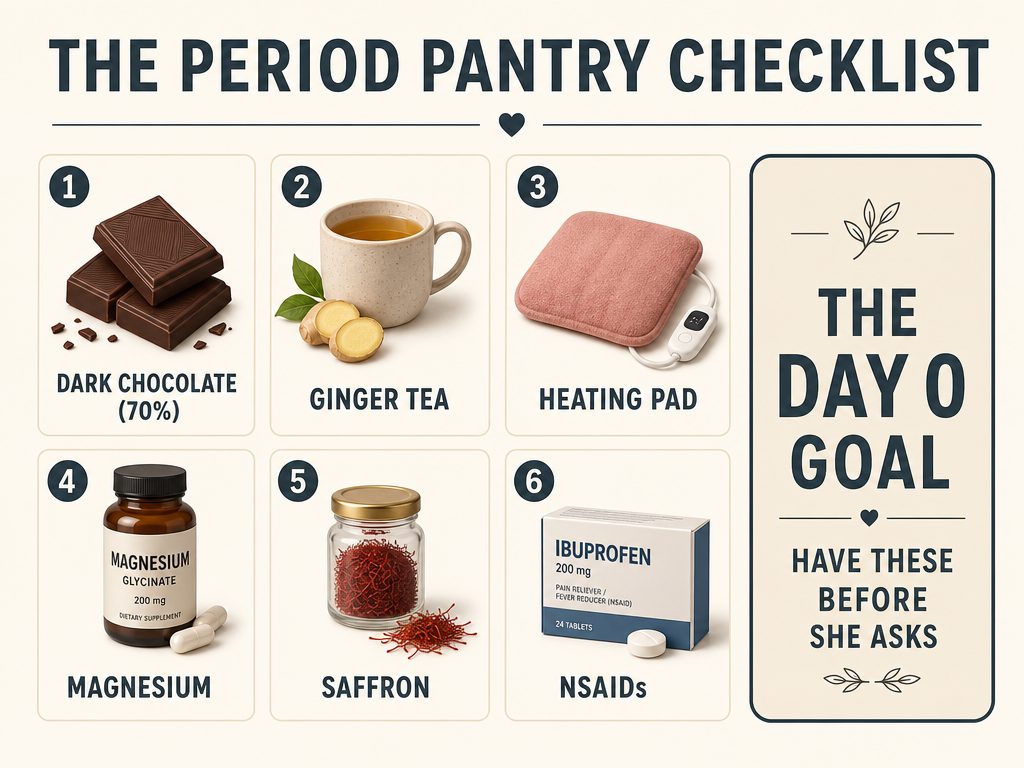 During the Luteal phase, shifting your focus from solving problems to validating her emotional experience is the most effective way to maintain relationship harmony.
The Validation vs. Fixing Framework
What NOT to Do:
- Offer unsolicited advice or solutions
- Minimize her feelings ("it's not that bad")
- Point out logical inconsistencies in her concerns
- Suggest she's overreacting or being too sensitive
- Add to her to-do list with requests or plans
What DOES Work:
- Validate her emotional experience first: "That sounds really hard."
- Ask "what do you need right now?" instead of assuming
- Handle tasks without being asked (dishes, errands, meal prep)
- Offer low-energy comfort (cozy home night, her favorite takeout, no-decision entertainment)
- Give her space if she withdraws (it's biology, not rejection)
Tactical Scripts for Luteal Phase
When she expresses frustration or stress:
- "That makes total sense. Do you want to talk through it or just vent?"
- "I hear you. That's a lot to deal with."
- "I've got [specific task]. You don't need to think about it."
When planning anything:
- "I know you've been tired. Want to just stay in this weekend?"
- "I'll handle dinner tonight - what sounds good, or should I surprise you?"
- "If you need to cancel [plans], we can move it. No pressure."
When she withdraws or seems irritable:
- "I'm here if you need anything, but I'll give you space."
- Don't take it personally (progesterone increases sensitivity - it's biochemistry)
The tactical advantage during luteal phase is understanding that she's not pushing you away - she's managing a hormonal shift that makes emotional regulation harder. Research from the International Association for Premenstrual Disorders shows that 3-9% of women suffer from PMDD (Premenstrual Dysphoric Disorder), a severe clinical condition that requires medical intervention. For the 70% experiencing standard PMS symptoms, the support that works is emotional validation combined with reduced demands on her time and energy.
For more specific guidance on navigating the luteal phase, including communication scripts that reduce conflict by 58%, see our dedicated luteal phase support guide.
The "Period Pantry": A Tactical Stockpile for Men
The "Period Pantry" is a pre-stocked collection of physical items and comfort tools that you maintain before her cycle starts, eliminating the need for her to ask or for you to scramble during the menstrual phase. Building this pantry in advance is a high-leverage romantic gesture because it demonstrates foresight, removes decision-making burden, and signals that you're paying attention to her needs before they become urgent.
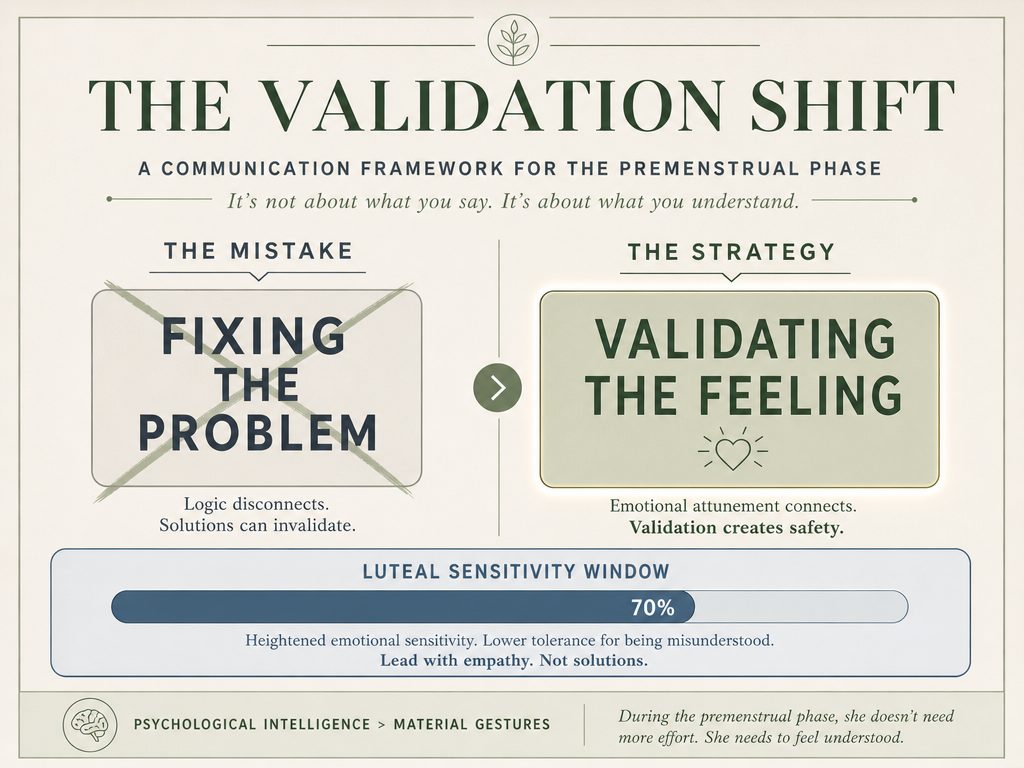 Building a 'Period Pantry' is a high-leverage romantic gesture that demonstrates foresight and a deep commitment to her physical well-being before the cycle begins.
Essential Pantry Items
Pain Management:
- NSAIDs (ibuprofen or naproxen) - keep a full bottle stocked
- Heating pad (electric, microwaveable, or reusable)
- Ginger supplements or fresh ginger for tea (PMC research shows ginger is as effective as some NSAIDs for menstrual pain)
- Magnesium supplements or magnesium-rich foods (almonds, dark leafy greens)
Comfort Foods:
- Dark chocolate (70% cacao or higher reduces inflammation)
- Herbal teas (chamomile, peppermint, ginger)
- Salt-based snacks (if she craves them - progesterone increases salt cravings)
- Easy meals that require zero prep (frozen options, meal kit ingredients)
Physical Comfort:
- Extra-soft blankets or weighted blanket
- Comfortable loungewear in her size (already washed and ready)
- Unscented or lightly scented candles (strong scents can trigger nausea)
Hygiene & Self-Care:
- Her preferred period products (tampons, pads, menstrual cup) - ask what she uses
- Face masks or bath products (low-effort self-care options)
- Unscented lotion (hormone fluctuations can increase skin sensitivity)
The tactical move here is setting up this pantry before you need it. Don't wait until she's in pain and asking for ibuprofen to realize you're out. Stock it once, maintain it monthly, and you've permanently removed one source of friction from the most difficult phase of her cycle.
For men looking to track their partner's cycle more systematically, period tracking apps designed for partners can send you reminders to restock the pantry before her menstrual phase begins.
How to Talk About Tracking Her Cycle Without Being "That Guy"
The biggest fear men have when considering cycle tracking is that it comes across as surveillance, control, or reducing her to her hormones. That fear is valid - framing matters. The difference between supportive tracking and invasive tracking is consent and communication. Before you download any app or start noting dates, you need to have a direct conversation that positions tracking as a tool for better support, not a system for managing her moods.
The Permission Script (Use This Verbatim)
"I've been reading about how the menstrual cycle affects energy and mood, and I realized I've probably been planning things at the wrong times or missing when you needed more support. Would it be helpful if we tracked your cycle together so I can anticipate when you might need space or when you're up for bigger plans? I want to be better at supporting you without you having to explain everything every time."
Why This Works:
- Uses "we" language (partnership, not surveillance)
- Names the benefit to her (better support, less explaining)
- Frames it as your responsibility to improve (not her problem to manage)
- Asks for permission instead of announcing a plan
- Acknowledges past mistakes without blame
If She Says No
Respect it. Some women don't want their partner tracking their cycle because it feels invasive or because they prefer to manage it privately. If she declines, your alternative is learning to recognize cycle phases through behavioral cues instead of tracking dates - energy shifts, social appetite changes, and mood patterns are observable without needing her to share specific data.
If She Says Yes
Ask these follow-up questions:
- "Do you already track it yourself, or should we start fresh?"
- "Are there specific things you'd want me to do during certain phases, or should I just pay attention and ask?"
- "Is there anything I should avoid bringing up related to your cycle?"
The consent-first model eliminates the "creepy boyfriend tracking my period" problem and reframes tracking as a shared tool for better communication. Research from VibeCheck shows that couples who discuss cycle tracking as a partnership tool before implementing it report 41% less friction than couples where one partner tracks unilaterally.
For a detailed breakdown of which period tracking apps support partner mode, including privacy settings and what data each app shares, see our comprehensive app comparison guide.
What Are Some Romantic Gestures for Men?
Romantic gestures for men fall into three categories: physical comfort (things you provide), emotional validation (things you say), and intentional effort (things you plan). The most effective gestures are phase-specific - what works during ovulation (high-energy date night) fails during menstruation (low-energy rest). The goal is matching your romantic effort to her current capacity instead of defaulting to generic gestures that ignore her biological rhythm.
High-Value Gestures by Phase:
| Phase | Physical Gestures | Emotional Gestures | Planning Gestures |
|---|---|---|---|
| Menstrual | Heating pad, dark chocolate, handling chores | "I've got it - you rest" | Cancel plans so she doesn't have to |
| Follicular | Plan a new restaurant, suggest a weekend trip | "What do you want to try next?" | Book an activity she's mentioned |
| Ovulation | Dress up for a date, public affection | Specific compliments, verbal affirmation | High-quality date night with intentional setting |
| Luteal | Cozy home setup, comfort food delivery | "That sounds frustrating" (validation first) | Handle tasks without her asking |
The tactical advantage is recognizing that romantic gestures aren't one-size-fits-all. The surprise flowers that delight her during follicular phase might feel like extra work during luteal phase if she's already overwhelmed. Timing transforms generic gestures into targeted support.
How to Support Girlfriend During Menstrual Cycle?
Supporting your girlfriend during the menstrual cycle means matching your actions to her current biological phase instead of treating the entire month as one static state. The most effective support is proactive - anticipating needs before she has to ask - and phase-specific. During menstruation, prioritize physical comfort and zero-decision support. During the follicular phase, suggest novelty and adventure. During ovulation, create opportunities for connection and romance. During the luteal phase, provide emotional validation and reduce her cognitive load.
Phase-by-Phase Support Breakdown:
Menstrual Phase (Days 1-7):
- Handle meals, errands, and chores without asking her preference
- Stock comfort items (heating pad, dark chocolate, pain relief) in advance
- Cancel or postpone plans that require her energy
- Avoid emotionally demanding conversations or complex decisions
Follicular Phase (Days 8-12):
- Suggest new activities or restaurants she's mentioned
- Plan weekend trips or adventures with novelty
- Have big conversations about the future (she has the bandwidth now)
- Match her rising energy with higher-effort plans
Ovulation Phase (Days 13-17):
- Plan high-quality date nights with intentional settings
- Dress up yourself and create opportunities for physical closeness
- Give specific compliments and verbal affirmation
- Don't waste this high-capacity window on routine dates
Luteal Phase (Days 18-28):
- Validate her feelings before offering solutions
- Reduce demands on her time and energy
- Offer low-effort comfort (cozy nights in, comfort food)
- Give her space if she withdraws (it's progesterone, not rejection)
The biggest mistake men make is treating the entire cycle like one continuous state. Your girlfriend during ovulation has completely different needs and capacities than your girlfriend during the luteal phase. Research from VibeCheck found that men who adjust their support based on cycle phase report 58% less relationship friction compared to men who use the same approach all month.
For specific scripts and tactical missions for each phase, including what to say during conflict and how to time important conversations, see our complete cycle support guide.
How to Make a Partner Happy During Periods?
Making your partner happy during her period requires shifting from high-effort romantic gestures to low-effort physical comfort and invisible labor. The menstrual phase (days 1-7) is characterized by low energy, physical discomfort, and minimal tolerance for decisions or demands. What makes her happy during this window is anything that reduces friction in her day and allows her to rest without guilt. The gestures that land during menstruation are the ones she doesn't have to participate in or manage.
Tactical Support During Menstruation:
- Deliver a heating pad to wherever she's resting without her asking
- Handle all meals without requiring her input on what she wants
- Stock dark chocolate and ginger tea in advance (both reduce inflammation and pain)
- Take over any errands or chores scheduled for the next 3-7 days
- Queue up low-effort entertainment (comfort TV she's already seen, not new shows requiring attention)
- Avoid suggesting plans that require her to leave the house or make decisions
What NOT to Do:
- Suggest activities that require energy (hiking, dinner out, social events)
- Ask her to make decisions about meals, plans, or anything requiring mental bandwidth
- Minimize her discomfort ("it's not that bad") or compare it to your own experiences
- Bring up emotionally complex topics or relationship issues during this phase
The scientific reality backing this approach: 88% of women experience physical discomfort during menstruation according to VibeCheck's 2026 user survey, including cramps, bloating, fatigue, and back pain. That discomfort creates a biological need for rest, not stimulation. Clinical research from PMC shows that over 50% of women report painful periods (dysmenorrhea) at some point in their lives, with intensity ranging from mild to debilitating.
The tactical move during menstruation is recognizing that "making her happy" looks different than it does during ovulation or follicular phase. The surprise date night that would thrill her during peak energy becomes a burden during menstruation. Happiness during this phase comes from reduced demands, physical comfort, and your ability to handle logistics without requiring her participation.
For men struggling with when their girlfriend seems distant or withdrawn during her period, understanding that it's a biological state - not relationship rejection - eliminates most of the confusion and prevents unnecessary conflict.
How to Handle Mood Swings of a Girl During Periods as a Boyfriend?
Handling your girlfriend's mood swings during her period requires understanding that you're witnessing a biological event, not a personality flaw or relationship problem. The luteal phase (days 18-28) and the first few days of menstruation are driven by progesterone dominance and a serotonin crash, which lowers emotional regulation capacity and increases sensitivity to stress and criticism. The tactical response is validation before solutions - acknowledging her emotional experience as real and difficult instead of trying to logic her out of it or minimize what she's feeling.
The Triple-A Framework for Mood Swings:
1. Acknowledge (Don't Minimize): When she's frustrated, irritated, or upset, your first response should validate the emotional state without questioning whether it's "reasonable."
- "That sounds really frustrating."
- "I hear you. That's a lot to deal with."
- "That makes total sense given everything you've got going on."
2. Ask (Don't Assume): After validating, ask what she needs instead of jumping to solutions or advice.
- "Do you want to talk through it, or just vent?"
- "What would be most helpful right now?"
- "Is there anything I can do, or do you need space?"
3. Act (With Permission): Only after you've validated and asked should you take action - and only if she's requested it.
- If she wants space: give it without taking it personally
- If she wants support: offer specific help (handle dinner, take over a task)
- If she wants to vent: listen without trying to fix the situation
What Triggers Escalation:
- Pointing out logical inconsistencies in her concerns
- Saying "you're being too sensitive" or "it's just your period"
- Offering unsolicited advice or solutions before she asks
- Bringing up past conflicts or unrelated issues during this window
- Taking her irritability as a personal attack instead of a biological state
The clinical context: a 2024 Clue data report found that 70% of women experience premenstrual symptoms including mood swings, irritability, and anxiety. For 3-9% of women, these symptoms cross into PMDD (Premenstrual Dysphoric Disorder), a clinical condition that requires medical treatment. For the majority experiencing standard PMS, the mood swings are driven by a serotonin and dopamine crash as progesterone peaks and then drops before menstruation.
The most common mistake is treating her mood swings as something she can control or as evidence of relationship problems. Progesterone increases emotional sensitivity - meaning things that normally wouldn't bother her register as more stressful. Your job as a partner isn't to "fix" her mood or convince her she's overreacting. It's to provide a stable, validating presence while her hormones reset.
For a comprehensive breakdown of how to navigate the luteal phase without triggering conflict, including specific scripts that reduce friction by 58%, see our tactical luteal phase field guide.
Frequently Asked Questions
What is the 3 6 9 rule in dating?
The 3-6-9 rule in dating is a courtship timeline suggesting that couples reach key relationship milestones at 3 months (exclusivity decision), 6 months (first major conflict or compatibility test), and 9 months (long-term viability assessment). While this rule originated as a rough guideline for pacing early relationships, it has no biological or psychological basis tied to the menstrual cycle. For men looking to improve relationship timing based on actual biological rhythms, understanding the 28-day hormonal cycle is far more actionable than arbitrary month-based milestones. The real pattern to track is her four biological phases, which repeat every month and directly affect her energy, mood, and capacity for connection.
What is the 7 7 7 rule for couples?
The 7-7-7 rule for couples is a relationship maintenance guideline suggesting that partners should go on a date every 7 days, take an overnight trip every 7 weeks, and plan a week-long vacation every 7 months to maintain connection and novelty. While this rule provides a useful framework for intentional planning, it doesn't account for her biological rhythm. A more effective adaptation is timing your "7-day date" to her follicular or ovulation phases (days 8-17) when her energy and social capacity are highest, and scheduling low-effort quality time during her menstrual or luteal phases (days 1-7 and 18-28) when she needs support over stimulation.
What is the 3-3-3 rule for intimacy?
The 3-3-3 rule for intimacy is a communication framework suggesting that partners should share 3 things they appreciate about each other, 3 things they want to improve together, and 3 future goals at regular intervals to maintain emotional closeness. This rule can be cycle-optimized by timing these deeper conversations for the follicular phase (days 8-12) when she has the emotional bandwidth for reflection and future planning, rather than during the luteal phase (days 18-28) when she's more sensitive to criticism and less receptive to problem-solving discussions. Matching intimacy-building conversations to her biological rhythm increases success rates and reduces the risk of triggering conflict.
What are some romantic gestures for men?
Romantic gestures for men include physical comfort gestures (heating pads, dark chocolate, handling chores), emotional validation gestures (specific compliments, active listening without solutions), and planning gestures (surprise date nights, weekend trips, taking over logistics). The most effective romantic gestures are phase-specific: during menstruation (days 1-7), prioritize low-effort comfort like delivering a heating pad and handling meals without her input; during the follicular phase (days 8-12), plan adventure-based dates like new restaurants or hiking; during ovulation (days 13-17), create high-quality romantic moments like upscale dinners or concerts; during the luteal phase (days 18-28), offer validation and reduce her cognitive load by handling tasks without being asked. Research from VibeCheck found that men who match romantic gestures to biological phases report 3x higher satisfaction from their efforts compared to men using the same gestures all month.
What is the 7 2 1 rule for menstruation?
The 7-2-1 rule for menstruation is not a widely recognized framework in medical or relationship literature. If you're looking for a tactical support rule for partners, a more useful framework is the "9-day support window" - the 5 days before menstruation begins (late luteal phase) plus the first 4 days of menstruation itself. During this 9-day window, 70% of women experience premenstrual symptoms and physical discomfort, making it the highest-priority phase for proactive partner support. The tactical approach during this window is: validate her emotional experience, reduce her decision-making load, and stock comfort items in advance without waiting for her to ask.
How to support girlfriend during menstrual cycle?
Supporting your girlfriend during her menstrual cycle requires matching your actions to her current biological phase instead of using the same approach all month. During menstruation (days 1-7), prioritize physical comfort by stocking heating pads, dark chocolate, and pain relief in advance while handling chores and meals without requiring her input. During the follicular phase (days 8-12), suggest new activities and adventures that match her rising energy and openness to novelty. During ovulation (days 13-17), plan high-quality date nights and create opportunities for romance and physical connection. During the luteal phase (days 18-28), provide emotional validation before offering solutions, reduce demands on her time, and give her space if she withdraws. Research from VibeCheck found that cycle-aware support reduces relationship conflict by 41% within the first month compared to generic support approaches.
How to make a partner happy during periods?
Making your partner happy during her period requires shifting from high-effort romantic gestures to low-effort physical comfort and invisible labor. During menstruation (days 1-7), 88% of women experience physical discomfort including cramps, bloating, and fatigue according to VibeCheck's 2026 survey, which creates a biological need for rest rather than stimulation. The gestures that work during this phase include delivering a heating pad without being asked, handling all meals and errands without requiring her input, stocking dark chocolate and ginger tea in advance, and avoiding plans that require her to leave the house or make decisions. The key is reducing friction in her day and allowing her to rest without guilt, rather than trying to "cheer her up" with activities that require energy she doesn't have.
How to handle mood swings of a girl during periods as a boyfriend?
Handling your girlfriend's mood swings during her period requires understanding that progesterone dominance and a serotonin crash lower her emotional regulation capacity, making her more sensitive to stress and criticism. The tactical response is the Triple-A Framework: Acknowledge her emotional experience without minimizing it ("That sounds really frustrating"), Ask what she needs instead of assuming ("Do you want to talk through it or just vent?"), and Act only with permission (give space if requested, offer specific help if asked). Avoid pointing out logical inconsistencies, saying "you're being too sensitive," or offering unsolicited advice before she asks. Research from Clue's 2024 data report shows that 70% of women experience premenstrual symptoms including irritability and anxiety, and for 3-9%, these symptoms cross into PMDD (Premenstrual Dysphoric Disorder), requiring medical treatment. Your role is providing a stable, validating presence while her hormones reset, not trying to logic her out of the mood swings or taking them as personal attacks.
Tags

Related Articles
Continue reading to deepen your understanding

Understanding Why Your Girlfriend’s Communication Style Shifts Weekly
Ever wonder why your partner’s moods and energy levels shift so much? Understanding the four phases of her menstrual cycle helps you become a more supportive and proactive partner.

When Do Your Girlfriend’s Energy Levels Change During Her Cycle?
Your girlfriend’s mood and stamina follow a biological rhythm. Learn how her energy peaks and crashes throughout the month so you can plan better dates and provide better support.

Why Your Girlfriend Needs Different Attention Each Week: The Four Seasons Framework
Stop walking on eggshells and start understanding her cycle. This framework shows you exactly how to support your girlfriend through all four biological phases every month.

Why Your Girlfriend Wants Space the Week Before Her Period
Does your girlfriend suddenly pull away every month? Discover the biological reasons behind the pre-period space window and how to navigate this phase together.

Why Your Girlfriend Wants Different Kinds of Affection at Different Times in Her Cycle
Ever feel like your girlfriend’s needs change every week? It’s not random. Understand how the four phases of her cycle drive her desire for intimacy so you can support her better.

How to Plan Romantic Gestures by Cycle Timing: The Partner’s Tactical Guide
Stop guessing why your date night plans fell flat. This guide explains how to synchronize your romantic efforts with her biological cycle for better intimacy and connection.

How to Tell When Your Girlfriend Is Ovulating: Reading the Biological Signals Your Partner Sends
Understanding your partner’s cycle helps you anticipate her needs and time important conversations. Learn the behavioral signs of ovulation to improve your relationship and connection.

Understanding Your Girlfriend’s Words of Affirmation Cycle: A Partner’s Guide
Ever feel like your compliments land wrong? Her need for words of affirmation isn’t random—it follows a biological rhythm. Learn how to match your support to her internal hormonal seasons.