How to Comfort Your Girlfriend During a Hormonal Headache (Without Medication)

When she’s in pain from a menstrual migraine, medicine isn’t always her first choice. Support her with sensory environment audits, physical care, and clinically backed kitchen remedies.
How to Comfort Your Girlfriend During a Hormonal Headache (Without Medication)
When she's lying in bed with the lights off, barely able to open her eyes, you're standing in the doorway wondering what the hell you can do to help. You've already offered painkillers, water, and a quiet place to rest. But what if she's not looking for medication right now? What if she wants comfort, not chemistry?
Hormonal headaches - also called menstrual migraines - hit differently than regular tension headaches. They're tied to a sharp drop in estrogen that happens in a predictable window around her period. At least 60% of people who have a period and experience migraines report them happening around their menstrual cycle, and the pain can range from a dull ache to a debilitating throb that makes light, sound, and even your voice feel like an assault.
This guide will show you exactly what to do in the first five minutes, how to set up her environment for relief, which natural remedies actually have clinical backing, and how to prevent the next one from hitting as hard. You'll learn the difference between acute comfort measures (what works now) and preventative strategies (what reduces frequency and severity over time). Most importantly, you'll understand why timing matters - and how to become the partner who anticipates her needs before she has to ask.
Table of Contents
- What Is a Hormonal Headache and How Is It Different?
- How to Tell if a Headache Is from Hormones
- The First 5 Minutes: Immediate Silent Support
- The Sensory Audit: Create a Healing Environment
- Physical Comfort Measures That Work
- Natural Kitchen Remedies with Clinical Backing
- The Task Rabbit Strategy: Remove the Mental Load
- Prevention: The Long Game
- When to Stop Natural Care and Call a Doctor
- Frequently Asked Questions
What Is a Hormonal Headache and How Is It Different?
A hormonal headache isn't just "she's stressed" or "she slept badly." It's a physiological response to a rapid drop in estrogen that happens in the days surrounding her period. Menstrual migraines typically occur in the window from 2 days before the period starts to the 3rd day of flow.
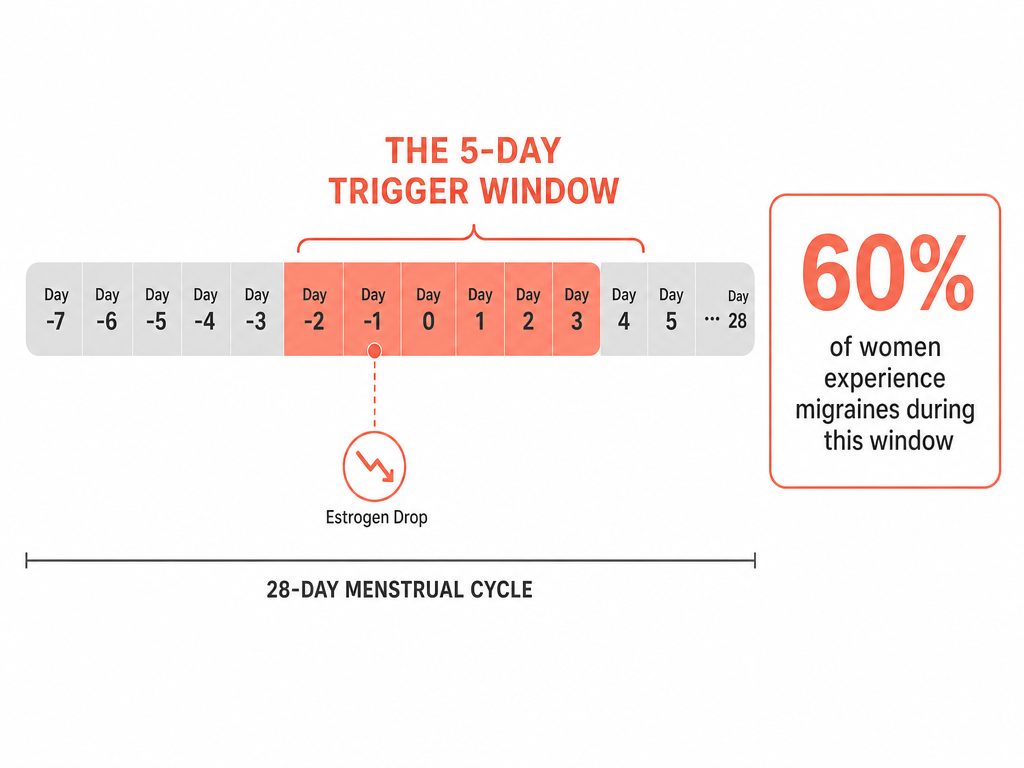 Understanding the 'Estrogen Drop' window helps you predict when a hormonal headache is likely to strike, allowing for proactive care before the pain peaks.
This isn't a regular tension headache where her neck is tight from hunching over a laptop. This is a migraine: throbbing, often one-sided, accompanied by nausea, light sensitivity, and sound sensitivity. The pain can be so severe that movement makes it worse. Some women describe it as "someone driving a spike through my temple" or "my brain is trying to escape my skull."
The key difference is the trigger. While stress, dehydration, and lack of sleep can all cause headaches, a hormonal migraine is driven by the body's natural estrogen withdrawal. Estrogen affects many body systems, including brain function and the ability to focus, and levels are highest in the days leading up to ovulation. When estrogen crashes right before menstruation, blood vessels in the brain react - and the result is pain.
VibeCheck App
Download Free on iOS →Understanding this timing allows you to anticipate the storm. If her period typically starts on day 28 of her cycle, the danger window is roughly days 26 through 31. That's when you shift from regular boyfriend mode to proactive support mode.
How to Tell if a Headache Is from Hormones
Not every headache your girlfriend gets is hormonal. So how do you tell the difference?
Timing is the first clue. If the headache consistently shows up in the same window each month - usually 2 days before her period through the first 3 days of bleeding - it's likely hormonal. The menstrual cycle has four phases: menstrual (bleeding, approximately day 1-5), follicular (day 1 through ovulation, estrogen rising), ovulation (around day 14 in a 28-day cycle), and luteal (after ovulation to the next period, progesterone rising then falling). The follicular and menstrual phases overlap. Hormonal headaches strike during the transition from the luteal phase to the menstrual phase, when both estrogen and progesterone drop sharply.
Severity and associated symptoms are the second clue. A tension headache feels like a tight band around the head. A hormonal migraine is typically one-sided, throbbing, and made worse by movement. She might also experience nausea, vomiting, sensitivity to light and sound, and visual disturbances (like seeing spots or flashing lights).
Pattern recognition is the third clue. Tracking your own (or a partner's, with her participation) symptoms and mood changes across the cycle for a few months is a legitimate, medically endorsed way to identify real patterns and timing. If you notice the headaches cluster around the same cycle days for three months in a row, you've found your pattern.
If she's already using a period tracker app, look at the symptom log. If she isn't, consider suggesting one - or use a period calculator to map her next few cycles and start noting when headaches appear.
The First 5 Minutes: Immediate Silent Support
When a hormonal migraine hits, your first instinct might be to ask questions: "What do you need?" "Should I get you medicine?" "Do you want me to stay or go?"
Stop. Don't make her think or talk. Her brain is already under siege.
Here's what to do instead:
1. Create the Void. Walk into the room and immediately start reducing sensory input. Close the blinds or curtains to block out light. Turn off overhead lights. If there's a TV or music playing, turn it off. Lower the temperature if possible - cool air can help reduce inflammation and provide relief.
2. Bring water and electrolytes without asking. Fill a large glass with cold water or make a cup of herbal tea (ginger or peppermint work well). Place it on her nightstand with a straw if she has one. Don't wait for her to request it. Dehydration worsens migraines, and she may not have the mental bandwidth to ask.
3. Offer a cold compress. Grab a clean washcloth, run it under cold water, wring it out, and fold it. Place it gently on her forehead or the back of her neck. Applying cold packs to the head/neck for 15 minutes is recommended to avoid skin irritation or rebound pain. If you have an ice pack in the freezer, wrap it in a thin towel and use that instead.
4. Whisper or write. If you need to communicate, speak in a low, soft voice or write a note. "I'm here. Do you need anything else?" is enough. Don't narrate what you're doing. Just do it.
5. Leave the room if she wants space. Some women need complete isolation during a migraine. If she closes her eyes and turns away, that's your cue to step out quietly. Leave the door slightly open so she can call for you if needed.
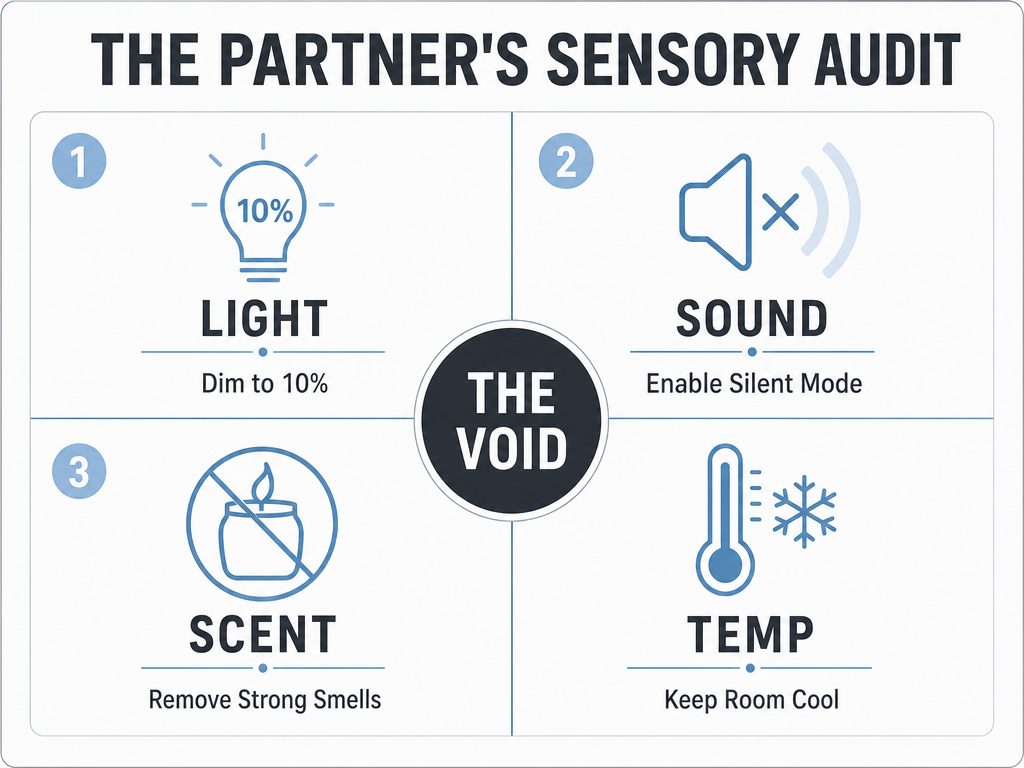 Performing a sensory audit creates a 'void' environment that minimizes external triggers, providing immediate natural relief for your partner during a migraine.
The Sensory Audit: Create a Healing Environment
Once the immediate crisis is managed, it's time to conduct a full sensory audit. Your goal is to eliminate every possible trigger that could make her headache worse.
Light: Even dim light can feel like a laser when you're in the middle of a migraine. If you have blackout curtains, use them. If not, use towels or blankets to block gaps around windows. Turn off all screens - TV, laptop, phone. If she needs to use her phone for any reason, set it to the lowest brightness and enable night mode or a blue light filter.
Sound: Silence is medicine. Turn off the TV, mute your phone, and ask anyone else in the house (kids, roommates) to keep noise to a minimum. If you live in a noisy area, consider using a white noise machine or a fan to create a consistent, low hum that masks jarring sounds.
Smell: Strong scents - cooking smells, perfume, air fresheners, scented candles - can trigger or worsen a migraine. Before she even tells you, remove any strong-smelling items from the room. If you've been cooking something pungent (garlic, onions, fish), open windows in the kitchen and close the bedroom door.
Temperature: Cool environments tend to provide relief. If it's warm, turn on a fan or adjust the thermostat. If she's cold, offer a light blanket but keep the room itself cool.
Touch: Unless she specifically asks for it, avoid touching her. Even a well-meaning hand on the shoulder can feel overwhelming when every nerve ending is on fire.
This audit takes two minutes and can dramatically reduce the intensity of her pain. Think of it as setting up a recovery pod - a space designed for one purpose: healing.
Physical Comfort Measures That Work
Natural relief doesn't mean ineffective relief. Several physical interventions have clinical backing for reducing migraine pain.
Cold Compress to the Neck and Temples
We already covered this in the first five minutes, but it bears repeating: cold therapy works. Applying cold packs to the head/neck for 15 minutes is recommended to avoid skin irritation or rebound pain. The cold constricts blood vessels, which can reduce the throbbing sensation.
How to do it right:
- Use a clean, damp washcloth soaked in cold water, or an ice pack wrapped in a thin towel.
- Apply it to the base of her neck, her forehead, or her temples - wherever she says it feels best.
- Leave it on for 15 minutes, then remove it for at least 15 minutes before reapplying.
- Don't apply ice directly to the skin. This can cause frostbite or rebound vasodilation (when blood vessels rapidly expand after being constricted, making the headache worse).
Hydration + Electrolytes
Dehydration is a common migraine trigger, and many women don't drink enough water when they're in pain. Bring her water or herbal tea regularly - every 30 to 60 minutes if she's awake. Add a pinch of salt or a squeeze of lemon to plain water to help with electrolyte balance.
Avoid caffeine unless it's already part of her routine. Some sources recommend a small amount of caffeine to constrict blood vessels, but if she doesn't normally drink coffee or tea, introducing it during a migraine can backfire.
Gentle Massage (Only If She Asks)
If she requests it, a very light scalp, neck, or jaw massage can provide relief. Focus on the muscles at the base of the skull, the temples, and the jaw (which often tenses during a migraine).
Use minimal pressure. Think "feather touch," not deep tissue. If she winces or pulls away, stop immediately.
Important: Never suggest a massage unprompted. Many migraine sufferers find touch unbearable during an attack. Let her ask for it.
For more on how to support your girlfriend during different cycle phases, check out our guide on how to comfort your girlfriend during PMS.
Natural Kitchen Remedies with Clinical Backing
Not all natural remedies are created equal. Some have solid research behind them. Others are internet folklore. Here are the ones that actually matter.
Ginger Tea for Nausea
Ginger has been shown in some studies to be as effective as some NSAIDs for pain reduction (approx 1,000 mg dose). It's particularly helpful if she's experiencing nausea or vomiting alongside the headache.
How to make it:
- Slice fresh ginger root (about 1 inch) into thin pieces.
- Boil in 2 cups of water for 10 minutes.
- Strain and serve warm. Add honey or lemon if she wants it.
If you don't have fresh ginger, ginger tea bags work too. Avoid ginger ale - it's loaded with sugar and doesn't contain enough actual ginger to make a difference.
Magnesium-Rich Snacks (If She Can Eat)
Magnesium plays an important role in headache management. If she's able to eat, offer small, magnesium-rich snacks:
- A handful of pumpkin seeds
- A few squares of dark chocolate (higher cacao content)
- A banana
- A small portion of almonds or cashews
Don't push food if she's nauseous. The goal is to offer, not force.
Peppermint or Lavender (Use With Caution)
Essential oils are controversial for migraines. Some people find peppermint or lavender soothing; others find any scent triggers or worsens their pain. Ask before applying. If she's interested, dilute a drop of peppermint or lavender oil in a carrier oil (like coconut or olive oil) and gently massage it into her temples or the back of her neck.
Never apply undiluted essential oils directly to the skin. And never use strong-smelling oils in a diffuser during an active migraine - the scent can be overwhelming.
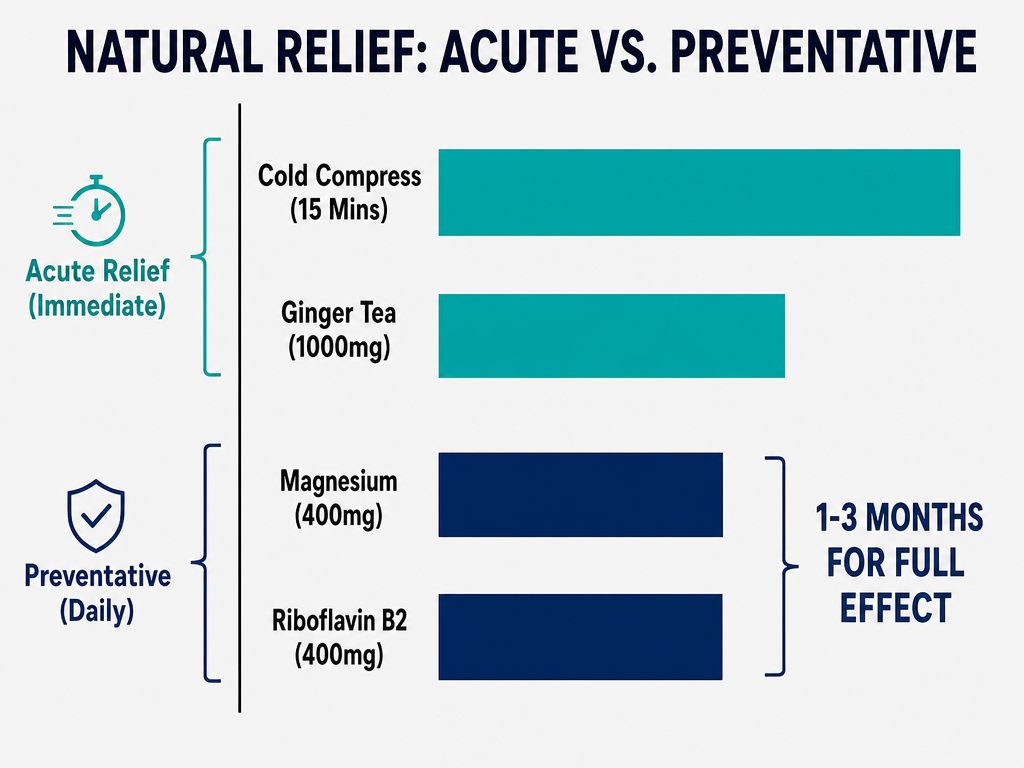 While cold packs and ginger provide immediate relief, daily supplements like Magnesium and B2 are long-term strategies that require consistency to reduce headache frequency.
The Task Rabbit Strategy: Remove the Mental Load
The most underrated natural remedy for a hormonal headache is this: take everything off her plate.
When she's in pain, every decision - even small ones - becomes exhausting. "What's for dinner?" "Did you walk the dog?" "Can you text your mom back?" These aren't just questions. They're mental tasks she now has to solve while her brain is already under siege.
Here's your Task Rabbit checklist:
1. Handle dinner. Cook something simple, order takeout, or make a meal that requires zero input from her. Don't ask what she wants. Just handle it.
2. Manage the household noise. If you have kids, take them out of the house for a few hours. If you have a dog that barks, take it for a long walk. If there's laundry to fold or dishes to wash, do it quietly in another room.
3. Be the communication gatekeeper. If her phone is buzzing with texts or calls, offer to check it for her and respond to anything urgent. "She's resting right now, I'll have her call you back later" is a perfectly acceptable response.
4. Don't ask her to make decisions. "Do you want soup or pasta?" is a question. "I made you soup, it's on the nightstand" is a solution. Choose the latter.
5. Anticipate needs before she asks. Refill her water glass before it's empty. Bring a fresh cold compress before the current one gets warm. Check in quietly every hour without making her explain how she feels.
 The most effective natural remedy is often the removal of stress. Use this strategy to handle the 'mental load' so your partner can focus on recovery.
This strategy doesn't just reduce her stress - it actively lowers cortisol, which can worsen migraine pain. Lifestyle approaches that can help ease PMS symptoms include regular aerobic exercise, smaller/more frequent meals, less salt/caffeine/alcohol, adequate sleep, and stress-reduction practices like deep breathing or yoga. A partner who understands these and is patient/supportive around them is aligning with medically recommended self-care.
For more on reducing stress during her cycle, see our guide on how to help your girlfriend during period mood swings.
Prevention: The Long Game
Comforting her during a migraine is critical. Preventing the next one is even better.
Prevention isn't about quick fixes. It's about consistent, month-long strategies that reduce the frequency and severity of hormonal headaches over time.
Help Her Track Her Cycle
If she isn't already tracking her period, now is the time to start. Tracking your own (or a partner's, with her participation) symptoms and mood changes across the cycle for a few months is a legitimate, medically endorsed way to identify real patterns and timing.
Popular apps include Flo, Clue, and our own period calculator. The goal is to identify her personal danger window - the 5-day stretch when migraines are most likely to hit. Once you know that window, you can take preventative steps (see below) and avoid scheduling high-stress events during that time.
Stock the Cabinet with Verified Supplements
Two supplements have solid research backing for migraine prevention:
Magnesium oxide (400 mg daily): Magnesium oxide (400 mg) taken daily can help prevent hormonal migraine frequency and severity. This isn't a "take it when you feel a headache coming" supplement. It's a daily preventative that needs to be taken consistently for several months to show results.
Riboflavin (Vitamin B2) (400 mg daily): Riboflavin (Vitamin B2) at a dose of 400 mg daily requires at least 1-3 months of consistent use to show preventative effects. Like magnesium, this is a long-term strategy, not an acute treatment.
Before she starts any new supplement, she should check with her doctor - especially if she's on birth control or other medications.
Reduce Trigger Foods in the Luteal Phase
Certain foods can trigger migraines in susceptible people. Common culprits include:
- Aged cheeses
- Processed meats (hot dogs, deli meat)
- Alcohol (especially red wine)
- Chocolate (in large amounts)
- Artificial sweeteners
- MSG
If she's willing, try reducing or eliminating these foods in the week leading up to her period and see if it makes a difference.
Prioritize Sleep and Stress Management
Poor sleep and chronic stress are two of the biggest migraine triggers. In the days leading up to her period, prioritize:
- Consistent bedtimes and wake times
- A cool, dark, quiet bedroom
- No screens for at least 30 minutes before bed
- Stress-reduction practices like deep breathing, yoga, or a walk outside
You can support this by taking over evening chores, handling stressful logistics, or simply giving her space to decompress without interruption.
For more on cycle-aware support, check out our partner's guide to the menstrual cycle.
When to Stop Natural Care and Call a Doctor
Natural remedies work for many women, but they're not always enough. Here's when you need to escalate care:
Call a doctor immediately if:
- This is the worst headache she's ever had (sudden, explosive pain)
- The headache is accompanied by confusion, slurred speech, weakness on one side of the body, or vision loss
- She has a fever, stiff neck, or rash alongside the headache
- The headache came on after a head injury
- She's pregnant and experiencing a severe headache
Schedule a non-emergency appointment if:
- Her migraines are happening more than several times per month
- Over-the-counter pain relievers (when she does take them) aren't working
- The migraines are getting progressively worse
- She's missing work, social events, or daily activities because of the pain
Hormonal migraines can sometimes be managed with prescription medications (like triptans) or hormonal therapies (like certain types of birth control). If natural methods aren't cutting it, a doctor can offer additional options.
Frequently Asked Questions
How to get rid of a hormonal headache naturally?
Start by creating a dark, quiet, cool environment. Apply a cold compress to her neck or temples for 15 minutes at a time. Offer ginger tea if she's nauseous, and ensure she's drinking water regularly. Remove all mental tasks from her plate - handle dinner, manage the household, and let her rest without making decisions. For long-term prevention, help her track her cycle and consider daily magnesium and riboflavin supplements after consulting a doctor.
How to tell if a headache is from hormones?
Timing is the key indicator. If the headache consistently occurs in the same window each month - typically 2 days before her period through the first 3 days of bleeding - it's likely hormonal. Hormonal migraines are usually one-sided, throbbing, and accompanied by nausea, light sensitivity, and sound sensitivity. Track her symptoms for several months to identify the pattern.
How do I help my partner with a migraine?
In the first five minutes: dim the lights, turn off all noise, bring cold water and a cold compress, and don't ask questions. Conduct a sensory audit to eliminate light, sound, and smell triggers. Take over household tasks so she doesn't have to think. Offer ginger tea and magnesium-rich snacks if she can eat. Most importantly, let her rest in silence without pressure to respond or make decisions.
What are some tricks to relieve migraine pain?
Apply a cold compress to the base of the neck or temples for 15 minutes. Keep the room dark, quiet, and cool. Offer ginger tea for nausea. Ensure she's hydrated with water or herbal tea. If she requests it, provide a very gentle scalp or neck massage. Remove all stressors - take over chores, manage the kids or pets, and be the communication gatekeeper. These aren't "tricks" - they're evidence-backed interventions that reduce migraine severity.
How can I relieve hormonal headaches during my period?
(This question is phrased for the person experiencing the headache, but many men search this to help their partner.) Create a low-stimulus environment: dark room, no noise, cool temperature. Use a cold compress on your forehead or neck for 15 minutes at a time. Drink water or ginger tea regularly. Rest in a quiet space without screens. For prevention, consider daily magnesium and riboflavin after talking to your doctor. Track your cycle to identify when headaches are most likely, and plan lighter schedules during that window.
Can stress cause a period to come early?
Yes. Stress can disrupt the hormonal signals that regulate the menstrual cycle, potentially causing a period to arrive earlier than expected. If your girlfriend is experiencing unusual cycle changes alongside severe headaches, it may be worth tracking both stress levels and cycle timing to identify patterns. For more on this, see our guide on whether stress can cause a period to come early.
You can't cure a hormonal headache with words. But you can create an environment where her body has the best chance to heal. You can remove every obstacle between her and rest. You can anticipate her needs before she has to ask.
That's not "just" being a good boyfriend. That's being a strategic partner who understands that biology isn't something to fight - it's something to work with. When you align your support with her cycle, you stop reacting to crises and start preventing them.
And when the next headache hits, you'll already know exactly what to do.
Tags

Related Articles
Continue reading to deepen your understanding

How to Understand Your Girlfriend’s Social Battery and Hormones
Does your girlfriend suddenly cancel plans or seem withdrawn? This guide explains how her cycle impacts her energy so you can support her like a pro.

How Your Girlfriend’s Emotional Needs Change During Her Cycle
Does your girlfriend’s mood seem unpredictable? Learn how her emotional needs shift on a biological loop and how to support her through every phase of her cycle.

What to Buy When Your Girlfriend Has Hormone Cravings: A Support Guide
Stop wondering what to pick up at the store. This guide explains the science behind cycle cravings and provides a specific list of foods and comfort items she needs.

Your Girlfriend’s Mood Shifts Throughout the Month, Explained
Ever wonder why her energy and moods change so drastically each week? Understand the four hormonal phases and how to be the partner she needs during every stage of her cycle.

How to Support Your Girlfriend When She’s Crying Because of Hormones
Watching her cry when hormones hit can feel overwhelming. Learn the biological why behind the tears and use these proven scripts to provide the support she actually needs right now.

How to Help Your Girlfriend with Hormonal Mood Swings Without Arguing
Understand her cycle and learn tactical scripts to handle tension. This guide shows you how to support her through hormonal shifts without getting into unnecessary fights.

When to Feed Your Girlfriend: Understanding Hangry Hormones
Does your girlfriend get irritable when she hasn’t eaten? It’s not just in her head. Learn why hormones cause hanger and the specific times her body needs more fuel.

The Boyfriend’s Guide to Supporting Your Partner Through PMS
If your partner is suddenly irritable and exhausted, it’s biology, not you. Learn about the luteal phase and how to provide meaningful support without walking on eggshells.