What to Buy When Your Girlfriend Has Hormone Cravings: A Support Guide

Stop wondering what to pick up at the store. This guide explains the science behind cycle cravings and provides a specific list of foods and comfort items she needs.
Understanding Your Girlfriend's Hormone Cravings: A Practical Shopping and Support Guide
You're standing in the grocery store, staring at three different types of chocolate, wondering if this is the right call. Your girlfriend mentioned she was craving something, but you're not sure if you should show up with snacks, stay quiet, or just ask what she needs.
Here's what most guys miss: her cravings aren't random, and they're not just "in her head." They follow a biological pattern driven by shifts in estrogen, progesterone, and serotonin across her menstrual cycle. When you understand the mechanism behind these cravings, you can stop guessing and start providing the exact support she needs - often before she asks.
This guide explains why hormone-driven cravings happen, what to buy during each phase of her cycle, and how to be a proactive partner without overstepping.
Table of Contents
- Why Do Hormone Cravings Happen?
- The Four-Phase Shopping Guide
- What Not to Buy (Common Mistakes)
- The 7-2-1 Safety Framework
- The Communication Matrix: What to Say (and What Not to Say)
- Building a Period Support Kit
- Frequently Asked Questions
Why Do Hormone Cravings Happen?
Cravings aren't weakness or lack of willpower. They're a physiological response to dramatic hormonal shifts that occur throughout the menstrual cycle.
Here's the biological reality: after ovulation, the luteal phase begins. Progesterone rises to prepare the uterine lining for a possible pregnancy. If pregnancy doesn't happen, both progesterone and estrogen drop sharply in the days before her period. This hormonal crash directly impacts serotonin levels, which can fall substantially during the luteal phase.
Serotonin is the neurotransmitter that regulates mood, sleep, and appetite. When it drops, her body starts hunting for ways to restore balance. Carbohydrates and certain minerals (especially magnesium) help boost serotonin production, which is why she might suddenly crave chocolate, bread, or salty snacks.
VibeCheck App
Download Free on iOS →Think of it like a smartphone battery. When the charge drops below 20%, the phone enters low-power mode and starts shutting down background apps to conserve energy. Her body does the same thing - it prioritizes essential functions and starts demanding the specific fuel it needs to recharge.
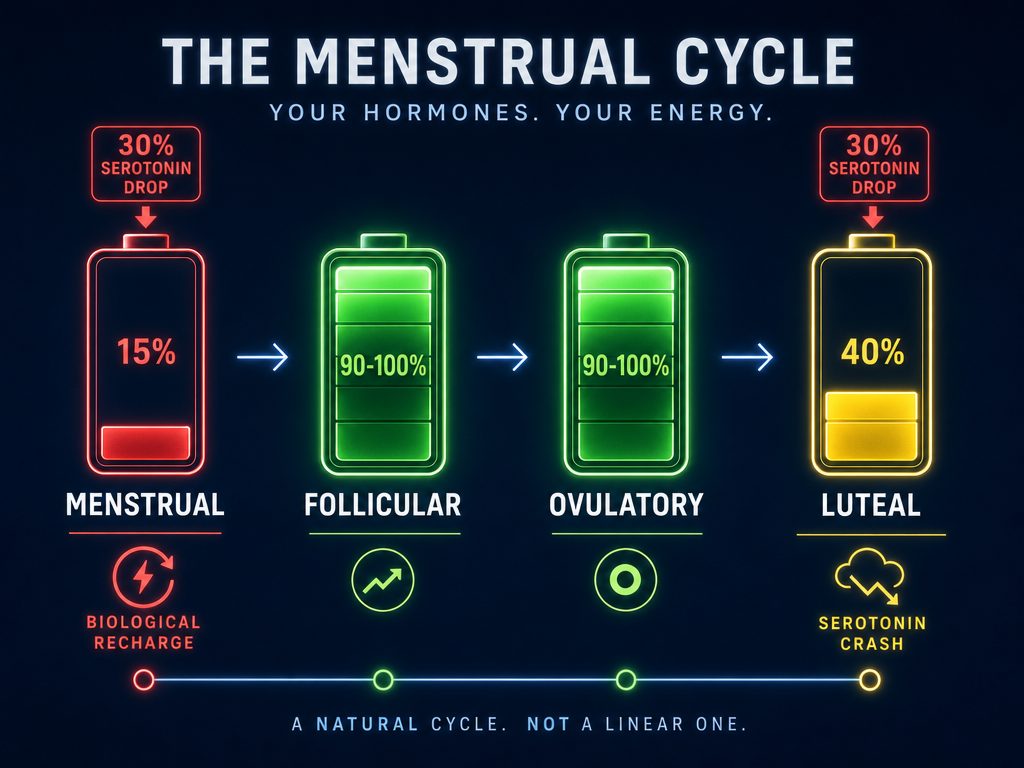 Understanding the 'serotonin crash' as a biological battery recharge helps partners view mood shifts and fatigue as physical realities rather than personal slights.
Chocolate is the most common food craved by women pre-menstrually, and there's a reason: dark chocolate contains magnesium, which helps ease muscle tension and supports serotonin production. It's not indulgence - it's her body asking for specific nutrients.
Here's what else happens during the luteal phase: many women notice PMS-like symptoms including mood shifts, breast tenderness, bloating, acne, and appetite changes. These aren't personality flaws or mood disorders - they're documented, predictable responses to the hormonal environment her body is navigating.
The Four-Phase Shopping Guide
A typical menstrual cycle is roughly 28 days and involves four distinct phases: Menstrual, Follicular, Ovulatory, and Luteal. Her energy, mood, and nutritional needs shift with each one. Here's what to stock during the phases when cravings are highest.
Menstrual Phase (Days 1-5): Comfort and Iron
This is when bleeding occurs. Energy is at its lowest point, and her body is losing iron. Cravings for rich, comforting foods are common.
What to buy:
- Iron-rich foods: Lean red meat, lentils, spinach, fortified cereals
- Warm comfort foods: Soup, oatmeal, herbal teas (ginger, peppermint)
- Dark chocolate: Choose options with higher cacao content for magnesium and iron
- Fruit: Berries, bananas (natural sugars for quick energy)
Physical support:
- Electric heating pad with auto-shutoff
- Epsom salts for baths
- Naproxen (more effective than acetaminophen for cramps)
Follicular Phase (Days 6-13): Energy and Variety
During the follicular phase, estrogen rises as an egg-containing follicle develops in the ovary. Energy builds, and her appetite may increase.
What to buy:
- Complex carbs: Whole-grain bread, quinoa, sweet potatoes
- Lean protein: Chicken, fish, tofu
- Fresh vegetables: Whatever she typically enjoys
- Healthy fats: Avocado, nuts, seeds
This phase is when energy tends to build through the follicular phase toward ovulation, so she's more likely to want varied, nutritious meals rather than comfort foods.
Ovulation Phase (Around Day 14): Peak Energy
Ovulation is when a surge in luteinizing hormone (LH) causes the ovary to release an egg, typically around day 14 of a 28-day cycle. This is often her highest-energy window.
What to buy:
- Light, fresh foods: Salads, smoothies, fresh fruit
- Hydration: Coconut water, herbal teas
- Social foods: Items for shared meals if you're planning to eat together
Around ovulation, many women notice symptoms such as increased sex drive, mild pelvic or abdominal pain, tender breasts, bloating, and mood changes, though these vary a lot person to person.
Luteal Phase (Days 15-28): The Craving Window
This is the phase that trips up most boyfriends. After ovulation, progesterone rises to help prepare the uterine lining for a possible pregnancy. If pregnancy doesn't happen, both progesterone and estrogen drop before the next period.
What to buy for sweet cravings:
- Dark chocolate: Higher cacao content provides magnesium
- Greek yogurt with honey or fruit: Protein + natural sugars
- Dates or dried fruit: Natural sweetness with fiber
What to buy for salty cravings:
- Nuts and seeds: Almonds, cashews, pumpkin seeds
- Air-popped popcorn: Lower-sodium option
- Pickles or olives: If she's craving salt specifically
What to avoid:
- High-sodium processed foods (worsens bloating)
- Excessive caffeine (can worsen anxiety and cramps)
- Alcohol (disrupts hormone balance further)
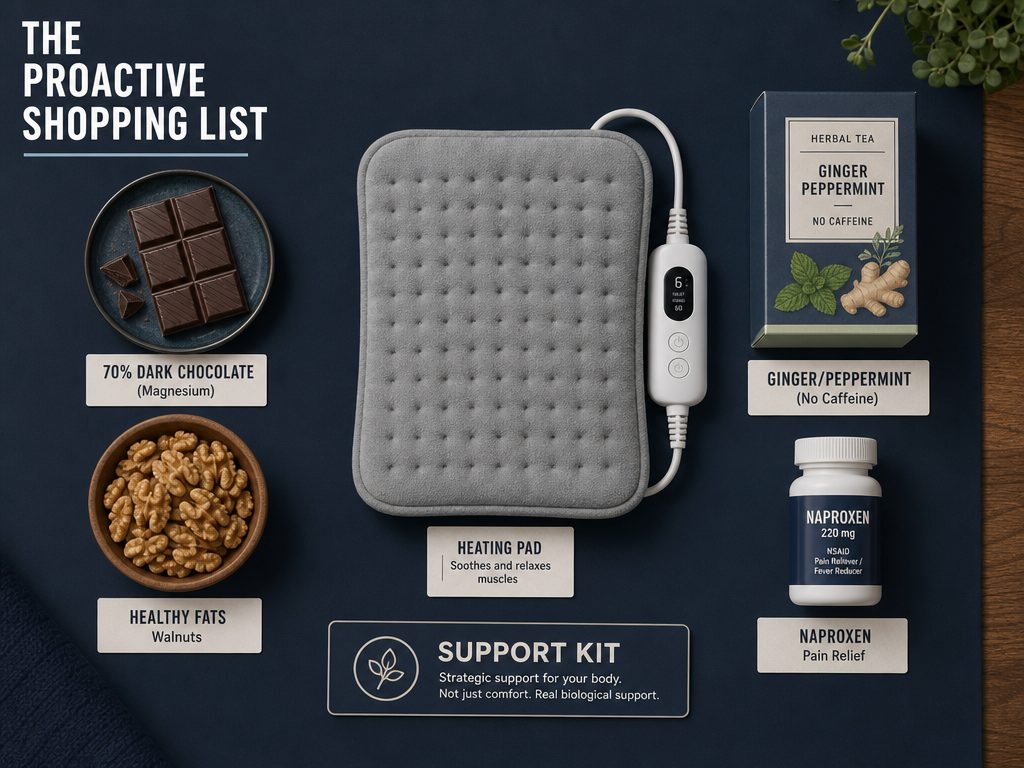 A curated support kit focuses on magnesium-rich foods and physical comfort tools to help manage hormonal shifts and physical discomfort during the menstrual cycle.
According to the Mayo Clinic, lifestyle approaches that can help ease PMS symptoms include regular aerobic exercise, smaller/more frequent meals, less salt/caffeine/alcohol, adequate sleep, and stress-reduction practices like deep breathing or yoga.
What Not to Buy (Common Mistakes)
Showing up with the wrong thing can make her feel misunderstood. Here's what to skip:
Don't Buy Unless She's Asked For It
- Supplements or vitamins (she may already be taking specific ones)
- Unfamiliar brands of period products (brand loyalty is strong here)
- Diet or "low-calorie" versions of comfort foods (this sends the wrong message)
Don't Default to Flowers or Jewelry
Romantic gestures can feel tone-deaf when she's in physical discomfort. Save the grand gestures for her follicular or ovulation phases when her energy is higher and she can actually enjoy them. During the luteal and menstrual phases, practical support beats symbolic gestures.
Don't Ask a Series of Open-Ended Questions
"What do you want for dinner?" or "Do you need anything from the store?" can feel exhausting when her brain is already managing decision fatigue. Instead, make a low-stakes decision and present it: "I'm picking up Thai food and grabbed your usual order. I'll be home in 20."
The 7-2-1 Safety Framework
Most discomfort during a period is normal, but there are clear medical thresholds every boyfriend should know. Medical attention is needed if bleeding lasts longer than 7 days, requires product changes every 2 hours, or includes clots larger than 1 inch.
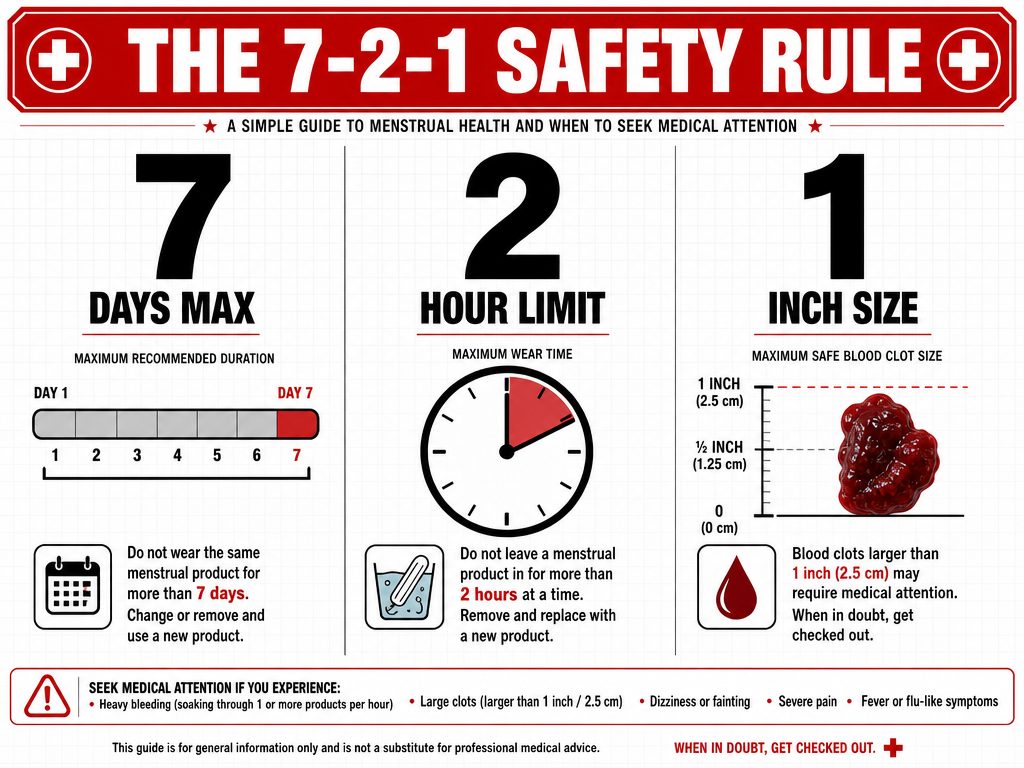 The 7-2-1 guideline is a vital medical safety framework that helps partners identify when menstrual symptoms move from normal discomfort to requiring professional medical consultation.
This framework elevates your role from "supportive boyfriend" to "medical advocate." You're not overstepping by noticing these signs - you're being responsible.
When to suggest she see a doctor:
- Bleeding that soaks through a pad or tampon every two hours or less
- Periods lasting longer than seven days
- Blood clots larger than a quarter (about one inch)
- Severe pain that doesn't improve with over-the-counter medication
- Symptoms that interfere with daily life (work, school, social activities)
PMDD (premenstrual dysphoric disorder) is a real, clinically recognized condition - it's listed in the DSM-5 as a depressive disorder, affecting roughly 1 in 10 people who menstruate. If her symptoms are consistently severe, suggest tracking them for a few cycles and bringing the data to her doctor.
The Communication Matrix: What to Say (and What Not to Say)
Saying the wrong thing during a hormonal low can turn a manageable situation into a fight. Here's a tactical script for different scenarios.
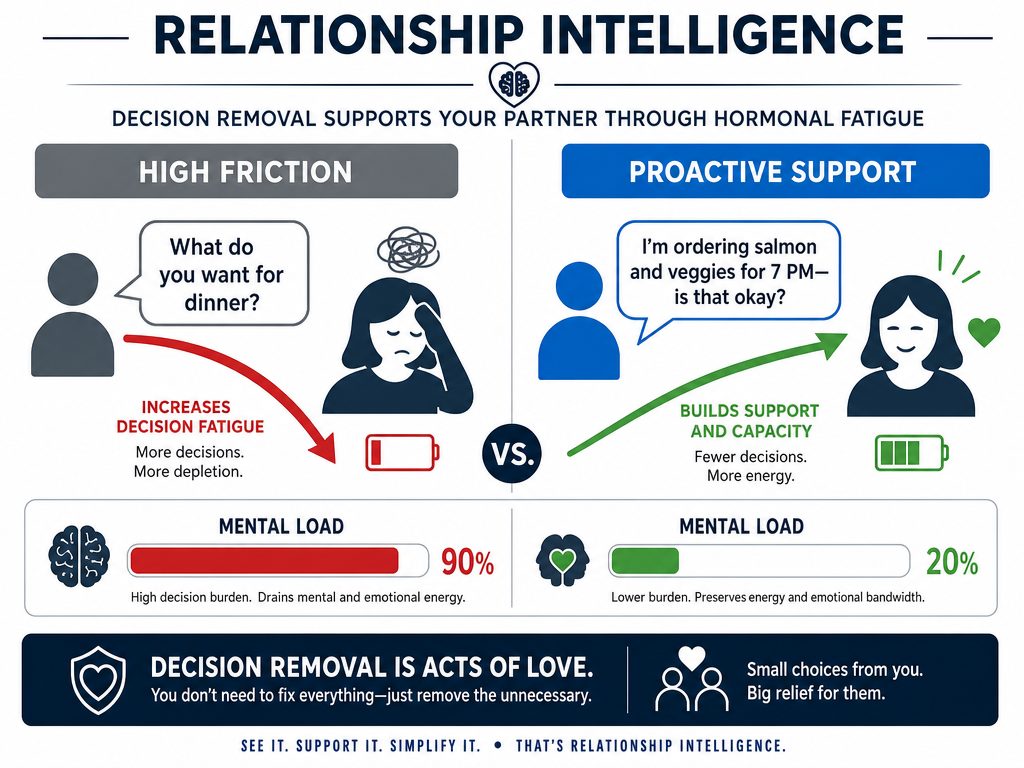 Mastering relationship intelligence means moving from asking open-ended questions to making low-stakes decisions, effectively removing executive function burdens from your partner during difficult days.
❌ Avoid Saying:
- "Are you on your period?"
- "You're being irrational."
- "It's not that big of a deal."
- "Just calm down."
- "Do you need me to do anything?" (puts decision-making burden on her)
✅ Say Instead:
- "I noticed today feels a bit heavy. I'm handling dinner so you can rest."
- "That sounds really frustrating. I'm here if you want to talk about it."
- "I picked up your favorite snacks. No need to thank me - just wanted you to have them."
- "I'm running errands. Text me if there's anything you need."
Building a Period Support Kit
Instead of scrambling each month, build a small box with essentials she can access anytime. Keep it in a bathroom cabinet or closet.
What to include:
- Her preferred brand of period products (pads, tampons, or menstrual cup)
- Pain relief (naproxen or ibuprofen)
- Heating pad or microwavable heat pack
- Dark chocolate (individually wrapped bars)
- Herbal tea bags (ginger, peppermint, chamomile)
- Her favorite non-perishable snacks
- A phone charger (if she's resting in bed)
- Hand lotion or lip balm (small comforts)
This isn't about "fixing" her experience - it's about reducing the friction of having to ask for things when she's already uncomfortable.
If you want to track her cycle and anticipate these windows proactively, apps like VibeCheck give partners a daily action plan based on where she is in her cycle. It turns biological data into clear guidance so you're not guessing.
Frequently Asked Questions
What foods satisfy period cravings?
Foods that boost serotonin and provide key minerals are most effective. Chocolate is the most common food craved by women pre-menstrually, particularly dark chocolate with higher cacao content, which contains magnesium. Complex carbohydrates (whole grains, oatmeal, sweet potatoes) also help by supporting serotonin production. For salty cravings, nuts, seeds, and air-popped popcorn provide minerals without excessive sodium that worsens bloating.
What phase of your period do you want to eat everything?
The luteal phase (roughly days 15-28 of a cycle) is when appetite and cravings tend to be strongest. This is the phase after ovulation when progesterone rises and then both progesterone and estrogen drop if pregnancy doesn't occur. Serotonin levels can fall substantially during the luteal phase, which drives cravings for carbohydrates and magnesium-rich foods. Energy expenditure also increases slightly during this phase, so increased hunger isn't imaginary - her body is working harder.
Should I ask what she needs, or just do it?
Don't ask open-ended questions when she's already managing discomfort and decision fatigue. Make a low-stakes decision and execute it: "I'm picking up Thai food and your favorite snacks" beats "What do you want for dinner?" If you're uncertain about a specific preference, offer two concrete options instead of an open question: "Heating pad or hot bath?" This removes mental load without removing her autonomy.
How do I get rid of hormonal cravings?
You don't "get rid" of hormonal cravings - they're a biological signal, not a behavior to suppress. Instead, work with them. Stock the foods that satisfy the underlying nutritional need (magnesium, iron, complex carbs) in healthier forms. Dark chocolate instead of candy bars. Whole-grain toast instead of white bread. Greek yogurt with fruit instead of ice cream. The goal isn't elimination - it's meeting her body's actual needs in a way that doesn't worsen other symptoms like bloating or energy crashes.
What should a boyfriend do when his girlfriend is on her period?
Be present without hovering. Stock practical supplies (pain relief, heating pad, her preferred snacks) before she asks. Handle household decisions so she doesn't have to manage mental load on top of physical discomfort. Monitor for concerning symptoms using medical guidance. Don't take mood shifts personally - PMS affects as many as 3 in 4 women at some point in their life, and symptoms are driven by hormonal changes, not by you. Offer reassurance and space in equal measure based on what she signals she needs.
When do symptoms require medical attention?
Use medical guidance: if bleeding lasts longer than 7 days, requires product changes every 2 hours, or includes clots larger than 1 inch, she should see a doctor. Also watch for severe pain that doesn't improve with over-the-counter medication, or symptoms severe enough to disrupt daily life, which affect about 1 in 5 people who menstruate. PMDD is a clinically recognized condition that requires professional treatment, so if her symptoms are consistently extreme, suggest tracking symptoms across a few cycles and bringing that data to her doctor.
What is a good period care gift for my girlfriend?
The best gifts are practical, not symbolic. Build a small support kit with her preferred period products, pain relief (naproxen works better than acetaminophen for cramps), a heating pad with auto-shutoff, dark chocolate, herbal teas, and Epsom salts for baths. Avoid flowers or jewelry unless you know she'd appreciate them - during the menstrual or luteal phases, comfort beats romance. Showing up unprompted with practical support signals you understand what she's going through.
Does birth control change what I should buy?
Yes. Hormonal birth control can reduce or eliminate the natural hormone fluctuations that drive cravings, so some women on the pill won't experience the same luteal-phase intensity. Others may have different side effects (nausea, headaches) that change what feels comforting. Ask her what she's noticed about her own patterns instead of assuming the standard cycle applies. Every woman's experience is different, and a "normal" cycle varies widely - bleeding can start anywhere from every 24 to every 38 days and last up to 8 days.
Understanding your girlfriend's hormone cravings isn't about memorizing a shopping list. It's about recognizing the biological pattern behind her needs and being proactive instead of reactive. When you stock the right foods, remove decision-making friction, and know when to step in (or step back), you stop walking on eggshells and start being the partner she can rely on.
If you want to track her cycle and get daily guidance on how to support her, VibeCheck gives you a personalized action plan for every phase. Stop guessing. Start understanding.
Tags

Related Articles
Continue reading to deepen your understanding

Your Girlfriend’s Mood Shifts Throughout the Month, Explained
Ever wonder why her energy and moods change so drastically each week? Understand the four hormonal phases and how to be the partner she needs during every stage of her cycle.

How to Support Your Girlfriend When She’s Crying Because of Hormones
Watching her cry when hormones hit can feel overwhelming. Learn the biological why behind the tears and use these proven scripts to provide the support she actually needs right now.

How to Help Your Girlfriend with Hormonal Mood Swings Without Arguing
Understand her cycle and learn tactical scripts to handle tension. This guide shows you how to support her through hormonal shifts without getting into unnecessary fights.

When to Feed Your Girlfriend: Understanding Hangry Hormones
Does your girlfriend get irritable when she hasn’t eaten? It’s not just in her head. Learn why hormones cause hanger and the specific times her body needs more fuel.

The Boyfriend’s Guide to Supporting Your Partner Through PMS
If your partner is suddenly irritable and exhausted, it’s biology, not you. Learn about the luteal phase and how to provide meaningful support without walking on eggshells.

Why Your Girlfriend Wants Different Things Each Week: The Biological Roadmap
Does your partner seem like a different person every seven days? Understand how her 28-day biological cycle impacts her energy and mood so you can provide the support she actually needs.

How to Help Your Girlfriend When She’s Irritable Before Her Period: The Partner’s Playbook
Is your partner snapping at small things right before her cycle? It’s not you—it’s biology. Learn how to navigate the serotonin crash and provide the support she actually needs.

How to Tell Your Girlfriend Is Overwhelmed by Hormones
Is she snapping or withdrawing for no reason? Identify the behavioral tells of hormonal overwhelm and learn how to support her during the luteal phase without triggering a fight.