How to Comfort Your Girlfriend During Hormonal Insomnia: A Partner’s Playbook

When she is staring at the ceiling at 2 AM, she needs support. This guide explains the biological shifts of hormonal insomnia and gives you natural, practical ways to help her sleep.
How to Comfort Your Girlfriend During Hormonal Insomnia: A Partner's Playbook
When she's lying next to you, staring at the ceiling at 2 AM, and you don't know what to do - you're not alone. Hormonal insomnia isn't a mystery or an excuse; it's a real biological shift that makes sleep genuinely harder for her body to achieve. Sleep disorders affect approximately 42% of women in premenopausal ages, and understanding the "why" behind it is the first step toward becoming the partner she needs during those sleepless nights.
This guide will walk you through the biological mechanisms causing her insomnia, give you concrete physical tasks you can take on, and show you how to communicate support without accidentally making things worse. You'll learn which natural remedies actually help, when to suggest professional help, and how to avoid the common traps that turn good intentions into relationship friction.
Table of Contents
- What Is Hormonal Insomnia?
- The Biology Behind Her Sleeplessness
- The Comfort Playbook: Physical Tasks You Can Own
- The Natural Support Kit
- Communication: The Art of Supportive Silence
- When to Stop Comforting and Start Consulting
- Frequently Asked Questions
What Is Hormonal Insomnia?
Hormonal insomnia is sleep disruption caused by fluctuations in reproductive hormones - primarily estrogen and progesterone - across the menstrual cycle. It's not a character flaw, stress mismanagement, or something she can simply "relax" away. Her body is experiencing real chemical shifts that make falling asleep and staying asleep physically harder.
The menstrual cycle has four phases: menstrual (bleeding, roughly days 1-5), follicular (day 1 through ovulation, estrogen rising), ovulation (around day 14 in a 28-day cycle, triggered by a surge in luteinizing hormone), and luteal (after ovulation to the next period, progesterone rising then falling). The follicular and menstrual phases overlap, and each phase brings different hormonal conditions that affect sleep quality.
The most common time for hormonal insomnia is the week before her period - the late luteal phase - when both progesterone and estrogen drop sharply. After ovulation, the luteal phase begins: progesterone rises to help prepare the uterine lining for a possible pregnancy. If pregnancy doesn't happen, both progesterone and estrogen drop before the next period. Many women notice PMS-like symptoms in this phase: mood shifts, breast tenderness, bloating, acne, and appetite changes. Sleep disruption is part of that package.
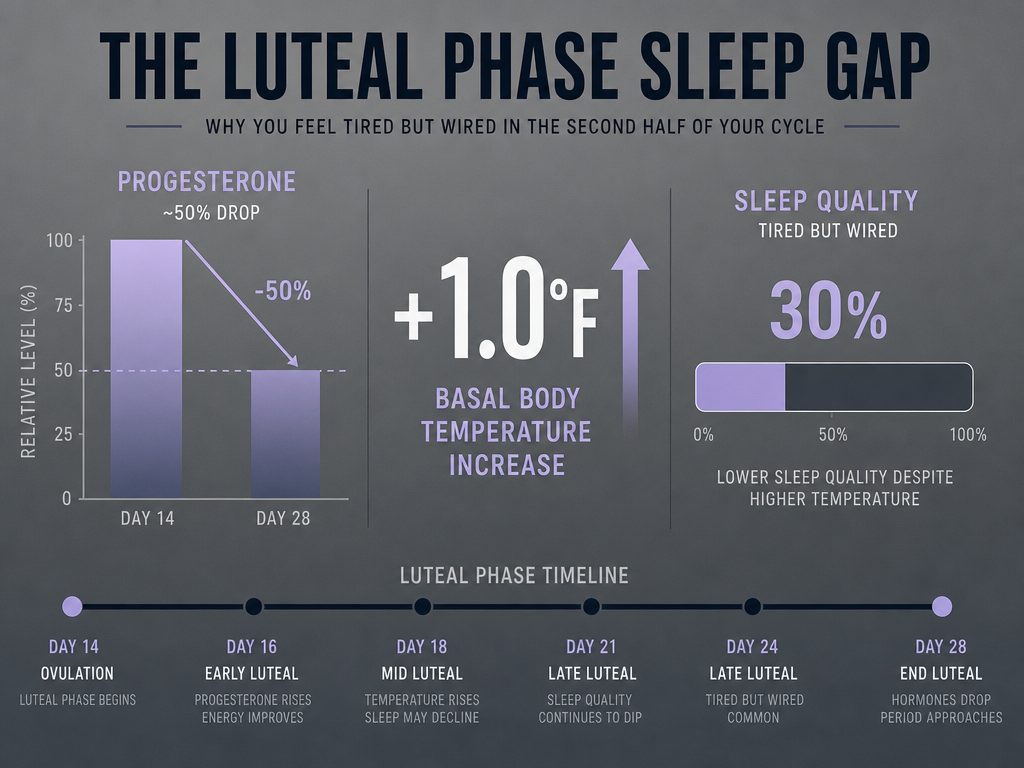 Understanding the biological shift: During the luteal phase, a drop in progesterone and a spike in core body temperature create a physical barrier to deep, restorative sleep.
The Biology Behind Her Sleeplessness
The Progesterone Drop
Progesterone is often called the body's natural sedative. During the luteal phase - the roughly two weeks after ovulation - progesterone levels rise to prepare the uterine lining for a possible pregnancy. This hormone has a calming, sleep-promoting effect on the brain, similar in some ways to anti-anxiety medications.
VibeCheck App
Download Free on iOS →When pregnancy doesn't occur, progesterone levels crash right before menstruation begins. This isn't a gradual decline; it's a sharp drop that can feel like withdrawing from a calming substance. The result? Increased anxiety, restlessness, and difficulty falling asleep. She isn't overreacting - her brain chemistry has genuinely shifted.
The Heat Factor
Here's something most guys don't know: her core body temperature actually rises after ovulation and stays elevated throughout the luteal phase. The optimal bedroom temperature for sleep is between 60-67°F, but her internal thermostat is running hotter than usual.
This temperature shift isn't dramatic - typically around 0.5 to 1.0°F - but it's enough to make falling asleep harder. If she's kicking off blankets, complaining that the room feels stuffy, or asking you to turn down the heat, she isn't being difficult. Her body is physically warmer, and she needs a cooler environment to compensate.
The Cortisol Connection
During the luteal phase, the drop in progesterone can allow cortisol - the stress hormone - to run higher than usual, especially at night. This creates the "tired but wired" feeling: her body is exhausted, but her mind won't shut off. She might describe feeling anxious about nothing in particular or notice her thoughts racing when she lies down.
Estrogen affects many body systems, including brain function and the ability to focus, and levels are highest in the days leading up to ovulation. When estrogen drops alongside progesterone before her period, mood regulation becomes harder. This hormonal combination sets the stage for insomnia that feels impossible to control.
The Comfort Playbook: Physical Tasks You Can Own
The most valuable thing you can do is take ownership of environmental and physical comfort without being asked. This isn't about being overbearing - it's about reducing the mental load she's carrying when her brain is already working overtime.
Take Charge of the Thermostat
Don't ask if she wants the room cooler. Just do it. Set the bedroom temperature to 65°F or lower in the evening. If you're cold, add a layer or use a separate blanket. This single change can make a measurable difference in her ability to fall asleep during the luteal phase.
Consider these upgrades:
- A cooling pillow or pillowcase designed to dissipate heat
- A fan on her side of the bed, even in winter
- Breathable, moisture-wicking sheets (avoid heavy flannel during her luteal phase)
The Ritual: Don't Ask, Just Bring
Ninety minutes before her usual bedtime, prepare a caffeine-free drink and bring it to her. Don't ask "Do you want tea?" or offer three options. Just make it and hand it to her. This removes a decision from her mental queue and sends a clear signal: you're paying attention.
Best options:
- Chamomile tea (traditional sleep aid with mild sedative properties)
- Tart cherry juice (contains natural melatonin)
- Warm milk with a small amount of honey (the tryptophan in milk supports sleep)
Avoid anything with sugar substitutes or stimulating herbs like peppermint, which can interfere with relaxation.
The Touch: Oxytocin as Medicine
Physical touch isn't just about intimacy - it's a biological tool. Ten to fifteen minutes of gentle massage can release oxytocin, which naturally counters cortisol. This isn't a full-body massage requiring oil and planning. It's simple, consistent touch focused on areas where she holds tension.
High-value zones:
- Feet: Slow, firm pressure on the soles and arches
- Shoulders and neck: Gentle kneading where tension accumulates
- Scalp: Light circular motions with your fingertips
- Lower back: Steady, warming pressure if she's experiencing cramps
The key is consistency and lack of expectation. This touch is about comfort, not foreplay. Make it clear through your body language and rhythm that this is a gift, not a transaction.
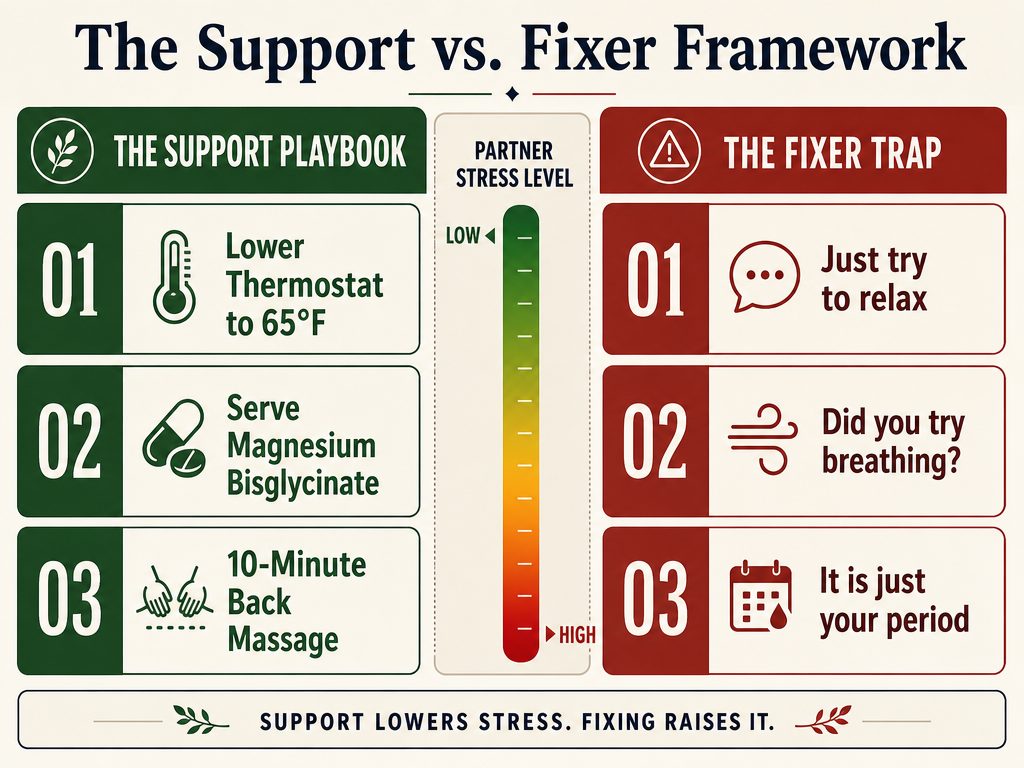 Moving from 'fixing' to 'supporting' involves taking over environmental controls and physical comfort tasks rather than offering unsolicited advice or clinical solutions.
Handle the Morning Load
If she's up past midnight struggling to sleep, take ownership of the morning alarm and chores. Tell her explicitly: "I've got the morning covered. Sleep in if you can." Then actually do it. Make coffee, handle breakfast, walk the dog - whatever your usual morning includes.
This single act removes the anxiety of "If I don't fall asleep soon, tomorrow will be impossible." Knowing she has a buffer reduces the performance pressure that keeps many people awake.
The Natural Support Kit
Natural sleep aids can help, but only when used correctly and without conflicting with any medications she's taking. Never pressure her to try something; offer information and let her decide.
Magnesium Bisglycinate
Not all magnesium is the same. Magnesium bisglycinate is the form most associated with muscle relaxation and improved sleep quality. It's gentle on the digestive system, unlike magnesium citrate, which acts as a laxative.
Typical dosage: 200-400mg taken 1-2 hours before bed. She should start at the lower end and consult with her doctor if she's on any medications, particularly those affecting kidney function.
Melatonin: Use It Right or Skip It
Melatonin supplements are most effective for sleep when taken in doses of 0.5-3mg, 1-2 hours before bed. Many over-the-counter supplements contain 5mg or more, which is often excessive and can cause grogginess the next day.
The key with melatonin is timing and dose. A small amount (0.5-1mg) taken early enough allows the body to process it naturally. Taking too much or too late can backfire, leaving her feeling foggy in the morning without improving sleep quality.
Melatonin works best for occasional use, not as a nightly crutch. If she's using it more than a few nights per week, that's a signal to address underlying causes rather than rely on supplementation.
Red Light and Darkness
Blue light from screens suppresses melatonin production. An hour before bed, take the lead on dimming lights and putting devices away. This isn't about policing her phone use - it's about creating an environment that supports sleep.
Practical steps:
- Install a red-light bulb or use a dim lamp in the bedroom
- Enable night mode or blue-light filters on all devices by 8 PM
- Put your own phone away first; model the behavior rather than suggesting it
If she resists because she's scrolling to relax, acknowledge that scrolling feels soothing but is chemically sabotaging her sleep. Offer an alternative: reading a physical book together, listening to an audiobook, or a short guided meditation you can do side by side.
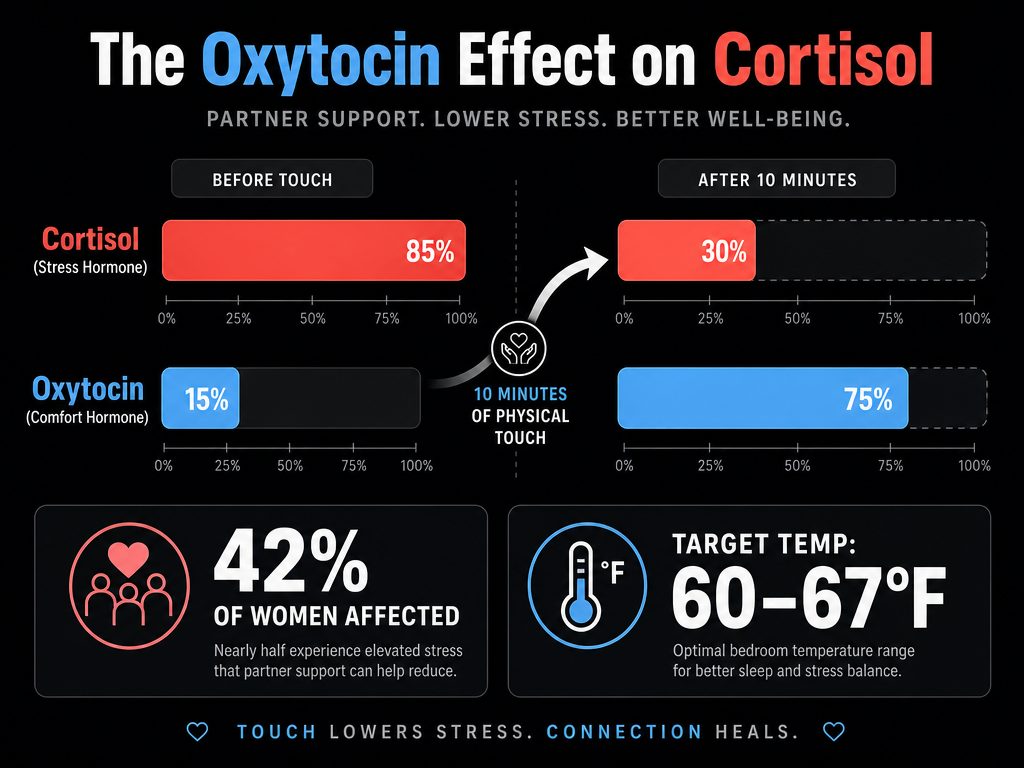 Physical touch isn't just about intimacy; it's a biological tool. Brief periods of massage or cuddling release oxytocin, which actively counters the cortisol keeping her awake.
Herbal Teas and Tinctures
Beyond chamomile, several herbs have evidence supporting their use as mild sleep aids:
- Passionflower: May help quiet the racing-mind sensation
- Valerian root: Traditional sedative herb; can take a few weeks of consistent use to show effects
- Lemon balm: Gentle calming effect, often combined with other herbs
The limitation of herbal remedies is that their effects are subtle. They're not pharmaceutical sleep aids. For mild insomnia, they can tip the balance; for severe disruption, they're unlikely to be enough on their own.
What About CBD?
Cannabidiol (CBD) has gained popularity as a sleep aid, and some women report it helps with both anxiety and sleep quality. The evidence is still emerging, and quality varies widely between products. If she's interested in trying CBD, look for products with third-party lab testing, clear dosage information, and minimal THC content.
Start with a low dose (10-15mg) and give it a few nights to assess effects. CBD interacts with certain medications, so she should consult her doctor first if she takes prescription drugs regularly.
Communication: The Art of Supportive Silence
Avoid "Fixer" Phrases
When she tells you she can't sleep, your instinct may be to offer solutions. Resist. The following phrases, however well-intentioned, often make things worse:
- "Just try to relax."
- "Did you try that breathing thing I told you about?"
- "Maybe you're overthinking it."
- "You need to stop looking at your phone."
These phrases position you as the expert solving her problem, which implies she's failing to implement obvious solutions. When a partner is struggling emotionally, responding with genuine empathy - listening without judgment, focusing on their feelings rather than debating facts, and validating that their reaction makes sense - tends to help more than trying to "fix" the problem or offer silver linings.
Use Validation Instead
Validation acknowledges her experience without minimizing it or jumping to solutions. Try these scripts:
- "I know your body is working overtime right now. That sounds exhausting."
- "I've got the morning covered, so sleep in if you need to."
- "This phase is really hard. I'm here if you want company or if you need me to give you space."
The goal is to communicate that you see the struggle as real and valid, not as something she should be managing better.
When She Wants to Talk
Sometimes insomnia comes with a side of anxiety or racing thoughts, and she might want to talk through what's on her mind at 1 AM. This is one of the hardest scenarios to navigate because you're tired too.
If you have the bandwidth, listen without trying to solve. Let her vent, ask clarifying questions, and reflect back what you're hearing. If you're genuinely too exhausted to be a good listener, it's better to be honest: "I want to give you my full attention, but I'm falling asleep mid-sentence. Can we revisit this in the morning when I can actually think?"
That's not dismissive if it's followed through with an actual morning conversation.
What Not to Say
Certain comments will guarantee a fight:
- "You're always tired lately."
- "Maybe if you exercised more..."
- "You were fine earlier. What changed?"
- "It's probably just stress."
These phrases dismiss her biology and place blame. Even if exercise, stress management, or sleep hygiene improvements would help, delivering them in the middle of insomnia won't land well.
When to Stop Comforting and Start Consulting
Natural support has limits. If her insomnia is severe, persistent, or accompanied by other concerning symptoms, it's time to shift from comforting partner to advocate for professional help.
Red Flags That Require Medical Attention
- Insomnia lasting more than three months, most nights per week
- Severe mood symptoms that disrupt daily functioning (possible PMDD)
- Thoughts of self-harm or hopelessness
- Physical symptoms like unexplained weight changes, severe headaches, or vision changes
- Insomnia accompanied by irregular or absent periods
PMDD (premenstrual dysphoric disorder) is a real, clinically recognized condition - it's listed in the DSM-5 as a depressive disorder, not something people are "making up" or simply failing to cope with. It affects roughly 1 in 10 people who menstruate. If her mood symptoms are extreme enough to strain your relationship or interfere with her work, she deserves a clinical evaluation, not more chamomile tea.
How to Suggest Professional Help Without Being Dismissive
Timing and framing matter. Don't bring up seeing a doctor in the middle of a sleepless night or during an argument. Wait for a calm moment earlier in her cycle, then lead with concern, not criticism:
"I've noticed the insomnia has been hitting you hard for a few months now, and I hate seeing you struggle. Would it be helpful to talk to a doctor about what's going on hormonally? I'm happy to help research providers or come to an appointment if you want the support."
Position it as a partnership, not a directive. You're offering to help solve a problem together, not telling her she needs to be fixed.
What Professional Help Looks Like
Depending on the severity, professional help might include:
- Primary care physician: Can assess for underlying conditions, review medication side effects, and provide initial treatment options
- OB-GYN: Specializes in reproductive hormone issues; may suggest hormonal birth control or other interventions to stabilize cycles
- Sleep specialist: Can conduct a sleep study if there's concern about sleep apnea or other disorders beyond hormonal causes
- Therapist: Cognitive behavioral therapy for insomnia (CBT-I) is evidence-based and doesn't require medication
Your role isn't to diagnose or push - it's to normalize seeking help and remove logistical barriers like scheduling appointments or handling insurance calls.
Frequently Asked Questions
How do I support my partner with insomnia?
Support involves both action and restraint. Take ownership of environmental factors like room temperature, prepare caffeine-free drinks without being asked, offer physical touch without expectation, and handle morning responsibilities so she can sleep in. Equally important is what not to do: avoid offering unsolicited advice, don't minimize her experience, and resist the urge to "fix" the problem with suggestions she's likely already tried.
How to fix hormonal insomnia?
Hormonal insomnia isn't something you "fix" with a single intervention; it's managed through a combination of environmental adjustments, natural support, and sometimes medical consultation. The most effective natural approaches include cooling the bedroom to 60-67°F, using magnesium bisglycinate (200-400mg before bed), reducing screen time an hour before sleep, and maintaining consistent sleep-wake times even on weekends. Lifestyle approaches that can help ease PMS symptoms include regular aerobic exercise, smaller/more frequent meals, less salt/caffeine/alcohol, adequate sleep, and stress-reduction practices like deep breathing or yoga. If natural methods don't provide relief after consistent use, a healthcare provider can assess whether hormonal birth control or other medical interventions are appropriate.
What is the 1/4 hour rule for insomnia?
The quarter-hour rule (also called the 15-minute rule) is a sleep hygiene technique: if you've been lying in bed awake for 15 minutes, get up and do a quiet, non-stimulating activity in dim light until you feel sleepy, then return to bed. This prevents your brain from associating the bed with wakefulness and frustration. Activities should be genuinely boring - reading something dry, folding laundry, or listening to a calm podcast - not scrolling social media or watching TV, which provide too much stimulation. The goal is to maintain the bed as a place exclusively for sleep and intimacy, not tossing and turning.
How to comfort someone who has insomnia?
Comfort means being present without pressure. Physical presence - lying beside her, offering a foot massage, or just being a warm body she can lean against - often helps more than words. Avoid asking a lot of questions or launching into problem-solving mode. Instead, acknowledge the frustration ("I know this is miserable") and offer simple, low-stakes comforts like a cool washcloth, herbal tea, or turning on white noise. If she wants to talk, listen without judgment. If she wants silence, give her that too. The key is following her lead rather than imposing what you think should help.
How to get rid of period insomnia?
Period insomnia - technically luteal phase insomnia because it happens in the days before bleeding starts - responds best to a multi-layered approach. First, track her cycle for a few months to identify patterns and anticipate when insomnia is likely to hit. Tracking your own (or a partner's, with her participation) symptoms and mood changes across the cycle for a few months is a legitimate, medically endorsed way to identify real patterns and timing - rather than assuming based on stereotypes or a single cycle. Once you know the timeline, you can proactively adjust the sleep environment (cooler room, darker space, quieter setting), reduce evening commitments during that week to minimize stress, and introduce magnesium supplementation a few days before symptoms typically start. If insomnia is severe or accompanied by mood symptoms that disrupt daily life, consult a healthcare provider about whether hormonal interventions might be appropriate.
What female hormone helps you sleep?
Progesterone is the primary female hormone that promotes sleep. It has a sedative effect on the brain, similar to some anti-anxiety medications, and helps regulate the sleep-wake cycle. Progesterone levels are highest during the luteal phase (the two weeks after ovulation). When progesterone drops sharply before menstruation, many women experience the "tired but wired" sensation: physical exhaustion combined with racing thoughts and difficulty falling asleep. Estrogen also plays a role in sleep quality by influencing REM sleep and regulating body temperature, but its effects are more complex and vary across the cycle. The dramatic drop in both hormones right before a period is why sleep disruption is most common in the late luteal phase.
How can I best support my partner who has PMDD?
PMDD is clinically distinct from regular PMS and requires a higher level of support and often medical intervention. PMDD is a more severe, sometimes disabling extension of PMS. Both happen on a similar timeline (about 7-10 days before a period) and can share physical symptoms like bloating and fatigue, but PMDD specifically involves extreme mood symptoms - such as marked irritability, anxiety, or hopelessness - intense enough to disrupt daily life and strain relationships. If your partner has been diagnosed with PMDD, your role includes normalizing professional treatment (which may involve therapy, medication, or both), reducing her stress load during the luteal phase, and learning to recognize when mood shifts are neurochemical rather than relationship-based. This isn't about excusing hurtful behavior, but understanding that extreme irritability or sadness during those 7-10 days is a symptom, not a reflection of how she feels about you. Work with her to establish communication boundaries that protect both of you - phrases like "I need to pause this conversation because I'm not in a good headspace" can prevent fights that you'll both regret. Most importantly, encourage her to work with a healthcare provider who takes PMDD seriously; not all doctors do, and she may need to advocate for proper treatment.
Hormonal insomnia isn't something you can cure overnight, but understanding the biological forces at work changes the dynamic from "Why is this happening again?" to "Here's what her body is dealing with, and here's how I can help." The difference between a partner who gets it and one who doesn't isn't grand gestures - it's the quiet consistency of a cooler room, a prepared cup of tea, and the willingness to say "I've got the morning" when she needs it most.
For more guidance on navigating your partner's cycle phases, check out our complete guide to supporting your girlfriend through every menstrual phase or learn how to tell which cycle phase she's in without asking directly.
Tags

Related Articles
Continue reading to deepen your understanding

How to Understand Your Girlfriend’s Social Battery and Hormones
Does your girlfriend suddenly cancel plans or seem withdrawn? This guide explains how her cycle impacts her energy so you can support her like a pro.

How Your Girlfriend’s Emotional Needs Change During Her Cycle
Does your girlfriend’s mood seem unpredictable? Learn how her emotional needs shift on a biological loop and how to support her through every phase of her cycle.

What to Buy When Your Girlfriend Has Hormone Cravings: A Support Guide
Stop wondering what to pick up at the store. This guide explains the science behind cycle cravings and provides a specific list of foods and comfort items she needs.

Your Girlfriend’s Mood Shifts Throughout the Month, Explained
Ever wonder why her energy and moods change so drastically each week? Understand the four hormonal phases and how to be the partner she needs during every stage of her cycle.

How to Support Your Girlfriend When She’s Crying Because of Hormones
Watching her cry when hormones hit can feel overwhelming. Learn the biological why behind the tears and use these proven scripts to provide the support she actually needs right now.

How to Help Your Girlfriend with Hormonal Mood Swings Without Arguing
Understand her cycle and learn tactical scripts to handle tension. This guide shows you how to support her through hormonal shifts without getting into unnecessary fights.

When to Feed Your Girlfriend: Understanding Hangry Hormones
Does your girlfriend get irritable when she hasn’t eaten? It’s not just in her head. Learn why hormones cause hanger and the specific times her body needs more fuel.

The Boyfriend’s Guide to Supporting Your Partner Through PMS
If your partner is suddenly irritable and exhausted, it’s biology, not you. Learn about the luteal phase and how to provide meaningful support without walking on eggshells.