Understanding How Your Girlfriend’s Hormones Affect Her Need for Physical Touch

Learn how to read her body language and understand how hormonal shifts throughout the menstrual cycle dictate her needs for affection, intimacy, and personal space.
Understanding When Your Girlfriend Needs Physical Touch: A Hormone-Based Guide for Partners
Your girlfriend's need for physical touch isn't static - it shifts throughout her menstrual cycle in response to hormonal changes. During the follicular phase, rising estrogen boosts oxytocin production and makes her brain more responsive to bonding touch. In the luteal phase, high progesterone can increase stress sensitivity, making affectionate touch a biological tool to lower cortisol. Understanding this rhythm helps you provide the right kind of support at the right time.
Table of Contents
- The Four Phases of Touch Needs
- Why Touch Needs Change: The Biological Foundation
- The Luteal Phase: When Touch Becomes a Survival Tool
- Reading the Physical and Behavioral Tells
- Which hormone is responsible for intimacy?
- Does oxytocin make men attached?
- At what point in a woman's cycle is she most turned on?
- How to support girlfriend during luteal phase?
- Are girls more affectionate on their period?
- Frequently Asked Questions
The Four Phases of Touch Needs
The menstrual cycle has four distinct phases - menstrual, follicular, ovulatory, and luteal - each with its own hormonal signature and corresponding touch needs. The follicular and menstrual phases overlap, making the practical framework closer to four distinct "seasons."
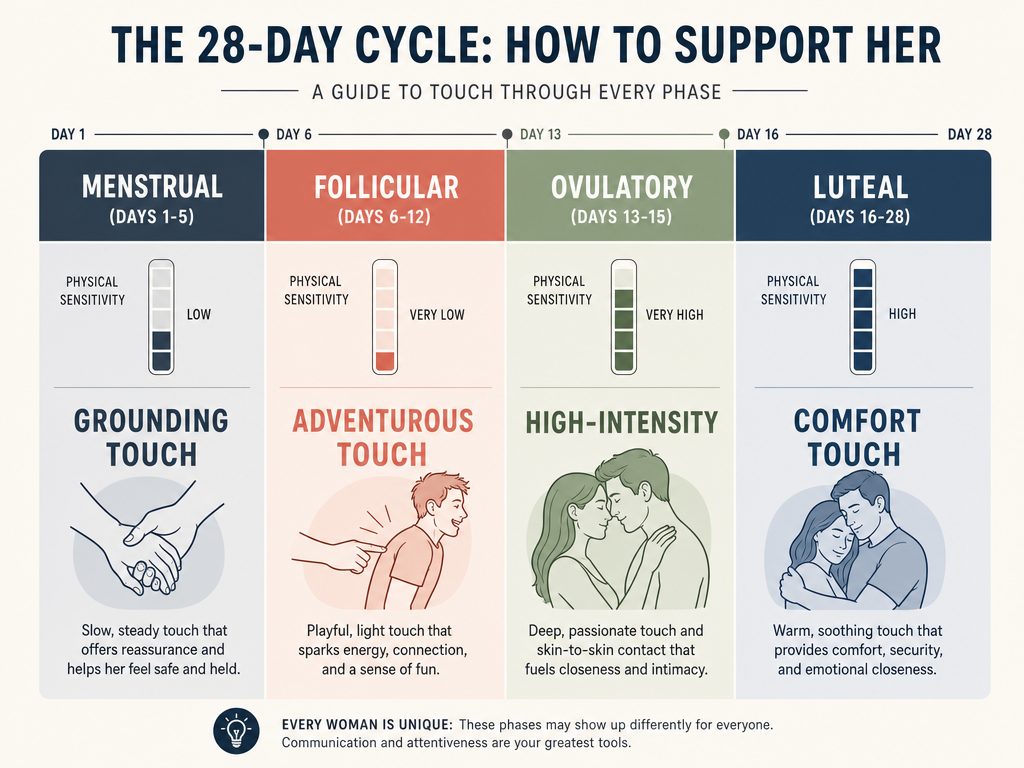 Understanding the four phases of the menstrual cycle helps partners identify the specific biological needs for physical affection and intimacy throughout the month.
Menstrual Phase (Day 1-5): Grounding Touch
When bleeding starts, both estrogen and progesterone are at their lowest. Energy drops, she may feel introspective or need more rest, and physical discomfort from cramps or back pain is common.
What she needs: Gentle, non-demanding touch that provides comfort without requiring reciprocal energy. Think hand-holding during a movie, light hair stroking while she rests, or simply sitting close without conversation. Heavy blankets or weighted items can mimic the grounding sensation of touch when she needs space.
Follicular Phase (Day 6-12): Playful, Frequent Touch
During the follicular phase, estrogen rises as an egg-containing follicle develops in the ovary. This rising estrogen also thickens the uterine lining and sets the stage for ovulation. Energy, creativity, and social motivation all tend to increase.
What she needs: Lighter, more spontaneous touch that matches her rising energy. Quick shoulder squeezes as you walk past, playful nudges during conversation, or trying something new together - rock climbing, dancing, or a cooking class. The key is frequency and variety, not intensity.
VibeCheck App
Download Free on iOS →Ovulatory Phase (Day 13-15): High-Intensity, Skin-to-Skin Touch
Ovulation happens when a surge in luteinizing hormone (LH) causes the ovary to release an egg, typically around day 14 of a 28-day cycle. Libido typically peaks in the days leading up to ovulation, and estrogen is at its highest. Confidence, social energy, and physical desire all hit their monthly peak.
What she needs: Bold, passionate, skin-to-skin contact. This is the biological window for intense physical connection - long embraces, back and neck focus, and sexual initiation are all more likely to be well-received. Her cervix may rise slightly during this phase, which can influence comfort in different physical positions.
Luteal Phase (Day 16-28): Comfort Touch and Long Hugs
After ovulation, the luteal phase begins: progesterone rises to help prepare the uterine lining for a possible pregnancy. If pregnancy doesn't happen, both progesterone and estrogen drop before the next period. Many women notice PMS-like symptoms in this phase - mood shifts, breast tenderness, bloating, acne, and appetite changes - though not everyone does.
What she needs: Sustained, reassuring touch that signals safety and lowers stress. Twenty-second hugs (long enough to trigger oxytocin release), gentle back rubs, and "parallel presence" - sitting together on the couch, bodies touching but not demanding interaction - are all effective. Avoid rough or high-impact physical play, especially if she mentions breast tenderness.
Why Touch Needs Change: The Biological Foundation
The link between hormones and touch isn't psychological - it's neurochemical. Estrogen boosts oxytocin production and makes the brain more sensitive to its positive bonding effects. When estrogen is high (follicular and ovulatory phases), her brain is primed to respond positively to touch, connection, and novelty.
Affectionate touch is directly associated with decreased self-reported anxiety, stress, and cortisol levels. This effect is especially important in the luteal phase, when progesterone's influence can increase sensitivity to stress and social threats.
Estrogen and progesterone influence "social monitoring," with the luteal phase (high progesterone) underlying a woman's increased sensitivity to social information and threats. This biological shift explains why she might be more vigilant about relationship dynamics, read into tone or body language more carefully, or need more reassurance during this phase.
Understanding these patterns doesn't mean you can predict her exact needs on a given day - a "normal" cycle varies a lot between women, with menstrual bleeding starting anywhere from every 24 to every 38 days and lasting up to 8 days. But recognizing the general rhythm gives you a framework for interpreting her signals.
The Luteal Phase: When Touch Becomes a Survival Tool
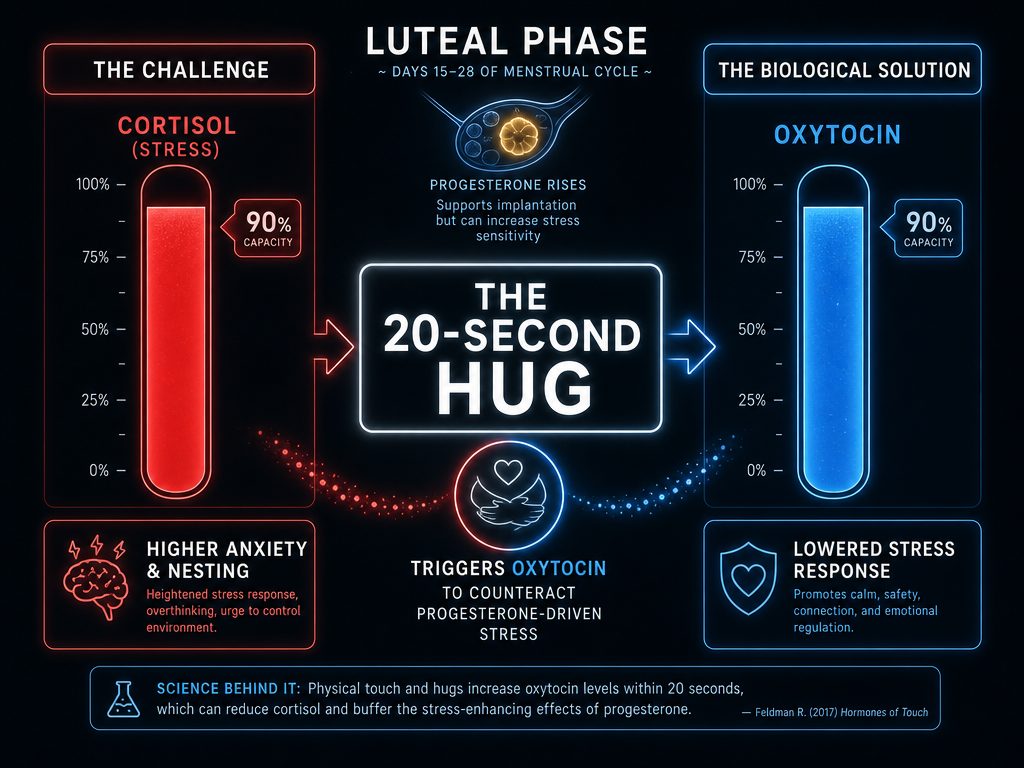 In the luteal phase, high progesterone can increase cortisol; a prolonged 20-second hug acts as a biological tool to release oxytocin and restore emotional balance.
The luteal phase is where most relationship friction occurs. As progesterone rises and then crashes before the next period, her stress response can become more reactive, and her need for emotional safety increases sharply.
This is when touch shifts from "nice to have" to "biologically necessary." Oxytocin - the bonding hormone released during sustained physical contact - directly counteracts cortisol, the stress hormone. A 20-second hug isn't romantic theater; it's a manual override for a system that's running hot.
The 20-second rule: Hold the embrace for a full 20 seconds, long enough for oxytocin release to kick in. Don't pull away early, don't check your phone, don't initiate conversation. Just hold steady and breathe.
This phase also demands different communication. When a partner is struggling emotionally, responding with genuine empathy - listening without judgment, focusing on their feelings rather than debating facts, and validating that their reaction makes sense - tends to help more than trying to "fix" the problem or offer silver linings. Feeling understood, not corrected, is what tends to defuse tension.
If she's asking for more help with chores or practical tasks during this phase, she's not being difficult - she's using her limited energy where it matters most. Lifestyle approaches that can help ease PMS symptoms include regular aerobic exercise, smaller/more frequent meals, less salt/caffeine/alcohol, adequate sleep, and stress-reduction practices like deep breathing or yoga. A partner who understands these and is patient around them (rather than dismissive of symptoms) is aligning with medically recommended self-care.
Reading the Physical and Behavioral Tells
You don't need to ask her what day she's on to understand what she needs. Her body and behavior signal which phase she's in - if you know what to watch for.
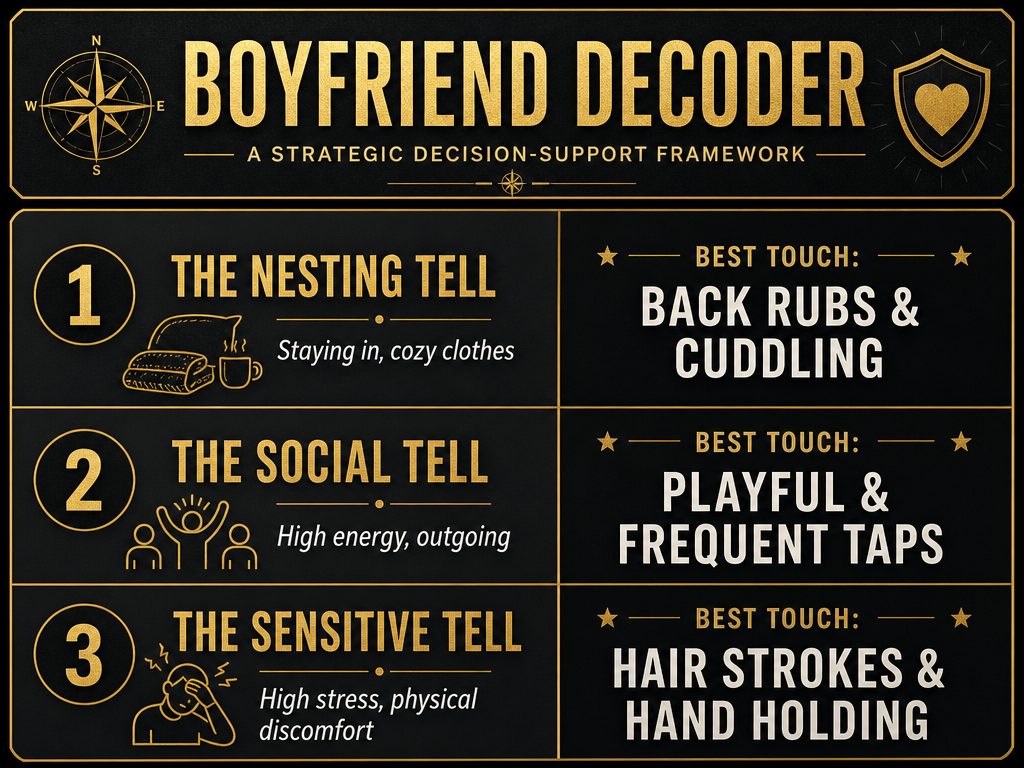 By observing subtle behavioral 'tells' like energy levels and social orientation, partners can accurately gauge which type of physical contact is most supportive.
Energy and Social Orientation
Is she planning back-to-back social events, saying yes to everything, and radiating outward energy? That's follicular or ovulatory. Match her with frequent, playful touch and adventurous plans.
Is she canceling plans, wanting to stay home, and focusing inward? That's likely luteal or menstrual. Provide steady, grounding touch and respect her need for lower-stimulation environments.
Physical Changes
Breast tenderness, bloating, or skin changes are common in the luteal phase. If she winces when you hug her or shifts away from rough contact, adjust your approach - gentler pressure, slower movements, and more space.
Around ovulation, many women notice symptoms such as increased sex drive, mild pelvic or abdominal pain, tender breasts, bloating, and mood changes - but these vary a lot person to person, and not everyone notices them. One consistent signal is cervical mucus: in the days just before ovulation, it becomes clear and slippery, which is the most fertile window of the cycle.
Some women experience mittelschmerz - one-sided lower abdominal pain around the time of ovulation. It's generally harmless, usually lasts minutes to a couple of days, and typically doesn't require medical treatment. How often mittelschmerz happens varies a lot: some women get it almost every cycle, others only occasionally or never.
Communication Style
If she's asking direct questions about relationship security ("Do you still think we're good?"), initiating deeper conversations, or bringing up issues from the past, she's likely in the luteal phase, when social sensitivity increases. This isn't insecurity - it's heightened awareness. Respond with reassurance and physical closeness, not defensiveness.
Which hormone is responsible for intimacy?
Oxytocin is often called the "bonding hormone" or "love hormone" because it's released during physical touch, orgasm, childbirth, and breastfeeding. But intimacy isn't driven by a single hormone - it's a coordinated dance between oxytocin, estrogen, progesterone, and testosterone.
Estrogen amplifies oxytocin's effects. When estrogen is high (follicular and ovulatory phases), the brain is more responsive to oxytocin's positive bonding signals. This is why touch during these phases tends to feel especially rewarding and why initiating intimacy is more likely to be well-received.
Testosterone, which also rises slightly around ovulation, is linked to sex drive and assertiveness. Progesterone, dominant in the luteal phase, tends to be calming but can also increase anxiety if stress is already present.
The practical takeaway: different phases require different types of connection. High-estrogen phases (follicular/ovulatory) are when novelty, passion, and intensity resonate most. High-progesterone phases (luteal) are when safety, routine, and comfort touch matter more.
Does oxytocin make men attached?
Yes. Oxytocin affects men and women similarly - it promotes bonding, trust, and emotional connection. Physical touch, cuddling, and sexual intimacy all trigger oxytocin release in men, which can deepen attachment to a partner.
The difference is context. Men tend to experience oxytocin surges during sexual activity and in moments of physical protection or caregiving. Women experience broader oxytocin release - through nonsexual touch, conversation, and social bonding.
This means the 20-second hug isn't just calming her down; it's also strengthening your own emotional investment in the relationship. Regular physical affection creates a feedback loop of attachment for both partners.
At what point in a woman's cycle is she most turned on?
Libido typically peaks in the days leading up to ovulation (late follicular phase) and decreases shortly after ovulation. This window - roughly days 10-15 of a 28-day cycle - is when estrogen and testosterone are both elevated, confidence is high, and physical desire is strongest.
After ovulation, libido tends to drop as progesterone rises and the body shifts into a more cautious, preparation-focused state. Sexual interest doesn't disappear, but the drive is generally lower, and the type of intimacy she wants may shift from passionate to comforting.
That said, there's wide variation. Around ovulation, many women notice symptoms such as increased sex drive, mild pelvic or abdominal pain, tender breasts, bloating, and mood changes - but these vary a lot person to person, and not everyone notices them. Some women report increased desire right before their period, possibly due to pelvic congestion or relief-seeking behavior.
The key is to track patterns over several cycles rather than assuming based on a single month. Tracking your own (or a partner's, with her participation) symptoms and mood changes across the cycle for a few months is a legitimate, medically endorsed way to identify real patterns and timing.
For a data-driven approach to understanding her cycle, tools like VibeCheck's period calculator can help you predict ovulation windows and better align your relationship support with her biological rhythm.
How to support girlfriend during luteal phase?
The luteal phase demands a shift from "doing things together" to "creating safety together." Her stress response is more sensitive, her need for reassurance is higher, and her tolerance for friction is lower.
Specific strategies:
Anticipate, don't react. If you know she's entering the luteal phase, plan ahead. Stock the house with her preferred comfort foods, clear your schedule for low-key evenings, and avoid scheduling stressful conversations or big decisions during this window.
Use the 20-second hug. When she seems stressed or withdrawn, initiate sustained physical contact. Don't ask if she's okay first - just hold her.
Validate without solving. When she brings up a concern, resist the urge to fix it immediately. Say, "That sounds really frustrating," or "I can see why that would upset you." Feeling understood, not corrected, is what tends to defuse tension.
Reduce decision fatigue. Offer to handle small choices - what's for dinner, which movie to watch - without making her negotiate. Decision-making drains cognitive resources she may not have in abundance right now.
Track it together. Use a shared tracking system (like a period app with partner mode) so you're both aware of where she is in her cycle. This removes the guesswork and helps you both prepare.
For men looking to understand their partner's cycle in depth, the boyfriend guide to menstrual cycle phases offers a comprehensive breakdown of what to expect and how to respond in each phase.
Are girls more affectionate on their period?
It depends on the person and the type of affection. During menstruation, estrogen and progesterone are both low, which can reduce libido and overall energy. Physical discomfort from cramps, back pain, or fatigue may make her less interested in high-energy activities or sexual intimacy.
However, the need for oxytocin - the bonding hormone released through touch - doesn't disappear. Many women crave reassurance touch during their period: hand-holding, gentle cuddling, or simply lying together. This is comfort-seeking, not necessarily sexual desire.
Some women do report increased sexual interest during menstruation, possibly due to pelvic congestion or hormonal relief as the body "resets" for a new cycle. But this is individual and not universal.
The safest assumption: she needs grounding, non-demanding touch during this phase. Don't initiate with sexual intent unless she signals interest. Instead, offer the kind of closeness that says, "I'm here, and I'm not going anywhere."
Frequently Asked Questions
What are the physical signs she wants to be touched?
Physical proximity is the clearest signal. If she's sitting or standing closer than usual, initiating casual touch (brushing your arm, touching your shoulder), or positioning herself in your personal space, she's signaling openness to contact. Sustained eye contact, leaning in during conversation, and mirroring your body language are all green lights.
During high-estrogen phases (follicular and ovulatory), she may be more direct - taking your hand, initiating hugs, or asking for physical closeness. During the luteal phase, she may not ask directly but will appreciate it if you initiate gently and without pressure.
How can you tell if your girlfriend is on her period?
Physical signs include bloating, breast tenderness, skin changes (breakouts or oiliness), and lower energy. Behavioral signs include a preference for staying home, reduced social energy, and a need for more rest or alone time.
Emotional sensitivity often increases right before and during menstruation due to the hormone drop. If she seems quicker to cry, more easily frustrated, or more withdrawn than usual, she may be in the late luteal or menstrual phase.
The most reliable method is simply tracking her cycle together. Apps like VibeCheck or Flo for Partners allow you to see predictions based on her input, removing the need to guess.
Does estrogen make you more attracted to men?
Estrogen doesn't "make" anyone attracted to men - sexual orientation is not determined by fluctuating hormone levels. However, estrogen does influence sexual desire and social orientation across the cycle.
When estrogen is high (around ovulation), research shows increased interest in novelty, social interaction, and physical attraction signals like symmetrical faces or confident body language. This doesn't change who you're attracted to, but it may intensify the experience of attraction.
What hormone is linked to horniness?
Testosterone is the primary hormone associated with libido in both men and women. Women produce testosterone in smaller amounts, and levels rise slightly around ovulation, contributing to the peak in sexual desire during that phase.
Estrogen also plays a role by increasing blood flow to sexual organs and enhancing sensitivity to touch. The combination of high estrogen and moderate testosterone around ovulation creates the strongest biological drive for sexual activity.
Does liking a girl trigger oxytocin?
Romantic attraction - the emotional high of new love or deepening connection - does involve oxytocin, but it's not the only player. Dopamine (the reward chemical), norepinephrine (the excitement chemical), and serotonin (the mood stabilizer) are all involved in the early stages of attraction.
Oxytocin becomes more central as the relationship deepens. It's released during physical touch, eye contact, and moments of trust, reinforcing the bond between partners. This is why regular physical affection - not just sexual activity - is critical to maintaining long-term connection.
Do guys release oxytocin when cuddling?
Yes. Men experience oxytocin release during cuddling, hugging, and other forms of nonsexual physical touch. This bonding effect is one reason why regular physical affection strengthens attachment in both partners.
Men may experience sharper oxytocin spikes during sexual activity and moments of caregiving (protecting a partner, offering physical support), while women tend to have broader oxytocin activation through conversation and emotional connection. But the underlying mechanism is the same: sustained, affectionate touch promotes bonding.
The bottom line: Your girlfriend's need for physical touch isn't random or unpredictable. It follows a biological rhythm tied to her menstrual cycle. High-estrogen phases (follicular and ovulatory) call for playful, frequent, and intense touch. High-progesterone phases (luteal) demand sustained, reassuring, comfort-focused touch. Menstruation requires gentle, grounding closeness without expectation.
By learning to read her signals - energy level, social orientation, physical symptoms, and communication style - you can provide the right kind of support at the right time. This doesn't require perfection; it requires awareness and effort. Track her cycle with her consent, adjust your approach phase by phase, and remember that the goal isn't to control her experience but to meet her where she is.
For men ready to move beyond guesswork, VibeCheck offers cycle-based relationship guidance designed to help you understand your partner's needs and become a more attuned, responsive partner.
Tags

Related Articles
Continue reading to deepen your understanding

How to Understand Your Girlfriend’s Social Battery and Hormones
Does your girlfriend suddenly cancel plans or seem withdrawn? This guide explains how her cycle impacts her energy so you can support her like a pro.

How Your Girlfriend’s Emotional Needs Change During Her Cycle
Does your girlfriend’s mood seem unpredictable? Learn how her emotional needs shift on a biological loop and how to support her through every phase of her cycle.

What to Buy When Your Girlfriend Has Hormone Cravings: A Support Guide
Stop wondering what to pick up at the store. This guide explains the science behind cycle cravings and provides a specific list of foods and comfort items she needs.

Your Girlfriend’s Mood Shifts Throughout the Month, Explained
Ever wonder why her energy and moods change so drastically each week? Understand the four hormonal phases and how to be the partner she needs during every stage of her cycle.

How to Support Your Girlfriend When She’s Crying Because of Hormones
Watching her cry when hormones hit can feel overwhelming. Learn the biological why behind the tears and use these proven scripts to provide the support she actually needs right now.

How to Help Your Girlfriend with Hormonal Mood Swings Without Arguing
Understand her cycle and learn tactical scripts to handle tension. This guide shows you how to support her through hormonal shifts without getting into unnecessary fights.

When to Feed Your Girlfriend: Understanding Hangry Hormones
Does your girlfriend get irritable when she hasn’t eaten? It’s not just in her head. Learn why hormones cause hanger and the specific times her body needs more fuel.

The Boyfriend’s Guide to Supporting Your Partner Through PMS
If your partner is suddenly irritable and exhausted, it’s biology, not you. Learn about the luteal phase and how to provide meaningful support without walking on eggshells.