How to Plan Dates Around Your Girlfriend’s Hormone Cycle

Stop the guesswork and start planning dates she actually wants to be on. Align your social plans with her biological rhythm to reduce friction and create effortless experiences.
How to Plan Dates Around Your Girlfriend's Hormone Cycle: The Strategic Partner's Playbook
You've noticed the pattern. She's excited about hiking one weekend and barely wants to leave the couch the next. You planned a surprise dinner at that new restaurant, but she's overwhelmed and snaps at you. A week later, the same date idea gets an enthusiastic yes.
You're not imagining it. Her energy, mood, and social bandwidth shift throughout the month - not randomly, but on a predictable 28-day biological rhythm. Most men treat these shifts like unpredictable weather. Elite partners understand the menstrual cycle has four distinct phases, each with its own energy profile and ideal activities.
This isn't about walking on eggshells or "managing" her. It's about stopping the guesswork and becoming the partner who consistently plans dates she actually wants to be on. Because when you align your plans with her biological rhythm, you reduce friction and create experiences that feel effortless instead of exhausting.
Table of Contents
- The Four Seasons Framework: Your Planning Blueprint
- How to Have "The Conversation" About Cycle-Informed Dating
- Phase-by-Phase Date Planning Guide
- The Birth Control Exception: When the Cycle Doesn't Apply
- The Luteal Phase Survival Guide: Navigating Her Storm Week
- Biological Context: Why Her Energy and Mood Actually Shift
- Frequently Asked Questions
The Four Seasons Framework: Your Planning Blueprint
Her cycle isn't a medical mystery - it's a repeating pattern with four distinct phases, each lasting roughly a week. Think of them as seasons, each with its own weather forecast.
Winter (Menstrual Phase, Days 1-5): Energy and mood hit their lowest point. Her body is shedding the uterine lining, often with cramps, fatigue, and a strong preference for rest. This is hibernation mode.
Spring (Follicular Phase, Days 6-13): Estrogen starts climbing. As the follicle develops in her ovary, energy builds, creativity peaks, and she's more open to trying new things. This is her biological renewal phase.
VibeCheck App
Download Free on iOS →Summer (Ovulation, Days 14-16): Peak fertility brings peak everything. Estrogen levels are highest in the days leading up to ovulation, driving confidence, social energy, and physical stamina to their monthly high. She's in her biological showtime phase.
Autumn (Luteal Phase, Days 17-28): Progesterone rises after ovulation, preparing the body for a possible pregnancy. When pregnancy doesn't occur, both progesterone and estrogen crash before her period. This phase brings increased sensitivity, lower social bandwidth, and a preference for familiar comfort over novelty. It's her biological wind-down.
Keep in mind: Normal cycles vary significantly between women - bleeding can start anywhere from every 24 to 38 days and last up to 8 days. These day ranges are approximate guides, not fixed rules.
 Aligning your date activities with your partner's hormonal seasons helps minimize friction and maximizes quality time by matching her natural energy levels.
How to Have "The Conversation" About Cycle-Informed Dating
Before you start tracking anything, you need permission. This isn't about secretly monitoring her body - it's about becoming a better partner through shared understanding.
Here's a three-step script that frames this as supportive, not controlling:
1. Start with your intent, not her biology.
"I've been reading about how energy and mood shift throughout the month, and I realized I've been planning dates without considering what you might actually be in the mood for. I want to get better at that."
2. Ask for her input, not her data.
"Would it help if I had a better sense of when you're feeling high-energy versus when you need more low-key plans? I don't need to track anything formally - I just want to stop planning hiking trips when you'd rather be on the couch."
3. Offer autonomy and respect her boundaries.
"If you'd rather keep your cycle private, that's completely fine. But if you're open to sharing patterns - even just 'this week is a rest week' or 'I'm in a social mood' - I'd love to use that to plan better dates."
Many women will appreciate the effort. Some may even share access to their period tracker. Others may prefer to communicate patterns verbally. Both approaches work - what matters is that you're asking, not assuming.
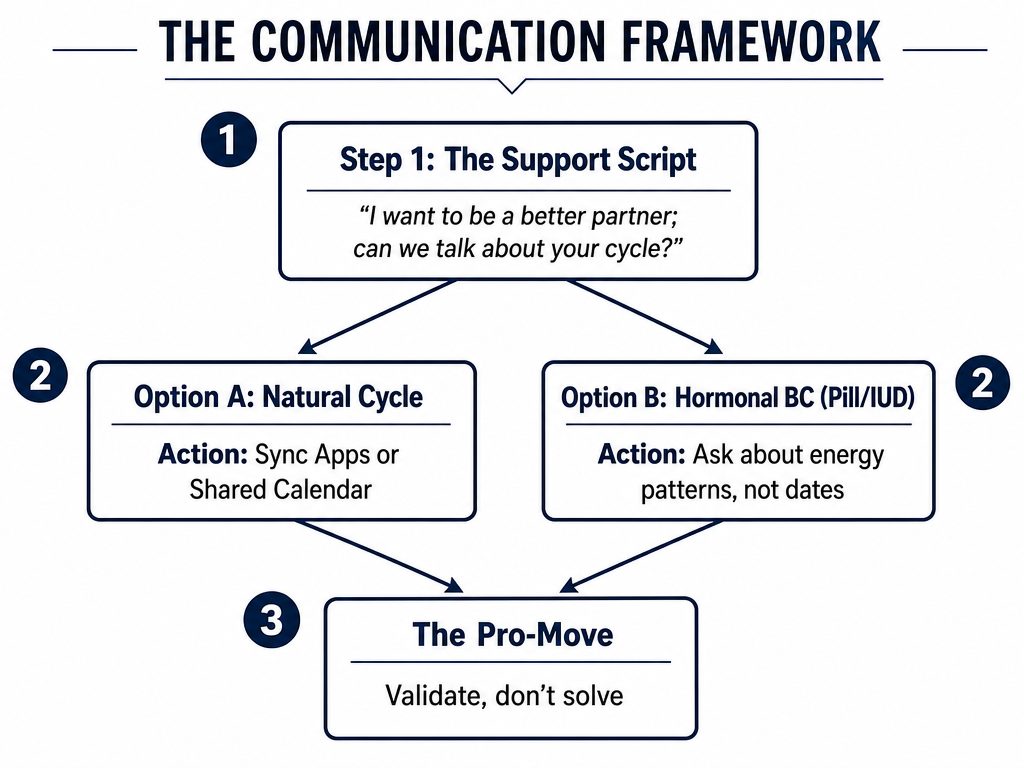 Effective cycle-informed dating starts with a supportive conversation. Use this framework to determine if you should track via an app or observe energy patterns.
Phase-by-Phase Date Planning Guide
Once you understand her cycle, planning becomes strategic instead of guesswork. Here's what works best in each phase.
Winter (Menstrual Phase): The Home Spa Date
Her Vibe: Low energy, physical discomfort, strong preference for rest and familiar comfort.
What to Plan: Takeout at home, movie marathon, a heating pad and her favorite snacks ready without her asking. This is not the week for surprise adventures or high-effort outings.
Pro-Move: Handle logistics so she doesn't have to think. Order her favorite meal, set up a cozy spot on the couch, and have ibuprofen or a heating pad within arm's reach before she asks. Roughly half of people who menstruate report having at least one PMS symptom, but only about 1 in 5 have symptoms severe enough to disrupt daily life - so gauge her needs, don't assume.
What NOT to Do: Book tickets to anything that requires her to be "on" socially. Don't suggest a spontaneous road trip. Don't act like she's being dramatic if she needs to cancel plans.
Spring (Follicular Phase): The Learning Experience
Her Vibe: Rising energy, openness to novelty, creative and curious.
What to Plan: Try that new restaurant. Book a cooking class. Explore a neighborhood you've never been to. Women in the follicular phase show significantly higher activation in brain reward centers compared to the luteal phase, making this the ideal window for new experiences.
Pro-Move: Surprise her with something she's mentioned wanting to try. She's more likely to say yes to spontaneous plans during this phase.
What NOT to Do: Play it safe with the same dinner-and-a-movie routine. This is her biological renewal phase - lean into novelty.
Summer (Ovulation): The Night Out
Her Vibe: Peak confidence, social energy at its monthly high, physically at her best.
What to Plan: The concert she mentioned months ago. Dancing. A group dinner with friends. Around ovulation, many women notice increased sex drive, along with other symptoms like mild pelvic discomfort, tender breasts, and mood changes - though these vary significantly person to person.
Pro-Move: Give heavy, specific compliments. Tell her exactly what you notice and appreciate - she's in her most receptive window for feeling seen.
What NOT to Do: Waste this phase on low-energy couch dates. She's in biological showtime mode - match her energy.
The Caveat: Some women experience mittelschmerz - one-sided lower abdominal pain during ovulation. If she's dealing with this, active or high-intensity dates may not land well. Check in rather than assume.
Autumn (Luteal Phase): The Comfort Date
Her Vibe: Increased sensitivity, lower social bandwidth, preference for familiar routines and emotional safety.
What to Plan: A quiet walk at sunset. Dinner at the place you always go. Staying in with her favorite show. Many women notice PMS-like symptoms in this phase - mood shifts, bloating, acne, and appetite changes - though not everyone does.
Pro-Move: Validate feelings without trying to fix them. When she's frustrated or overwhelmed, responding with genuine empathy tends to help more than trying to "fix" the problem. Say "That sounds really frustrating" instead of "Here's what you should do."
What NOT to Do: Plan a surprise party. Book a trip that requires travel logistics. Start a serious conversation about finances or future plans. Save high-stakes discussions for the follicular phase when her nervous system is calmer.
If you want a tactical breakdown of how to support her during the luteal phase specifically, check out our partner's guide to the luteal phase.
The Birth Control Exception: When the Cycle Doesn't Apply
Here's what most cycle-syncing content ignores: hormonal birth control (the Pill, hormonal IUDs, implants) suppresses the natural ovulatory cycle. If your girlfriend is on hormonal contraception, she won't experience the estrogen peaks and progesterone waves described above.
That doesn't mean her energy and mood are completely flat - stress, sleep, nutrition, and life circumstances still matter. But the biological "Four Seasons" framework doesn't apply in the same way.
What to do instead: Ask her directly about her energy patterns. Does she notice predictable shifts? Does she feel better or worse at certain times of the month, even without ovulation? Some women on the Pill still experience withdrawal bleeding and associated symptoms during their placebo week. Others don't notice much variation at all.
The key principle remains: don't assume. If she's on hormonal birth control, your job is to observe and ask, not to impose a cycle framework that may not match her lived experience.
The Luteal Phase Survival Guide: Navigating Her Storm Week
The luteal phase - the week or so before her period - is when most relationship friction happens. Not because she's "crazy" or "hormonal," but because her nervous system is going through a measurable biological shift.
Progesterone metabolites act directly on GABA-A receptors in the brain, influencing anxiety and mood stability. When progesterone drops sharply before her period, so does this calming effect - leaving her more sensitive to stress, criticism, and perceived slights.
Add to that: energy intake is significantly lower in the follicular phase compared to the luteal phase, which often sees increased appetite. Serum magnesium levels also fluctuate during the cycle, typically reaching their lowest point during the premenstrual phase. Her body is literally demanding more fuel while simultaneously becoming more reactive to emotional input.
Here's how to support her without making it worse:
Don't use logic to argue her out of feelings. When she says "You never listen to me," responding with "That's not true, I listened yesterday" will backfire. Instead, validate first: "I hear you. Tell me more about what made you feel that way."
Anticipate needs before she asks. If you know she's in the luteal phase, restock her favorite snacks. Offer to handle dinner. Ask "Do you want company or space tonight?" instead of waiting for her to tell you.
Don't take irritability personally. She's not mad at you specifically - her nervous system is more reactive to everything. Avoid defensiveness. Stay calm. Give her room to vent without needing to defend yourself in the moment.
Know when to postpone difficult conversations. If you need to discuss something important, wait until the follicular phase when her emotional bandwidth is higher. Bringing up a contentious topic during the luteal phase is like choosing to negotiate during a storm.
For a deeper breakdown of what's happening biologically and how to respond, read our guide on how to support your girlfriend during the luteal phase.
Biological Context: Why Her Energy and Mood Actually Shift
Understanding the mechanism matters. This isn't about excusing behavior or treating her like she's "controlled by hormones." It's about recognizing that there is general research support for hormone-linked differences in mood and energy across the cycle - energy tends to be lower during the period and can build through the follicular phase toward ovulation, with PMS-type symptoms more likely in the luteal phase.
Here's what's happening under the surface:
Estrogen affects brain function and mood. Estrogen affects many body systems, including brain function and the ability to focus, and levels are highest in the days leading up to ovulation. Medical sources describe this brain effect in general terms; they don't specify an exact neurotransmitter pathway for how estrogen affects day-to-day mood. But the lived experience is real: higher estrogen correlates with better mood, more energy, and increased openness to social interaction.
Progesterone is calming - until it drops. After ovulation, progesterone rises to prepare the body for pregnancy. One of its metabolites, allopregnanolone, enhances GABA activity in the brain, which has a calming, anti-anxiety effect. When progesterone crashes right before her period, that calming buffer disappears - and anxiety, irritability, and emotional sensitivity spike.
The luteal phase is metabolically demanding. Her body is preparing for a pregnancy that isn't happening, which means increased caloric needs and nutrient demands. When magnesium dips and appetite rises, cravings intensify. This isn't a character flaw - it's biology.
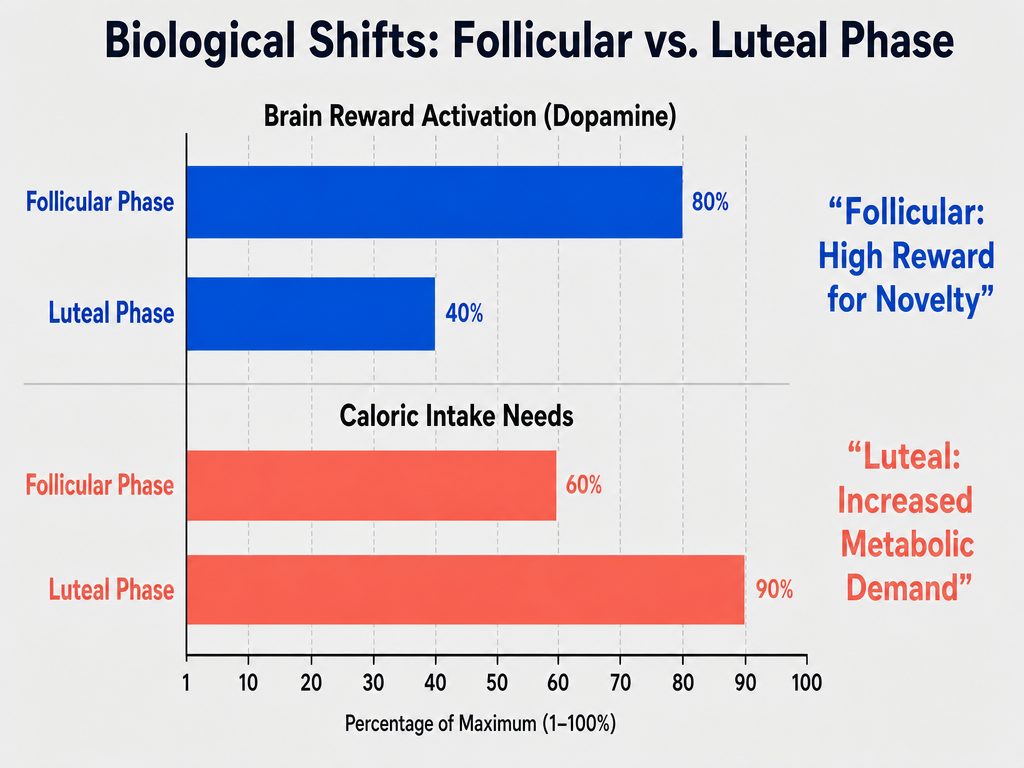 Scientific data indicates that while the follicular phase is ideal for trying new things, the luteal phase requires more physical energy and comfort-focused support.
If you want to learn more about how hormones influence mood and energy throughout the month, check out our guide on understanding your partner's cycle.
Frequently Asked Questions
What should a man do during his girlfriend's menstruation?
Focus on reducing her physical and mental load. Offer to pick up dinner, handle errands, or simply give her space to rest. Lifestyle approaches that can help ease PMS symptoms include regular aerobic exercise, smaller/more frequent meals, less salt/caffeine/alcohol, adequate sleep, and stress-reduction practices like deep breathing or yoga. A partner who understands these and is patient around them is aligning with medically recommended self-care, not indulging an excuse.
If she's in pain, have ibuprofen or a heating pad ready without her needing to ask. The key is anticipating needs rather than waiting for her to spell them out. For a complete breakdown, read our guide on what to do when your girlfriend is on her period.
Is there a period cycle app specifically for men?
Yes. Apps like VibeCheck, Flo for Partners, and Clue Partner Connect allow men to track their partner's cycle and receive insights tailored to supportive actions. Some apps provide daily prompts or "missions" based on cycle phase, while others focus on data transparency and symptom tracking.
The best option depends on what you're looking for: tactical guidance, shared data access, or simply cycle awareness. Compare the top options in our guide to the best period tracker apps for men.
How do GABA receptors change during the luteal phase of the menstrual cycle?
Progesterone metabolites like allopregnanolone act directly on GABA-A receptors in the brain, enhancing the calming effects of GABA. This is why the early luteal phase (right after ovulation) can feel stable or even pleasant. But when progesterone drops sharply in the late luteal phase, that GABA-enhancing effect disappears - and anxiety, irritability, and emotional reactivity spike.
This isn't just "being moody." It's a measurable shift in how her nervous system processes stress and emotion.
What hormone is linked to libido during the cycle?
Around ovulation, many women notice symptoms such as increased sex drive, driven by peak estrogen levels and the body's biological fertility window. This is the phase when she's most likely to initiate sex or be receptive to advances.
However, libido is complex and influenced by more than just hormones - stress, relationship satisfaction, sleep, and physical comfort all matter. If she's dealing with ovulation pain, for example, that fertility window may feel less appealing. For more on this, check out our guide on libido and ovulation.
Is estrogen higher in the follicular or luteal phase?
During the follicular phase, estrogen rises as an egg-containing follicle develops in the ovary. It peaks just before ovulation, then drops slightly afterward. In the luteal phase, estrogen rises again but not to the same peak levels. Near the end of the luteal phase, both estrogen and progesterone crash, which is what triggers PMS symptoms.
So yes, estrogen is higher - and climbing - during the follicular phase, especially in the days leading up to ovulation.
Do you need more magnesium in the luteal phase?
Serum magnesium levels fluctuate during the cycle, typically reaching their lowest point during the premenstrual phase. This is one reason many women crave magnesium-rich foods (like dark chocolate) in the days before their period.
While magnesium supplementation or dietary sources can help ease PMS symptoms like cramps and mood swings, it's not a cure-all. If her symptoms are severe, roughly 1 in 10 people who menstruate experience PMDD - a clinically recognized condition that requires more than snacks and supplements.
When are you skinniest in your cycle?
Weight fluctuations during the cycle are primarily driven by water retention, not fat loss. Many women notice they feel or look "leaner" in the follicular phase because estrogen can reduce water retention. In the luteal phase, progesterone increases water retention and bloating, which can make the scale go up by a few pounds.
This is temporary and biological - not a reflection of actual fat gain or loss. If you're planning a beach trip or photoshoot, the follicular phase may feel more comfortable, but framing any phase as "skinniest" misses the point.
What is day 3 of the menstrual cycle?
Day 3 of the menstrual cycle is the third day of bleeding, still within the menstrual phase. The menstrual phase typically lasts from day 1 to day 5, though this varies between women. Energy is still low, and physical discomfort may persist.
This is not the time to plan high-energy activities. Keep plans low-key and supportive.
Does magnesium lower estrogen?
No. Magnesium does not directly lower estrogen levels. It supports overall hormone metabolism and can help ease symptoms related to hormonal fluctuations, but it's not a mechanism for reducing estrogen specifically.
If estrogen dominance is a concern, that's a medical issue requiring consultation with a healthcare provider - not something you can fix with supplements alone.
Cycle-informed dating isn't about tracking her like a science experiment. It's about understanding that her energy, mood, and social bandwidth shift on a predictable loop - and using that knowledge to plan dates she actually wants to be on.
Track her cycle with a supportive tool or simply ask her where she is in the month. Match your date plans to her biological rhythm. Show up with empathy, not defensiveness, when the luteal phase hits. And remember: tracking your own (or a partner's, with her participation) symptoms and mood changes across the cycle for a few months is a legitimate, medically endorsed way to identify real patterns - rather than assuming based on stereotypes or a single cycle.
You're not managing her hormones. You're becoming the partner who understands them.
Tags

Related Articles
Continue reading to deepen your understanding

How to Understand Your Girlfriend’s Social Battery and Hormones
Does your girlfriend suddenly cancel plans or seem withdrawn? This guide explains how her cycle impacts her energy so you can support her like a pro.

How Your Girlfriend’s Emotional Needs Change During Her Cycle
Does your girlfriend’s mood seem unpredictable? Learn how her emotional needs shift on a biological loop and how to support her through every phase of her cycle.

What to Buy When Your Girlfriend Has Hormone Cravings: A Support Guide
Stop wondering what to pick up at the store. This guide explains the science behind cycle cravings and provides a specific list of foods and comfort items she needs.

Your Girlfriend’s Mood Shifts Throughout the Month, Explained
Ever wonder why her energy and moods change so drastically each week? Understand the four hormonal phases and how to be the partner she needs during every stage of her cycle.

How to Support Your Girlfriend When She’s Crying Because of Hormones
Watching her cry when hormones hit can feel overwhelming. Learn the biological why behind the tears and use these proven scripts to provide the support she actually needs right now.

How to Help Your Girlfriend with Hormonal Mood Swings Without Arguing
Understand her cycle and learn tactical scripts to handle tension. This guide shows you how to support her through hormonal shifts without getting into unnecessary fights.

When to Feed Your Girlfriend: Understanding Hangry Hormones
Does your girlfriend get irritable when she hasn’t eaten? It’s not just in her head. Learn why hormones cause hanger and the specific times her body needs more fuel.

The Boyfriend’s Guide to Supporting Your Partner Through PMS
If your partner is suddenly irritable and exhausted, it’s biology, not you. Learn about the luteal phase and how to provide meaningful support without walking on eggshells.