How to Help Your Girlfriend During the Luteal Phase: The Partner’s Tactical Guide

Your girlfriend’s energy crash isn’t laziness; it’s a biological shift. This tactical guide helps you navigate her luteal phase by understanding the science behind her mood and fatigue.
How to Help Your Girlfriend During the Luteal Phase: The Partner's Tactical Guide
Your girlfriend went from planning trips to barely responding. She's exhausted, irritable, and suddenly everything you do feels wrong. It's not you - it's the luteal phase, and it's happening on a biological loop you can predict and manage.
This guide explains why her energy crashes, what's actually happening in her body, and exactly what to do to minimize conflict and help her through it.
Table of Contents
- What Is the Luteal Phase?
- Why Does She Have Zero Energy Before Her Period?
- The Biological Triggers Behind the Mood Shift
- How to Tell She's in the Luteal Phase Without Asking
- The Tactical 3-Pillar Support Framework
- The Red Zone Rules: What Not to Do
- When Is This a Medical Issue?
- Frequently Asked Questions
What Is the Luteal Phase?
The luteal phase is the two-week window after ovulation and before the next period starts. It typically lasts 10 to 14 days. After ovulation, progesterone rises to help prepare the uterine lining for a possible pregnancy. If pregnancy doesn't happen, both progesterone and estrogen drop sharply before the next period.
This hormonal crash is what drives the mood shifts, breast tenderness, bloating, acne, and appetite changes commonly associated with PMS. Not everyone experiences them, but many women do - and the intensity varies widely.
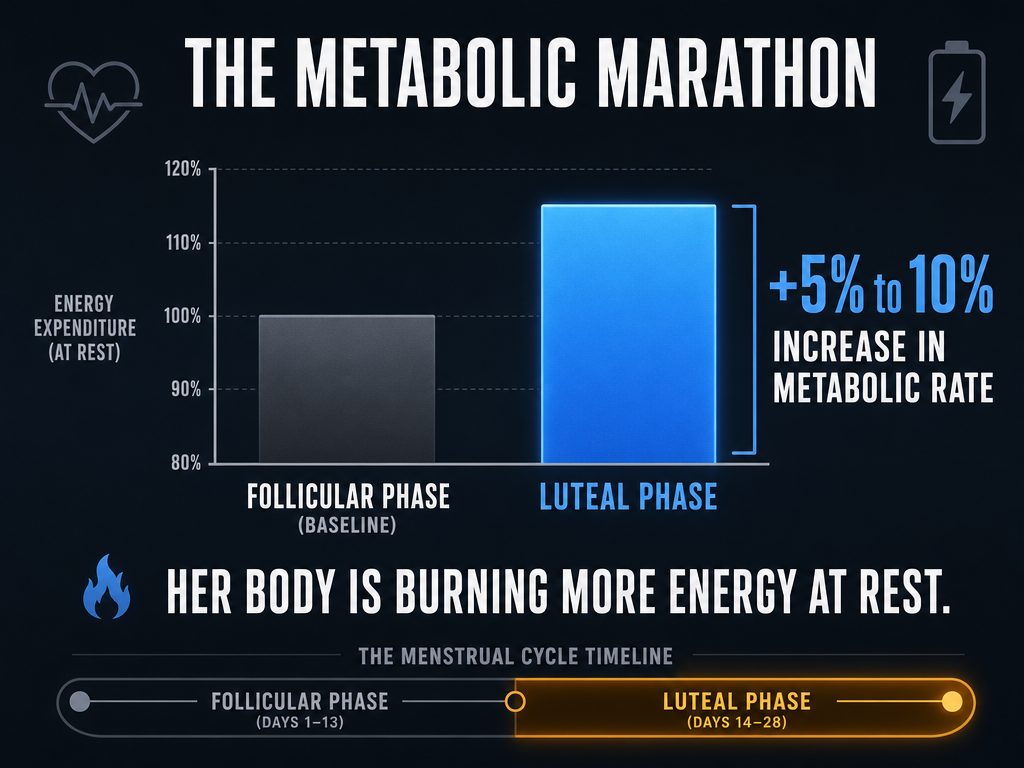 During the luteal phase, a woman's Resting Metabolic Rate increases by up to 10%, meaning her body is working significantly harder even while resting.
Why Does She Have Zero Energy Before Her Period?
She's not lazy. She's running a marathon while sitting on the couch.
Research shows that energy expenditure can increase by approximately 6.1% during the luteal phase. Another study found that 47% of studies reported an increase in resting metabolic rate (RMR) favoring the luteal phase, with metabolic rate peaking considerably during the late luteal phase.
VibeCheck App
Download Free on iOS →Her body is building and maintaining a life-support system - the uterine lining - in preparation for a possible pregnancy. This biological work happens 24/7, even when she's sleeping. Core body temperature rises approximately 0.3°C to 0.5°C after ovulation and stays elevated throughout the luteal phase, adding to the physical drain.
The result: she burns more energy at rest, which means she has less energy for everything else. This isn't about willpower or motivation. It's physiology.
The Biological Triggers Behind the Mood Shift
The progesterone crash does more than cause physical symptoms. It directly affects brain chemistry.
Progesterone supports GABA (gamma-aminobutyric acid), the brain's "natural chill" neurotransmitter. When progesterone drops, GABA receptors lose their fuel. The result is heightened anxiety, shorter fuse, and amplified emotional reactions to things that normally wouldn't register.
Research shows that mental fatigue can rise to "pathological levels" in the luteal phase even in women without generalized anxiety. This isn't about her having a "bad attitude." It's a measurable neurochemical shift.
Understanding this distinction is critical. When you recognize that her irritability or withdrawal is driven by a biological event - not a relationship crisis - you stop taking it personally and start responding strategically.
How to Tell She's in the Luteal Phase Without Asking
You don't need to ask "Are you on your period?" to understand what's happening. Watch for these behavioral and physical cues:
Energy Shift
- She cancels plans she was excited about days ago
- She chooses the couch over social activities
- She's exhausted despite sleeping normally
Mood Changes
- She's more irritable or tearful without a clear trigger
- She's more sensitive to criticism or perceived slights
- Small problems feel overwhelming to her
Physical Symptoms
- Bloating or feeling "puffy"
- Breast tenderness
- Cravings for salt, sugar, or carbs
- Mild acne or skin changes
Social Battery
- She needs more alone time
- She's less interested in conversation
- She wants physical closeness but minimal interaction
If you see three or more of these signs together, she's likely in the luteal phase. Tracking these patterns for a few months helps you identify her specific rhythm instead of assuming based on stereotypes.
The Tactical 3-Pillar Support Framework
Most guides say "help out." That's not specific enough. Here's what actually works.
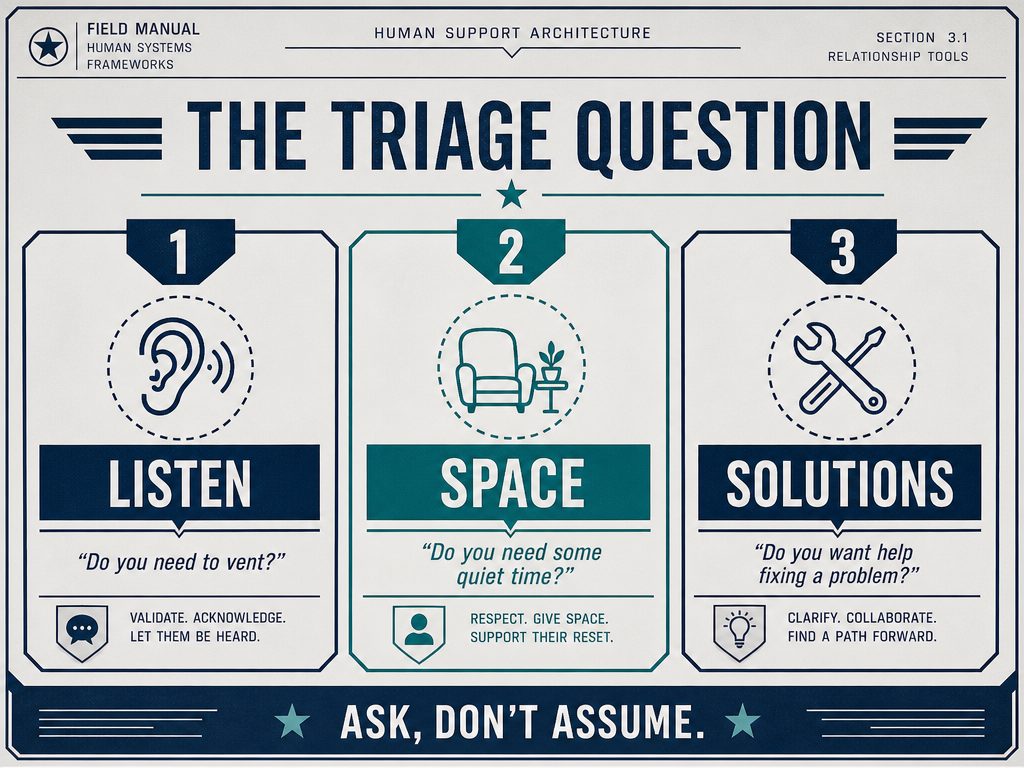 Using the Triage Question helps men avoid the 'fix-it' trap and provides exactly the type of support their partner needs in the moment.
Pillar 1: Physical Support (Handle the Mental Load)
Don't wait for her to ask. Take ownership of the invisible labor that taxes her already-strained cognitive bandwidth:
- Meal planning: Don't ask "What's for dinner?" - decide, order, or cook
- Household admin: Restock essentials (soap, toilet paper, coffee) before she notices they're low
- Visual clutter: Clear the counters, put away laundry, tidy shared spaces
- Logistics: Handle appointment confirmations, package pickups, bill payments
The goal is to remove decisions from her plate, not add "helping out" to her mental checklist.
Pillar 2: Emotional Support (Use the Triage Question)
When she's upset, responding with genuine empathy - listening without judgment and validating that her reaction makes sense - tends to help more than trying to "fix" the problem.
Ask the Triage Question before you respond:
"Do you want me to listen, give you space, or help find a solution?"
This simple script avoids the risk of both ignoring her and over-talking. It puts her in control of the support she needs in that moment.
What "Listen" Looks Like:
- Sit with her without offering advice
- Reflect what she's saying: "That sounds incredibly frustrating"
- Don't interrupt or redirect to a silver lining
What "Space" Looks Like:
- Leave her alone without taking it personally
- Check in once: "I'm here if you need me"
- Don't sulk or act hurt
What "Solutions" Looks Like:
- Ask clarifying questions first
- Offer one specific idea, not a list
- Accept if she says "never mind" - she might just need to vent
Pillar 3: Environmental Support (Create a Sensory Sanctuary)
Luteal phase sensitivity isn't just "mood" - it's often sensory overload. Lights feel brighter, sounds are louder, and small annoyances compound into overwhelm.
Make your shared space less taxing:
- Lighting: Dim overhead lights, use lamps instead
- Sound: Lower TV volume, reduce background noise
- Temperature: Keep the space cool (remember, her body temperature is elevated)
- Smell: Avoid strong colognes, cook less pungent meals
- Visual: Clear counters, put away clutter that creates "visual noise"
This isn't about indulging her. Lifestyle approaches that can help ease PMS symptoms include stress-reduction practices and adequate sleep, and creating a calm environment supports both.
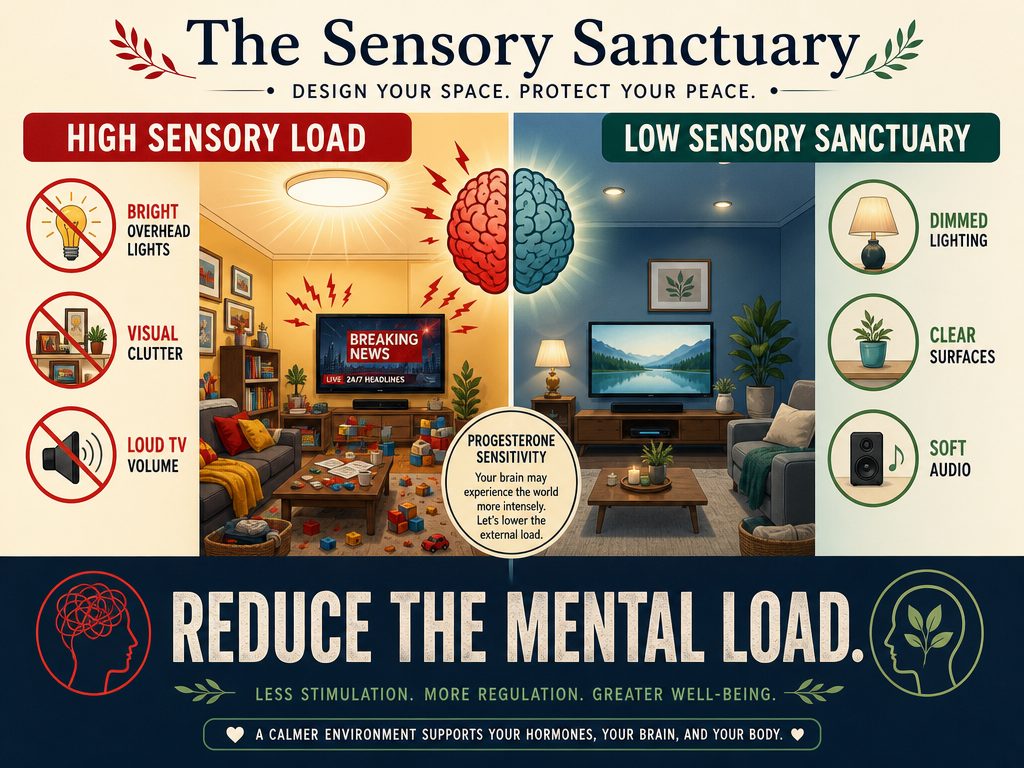 Creating a 'Sensory Sanctuary' by dimming lights and clearing clutter reduces the environmental stress on a partner already experiencing heightened sensitivity.
The Red Zone Rules: What Not to Do
The last 5 to 7 days before her period are the biological "red zone." Small conflicts can spiral into relationship-defining fights if you don't follow these guardrails.
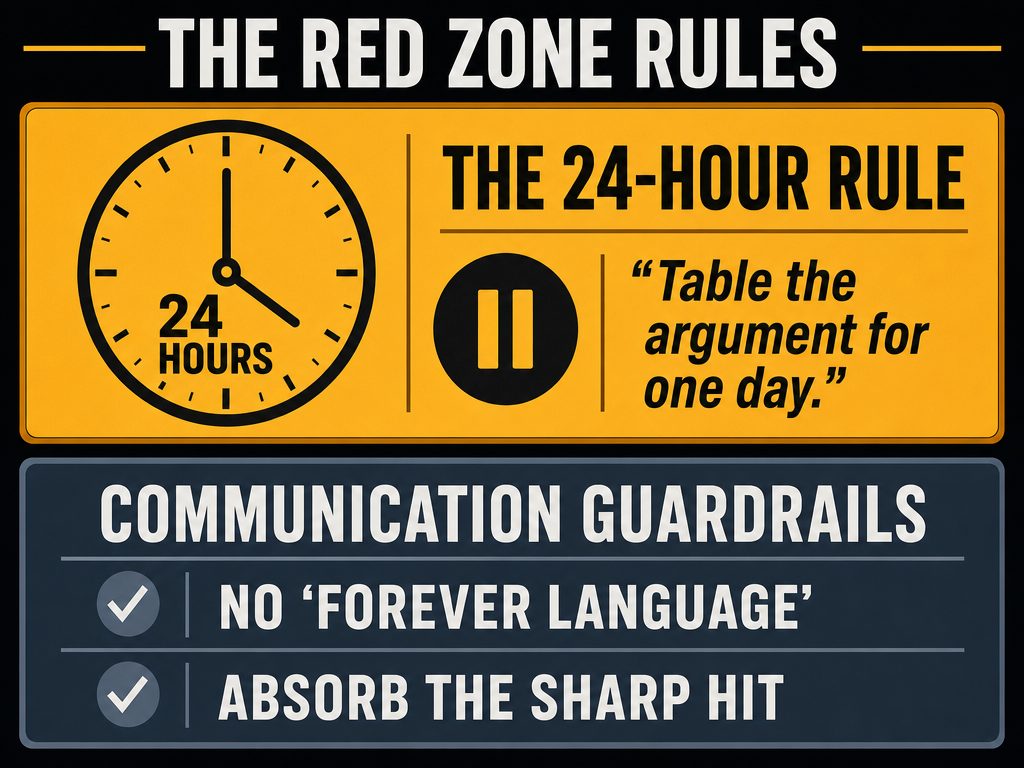 Establishing clear rules like the 24-Hour Rule prevents temporary hormonal shifts from causing permanent relationship damage through 'forever language.'
Rule 1: No "Forever Language"
If she says "I can't do this anymore" or "We're not compatible," do not engage in that conversation right now.
The neurochemical crash amplifies negative thinking. She's not lying, but she's also not seeing clearly. Respond with:
"I hear you, and I want to talk about this when you're feeling more like yourself. Can we table it for a few days?"
Revisit the conversation 3 to 5 days after her period starts, when her serotonin and progesterone have stabilized.
Rule 2: The 24-Hour Rule
If an argument starts, pause it. Say:
"I don't want to make this worse. Let's pick this up tomorrow when we've both had time to think."
Most "red zone" fights aren't about the stated issue - they're about the hormonal amplification of that issue. A 24-hour delay removes the biological magnifier.
Rule 3: Absorb the "Sharp Hit"
If she says something uncharacteristically mean, don't retaliate.
Her short fuse is driven by the GABA receptor crash we discussed earlier. If you respond with equal heat, you're fighting biology, not her. Instead:
- Exit the conversation calmly
- Revisit it 3 days after her period starts
- Use a neutral script: "Last week you said X. Did you mean that?"
Nine times out of ten, she'll apologize on her own once her brain chemistry normalizes.
Rule 4: Don't Suggest a Workout
Yes, regular aerobic exercise can help ease PMS symptoms, but telling her to "go for a run" when she's exhausted will backfire.
If you want to support movement, suggest a gentle walk together - not a high-intensity activity. Frame it as time together, not as a fix.
When Is This a Medical Issue?
Most women experience some PMS symptoms during the luteal phase. As many as 3 in 4 women report experiencing PMS at some point in their life, though severity varies widely. However, roughly half of people who menstruate report having at least one PMS symptom, but only about 1 in 5 have symptoms severe enough to disrupt their daily life.
There's a more severe condition called PMDD (Premenstrual Dysphoric Disorder), which affects approximately 5-8% of women of reproductive age. PMDD is a real, clinically recognized condition - it's listed in the DSM-5 as a depressive disorder. It's not something people are "making up" or simply failing to cope with.
Red Flags That Require a Doctor:
- Suicidal thoughts or self-harm ideation
- Inability to function at work or in relationships during the luteal phase
- Rage or anger that feels dangerous
- Severe depression that goes beyond typical PMS moodiness
- Physical symptoms so intense she can't leave the house
If she's experiencing any of these, don't try to manage it on your own. Encourage her to see a healthcare provider who specializes in reproductive health. PMDD is treatable with medication, therapy, and lifestyle changes.
Frequently Asked Questions
What to do during the luteal phase as a boyfriend?
Handle the mental load without being asked, use the Triage Question to understand what type of support she needs, and create a calm environment by dimming lights and reducing sensory overload. Avoid suggesting workouts or having big relationship talks during the red zone (the 5 to 7 days before her period).
How to deal with low energy during luteal phase?
Recognize that her body is burning more energy at rest - energy expenditure can increase by approximately 6.1% during the luteal phase. Don't push her to "power through." Instead, take tasks off her plate, let her rest, and match your plans to her energy level rather than fighting it.
How to treat your girlfriend during her luteal phase?
Be proactive, not reactive. Handle household logistics, avoid conflict escalation with the 24-Hour Rule, and validate her feelings instead of dismissing them. When a partner is struggling emotionally, validating that their reaction makes sense tends to help more than trying to "fix" the problem.
Is it normal to hate my boyfriend during the luteal phase of PMS?
Yes, amplified irritability and relationship doubt are common during the luteal phase. When progesterone crashes, GABA receptors lose their fuel, which heightens anxiety and shortens her fuse. Mental fatigue can rise considerably in the luteal phase even in women without generalized anxiety. She's not falling out of love - her brain chemistry is temporarily shifted. Revisit any serious relationship doubts 3 to 5 days after her period starts, when her hormones have stabilized.
How can I tell she's in the luteal phase without asking?
Watch for a combination of cues: canceled plans, increased irritability, bloating, cravings, needing more alone time, and physical exhaustion despite normal sleep. If you see three or more of these signs together, she's likely in the luteal phase. Tracking these patterns for a few months helps you identify her specific rhythm.
Should I give her space or stay close during the luteal phase?
Use the Triage Question: "Do you want me to listen, give you space, or help find a solution?" Don't assume. Her needs shift day by day during this phase. Some days she'll want physical closeness with minimal conversation. Other days she'll need complete solitude. Asking directly removes the guesswork.
When should we seek medical help for luteal phase symptoms?
If she experiences suicidal thoughts, severe depression, rage that feels dangerous, or an inability to function during the luteal phase, these are signs of PMDD (Premenstrual Dysphoric Disorder), which requires medical treatment. Encourage her to see a healthcare provider who specializes in reproductive health.
Understanding the luteal phase transforms you from a guy walking on eggshells into a strategic partner who knows exactly when to step up. Her energy crashes, mood shifts, and need for space aren't random - they follow a predictable biological rhythm you can learn to anticipate and support.
Use this guide to reduce conflict, time your support right, and build a relationship where both of you feel understood.
For more on supporting your partner through every phase of her cycle, check out our complete guide to the menstrual cycle for boyfriends or explore how to tell which cycle phase your girlfriend is in without asking directly.
Tags

Related Articles
Continue reading to deepen your understanding

Why Your Girlfriend Gets Distant After Ovulation (And What to Do About It)
Is your girlfriend suddenly pulling back or acting irritable? It might be her cycle. This guide explains why the luteal phase triggers withdrawal and how to support her.

Supporting Your Girlfriend Through the Luteal Phase
When hormone levels crash before her period, your partner’s brain enters a high-alert state. Learn how to provide the security she needs with tactical scripts and empathy.

How to Give Your Girlfriend Reassurance During Ovulation Week
Is your girlfriend suddenly questioning everything during her cycle? Understand the estrogen crash and learn how to provide the tactical support she needs to feel secure and loved.

When to Give Her Space vs. When to Stay Close: Your Phase-by-Phase Guide
Your girlfriend’s need for closeness isn’t random. Understanding how her 28-day biological rhythm affects her energy helps you time your support perfectly across all four phases.

Your Girlfriend’s 28-Day Relationship Manual: How to Support Her Through Every Phase
Understanding her menstrual cycle transforms you from a guy walking on eggshells into a strategic partner who knows exactly what support to offer and when.

When Your Girlfriend Goes Distant During the Luteal Phase: The Partner’s Tactical Guide
Does your girlfriend pull away or go quiet right before her period? Understand the biological reason for her withdrawal and how you can support her without making it worse.

The Strategic Partner’s Guide to Ovulation Energy Surge Date Ideas
Is your girlfriend suddenly full of energy and ready for adventure? It’s likely her ovulation surge. Use this guide to plan dates that match her peak confidence and social drive.

How to Plan a Surprise for Your Girlfriend During Her Follicular Phase
Stop fighting her hormones and start working with them. Use this guide to time your surprises perfectly with her biological clock for better reactions and maximum joy.