The Strategic Partner’s Guide to Ovulation Energy Surge Date Ideas

Is your girlfriend suddenly full of energy and ready for adventure? It’s likely her ovulation surge. Use this guide to plan dates that match her peak confidence and social drive.
The Strategic Partner's Guide to Ovulation Energy Surge Date Ideas
Your girlfriend is practically bouncing off the walls. Yesterday she wanted to stay home in sweatpants, but today she's texting you about trying that new rock climbing gym or finally booking that concert you've been talking about. What changed overnight?
The answer is ovulation - and if you time your date plans to match this biological window, you'll stop guessing and start consistently landing ideas she's genuinely excited about.
This guide explains the hormonal drivers behind the ovulation energy surge, teaches you how to identify the window in real time, and gives you a tactical framework for choosing date ideas that match her peak energy, confidence, and social drive.
Table of Contents
- What Is the Ovulation Energy Surge?
- Why Does the Energy Surge Happen? The Hormonal Trifecta
- When Does the Ovulation Energy Surge Actually Happen?
- Date Ideas That Match the Ovulation Energy Surge
- How to Know If She's in the Ovulation Window Right Now
- When the Surge Doesn't Happen
- How to Suggest a Date During the Ovulation Phase
- Frequently Asked Questions
What Is the Ovulation Energy Surge?
The ovulation energy surge is a noticeable increase in physical energy, social confidence, and enthusiasm for novelty that many women experience in the days leading up to and during ovulation - roughly days 12-16 of a typical 28-day cycle.
VibeCheck App
Download Free on iOS →This isn't a vague wellness trend. It's driven by measurable hormonal changes: estradiol (a form of estrogen) levels can spike by more than 800% during the ovulatory phase, and research confirms that serum testosterone levels in healthy females peak during the mid-cycle ovulatory window.
For you as a partner, this translates into a predictable window where she's more likely to say yes to active, social, or adventurous plans - and genuinely enjoy them.
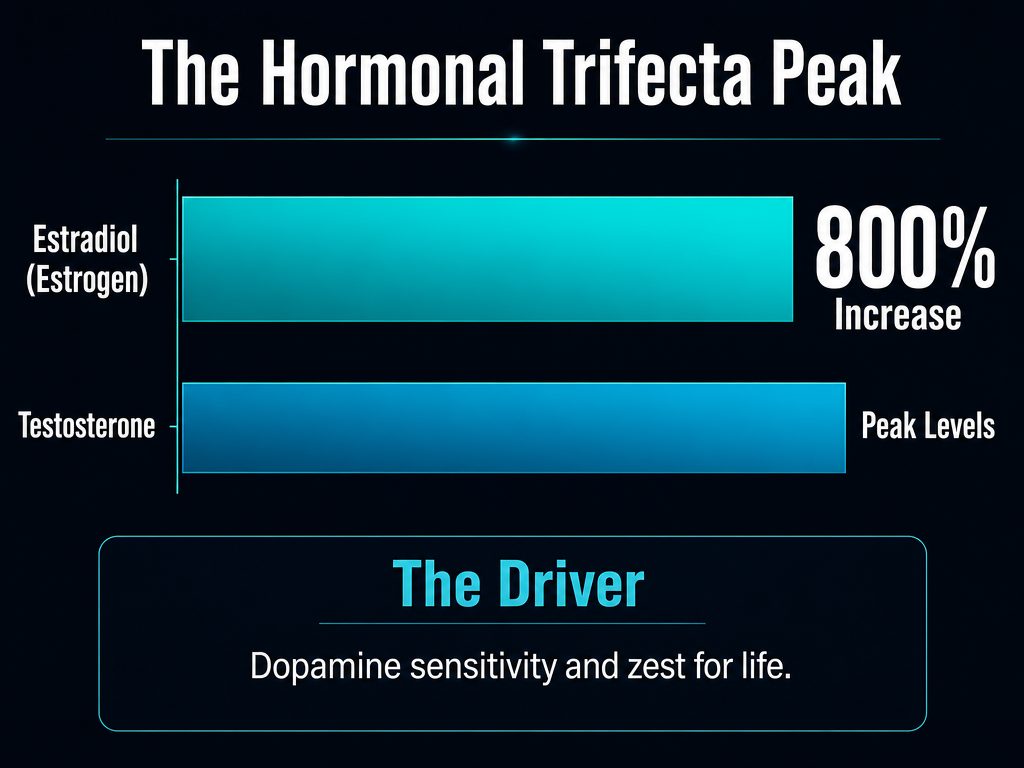 Understanding the massive hormonal shifts, like the 800% estrogen spike, helps men identify why the ovulation window is the best time for adventurous, high-energy date activities.
Why Does the Energy Surge Happen? The Hormonal Trifecta
Three hormones work together to create the ovulation energy surge: estrogen, testosterone, and luteinizing hormone (LH). Each plays a distinct role in shaping her mood, energy, and social drive during this phase.
Estrogen: The Energy Driver
During the follicular phase, estrogen rises as an egg-containing follicle develops in the ovary. This rising estrogen also thickens the uterine lining and, critically for your date planning, affects many body systems, including brain function and the ability to focus.
When estrogen peaks just before ovulation, many women report feeling sharper, more optimistic, and physically energized. Studies show that social energy and optimism increase by an estimated 20-30% during the high-estrogen window (days 6-14).
Testosterone: The Libido and Daring Boost
Yes, women produce testosterone - and it matters for your relationship. Research confirms that serum testosterone levels peak during the mid-cycle ovulatory window, regardless of age or detection technique.
This testosterone surge drives more than just sexual interest. It's also linked to a willingness to take social risks, try new activities, and seek out stimulating experiences. If she's suddenly interested in indoor skydiving or wants to finally try that spicy Thai place, testosterone is likely playing a role.
Luteinizing Hormone (LH): The Confidence Trigger
Near the end of the follicular phase, high estrogen triggers a surge in luteinizing hormone (LH), which sets off ovulation. This LH spike is what ovulation predictor kits detect - and it's associated with a brief window of peak confidence and assertiveness.
During this window, she may feel more comfortable being the center of attention, speaking up in group settings, or initiating plans. It's the biological equivalent of a "green light" for high-visibility or socially ambitious dates.
When Does the Ovulation Energy Surge Actually Happen?
Ovulation is when a surge in luteinizing hormone (LH) causes the ovary to release an egg, typically around day 14 of a 28-day cycle. But here's the critical detail: a "normal" cycle varies a lot between women - menstrual bleeding can start anywhere from every 24 to every 38 days.
So while the "textbook" ovulation window is days 12-16, the actual timing for your girlfriend depends on her specific cycle length. Day 1 is the first day of her period. From there, ovulation typically happens about 12-16 days before her next period starts - not a fixed number of days after the last one.
If her cycle is consistently 30 days, ovulation likely happens around day 16. If it's 26 days, it's closer to day 12. Precision matters here, because the energy surge peaks in the 2-3 days before ovulation and the day of ovulation itself - a narrow, high-value window.
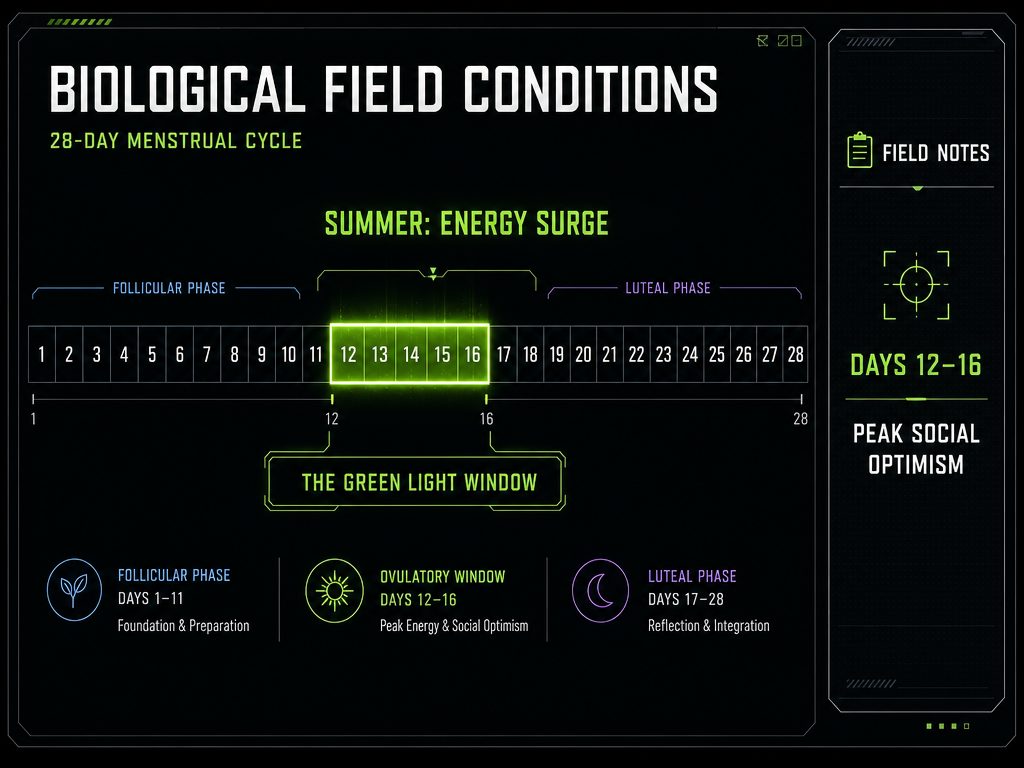 Timing is everything in relationship optimization. Use this field manual timeline to identify the four-day 'Green Light' window where novelty and connection are biologically prioritized.
The most reliable way to identify this window is by tracking her cycle for a few months using an app (like Flo, Clue, or VibeCheck) or by watching for behavioral and physical cues (more on this below).
Date Ideas That Match the Ovulation Energy Surge
The ovulation phase isn't the time for a quiet Netflix night. Her biology is primed for novelty, movement, and social visibility. Here are three tactical date categories that align with the energy surge, each targeting a different aspect of the hormonal shift.
The Social Peak: High-Visibility Group Events
During ovulation, her confidence is elevated and she's more comfortable being seen and admired. This is the ideal time for dates that put her in a social spotlight or involve interacting with others.
Examples:
- Concerts or live music events
- Group dinners or double dates
- Trivia nights or pub crawls
- Dance classes (salsa, swing, or hip hop)
- Art gallery openings or food festivals
Why it works: Her rising testosterone and peak estrogen make her more extroverted and socially assertive. She'll enjoy the energy of a crowd and won't feel drained by social interaction the way she might during other phases.
The Novelty Peak: First-Time Experiences
Dopamine receptors become more sensitive during the high-estrogen window, making novel experiences feel more rewarding. If there's something you've both been meaning to try, now is the time.
Examples:
- Indoor rock climbing or bouldering
- A new cuisine she's never tried (Ethiopian, Georgian, Vietnamese)
- Axe throwing or escape rooms
- A spontaneous day trip to a nearby town
- Trying a new hiking trail or water sport
Why it works: The testosterone peak makes her more willing to take physical or social risks, and the estrogen boost amplifies the reward response when she succeeds. Novelty feels exciting, not stressful.
The Intimacy Peak: Dress-Up and Romance
Research shows that women are often perceived as more attractive during ovulation - and they know it. She's likely feeling her most confident and "put together" during this window, which makes it a great time for dates where she can dress up and feel seen.
Examples:
- A formal dinner at a restaurant you've been saving for a special occasion
- A rooftop bar or speakeasy with a dress code
- Tickets to the theater, ballet, or opera
- A photoshoot date (hire a photographer or just take photos of each other in a scenic location)
- A wine tasting or upscale cocktail bar
Why it works: The "radiance effect" is real. She's more likely to feel attractive and confident, and she'll appreciate a setting where that feeling is amplified.
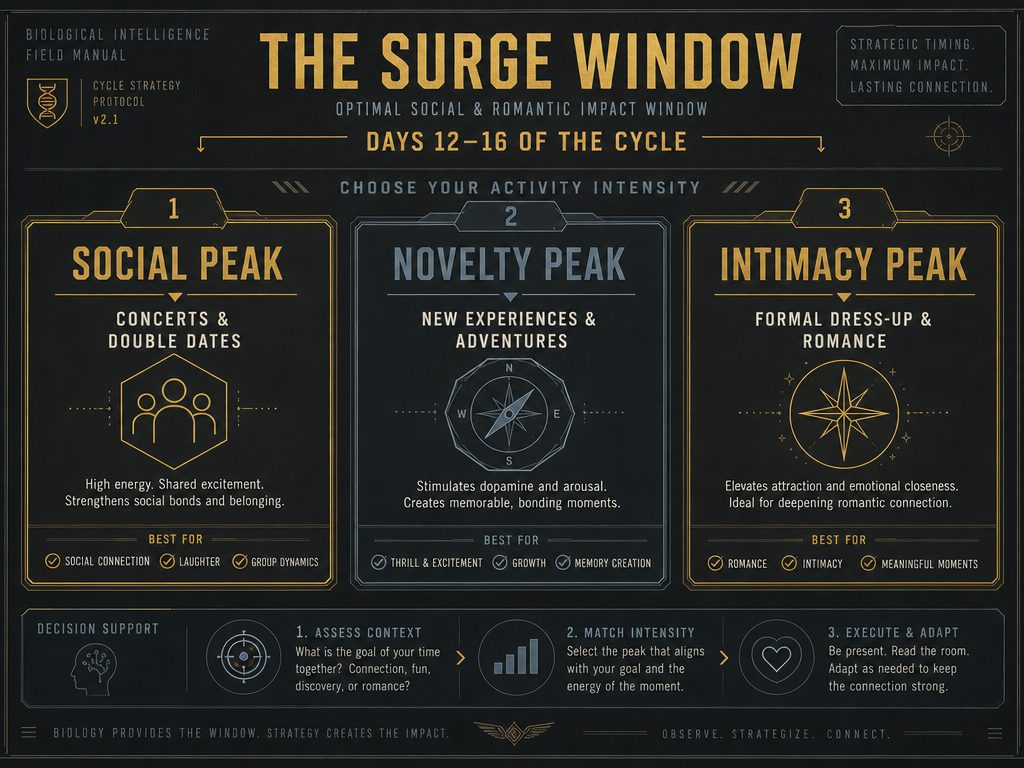 Align your dating strategy with her biology by choosing between high-visibility social events or daring new adventures when her dopamine sensitivity is at its highest point.
How to Know If She's in the Ovulation Window Right Now
If you're not tracking her cycle with an app, you can still identify the ovulation window by watching for behavioral and physical cues. Around ovulation, many women notice symptoms such as increased sex drive, mild pelvic or abdominal pain, tender breasts, bloating, and mood changes - though these vary a lot person to person, and not everyone notices them.
Here are the most reliable signals:
Behavioral Cues
- She initiates plans or suggests going out more often
- She's more talkative, animated, or enthusiastic in conversation
- She's more interested in physical touch or intimacy
- She mentions feeling "really good" or having a lot of energy
Physical Cues
- Clearer, more radiant skin
- Slightly elevated body temperature (if you're tracking basal body temp)
- In the days just before ovulation, cervical mucus becomes clear and slippery (she may mention this if she's tracking it)
What Not to Rely On
- Don't assume she's ovulating just because it's been two weeks since her last period. Cycle lengths vary.
- Don't treat any single cue as definitive. Look for a cluster of signs.
The most reliable approach? Ask if she tracks her cycle, and if so, whether she'd be comfortable sharing that information with you. 60% of women say their partner's limited understanding of reproductive health affects their relationship dynamics, so simply asking shows you're paying attention.
If you want to dive deeper into recognizing signs your girlfriend is ovulating, we have a full tactical guide covering biological markers.
When the Surge Doesn't Happen
Not every woman experiences a dramatic energy surge during ovulation. Some notice it only occasionally. Others experience mittelschmerz - one-sided lower abdominal pain around the time of ovulation - which is generally harmless and usually lasts minutes to a couple of days, but can make high-intensity plans uncomfortable.
How often mittelschmerz happens varies a lot: some women get it almost every cycle, others only occasionally or never. It may be somewhat more common in women in their teens through mid-20s, though there's no clearly established risk factor.
Even if she typically experiences a surge, there are cycles where it won't show up - stress, illness, or hormonal fluctuations can blunt the effect.
The "Check the Vibe" Rule
Before you execute a high-energy date plan, do a quick check-in:
"You've seemed like you have a lot of energy this week - how about we finally try that rock climbing gym?"
If she hesitates or seems less enthusiastic than you expected, pivot. Suggest a lower-intensity backup plan and save the big adventure for next cycle. Forcing a high-energy date when she's dealing with pain or fatigue will backfire.
For a deeper guide to supporting your girlfriend during ovulation mood changes, including what to do when the surge turns into irritability, we've written a full tactical playbook.
How to Suggest a Date During the Ovulation Phase
Even with perfect timing, the way you frame the suggestion matters. Here are three tested scripts that work well during the ovulation window:
Script 1: Energy Match
"You seem like you've got a ton of energy this week - want to do something active? I was thinking we could check out that new climbing gym."
Why it works: You're acknowledging her energy level without making it weird. She'll likely appreciate that you noticed.
Script 2: Novelty Angle
"We've been talking about trying [activity] forever. This weekend feels like the right time - you in?"
Why it works: You're connecting the plan to something she already expressed interest in, so it doesn't feel random or forced.
Script 3: Social Visibility
"I know you've been wanting to wear that new dress - want to make a night of it and try that rooftop bar downtown?"
Why it works: You're giving her a reason to dress up and feel seen, which aligns with the confidence boost she's experiencing.
What to Avoid
- Don't say "You're ovulating, so let's do something fun" - that's clinical and awkward.
- Don't push if she's not feeling it. A "no" during the ovulation phase is still a no.
- Don't frame the date as a reward for her being in a good mood. That's condescending.
For more advice on planning dates around your girlfriend's cycle phases, we have a comprehensive guide covering all four phases.
Frequently Asked Questions
Can men sense when their partner is ovulating?
Some research suggests men can unconsciously detect subtle changes in scent, voice pitch, and facial symmetry during ovulation, but it's not a reliable way to know for certain. Tracking her cycle or watching for behavioral cues is far more accurate.
Why do I have so much energy when I'm ovulating?
The substantial estrogen spike and testosterone peak work together to boost physical energy, mental clarity, and social confidence. It's a biological response designed to increase activity and social engagement during your most fertile window.
Do you attract more men when ovulating?
Studies show that women are often rated as more attractive by others during ovulation, likely due to subtle changes in facial symmetry, skin tone, and behavior. For your relationship, this means she may feel more confident and "radiant" during this phase - which is useful context when planning dates where she wants to feel seen.
Is energy higher during ovulation?
Yes, for many women. The estrogen and testosterone surges create a noticeable increase in physical energy, social drive, and enthusiasm for novelty. That said, not everyone experiences this surge every cycle, and some women experience fatigue or pain during ovulation instead.
Which ovulation day is the strongest?
The peak energy surge typically happens in the days before ovulation and on the day of ovulation itself. This is when estrogen is at its highest and LH has just spiked. After ovulation, estrogen drops sharply, and the energy surge fades quickly.
What if she doesn't track her cycle?
You can still identify the ovulation window by watching for behavioral and physical cues (more social energy, increased confidence, physical signs like clearer skin). You can also suggest using a period tracking app together - many apps now have partner modes designed to help you stay in sync.
What happens after the ovulation phase ends?
After ovulation, the luteal phase begins: progesterone rises to prepare the uterine lining for a possible pregnancy. If pregnancy doesn't happen, both progesterone and estrogen drop before the next period. Many women notice PMS-like symptoms in this phase - mood shifts, breast tenderness, bloating, acne, and appetite changes. Energy levels typically decrease, and her social battery drains faster. This is when your date strategy should shift toward low-key, low-pressure activities. For a full guide to supporting your girlfriend during the luteal phase, we have a detailed tactical playbook.
How can I track her cycle without being intrusive?
Ask if she's comfortable sharing her cycle information with you, and explain why it matters - not because you're trying to predict her moods, but because you want to be a more attentive partner. Only 28% of men know their partner's specific ovulation dates, so simply asking puts you ahead of most guys. If she's not comfortable sharing, respect that boundary and focus on reading behavioral cues instead.
Your Next Step: Stop Guessing, Start Timing
The ovulation energy surge is a real, measurable biological event - and it's one of the most actionable insights you can use to improve your relationship. When you time your date plans to match her peak energy window, you stop guessing what she'll enjoy and start consistently landing ideas she's genuinely excited about.
Here's what to do next:
- Identify her cycle length by tracking her period start dates for 2-3 months (or ask if she already tracks it).
- Calculate her likely ovulation window (roughly 12-16 days before her next period starts).
- Plan high-energy, social, or novel dates during that window - and save quiet, low-key plans for other phases.
- Check in before executing any plan to make sure she's actually feeling the surge (not dealing with pain or fatigue).
If you want to take this further, consider using a period tracker designed for partners. Apps like VibeCheck translate cycle data into daily insights on her mood, energy, and needs - so you're not just timing dates, you're becoming a more attentive partner across all four phases.
Understanding her cycle isn't about predicting her every move. It's about meeting her where she actually is - biologically, emotionally, and physically - instead of where you assume she should be. That's the difference between a guy who gets it and a guy who's always guessing.
Tags

Related Articles
Continue reading to deepen your understanding

Your Girlfriend Is Withdrawn During Ovulation? What It Actually Means and How to Respond
Is your girlfriend suddenly distant mid-cycle? This guide covers the biological causes of ovulation withdrawal and how to support her with an invisible framework.

When Your Girlfriend Is Sensitive to Criticism During the Luteal Phase: The Partner’s Science-Based Action Guide
Does your partner react intensely to feedback right before her period? Understand the biology behind luteal phase rejection sensitivity and learn how to communicate effectively.

How to Give Your Girlfriend Reassurance During the Follicular Phase: A Partner’s Tactical Guide
Is your girlfriend feeling vulnerable after her period? Learn why the early follicular phase causes emotional lows and how you can provide the specific reassurance she needs to feel secure.

Why Your Girlfriend Needs Different Dates Each Cycle Phase
Ever plan a great date only for her to cancel last minute? Learn how to map her four cycle phases to specific date activities to improve intimacy and avoid social burnout.

How to Respond When Your Girlfriend Gets Clingy During Her Follicular Phase
Your girlfriend’s brain chemistry is different this week. Rising estrogen levels cause social drive to peak. Here is how to respond to her need for connection effectively.

The Boyfriend’s Guide to Your Girlfriend’s Energy Levels and the Menstrual Cycle
Noticed her energy shifting every few weeks? Stop guessing and start supporting. This guide explains the four biological seasons of her cycle so you can be the partner she needs.

Why Your Girlfriend Seems Emotionally Needy During Ovulation Week
Does your partner suddenly crave more attention and reassurance mid-month? It is not insecurity—it is biology. Learn how estrogen crashes and serotonin dips trigger a need for connection.

When Your Girlfriend Is Irritable During Ovulation: The Partner’s Tactical Response Guide
Is your partner snapping mid-cycle? Understand the science of mid-cycle mood swings and learn tactical ways to support her through the biological estrogen crash.