When Do Your Girlfriend’s Energy Levels Change During Her Cycle?

Your girlfriend’s mood and stamina follow a biological rhythm. Learn how her energy peaks and crashes throughout the month so you can plan better dates and provide better support.
When Do Your Girlfriend's Energy Levels Change With Her Cycle?
Your girlfriend's energy levels follow a predictable 28-day biological rhythm, peaking during the follicular phase (roughly days 6-13) and dipping sharply during menstruation (days 1-5) and the luteal phase (days 15-28). Understanding these patterns helps you anticipate her needs instead of reacting to mood shifts you didn't see coming.
Table of Contents
- The Four Phases of Her Energy Cycle
- When Her Energy Peaks: The Follicular and Ovulation Phases
- When Her Energy Crashes: The Luteal and Menstrual Phases
- Why Her Energy Changes: The Science Behind the Shifts
- How to Support Her Through Each Phase
- When to Worry: The 7-2-1 Rule
- Frequently Asked Questions
The Four Phases of Her Energy Cycle
Her cycle isn't one uniform experience. It's four distinct biological seasons, each with its own hormonal signature and energy profile.
The menstrual cycle has four phases: menstrual (bleeding, roughly days 1-5), follicular (day 1 through ovulation, estrogen rising), ovulation (around day 14 in a 28-day cycle, triggered by a surge in luteinizing hormone), and luteal (after ovulation to the next period, progesterone rising then falling). The follicular and menstrual phases overlap, but her energy levels during these windows are drastically different.
Here's the critical piece most guys miss: a "normal" cycle varies a lot between women. Menstrual bleeding can start anywhere from every 24 to every 38 days and last up to 8 days. There is no single universal 28-day cycle, so exact day-by-day predictions for any specific woman should be treated as approximate.
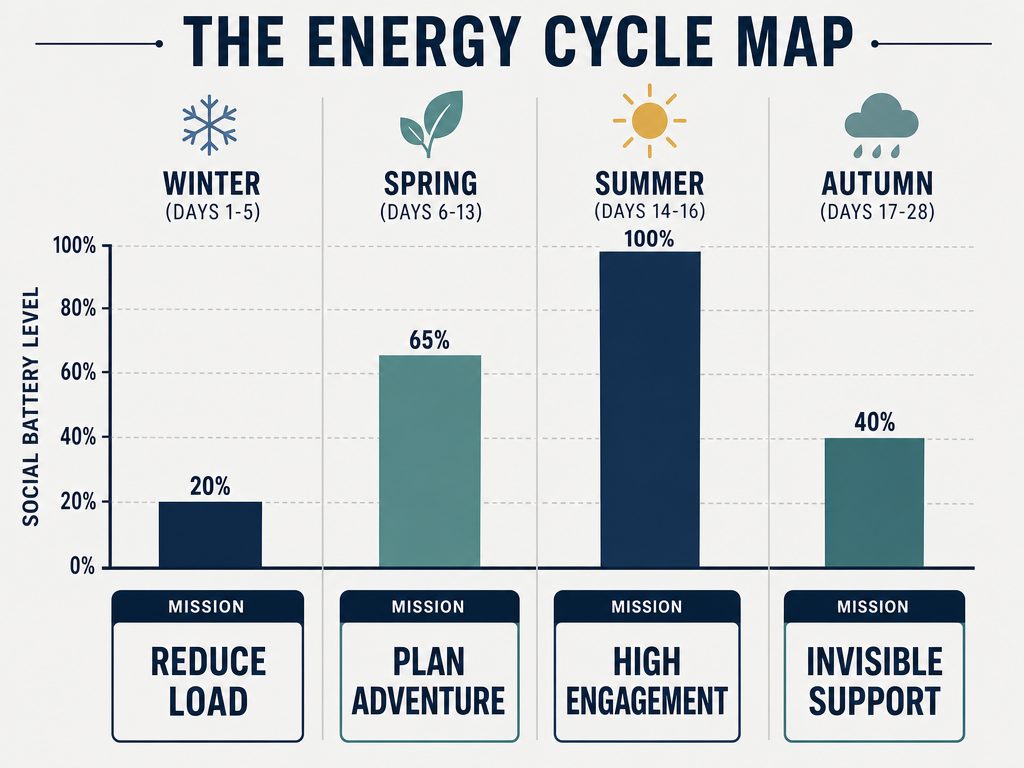 Understanding these four hormonal seasons helps you predict her energy peaks and dips, allowing you to transition from reactive responses to proactive support.
Think of it as four seasons, each lasting about a week:
- Winter (Menstrual Phase, Days 1-5): Lowest energy. She's bleeding, cramping, and exhausted.
- Spring (Follicular Phase, Days 6-13): Rising energy. She's more social, optimistic, and ready to plan.
- Summer (Ovulation, Days 14-16): Peak energy. She's confident, outgoing, and at her most energetic.
- Autumn (Luteal Phase, Days 17-28): Crashing energy. She's irritable, withdrawn, and needs more rest.
If you're trying to plan a high-energy date, book travel, or have a difficult conversation, knowing which season she's in matters more than you think.
VibeCheck App
Download Free on iOS →When Her Energy Peaks: The Follicular and Ovulation Phases
Her energy doesn't rise gradually. It surges.
During the follicular phase, estrogen rises as an egg-containing follicle develops in the ovary. This rising estrogen also thickens the uterine lining. Near the end of this phase, high estrogen triggers a surge in luteinizing hormone (LH), which sets off ovulation.
Estrogen affects many body systems, including brain function and the ability to focus, and levels are highest in the days leading up to ovulation. Medical sources describe this brain effect in general terms; they do not specify an exact mechanism for how estrogen affects day-to-day mood.
What you'll notice:
- She's more social and wants to make plans
- She's more optimistic about projects and conversations
- She's more physically active and less fatigued
- She's more interested in trying new things
Around ovulation, many women notice symptoms such as increased sex drive, mild pelvic or abdominal pain, tender breasts, bloating, and mood changes, though these vary a lot person to person, and not everyone notices them.
Ovulation is when a surge in luteinizing hormone (LH) causes the ovary to release an egg, typically around day 14 of a 28-day cycle. In the days just before ovulation, cervical mucus becomes clear and slippery, which is the most fertile window of the cycle.
This is the window where adventure dates, intense conversations, and social gatherings tend to land well. Her body is primed for connection, exploration, and engagement.
If you're wondering when to book that concert or plan a weekend hike, the follicular and ovulation phases are your best bet. For more on how to support your girlfriend during ovulation mood changes, check out our detailed tactical guide.
When Her Energy Crashes: The Luteal and Menstrual Phases
After ovulation, her energy doesn't just decline. It collapses.
After ovulation, the luteal phase begins: progesterone rises to help prepare the uterine lining for a possible pregnancy. If pregnancy doesn't happen, both progesterone and estrogen drop before the next period. Many women notice PMS-like symptoms in this phase - mood shifts, breast tenderness, bloating, acne, and appetite changes - though not everyone does.
This is the "storm week" of her cycle. She's not being difficult. Her brain chemistry is shifting.
PMS (premenstrual syndrome) is very common: as many as 3 in 4 women report experiencing PMS symptoms at some point in their life, though severity varies widely. Symptoms - which can include mood swings, irritability, bloating, breast tenderness, and fatigue - typically show up one to two weeks before a period and resolve within a few days after it starts.
Roughly half of people who menstruate report having at least one PMS symptom, but only about 1 in 5 have symptoms severe enough to disrupt their daily life. That more disruptive tier is a meaningfully different experience than "typical" PMS.
What you'll notice:
- She's more withdrawn and less interested in social plans
- She's more irritable and less patient with small annoyances
- She's more fatigued and needs more rest
- She's more likely to crave specific foods (especially carbs and sweets)
Then menstruation starts, and the physical symptoms layer on top. Roughly 1 in 7 women you encounter is on their period at any given moment. The median menstrual cycle length is 29 days, with menstruation lasting a median of 4 days.
Up to 88% of women experience cramps every cycle. That's not an exaggeration. Most women are managing physical pain on top of the energy crash.
This is not the time to suggest a hiking trip or bring up a difficult relationship issue. It's the time to reduce her mental load, handle chores without asking, and give her space to recover. For a complete breakdown of how to help your girlfriend during period mood swings, we've built a detailed support framework.
Why Her Energy Changes: The Science Behind the Shifts
Her body isn't just shifting moods. It's burning more fuel.
Mean energy intake can rise from 1730 ± 254 kcal/day in the follicular phase to 2259 ± 375 kcal/day in the luteal phase. That's a substantial increase in caloric needs - her resting metabolic rate literally spikes in the week before her period.
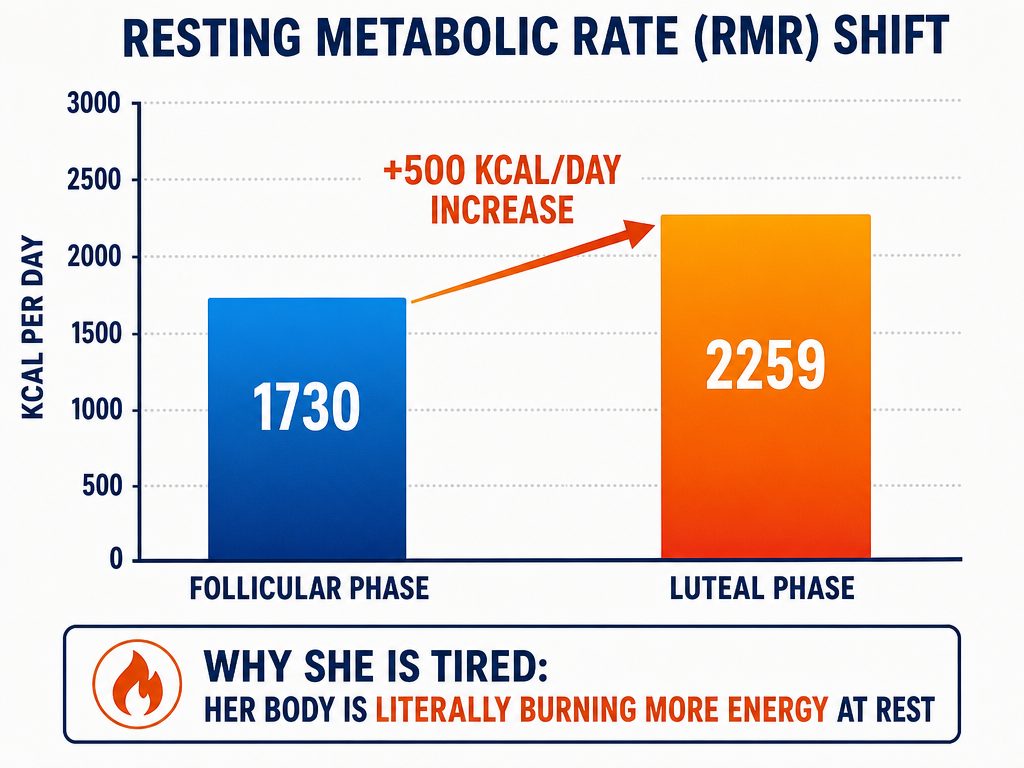 During the luteal phase, her body's resting metabolic rate can spike by nearly 500 calories a day, explaining why she may experience both fatigue and intense cravings.
She's not lazy. She's literally burning more energy doing nothing. This explains the cravings (her body needs more fuel), the fatigue (her system is working harder), and the irritability (low blood sugar combined with hormonal shifts).
The hormones driving these changes are estrogen and progesterone. Estrogen peaks before ovulation, boosting mood, energy, and social drive. Progesterone rises after ovulation, preparing the body for a possible pregnancy. When pregnancy doesn't happen, both hormones crash, taking serotonin with them.
That's why the luteal phase feels like an emotional withdrawal. Her brain is adjusting to a chemical drop, and it takes time to stabilize.
There is general research support for hormone-linked differences in mood and energy across the cycle - energy tends to be lower during the period and can build through the follicular phase toward ovulation, with PMS-type symptoms more likely in the luteal phase. Specific "cycle syncing" lifestyle programs built on this idea have not themselves been tested in clinical research, so prescriptive claims (exact workouts/foods for exact cycle days) go beyond what's established.
What is clear: her body is on a 28-day loop, and understanding that loop gives you a massive advantage in supporting her.
How to Support Her Through Each Phase
Supporting her isn't about grand gestures. It's about matching your actions to her energy level.
Phase 1: Menstruation (Days 1-5) - Winter
Mission: Reduce mental load.
- Handle chores without asking
- Stock the Period Kit (heating pad, pain relief, dark chocolate)
- Offer low-key plans (movie night, takeout)
- Don't push for conversation if she's withdrawn
Phase 2: Follicular (Days 6-13) - Spring
Mission: Lean into her rising energy.
- Suggest adventure dates (hikes, concerts, exploring new places)
- Plan social activities (dinner with friends, group outings)
- Have important conversations while she's more receptive
- Encourage her to lead on plans
Phase 3: Ovulation (Days 14-16) - Summer
Mission: High-engagement connection.
- Book high-energy dates (physical activities, travel)
- Initiate deep conversations
- Show physical affection (she's more receptive)
- Match her social drive
Phase 4: Luteal (Days 17-28) - Autumn
Mission: Invisible support.
- Don't ask "how can I help?" - just do it
- Reduce sensory overload (dim lights, quiet space)
- Stock comfort foods (complex carbs, magnesium-rich snacks)
- Validate her feelings without trying to fix them
When a partner is struggling emotionally, responding with genuine empathy - listening without judgment, focusing on their feelings rather than debating facts, and validating that their reaction makes sense - tends to help more than trying to "fix" the problem or offer silver linings. Feeling understood, not corrected, is what tends to defuse tension.
Lifestyle approaches that can help ease PMS symptoms include regular aerobic exercise, smaller/more frequent meals, less salt/caffeine/alcohol, adequate sleep, and stress-reduction practices like deep breathing or yoga. A partner who understands these and is patient/supportive around them (rather than dismissive of symptoms) is aligning with medically recommended self-care, not indulging an excuse.
If you want a complete breakdown of how to track her cycle as a boyfriend, we've built a practical guide with specific tracking tools.
When to Worry: The 7-2-1 Rule
Most cycle symptoms are normal. But some aren't.
The 7-2-1 rule for heavy periods: bleeding lasting more than 7 days, changing pads or tampons in less than every 2 hours, or clots larger than 1 inch.
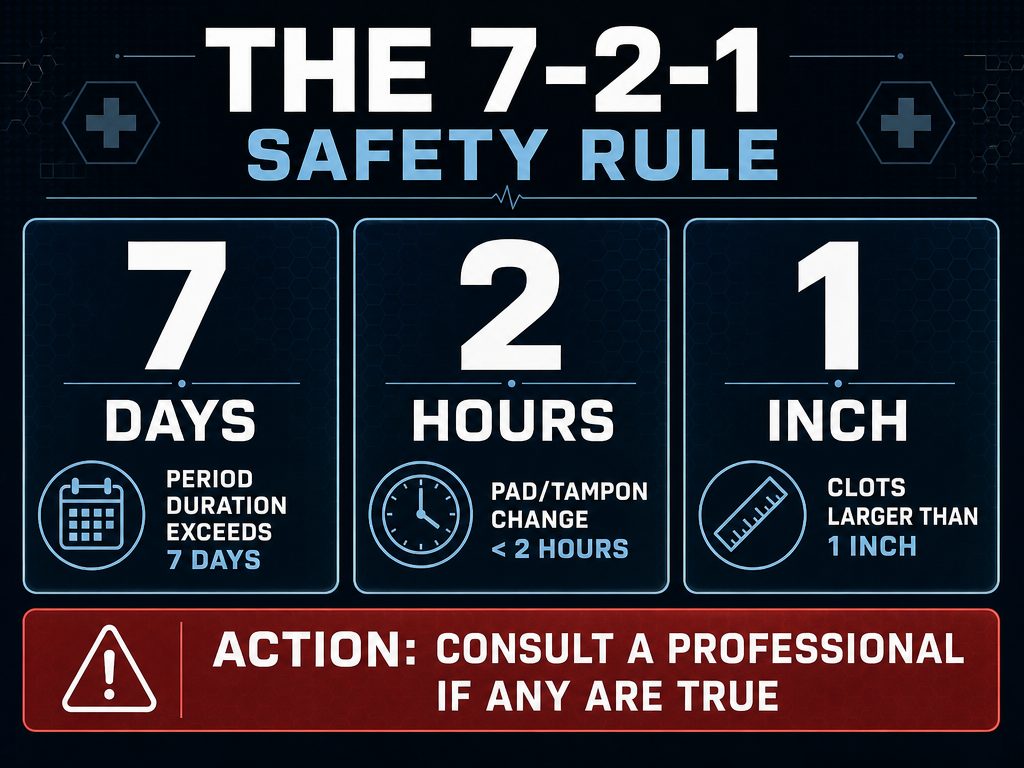 The 7-2-1 rule is a critical health-check tool that allows you to provide informed support and recognize when her symptoms may require professional medical advice.
If any of these apply, she should see a doctor. This isn't something to ignore or "push through."
PMDD (premenstrual dysphoric disorder) is a real, clinically recognized condition - it's listed in the DSM-5 as a depressive disorder, not something people are "making up" or simply failing to cope with. It affects roughly 1 in 10 people who menstruate.
PMDD is a more severe, sometimes disabling extension of PMS. Both happen on a similar timeline (about 7-10 days before a period) and can share physical symptoms like bloating and fatigue, but PMDD specifically involves extreme mood symptoms - such as marked irritability, anxiety, or hopelessness - intense enough to disrupt daily life and strain relationships.
If her mood shifts are consistently severe enough to interfere with work, relationships, or daily functioning, PMDD should be ruled in or out by a medical professional.
Tracking her symptoms and mood changes across the cycle for a few months is a legitimate, medically endorsed way to identify real patterns and timing - rather than assuming based on stereotypes or a single cycle. If you're seeing a consistent pattern of extreme symptoms, that data helps her doctor make an informed diagnosis.
Frequently Asked Questions
At what point in a woman's cycle does she have the most energy?
Energy peaks during the follicular phase (roughly days 6-13) and ovulation (days 14-16). Estrogen is rising, mood is elevated, and her body is primed for activity and connection. This is the best window for high-energy dates, social plans, and intense conversations.
How to explain the luteal phase to a man?
The luteal phase is the "storm week" before her period. After ovulation, progesterone rises to prepare the body for pregnancy. If pregnancy doesn't happen, both progesterone and estrogen crash, taking serotonin with them. This hormonal drop explains mood swings, fatigue, irritability, and withdrawal. It's not a personality flaw - it's a chemical event. Your job is to reduce her mental load, validate her feelings, and provide invisible support.
Which menstrual phase makes you most energetic?
The follicular phase (days 6-13) and ovulation (days 14-16) are the most energetic windows. Estrogen is rising, mood is optimistic, and physical energy is highest. If you're planning a trip, booking a concert, or suggesting a hike, these phases are your best bet.
What should guys do for their girlfriend in periods?
Reduce her mental load. Handle chores without asking. Stock the Period Kit (heating pad, pain relief, dark chocolate, complex carbs). Offer low-key plans (movie night, takeout). Don't push for conversation if she's withdrawn. Validate her pain without dismissing it. A person with a regular cycle will have approximately 450 periods in their lifetime - this is not a rare event, and being a supportive partner through it matters.
Can being in love affect your menstrual cycle?
Stress, emotions, and major life changes can affect cycle timing, but being in love itself doesn't directly alter the menstrual cycle. However, stress reduction from a supportive relationship can stabilize cycle patterns. Chronic stress, on the other hand, can delay ovulation or shorten the luteal phase.
When are you skinniest during your cycle?
Some women notice less bloating and a leaner appearance during the follicular phase (days 6-13), when estrogen is rising and progesterone is low. The luteal phase (days 17-28) typically brings water retention and bloating due to progesterone's effect on the body. This is a normal biological fluctuation, not a sign of weight gain.
Are you hornier in ovulation or luteal phase?
Libido tends to peak around ovulation (days 14-16), driven by the surge in estrogen and testosterone. Some women also experience increased libido in the early luteal phase, though this varies widely. Libido typically dips during menstruation and the late luteal phase, when both estrogen and progesterone are low.
Understanding when your girlfriend's energy levels change with her cycle isn't about predicting every mood. It's about recognizing patterns, timing your support, and becoming the partner who shows up when she needs it most. If you want a tool that helps you track these phases and gives you daily guidance on exactly what to say and do, check out VibeCheck - the relationship app built for men who want to stop guessing and start supporting.
Tags

Related Articles
Continue reading to deepen your understanding

Why Your Girlfriend Needs Different Attention Each Week: The Four Seasons Framework
Stop walking on eggshells and start understanding her cycle. This framework shows you exactly how to support your girlfriend through all four biological phases every month.

Why Your Girlfriend Wants Space the Week Before Her Period
Does your girlfriend suddenly pull away every month? Discover the biological reasons behind the pre-period space window and how to navigate this phase together.

Why Your Girlfriend Wants Different Kinds of Affection at Different Times in Her Cycle
Ever feel like your girlfriend’s needs change every week? It’s not random. Understand how the four phases of her cycle drive her desire for intimacy so you can support her better.

How to Plan Romantic Gestures by Cycle Timing: The Partner’s Tactical Guide
Stop guessing why your date night plans fell flat. This guide explains how to synchronize your romantic efforts with her biological cycle for better intimacy and connection.

How to Tell When Your Girlfriend Is Ovulating: Reading the Biological Signals Your Partner Sends
Understanding your partner’s cycle helps you anticipate her needs and time important conversations. Learn the behavioral signs of ovulation to improve your relationship and connection.

Understanding Your Girlfriend’s Words of Affirmation Cycle: A Partner’s Guide
Ever feel like your compliments land wrong? Her need for words of affirmation isn’t random—it follows a biological rhythm. Learn how to match your support to her internal hormonal seasons.

The Partner’s Guide to the Luteal Phase: What It Is and How to Support Her
Stop walking on eggshells. Understand the biological changes of the luteal phase so you can support your partner through mood shifts and fatigue with empathy.

How to Plan Valentine’s Day Around Your Girlfriend’s Cycle
Does your romantic plan clash with her biological rhythm? Learn how to adjust your date night to her specific cycle phase so she feels comfortable and truly cared for this year.