When Your Girlfriend Gets Withdrawn Before Her Period

If she suddenly pulls away, it is usually biology, not you. Learn why your girlfriend gets distant before her period and use these tactical scripts to help her during the luteal phase.
When Your Girlfriend Gets Withdrawn Before Her Period: The Biology and the Tactical Response
You're used to her being engaged, affectionate, easy to reach. Then, a few days before her period, something shifts. She's quieter. Less available. Maybe she cancels plans, sends one-word replies, or seems emotionally distant. Your first instinct is to ask what you did wrong.
Most of the time, the answer is nothing.
What you're seeing is the luteal phase - a biological state where her brain's neurochemistry shifts so dramatically that social interaction can feel like sensory overload. This isn't "being moody." It's not a rejection of you. It's a predictable, hormonally driven transition that affects approximately 90% of women to some degree.
This guide walks you through the biology behind her withdrawal, the specific signs to watch for, and the tactical scripts and strategies that actually help.
Table of Contents
- Why She Gets Withdrawn Before Her Period
- The Luteal Phase Explained
- The Biological "Breakup Urge"
- How to Tell If She Needs Space or Support
- The Triage Script: Ask, Don't Assume
- The Sensory Sanctuary Protocol
- The 7-2-1 Framework for Partners
- Red Zone Rules: What Not to Do
- When Withdrawal Signals PMDD, Not PMS
- Frequently Asked Questions
Why She Gets Withdrawn Before Her Period
Her withdrawal isn't random. It follows a biological schedule.
After ovulation, progesterone rises to help prepare the uterine lining. If pregnancy doesn't happen, both progesterone and estrogen drop sharply in the days leading up to her period. This crash affects brain chemistry - specifically the neurotransmitters that regulate mood, energy, and stress tolerance.
VibeCheck App
Download Free on iOS →When serotonin dips, her brain's threat-detection system becomes more active. Small irritations feel bigger. Social demands feel heavier. Touch can become overstimulating rather than comforting. What used to be a simple text exchange now requires energy she doesn't have.
This is why she might:
- Cancel plans she was excited about a week ago
- Give short, clipped responses instead of long texts
- Prefer being alone in a quiet room instead of going out
- Seem irritable when you try to initiate physical affection
- Not want to "talk about it" when you ask what's wrong
It's not that she doesn't care about you. It's that her nervous system is in a different operating mode.
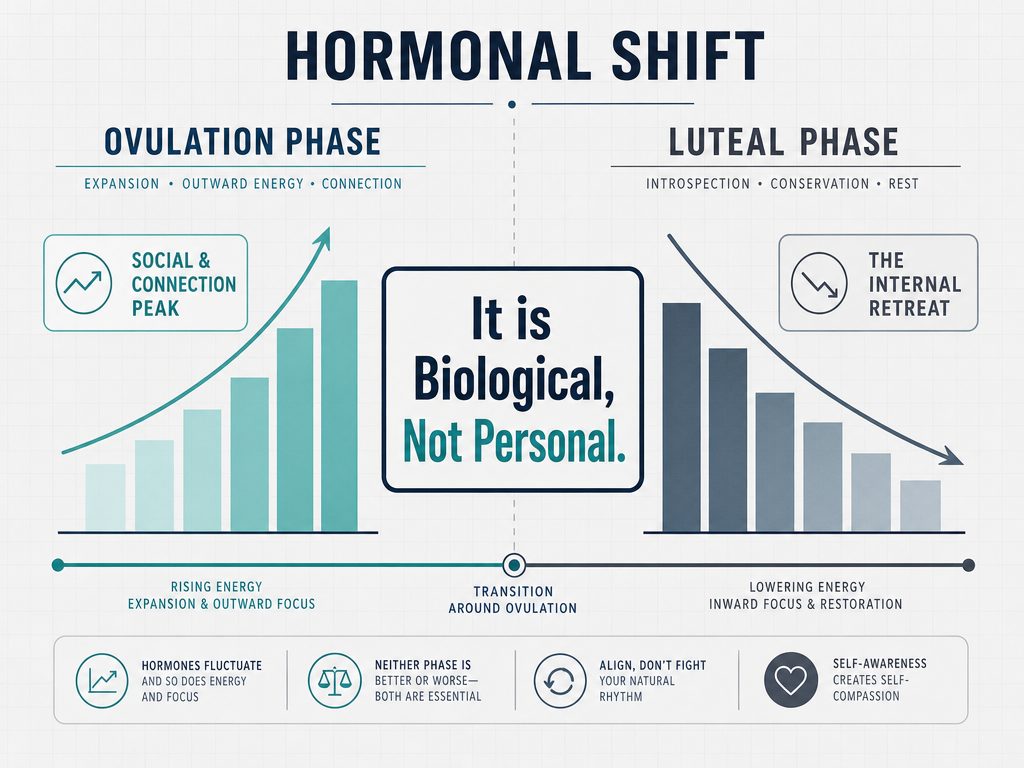 Understanding the biological shift from social energy to internal retreat helps partners recognize that pre-period withdrawal is a hormonal response, not a reflection of the relationship.
The Luteal Phase Explained
The luteal phase begins after ovulation and lasts until the next period starts - typically 12 to 14 days in a standard 28-day cycle. During this window, progesterone dominates. When it crashes toward the end of the phase, many women experience PMS symptoms: mood changes, breast tenderness, bloating, acne, appetite shifts, and fatigue.
Not everyone experiences these symptoms the same way. Roughly half of people who menstruate report having at least one PMS symptom, but only about 1 in 5 have symptoms severe enough to disrupt their daily life.
For men in relationships, this phase is the hardest to navigate because the shifts are internal. You can't see the hormonal drop. You can only observe the behavioral change - and that change often looks like distance.
Understanding the biology behind her withdrawal is the first step toward responding effectively instead of reacting defensively.
The Biological "Breakup Urge"
Here's something many men don't know: during the luteal phase, some women experience a sudden, intense urge to end the relationship. Not because anything is objectively wrong. Not because you did something terrible. But because her brain's stress response is amplified, and one of the ways the mind tries to solve chronic stress is by eliminating perceived sources of friction.
You become the friction.
Research shows that married or cohabiting women with severe PMS or PMDD have a 21% increased risk of relationship disruption. The breakup urge is a real, documented phenomenon. It doesn't mean she genuinely wants to leave. It means her neurological system is in crisis mode and trying to reduce load.
If she says something like "I don't know if this is working anymore" or "maybe we need a break," your first response should not be panic. Your first response should be to check the calendar. If she's 7 to 10 days away from her period, this is likely the luteal phase talking, not her actual desires.
The tactical response: Do not make permanent decisions during this window. No breakups. No big relationship talks. Table it for 72 hours and revisit after her period starts. If the concern is still there three days into her cycle, it's real. If it evaporates, it was hormonal.
How to Tell If She Needs Space or Support
The mistake most men make: assuming she wants the same thing every cycle. Some months she'll want you closer. Other months she'll want distance. The key is to stop guessing and start asking.
But before you ask, observe. These behavioral cues signal what she probably needs:
Signs she needs space:
- Headphones on, door closed
- One-word text replies
- Declining invitations she'd normally accept
- Saying "I'm fine" when you ask if she's okay
- Physically pulling away when you initiate touch
Signs she needs proximity:
- Asking you to stay home instead of going out
- Seeking physical touch (hugs, holding hands)
- Wanting to be in the same room even if she's not talking
- Crying or expressing frustration directly
- Asking for specific help ("Can you make dinner?")
If you're unsure, use the triage script (below). Don't assume. Don't try to read her mind. Just ask.
The Triage Script: Ask, Don't Assume
Most relationship blogs tell you to "be patient" or "show you care." That's vague. What she actually needs is for you to give her control over how you help.
This is the triage script. Use it verbatim or adapt it to your style:
"I notice you seem a little off. Do you want me to listen, give you space, or help find a solution?"
Three options. No guessing. She picks one, and you follow through.
Option 1: Listen.
She talks. You don't problem-solve. You don't offer advice unless she asks. Research from the Gottman Institute shows that responding with genuine empathy - listening without judgment and validating her feelings - tends to help more than trying to fix the problem.
Option 2: Space.
She needs to be alone. You don't take it personally. You tell her you'll check in later, then you actually do. Space doesn't mean abandonment. It means respecting her boundary while staying available.
Option 3: Solution.
She wants something tangible - dinner, pain relief, a canceled plan, logistical help. You act on it without making her manage you.
This framework removes the emotional guesswork and replaces it with a clear action path.
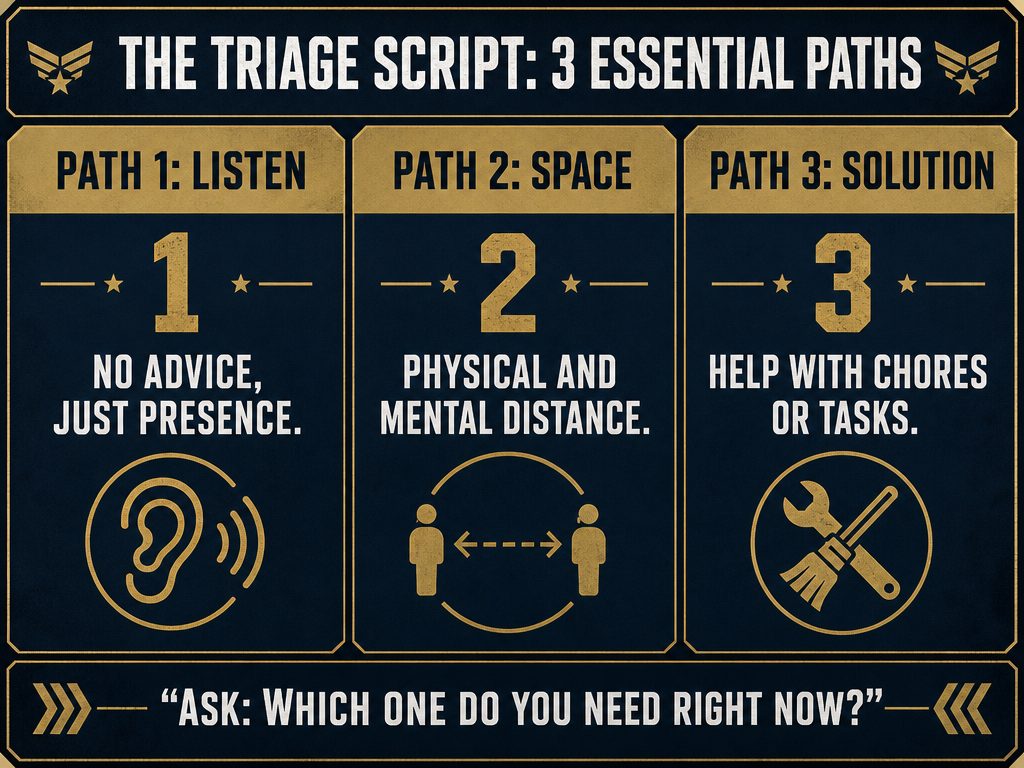 Using a triage script replaces guesswork with clear communication, allowing you to provide exactly the type of support your partner needs during sensitive luteal phases.
The Sensory Sanctuary Protocol
During the luteal phase, her sensory threshold drops. Bright lights feel harsher. Loud sounds are more grating. Strong smells are overwhelming. Physical touch can shift from comforting to irritating.
This isn't a personality change. It's a neurological reality. Your job is to lower her baseline sensory load so she has more capacity for everything else.
Adjust the environment:
- Dim the lights in shared spaces, especially in the evening
- Lower TV or music volume by 20 to 30%
- Reduce visual clutter in the bedroom and living room
- Use unscented or very mild cleaning products
- Keep the temperature cooler (progesterone raises body temp slightly)
Physical touch adjustments:
- Ask before initiating affection: "Do you want a hug, or are you touched out?"
- If she says she's "touched out," don't take it as rejection - it means her nervous system is maxed
- Offer a hand on her shoulder or back rather than a full embrace if she seems ambivalent
- Don't initiate sex without a clear green light; flirtatious behavior typically peaks around ovulation mid-cycle, not during the luteal phase or period
Creating a sensory sanctuary doesn't require major effort. It requires awareness and small, repeated adjustments that compound over time. For more on how to help your girlfriend during this phase, start with her immediate environment.
The 7-2-1 Framework for Partners
Her withdrawal affects you too. If you absorb all of her irritability without managing your own state, you'll burn out or lash out. This framework helps you stay grounded while staying supportive.
7 hours of sleep:
Your emotional regulation depends on rest. If you're sleep-deprived during her luteal phase, small conflicts escalate. Prioritize getting a full night's sleep - even if it means going to bed earlier or skipping late-night plans.
2 gestures:
Do two small, visible things each day that show you're thinking of her: make her coffee, text her a supportive message, pick up something she mentioned needing. These don't have to be grand. Consistency matters more than size.
1 absorbed friction moment:
Once per day, absorb one sharp comment, irritable response, or minor criticism without retaliating. Let it slide. Don't store it up to mention later. This is not enabling bad behavior; it's recognizing that her neurological state makes emotional regulation harder during this window.
This framework isn't about being a doormat. It's about having a concrete plan so you're not improvising your response every time tension surfaces. Lifestyle approaches that can help ease PMS symptoms include regular aerobic exercise, adequate sleep, and stress-reduction practices. The same applies to you.
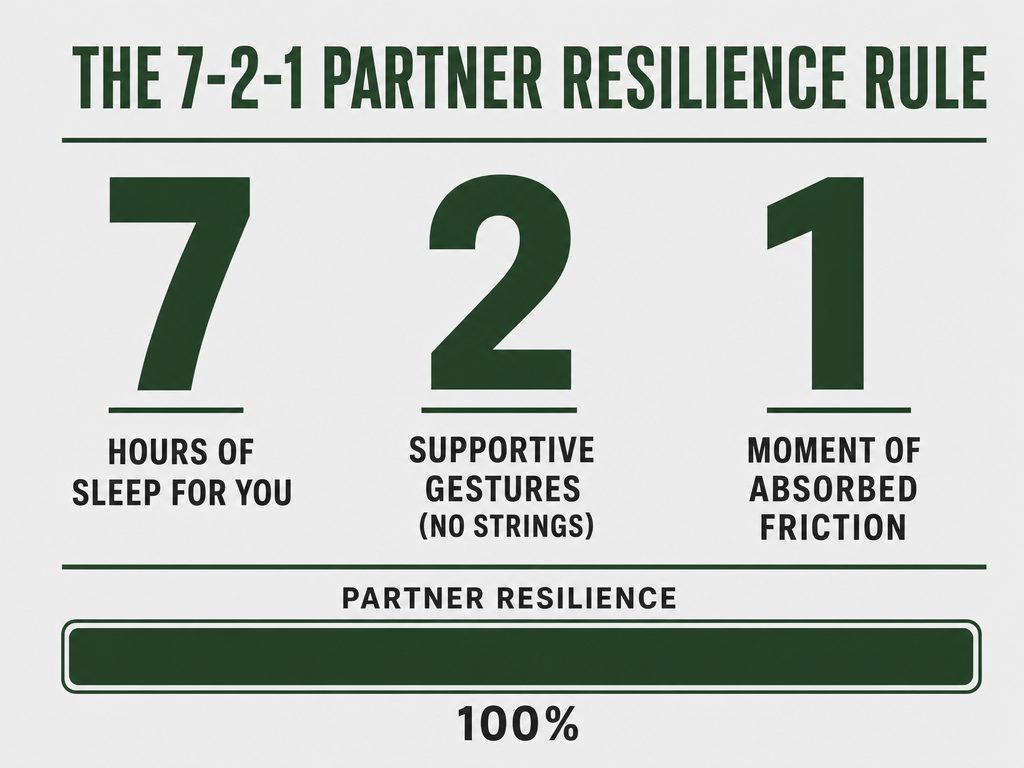 The 7-2-1 Rule provides a concrete framework for men to manage their own well-being while effectively supporting a partner who is experiencing premenstrual withdrawal.
Red Zone Rules: What Not to Do
Certain behaviors will escalate conflict during the luteal phase. Avoid these completely:
1. Don't use "forever language."
No breakups. No major life decisions. No "we need to talk about our future" conversations. If the topic is high-stakes, defer it by 72 hours. If it's still urgent after her period starts, revisit it then.
2. Don't ask, "Is it that time of the month?"
Even if you're right, this phrase invalidates her experience and turns a biological event into a punchline. If you want to acknowledge her cycle, do it with empathy: "I know you're dealing with a lot this week - what can I do to help?"
3. Don't start logic battles.
Her emotional state is real, even if the triggering event is minor. Trying to "reason her out of" being upset will backfire. Validate first, problem-solve later (if she asks).
4. Don't withdraw in retaliation.
If she's distant, don't match her energy with cold silence. Stay warm and available without being invasive. Your consistency is what helps her trust the relationship during a neurologically turbulent window.
5. Don't make her manage you.
Don't ask, "Are you mad at me?" or "Did I do something wrong?" every time her mood shifts. If you're genuinely unsure, use the triage script. Otherwise, trust that her withdrawal is about her internal state, not your behavior.
These rules aren't universal relationship advice. They're specific to the luteal phase - a 7- to 10-day window where her brain is chemically different than it is the rest of the month.
When Withdrawal Signals PMDD, Not PMS
For most women, luteal-phase symptoms are manageable. For about 1 in 10, they're disabling. PMDD (premenstrual dysphoric disorder) is a clinically recognized condition listed in the DSM-5 as a depressive disorder. It affects roughly 1 in 10 people who menstruate.
Signs her symptoms may be PMDD, not PMS:
- Severe mood swings or rage that feel disproportionate to the situation
- Suicidal ideation or feelings of hopelessness during the luteal phase
- Complete inability to function at work or in social settings
- Relationship damage severe enough that she or you consider ending things every month
- Physical symptoms so intense she can't get out of bed for multiple days
PMDD is not something you can support your way through alone. If she meets these criteria, encourage her to talk to a healthcare provider. PMDD can be managed with medication, therapy, or lifestyle changes, but it requires clinical intervention.
Your role as a partner: recognize when the symptom severity crosses a threshold, bring it up with empathy (not urgency), and respect her autonomy in seeking help.
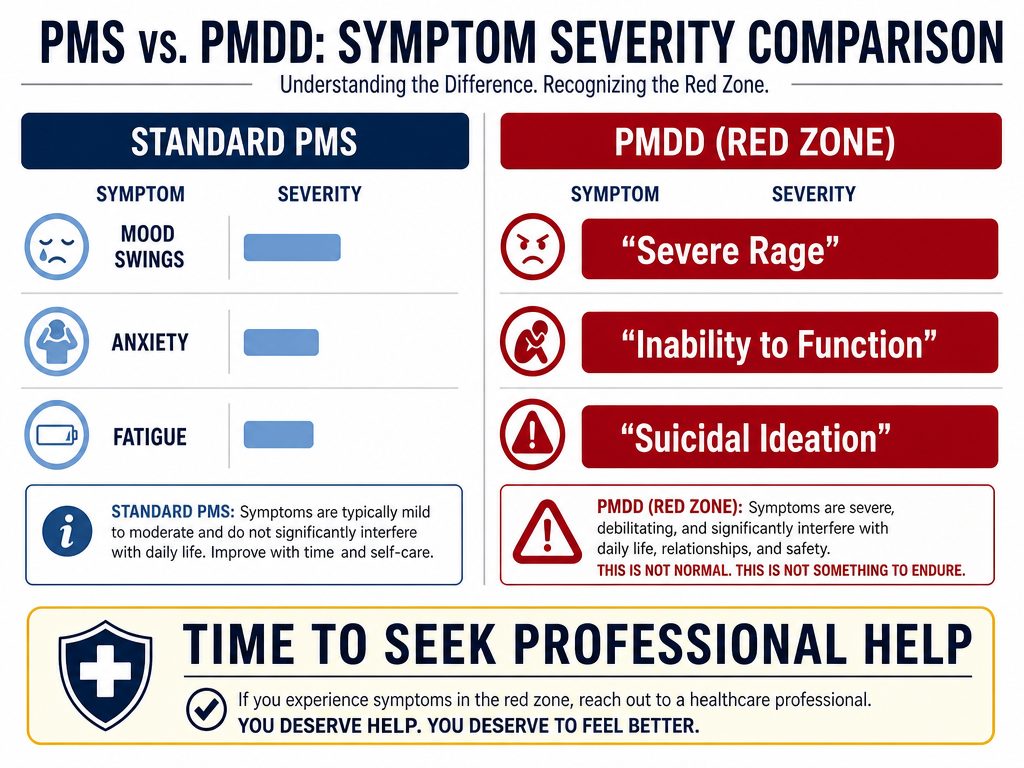 Recognizing the difference between standard PMS and PMDD is critical for determining when relationship tactics need to be supplemented with professional medical support.
Frequently Asked Questions
How to deal with your girlfriend on her period?
Start by understanding that most menstrual blood loss and peak physical symptoms occur during the first three days of the period. She needs rest, warmth, and minimal friction during this window. Offer practical help - heat pads, pain relief, easy meals - and check in without hovering. If she's withdrawn, respect it. If she wants company, provide it without expecting her to entertain you. The key is flexibility and consistency.
Is it normal to not like your partner during the luteal phase?
Yes. The progesterone crash before menstruation can trigger irritability and a heightened stress response, making small annoyances feel bigger. This doesn't mean the relationship is bad. It means her brain's threat-detection system is temporarily more sensitive. PMS symptoms, including mood swings and irritability, typically show up one to two weeks before a period. If the feeling disappears after her period starts, it's hormonal, not relational.
How can I best support my partner who has PMDD?
PMDD is more than intense PMS. It involves extreme mood symptoms - such as marked irritability, anxiety, or hopelessness - intense enough to disrupt daily life and strain relationships. Your support alone isn't enough. Encourage her to see a healthcare provider and consider options like SSRIs, hormonal treatments, or therapy. In the meantime, use the same triage and sensory protocols described above, but recognize that her symptoms require medical management, not just relational adjustment.
What to do when a girl tells you she started her period?
Acknowledge it neutrally and ask what she needs. "Got it - do you need anything?" is the correct response. Don't make jokes. Don't treat it as taboo. Don't overreact. If she mentions pain or discomfort, offer practical help: heat pads, ibuprofen, light food. Your role is to normalize the experience and remove logistical friction, not to make her explain or justify her biology.
How to help your partner during the luteal phase?
Use the triage script to determine what type of support she needs: listening, space, or solutions. Adjust the sensory environment to lower her baseline stress. Follow the 7-2-1 framework to manage your own emotional state. Avoid high-stakes conversations and "forever language" during this window. For a detailed breakdown, see our guide on how to support your girlfriend during the luteal phase.
How to reduce luteal phase symptoms?
Lifestyle approaches that can help ease PMS symptoms include regular aerobic exercise, smaller and more frequent meals, less salt/caffeine/alcohol, adequate sleep, and stress-reduction practices like deep breathing or yoga. As her partner, you can support these habits by making them easier: cook low-sodium meals, stock the fridge with easy snacks, minimize evening plans that disrupt her sleep, and offer to do a calming activity together like a walk or stretching routine.
What are the signs of PMDD?
Watch for severe irritability, anxiety, or depression that appears only in the luteal phase and resolves after menstruation starts. Physical symptoms may include fatigue, bloating, breast tenderness, and sleep disturbances. If these symptoms are intense enough to interfere with work, relationships, or daily functioning, it may be PMDD rather than standard PMS. Tracking symptoms across a few cycles can help identify the pattern and justify a conversation with a healthcare provider.
Her withdrawal before her period isn't a relationship problem. It's a biological event. Understanding the luteal phase, using the triage script, and adjusting your environment and behavior to match her state will reduce friction and strengthen your connection. When you stop taking it personally and start responding tactically, you become the kind of partner she can rely on - even when her neurochemistry makes everything feel harder.
If you want to track her cycle phases and get daily guidance on how to support her, check out VibeCheck - the relationship app built for men who want to stop guessing and start leading.
Tags

Related Articles
Continue reading to deepen your understanding

How to Respond When Your Girlfriend Needs Space During Her Period
If she’s suddenly sending one-word texts or pulling away, it’s likely not about you. Learn the science of the luteal phase and how to support her without feeling rejected.

Understanding Why Your Girlfriend’s Communication Style Shifts Weekly
Ever wonder why your partner’s moods and energy levels shift so much? Understanding the four phases of her menstrual cycle helps you become a more supportive and proactive partner.

When Do Your Girlfriend’s Energy Levels Change During Her Cycle?
Your girlfriend’s mood and stamina follow a biological rhythm. Learn how her energy peaks and crashes throughout the month so you can plan better dates and provide better support.

Why Your Girlfriend Needs Different Attention Each Week: The Four Seasons Framework
Stop walking on eggshells and start understanding her cycle. This framework shows you exactly how to support your girlfriend through all four biological phases every month.

Why Your Girlfriend Wants Space the Week Before Her Period
Does your girlfriend suddenly pull away every month? Discover the biological reasons behind the pre-period space window and how to navigate this phase together.

Why Your Girlfriend Wants Different Kinds of Affection at Different Times in Her Cycle
Ever feel like your girlfriend’s needs change every week? It’s not random. Understand how the four phases of her cycle drive her desire for intimacy so you can support her better.

How to Plan Romantic Gestures by Cycle Timing: The Partner’s Tactical Guide
Stop guessing why your date night plans fell flat. This guide explains how to synchronize your romantic efforts with her biological cycle for better intimacy and connection.

How to Tell When Your Girlfriend Is Ovulating: Reading the Biological Signals Your Partner Sends
Understanding your partner’s cycle helps you anticipate her needs and time important conversations. Learn the behavioral signs of ovulation to improve your relationship and connection.