How to Tell When Your Girlfriend Is Ovulating: Reading the Biological Signals Your Partner Sends

Understanding your partner’s cycle helps you anticipate her needs and time important conversations. Learn the behavioral signs of ovulation to improve your relationship and connection.
How to Tell When Your Girlfriend Is Ovulating: Reading the Biological Signals Your Partner Sends
Your girlfriend's mood, energy, and social drive shift noticeably mid-cycle. You've probably seen her go from planning group outings to suddenly craving quiet time, or from upbeat and confident to withdrawn and sensitive - sometimes within the same week. These aren't random swings. They follow a predictable biological pattern driven by hormonal changes during the menstrual cycle.
When you understand the ovulation phase, you gain a relationship advantage: you can anticipate her needs, time conversations better, and stop walking on eggshells. This guide explains what ovulation actually does to her body, how it shows up in her behavior, and how you can use that knowledge to be a better partner.
Table of Contents
- What Ovulation Is and When It Happens
- Why Understanding Ovulation Matters for Your Relationship
- The Behavioral Changes During Ovulation
- Physical Signs You Can Notice
- Can You Actually Sense When She's Ovulating?
- What She Needs from You During Ovulation
- What NOT to Do
- How to Track Her Cycle Without Being Weird About It
- Frequently Asked Questions
What Ovulation Is and When It Happens
Ovulation is when a surge in luteinizing hormone (LH) causes the ovary to release an egg, typically around day 14 of a 28-day cycle. In the days just before ovulation, cervical mucus becomes clear and slippery, which is the most fertile window of the cycle.
But here's what matters for you as a partner: a "normal" cycle varies substantially between women - menstrual bleeding can start anywhere from every 24 to every 38 days and last up to 8 days. There is no single universal 28-day cycle, so exact day-by-day predictions for any specific woman should be treated as approximate.
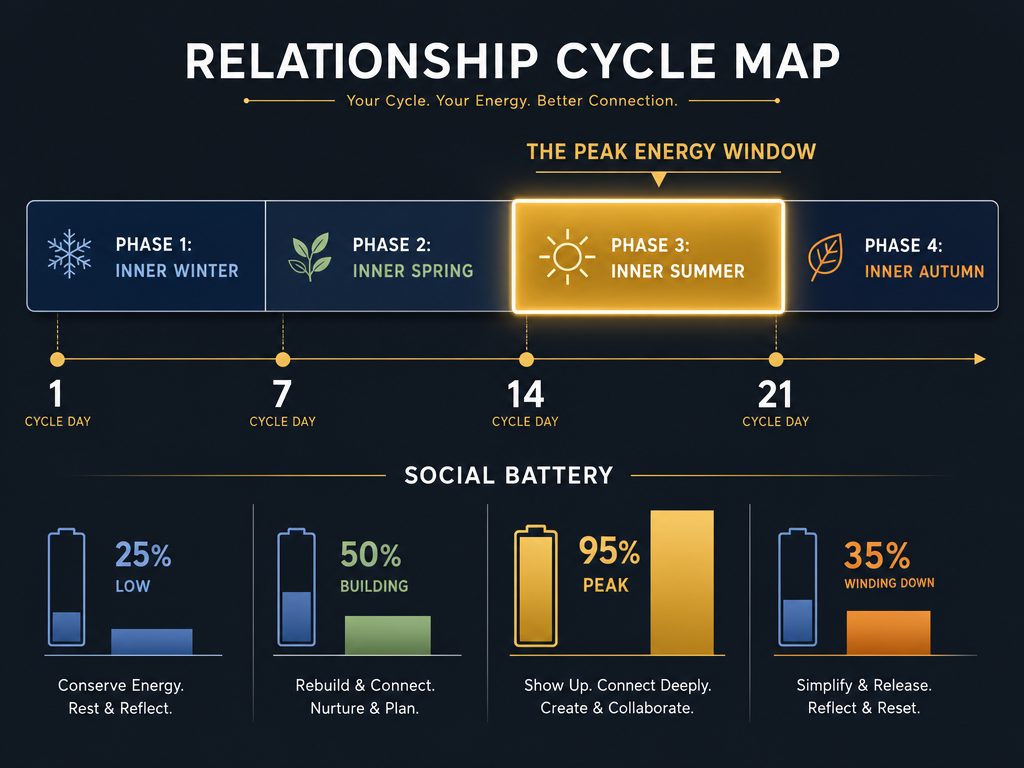
The cycle has four distinct phases: menstrual (bleeding, roughly day 1-5), follicular (day 1 through ovulation, estrogen rising), ovulation (around day 14 in a 28-day cycle, triggered by that surge in luteinizing hormone), and luteal (after ovulation to the next period, progesterone rising then falling). The follicular and menstrual phases overlap.
During the follicular phase, estrogen rises as an egg-containing follicle develops in the ovary; this rising estrogen also thickens the uterine lining. Near the end of this phase, high estrogen triggers the LH surge, which sets off ovulation. Think of it as the biological ramp-up before the main event.
VibeCheck App
Download Free on iOS →Why Understanding Ovulation Matters for Your Relationship
Most relationship advice for men focuses on "surviving PMS." That makes sense - PMS symptoms affect as many as 3 in 4 women at some point in their life, and they can include mood swings, irritability, bloating, breast tenderness, and fatigue, typically showing up one to two weeks before a period.
But focusing only on the hard days means you miss the best ones. Ovulation is when her energy, confidence, and social drive peak. If you time your big conversations, trips, or difficult discussions for this window, you're working with her biology instead of against it. If you plan a serious talk during her luteal phase, when progesterone rises to help prepare the uterine lining for a possible pregnancy and then drops sharply before her period, you're setting yourself up for unnecessary friction.
Research shows that sexual desire increases significantly before and during ovulation, directed equally toward primary partners and other men. That doesn't mean she's suddenly looking elsewhere - it means her brain is biologically primed for connection and intimacy. Use that window.
Understanding her cycle also means you stop taking mood shifts personally. When she's suddenly withdrawn a week before her period, it's not about you. Her body is in the luteal phase: progesterone is rising, energy is dropping, and many women notice PMS-like symptoms such as mood shifts, breast tenderness, bloating, acne, and appetite changes - though not everyone does.
The Behavioral Changes During Ovulation
Around ovulation, many women notice symptoms such as increased sex drive, mild pelvic or abdominal pain, tender breasts, bloating, and mood changes - but these vary substantially person to person, and not everyone notices them.
Here's what you might observe during the 3-5 days around ovulation:
Social Energy and Confidence
She's more likely to say yes to plans. Group dinners, concerts, spontaneous trips - her social battery is charged. This isn't a personality shift; it's estrogen. Estrogen affects many body systems, including brain function and the ability to focus, and levels are highest in the days leading up to ovulation.
She may also seem more confident. New outfits, more effort with hair or makeup, trying things she usually wouldn't. She's not performing for anyone - she just feels more like herself.
Increased Libido and Physical Affection
Her body is biologically primed for connection. You'll notice more physical touch, more initiation, more openness to intimacy. This is the peak fertility window, and her brain knows it.
Clearer Communication and Bigger-Picture Thinking
She's more direct, more articulate, and more willing to engage in serious conversations. If you've been putting off talking about moving in together, finances, or future plans, this is your opening. Her cognitive function is sharpest during this phase.
Physical Signs You Can Notice
Beyond behavior, there are physical changes you can observe:
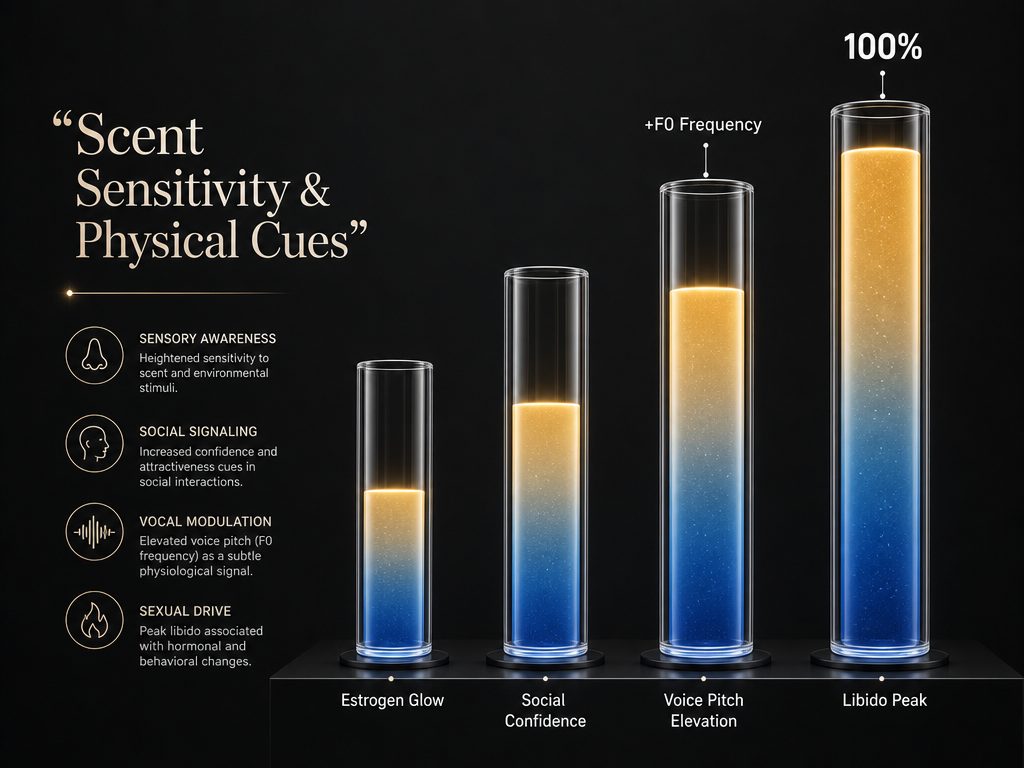
The "Estrogen Glow"
Her skin may look clearer. Water retention drops. She looks more "put together" even without extra effort. That's estrogen at work - it affects collagen production and soft tissue.
Voice Pitch
Women's voice pitch (fundamental frequency) has been observed to increase slightly in the days leading up to ovulation. You probably won't consciously notice this, but your brain might register it subconsciously.
Scent
This one's controversial. Older studies suggested men could detect fertile scent at a 61% rate in controlled settings, and that exposure to "fertile window" body odor caused temporary elevations in testosterone levels in men. However, recent research casts doubt on whether men can reliably "smell" ovulation in a way that triggers behavioral shifts. The takeaway: scent attractiveness may fluctuate, but don't expect to consciously detect it.
Ovulation Pain (Mittelschmerz)
Some women experience mittelschmerz - one-sided lower abdominal pain around the time of ovulation. It's a real, documented phenomenon, not something imagined. It's generally harmless, usually lasts minutes to a couple of days, and typically doesn't require medical treatment.
How often it happens varies substantially: some women get it almost every cycle, others only occasionally or never. It may be somewhat more common in women in their teens through mid-20s, though there's no clearly established risk factor. If she mentions discomfort mid-cycle, this is likely why.
Can You Actually Sense When She's Ovulating?
Short answer: not reliably, but you might pick up on indirect cues.
The scent research is mixed. While some studies show men respond to fertile-phase body odor in lab settings, newer findings suggest this doesn't translate into real-world detection. You're not going to walk into a room and think, "She must be ovulating."
What you can do is pay attention to patterns. After a few months, you'll notice:
- When she's more outgoing versus when she wants to stay in
- When she initiates plans versus when she declines them
- When she's more physically affectionate versus when she needs space
These shifts follow a biological rhythm. Tracking your own (or a partner's, with her participation) symptoms and mood changes across the cycle for a few months is a legitimate, medically endorsed way to identify real patterns and timing - rather than assuming based on stereotypes or a single cycle.
The best approach is to use a period tracker for partners that gives you a heads-up about upcoming phase changes. Apps like VibeCheck are specifically designed for men who want to understand their partner's cycle without invading her privacy or making it weird.
What She Needs from You During Ovulation
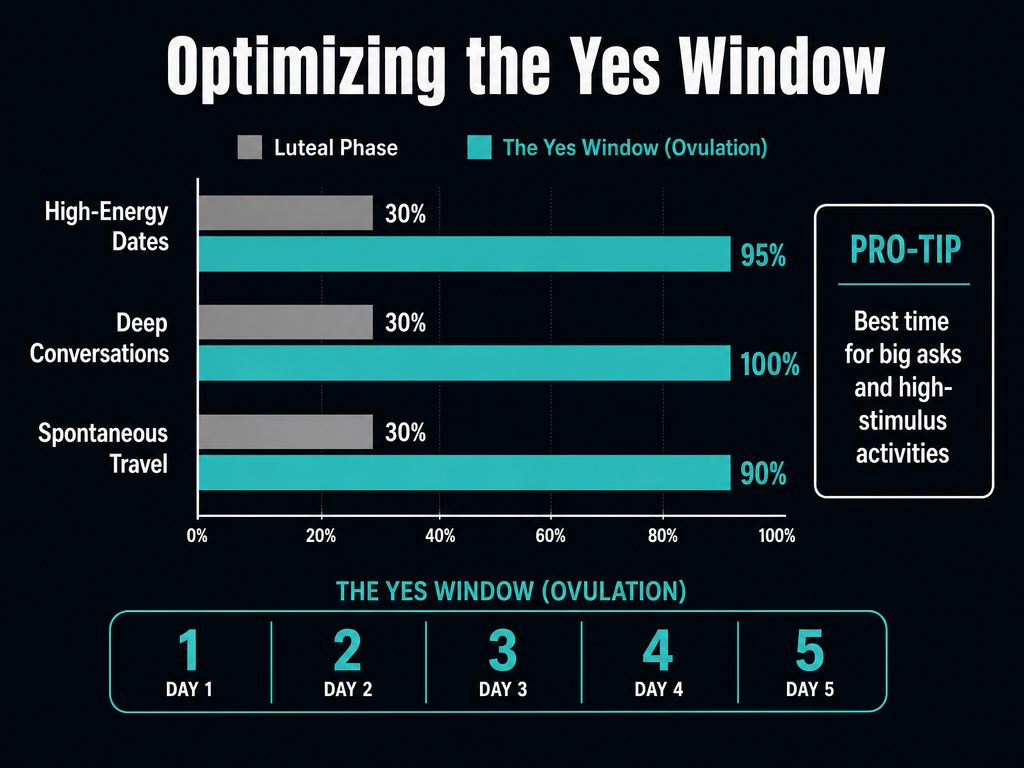
This is the "Yes Window" - the 3-5 days when her energy and openness are at their peak. Here's how to make the most of it:
Plan High-Stimulus Activities
This is the time for concerts, group dinners, road trips, dance classes, or any activity that requires social energy. She's biologically primed for novelty and stimulation right now.
Initiate Bigger Conversations
Want to talk about moving in together? Finances? Future plans? This is your window. Her cognitive function is sharp, her mood is stable, and she's more willing to engage with serious topics. Don't waste this phase on small talk.
Up the Physical Affection
Her libido is peaking. More touch, more flirting, more initiation. She wants connection right now - lean into it.
Acknowledge Her Confidence
If she's trying something new or taking a risk, support it. This is when she feels most like herself. Don't dismiss her energy as "random" or tell her to slow down. Match her pace.
What NOT to Do
Here's where most guys mess up:
Don't Tell Her "You Must Be Ovulating"
Even if you're right, saying this out loud makes you sound like a biological auditor. Use the information to be a better partner, not to explain her behavior back to her. When a partner is struggling emotionally, responding with genuine empathy - listening without judgment, focusing on their feelings rather than debating facts, and validating that their reaction makes sense - tends to help more than trying to "fix" the problem or offer silver linings.
Don't Assume She's "Always in the Mood"
Yes, libido increases during ovulation, but she's still a person with agency. Higher biological drive doesn't mean consent is automatic. Read the room.
Don't Plan Low-Energy Dates
If she's in her peak energy phase and you suggest "Netflix and takeout," you're wasting the opportunity. Save the cozy nights for her luteal phase, when her body actually craves rest.
Don't Ignore the Crash That Comes After
Right after ovulation, estrogen drops. That can trigger a noticeable mood dip. She might go from confident and outgoing to withdrawn and irritable within 48 hours. This isn't a personality flaw - it's biology. Support her through the transition instead of acting confused about why "she changed."
How to Track Her Cycle Without Being Weird About It
The key is collaboration, not surveillance. Here's how to approach it:
Have the Conversation
"I've been reading about how hormones affect mood and energy throughout the month, and I want to understand your patterns better so I can be a more supportive partner. Would you be open to sharing your cycle dates with me?"
Frame it as relationship improvement, not biological data collection. If she's hesitant, respect that. Some women don't want their partner tracking their cycle, and that's valid.
Use a Partner-Focused App
Apps like VibeCheck or Flo's partner mode are specifically designed for men who want to support their partner without overstepping. You get phase alerts and actionable advice without needing to know every detail of her symptoms.
Pay Attention to Patterns, Not Just Dates
Tracking the calendar is useful, but observing her behavior is more accurate. Does she consistently want to go out mid-cycle and stay in the week before her period? Does she initiate serious conversations more often in certain weeks? Those patterns are your real guide.
Never Use Cycle Information Against Her
If she's upset and you say, "Well, you're about to start your period," you've just destroyed any trust you built. Cycle awareness is a tool for empathy, not a weapon for dismissal.
Frequently Asked Questions
How to tell if a girl is ovulating by behavior?
Look for increased social energy, confidence, and libido. She's more likely to say yes to plans, initiate physical affection, and engage in serious conversations. These shifts typically happen 3-5 days mid-cycle when estrogen peaks. Pay attention to patterns over several months rather than trying to diagnose a single day.
Can ovulation cause mood swings?
Ovulation itself usually brings stable, upbeat moods because estrogen is high. The mood swings often happen right after ovulation when estrogen drops sharply. That hormonal crash can trigger irritability, fatigue, or sadness - similar to PMS but earlier in the cycle. If she seems withdrawn or snappy a few days after her peak energy phase, that's likely the post-ovulation dip.
Can a man sense when a woman is ovulating?
Research is mixed. Some studies show men respond to scent and voice cues during ovulation in controlled lab settings, but newer findings suggest these cues don't reliably translate to real-world detection. You're more likely to notice behavioral patterns - like increased social energy or libido - than to consciously "sense" fertility. Tracking her cycle and observing her behavior over time is far more accurate than relying on subconscious cues.
Why do girls act differently when ovulating?
Hormone levels drive behavior. During ovulation, estrogen peaks, which affects brain function, energy levels, and mood. Higher estrogen is linked to increased confidence, sharper cognitive function, and greater social drive. It's not a personality change - it's a predictable biological shift that repeats every cycle. Understanding this helps you anticipate her needs instead of being confused by the fluctuations.
What should guys do for their girlfriend during different cycle phases?
Match your support to her energy level. During ovulation (mid-cycle), plan high-energy dates and have important conversations. During the luteal phase (the week before her period), offer low-key activities and emotional validation. During menstruation, provide physical comfort and give her space if needed. During the follicular phase (right after her period), support her return to higher energy with collaborative planning. A period tracker app for partners can guide you through each phase.
Does a woman's behavior change during ovulation?
Yes, noticeably. Energy, confidence, social drive, and libido all tend to increase during the 3-5 days around ovulation. These aren't random shifts - they're driven by peak estrogen levels. After ovulation, when estrogen drops and progesterone rises, you'll often see the opposite: lower energy, more need for rest, and sometimes irritability. The behavioral changes are real and predictable once you understand the biological pattern.
Are guys more attracted to you during ovulation?
Some research suggests men find women more attractive during ovulation due to subtle changes in scent, voice pitch, and appearance (like clearer skin). However, newer studies question whether these cues are strong enough to trigger conscious awareness or behavioral changes. What is clear: women often feel more confident and put more effort into their appearance during ovulation, which can make them more attractive regardless of biological cues.
Understanding your girlfriend's ovulation phase isn't about becoming a biology expert - it's about being a more attentive partner. When you recognize that her energy, mood, and needs shift on a predictable cycle, you stop taking fluctuations personally and start timing your support better.
The payoff is a relationship with less friction, better timing, and deeper connection. You're no longer guessing why she's suddenly distant or why last week's date idea landed perfectly but this week's flopped. You're working with her biology instead of against it.
Want to stop walking on eggshells and start understanding the patterns? Try VibeCheck, the relationship app built for men who want to support their partner through every phase of her cycle.
Tags

Related Articles
Continue reading to deepen your understanding

Why Your Girlfriend Needs Different Communication Styles During Her Cycle
Stop wondering why your conversations feel like a minefield one week and a breeze the next. Use biology to understand her changing needs and adapt your style.

When Your Girlfriend Gets Withdrawn Before Her Period
If she suddenly pulls away, it is usually biology, not you. Learn why your girlfriend gets distant before her period and use these tactical scripts to help her during the luteal phase.

How to Respond When Your Girlfriend Needs Space During Her Period
If she’s suddenly sending one-word texts or pulling away, it’s likely not about you. Learn the science of the luteal phase and how to support her without feeling rejected.

Understanding Why Your Girlfriend’s Communication Style Shifts Weekly
Ever wonder why your partner’s moods and energy levels shift so much? Understanding the four phases of her menstrual cycle helps you become a more supportive and proactive partner.

When Do Your Girlfriend’s Energy Levels Change During Her Cycle?
Your girlfriend’s mood and stamina follow a biological rhythm. Learn how her energy peaks and crashes throughout the month so you can plan better dates and provide better support.

Why Your Girlfriend Needs Different Attention Each Week: The Four Seasons Framework
Stop walking on eggshells and start understanding her cycle. This framework shows you exactly how to support your girlfriend through all four biological phases every month.

Why Your Girlfriend Wants Space the Week Before Her Period
Does your girlfriend suddenly pull away every month? Discover the biological reasons behind the pre-period space window and how to navigate this phase together.

Why Your Girlfriend Wants Different Kinds of Affection at Different Times in Her Cycle
Ever feel like your girlfriend’s needs change every week? It’s not random. Understand how the four phases of her cycle drive her desire for intimacy so you can support her better.