Timing Your Support: How to Understand Her Cycle and Give the Best Gifts

Ever feel like you’re missing the signs? Understanding your partner’s 28-day cycle helps you provide the right support and gifts at exactly the right moment to strengthen your bond.
Timing Your Support: When to Step Up, Based on Her Biological Rhythm
You've noticed the pattern. Some weeks she's planning weekend trips and initiating conversations about the future. Other weeks she cancels plans, wants the apartment quiet, and needs space. You're not imagining it, and it's not random.
Her energy, mood, and social bandwidth shift on a predictable 28-day biological loop. Understanding this rhythm doesn't mean "managing her moods" - it means becoming a more attentive partner who can anticipate her needs before she has to ask. 60% of women believe their partner's lack of female health knowledge negatively affects their relationship, and 53% say their emotional bond would be strengthened if their partner understood more about female health.
This guide translates the menstrual cycle into actionable intelligence. You'll learn when to plan a surprise date versus when to handle the laundry and stay quiet, which apps can automate this awareness, and how to have the conversation about cycle tracking without sounding like you're trying to "manage" her.
Table of Contents
- The Four Seasons Framework: Your Relationship Intelligence Blueprint
- How Do I Track My Partner's Menstrual Cycle?
- The 7-2-1 Safety Check: When to Be Her Health Advocate
- The Biological "Why": Understanding the Hormone Shifts
- Can I Share My Period Tracker With My Boyfriend?
- Gift Guide Index: What to Give (and When)
- The Conversation Script: How to Ask Without Being Creepy
- Frequently Asked Questions
The Four Seasons Framework: Your Relationship Intelligence Blueprint
Think of the menstrual cycle as four distinct seasons, each with its own energy signature and support needs. The menstrual cycle has four phases - menstrual (bleeding, roughly day 1-5), follicular (day 1 through ovulation, estrogen rising), ovulation (around day 14 in a 28-day cycle, triggered by a surge in luteinizing hormone), and luteal (after ovulation to the next period, progesterone rising then falling). The follicular and menstrual phases overlap.
Here's the crucial nuance: a "normal" cycle varies considerably between women - menstrual bleeding can start anywhere from every 24 to every 38 days and last up to 8 days. There is no universal 28-day cycle, so treat exact day-by-day predictions as approximate guides, not gospel.
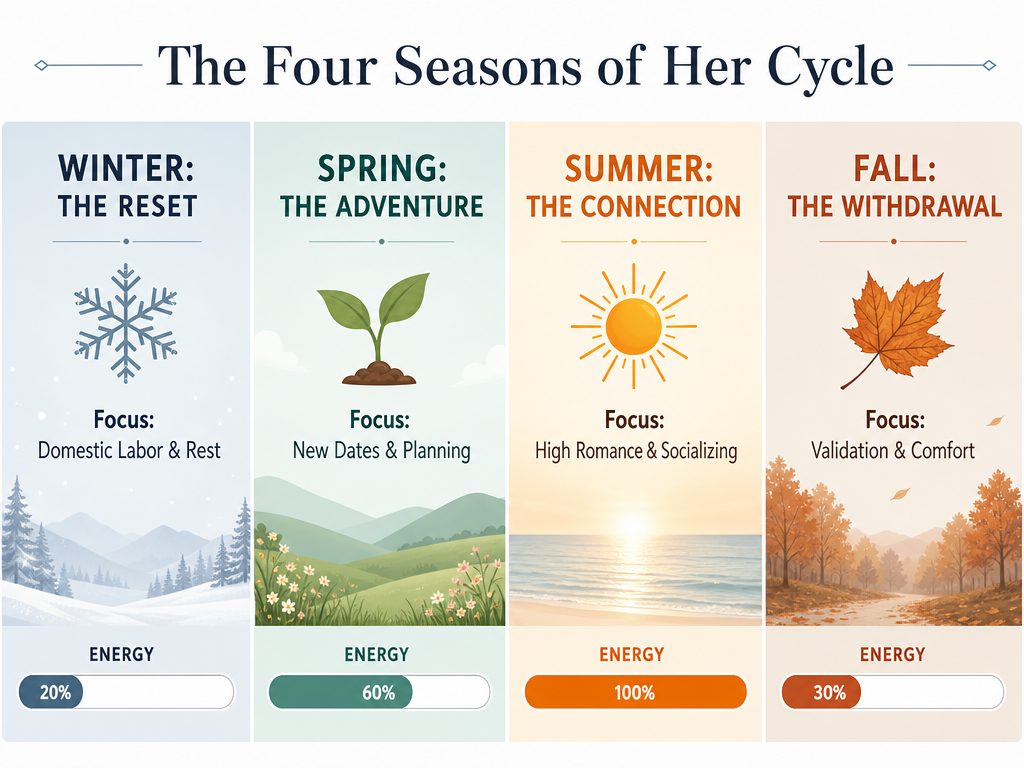 Understanding the 'Four Seasons' framework helps you transition from a reactive partner to a proactive one by aligning your support missions with her biological energy.
Winter (Menstrual Phase): The Reset
Timeline: Days 1-5 (first day of bleeding through the end of her period)
VibeCheck App
Download Free on iOS →Energy Level: Low to moderate, rebuilding
Her Experience: This is the biological "reset." Energy is lower, she may have cramps or fatigue, and social bandwidth is limited. She's not being dramatic - her body is literally shedding the uterine lining it built last month.
Your Support Mission:
- Take over domestic labor without being asked (dishes, cooking, grocery runs)
- Stock magnesium-rich comfort foods (dark chocolate is scientifically justified here)
- Offer physical comfort if she wants it (heating pad, back rubs) but don't take it personally if she needs space
- Cancel or postpone high-energy social plans
Gift Ideas: Epsom salts for a bath, her favorite takeout, a weighted blanket, candles, a streaming service subscription for low-key evenings.
Spring (Follicular Phase): The Adventure
Timeline: Day 1 through ovulation (roughly days 1-14, overlapping with menstruation)
Energy Level: Rising steadily
Her Experience: During the follicular phase, estrogen rises as an egg-containing follicle develops in the ovary; this rising estrogen also thickens the uterine lining. As her period ends and estrogen climbs, energy returns. She's more open to new experiences, planning, and social connection. This is the biological "yes" phase.
Your Support Mission:
- Plan a new date or activity she's been mentioning
- Book that weekend trip or concert tickets
- Start a project together (cooking class, furniture assembly, home improvement)
- Engage her in bigger conversations (future plans, relationship goals)
Gift Ideas: Experience gifts (concert tickets, cooking class vouchers, museum passes), a book she's mentioned, gear for a hobby she wants to try, travel accessories.
Summer (Ovulatory Phase): The Connection
Timeline: Around day 14 in a 28-day cycle, but varies
Energy Level: Peak
Her Experience: Ovulation is when a surge in luteinizing hormone (LH) causes the ovary to release an egg. This is her biological peak. Estrogen can spike by up to 800% during the Ovulatory phase. Confidence, libido, and social energy are highest. Around ovulation, many women notice symptoms such as increased sex drive, mild pelvic or abdominal pain, tender breasts, bloating, and mood changes - but these vary considerably person to person, and not everyone notices them.
Your Support Mission:
- Match her high energy with physical affection and quality time
- Plan social events (double dates, parties, gatherings)
- High-romance gestures land well here (jewelry, perfume, handwritten notes)
- Be present - this is when deep conversations and emotional connection feel easiest for her
Gift Ideas: Jewelry, perfume, lingerie (if that's your dynamic), flowers, a nice dinner reservation, a surprise romantic getaway.
Fall (Luteal Phase): The Withdrawal
Timeline: After ovulation to the next period (roughly days 15-28)
Energy Level: Declining, sometimes sharply
Her Experience: After ovulation, the luteal phase begins: progesterone rises to help prepare the uterine lining for a possible pregnancy. If pregnancy doesn't happen, both progesterone and estrogen drop before the next period. This hormonal crash is biochemically similar to withdrawal. Many women notice PMS-like symptoms in this phase - mood shifts, breast tenderness, bloating, acne, and appetite changes - though not everyone does.
PMS (premenstrual syndrome) is very common: as many as 3 in 4 women report experiencing PMS symptoms at some point in their life, though severity varies widely. Roughly half of people who menstruate report having at least one PMS symptom, but only about 1 in 5 have symptoms severe enough to disrupt their daily life.
Your Support Mission:
- Validate her feelings without trying to "fix" them ("I hear you," not "have you tried...")
- Be willing to cancel social plans
- Provide comfort without crowding (ask what she needs)
- Handle logistics she usually manages (meal planning, scheduling)
Gift Ideas: Comfort foods she's craving, cozy pajamas, subscription boxes (snacks, self-care), noise-canceling headphones, a massage gift card, her favorite wine or tea.
Understanding how to support girlfriend during ovulation mood changes and other cycle phases requires recognizing that her needs genuinely shift throughout the month.
How Do I Track My Partner's Menstrual Cycle?
The short answer: use an app with partner mode, but only with her enthusiastic consent and her controlling what you see.
Here's a comparison of the top three options designed specifically for partners:
| App | Core Strength | Partner Mode Cost | Privacy Model | Best For |
|---|---|---|---|---|
| VibeCheck | Tactical daily missions tailored to her cycle phase | Free for both | She controls sharing; you get action-oriented guidance | Men who want to know what to do today, not just what day it is |
| Flo for Partners | Medical-grade education and video library | Premium required ($49.99/year) | End-to-end encryption; she chooses what to share | Couples who want deep biological understanding and clinical accuracy |
| Clue Connect | Privacy-first with minimal data collection | Free | End-to-end encryption; currently reported as buggy in 2026 | Privacy-conscious couples; women already using Clue |
Men who used cycle-based recommendations reduced unresolved conflict cycles by 41% within the first month. The right tool depends on your relationship dynamic and what you're optimizing for: education, privacy, or tactical guidance.
For a deeper dive into features and pricing, see our complete boyfriend guide to menstrual cycle phases & support.
The 7-2-1 Safety Check: When to Be Her Health Advocate
Most "boyfriend cycle guides" focus on mood management. This one includes something more important: knowing when to help her spot a genuine health concern.
The 7-2-1 Rule for Heavy Menstrual Bleeding is a medical benchmark you should memorize: Periods lasting more than 7 days, needing to change pads or tampons every 2 hours or less, or passing blood clots larger than a quarter.
If she meets any one of these criteria consistently, it's not "just a heavy period" - it's Heavy Menstrual Bleeding (HMB), and she should talk to a doctor. Many women normalize this because they've never tracked it objectively. You can be the person who lovingly suggests, "That doesn't sound normal - have you mentioned it to your doctor?"
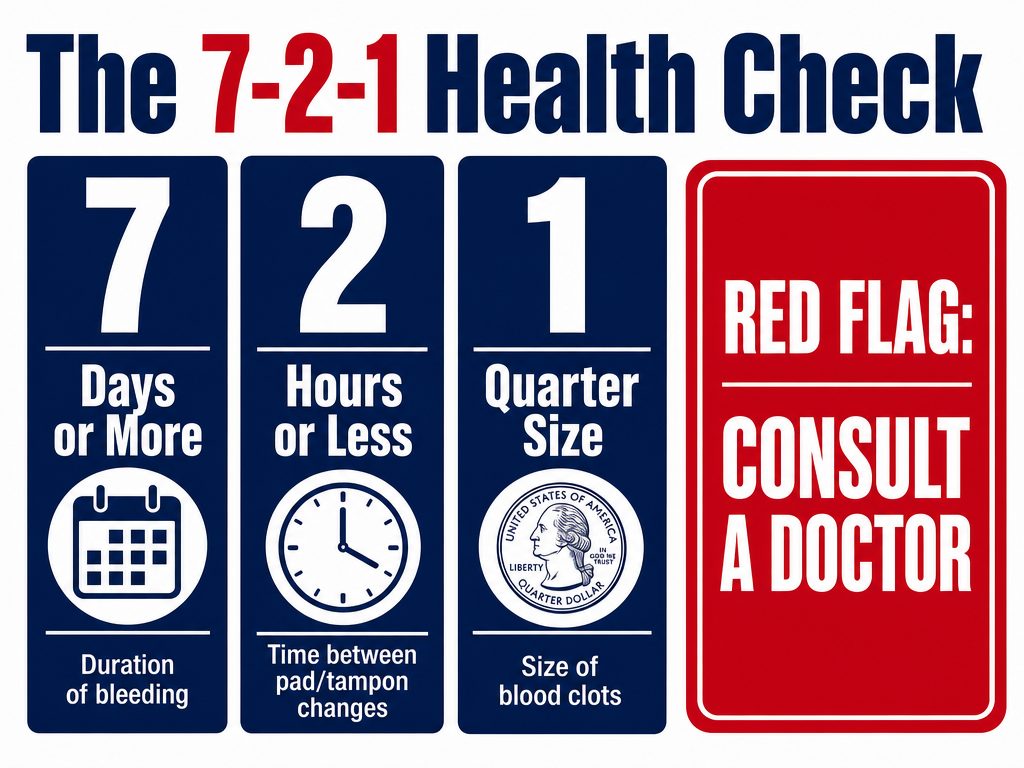 The 7-2-1 rule is a critical health benchmark that allows you to act as a protector by identifying when she may need professional medical advice.
This isn't about diagnosing her. It's about being informed enough to notice patterns that warrant professional evaluation. You're not her doctor, but you can be her advocate.
The Biological "Why": Understanding the Hormone Shifts
Knowing when to support her is helpful. Understanding why her needs shift transforms you from a guy following a checklist to a partner who genuinely gets it.
Estrogen: The Energy Hormone
Estrogen affects many body systems, including brain function and the ability to focus, and levels are highest in the days leading up to ovulation. When estrogen is rising (follicular phase into ovulation), she has more energy, clearer thinking, and higher social tolerance. This isn't "being in a good mood" - it's biochemistry.
When estrogen crashes after ovulation, the drop is sharp. Think of it as going from a caffeine high to withdrawal, except it's happening in her brain's reward and mood centers.
Progesterone: The "Calm Down" Hormone That Causes a Crash
After ovulation, progesterone rises to help prepare the uterine lining for a possible pregnancy. Progesterone has a calming effect initially, but when it drops sharply in the days before her period, it can trigger anxiety, irritability, and fatigue. This isn't her "overreacting" - her brain is experiencing a chemical withdrawal similar to coming off a sedative.
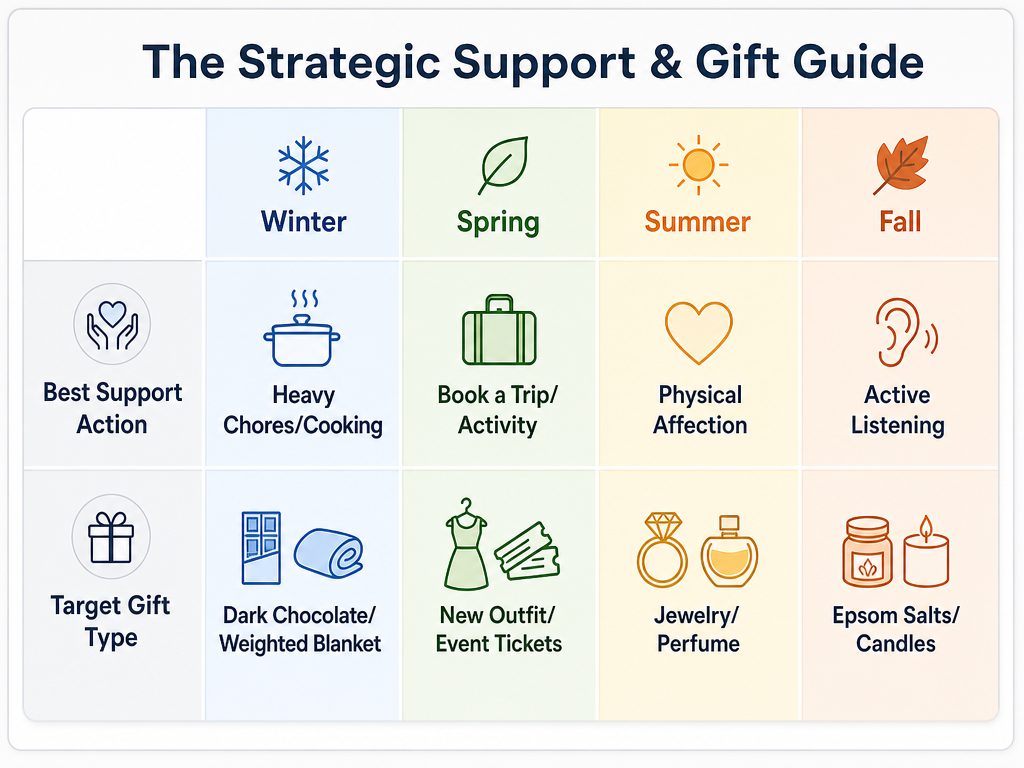 Visualizing the massive 800% estrogen spike followed by a progesterone crash helps partners empathize with the 'chemical withdrawal' she feels during the luteal phase.
When you understand this, you stop taking her mood shifts personally. She's not mad at you - her serotonin levels are tanking because progesterone is crashing.
For more on how hormones affect mood, our dedicated guide covers the neuroscience in partner-friendly terms.
Can I Share My Period Tracker With My Boyfriend?
Yes, and many apps are designed specifically for this - but the conversation matters more than the technology.
Women's biggest fear around sharing cycle data with a partner is that it will be used to dismiss their feelings ("Oh, you're just on your period") or to "manage" them. The apps that work best give her control over what you see and frame the information as "how to support her," not "how to predict her moods."
What She's Likely Worried About:
- You'll use it to invalidate her emotions
- You'll treat her like a science experiment
- You'll share her data without permission
- It will feel patronizing or intrusive
What Reassures Her:
- You frame it as wanting to be a better partner, not wanting to "track" her
- She controls exactly what you can see
- You use the information to ask supportive questions, not make assumptions
- You never bring it up in an argument ("You're just in your luteal phase")
Most women are open to sharing cycle information with a partner who approaches it respectfully. The key is positioning it as a tool for you to learn, not for her to be monitored.
Gift Guide Index: What to Give (and When)
Timing matters. A surprise spa day during her ovulatory phase (when she has peak energy and wants to be social) is thoughtful. The same surprise during her menstrual phase (when she's exhausted and wants to be left alone) feels tone-deaf.
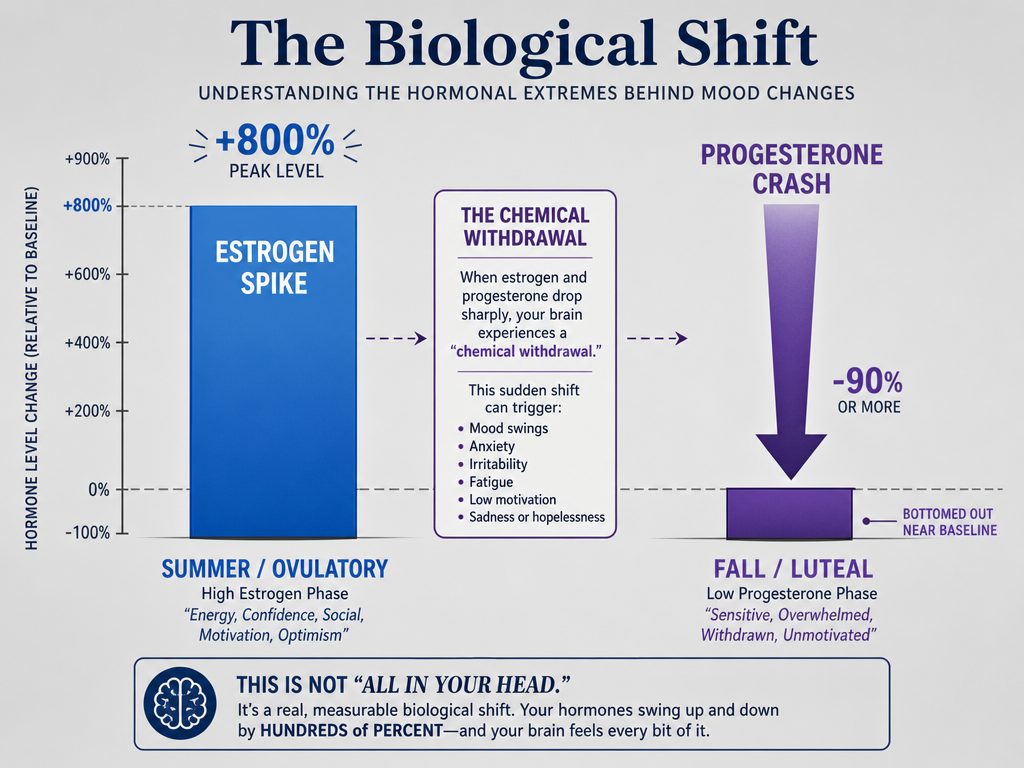 Use this strategic matrix to choose the right gift or action based on her current cycle phase, ensuring your gestures are always well-timed and appreciated.
Menstrual Phase (Winter): Comfort & Rest
- Heating pad or electric blanket
- Epsom salts or bath bombs
- Her favorite takeout or comfort food
- Cozy pajamas or loungewear
- Subscription to a streaming service
- Dark chocolate (magnesium-rich, scientifically justified)
Follicular Phase (Spring): Adventure & Novelty
- Concert or event tickets
- Cooking class or workshop voucher
- Weekend getaway booking
- A book or course she's mentioned
- Hiking gear or fitness accessories
- Museum or art gallery passes
Ovulatory Phase (Summer): Romance & Connection
- Jewelry (even something small and thoughtful)
- Perfume or high-quality skincare
- Flowers delivered to her workplace
- A handwritten love letter
- Nice dinner reservation at a restaurant she's wanted to try
- A surprise romantic gesture (picnic, sunset drive, etc.)
Luteal Phase (Fall): Validation & Low-Effort Care
- Her favorite snacks or cravings
- Weighted blanket
- Noise-canceling headphones
- Massage or spa gift card (for her to use when she chooses)
- Subscription box (snacks, self-care, etc.)
- Her favorite wine, tea, or coffee
The best gifts during this phase are the ones that require zero effort from her. Don't give her a spa day she has to schedule and drive to - give her a gift card she can use when she's ready.
The Conversation Script: How to Ask Without Being Creepy
Here's the conversation most men dread: "Can we use an app so I can understand your cycle better?" It feels invasive to suggest, and you're worried she'll think you're trying to "manage" her.
Use this three-step script, adapted to your relationship's communication style:
Step 1: State the Problem (From Your Perspective)
"I've noticed that sometimes I offer to do things or suggest plans, and they land really well, and other times they seem to frustrate you or feel like bad timing. I don't think you're unpredictable - I think I'm not paying attention to patterns."
This frames the issue as your lack of awareness, not her inconsistency.
Step 2: Introduce the Tool (As Something for Your Education)
"I've been reading about how energy and mood shift throughout the month based on biology, and I want to be better at anticipating when you need support versus when you want adventure. There are apps designed to help partners understand that rhythm - would you be open to trying one, where you control what I see?"
This positions the app as a learning tool for you, not a tracking system for her.
Step 3: Guarantee Privacy and Agency
"You'd be in complete control of what I can see, and I'd never bring it up in a way that dismisses how you're feeling. I just want to be a more attentive partner."
This addresses her biggest fears directly.
Most women respond positively to this framing. If she's hesitant, ask what would make her comfortable. Maybe she's willing to share general phase information (follicular, ovulatory, luteal, menstrual) without specific symptoms. Maybe she wants to try it for one month and reassess. Respect her boundaries.
If you're looking for a broader understanding of how to understand your girlfriend, we cover communication, empathy, and science-backed relationship strategies.
Frequently Asked Questions
What is the 7-2-1 rule for menstruation?
The 7-2-1 rule is a medical guideline to identify Heavy Menstrual Bleeding (HMB): periods lasting more than 7 days, needing to change pads or tampons every 2 hours or less, or passing blood clots larger than a quarter. If your partner consistently meets any one of these criteria, she should talk to a doctor. Many women normalize heavy bleeding because they've never tracked it objectively - you can help her recognize when something warrants medical evaluation.
How do I tell if my period flow is heavy?
Heavy flow isn't subjective. Use the 7-2-1 rule: if she's bleeding for more than 7 days, changing protection every 2 hours or less, or passing clots larger than a quarter, that's clinically defined as heavy bleeding. Encourage her to track this for a couple of cycles and bring the data to her doctor if it's consistent.
Which tea is best for balancing hormones?
There's no single tea that "balances hormones" in a medically proven way, but certain teas can support comfort during specific phases. Ginger tea may help with nausea and cramps during menstruation. Chamomile can support relaxation during the luteal phase when anxiety may spike. Red raspberry leaf tea is traditionally used to support uterine health, though clinical evidence is limited. The best approach is to ask what she finds soothing rather than prescribing a specific remedy.
Can stress cause a period to come early?
Yes. Stress can disrupt the hormonal signals that regulate the menstrual cycle, potentially causing an early period or delaying it. If she's under significant stress (work deadlines, family issues, major life changes), her cycle may shift unpredictably. This is temporary and usually resolves when stress decreases, but chronic stress can lead to ongoing cycle irregularities. For more detail, see our guide on can stress cause period to come early.
What does ovulation pain feel like?
Mittelschmerz - one-sided lower abdominal pain around the time of ovulation - is a real, documented phenomenon, not something imagined. It's generally harmless, usually lasts minutes to a couple of days, and typically doesn't require medical treatment. Some women describe it as a sharp twinge or dull ache on one side of the lower abdomen. How often mittelschmerz happens varies considerably: some women get it almost every cycle, others only occasionally or never. If she mentions ovulation pain, it's a real physical sensation, not an excuse to avoid plans.
How can I support my girlfriend during PMS?
When a partner is struggling emotionally, responding with genuine empathy - listening without judgment, focusing on their feelings rather than debating facts, and validating that their reaction makes sense - tends to help more than trying to "fix" the problem or offer silver linings. During PMS, she doesn't need you to solve anything. She needs you to validate her experience ("That sounds really hard"), take over tasks without being asked, and be willing to cancel plans if her energy is low. For specific tactics, see our detailed guide on how to comfort your girlfriend during PMS.
Are cycle syncing lifestyle programs scientifically proven?
Not exactly. There is general research support for hormone-linked differences in mood and energy across the cycle - energy tends to be lower during the period and can build through the follicular phase toward ovulation, with PMS-type symptoms more likely in the luteal phase. However, specific "cycle syncing" lifestyle programs built on this idea have not themselves been tested in clinical research, so prescriptive claims (exact workouts or foods for exact cycle days) go beyond what's established. The framework is useful for general awareness, not as a rigid prescription.
What are some supportive things I can do during her luteal phase?
Lifestyle approaches that can help ease PMS symptoms include regular aerobic exercise, smaller and more frequent meals, less salt/caffeine/alcohol, adequate sleep, and stress-reduction practices like deep breathing or yoga. A partner who understands these and is patient and supportive around them - rather than dismissive of symptoms - is aligning with medically recommended self-care. Practical actions include cooking meals that match these guidelines, initiating a walk together, or simply giving her space to rest without judgment.
Should I mention PMDD if her PMS seems really severe?
Tread carefully here. PMDD (premenstrual dysphoric disorder) is a real, clinically recognized condition - it's listed in the DSM-5 as a depressive disorder, affecting roughly 1 in 10 people who menstruate. PMDD is a more severe, sometimes disabling extension of PMS. Both happen on a similar timeline (about 7-10 days before a period) and can share physical symptoms like bloating and fatigue, but PMDD specifically involves extreme mood symptoms - such as marked irritability, anxiety, or hopelessness - intense enough to disrupt daily life and strain relationships. If her symptoms genuinely seem to fit this pattern, you can gently suggest, "What you're describing sounds really hard - have you ever talked to your doctor about whether this might be PMDD?" But never diagnose her yourself or use it to dismiss her feelings.
Final Thought: Understanding her cycle isn't about predicting her moods like a weather forecast. It's about recognizing that her needs genuinely shift on a biological rhythm and adjusting your support accordingly. Men who used cycle-based recommendations reduced unresolved conflict cycles by 41% within the first month - not because they manipulated their partners, but because they stopped treating every day the same and started meeting her where she actually was.
The goal isn't to become her biology teacher. It's to become the partner who notices when she needs rest instead of adventure, validation instead of solutions, and comfort instead of crowding. That's not "managing" her - that's listening to her body when she might not have the bandwidth to explain it herself.
Tags

Related Articles
Continue reading to deepen your understanding

How to Understand Your Girlfriend’s Social Battery and Hormones
Does your girlfriend suddenly cancel plans or seem withdrawn? This guide explains how her cycle impacts her energy so you can support her like a pro.

How Your Girlfriend’s Emotional Needs Change During Her Cycle
Does your girlfriend’s mood seem unpredictable? Learn how her emotional needs shift on a biological loop and how to support her through every phase of her cycle.

What to Buy When Your Girlfriend Has Hormone Cravings: A Support Guide
Stop wondering what to pick up at the store. This guide explains the science behind cycle cravings and provides a specific list of foods and comfort items she needs.

Your Girlfriend’s Mood Shifts Throughout the Month, Explained
Ever wonder why her energy and moods change so drastically each week? Understand the four hormonal phases and how to be the partner she needs during every stage of her cycle.

How to Support Your Girlfriend When She’s Crying Because of Hormones
Watching her cry when hormones hit can feel overwhelming. Learn the biological why behind the tears and use these proven scripts to provide the support she actually needs right now.

How to Help Your Girlfriend with Hormonal Mood Swings Without Arguing
Understand her cycle and learn tactical scripts to handle tension. This guide shows you how to support her through hormonal shifts without getting into unnecessary fights.

When to Feed Your Girlfriend: Understanding Hangry Hormones
Does your girlfriend get irritable when she hasn’t eaten? It’s not just in her head. Learn why hormones cause hanger and the specific times her body needs more fuel.

The Boyfriend’s Guide to Supporting Your Partner Through PMS
If your partner is suddenly irritable and exhausted, it’s biology, not you. Learn about the luteal phase and how to provide meaningful support without walking on eggshells.