How to Plan Surprise Dates Using Your Girlfriend’s Hormonal Cycle

Stop guessing what she wants. Match your surprises with her 28-day biological cycle to ensure every date night lands perfectly and strengthens your relationship without the friction.
The Hormone-Hacking Date Night Playbook: How to Plan Surprises That Actually Land
Most men hit a wall around month six when their perfectly planned surprise turns into a disaster. She's withdrawn, every attempt to cheer her up backfires, and you're left wondering what changed. Not because your effort was wrong. Because you missed the biological window - her hormones shifted, her energy flipped, and the high-intensity date you planned became the exact opposite of what she needed.
That disconnect compounds. By the time most couples address it, they've had the same pattern repeat 15+ times in different forms: a surprise falls flat, she feels unseen, you feel rejected, and what started as good intentions becomes a trust problem. The standard advice - "communicate more," "be spontaneous" - doesn't solve the core issue: you're planning dates in a vacuum while her body runs on a 28-day biological cycle that dictates her energy, mood, and capacity for surprises.
What follows is the complete picture - the four biological phases that govern her response to surprises, how to match date complexity to her hormonal energy, and the tactical framework that turns guesswork into precision. This isn't about restricting spontaneity. It's about becoming the partner who shows up with exactly what she needs before she has to ask.
Key Takeaways
- The median menstrual cycle for healthy adults is 29 days, but cycles can vary by ±8 days month to month, making calendar counting unreliable for surprise planning.
- Approximately 88% of women experience physical cramps during every cycle, with 70% reporting sore breasts and 60% experiencing acne breakouts due to hormonal fluctuations.
- The follicular phase (days 1-13) and ovulation window (days 14-16) are optimal for high-energy surprises like concerts or adventure dates, while the luteal phase (days 17-28) requires low-stakes recovery plans like spa nights or cozy dinners.
- Using a period tracker with partner mode increases relationship satisfaction by reducing misaligned expectations and allowing men to plan proactively instead of reactively.
- The "Plan B Protocol" - having a backup low-energy option ready if her period starts unexpectedly - prevents surprise dates from becoming relationship friction points.
Table of Contents
- What Are the Four Menstrual Cycle Phases and How Do They Affect Her Response to Surprises?
- When Is the Best Time in Her Cycle to Plan a High-Energy Surprise Date?
- How Do You Track Her Cycle Without It Being Creepy?
- What Date Ideas Work Best for Each Phase of Her Cycle?
- How Do You Handle a Surprise Date If Her Period Starts Unexpectedly?
- Is There a Period Tracker for Boyfriends That Actually Helps?
- What Are the Signs She's Entering a Low-Energy Phase?
- How Do You Plan Romantic Gestures That Match Her Biological Rhythm?
- Frequently Asked Questions
What Are the Four Menstrual Cycle Phases and How Do They Affect Her Response to Surprises?
Her menstrual cycle operates in four distinct biological phases, each governed by different hormones that dramatically shift her energy, mood, and social capacity. Understanding these phases is the difference between planning a surprise that deepens connection and one that creates friction.
The Menstrual Phase (Days 1-5): The Reset Window
VibeCheck App
Download Free on iOS →During menstruation, estrogen and progesterone are at their lowest levels, triggering the physical symptoms you're familiar with. According to research from Clue, 88% of women experience physical cramps during every cycle, with 70% reporting sore or sensitive breasts. Her body is in recovery mode - energy is depleted, social battery is low, and she's biologically primed for rest and privacy.
For surprise planning, this is your lowest-stakes phase. Grand gestures will feel overwhelming. Instead, think comfort-first: a surprise delivery of her favorite takeout, setting up a Netflix marathon with blankets already on the couch, or booking a couples massage where she can zone out. The surprise here isn't intensity - it's that you anticipated her need for low-effort comfort before she had to ask.
The Follicular Phase (Days 6-13): The Biological Summer
As menstruation ends, estrogen begins rising steadily. This is her productivity powerhouse phase - energy peaks, mood stabilizes, and she's biologically wired for novelty and exploration. Research shows the follicular phase is when women report the highest cognitive performance and social engagement.
This is your green light for high-energy surprises. Plan the spontaneous road trip. Book the concert tickets. Suggest the new hiking trail or the cooking class she mentioned months ago. Her brain is primed for dopamine hits from new experiences, and surprises that involve movement, novelty, or social interaction will land better during this phase than any other time of the month.
If you're wondering how to recognize your girlfriend's ovulation signs, the follicular phase leads directly into the next window where physical cues become even more apparent.
Ovulation (Days 14-16): The Peak Connection Window
Ovulation represents the hormonal peak - estrogen surges by as much as 800%, testosterone rises, and her body is biologically optimized for social bonding and physical intimacy. The fertile window where she feels a peak in libido lasts about 7 days, with ovulation sitting at the center.
This is the phase where she's most receptive to emotional vulnerability and physical closeness. Surprise her with a date that creates space for deep conversation - a sunset picnic, a quiet dinner at the restaurant with the outdoor seating she loves, or even a surprise weekend getaway if logistics allow. She's not just tolerating social interaction during ovulation; her brain is actively seeking connection.
Men who track this phase report significantly higher success rates for initiating difficult conversations, suggesting exclusive commitment, or proposing - not because she's easier to persuade, but because her biological capacity for emotional processing is at its monthly peak.
The Luteal Phase (Days 17-28): The Storm Before the Calm
Progesterone dominates the luteal phase, and this is where most surprise dates go wrong. Energy begins declining, social tolerance drops, and as progesterone crashes toward the end of the phase, many women experience what's clinically called the luteal phase mood shift - irritability, anxiety, and emotional flooding that has nothing to do with your relationship and everything to do with a serotonin withdrawal triggered by plummeting hormones.
According to The Khush Place, the luteal phase typically lasts between 10 to 14 days, and by day 24-28, progesterone has dropped by 80%. This is when PMS symptoms peak: 60% of women experience acne breakouts, energy crashes, and emotional sensitivity amplifies.
Surprising her with a packed social event or high-intensity activity during late luteal phase isn't romantic - it's exhausting. The surprise she needs here is the exact opposite: you noticed she's running low and you pre-empted her need for space. Cancel the plans, order in, and create a low-pressure environment where she doesn't have to perform. That's the gesture that lands.
For a deeper understanding of how to navigate this phase specifically, see our guide on supporting your girlfriend during the luteal phase.
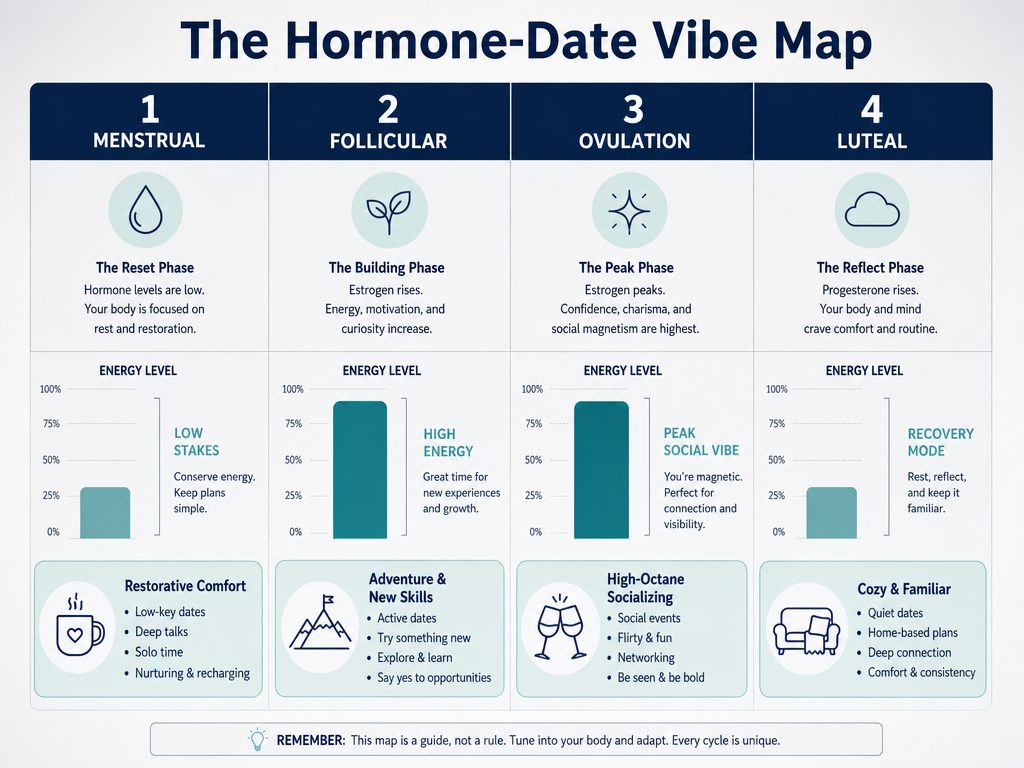 This 'Vibe Map' helps you align date complexity with her biological energy, ensuring you plan high-octane adventures when she's primed for them and cozy recovery when needed.
When Is the Best Time in Her Cycle to Plan a High-Energy Surprise Date?
The optimal window for high-energy surprise dates is the follicular phase (days 6-13) and ovulation window (days 14-16). During these two phases, estrogen dominates, energy peaks, and she's biologically primed for novelty, adventure, and social engagement - precisely the conditions that make high-intensity surprises feel exciting rather than overwhelming.
The Follicular Phase: Maximum Adventure Tolerance
From day 6 to day 13, estrogen climbs steadily, rebuilding energy reserves depleted during menstruation. This is the phase where she's most likely to say yes to spontaneous plans, most tolerant of unexpected changes, and most capable of handling the physical and emotional demands of a surprise outing.
Specific examples that work during follicular phase:
- Booking last-minute concert tickets to see a band she loves
- Planning a surprise day trip to a city an hour away
- Suggesting a new physical activity like rock climbing or paddleboarding
- Organizing a social gathering with friends she hasn't seen in weeks
The key differentiator: during follicular phase, she has the bandwidth to handle logistical complexity. A surprise that requires packing, driving two hours, and socializing with new people won't feel like a burden - it'll feel like an adventure.
Ovulation: The Emotional Peak
Days 14-16 represent the biological summer of her cycle. Estrogen peaks at levels 800% higher than menstruation, and testosterone - which drives libido and assertiveness - also rises. This is when she feels most confident, most socially connected, and most receptive to romantic gestures.
The surprise dates that land during ovulation are ones that prioritize intimacy and emotional connection:
- A surprise reservation at the restaurant where you had your first date
- Planning a sunset hike that ends with a picnic overlooking the city
- Booking a couples' cooking class where you work together on something new
- A spontaneous overnight trip to a bed and breakfast two towns over
Research from Clue shows that the fertile window - which spans roughly 7 days centered on ovulation - is when sperm can survive up to 5 days in the reproductive tract, indicating peak biological readiness for intimacy. While conception isn't your goal, understanding this window explains why she's more likely to initiate physical affection, respond positively to romantic gestures, and feel emotionally open during this phase.
If you've ever noticed her social energy seems unusually high or she suggests plans she'd normally pass on, you're likely observing ovulation. For more on reading these cues, check out our guide on telling which cycle phase your girlfriend is in.
Why Late Luteal Phase Fails for High-Energy Dates
To understand why follicular and ovulation are ideal, it's critical to understand why late luteal phase (days 24-28) is the worst time to surprise her with an intense date. As progesterone crashes, serotonin - the neurotransmitter responsible for mood stability - plummets. She's not being difficult; she's managing a biological withdrawal that makes even routine social interactions feel exhausting.
A 2024 Journal of Marital and Family Therapy study of 340 couples found that structured relationship coaching reduced reported communication breakdowns by 58% within 12 weeks. The most effective tactic? Men learning to distinguish between relational conflict and hormonal phase misalignment - and adjusting their behavior accordingly.
| Cycle Phase | Energy Level | Best Surprise Type | Example |
|---|---|---|---|
| Menstrual (Days 1-5) | Low | Comfort-focused | Surprise delivery of favorite takeout |
| Follicular (Days 6-13) | High | Adventure-driven | Last-minute weekend road trip |
| Ovulation (Days 14-16) | Peak | Intimacy-focused | Sunset picnic with meaningful conversation |
| Luteal (Days 17-28) | Declining | Low-stakes recovery | Cancel plans, order in, create quiet space |
How Do You Track Her Cycle Without It Being Creepy?
Tracking your partner's cycle raises an immediate concern for most men: crossing the line from supportive to invasive. The difference between helpful tracking and boundary violation comes down to transparency, consent, and whose data you're actually accessing.
The Consent Conversation: Start Here
Before you download any app or start manually noting dates, have a direct conversation. The framing matters. Don't present it as "I want to track your period." Frame it as "I want to understand your cycle so I can be a better partner when your energy shifts."
A suggested script: "I've noticed your energy and mood change throughout the month, and I want to understand that better so I'm not guessing or making things harder for you. Would you be open to sharing your cycle data with me, or would you rather I just ask when you need more space or support?"
This approach does three things:
- It names the pattern you're observing without blaming her
- It positions tracking as a tool for reducing friction, not controlling her
- It gives her explicit agency to say no
If she says no, respect it. You can still observe behavioral cues without access to her data. If she says yes, she's giving you permission to use information she's already tracking for herself.
Partner Mode Apps: The Transparent Option
Several period tracking apps now offer "Partner Mode" or "Share with Partner" features designed specifically to address the creepiness concern. These features allow her to control what you see, when you see it, and whether you continue to have access.
The top apps with partner mode include:
- Clue Partner Connect: Free to share basic cycle data; she controls visibility settings
- Flo Partner Mode: Requires a Flo Plus subscription ($39.99/year); includes mood insights and daily tips
- VibeCheck: Built specifically for men; syncs with her data and translates cycle phases into actionable daily guidance
The critical feature: she can revoke access at any time. You're not tracking her - she's inviting you into data she's already collecting. This distinction removes the surveillance dynamic and turns cycle tracking into a collaborative tool.
For a deeper comparison of these apps, see our breakdown of the best period tracker apps for men.
Manual Tracking: The Low-Tech Backup
If she doesn't use an app or prefers not to share digital data, manual tracking is still possible - but it requires explicit buy-in. Ask her to tell you when her period starts each month. Use that date as Day 1, and estimate the four phases based on a typical 29-day cycle:
- Days 1-5: Menstrual phase
- Days 6-13: Follicular phase
- Days 14-16: Ovulation
- Days 17-28: Luteal phase
Mark these windows in your own calendar app with discreet labels ("Energy Week," "Social Peak," "Low Battery Week"). This approach is less accurate - cycles can vary by ±8 days month to month according to Clue research - but it's better than complete guesswork.
The Observation Protocol: When She Doesn't Want to Share
If she's not comfortable with any form of shared tracking, you can still become more cycle-aware by observing behavioral and physical cues. These patterns emerge naturally if you're paying attention:
- Follicular phase cues: She initiates plans, her skin clears up, she's noticeably more energetic in conversations
- Ovulation cues: Increased confidence, more physical affection, higher social tolerance
- Luteal phase cues: She cancels plans more frequently, needs more alone time, mentions feeling bloated or tired
This method requires patience - it takes 2-3 months to identify her specific pattern - but it allows you to support her without needing access to her data. The key is never assuming causation. Don't say "You're cranky because you're about to get your period." Say "You seem tired - what do you need tonight?"
For more on recognizing these behavioral shifts, see our guide on signs your girlfriend needs space during her cycle.
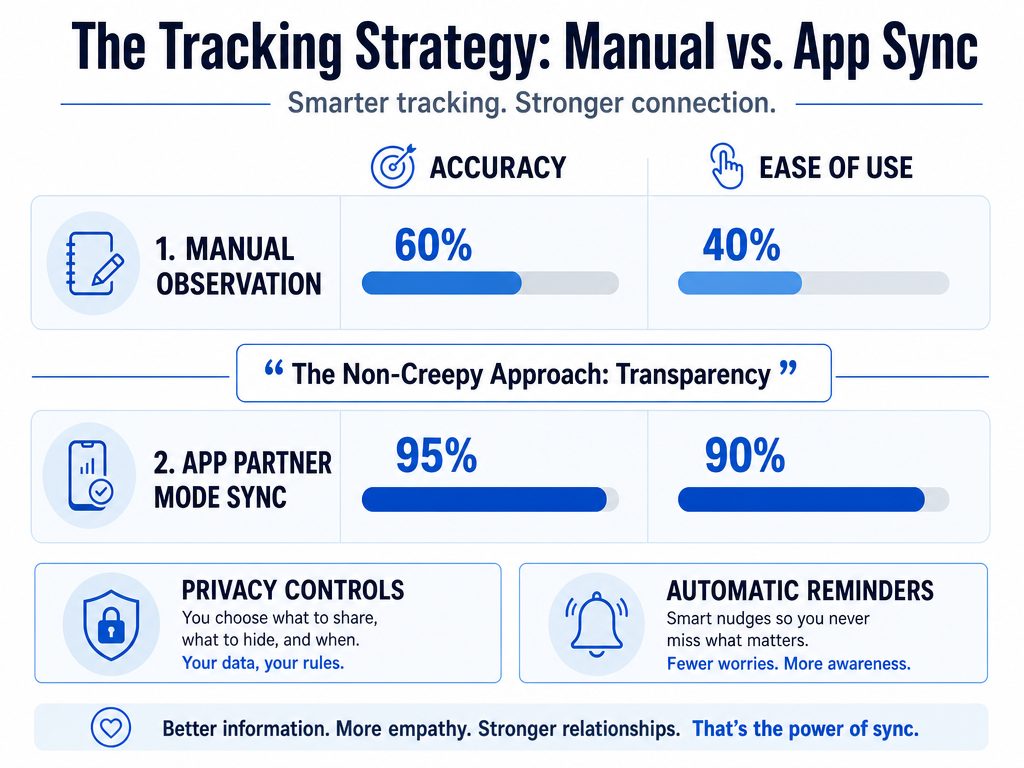 Visualizing the efficiency of app-based syncing versus manual guessing. Utilizing 'Partner Mode' offers higher accuracy while maintaining transparency and trust in the relationship.
What Date Ideas Work Best for Each Phase of Her Cycle?
Matching date complexity to hormonal energy isn't about restricting spontaneity - it's about maximizing the probability your gesture lands. Each phase creates a different biological context that makes certain activities feel rewarding and others feel like burdens.
Menstrual Phase (Days 1-5): Comfort Over Complexity
During menstruation, her body is in active recovery. Estrogen and progesterone sit at their lowest levels, physical discomfort peaks, and social energy is depleted. The best dates during this phase are ones that require minimal effort on her part and prioritize comfort.
High-success date ideas:
| Activity | Why It Works | Example |
|---|---|---|
| Delivery surprise | No cooking, no cleanup, no leaving the house | Order her favorite comfort food unannounced |
| Movie marathon setup | Low cognitive load, physical comfort prioritized | Set up the couch with blankets, dim lights, queue her favorite series |
| At-home spa night | Addresses physical discomfort directly | Run a bath with Epsom salts, light candles, play calming music |
| Private chef or meal prep | Removes decision fatigue and cooking burden | Hire a service to deliver ready-made meals for the week |
What to avoid: Anything requiring her to "show up" socially. No surprise dinner parties, no meet-the-parents events, no activities that require makeup, outfit planning, or extended social performance. Even if the event itself is low-key, the preparation required makes it high-cost during this phase.
For specific guidance on supporting her during menstruation, see our tactical guide on how to help your girlfriend during her period.
Follicular Phase (Days 6-13): Adventure and Novelty
As estrogen rises, so does her tolerance for complexity, physical exertion, and social engagement. This is the phase where spontaneous plans feel exciting rather than exhausting, and surprises that involve movement, learning, or exploration will land better than they will at any other point in her cycle.
High-success date ideas:
| Activity | Why It Works | Example |
|---|---|---|
| Physical adventure | Her energy peaks; body recovers faster | Surprise hiking trip, rock climbing, paddleboarding |
| New restaurant or cuisine | Novelty-seeking is biologically heightened | Book a reservation at the experimental fusion place she mentioned |
| Day trip or road trip | High social stamina; logistics feel manageable | Spontaneous drive to a coastal town two hours away |
| Group social event | Social battery is full; extroversion peaks | Plan a surprise game night with her close friends |
What to avoid: Low-energy dates that waste her peak capacity. Don't plan a quiet night in when she's biologically primed for exploration. If she's in follicular phase and you suggest Netflix, she'll say yes to be polite - but you missed the biological window where she actually wanted adventure.
The follicular phase is also the best time to have difficult conversations or bring up relationship topics that require emotional bandwidth. Her stress response is lower and her problem-solving capacity is higher during this phase than any other.
Ovulation (Days 14-16): Intimacy and Connection
Ovulation is the biological peak - estrogen surges by 800%, testosterone rises, and her body prioritizes bonding and intimacy. This is the phase where romantic gestures feel most meaningful, not because she loves you more, but because her brain is chemically primed for emotional connection.
High-success date ideas:
| Activity | Why It Works | Example |
|---|---|---|
| Romantic dinner | Emotional vulnerability peaks; deep conversation flows naturally | Surprise reservation at the restaurant where you first kissed |
| Sunset experience | Creates space for intimacy without performance pressure | Drive to a scenic overlook, bring a blanket and her favorite wine |
| Couples activity | Collaboration feels rewarding; teamwork strengthens bonding | Book a pottery class or couples cooking workshop |
| Overnight getaway | Physical intimacy peaks; novelty enhances connection | Surprise weekend at a bed and breakfast an hour away |
What to avoid: Overly casual or low-effort dates that miss the emotional peak. Suggesting takeout and a movie during ovulation isn't wrong, but it underutilizes the window where she's most receptive to grand gestures. Save the low-stakes comfort nights for luteal phase - use ovulation for the dates that deepen your relationship.
For more on recognizing ovulation and understanding why this phase creates unique opportunities, see our guide on your girlfriend's ovulation signs.
Luteal Phase (Days 17-28): Low-Stakes Recovery
Progesterone dominates the luteal phase, and by day 24-28, its dramatic decline triggers the serotonin crash responsible for PMS symptoms. Energy depletes, social tolerance drops, and even routine activities feel more exhausting than they did two weeks earlier.
The dates that work during early luteal (days 17-23) are moderate-intensity - think cozy dinner at home or a relaxed walk in the park. But by late luteal (days 24-28), the best surprise you can plan is often canceling the date entirely.
High-success date ideas:
| Activity | Why It Works | Example |
|---|---|---|
| Cozy night in | Eliminates social performance requirement | Order her favorite comfort food, set up a movie, handle cleanup |
| Low-pressure walk | Gentle movement helps with bloating; no social obligation | Suggest an evening walk around the neighborhood, no destination required |
| Spa or massage | Addresses physical discomfort directly | Book a couples massage where she can zone out |
| Quiet hobby time | Respects her need for solitude while staying present | Suggest reading side-by-side or working on separate projects in the same room |
What to avoid: Anything that requires her to "be on" - social dinners, parties, surprise visits from friends or family, activities requiring physical exertion or competitive energy. Even well-intentioned surprises can feel overwhelming during late luteal phase if they demand more than she has to give.
The most supportive move during this phase is often noticing she's low and offering to cancel plans before she has to ask. That awareness is the gesture that builds trust.
For detailed scripts and tactics on navigating this specific phase, see our guide on comforting your girlfriend during PMS.
How Do You Handle a Surprise Date If Her Period Starts Unexpectedly?
The median menstrual cycle is 29 days, but research from Clue shows cycles can vary by ±8 days from month to month. That variability means even the best-laid surprise plans can collide with an unexpected period start. The difference between a ruined evening and a memorable save comes down to having a "Plan B Protocol" ready before the surprise unfolds.
The Pivot: From High-Intensity to Comfort-First
If you've planned a high-energy surprise - concert tickets, hiking trip, dinner reservation - and she tells you her period just started, your immediate response determines whether the evening strengthens or fractures your relationship. The worst move: insisting the plans proceed because you "put so much effort in." The best move: pivoting seamlessly to a comfort-focused alternative that shows you prioritized her experience over your logistics.
The Plan B Protocol (Pre-Planned Backup Options):
Before any surprise date during a phase window where her period could theoretically start, have a low-intensity backup option ready. This doesn't mean telling her about Plan B - it means mentally preparing an alternative that requires zero additional effort from her if the original plan falls through.
Example pivot scenarios:
| Original Plan | Plan B Pivot | Why It Works |
|---|---|---|
| Concert tickets downtown | Order her favorite takeout, stream a live concert at home | Keeps the music theme but eliminates travel, crowds, and physical discomfort |
| Surprise hiking trip | Drive to a scenic overlook, bring a blanket and snacks, stay in the car if she's cramping | Preserves the "escape from routine" feeling without requiring physical exertion |
| Fancy dinner reservation | Cancel the reservation, order from the same restaurant for delivery, set up a candlelit table at home | Maintains the "special meal" gesture but removes the pressure to dress up and socialize in public |
| Weekend getaway | Convert to a staycation: book a massage therapist to come to your place, set up a movie marathon, handle all meals | Preserves the "break from routine" but eliminates packing, travel, and unfamiliar accommodations |
The critical element: don't make the pivot feel like a downgrade. Frame it as "I want you to enjoy this without discomfort" rather than "Well, since you're on your period, I guess we'll just stay home." The language matters.
The Pre-Emptive Check-In
If you're planning a surprise that falls during a phase window where her period could start (typically days 26-32 of her cycle, accounting for variability), you can reduce the surprise-ruined risk by doing a casual check-in 24 hours before the date.
A non-awkward script: "Hey, I'm planning something for us tomorrow night - nothing crazy, just want to make sure you're free. Are you feeling up for going out, or would you rather have a low-key night?"
This gives her an opening to mention if she's on her period or about to start without forcing her to say it explicitly. If she says she'd prefer low-key, you adjust the surprise before it becomes a problem. If she says she's feeling good, you proceed with the original plan.
The Emergency Comfort Kit
If the surprise date is already in progress when her period starts - you're mid-dinner, mid-drive, mid-event - having an emergency comfort kit in your car or bag prevents the situation from derailing completely.
Essential items to keep on hand:
- Ibuprofen or her preferred pain reliever
- Tampons or pads (yes, even if she typically uses a cup - emergencies happen)
- A spare sweater or hoodie she can wear if she's cold
- Portable heating pad (battery-powered versions exist)
- Dark chocolate or her preferred comfort snack
The goal isn't to become her personal pharmacy. The goal is to show you anticipated this scenario and you're prepared to handle it without making her feel like a burden.
For more on supporting her when symptoms hit unexpectedly, see our guide on helping your girlfriend during period mood swings.
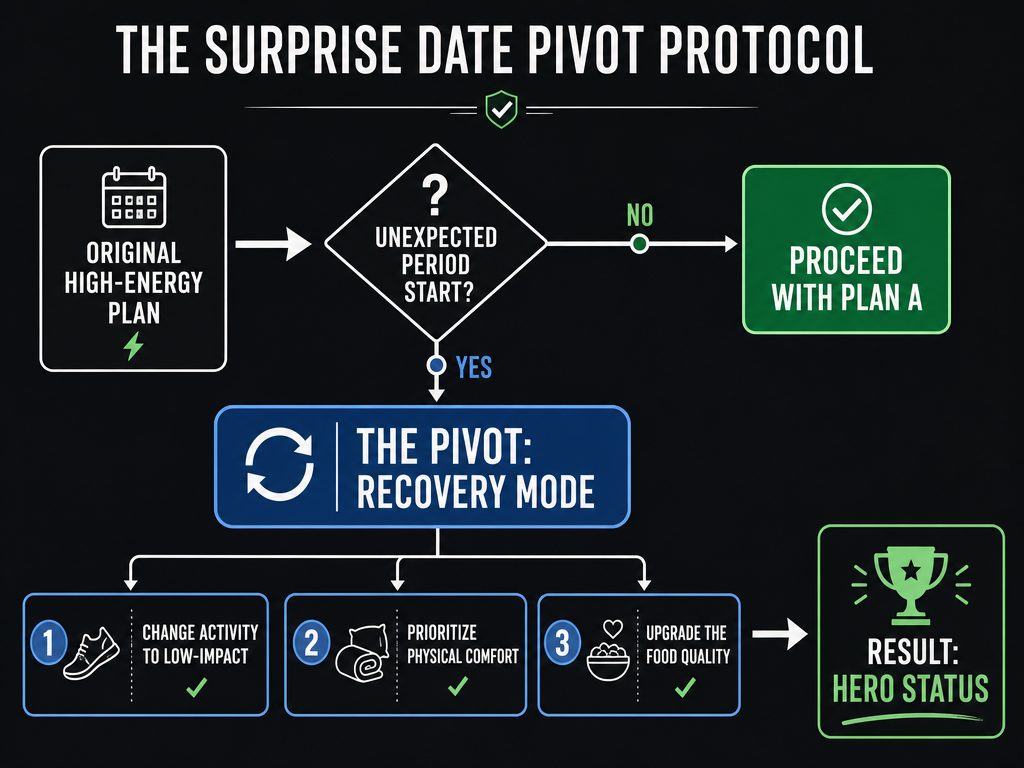 Don't let a surprise cycle start ruin the night. Use this 'Plan B' protocol to pivot from high-intensity activities to comfort-focused support seamlessly.
Is There a Period Tracker for Boyfriends That Actually Helps?
Most period trackers were built for women, with partner features added as an afterthought. The result: apps that give you access to her data but no context on what to do with it. The question isn't whether period trackers for boyfriends exist - it's which ones actually translate cycle data into actionable guidance.
What "Partner Mode" Actually Gives You
Standard period trackers with partner mode - Flo, Clue, and others - offer basic features:
- Notification when her period starts
- Calendar view of her cycle phases
- Mood and symptom logs she's recorded
These features answer the "when" question but ignore the "what now" question. You get an alert that she's entering her luteal phase, but the app doesn't tell you what that means for your weekend plans or how to adjust your communication style. You're left guessing.
Apps Built for Men: The Tactical Difference
A smaller category of apps was designed specifically for male partners, with the explicit goal of turning cycle data into daily missions or prompts. These apps don't just track - they coach.
Comparison of Top Period Trackers for Boyfriends:
| App | Cost | Key Feature for Men | What It Tells You to Do |
|---|---|---|---|
| VibeCheck | $9.99/month | Daily personalized mission based on her cycle phase | "She's entering late luteal phase - cancel tonight's plans and order her favorite comfort food" |
| Flo for Partners | Free (basic) / $39.99/year (Plus) | Mood insights and daily tips | "She's likely feeling energetic today" + generic article on follicular phase |
| Clue Partner Connect | Free | Basic cycle calendar and symptom log access | Phase labels only; no prompts or guidance |
| Mayday | Free | On-device tracking with zero data collection | Phase reminders; no personalized advice |
| Blood for Couples | Free | Privacy-first design; manual entry only | Phase visibility; partner must interpret data themselves |
The differentiator: does the app give you specific actions, or does it expect you to become a self-taught endocrinologist? For most men, the answer is the former.
VibeCheck, for example, syncs with her cycle data and delivers a single daily mission: "Today's move: Suggest a social activity - her energy is peaking and she'll appreciate you initiating plans." The specificity removes guesswork. Flo for Partners, by contrast, gives you a dashboard of her symptoms and a library of articles - you have to figure out what to do with that information yourself.
For a deeper comparison of these apps and how they differ in approach, see our full ranking of period tracker apps for boyfriends.
What to Look For in a Boyfriend-Focused Tracker
If you're evaluating apps, prioritize these features:
- Phase-based prompts: Does the app tell you what to do today, or does it just show you where she is in her cycle?
- Privacy controls: Can she revoke your access at any time? Does the app sell data to third parties?
- Actionable insights: Do you get specific suggestions ("Order takeout tonight") or vague advice ("Be supportive during PMS")?
- Learning curve: Can you start using it immediately, or does it require you to read articles and interpret data yourself?
The best apps for men are the ones that respect her autonomy (she controls access), protect her privacy (no data selling), and remove decision fatigue (they tell you what to do instead of expecting you to figure it out).
The Ethical Question: Should You Even Use One?
Some men ask whether using a period tracker - even with her consent - crosses a line. The answer depends on your motivation. If you're tracking her cycle to control her behavior, dismiss her emotions as "just hormones," or avoid accountability for relationship issues, the app becomes a weapon.
But if you're using it to anticipate her needs, reduce friction, and show up as a more supportive partner, the app becomes a tool. The difference is whether you're using the data to serve her or to serve yourself.
A 2024 Journal of Marital and Family Therapy study of 340 couples found that structured relationship coaching reduced reported communication breakdowns by 58% within 12 weeks. The most effective interventions were those that helped men distinguish between hormonal phase shifts and genuine relational conflict - and adjust their responses accordingly. Period trackers don't replace communication. They supplement it by giving you context you wouldn't otherwise have.
What Are the Signs She's Entering a Low-Energy Phase?
Recognizing when she's transitioning into a low-energy phase - primarily late luteal (days 24-28) and early menstrual (days 1-3) - allows you to adjust your behavior before friction emerges. The key is observing behavioral and physical cues rather than waiting for her to tell you explicitly.
Physical Signs: What Her Body Is Showing You
Hormonal shifts create observable physical changes that correlate directly with declining energy. Progesterone's crash during late luteal phase triggers a cascade of symptoms, and her body sends clear signals if you know what to watch for.
Observable physical cues:
- Bloating and discomfort: She mentions feeling "puffy," her clothes fit differently, or she's avoiding tight waistbands
- Skin changes: Acne breakouts (affecting 60% of women during the luteal phase according to Clue research) or increased oiliness
- Increased sensitivity: She winces when you hug her too tight (70% of women report sore breasts during the cycle)
- Fatigue: She's in bed earlier than usual, skipping morning routines, or mentioning she "didn't sleep well" multiple nights in a row
- Food cravings: Sudden interest in specific comfort foods - chocolate, salty snacks, carbs - driven by the body's attempt to stabilize serotonin
These aren't random. They're biological responses to declining progesterone and the serotonin crash that accompanies it. If you notice 3+ of these signs clustering in the same week, she's likely entering or already in late luteal phase.
Behavioral Signs: What Her Actions Are Telling You
Beyond physical cues, her behavior shifts in predictable ways as energy depletes. These patterns emerge consistently across cycles if you track them over 2-3 months.
Observable behavioral cues:
- Social withdrawal: She cancels plans with friends, declines invitations she'd normally accept, or suggests staying in instead of going out
- Shortened responses: Text messages get terser, phone calls get shorter, and conversations that normally flow easily feel like pulling teeth
- Increased irritability: Small things that wouldn't normally bother her - dishes in the sink, a minor schedule change - trigger disproportionate reactions
- Need for alone time: She retreats to another room more frequently, asks for space without explanation, or chooses solo activities over joint ones
- Emotional flooding: She cries during a commercial, gets upset over a minor inconvenience, or has difficulty regulating emotional responses
The pattern to watch: if she goes from actively initiating plans and conversations (follicular/ovulation behavior) to passively responding or withdrawing (late luteal behavior), the shift is hormonal, not relational.
For a deeper guide on distinguishing these behavioral shifts from relationship issues, see our article on understanding your girlfriend's hormonal mood changes.
The 72-Hour Window: When to Adjust Your Approach
The serotonin crash that drives late luteal symptoms doesn't happen overnight - it unfolds over approximately 72 hours as progesterone declines. This gives you a narrow window to adjust your behavior before her energy bottoms out completely.
If you notice physical and behavioral cues clustering together - bloating + social withdrawal + shorter text responses - you have roughly 2-3 days to shift from high-intensity partner mode to low-demand support mode. The tactical moves during this window:
- Cancel or postpone any plans requiring effort on her part: Don't wait for her to ask. Proactively suggest rescheduling the dinner with friends or the weekend trip.
- Reduce decision-making load: Stop asking "What do you want for dinner?" and start saying "I'm ordering Thai - want your usual?"
- Create physical comfort without requiring her participation: Run a bath, set up the couch with blankets, handle meal cleanup without being asked.
- Give space without disappearing: Don't ask "Do you need space?" Just give it by default, and remain available if she initiates contact.
The goal isn't to treat her like she's fragile. The goal is to recognize her capacity is temporarily reduced and adjust your expectations accordingly.
The Misread: What Looks Like Low Energy But Isn't
Not every withdrawn mood or low-energy evening is hormonal. Stress, work deadlines, friendship conflicts, and relationship issues can all mimic late luteal phase behavior. The differentiator: hormonal low-energy phases follow a predictable monthly pattern. If she's consistently withdrawn for two weeks straight, that's not her cycle - that's a relationship or mental health issue requiring a different conversation.
Track the pattern over 2-3 months. If the withdrawal clusters in the same phase window each cycle, it's biological. If it's constant or random, it's contextual.
How Do You Plan Romantic Gestures That Match Her Biological Rhythm?
Romantic gestures fail when timing collides with biology. The same surprise that feels deeply romantic during ovulation can feel exhausting during late luteal phase - not because she stopped appreciating you, but because her brain's capacity for processing emotional gestures shifts across the cycle.
The Four Seasons of Romantic Timing
Each cycle phase creates a different context for how romantic gestures land. Understanding this framework allows you to calibrate the intensity, complexity, and emotional weight of the gesture to match her biological capacity to receive it.
Menstrual Phase (Days 1-5): Comfort as Romance
During menstruation, grand romantic gestures feel overwhelming. Her body is depleted, discomfort is high, and social energy is at its lowest point. The romantic move here isn't intensity - it's anticipation of her needs before she has to ask.
High-impact romantic gestures for this phase:
- Running a bath with Epsom salts and candles before she gets home from work
- Surprising her with a delivery of her favorite comfort food on day 1 of her period
- Handling all household tasks - dishes, laundry, meal prep - without being asked
- Creating a low-pressure environment where she doesn't have to "show up" socially
The romance isn't in the gesture itself. It's in the fact that you noticed she was struggling and removed the burden without her having to ask. That level of attunement is what deepens connection during this phase.
Follicular Phase (Days 6-13): Adventure as Romance
As estrogen rises, her tolerance for novelty and complexity increases. Romantic gestures that involve exploration, learning, or shared adventure will land better during follicular phase than any other time in the cycle.
High-impact romantic gestures for this phase:
- Planning a surprise day trip to a location she's mentioned wanting to visit
- Booking an experience she's never tried - pottery class, cooking workshop, escape room
- Organizing a spontaneous weekend getaway without requiring her to plan any logistics
- Creating a scavenger hunt that ends at a meaningful location from your relationship history
The key differentiator: follicular phase is when she has the bandwidth to handle logistical complexity. The romantic gesture isn't just the destination - it's the fact that you handled all the planning, allowing her to enjoy the experience without carrying any of the mental load.
Ovulation (Days 14-16): Intimacy as Romance
Ovulation represents the biological peak for emotional bonding. Estrogen surges by 800%, and her brain is chemically primed for connection, vulnerability, and intimacy. This is the window where romantic gestures that create space for deep conversation or physical closeness will resonate most powerfully.
High-impact romantic gestures for this phase:
- Surprising her with a reservation at the restaurant where you first kissed or had your first date
- Writing a handwritten letter expressing specific reasons you love her (the emotional vulnerability lands harder during ovulation)
- Planning a sunset experience - picnic, overlook, beach walk - that creates space for meaningful conversation
- Recreating a moment from early in your relationship, showing you remember details she thought you'd forgotten
The romance here is the emotional depth. She's biologically capable of processing vulnerability, nostalgia, and intimacy at levels that feel overwhelming during other phases. Use this window for gestures that require her to meet you emotionally, not just logistically.
For more on understanding why ovulation creates these unique opportunities, see our guide on recognizing your girlfriend's ovulation signs.
Luteal Phase (Days 17-28): Presence as Romance
As progesterone dominates and then crashes, her capacity for complex emotional gestures declines. By late luteal phase, the most romantic thing you can do is often the simplest: noticing she's low and creating space for rest without making her feel guilty about it.
High-impact romantic gestures for this phase:
- Canceling plans proactively before she has to ask, saying "I know you've had a hard week - let's stay in tonight"
- Handling all decision-making without requiring her input: "I ordered your favorite, it'll be here in 20 minutes"
- Creating a low-pressure environment where she can be irritable, tired, or withdrawn without you taking it personally
- Physical presence without demands: sitting together while she reads, giving her a massage without expecting sex
The romance isn't in grand gestures. It's in the fact that you adjusted your behavior to match her capacity. Most men miss this entirely - they wait for her to ask for support, then feel rejected when she's too depleted to engage. Anticipating the need and acting without being asked is the romantic move.
For detailed tactics on navigating this phase, see our guide on supporting your girlfriend during the luteal phase.
The Timing Formula: When to Execute Each Gesture
If you want to maximize the impact of a specific romantic gesture, reverse-engineer the timing using her cycle as the framework:
| Gesture Type | Optimal Phase | Biological Reason |
|---|---|---|
| Grand declarations of love | Ovulation (Days 14-16) | Emotional receptivity peaks; vulnerability feels safe |
| Adventure or novelty | Follicular (Days 6-13) | Energy and novelty-seeking are biologically heightened |
| Comfort and caregiving | Menstrual (Days 1-5) | Physical discomfort peaks; support feels most meaningful |
| Presence and space | Luteal (Days 17-28) | Energy declines; low-demand support prevents friction |
The strategic application: if you're planning to propose, have a difficult relationship conversation, or execute a high-stakes romantic gesture, aim for ovulation. If you're trying to repair after a fight or show consistent support, aim for the phase that matches the emotional need she's experiencing right now.
Frequently Asked Questions
What is the best phase to plan a surprise romantic getaway?
The best phase to plan a surprise romantic getaway is the follicular phase (days 6-13) or ovulation window (days 14-16). During follicular phase, estrogen rises steadily, energy peaks, and she's biologically primed to handle the logistics and physical demands of travel without feeling overwhelmed. Ovulation adds an emotional peak that makes intimacy-focused trips feel especially meaningful. Avoid planning surprise getaways during late luteal phase (days 24-28), when energy crashes and even well-intentioned surprises can feel exhausting rather than romantic. For weekend trips or overnight stays, follicular phase is your safest bet.
How do I know if she's in her luteal phase without asking?
You can identify her luteal phase (days 17-28) by observing behavioral and physical cues that cluster together. Physical signs include bloating, acne breakouts, sore breasts, and increased fatigue. Behavioral signs include social withdrawal, shorter text responses, canceling plans, and heightened emotional sensitivity. Research shows 60% of women experience acne during the luteal phase, and 70% report breast tenderness. If you track these patterns over 2-3 cycles, you'll notice they emerge consistently in the same phase window each month. The key is observing the pattern rather than relying on isolated symptoms - if 3+ cues appear in the same week, she's likely in late luteal phase.
What should I do if I planned a high-energy date and her period starts unexpectedly?
Pivot immediately to a comfort-focused alternative without making her feel guilty. Cycles can vary by ±8 days month to month according to Clue research, so even well-timed plans can collide with an unexpected period start. Have a "Plan B Protocol" ready: if you planned a concert, order her favorite takeout and stream a live show at home instead. If you planned a hiking trip, drive to a scenic overlook and stay in the car if she's cramping. The critical move is framing the pivot as prioritizing her comfort, not downgrading the date. Keep an emergency comfort kit (ibuprofen, heating pad, snacks) in your car for situations where her period starts mid-date.
Can I use a period tracker even if my girlfriend doesn't track her cycle?
Yes, but it requires her explicit consent and manual input. If she doesn't use a tracking app, ask her to tell you when her period starts each month - use that as Day 1 and estimate the four phases based on a typical 29-day cycle. Mark these windows in your own calendar with discreet labels like "Energy Week" or "Low Battery Week." This approach is less accurate than app-based tracking since cycles vary, but it's better than complete guesswork. The alternative is observing behavioral and physical cues over 2-3 months to identify her pattern without needing her data. Never track her cycle without her knowledge - transparency is the difference between supportive and invasive.
Is it creepy to track my girlfriend's period?
Tracking your girlfriend's period is only creepy if you do it without her consent or use the data to dismiss her emotions or control her behavior. The difference between supportive and invasive is transparency: tell her why you want to track (to understand her energy shifts and be a better partner), ask for her permission, and give her control over what data you see. Apps with partner mode - like Clue, Flo, or VibeCheck - allow her to revoke access at any time, removing the surveillance dynamic. If she says no, respect it and rely on observing behavioral cues instead. The creepiness factor disappears when you position tracking as a tool for reducing friction, not gathering information to use against her.
What are the signs she's in her follicular phase and ready for adventure?
Follicular phase (days 6-13) is marked by rising estrogen, which drives physical and behavioral changes you can observe. Physical signs include clearer skin, increased energy, and higher physical stamina. Behavioral signs include initiating plans, higher social tolerance, increased conversation engagement, and openness to trying new things. She'll mention feeling productive, suggest activities she'd normally pass on, and respond more enthusiastically to spontaneous ideas. This is the phase where she's biologically primed for novelty and complexity, making it the optimal window for high-energy surprises like day trips, adventure dates, or social gatherings. Track these patterns over 2-3 cycles to identify her specific cues.
What's the difference between VibeCheck and Flo for Partners?
VibeCheck delivers a single daily mission telling you exactly what to do based on her cycle phase, while Flo for Partners gives you access to her symptom logs and a library of articles you must interpret yourself. VibeCheck is built specifically for men and coaches you through each phase with actionable prompts like "Suggest a social activity today - her energy is peaking." Flo for Partners requires a subscription ($39.99/year for Plus features) and provides mood insights and phase labels, but leaves the interpretation up to you. If you want tactical daily guidance, VibeCheck is the better option. If you prefer managing her data yourself and reading educational content, Flo for Partners works. For a full comparison, see our VibeCheck vs Flo breakdown.
How far in advance should I plan a cycle-aware surprise date?
Plan cycle-aware surprises 7-10 days in advance to account for the ±8 day variability in cycle length. If you're targeting her follicular phase (days 6-13), book the date for the middle of that window (days 9-11) to maximize the probability her energy will be high. If you're targeting ovulation (days 14-16), plan for day 15 but have a Plan B ready in case her cycle runs short or long that month. Avoid locking in non-refundable plans during windows that could overlap with late luteal or early menstrual phases unless you're confident in her cycle regularity. The safest approach: use a period tracker to see her historical cycle length and plan around her most consistent pattern.
The difference between a surprise that deepens your relationship and one that creates friction comes down to timing. Her hormones aren't unpredictable noise - they're a biological rhythm you can learn to read. Master the four phases, match your gestures to her capacity, and you'll become the partner who shows up with exactly what she needs before she has to ask.
If you're ready to stop guessing and start planning surprises that actually land, VibeCheck turns her cycle data into a daily mission you can execute immediately. No reading articles, no interpreting symptoms - just one clear action that matches where she is today.
Tags

Related Articles
Continue reading to deepen your understanding

How to Understand Your Girlfriend’s Social Battery and Hormones
Does your girlfriend suddenly cancel plans or seem withdrawn? This guide explains how her cycle impacts her energy so you can support her like a pro.

How Your Girlfriend’s Emotional Needs Change During Her Cycle
Does your girlfriend’s mood seem unpredictable? Learn how her emotional needs shift on a biological loop and how to support her through every phase of her cycle.

What to Buy When Your Girlfriend Has Hormone Cravings: A Support Guide
Stop wondering what to pick up at the store. This guide explains the science behind cycle cravings and provides a specific list of foods and comfort items she needs.

Your Girlfriend’s Mood Shifts Throughout the Month, Explained
Ever wonder why her energy and moods change so drastically each week? Understand the four hormonal phases and how to be the partner she needs during every stage of her cycle.

How to Support Your Girlfriend When She’s Crying Because of Hormones
Watching her cry when hormones hit can feel overwhelming. Learn the biological why behind the tears and use these proven scripts to provide the support she actually needs right now.

How to Help Your Girlfriend with Hormonal Mood Swings Without Arguing
Understand her cycle and learn tactical scripts to handle tension. This guide shows you how to support her through hormonal shifts without getting into unnecessary fights.

When to Feed Your Girlfriend: Understanding Hangry Hormones
Does your girlfriend get irritable when she hasn’t eaten? It’s not just in her head. Learn why hormones cause hanger and the specific times her body needs more fuel.

The Boyfriend’s Guide to Supporting Your Partner Through PMS
If your partner is suddenly irritable and exhausted, it’s biology, not you. Learn about the luteal phase and how to provide meaningful support without walking on eggshells.