How to Tell Your Girlfriend Is Overwhelmed by Hormones

Is she snapping or withdrawing for no reason? Identify the behavioral tells of hormonal overwhelm and learn how to support her during the luteal phase without triggering a fight.
How to Tell Your Girlfriend Feels Overwhelmed by Hormones: The Partner's Diagnostic Guide
You've noticed the pattern. One week she's planning spontaneous weekend trips and laughing at your jokes, the next she's snapping over dishes in the sink and can't decide what she wants for dinner. You suspect hormones are involved, but you're not sure how to tell - and you definitely don't want to make things worse by asking the wrong question.
Here's what most guys miss: approximately 90% of women experience some degree of premenstrual change, but the signs aren't always obvious. She might not complain about cramps or tell you she's exhausted. In fact, only 20.1% of women tell their employers or school that an absence was actually due to menstruation. The same concealment strategy plays out in relationships - what you're seeing is often what she isn't saying.
This guide will teach you how to recognize the behavioral, emotional, and physical "tells" that hormonal overwhelm is happening, explain the biology behind the friction window, and give you tactical scripts so you can support her without triggering a fight.
Table of Contents
- The Behavioral "Tells": What Hormonal Overwhelm Actually Looks Like
- The Science of the "Steep Drop": Why the Luteal Phase Creates Friction
- How to Tell PMS from PMDD: The 6.4-Day Rule
- The Communication Playbook: What to Say (and What Never to Say)
- Tactical Support: The Partner's Action Checklist
- When to Suggest Shared Tracking (Without Being Intrusive)
- Frequently Asked Questions
The Behavioral "Tells": What Hormonal Overwhelm Actually Looks Like
Hormonal overwhelm doesn't always announce itself with tears or cramps. More often, it shows up as a subtle shift in bandwidth - she's present, but operating at 50% capacity. Medical research calls this presenteeism: decreased productivity while working symptomatic. In a study of 32,748 women, 80.7% reported presenteeism for an average of 23.2 days per year.
Here's what to watch for:
The Short Fuse
She snaps over something minor - a dish left in the sink, a joke that landed wrong last week. This isn't about the dish. After ovulation, the luteal phase begins: progesterone rises to help prepare the uterine lining for a possible pregnancy. If pregnancy doesn't happen, both progesterone and estrogen drop before the next period. That crash narrows her emotional bandwidth. What would normally be a non-issue suddenly feels overwhelming because her brain is managing a biological withdrawal.
VibeCheck App
Download Free on iOS →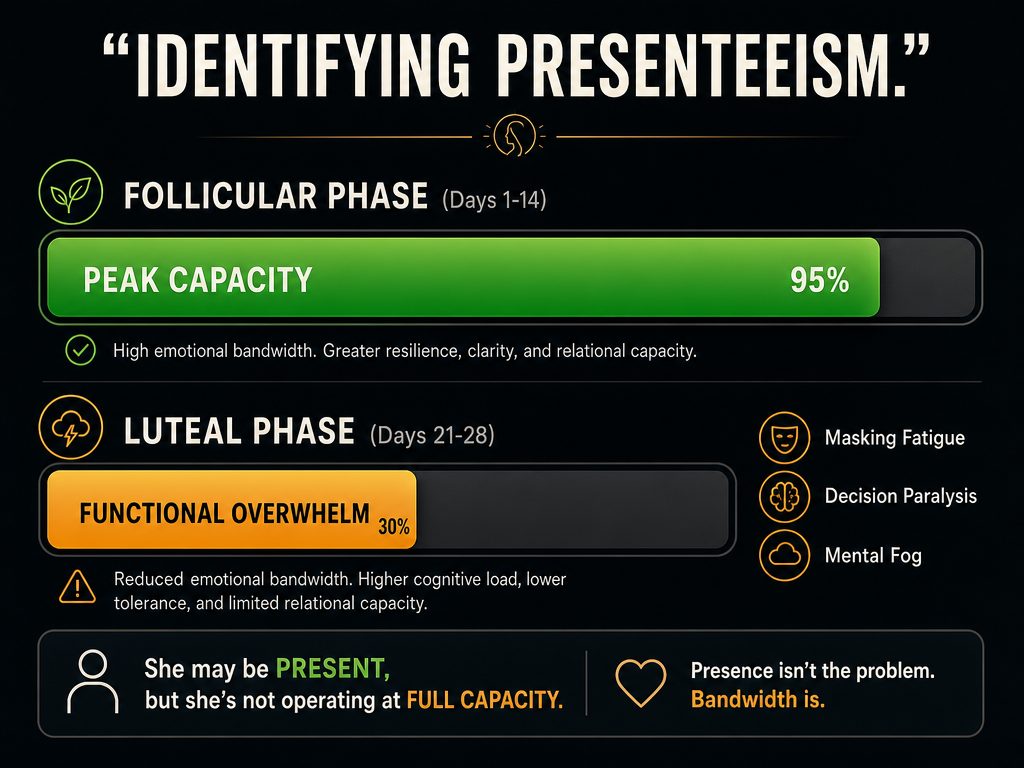 Recognizing "presenteeism" - where she is present but functioning at a lower capacity - is a vital diagnostic tool for partners to identify hidden hormonal stress.
The Silent Retreat
She goes quiet or withdraws - not in an angry way, but in a "I need to be alone" way. This is often a masking strategy. She's dealing with brain fog, low serotonin, and physical discomfort, but she doesn't want to explain it for the third time this month. If she's suddenly less chatty or cancels plans she'd normally enjoy, you're likely seeing hormonal fatigue, not relationship distance.
Decision Fatigue
"Where do you want to eat?" becomes an impossible question. She can't decide, doesn't care, or changes her answer three times. Low estrogen and progesterone affect brain function - specifically, they reduce serotonin and GABA, the neurotransmitters that help with mood regulation and calm decision-making. When she says she doesn't know what she wants, she genuinely doesn't.
Physical Cues
Look for increased acne (especially along the jawline), headaches that don't respond to normal pain relief, or a kind of exhaustion that doesn't resolve with sleep. PMS symptoms - which can include mood swings, irritability, bloating, breast tenderness, and fatigue - typically show up one to two weeks before a period and resolve within a few days after it starts. These physical markers often precede the emotional ones.
If you're seeing multiple behavioral tells clustered together - especially in the week before her period - you're likely witnessing the luteal phase crash, not a relationship problem. Understanding how to support your girlfriend during PMS starts with recognizing these patterns.
The Science of the "Steep Drop": Why the Luteal Phase Creates Friction
The luteal phase is the biological window between ovulation and her next period - roughly days 15-28 of the menstrual cycle. It's when friction in relationships tends to spike, and there's a biological reason for it.
Estrogen and progesterone levels can drop by 40-50% within a 72-hour window before menstruation. This isn't a gradual decline - it's a steep drop. When estrogen crashes, so does serotonin (the neurotransmitter that stabilizes mood). When progesterone crashes, GABA (the calming neurotransmitter) goes with it.
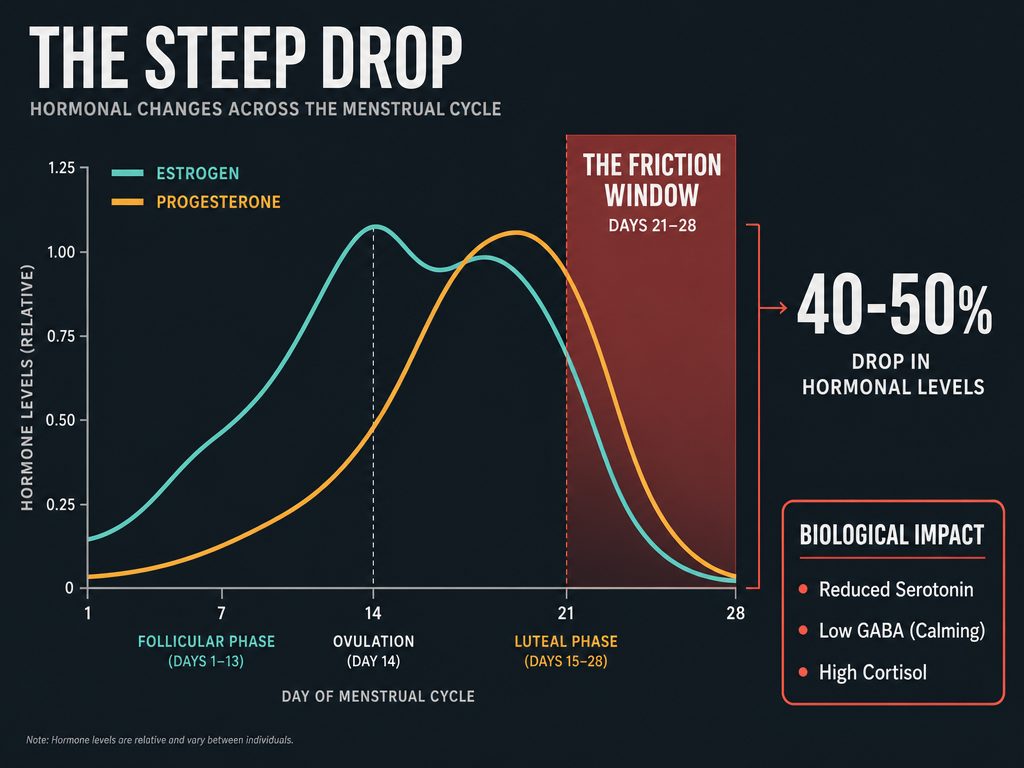 Understanding the "Steep Drop" helps partners recognize that emotional volatility is often a biological response to a massive hormonal shift rather than a relationship flaw.
The result? Her brain is in a state similar to withdrawal. She's more reactive, less patient, and genuinely feels like everything is harder than it should be. This isn't a character flaw or a sign she's unhappy with you - it's neurochemistry.
Why the Timing Matters
A "normal" cycle varies a lot between women - menstrual bleeding can start anywhere from every 24 to every 38 days and last up to 8 days. That means the luteal phase doesn't start on day 15 for everyone. Some women have a 10-day luteal phase, others have 16. The friction window is predictable once you know her cycle, but it won't match a textbook timeline.
If you're trying to understand your girlfriend's hormonal cycle, start by tracking her patterns rather than assuming a universal 28-day model.
How to Tell PMS from PMDD: The 6.4-Day Rule
Not all premenstrual symptoms are the same. Roughly half of people who menstruate report having at least one PMS symptom, but only about 1 in 5 have symptoms severe enough to disrupt their daily life. When symptoms cross the line from disruptive to disabling, it's likely PMDD - premenstrual dysphoric disorder.
PMDD is a real, clinically recognized condition - it's listed in the DSM-5 as a depressive disorder, not something people are "making up" or simply failing to cope with. It affects roughly 1 in 10 people who menstruate. The key difference: PMDD is a more severe, sometimes disabling extension of PMS. Both happen on a similar timeline (about 7-10 days before a period) and can share physical symptoms like bloating and fatigue, but PMDD specifically involves extreme mood symptoms - such as marked irritability, anxiety, or hopelessness - intense enough to disrupt daily life and strain relationships.
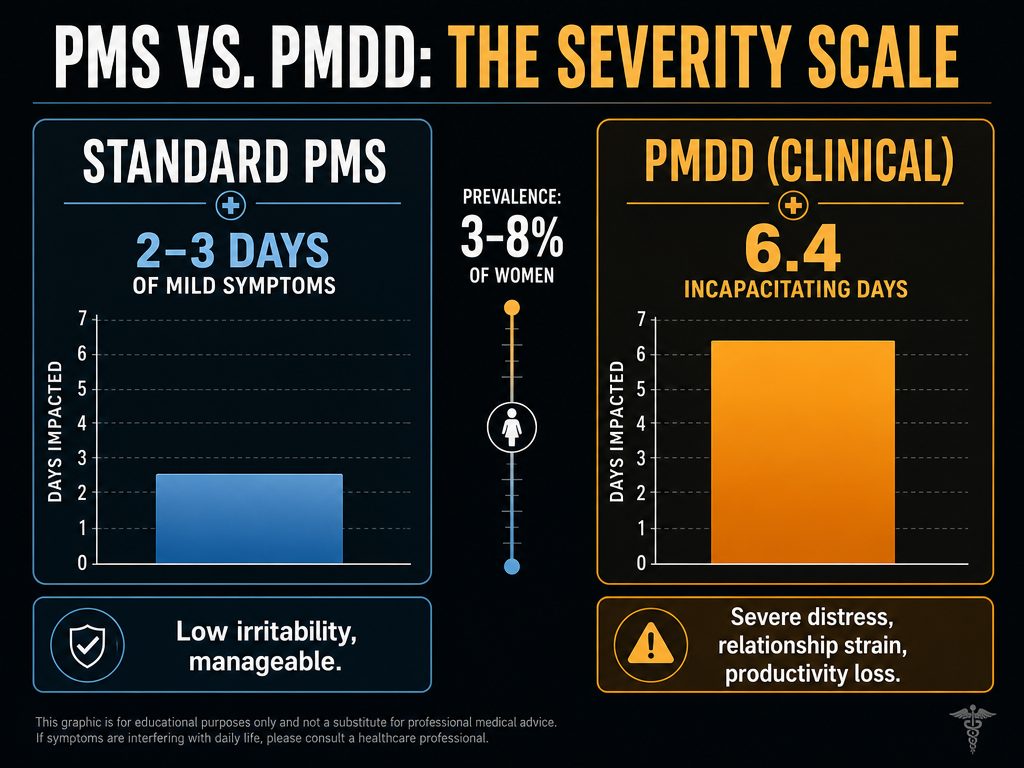 Distinguishing between standard premenstrual symptoms and the 6.4 incapacitating days of PMDD is essential for deciding whether clinical support or simple empathy is needed.
Here's the diagnostic shortcut: severe PMDD cases average roughly 6.4 incapacitating days per cycle. If she's genuinely unable to function - missing work, canceling all social plans, crying uncontrollably - for most of a week every month, that's not a "bad week." That's a clinical condition that benefits from medical support, not just empathy.
If you suspect PMDD, approach it with the same seriousness you would any other health issue. Don't minimize it, and don't suggest it's something she should "just push through." Lifestyle approaches that can help ease PMS symptoms include regular aerobic exercise, smaller/more frequent meals, less salt/caffeine/alcohol, adequate sleep, and stress-reduction practices, but PMDD often requires clinical intervention - therapy, medication, or both.
The Communication Playbook: What to Say (and What Never to Say)
The fastest way to turn hormonal overwhelm into a relationship fight is to ask, "Is it your period?" Even if you're right, that question reads as dismissal - like you're attributing her feelings to biology rather than taking them seriously.
Here's what works instead:
Validation Over Attribution
Use: "I can see you're handling a lot today. How can I help?"
This script does three things: it acknowledges her state without diagnosing it, it offers support without assuming what she needs, and it keeps the focus on her experience rather than your theory about what's causing it.
When a partner is struggling emotionally, responding with genuine empathy - listening without judgment, focusing on their feelings rather than debating facts, and validating that their reaction makes sense - tends to help more than trying to "fix" the problem or offer silver linings. Don't correct her feelings. Don't explain why she shouldn't be upset. Just acknowledge them.
The "Low Bandwidth" Signal
If you've had the cycle conversation before and she's open to it, agree on a non-judgmental code word. Some couples use "I'm at 10% today." Others use "low bandwidth day." The goal is a shorthand that lets her communicate her state without having to explain the biology every time.
This only works if you've built the foundation first. Don't introduce a code word mid-fight. Bring it up during a calm moment, ideally in the week after her period when energy tends to be lower during the period and can build through the follicular phase toward ovulation.
Timing: Save the Big Talks for the Follicular Phase
If you need to have a difficult relationship conversation - about moving in together, finances, future plans - don't schedule it for the luteal phase. During the follicular phase, estrogen rises as an egg-containing follicle develops in the ovary; this rising estrogen also thickens the uterine lining. That rising estrogen also supports clearer thinking and more emotional resilience.
Wait until the week after her period ends. You'll both have a better conversation, and she'll be able to engage without the serotonin crash working against you.
Learning how to talk to your girlfriend during different cycle phases can reduce unnecessary conflict and improve the quality of your communication.
Tactical Support: The Partner's Action Checklist
Empathy is great. Action is better. Here's what actually helps during the 48-hour peak-symptom window:
Take Over the Mental Load
The mental load isn't just chores - it's the invisible planning, remembering, and coordinating that keeps a household running. During the luteal phase, her cognitive bandwidth is reduced. Decision-making, planning, and task-switching all become harder.
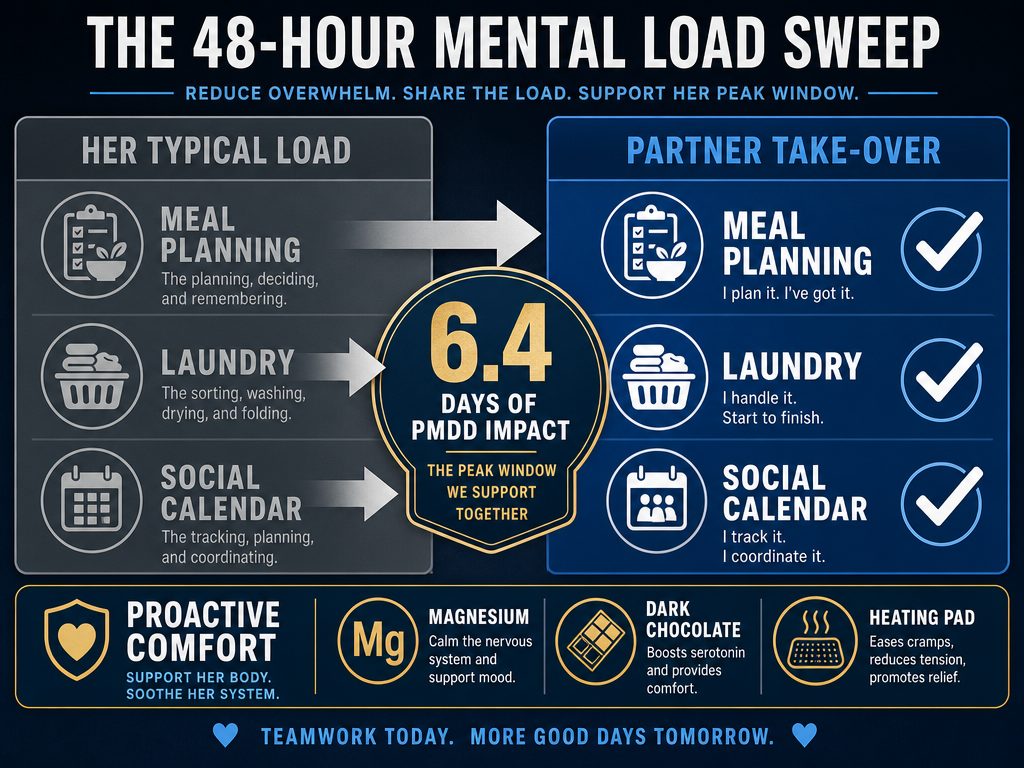 Taking over the "mental load" during the 48-hour peak symptom window is the most effective way to reduce relationship friction and provide tangible support.
Your action list:
- Plan and cook dinner (or order takeout without asking her what she wants)
- Do the laundry without being asked
- Handle logistics - groceries, errands, pet care
- Don't ask "what do you need?" Just do the obvious stuff
The "Men's Grocery List"
These items have clinical support for easing PMS symptoms:
- Magnesium (400mg): Helps with muscle tension, cramps, and sleep. You can get this as a supplement or through dark chocolate (70%+ cacao), which also provides a minor mood boost.
- Ginger tea or heating pad: Proactive comfort for prostaglandin-driven pain (the hormone that causes cramps).
- Her favorite comfort food: This isn't about fixing the biology - it's about showing you're paying attention.
Saffron supplementation (30mg/day) is clinically shown to reduce both mood symptoms and physical pain in PMS, but most people don't keep saffron in the house. If she's open to supplements, it's worth researching together.
Create a Low-Stress Environment
Reduce sensory input. Dim the lights. Keep the noise down. If she's retreating to the bedroom, don't take it personally - her nervous system is overwhelmed, and she needs to regulate.
Don't plan high-intensity social events during her luteal phase. If you've already committed to something, ask if she wants to bail. Give her the out. Women in unhappy or high-strain relationships experience measurably worse PMS symptoms, which means reducing external stress actually reduces symptom severity.
If you're looking for more specific guidance, learn how to help your girlfriend during period mood swings with a science-backed framework.
When to Suggest Shared Tracking (Without Being Intrusive)
Cycle tracking apps exist, and some of them have partner modes. Used well, they're relationship logistics - a shared calendar that helps you both anticipate needs. Used poorly, they feel like surveillance.
Here's how to bring it up:
Don't say: "I think you should track your period so I know when you're going to be moody."
Do say: "I've been reading about how the menstrual cycle affects energy and mood, and I want to be a better partner. Would it help if we used an app together so I know when you might need more support?"
The key is framing it as your tool to support her, not her responsibility to warn you when she's going to be difficult.
VibeCheck and similar apps are built for this - they turn cycle data into actionable guidance for partners. But only suggest shared tracking if she's open to it. Tracking your own (or a partner's, with her participation) symptoms and mood changes across the cycle for a few months is a legitimate, medically endorsed way to identify real patterns and timing, but it requires her buy-in.
For more on how tracking helps, check out the partner's guide to period tracking.
Frequently Asked Questions
When a girl says she feels overwhelmed?
When your girlfriend says she feels overwhelmed, take it at face value. Don't immediately jump to "is it hormones?" - even if it is. Respond with validation first: "That sounds really hard. What can I take off your plate?" If the overwhelm is happening in a predictable pattern (same time every month, clustered with physical symptoms), then hormones are likely a factor. But your first response should always be support, not diagnosis.
What are the signs and symptoms of hormonal imbalance in females?
Hormonal imbalance can show up as irregular periods, severe mood swings that disrupt daily life, persistent fatigue, unexplained weight changes, acne, hair loss, or changes in libido. If her symptoms are severe enough to interfere with work, relationships, or daily functioning - or if they don't follow a predictable monthly pattern - she should talk to a doctor. PMS symptoms typically show up one to two weeks before a period and resolve within a few days after it starts. If they're constant or random, it's not just PMS.
Can hormones make you not like your partner?
Hormones can temporarily reduce tolerance, patience, and social energy - which can make normal relationship friction feel unbearable. During the luteal phase, low serotonin and low GABA reduce emotional resilience. Small annoyances feel bigger. But hormones don't create relationship problems from nothing - they amplify what's already there. If she's irritable with you during her luteal phase but fine the rest of the month, it's biology. If she's unhappy across the entire cycle, that's a relationship issue, not a hormonal one.
How to help a partner who is feeling overwhelmed?
Start by removing logistical stress. Take over dinner, errands, and household planning without being asked. Create a low-stress environment - dim lights, quiet space, no social obligations. Ask open-ended questions like "What would help right now?" but don't put the burden of planning her own support on her. If the overwhelm is hormonal, tactical actions (magnesium, heating pad, canceled plans) work better than talking. If it's situational (work stress, family issues), listening without trying to fix works best.
How do I deal with my girlfriend's mood swings?
Don't react to the mood swing itself - respond to the underlying state. If she's snapping over small things, recognize that her emotional bandwidth is reduced, not that she's being unfair. Use the validation script: "I can see you're having a tough day. How can I help?" Don't take it personally, don't argue about whether her reaction is proportional, and don't bring up the mood swing later as evidence of a character flaw. If her mood swings follow a monthly pattern, learning her cycle phases gives you a predictive framework so you're not caught off guard.
What to do when your partner is feeling overwhelmed?
Reduce decision fatigue. Don't ask "What do you want for dinner?" or "Should we go out tonight?" Make the call yourself, and give her the option to veto. Physical comfort helps - offer a heating pad, run a bath, or suggest an early night. If she wants space, give it without making her feel guilty. The goal is to reduce the number of things she has to manage, not to fix her feelings. When a partner is struggling emotionally, responding with genuine empathy tends to help more than trying to "fix" the problem.
Is it normal to feel anger at my partner during the luteal phase of PMDD?
Yes. PMDD specifically involves extreme mood symptoms - such as marked irritability, anxiety, or hopelessness - intense enough to disrupt daily life and strain relationships. Anger and irritability are common PMDD symptoms, and they can be directed at the person closest to you even when there's no rational reason. If this happens every month and resolves after her period starts, it's a medical issue, not a relationship one. Encourage her to talk to a doctor - PMDD is treatable with therapy, medication, or both. In the meantime, don't take the anger personally, and don't use it as evidence she's unhappy in the relationship.
Recognizing hormonal overwhelm isn't about reducing your girlfriend to her cycle - it's about understanding the invisible forces that shape her capacity, mood, and needs so you can be a better partner. When you stop guessing and start paying attention to patterns, you reduce friction, avoid preventable fights, and show up in ways that actually help.
For a daily tactical guide built around her cycle, check out VibeCheck - the relationship app that turns biology into actionable support.
Tags

Related Articles
Continue reading to deepen your understanding

How to Understand Your Girlfriend’s Social Battery and Hormones
Does your girlfriend suddenly cancel plans or seem withdrawn? This guide explains how her cycle impacts her energy so you can support her like a pro.

How Your Girlfriend’s Emotional Needs Change During Her Cycle
Does your girlfriend’s mood seem unpredictable? Learn how her emotional needs shift on a biological loop and how to support her through every phase of her cycle.

What to Buy When Your Girlfriend Has Hormone Cravings: A Support Guide
Stop wondering what to pick up at the store. This guide explains the science behind cycle cravings and provides a specific list of foods and comfort items she needs.

Your Girlfriend’s Mood Shifts Throughout the Month, Explained
Ever wonder why her energy and moods change so drastically each week? Understand the four hormonal phases and how to be the partner she needs during every stage of her cycle.

How to Support Your Girlfriend When She’s Crying Because of Hormones
Watching her cry when hormones hit can feel overwhelming. Learn the biological why behind the tears and use these proven scripts to provide the support she actually needs right now.

How to Help Your Girlfriend with Hormonal Mood Swings Without Arguing
Understand her cycle and learn tactical scripts to handle tension. This guide shows you how to support her through hormonal shifts without getting into unnecessary fights.

When to Feed Your Girlfriend: Understanding Hangry Hormones
Does your girlfriend get irritable when she hasn’t eaten? It’s not just in her head. Learn why hormones cause hanger and the specific times her body needs more fuel.

The Boyfriend’s Guide to Supporting Your Partner Through PMS
If your partner is suddenly irritable and exhausted, it’s biology, not you. Learn about the luteal phase and how to provide meaningful support without walking on eggshells.