How to Comfort Your Girlfriend During Hormonal Fatigue Naturally

Is your partner suddenly exhausted before her period? Understand the science behind the luteal phase crash and how you can offer effective natural relief.
How to Comfort Your Girlfriend During Hormonal Fatigue Naturally
When your girlfriend is suddenly wiped out mid-week despite sleeping well, it's not laziness or burnout. It's her body undergoing a predictable chemical shift that drains her energy before her period. This fatigue isn't something she's doing wrong or something you can talk her out of - it's a biological event that affects over 90% of people who menstruate.
Hormonal fatigue is the extreme tiredness that hits during the second half of the menstrual cycle, when progesterone rises and then crashes. The same hormone that helps prepare her body for pregnancy also slows down her entire system, making even basic tasks feel overwhelming. Unlike regular tiredness, this fatigue doesn't always respond to more sleep or coffee. It requires a different kind of support - one that acknowledges the biology and provides targeted, natural relief.
This guide will show you how to recognize when hormonal fatigue is happening, why it feels so different from normal tiredness, and what you can actually do to help her feel better without relying on medications or supplements.
Table of Contents
- What Actually Causes Hormonal Fatigue?
- When Does Hormonal Fatigue Hit Hardest?
- Environmental Support: How to Optimize Her Sleep
- Nutritional Support: What to Offer Her (and When)
- Emotional Support: The Validation Framework
- How to Combat Extreme Fatigue During Your Period
- When Natural Support Isn't Enough: Recognizing PMDD
- Frequently Asked Questions
What Actually Causes Hormonal Fatigue?
Hormonal fatigue is triggered by the natural rise and fall of progesterone during the luteal phase - the approximately two-week stretch after ovulation and before her period starts. After ovulation, progesterone rises to help prepare the uterine lining for a possible pregnancy. If pregnancy doesn't happen, both progesterone and estrogen drop sharply before the next period.
That drop has consequences beyond her reproductive system. Progesterone is sedating - it's why she might feel calm or even a little sleepy mid-cycle. But when it crashes, it takes other brain chemicals with it, particularly serotonin. Lower serotonin means lower energy, worse mood regulation, and a harder time bouncing back from stress. It's not a character flaw; it's a chemical withdrawal.
Estrogen affects many body systems, including brain function and the ability to focus, and levels are highest in the days leading up to ovulation. When both estrogen and progesterone drop together, the combined effect can leave her feeling like she's running on fumes.
VibeCheck App
Download Free on iOS →This isn't "being tired." This is her body reallocating energy reserves away from social performance and toward managing the biological work of her cycle. Recognizing this shift as biochemistry - not behavior - changes how you respond.
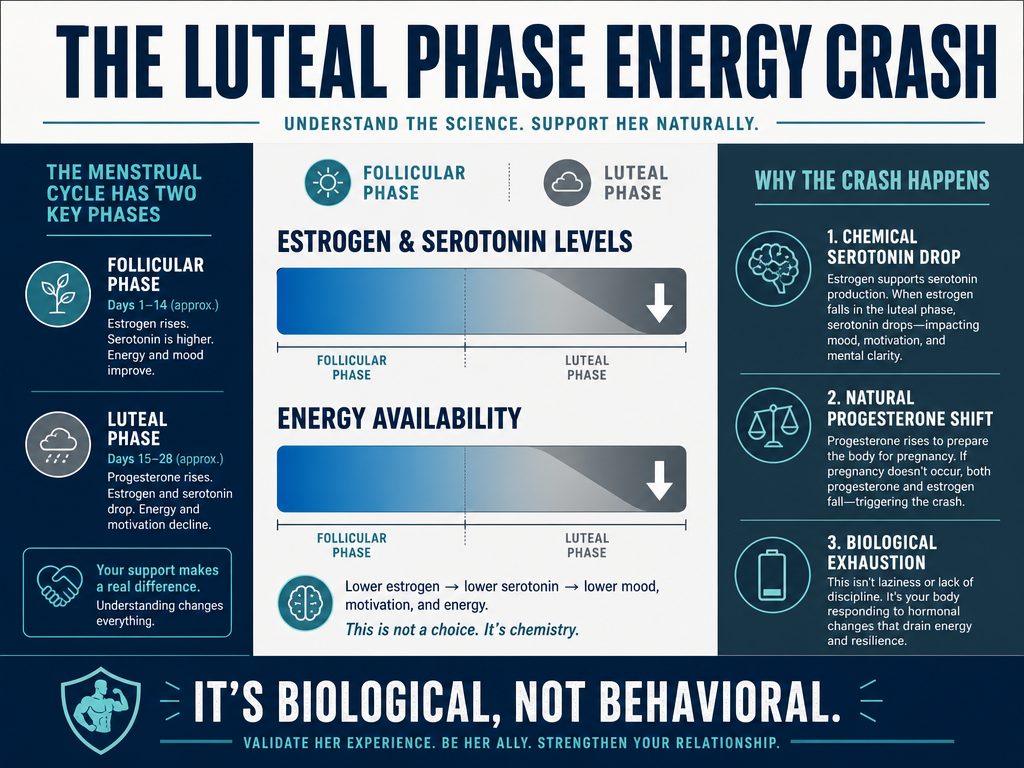 Understanding the biological shift behind hormonal fatigue helps partners provide better support by recognizing these symptoms as chemical rather than behavioral changes.
When Does Hormonal Fatigue Hit Hardest?
The fatigue doesn't arrive randomly. It follows a predictable window tied to the second half of her cycle. The menstrual cycle has four phases - menstrual, follicular, ovulation, and luteal - and fatigue is most pronounced in the late luteal phase, roughly seven to ten days before her period.
During this time, many women notice PMS-like symptoms in this phase - mood shifts, breast tenderness, bloating, acne, and appetite changes. Fatigue is one of the most common complaints, but it often arrives alongside other physical symptoms like headaches, muscle aches, or digestive slowdown.
Here's what to watch for:
- She's sleeping normal hours but waking up unrefreshed
- Tasks that normally feel easy (cooking dinner, responding to texts, making decisions) feel overwhelming
- She's canceling plans or expressing guilt about needing rest
- Her usual coping strategies (a workout, a nap, caffeine) aren't working
The timing matters because it helps you distinguish between hormonal fatigue and other causes. If the same pattern repeats monthly in the week or two before her period, it's almost certainly cycle-related. Tracking symptoms and mood changes across the cycle for a few months is a legitimate, medically endorsed way to identify real patterns rather than assuming based on stereotypes.
It's also worth noting that a "normal" cycle varies a lot between women - menstrual bleeding can start anywhere from every 24 to every 38 days. This means the fatigue window won't land on the same calendar date each month. You'll need to track her individual rhythm, not a generic 28-day template.
Understanding how your girlfriend's cycle phases affect her energy levels can help you anticipate these shifts before they create friction. Our guide to understanding your partner's cycle offers a deeper breakdown of all four phases.
Environmental Support: How to Optimize Her Sleep
Sleep is the foundation of recovery from hormonal fatigue, but her body actively works against quality rest during the luteal phase. A woman's basal body temperature (BBT) increases by approximately 0.5°C (around 1°F) after ovulation and remains high until the period begins. That might not sound like much, but it's enough to disrupt deep sleep and leave her waking up groggy.
You can't control her hormone levels, but you can control her sleep environment. Here's how to help:
Lower the Ambient Temperature
If you share a bedroom, drop the thermostat by a couple of degrees in the evening. The ideal sleep temperature for most people is between 60-67°F (15-19°C), but during the luteal phase, aim for the cooler end of that range. If separate temperature controls aren't an option, open a window, use a fan, or switch to lighter bedding.
Provide Cooling Tools
A cooling pillow or gel sleep mask can help offset her elevated body temperature without requiring you to freeze yourself out. Some women also find relief from a cold pack placed on the back of the neck before bed.
Handle the Bedtime Routine
Fatigue makes every small task feel harder. If you normally share evening chores - dishes, locking doors, prepping tomorrow's lunches - offer to handle them solo so she can get to bed earlier. Don't wait for her to ask. Say, "I've got the kitchen tonight, go rest."
Reduce Sensory Overload
Bright lights and screens suppress melatonin production, which is already lower during this phase. Dim the lights an hour before bed, encourage her to put her phone on do-not-disturb, and consider blackout curtains if light from outside is an issue.
Sleep quality directly impacts how well she manages the other symptoms of hormonal fatigue. Adequate sleep and stress-reduction practices like deep breathing or yoga are medically recommended approaches that a supportive partner can make easier to maintain.
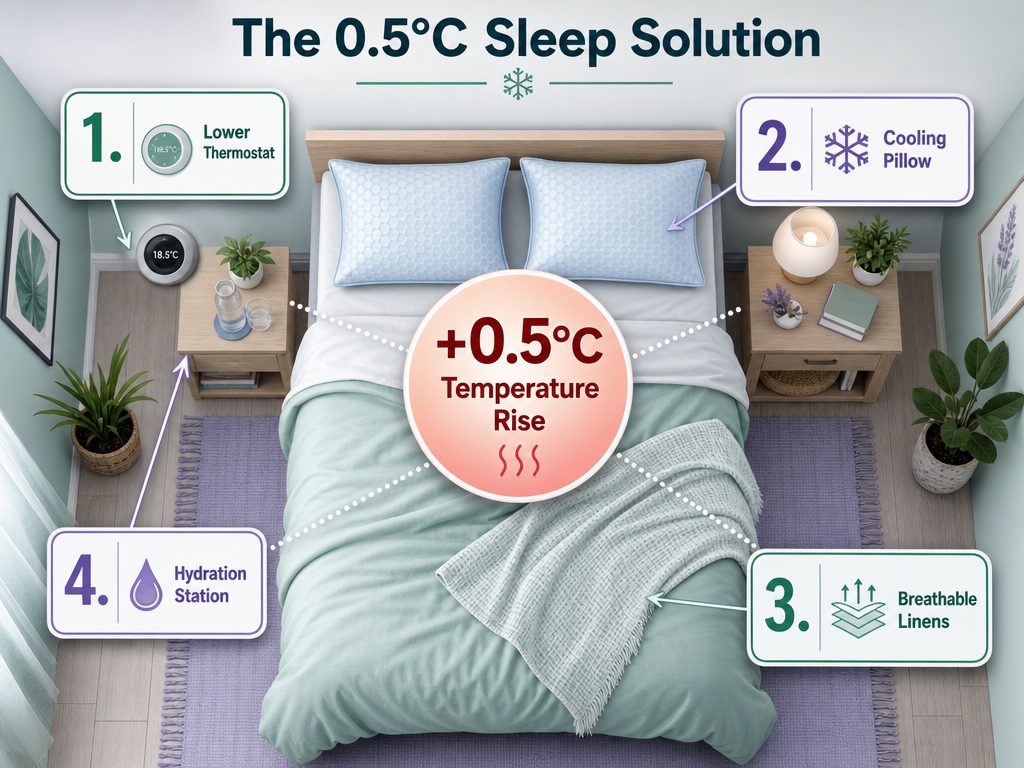 A woman's body temperature rises slightly before her period, often disrupting sleep; simple environmental adjustments like lowering the thermostat can provide significant natural relief.
Nutritional Support: What to Offer Her (and When)
Hormonal fatigue isn't just about sleep. It's also about blood sugar crashes, nutrient depletion, and cravings that signal real biological needs. Your role here isn't to prescribe supplements or tell her what to eat - it's to make nutrient-dense food more accessible when she's too tired to cook.
Iron-Rich Foods
If she experiences heavy periods, her iron stores may be lower than usual. Iron is essential for producing hemoglobin, the protein that carries oxygen in the blood. Low iron equals low energy. A 2014 study found that regular aerobic exercise (3x per week for 3 months) significantly reduced period fatigue and improved hemoglobin levels, but you can also support her through diet.
Offer:
- Red meat (steak, lean ground beef)
- Dark leafy greens (spinach, kale)
- Lentils and beans
- Fortified cereals
Pair these with vitamin C-rich foods (citrus, bell peppers, tomatoes) to help her body absorb the iron more efficiently.
Magnesium for Muscle Relaxation and Sleep
Magnesium helps regulate muscle contractions and supports deep sleep. Many women are marginally deficient, and the luteal phase can make that worse. Instead of suggesting pills, provide magnesium-rich snacks:
- Pumpkin seeds
- Almonds or cashews
- Dark chocolate with high cacao content
- Avocado
Dark chocolate is particularly effective because it also contains small amounts of caffeine and theobromine, which can provide a mild mood lift without the crash of sugary treats.
Complex Carbs to Stabilize Blood Sugar
When progesterone is high, blood sugar regulation gets harder. She may feel fine one moment and shaky or irritable the next. Small, frequent meals with complex carbs help smooth out these swings.
Prep options like:
- Whole grain toast with nut butter
- Oatmeal with fruit
- Brown rice with vegetables
- Sweet potatoes
Avoid suggesting she "just eat less sugar" or skip meals to "reset." That advice backfires during the luteal phase. Her body needs steady fuel.
Calcium
Daily intake of 1,200 mg of calcium has been shown to reduce physical and emotional PMS symptoms. You don't need to calculate exact milligrams - just make calcium-rich foods easy to access:
- Greek yogurt
- Cheese
- Fortified plant milk
- Sardines or salmon (with bones)
The key is to have these foods already prepped and available. She's not going to chop vegetables or cook a full meal when she's exhausted. If you can handle meal prep or order takeout that matches these criteria, you're removing a decision burden at the exact moment she has no bandwidth for decisions.
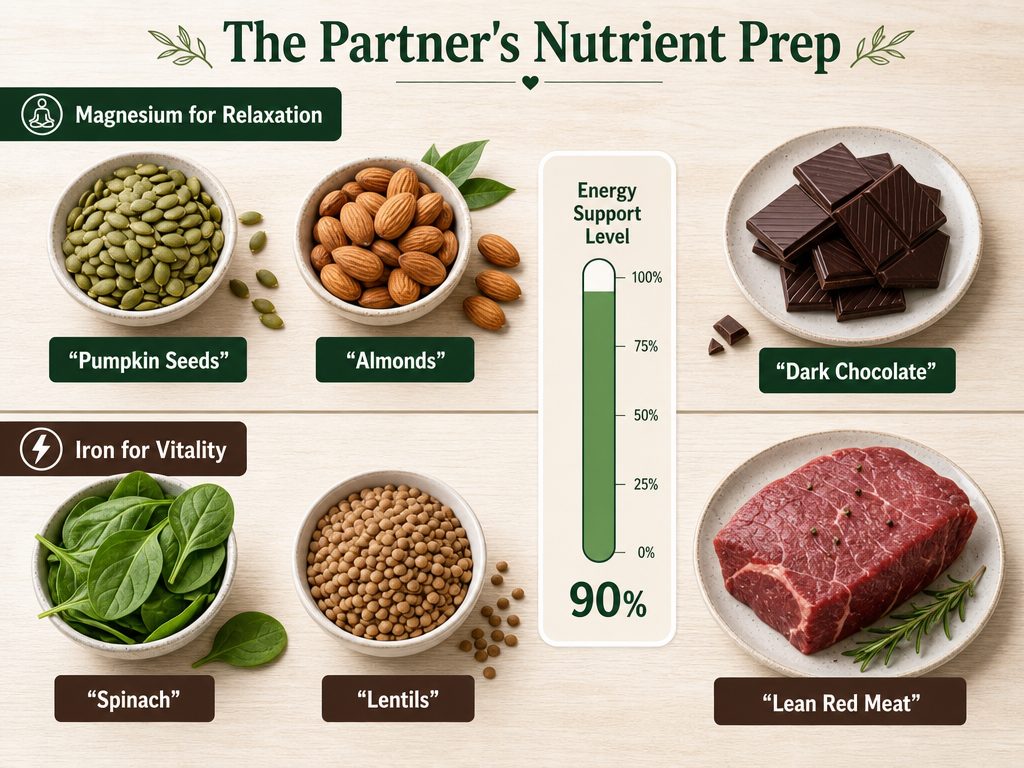 Preparing snacks rich in magnesium and iron is a proactive way for partners to support energy levels and muscle relaxation during the luteal phase.
For a deeper look at how diet can support her cycle, check out our guide to eating for your cycle.
Emotional Support: The Validation Framework
Physical support is important, but emotional validation is what makes the difference between her feeling supported and feeling managed. When she's exhausted, she doesn't need you to fix the problem or explain why it's happening. She needs you to acknowledge that the problem is real.
When a partner is struggling emotionally, responding with genuine empathy - listening without judgment, focusing on their feelings rather than debating facts, and validating that their reaction makes sense - tends to help more than trying to "fix" the problem or offer silver linings. Feeling understood, not corrected, is what tends to defuse tension.
Here's how to apply that in practice:
Don't Minimize the Fatigue
Avoid phrases like:
- "But you just slept nine hours"
- "You seemed fine yesterday"
- "Maybe you just need to exercise more"
These statements, even when well-intentioned, signal that you think she's exaggerating or not trying hard enough. Instead, try:
- "I can see you're exhausted. Let me handle dinner so you can rest."
- "This sounds really hard. What would help right now?"
Offer Specific Help, Not Generic Reassurance
Saying "Let me know if you need anything" puts the burden back on her to identify and articulate her needs - which is exactly what she doesn't have energy for. Instead, offer concrete options:
- "I'm going to take care of the laundry today."
- "I'll pick up groceries on my way home. Text me if there's anything specific you want."
- "I'm clearing my schedule tonight so we can stay in."
The specificity removes the decision-making load. She doesn't have to ask; she just has to accept.
Validate Without Solving
If she vents about how tired she is, resist the urge to jump into problem-solving mode. She's not looking for a five-step plan to optimize her sleep. She's looking for acknowledgment that this is hard.
Say:
- "That sounds exhausting."
- "I'm sorry you're dealing with this."
- "You're not being dramatic - this is real."
Then stop. Let silence do the work. If she wants solutions, she'll ask.
Understanding the emotional landscape of the luteal phase can help you provide better support. Our tactical guide to the luteal phase covers mood shifts, energy dips, and what to say when she's struggling.
How to Combat Extreme Fatigue During Your Period
The fatigue doesn't always stop when her period starts. For many women, the first few days of bleeding are the most physically draining. Menstrual cramps, blood loss, and continued hormonal shifts can leave her feeling worse than she did during the luteal phase.
Here's how to support her through the menstrual phase:
Encourage Gentle Movement
Regular aerobic exercise, smaller/more frequent meals, less salt/caffeine/alcohol, adequate sleep, and stress-reduction practices like deep breathing or yoga are medically recommended lifestyle approaches that can ease PMS symptoms. But during the menstrual phase, "regular aerobic exercise" should be reframed as "gentle movement."
This isn't the time to suggest she hit the gym for a HIIT class. Instead, encourage:
- A short walk around the block
- Light stretching or yoga
- Slow, restorative movement that doesn't spike her heart rate
The goal is to improve circulation and reduce cramping, not to burn calories or push through pain. If she's not up for any movement, don't push.
Provide Heat and Hydration
Heat helps relax the uterine muscles and ease cramping. Offer her:
- A heating pad or hot water bottle for her lower abdomen or back
- A warm bath (with Epsom salts if she likes them)
- Hot tea or warm lemon water
Hydration is often overlooked but essential. Blood loss can lead to dehydration, which makes fatigue worse. Keep water bottles within easy reach and refill them without being asked.
Handle the Logistics
Bleeding adds a layer of physical discomfort and mental load. If you share a home, offer to:
- Pick up pads, tampons, or whatever menstrual products she uses (text her for specifics if you're not sure)
- Handle laundry, especially if there are stained sheets or clothes
- Keep pain relievers (ibuprofen or acetaminophen) stocked
These small acts remove friction. She doesn't have to leave the house or manage logistics when she's already managing pain.
For a more comprehensive breakdown of what to do during her period, our guide to supporting your partner during menstruation covers the full 10-day support window.
When Natural Support Isn't Enough: Recognizing PMDD
Sometimes, the fatigue is severe enough that natural remedies and lifestyle adjustments aren't sufficient. Severe period fatigue can be a symptom of Premenstrual Dysphoric Disorder (PMDD), which affects roughly 5% of women of childbearing age.
PMDD is a real, clinically recognized condition - it's listed in the DSM-5 as a depressive disorder, not something people are "making up" or simply failing to cope with. It affects roughly 1 in 10 people who menstruate.
PMDD is a more severe, sometimes disabling extension of PMS. Both happen on a similar timeline (about 7-10 days before a period) and can share physical symptoms like bloating and fatigue, but PMDD specifically involves extreme mood symptoms - such as marked irritability, anxiety, or hopelessness - intense enough to disrupt daily life and strain relationships.
Signs That It's Time to See a Doctor
If your girlfriend experiences any of the following, natural support isn't enough. She needs professional help:
- Fatigue so severe she can't get out of bed or complete basic tasks
- Feelings of hopelessness, worthlessness, or suicidal thoughts
- Extreme irritability or anger that damages relationships or work performance
- Physical symptoms (pain, cramping, bloating) that don't respond to over-the-counter treatments
- Symptoms that continue after her period ends, suggesting the issue isn't cycle-related
PMDD is treatable. Treatment options include SSRIs (antidepressants that can be taken only during the luteal phase), hormonal birth control to stabilize hormone levels, and cognitive behavioral therapy (CBT) to manage mood symptoms. Your role as a partner is to recognize when the symptoms have crossed into territory that requires medical intervention and to support her in seeking that help.
Don't frame it as "you need to fix this" or "you're overreacting." Frame it as "these symptoms are disrupting your life, and there are treatments that can help. Let's find a doctor who takes this seriously."
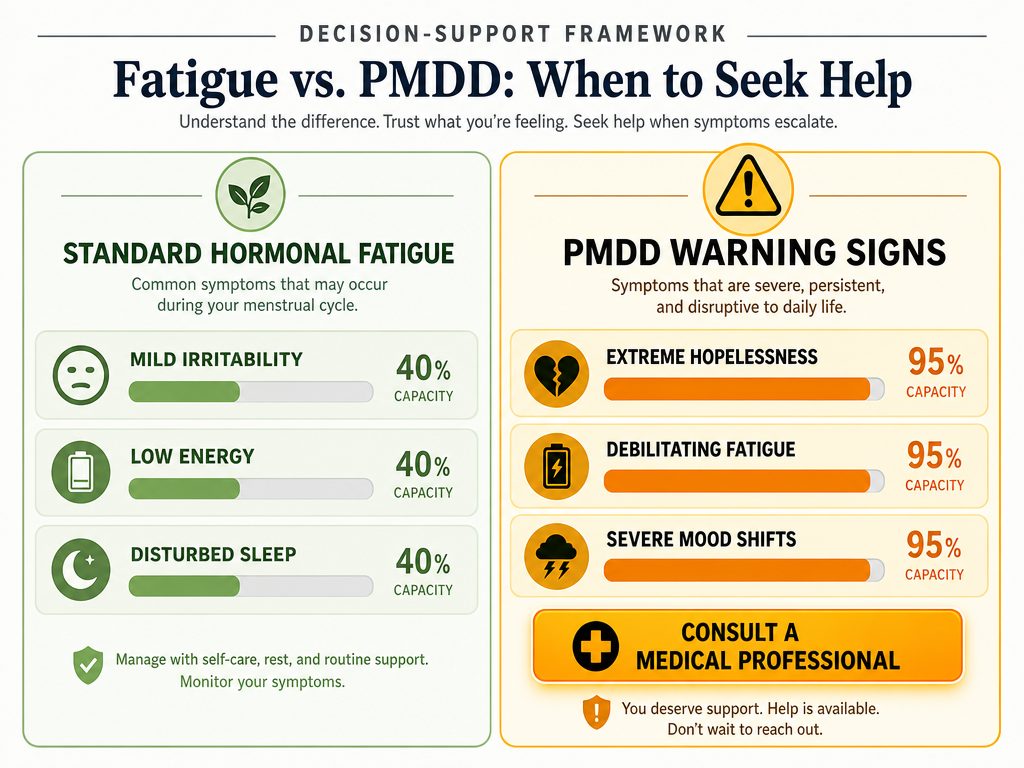 While most fatigue can be managed naturally, recognizing the severe symptoms of PMDD is crucial for knowing when to transition from home support to professional care.
For more on how to recognize and support PMDD, see our partner's guide to PMDD support.
Frequently Asked Questions
How can I best support my partner who has PMDD?
Supporting a partner with PMDD requires recognizing that her symptoms are neurochemical, not behavioral. She's not choosing to feel this way. PMDD is a real, clinically recognized condition - it's listed in the DSM-5 as a depressive disorder, and it responds to medical treatment.
Your role is to:
- Track the symptom window with her (usually 7-10 days before her period) so you can both anticipate the hardest days
- Encourage her to see a doctor who specializes in reproductive psychiatry or women's health
- Remove as many logistical burdens as possible during the symptomatic phase (meal prep, chores, social obligations)
- Validate her experience without minimizing or problem-solving unless she asks
PMDD often responds well to SSRIs taken during the luteal phase, hormonal birth control, or lifestyle interventions like regular exercise and dietary changes. But these need to be managed by a healthcare provider, not DIY-ed.
How to comfort a tired girlfriend?
Comfort for a tired girlfriend during hormonal fatigue looks different than comfort during regular tiredness. She doesn't just need rest - she needs you to acknowledge that her fatigue is real and to reduce the number of decisions she has to make.
Practical steps:
- Take over tasks she normally handles (cooking, cleaning, errands)
- Offer specific help rather than "let me know if you need anything"
- Create a restful environment (lower temperature, dim lights, quiet space)
- Provide easy-to-eat, nutrient-dense snacks (see the nutritional support section)
- Validate her experience with phrases like "I can see you're exhausted" rather than trying to fix or explain
The most powerful thing you can do is remove friction. She shouldn't have to ask for help, explain why she's tired, or justify taking time to rest.
How to increase energy during the luteal phase?
Energy during the luteal phase is naturally lower, so the goal isn't to "fix" the fatigue - it's to support her body through it. Lifestyle approaches that can help ease PMS symptoms include regular aerobic exercise, smaller/more frequent meals, less salt/caffeine/alcohol, adequate sleep, and stress-reduction practices.
As a partner, you can help by:
- Encouraging gentle movement like walking or yoga (not intense workouts)
- Preparing small, frequent meals with complex carbs and protein to stabilize blood sugar
- Making sure she's getting 7-9 hours of sleep in a cool, dark room
- Reducing caffeine and alcohol, which can worsen symptoms
- Supporting stress reduction through activities like reading, baths, or time alone
Avoid suggesting she "push through" or "just exercise more." Her energy is limited for a biological reason, and ignoring that reason won't make it go away.
How to beat luteal phase fatigue?
You don't "beat" luteal phase fatigue - you manage it. The fatigue is a sign that her body is reallocating energy toward reproductive processes. Fighting it with stimulants or forcing productivity usually backfires.
Instead, focus on:
- Accepting that this phase is naturally lower-energy and adjusting expectations accordingly
- Prioritizing rest and recovery over productivity
- Using the nutritional and environmental support strategies outlined in this guide
- Tracking the pattern so you can plan around it (avoid scheduling high-stakes events or travel during the late luteal phase)
If the fatigue is severe enough to interfere with daily life, it may be PMDD, which requires medical treatment. Don't try to "beat" a clinical condition with willpower.
How to help partner during luteal phase?
Helping your partner during the luteal phase means understanding that her needs change during this window. She may crave more downtime, less social interaction, and more emotional validation. After ovulation, progesterone rises to help prepare the uterine lining for a possible pregnancy. If pregnancy doesn't happen, both progesterone and estrogen drop before the next period.
Tactical support includes:
- Handling more household tasks without being asked
- Reducing decision fatigue by offering specific options ("I'll make pasta tonight" instead of "What do you want for dinner?")
- Giving her space if she needs it, but staying available if she wants to talk
- Not taking mood shifts personally - they're neurochemical, not relational
- Checking in without hovering ("How are you feeling today?" not "Are you okay?")
The luteal phase is temporary. Your job is to make those 10-14 days easier, not to fix her or change how she feels. For a deeper tactical framework, see our luteal phase support guide.
Hormonal fatigue is real, predictable, and manageable. Your girlfriend isn't lazy or dramatic - she's navigating a chemical shift that most men will never experience. By understanding the biology, adjusting her environment, providing the right nutrition, and validating her experience, you can turn what feels like a monthly crisis into a manageable routine. She doesn't need you to solve her hormones. She needs you to stop treating them like a mystery and start treating them like a map.
Tags

Related Articles
Continue reading to deepen your understanding

How to Understand Your Girlfriend’s Social Battery and Hormones
Does your girlfriend suddenly cancel plans or seem withdrawn? This guide explains how her cycle impacts her energy so you can support her like a pro.

How Your Girlfriend’s Emotional Needs Change During Her Cycle
Does your girlfriend’s mood seem unpredictable? Learn how her emotional needs shift on a biological loop and how to support her through every phase of her cycle.

What to Buy When Your Girlfriend Has Hormone Cravings: A Support Guide
Stop wondering what to pick up at the store. This guide explains the science behind cycle cravings and provides a specific list of foods and comfort items she needs.

Your Girlfriend’s Mood Shifts Throughout the Month, Explained
Ever wonder why her energy and moods change so drastically each week? Understand the four hormonal phases and how to be the partner she needs during every stage of her cycle.

How to Support Your Girlfriend When She’s Crying Because of Hormones
Watching her cry when hormones hit can feel overwhelming. Learn the biological why behind the tears and use these proven scripts to provide the support she actually needs right now.

How to Help Your Girlfriend with Hormonal Mood Swings Without Arguing
Understand her cycle and learn tactical scripts to handle tension. This guide shows you how to support her through hormonal shifts without getting into unnecessary fights.

When to Feed Your Girlfriend: Understanding Hangry Hormones
Does your girlfriend get irritable when she hasn’t eaten? It’s not just in her head. Learn why hormones cause hanger and the specific times her body needs more fuel.

The Boyfriend’s Guide to Supporting Your Partner Through PMS
If your partner is suddenly irritable and exhausted, it’s biology, not you. Learn about the luteal phase and how to provide meaningful support without walking on eggshells.