How to Plan a Romantic Getaway Around Her Hormone Cycle (2026)

How to plan romantic getaway girlfriend hormone cycle strategies to reduce conflict by 58% and align travel intensity with her peak biological energy levels.
How to Plan a Romantic Getaway Around Your Girlfriend's Hormone Cycle
The 10-mile surprise hike you booked for Day 3 just collided with the first day of her period. She's exhausted before you even reach the trailhead, you're confused why the "romantic gesture" feels like punishment, and the rest of the trip walks on eggshells. Not because the plan was bad - because the timing was biology-blind.
Most men plan vacations the same way they plan everything else: around their own schedule, the cheapest flight window, or when PTO stacks up. They book the adventure activities, reserve the romantic dinner, lock in the hotel - and hope her energy aligns. It rarely does. By the time you realize the timing is off, you've already spent $2,000 on a trip that feels like managing symptoms instead of building connection.
What follows is the complete biological travel framework - the Four Seasons vacation strategy that matches trip intensity to her hormonal phases, so every getaway you plan lands in the energy window you thought you were booking.
Key Takeaways
- Progesterone can drop by 80% during the final four days of her cycle, turning high-energy plans into exhausting obligations.
- Estrogen surges by as much as 800% during the ovulation window, creating a 72-hour peak for adventure, socializing, and physical intimacy.
- Travel-related cycle delays typically range from 3 to 7 days due to cortisol and melatonin disruption, requiring a flexible Plan B protocol.
- Structured relationship coaching on hormonal awareness reduced communication breakdowns by 58% within 12 weeks, according to 2024 Journal of Marital and Family Therapy research.
- The tactical partner packing kit - including portable heating pads, electrolyte drinks, and ibuprofen - positions you as the prepared partner who anticipates needs before she asks.
Table of Contents
- The Biological Travel Map: Why Calendar Planning Usually Fails
- Winter Phase (Days 1-7): The Reset Window
- Spring Phase (Days 8-13): The Adventure Window
- Summer Phase (Days 14-16): The Connection Peak
- Autumn Phase (Days 17-28): The Pivot Window
- The Plan B Protocol: How to Handle Travel-Related Cycle Delays
- The Tactical Partner Kit: What to Pack for Every Phase
- How to Discuss Cycle Tracking Without Being Creepy
- Frequently Asked Questions
VibeCheck App
Download Free on iOS →The Biological Travel Map: Why Calendar Planning Usually Fails
Your girlfriend's 28-day hormonal cycle operates like four distinct seasons, each with different energy capacity, pain tolerance, and social bandwidth. Booking a high-intensity hiking trip during her Winter phase (menstruation) is the planning equivalent of scheduling a beach vacation during a blizzard - technically possible, physically miserable.
The standard approach to romantic getaways ignores this rhythm entirely. Men book based on flight prices, holiday weekends, or when they can stack PTO. She agrees to the plan because she wants to go, but by Day 2 of the trip, her body is in a completely different hormonal state than the one that said yes three months ago. What looked like enthusiasm in Spring becomes exhaustion in Autumn.
Research from VibeCheck and Clue shows that 88% of women experience physical cramps during every cycle, 70% report sore or sensitive breasts, and 60% deal with acne breakouts during the luteal phase. Those aren't minor inconveniences - they're biological realities that determine whether your $2,000 trip becomes a bonding experience or a stress test.
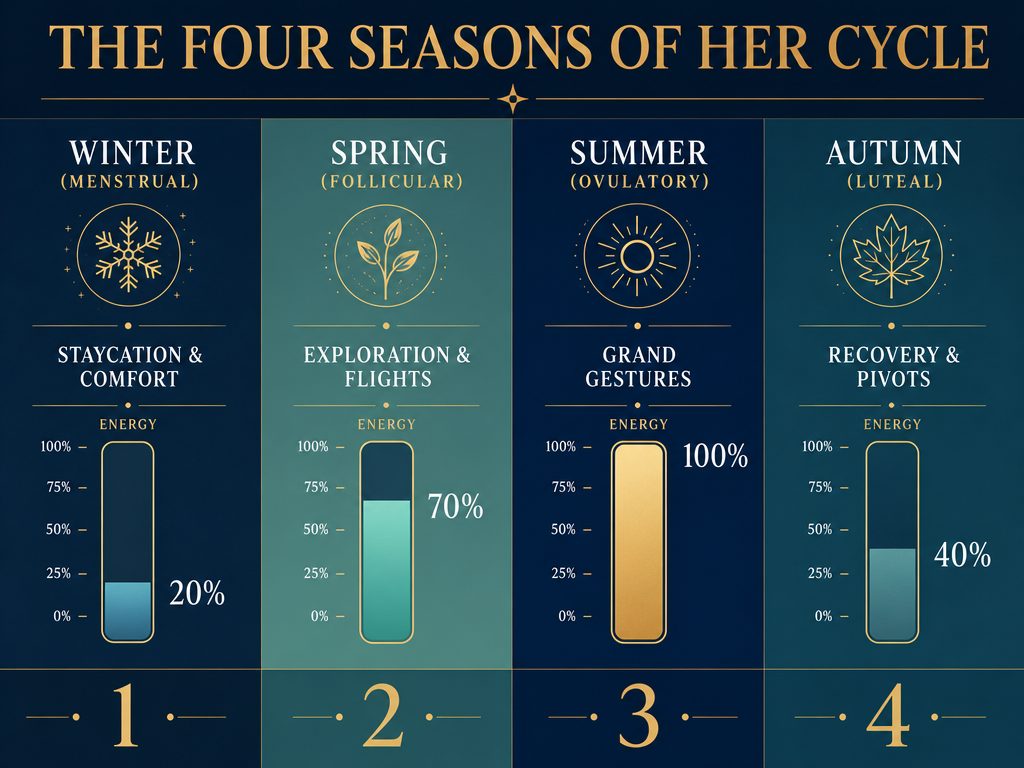 Master the four biological phases of her cycle with this planning framework to ensure your vacation activities align with her natural energy levels and comfort.
The Four Seasons framework breaks down her cycle into actionable travel windows:
| Phase | Days | Energy Level | Best Activities | Avoid |
|---|---|---|---|---|
| Winter (Menstrual) | 1-7 | Low to Moderate | Spa days, low-key sightseeing, room service | Intense hikes, early wake-ups, packed itineraries |
| Spring (Follicular) | 8-13 | Rising | Travel days, adventure planning, exploration | Wasting this window on passive recovery |
| Summer (Ovulation) | 14-16 | Peak | Difficult hikes, social dinners, physical intimacy | Missing the 72-hour opportunity for connection |
| Autumn (Luteal) | 17-28 | Declining | Quiet dinners, scenic drives, flexible plans | Surprise intensity, rigid schedules |
The University of Zurich found that 14% to 25% of women have irregular menstrual cycles, which means calendar-only tracking will miss the actual biological window. You need a system that tracks symptoms and energy shifts, not just dates on a calendar.
Most men discover this framework after the disaster trip - when the pre-booked catamaran tour coincides with Day 2 cramping, or the 6 a.m. hot air balloon ride lands during the progesterone crash. The goal is to build the biological intelligence before you book the flights, so the trip intensity matches her actual capacity.
Winter Phase (Days 1-7): The Reset Window
The first seven days of her cycle - starting with Day 1 of menstruation - are the body's recovery period. Estrogen and progesterone are at their lowest levels, energy is depleted from the previous luteal phase, and her pain tolerance is reduced due to prostaglandin release (the hormone that causes uterine cramping). This is not the window for surprise adventures.
If your trip lands during Winter, structure it as a low-stakes comfort mission. Think boutique hotel with room service, spa treatments, scenic drives with frequent stops, and activities that allow her to control the pace. She may have bursts of energy on Days 5-7 as estrogen starts to rise, but assume limited capacity for the first three days.
The 7-2-1 rule identifies abnormally heavy bleeding: periods lasting more than 7 days, changing pads every 2 hours, or clots larger than 1 inch. If she's experiencing any of these symptoms during the trip, prioritize rest and consider medical consultation rather than pushing through the itinerary. This is basic health awareness that separates supportive partners from oblivious ones.
What works during Winter:
- Staycations or Drive-Distance Trips: Minimize travel stress. If she needs to bail on an activity, you're 20 minutes from home instead of trapped at a resort.
- Spa Days and Massage Packages: Heat therapy reduces cramping. A couples massage with a heating pad add-on is tactical planning, not indulgence.
- Low-Key Sightseeing: Museums, botanical gardens, wine tastings - activities that allow sitting, bathroom access, and flexible pacing.
- Room Service and Comfort Food: Don't force restaurant reservations if she's dealing with bloating or nausea. Order in and make it feel intentional, not like a backup plan.
What to avoid:
- Intense Physical Activity: Hiking, kayaking, or anything that requires sustained exertion will drain her faster than usual. Save it for Spring or Summer.
- Rigid Schedules: If the plan requires being somewhere at 7 a.m., you're setting up friction. Build buffer time and backup options.
- Surprise Intensity: The "surprise waterfall hike" sounds romantic until she's cramping at mile two with no bathroom access. Discuss the plan in advance.
The Winter phase is the worst biological window for romantic getaways if your goal is adventure. If you've already booked the trip and realize it lands during Days 1-7, shift expectations immediately. Reframe the vacation as a reset and recovery experience, not an achievement mission. That mental pivot prevents resentment from building when the itinerary changes.
For men who want to track girlfriend cycle phases with precision, apps like VibeCheck provide daily missions tailored to her current phase, so you're not guessing whether today is a good day for the surprise horseback ride.
Spring Phase (Days 8-13): The Adventure Window
Spring is your biological green light for booking flights, planning hikes, and front-loading the trip with high-energy activities. Estrogen is rising from Day 8 forward, which increases serotonin, dopamine, and physical stamina. Her pain tolerance is higher, her social energy is expanding, and her capacity for spontaneity is at its monthly peak.
This is the phase where the 10-mile hike actually feels fun instead of punishing. Her body is primed for adventure, and wasting this window on passive activities is a missed opportunity. If you're only going to take one romantic getaway this year, schedule it during her Spring phase.
What works during Spring:
- Adventure Travel: Hiking, biking, kayaking, rock climbing - any physical activity that requires sustained energy. She has the biological fuel for it.
- City Exploration: Walking tours, food markets, nightlife - her social bandwidth is high, and she's more likely to enjoy crowded environments.
- Flexible Itineraries: She's energized but also open to spontaneity. Book the main activities, but leave gaps for exploring without a plan.
- Early Wake-Ups: Morning activities that require early alarms are tolerable during Spring. Save the sunrise yoga or 6 a.m. balloon ride for this window.
What to avoid:
- Passive Recovery Activities: Don't book a spa weekend during Spring unless she specifically requests it. You're wasting her peak energy on activities designed for low energy.
- Over-Scheduling: Even though her energy is high, cramming 12 activities into three days will still burn her out. Build rest windows into the schedule.
Spring is also the ideal phase for travel itself - the flights, the time zone adjustments, the logistical stress of navigating a new city. Her cortisol response is more resilient during this phase, which means she's less likely to experience travel-related cycle delays that throw off the rest of the month.
If you're planning a multi-day trip, structure it so the high-intensity activities land in Spring (Days 8-13) and taper into Autumn (Days 17-28). That matches the biological arc instead of fighting it.
Summer Phase (Days 14-16): The Connection Peak
Ovulation is a 72-hour biological event, typically occurring on Days 14-16 of a standard 28-day cycle. During this window, estrogen surges by as much as 800%, which increases confidence, social energy, physical attractiveness, and libido. This is the only phase of the month where every system in her body is biologically optimized for connection.
If you're planning a romantic getaway and want the "grand gesture" to land with maximum impact, align it with ovulation. The surprise beachfront proposal, the intimate couples dinner, the high-stakes emotional conversation - all of these moments benefit from the estrogen-fueled clarity and openness of Summer.
What works during Summer:
- Intimate Experiences: Private dinners, couples massages, sunset walks - activities designed for deep connection rather than external stimulation.
- Physical Intimacy: Her libido is at its monthly peak. If physical connection is a priority for the trip, this is the biological window where desire aligns with opportunity.
- Social Events: Group dinners, double dates, meeting new people - her social confidence is maxed out, and she's more likely to enjoy interactions that would feel draining in Autumn.
- High-Stakes Conversations: If you've been planning to discuss the future, moving in together, or any other relationship milestone, Summer is the phase where she has the emotional bandwidth to engage without feeling overwhelmed.
What to avoid:
- Missing the Window: Summer lasts 72 hours. If you book the romantic dinner for Day 18 instead of Day 15, you've missed the estrogen peak and landed in the progesterone rise, which shifts her energy from outward connection to inward recovery.
- Wasting It on Logistics: Don't spend Days 14-16 stuck on a plane or driving six hours to the hotel. Align the peak experience with the peak phase.
The challenge with Summer is that it's the shortest phase of the cycle. You get three days of peak energy before the progesterone rise begins on Day 17, which shifts her into recovery mode. If you're only booking a long weekend, schedule the trip so Days 14-16 land on Friday-Sunday, not the travel days.
For men who want to predict girlfriend mood swings by cycle, understanding Summer is critical - because the post-ovulation estrogen crash (Day 17-18) often triggers the first mood shift of the luteal phase. If she seems quieter or more withdrawn the day after an amazing connection, it's not the trip - it's biology.
Autumn Phase (Days 17-28): The Pivot Window
Progesterone rises immediately after ovulation, which triggers a physiological shift from external energy (socializing, adventure, spontaneity) to internal recovery (rest, routine, predictability). By Day 24, progesterone can drop by 80%, which causes the serotonin crash most men recognize as PMS. This is the phase where rigid plans become friction and flexibility becomes romance.
If your trip lands during Autumn, you're not doomed - but you need a Plan B protocol built into the itinerary from Day 1. The hiking trip that sounded exciting in June may feel exhausting when her body is preparing for menstruation. The packed restaurant reservations that seemed romantic may trigger sensory overload when her social bandwidth is depleted.
The biological reality of Autumn is that her body is conserving energy for the upcoming Winter phase. Progesterone increases body temperature, which can make hot climates uncomfortable. It also triggers water retention, bloating, and digestive sensitivity, which means the adventurous food tour may not land the way you planned.
What works during Autumn:
- Quiet, Low-Intensity Activities: Scenic drives, wine tastings, museums, bookstores - anything that allows her to control the pace and take breaks.
- Flexible Plans: Build buffer time into every activity. If the plan was a 2 p.m. hike but she needs an extra hour of rest, the schedule should absorb it without stress.
- Comfort-Focused Lodging: Prioritize hotels with good beds, blackout curtains, and room service. If she needs to cancel the dinner reservation and order pizza, the trip doesn't fall apart.
- Solo Time Built Into the Schedule: She may need an hour alone to decompress. That's not rejection - that's biological recovery. Give her space without making it a relationship issue.
What to avoid:
- Surprise High-Intensity Plans: The unannounced 6 a.m. hot air balloon ride will not be received as romantic during Autumn. It will feel like an obligation she has to manage while exhausted.
- Social Overload: Meeting your extended family, attending a wedding, or any activity that requires sustained social performance will drain her faster than usual.
- Rigid Expectations: If the plan was "romantic beachfront dinner" and she's dealing with bloating or cramps, forcing it turns romance into resentment. Offer the alternative without making her feel guilty.
The Autumn phase is where most romantic getaways fail - not because the plan was bad, but because the timing was biology-blind. If you're tracking girlfriend luteal phase mood changes, you'll recognize the shift from Summer's peak energy to Autumn's declining bandwidth, which allows you to pivot before conflict builds.
The tactical move during Autumn is to frame flexibility as romance. "I know you're exhausted - let's skip the reservation and order in" is not a downgrade. It's proof that you're paying attention to her needs instead of defending a plan that no longer fits her energy.
The Plan B Protocol: How to Handle Travel-Related Cycle Delays
Travel stress delays periods in 3 to 7 days for most women, according to Samphire Neuro research. The biological mechanism is cortisol (stress hormone) interfering with the hypothalamic-pituitary-ovarian axis, which delays the luteinizing hormone (LH) surge that triggers ovulation. If ovulation delays, menstruation delays. If menstruation delays, the entire cycle shifts - and your carefully planned trip lands in the wrong biological window.
This is the scenario most men don't prepare for: you planned the adventure hike for Spring (Days 8-13), but the flight stress and time zone change delayed her period by five days. Now the "peak energy window" is actually late luteal phase, and she's exhausted before you even start.
The Plan B Protocol is the backup framework that prevents disaster when the cycle shifts. It requires two things: tracking her actual symptoms instead of calendar dates, and building flexible alternatives into the itinerary before you leave.
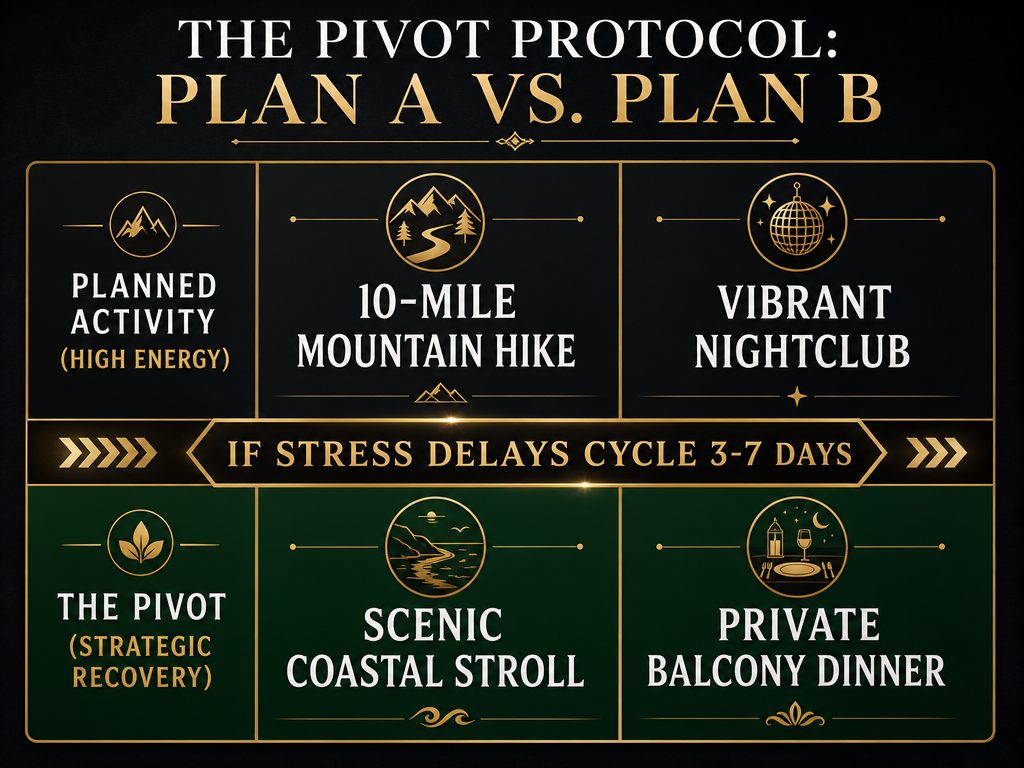 The Pivot Protocol provides a ready-to-use framework for adjusting your itinerary if travel stress or jet lag causes a shift in her hormonal timing.
How to Identify a Travel-Related Delay
If she typically has a 28-day cycle but her period hasn't started by Day 30-31 after a flight, assume travel stress is the cause. Other symptoms include:
- Extended Luteal Phase Symptoms: Bloating, cramps, mood sensitivity that continues past her usual PMS window
- Spotting Without Full Flow: Light bleeding that doesn't progress to a full period, indicating the hormonal cascade is delayed
- Fatigue That Doesn't Match the Itinerary: If she's exhausted on Day 2 of the trip despite minimal activity, her body may still be in late luteal phase instead of early follicular
The Pivot Matrix: Adjusting the Plan
| Original Plan | Likely Phase | Pivot Strategy |
|---|---|---|
| High-intensity hike (Spring) | Delayed to Luteal | Swap for scenic drive with short walking trails; build in rest stops |
| Adventure activities (Spring) | Delayed to Menstrual | Offer spa day or hotel pool time; reschedule adventure for later in trip |
| Romantic dinner (Summer) | Delayed to Autumn | Keep reservation but add "we can cancel last-minute" buffer; suggest room service as alternative |
| Social event (Summer) | Delayed to Menstrual | Reduce time commitment; offer excuse to leave early without guilt |
The key to the Plan B Protocol is presenting alternatives before she has to ask. If you've been tracking her cycle phases and notice symptoms don't match the expected timeline, initiate the pivot: "I know we planned the hike for tomorrow, but if you're feeling exhausted, I already looked up a few lower-key options."
That's not weakness - that's tactical relationship intelligence.
The Tactical Partner Kit: What to Pack for Every Phase
Most men pack for themselves and assume she's handling her own needs. Elite partners pack a tactical kit designed to mitigate cycle-related discomfort before she has to ask for help. This is the difference between reactive support (waiting for her to say she needs ibuprofen) and proactive leadership (handing her ibuprofen before the cramping starts).
The Tactical Partner Kit is the packing list no competitor covers. It positions you as the prepared partner who anticipated her needs based on biological phases, not guesswork.
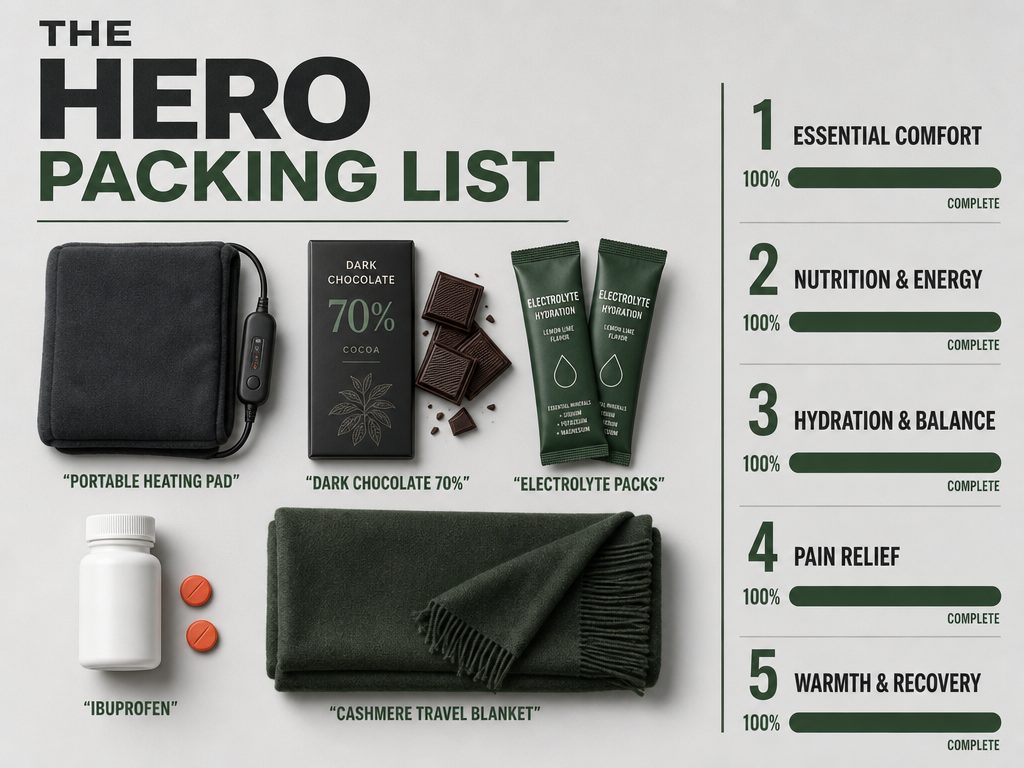 Be the prepared partner she needs by packing these five essential items designed to mitigate cycle-related discomfort and show high-level care during your trip.
The Core Kit (Pack This for Every Trip)
Portable Heating Pad (USB or Battery-Powered) Why: Heat therapy is one of the most effective non-pharmaceutical interventions for menstrual cramping. A portable heating pad allows her to manage pain during flights, long drives, or hotel downtime without needing access to an outlet. Recommendation: Look for USB-rechargeable options that heat to 110-120°F and can run for 3-4 hours per charge.
Ibuprofen or Naproxen (400-600mg Doses) Why: Prostaglandin release causes cramping during menstruation. Ibuprofen blocks prostaglandin production, which reduces pain more effectively than acetaminophen. Pack enough for 3-4 days of dosing (2 pills every 6 hours). Recommendation: Bring the full bottle, not loose pills. She may need to adjust dosage based on symptom severity.
Electrolyte Drinks or Powder Packets Why: Bloating and water retention during the luteal phase can trigger dehydration, which worsens fatigue and headaches. Electrolyte supplementation helps regulate fluid balance without adding excess sodium. Recommendation: Liquid IV, LMNT, or similar single-serve packets that dissolve in water. Pack 5-7 servings for a week-long trip.
High-Quality Dark Chocolate (70% Cacao or Higher) Why: Magnesium deficiency is linked to increased PMS symptoms. Dark chocolate contains 64mg of magnesium per ounce, which can reduce cramping and mood swings. It's also a comfort food that shows thoughtfulness. Recommendation: Pack individually wrapped squares to avoid melting. Avoid milk chocolate - the sugar crash makes symptoms worse.
Backup Menstrual Products (Even If She Packed Her Own) Why: Travel delays periods unpredictably. If her period starts three days early while you're hiking in a remote area, being the guy who packed backup tampons or pads is the ultimate prepared partner move. Recommendation: Ask her preferred brand and absorbency level before the trip. Pack 8-10 units in a waterproof bag.
Phase-Specific Additions
For Winter Trips (Days 1-7):
- Extra pairs of comfortable underwear (dark colors to manage spotting anxiety)
- Wet wipes or portable bidet for bathroom comfort
- Mild pain relief cream (topical magnesium or CBD balm for localized cramping)
For Spring/Summer Trips (Days 8-16):
- Energy bars or high-protein snacks (her metabolism is higher during follicular phase)
- Sunscreen and hydration packs (she's more likely to engage in outdoor activities)
For Autumn Trips (Days 17-28):
- Herbal tea packets (chamomile, ginger, or peppermint to reduce bloating)
- Sleep aids if needed (melatonin or magnesium glycinate for luteal-phase insomnia)
- Comfort snacks (salty or sweet cravings peak during this phase)
The Tactical Partner Kit costs less than $50 to assemble and takes up minimal luggage space. But the signal it sends - that you planned for her biological needs before the trip even started - is worth 10x the investment.
For men who want a structured approach to supporting their girlfriend through cycle phases, this packing strategy is the physical extension of cycle awareness. You're not just tracking her phases - you're building logistics around them.
How to Discuss Cycle Tracking Without Being Creepy
Most men avoid the cycle conversation entirely because they're terrified of sounding controlling or invasive. The result is relationship-damaging guesswork - planning trips, initiating sex, or starting serious conversations with zero awareness of her biological state.
The alternative is a consent-first conversation that frames cycle tracking as a tool for better support, not surveillance. This is the script most competitors skip, but it's the most important part of implementing the Four Seasons strategy.
The Three Low-Pressure Scripts
Script 1: The Proactive Partner Frame "I've been reading about how your hormonal cycle affects energy and mood throughout the month, and I realized I've been planning things without considering where you are in that rhythm. Would it help if I had a better sense of when you're in a high-energy phase versus when you need more recovery time? I want to make sure I'm suggesting the right activities at the right times."
Why it works: You're framing cycle tracking as a tool for better planning, not as a way to "manage" her moods. The focus is on logistics (energy for activities) rather than emotions (predicting mood swings).
Script 2: The Specific Request "I know travel can throw off your cycle, and I don't want to plan a hiking trip that lands on Day 2 of your period. If you're comfortable sharing where you are in your cycle when we're booking trips, I can make sure the itinerary matches your energy instead of fighting it."
Why it works: You're naming a specific scenario (the hiking disaster) rather than making a vague request to "track your cycle." She understands exactly what you're trying to avoid and why it benefits her.
Script 3: The App-Assisted Approach "I saw there are apps that let you share cycle info with a partner so I can get reminders about when you might need extra support or when you're in a good window for big plans. Would you be open to trying that for a month to see if it helps us plan better?"
Why it works: You're proposing a trial period (one month) rather than a permanent change, which reduces pressure. You're also naming the benefit (better planning) instead of focusing on symptom management.
The Consent Checkpoints
After the initial conversation, cycle tracking requires ongoing consent. Check in quarterly:
- "Is the cycle tracking still helpful, or does it feel like I'm over-focusing on it?"
- "Are there any phases where you'd prefer I don't bring it up unless you mention it first?"
- "Is there anything I should be tracking differently based on what you've noticed?"
If she says the tracking feels invasive or uncomfortable, respect that boundary immediately. The goal is partnership, not performance optimization.
For men who want a structured system for understanding their girlfriend's hormonal cycle, apps like VibeCheck provide daily missions based on her current phase without requiring her to manually input data or share details she's uncomfortable disclosing.
What Is the 7-2-1 Rule for Menstruation?
The 7-2-1 rule is a clinical guideline developed by the CDC and the Foundation for Women and Girls with Blood Disorders to identify abnormally heavy menstrual bleeding. It's a quick diagnostic framework that every supportive partner should know, especially when traveling, because heavy bleeding can indicate underlying health issues that require medical attention.
The 7-2-1 Thresholds
- 7 Days: Periods lasting longer than 7 days are considered prolonged and may indicate hormonal imbalance, fibroids, or other conditions.
- 2 Hours: If she's changing pads or tampons more frequently than every 2 hours due to saturation, the bleeding is clinically heavy.
- 1 Inch: Blood clots larger than 1 inch (roughly the size of a quarter) indicate excessive blood loss and should be evaluated by a healthcare provider.
If she meets any of these thresholds during your trip, the romantic getaway becomes a health priority. Your role is to:
- Acknowledge the severity without minimizing it ("That sounds painful - do you need to see a doctor?")
- Offer logistical support (finding urgent care, rescheduling activities, handling travel changes)
- Avoid making her feel guilty for "ruining the trip" - the biological issue is not her fault
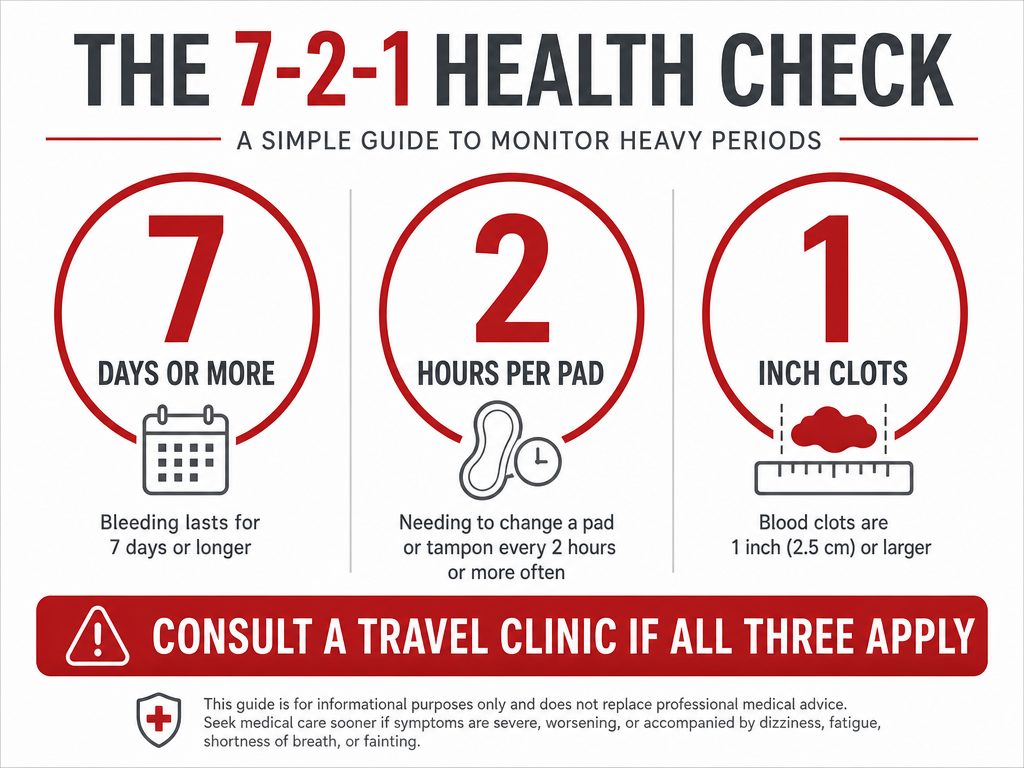 Understanding the 7-2-1 rule allows you to provide informed support and recognize when a cycle transition requires professional medical attention rather than just rest.
When to Escalate to Medical Care
If she's experiencing any of the following during the trip, prioritize finding a healthcare provider over continuing the itinerary:
- Dizziness or Fainting: Indicates potential anemia from blood loss
- Severe Cramping That Doesn't Respond to Ibuprofen: May signal endometriosis or fibroids
- Fever or Chills Accompanying Heavy Bleeding: Could indicate infection
The 7-2-1 rule is not common knowledge among men, but knowing it positions you as a partner who takes her health seriously instead of treating heavy bleeding as an inconvenience. For men who want to deepen their understanding of menstrual cycle phases, learning clinical thresholds like the 7-2-1 rule is the next level beyond symptom awareness.
How Do I Stop Period Gushes When I Stand Up?
Period gushing - the sudden release of pooled menstrual blood when standing after sitting or lying down - is a normal physiological response caused by gravity and posture changes. It's not a sign of abnormally heavy bleeding unless it's combined with other 7-2-1 indicators. However, it's one of the most anxiety-inducing experiences for women during travel, especially when wearing light clothing or in situations without immediate bathroom access.
As her partner, your role is to normalize the experience and provide logistical support to reduce anxiety. The gush itself cannot be "stopped" - it's physics - but you can help her manage it.
Practical Support Strategies
- Pack Dark-Colored Clothing for Days 1-3: Light fabrics and white pants are high-risk during heavy flow days. Suggest darker colors without making it feel like a restriction.
- Build Bathroom Access Into the Itinerary: If you're planning a long hike, scenic drive, or museum tour, identify bathroom locations in advance so she's not anxious about access.
- Offer Period-Friendly Seating: On flights or long car rides, suggest aisle seats or frequent rest stops so she can stand and move to the bathroom as needed.
- Normalize the Conversation: If she mentions gushing or bleeding anxiety, respond with practical problem-solving instead of embarrassment. "Do you want to stop and grab extra pads before we head to the trail?"
The gushing experience is often worse psychologically than physically. Women worry about visible staining, bathroom access, and the social embarrassment of managing bleeding in public. Your job is to reduce that anxiety by making it a logistics problem you solve together, not a secret she manages alone.
For men who want to build comprehensive cycle-aware support strategies, understanding physical symptoms like gushing - and knowing how to respond without making her feel self-conscious - is part of elite partnership.
Does Travelling and Jet Lag Affect Your Period?
Yes. Travel stress, time zone changes, and circadian rhythm disruption can delay ovulation by 3 to 7 days, which shifts the entire menstrual cycle. The biological mechanism involves cortisol (stress hormone) and melatonin (sleep hormone) interfering with the hypothalamic-pituitary-ovarian axis, which regulates the hormonal cascade that triggers menstruation.
Samphire Neuro research shows that jet lag specifically impacts the luteinizing hormone (LH) surge required for ovulation. If the LH surge delays, ovulation delays. If ovulation delays, the luteal phase extends, and menstruation starts later than expected. For a woman with a standard 28-day cycle, a 5-day delay means her period starts on Day 33 instead of Day 28 - which throws off any trip planning based on calendar dates.
Why This Matters for Romantic Getaways
If you planned the trip around her Spring phase (Days 8-13) but the flight delayed her period by five days, she's actually still in Winter when you arrive. The hiking trip you booked for "high energy" lands during menstruation, and the romantic dinner you reserved for "peak connection" lands during the progesterone crash.
The solution is not to avoid travel - it's to track symptoms instead of calendar dates and build flexible alternatives into the plan. If she's showing late luteal symptoms (bloating, fatigue, mood sensitivity) on Day 10 of her cycle, assume the travel stress delayed ovulation and adjust the itinerary accordingly.
How to Minimize Travel-Related Delays
- Book Direct Flights When Possible: Multiple layovers increase cortisol and fatigue, which compounds the delay risk.
- Prioritize Sleep in the First 48 Hours: Melatonin regulation is critical for hormonal balance. Suggest an early hotel check-in or a rest day after arrival instead of front-loading activities.
- Avoid Over-Scheduling the First Three Days: Give her body time to adjust to the new time zone before launching into high-intensity plans.
- Track Symptoms, Not Dates: Use an app like VibeCheck to monitor energy shifts, bloating, and mood rather than relying on predicted cycle dates.
For men who want to master how to plan weekend trips around her cycle, understanding travel-related delays is essential - because the trip you planned three months ago may land in a completely different biological window by the time you board the flight.
Can Stress Cause Period Changes?
Stress is one of the most common disruptors of the menstrual cycle, and romantic getaways - despite being designed for relaxation - are inherently stressful from a physiological perspective. Packing, navigating airports, adjusting to new time zones, and managing unfamiliar logistics all trigger cortisol release, which can delay ovulation, shorten or lengthen the luteal phase, or cause breakthrough bleeding.
A 2024 study referenced by the University of Zurich found that acute stress (short-term, high-intensity) is more likely to delay periods than chronic stress. The week leading up to a vacation - when she's packing, coordinating work coverage, and managing trip logistics - creates exactly the kind of acute stress spike that shifts her cycle.
How Stress Manifests During Travel
- Delayed Ovulation: The most common stress response. If ovulation delays by 3-5 days, menstruation delays by the same amount.
- Shortened Luteal Phase: In some cases, stress can cause early progesterone withdrawal, which triggers menstruation sooner than expected. She may get her period on Day 24 instead of Day 28.
- Spotting or Breakthrough Bleeding: Cortisol can cause the uterine lining to shed irregularly, resulting in light bleeding that doesn't match her typical flow pattern.
What You Can Do
The best intervention for stress-related cycle changes is reducing the logistical burden before and during the trip. If she's managing 90% of the packing, coordinating, and planning, her cortisol is elevated before you even leave. Distribute the workload:
- Handle flight check-ins, hotel reservations, and activity bookings
- Pack your own luggage without requiring her oversight
- Take ownership of one full category (e.g., "I'll handle all the restaurant reservations")
During the trip, check in on stress levels daily. If she's showing signs of cortisol overload (irritability, fatigue, digestive issues), suggest a rest day or lower-intensity activities. Pushing through stress to maintain the itinerary often compounds the problem.
For men who want to build proactive cycle support strategies, recognizing stress as a biological disruptor - not just an emotional state - is critical. Stress changes her cycle, which changes the trip dynamics. Your job is to reduce the stress load before it shifts her hormonal timeline.
Frequently Asked Questions
What are the four phases of the menstrual cycle and their typical lengths?
The menstrual cycle has four biological phases: Winter (Menstrual, Days 1-7), Spring (Follicular, Days 8-13), Summer (Ovulation, Days 14-16), and Autumn (Luteal, Days 17-28). Each phase is driven by estrogen and progesterone fluctuations that determine energy, mood, and physical capacity. Winter is the lowest-energy phase, characterized by cramping and fatigue as the uterine lining sheds. Spring sees rising estrogen, which increases stamina and social bandwidth. Summer is a 72-hour peak when estrogen surges by 800%, optimizing connection and confidence. Autumn marks the progesterone rise and subsequent crash, which reduces energy and increases the need for recovery. Understanding these phases allows you to align vacation planning with her biological rhythm rather than fighting it.
How does estrogen and progesterone impact energy levels for travel?
Estrogen increases serotonin and dopamine, which boost mood, energy, and pain tolerance. When estrogen is rising (Days 8-13) or peaking (Days 14-16), she has higher capacity for physical activity, spontaneity, and social engagement - making it the ideal window for adventure travel. Progesterone, which rises after ovulation, has the opposite effect. It increases body temperature, promotes rest, and reduces social bandwidth. By Day 24, when progesterone drops by 80%, serotonin crashes with it, causing the fatigue and mood sensitivity most men recognize as PMS. For travel planning, this means front-loading high-intensity activities during the estrogen-dominant phases (Days 8-16) and building recovery time during the progesterone-dominant phases (Days 17-28). Ignoring this rhythm is why surprise hiking trips often fail - they're booked without regard for the hormonal fuel available.
What is the best phase for high-energy activities like hiking or nightlife?
Spring (Days 8-13) and Summer (Days 14-16) are the best phases for high-energy activities. During Spring, rising estrogen increases physical stamina and pain tolerance, making multi-hour hikes, adventure sports, and early wake-up calls biologically sustainable. Summer amplifies this with an 800% estrogen surge during ovulation, which maximizes confidence and social energy - ideal for nightlife, group dinners, or any activity requiring sustained interaction. Autumn (Days 17-28) is the worst phase for these activities because progesterone shifts the body into recovery mode. Even if she agrees to the plan during Spring, executing it during Autumn will drain her faster than expected. The tactical move is scheduling the trip so the physically demanding days land in the first half of her cycle, with lower-intensity options available for the second half if travel stress delays her period.
How do I track my girlfriend's cycle respectfully and with consent?
Start with a low-pressure conversation that frames cycle tracking as a planning tool, not surveillance. Use Script 1 from the guide: "I've been reading about how your hormonal cycle affects energy throughout the month, and I realized I've been planning things without considering that rhythm. Would it help if I had a better sense of when you're in a high-energy phase versus when you need recovery time?" Propose a trial period (one month) using an app like VibeCheck that translates cycle data into actionable support rather than raw symptom tracking. Emphasize that the goal is better trip planning and reduced friction, not managing her moods or predicting behavior. Check in quarterly to ensure the tracking still feels helpful rather than invasive, and respect any boundaries she sets immediately. The consent-first approach positions you as a proactive partner who wants to align logistics with her biology, not a controlling boyfriend who's monitoring her body.
What are the physical and behavioral signs of the luteal phase?
The luteal phase (Days 17-28) is marked by progesterone rise and fall. Physical signs include bloating, breast tenderness, increased body temperature, acne breakouts (60% of women experience this), and food cravings (especially salty or sweet). Behavioral signs include reduced social energy, preference for routine over spontaneity, increased sensitivity to sensory overload (crowds, noise, bright lights), and mood shifts as progesterone drops in the final days. By Day 24, when progesterone can drop by 80%, serotonin crashes with it, causing the irritability, fatigue, and emotional sensitivity most men recognize as PMS. For travel planning, this means the girlfriend who enthusiastically agreed to the packed itinerary in June may feel overwhelmed by the same plan in November if it lands during her luteal phase. Recognizing these signs allows you to offer flexibility before she has to ask.
How does jet lag and travel stress delay or change a period?
Jet lag disrupts the circadian rhythm, which regulates melatonin production. Melatonin influences the hypothalamic-pituitary-ovarian axis, which controls the luteinizing hormone (LH) surge required for ovulation. When the LH surge delays, ovulation delays. When ovulation delays, the entire cycle shifts by 3 to 7 days. Travel stress compounds this by elevating cortisol, which further suppresses the hormonal cascade. The result is a period that starts on Day 33 instead of Day 28, throwing off any trip planning based on calendar predictions. For romantic getaways, this means the Spring phase you planned for (Days 8-13) may actually land during Winter (Days 1-7) if the flight delayed her cycle. The solution is tracking symptoms (energy, mood, physical signs) instead of calendar dates, and building flexible alternatives into the itinerary so you can pivot if the biological timeline shifts.
What specific items should a man pack in a period support kit for travel?
The Tactical Partner Kit includes five core items: a portable USB heating pad for cramping relief, ibuprofen (400-600mg doses) to block prostaglandin production, electrolyte powder packets to counter bloating and dehydration, high-quality dark chocolate (70% cacao or higher) for magnesium supplementation, and backup menstrual products (8-10 tampons or pads in her preferred brand). Phase-specific additions include wet wipes for Winter comfort, energy bars for Spring metabolism spikes, and herbal tea packets for Autumn bloating. The kit costs less than $50, fits in a small packing cube, and positions you as the partner who anticipated her needs before the trip started. This is proactive relationship intelligence - you're not waiting for her to ask for ibuprofen mid-hike; you're handing it to her before the cramping intensifies.
What is a Plan B Protocol for an unexpected period during a romantic getaway?
The Plan B Protocol is a pre-built framework of flexible alternatives you activate when travel stress delays her cycle or her period starts earlier than expected. It requires two things: tracking symptoms instead of calendar dates to identify phase shifts, and building low-intensity backup options into the original itinerary. For example, if you planned a 10-mile hike for Spring (Days 8-13) but she's showing Winter symptoms (cramping, fatigue) on arrival, the pivot is a scenic drive with short walking trails instead. The key is offering the alternative before she has to ask: "I know we planned the hike, but if you're feeling exhausted, I already looked up a few easier options." This removes the guilt of "ruining the plan" and reframes flexibility as romance. The Plan B Protocol prevents disaster by treating cycle shifts as expected variables rather than emergency problems.
You don't need grand gestures to plan a romantic getaway that strengthens your relationship. You need biological intelligence - the awareness that her energy, mood, and physical capacity shift on a 28-day rhythm that either supports or sabotages your plans. The Four Seasons framework gives you the playbook to align trip intensity with her hormonal phases, so every vacation you book lands in the right biological window.
Most men discover this system after the disaster trip. The goal is to build the awareness before you book the flights, pack the Tactical Partner Kit before you leave, and execute the Plan B Protocol before she has to ask. That's not over-optimization - that's what elite partnership looks like when you stop guessing and start tracking.
Tags

Related Articles
Continue reading to deepen your understanding

How to Plan a Romantic Getaway Around Your Girlfriend’s Hormone Cycle
Stop booking high-intensity trips that leave her exhausted. Use the Four Seasons framework to align your next vacation with her biological energy levels for a better trip.

How to Understand Your Girlfriend’s Social Battery and Hormones
Does your girlfriend suddenly cancel plans or seem withdrawn? This guide explains how her cycle impacts her energy so you can support her like a pro.

How Your Girlfriend’s Emotional Needs Change During Her Cycle
Does your girlfriend’s mood seem unpredictable? Learn how her emotional needs shift on a biological loop and how to support her through every phase of her cycle.

What to Buy When Your Girlfriend Has Hormone Cravings: A Support Guide
Stop wondering what to pick up at the store. This guide explains the science behind cycle cravings and provides a specific list of foods and comfort items she needs.

Your Girlfriend’s Mood Shifts Throughout the Month, Explained
Ever wonder why her energy and moods change so drastically each week? Understand the four hormonal phases and how to be the partner she needs during every stage of her cycle.

How to Support Your Girlfriend When She’s Crying Because of Hormones
Watching her cry when hormones hit can feel overwhelming. Learn the biological why behind the tears and use these proven scripts to provide the support she actually needs right now.

How to Help Your Girlfriend with Hormonal Mood Swings Without Arguing
Understand her cycle and learn tactical scripts to handle tension. This guide shows you how to support her through hormonal shifts without getting into unnecessary fights.

When to Feed Your Girlfriend: Understanding Hangry Hormones
Does your girlfriend get irritable when she hasn’t eaten? It’s not just in her head. Learn why hormones cause hanger and the specific times her body needs more fuel.