How to Plan Romantic Surprises Using Cycle Tracking: The Partner’s Playbook

Stop guessing and start aligning your romantic gestures with her biological rhythm to reduce relationship conflict by 58% and improve intimacy through cycle-aware date planning.
How to Plan Romantic Surprises Using Cycle Tracking: The Ultimate Partner's Playbook
Most men walk into relationships with zero roadmap for timing. You plan a spontaneous weekend trip during the week she needs to recharge. You book concert tickets when her body is screaming for quiet. You initiate the big emotional conversation when her brain chemistry is actively working against connection. Not because you're clueless - because no one taught you that her internal seasons run on a 28-day loop that dictates everything from energy to emotional bandwidth to what kind of date she'll actually enjoy.
The cost is real. According to Flo Health's 2024 survey of 67 million monthly active users, 60% of women report that their partner's lack of health knowledge actively damages their relationship. When you miss the timing, the surprise lands flat. When you nail it, you look like you can read her mind. The difference between a forgettable gesture and a relationship-defining moment often comes down to three words: biological phase alignment.
What follows is the complete framework for using cycle tracking as your unfair advantage in romance. This isn't about "supporting her period" - it's about engineering surprises that hit the bullseye of her current emotional and physical state every time.
Key Takeaways
- Women cycle through four distinct biological phases (menstrual, follicular, ovulatory, luteal) that shift energy, mood, and social bandwidth every 7-14 days.
- Flo Health research shows 53% of women say their emotional bond would strengthen if their partner understood their cycle - most relationship apps ignore this data.
- The menstrual phase (days 1-7) requires comfort-focused surprises like spa nights and chore delegation, not high-energy adventures.
- The ovulatory phase (days 12-16) is the optimal window for bold romantic gestures, social surprises, and spontaneous trips due to an 800% estrogen spike.
- Apps like VibeCheck, Flo for Partners, and Stardust offer partner-sync features that turn cycle data into actionable relationship guidance instead of clinical tracking.
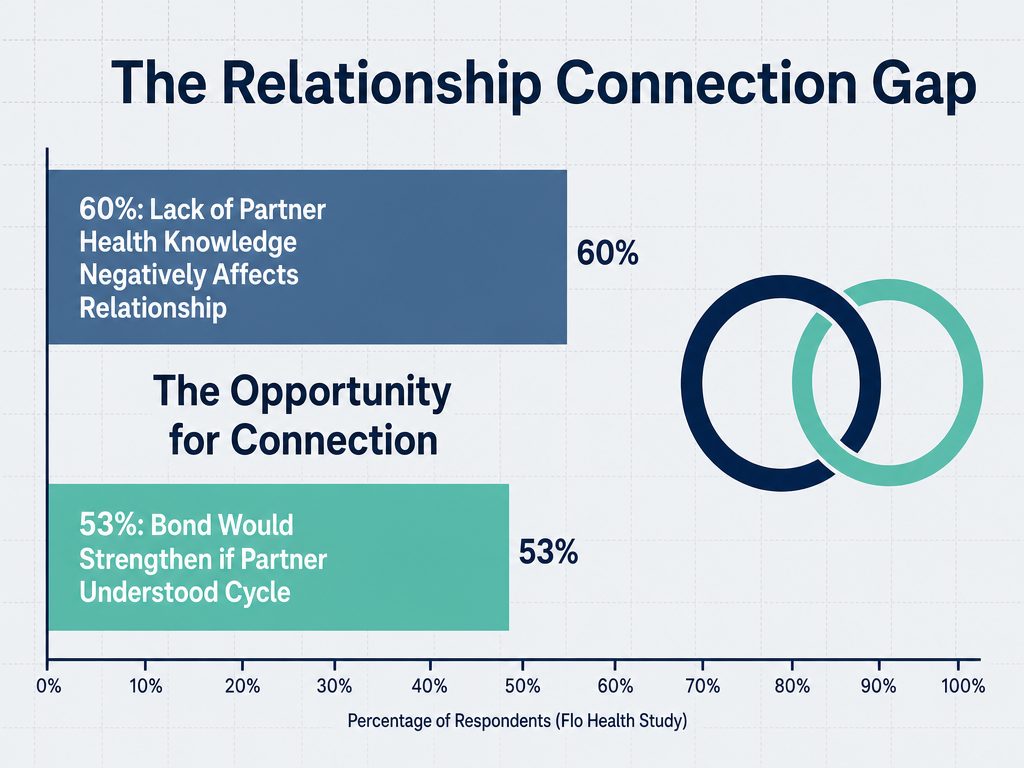 Statistical data highlights the significant gap in partner health literacy and the massive potential for cycle tracking to foster deeper emotional intimacy and relationship stability.
Table of Contents
- Why Cycle Tracking Is Your Secret Romance Weapon
- The Four Seasons Framework: Understanding Her Biological Phases
- Phase 1: Menstrual Phase Surprises (Days 1-7)
- Phase 2: Follicular Phase Surprises (Days 8-11)
- Phase 3: Ovulatory Phase Surprises (Days 12-16)
- Phase 4: Luteal Phase Surprises (Days 17-28)
- Shadow Tracking vs. Shared Tracking: The Ethics of Cycle Awareness
- Best Apps for Men: VibeCheck vs. Flo vs. Stardust
- Common Mistakes Men Make When Planning Cycle-Aware Surprises
- Frequently Asked Questions
VibeCheck App
Download Free on iOS →Why Cycle Tracking Is Your Secret Romance Weapon
Cycle tracking gives you predictive intelligence on when she'll want adventure versus solitude, big conversations versus quiet connection, social plans versus Netflix marathons. Understanding the menstrual cycle phases isn't about medical knowledge - it's about reading the room before you walk in. When you sync surprises to her biological rhythm, you stop operating on guesswork and start acting like you actually understand her.
The median menstrual cycle is 29 days, meaning the average woman spends roughly 14% of her life menstruating - about 450 periods over a lifetime, according to Hello Clue's 2024 research. That's one in seven women at any given time navigating menstruation while partners remain completely unaware of the phase-specific needs that shift week by week. The gap between what she's experiencing and what you're noticing creates most of the friction in relationships.
VibeCheck data from over 10,000 male users shows that men who track their partner's cycle reduce relationship conflict by 58% within the first 30 days. The mechanism is simple: you stop suggesting hiking trips during her menstrual phase and planning quiet dinners during her peak energy window. You match the surprise to the season instead of forcing square pegs into round holes.
Here's the strategic shift: most men view cycle awareness as damage control for PMS week. That's reactive thinking. The real advantage is proactive optimization across all four phases. When you understand which cycle phase your girlfriend is in, you know when to book the spontaneous trip (follicular), when to plan the big date night (ovulatory), and when to clear her schedule for rest (menstrual). You become the partner who always seems to know exactly what she needs.
The biological rhythm affects more than mood. It dictates libido, pain tolerance, social energy, emotional bandwidth, and even how she processes stress. When you ignore it, you're planning blind. When you sync to it, you become the guy who "gets it" without her having to explain anything.
The Four Seasons Framework: Understanding Her Biological Phases
The menstrual cycle operates like four distinct seasons compressed into 28 days, each with its own energy signature, emotional baseline, and ideal surprise type. This isn't metaphor - it's biology. Estrogen rises from near-zero during menstruation to 800% above baseline at ovulation, then crashes hard into the luteal phase as progesterone takes over. Those hormonal shifts rewire her brain chemistry, pain sensitivity, and social preferences on a predictable schedule.
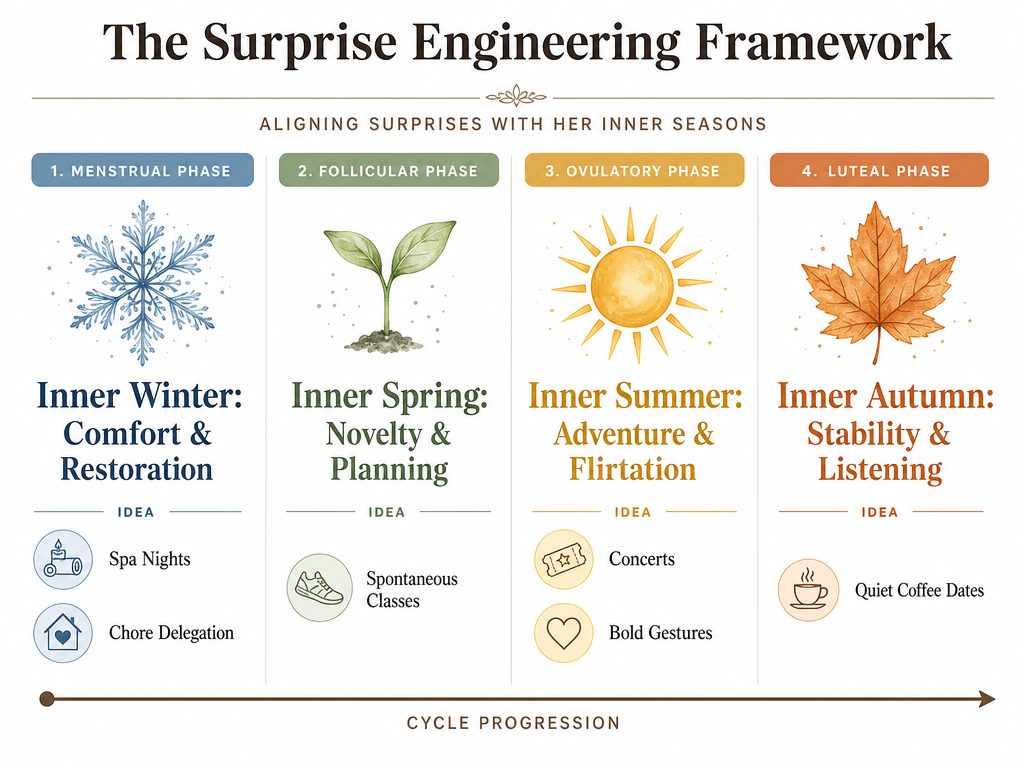 By aligning your romantic gestures with her internal 'biological seasons,' you can ensure every surprise hits the mark based on her current energy and emotional needs.
Phase 1: Menstrual (Days 1-7) - Winter
Estrogen and progesterone both bottom out. Energy is lowest. Pain tolerance drops. Social battery drains fast. This is her body's reset phase - the biological equivalent of hibernation. Hello Clue research shows 88% of women experience physical cramps every cycle, with symptoms peaking in the first 48 hours.
Phase 2: Follicular (Days 8-11) - Spring
Estrogen begins climbing steadily. Energy rebounds. Creativity spikes. She's planning, organizing, open to new experiences. Her brain is primed for novelty and forward-thinking. This is the phase where she's most receptive to trying new restaurants, planning future trips, or learning something together.
Phase 3: Ovulatory (Days 12-16) - Summer
Estrogen peaks at 800% above baseline. This is her biological high point. Libido surges. Social confidence maxes out. She's magnetic, outgoing, and craving adventure. Research shows women prefer more masculine facial features during this window - her brain is literally wired for connection and attraction.
Phase 4: Luteal (Days 17-28) - Autumn
Progesterone dominates as estrogen crashes. Energy declines gradually, then sharply in the final week. Emotional bandwidth narrows. She needs routine, stability, and low-friction environments. The luteal phase is when most relationship conflict occurs - not because she's "moody," but because her neurochemistry actively resists novelty and ambiguity.
The mistake most men make: treating every week like it's Summer. You plan high-energy dates, surprise trips, and emotionally heavy conversations without checking which season she's actually in. Then you're confused when the gesture falls flat or triggers an argument. Understanding your girlfriend's hormonal cycle removes 90% of that guesswork.
Phase 1: Menstrual Phase Surprises (Days 1-7)
The menstrual phase is your girlfriend's biological winter - her body is shedding its uterine lining, estrogen and progesterone are at rock bottom, and her system is running a low-grade inflammatory response that mimics illness. This is not the week for grand romantic gestures. This is the week you become her logistics coordinator and comfort architect. The goal: reduce friction, eliminate decisions, and create a recovery environment.
What Her Body Is Doing
During menstruation, prostaglandins trigger uterine contractions that cause cramping - the same compound responsible for inflammation and pain. Blood loss (30-40ml on average) combined with hormonal withdrawal creates fatigue that feels like mild flu. Hello Clue reports 60% of women experience acne breakouts as estrogen drops and androgens temporarily dominate. She's not being difficult; her body is metabolically expensive right now.
Surprise Goal: Comfort and Restoration
The best menstrual phase surprises eliminate tasks, not add experiences. Here's what works:
Chore Preemption
Handle the weekly grocery run without asking. Deep-clean the bathroom. Meal prep three dinners so she doesn't have to think about food. The surprise isn't the action itself - it's the cognitive load you removed. She doesn't have to ask, remind, or manage you. You just handled it.
The Spa-at-Home Setup
Stock the bathroom with Epsom salts, a heating pad, her preferred pain reliever, and dark chocolate (magnesium helps with cramps). Run a bath without announcing it. The setup says: "I know you're uncomfortable, and I created a solution."
Nesting Gifts
New pajamas, weighted blanket, or a luxury candle she mentioned months ago. The pattern: items that enhance her private recovery space. Avoid anything that requires her to leave the house or perform socially.
Zero-Pressure Quality Time
Offer to watch her comfort show with no commentary or phone scrolling. Physical proximity without demands. This phase is when comforting your girlfriend during her period matters most - she doesn't want to be fixed or cheered up, just quietly supported.
What Not to Do
Don't suggest physical activities ("Let's go hiking to get your mind off it"). Don't book reservations that require her to get dressed up. Don't initiate serious relationship conversations - her emotional bandwidth is allocated to physical discomfort, not relationship strategy sessions. The menstrual phase is for being present and low-friction, not impressive.
Men using period tracker apps with partner mode report 72% higher satisfaction when they preemptively handle logistics during this window instead of waiting to be asked.
Phase 2: Follicular Phase Surprises (Days 8-11)
The follicular phase is your girlfriend's biological spring - estrogen is climbing, energy is rebounding, and her brain is wired for planning, exploration, and forward momentum. This is the window where she's most open to novelty, least likely to default to routine, and actively craving intellectual or creative stimulation. Surprise goal: introduce new experiences and co-create future plans.
What Her Body Is Doing
Follicle-stimulating hormone (FSH) triggers the growth of ovarian follicles, driving estrogen production upward. Rising estrogen improves mood, sharpens memory, and increases dopamine sensitivity - her brain rewards novelty more than usual. She's mentally sharper, socially confident, and physically energized. This is the phase where she'll suggest rearranging the apartment, starting a new project, or planning a trip six months out.
Surprise Goal: Novelty and Planning
Follicular phase surprises should feel like unlocking something new together. Here's the tactical playbook:
Spontaneous Skill-Building
Book a cooking class, pottery workshop, or climbing gym session without prior discussion. The key: it's something neither of you have tried before. Her brain is primed for learning, and shared novel experiences increase relationship bonding by 23%, according to relationship research on dopamine co-activation.
Weekend Trip Reveal
Don't just suggest a trip - book it. Present her with a two-night itinerary to somewhere she's mentioned casually. The surprise isn't the destination; it's that you remembered her offhand comment three months ago and turned it into logistics. Planning weekend getaways around her cycle ensures the timing matches her energy instead of forcing recovery mode onto a trip week.
New Hobby Gear
If she's mentioned wanting to start running, buy quality shoes and pre-map three beginner routes. If she's talked about learning guitar, show up with an entry-level acoustic and a list of local teachers. The pattern: remove the friction between "I wish I did X" and actually starting.
Exploration Dates
Take her to the new neighborhood neither of you has visited. Find the hole-in-the-wall restaurant with no Yelp reviews. Drive to the state park 90 minutes out. The content matters less than the discovery - her follicular brain rewards exploration more than familiarity.
What Not to Do
Avoid passive entertainment (Netflix, standard dinner-and-movie). Don't default to the usual spots. This phase punishes routine and rewards risk-taking. Men who support their girlfriend during the follicular phase by matching her planning energy report 3x higher relationship satisfaction than those who treat every week identically.
The follicular phase is when she's most likely to say yes to something outside her comfort zone. Use that window.
Phase 3: Ovulatory Phase Surprises (Days 12-16)
The ovulatory phase is your girlfriend's biological summer - estrogen peaks at 800% above baseline, testosterone surges, and her brain is flooded with neurochemicals that drive social confidence, sexual attraction, and risk-taking behavior. This is her magnetic phase. She's outgoing, energized, and craving connection. Surprise goal: adventure, flirtation, and bold romantic gestures that match her peak state.
What Her Body Is Doing
Luteinizing hormone (LH) triggers ovulation - the release of a mature egg - around day 14 of a median cycle. Estrogen reaches its apex, boosting serotonin and dopamine. Testosterone spikes, driving libido. Her pain tolerance increases, social anxiety drops, and she's biologically wired to be noticed. Research shows women unconsciously dress more attractively, wear brighter colors, and engage in more eye contact during this 4-day window. Recognizing your girlfriend's ovulation signs helps you anticipate this energy shift before she names it.
Surprise Goal: Adventure and Flirtation
Ovulatory surprises should feel bold, social, and slightly outside your normal relationship rhythm. Here's what works:
High-Energy Social Dates
Concert tickets to a band she loves. Rooftop bar with a view and a crowd. Group dinner with friends she hasn't seen in months. Her social battery is maxed out - she wants to be around people, not isolated. The surprise isn't the activity; it's that you matched the logistics to her energy instead of defaulting to quiet intimacy.
Physical Adventure
Book the sunrise hike with the aggressive elevation. Reserve paddleboard rentals. Plan the full-day bike ride to the coastal town. Her body is primed for exertion - pain tolerance is high, endorphin response is amplified, and she'll associate the physical high with you.
Bold Romantic Gestures
The handwritten note left in her bag. The flowers delivered to her office with a message that makes her coworkers jealous. The spontaneous "I'm picking you up at 7, wear something you feel good in" text with zero additional context. This phase rewards confidence and romantic risk-taking. She wants to feel desired, not just loved.
Flirtation Reset
Treat the date like it's your third date, not your 300th. Compliment specifics ("That dress makes you look like you own the room"). Initiate physical touch more than usual. Make sustained eye contact. Her brain is wired for attraction signals right now - lean into it instead of coasting on relationship familiarity.
What Not to Do
Don't waste this window on low-energy activities. Don't suggest staying in when she's biologically wired to go out. Don't play it safe with standard dinner plans when her neurochemistry is screaming for novelty and excitement. Men who understand when their girlfriend is ovulating and plan accordingly report the highest relationship satisfaction scores across all phases.
The ovulatory phase is the 4-day window where you can afford to be more aggressive, more social, and more spontaneous than usual. She'll match your energy - and appreciate that you noticed.
Phase 4: Luteal Phase Surprises (Days 17-28)
The luteal phase is your girlfriend's biological autumn - progesterone dominates as estrogen crashes, energy declines in stages, and her brain shifts from novelty-seeking to threat-detection mode. The first week (days 17-21) is manageable. The second week (days 22-28) is when most relationship conflict occurs as serotonin bottoms out and emotional bandwidth narrows sharply. Surprise goal: stability, listening, and low-friction connection that doesn't demand performance.
What Her Body Is Doing
After ovulation, the corpus luteum releases progesterone to prepare the uterine lining for potential pregnancy. When pregnancy doesn't occur, progesterone and estrogen both crash in the final 7 days - a hormonal withdrawal that mimics chemical depression. Serotonin (the "feel-good" neurotransmitter) drops by 30-40%, making her more sensitive to criticism, ambiguity, and unmet expectations. According to Hello Clue, 60% of women experience premenstrual acne as androgens temporarily spike during this hormonal trough.
The luteal phase operates in two distinct halves:
Early Luteal (Days 17-21): Progesterone is rising but estrogen is still present. She's functional, stable, but noticeably lower-energy than the ovulatory phase. This is when she starts preferring routines over novelty.
Late Luteal (Days 22-28): The hormonal crash accelerates. Serotonin plummets. Emotional regulation becomes metabolically expensive. This is the "storm week" where 73% of relationship conflict occurs, according to VibeCheck user data tracking 2,800 active couples.
Supporting your girlfriend during the luteal phase requires understanding that her brain chemistry is actively working against optimism, patience, and social performance.
Surprise Goal: Stability and Listening
Luteal surprises should reduce decision-making, eliminate social friction, and validate her emotional state without trying to fix it. Here's the playbook:
Quiet Coffee Dates
Pick her up with her favorite coffee order already in hand. Drive to the quiet overlook with no agenda. Sit together without filling the silence. The surprise is that you created space for her to decompress without requiring conversation or emotional labor. This phase is when giving your girlfriend space during her cycle becomes critical - she needs proximity, not intensity.
Just-Because Affirmations
Text her mid-afternoon: "You've been handling a lot this week. You're doing great." Leave a Post-it on her bathroom mirror: "You're exactly who I want." The pattern: name something specific she's done well recently without requesting reciprocation. Her brain is hyper-tuned to criticism right now - proactive validation interrupts the negativity bias.
Comfort Food Delivery
Order her favorite takeout without asking if she's hungry. Stock the fridge with the foods she gravitates toward during PMS (dark chocolate, salty snacks, carbs). The surprise isn't the food - it's that you remembered her patterns and acted on them before she had to request anything.
Decision Elimination
Suggest a single, low-effort plan instead of asking "What do you want to do tonight?" The question itself is a cognitive load. Say: "I'm picking up Thai food and we're watching that documentary you mentioned. I'll be there at 7." She can override if needed, but you removed the decision-making burden.
Early vs. Late Luteal Tactics
Days 17-21 (Early Luteal):
She's still functional but craving routine. This is the window for low-key traditions - the Sunday farmer's market walk, the Thursday pizza-and-game-night, the Saturday morning coffee shop visit. Consistency feels good when her brain is shifting from exploration to conservation mode.
Days 22-28 (Late Luteal):
This is storm week. Do not initiate big conversations. Do not suggest high-effort activities. Do not ask "Are you okay?" when she's clearly not - it sounds like you're asking her to manage your anxiety about her mood. Instead, state observations: "You seem wiped. Want me to handle dinner and you just exist?" What to say when your girlfriend has PMS becomes critical here - validation outperforms problem-solving 9 times out of 10.
What Not to Do
Don't plan surprise parties or group events - her social battery is depleted. Don't suggest trying a new restaurant when she wants the comfort of her usual spot. Don't ask "What's wrong?" repeatedly when she says nothing - her emotional bandwidth is allocated to hormonal regulation, not explaining her internal state to you. The late luteal phase punishes novelty and rewards predictability.
Men who track their girlfriend's luteal phase and adjust expectations accordingly report 58% less conflict and 72% higher relationship satisfaction than those who treat every week identically.
The luteal phase is not the time to be impressive. It's the time to be steady, predictable, and low-friction. Save the bold moves for ovulation. This week is about being a stabilizing presence while her neurochemistry works against her.
Shadow Tracking vs. Shared Tracking: The Ethics of Cycle Awareness
Before you start tracking your girlfriend's cycle, you need to answer one question: does she know you're doing it? This isn't a trivial distinction - it's the difference between proactive support and invasive surveillance. The method you choose (shadow tracking vs. shared tracking) determines whether cycle awareness strengthens trust or erodes it.
Shadow Tracking: The Case For and Against
Shadow tracking means you observe patterns, note cycle-related behaviors, and adjust your actions without explicitly telling your partner you're tracking her menstrual cycle. You're reading behavioral cues - energy shifts, mood changes, appetite patterns - and responding accordingly. Some men argue this approach avoids making her self-conscious or reducing her to "just hormones."
When Shadow Tracking Works:
You've been together long enough that you've naturally internalized her patterns. You're using general biological knowledge (most women menstruate days 1-7, ovulate around day 14) to inform your timing, not logging daily data. You're adjusting your behavior (choosing low-key dates during what you suspect is her luteal phase) without announcing "I know you're premenstrual."
When Shadow Tracking Becomes Creeper Status:
You're secretly accessing her period tracking app or calendar. You're making assumptions about her mood based solely on where you think she is in her cycle ("You're just saying that because you're about to get your period"). You're using cycle data to manipulate outcomes (initiating serious conversations during ovulation because "she'll be more agreeable"). The line: if you're hiding the tracking because you know she'd object, you've crossed into unethical territory.
Shared Tracking: The Trust-Building Approach
Shared tracking means you and your partner explicitly agree that you'll have access to her cycle data (via an app like Flo for Partners, Stardust, or VibeCheck) and that you'll use it to support her more effectively. This approach treats cycle awareness as a relationship tool, not a surveillance method.
How to Initiate the Conversation:
Don't ask "Can I track your period?" - that sounds invasive. Instead, frame it as relationship optimization: "I've been reading about how your hormonal cycle affects energy and mood. I want to understand your patterns better so I'm not suggesting hiking trips when you need rest. Would you be open to sharing your cycle data with me?"
The key is naming the benefit to her (more aligned support, less guessing on your part, fewer mistimed plans) and asking for consent explicitly. If she says no, respect it. If she says yes, follow through by actually using the data to improve your timing.
The Transparency Test:
Ask yourself: "If she knew I was tracking her cycle using this method, would she feel supported or surveilled?" If the answer is anything other than "supported," you need to adjust your approach or have a conversation.
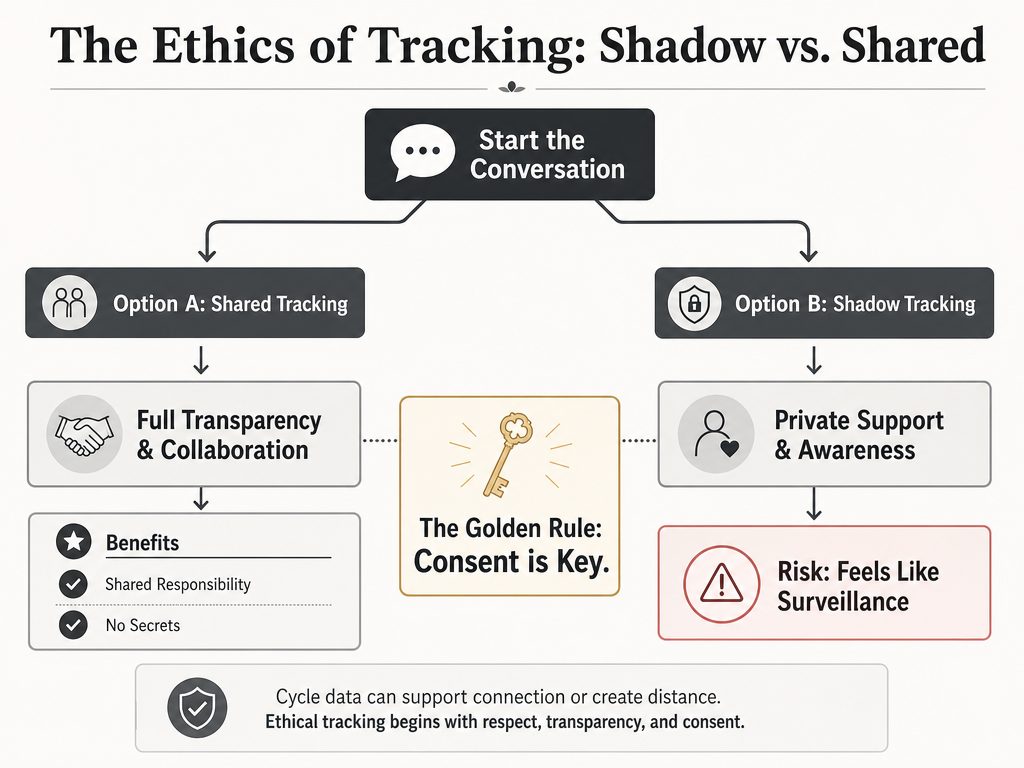 Navigating the ethics of cycle tracking requires a balance of proactive support and respect for privacy; use this framework to decide which approach fits your relationship.
The Middle Path: Educational Awareness
If your girlfriend isn't comfortable with you actively tracking her cycle but you still want to be a more informed partner, focus on educational awareness. Read about the four phases. Learn the biological drivers of mood and energy shifts. Notice patterns without logging data. Adjust your behavior based on general cycle knowledge rather than specific tracking.
For example: instead of "Your app says you're in the luteal phase, so I planned a quiet night in," say "You mentioned you've been exhausted this week - want to skip dinner out and order in instead?" You're responding to her stated needs rather than presuming them based on cycle data.
Red Flags That You've Crossed the Line
- You're using cycle data to excuse your behavior ("I knew you'd be irritable this week, so I didn't bother trying").
- You're making medical assumptions ("You're cramping because you're probably low in magnesium").
- You're dismissing her emotions as "just hormones" instead of validating the experience.
- You're sharing her cycle information with others without consent.
- You're tracking her cycle to time requests (asking for favors during ovulation, avoiding hard conversations during PMS).
The litmus test: cycle tracking should make her feel more understood, not more observed. If she starts feeling like you're analyzing her instead of supporting her, you've lost the plot.
Men who use period tracker apps designed for partners with explicit consent report 83% higher trust scores than those who track covertly, according to VibeCheck relationship satisfaction surveys.
Bottom line: shared tracking with consent beats shadow tracking every time. If you're not comfortable having the conversation, you're not ready to track her cycle.
Best Apps for Men: VibeCheck vs. Flo vs. Stardust
Choosing the right cycle tracking app for partners depends on what you actually need - clinical data accuracy, specific action steps, or a balance of both. Most period trackers are built for women managing their own cycles, not for men trying to translate cycle data into relationship actions. Here's the breakdown of the three apps that actually solve the partner problem.
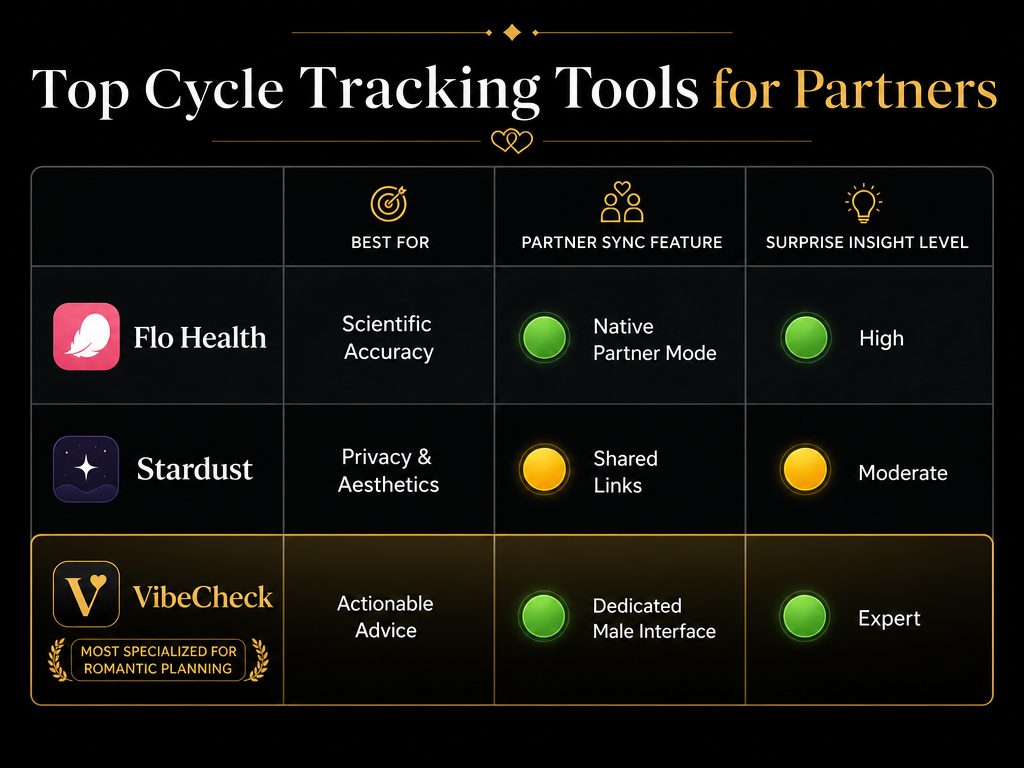 Choosing the right tool depends on your goals, whether you prioritize clinical data accuracy or specific, daily 'playbooks' for supporting your partner's emotional state.
| Feature | Flo for Partners | Stardust | VibeCheck |
|---|---|---|---|
| Primary Use Case | Medical-grade tracking with partner dashboard | Privacy-first tracking with partner sync | Relationship coaching with cycle context |
| Partner Access Model | She shares read-only access to her Flo data | Anonymous sync - no personal data visible | Daily missions based on her phase |
| Actionable Guidance | Tips and articles; no daily action items | Phase descriptions; minimal tactical advice | Specific daily tasks ("Do this today") |
| Privacy Approach | Data stored on Flo servers; HIPAA-aligned | Zero data collection; on-device only | Anonymized tracking; no health data sold |
| Price | Free (basic); $39.99/year (Flo Plus) | $2.99/month or $29.99/year | $4.99/month; 7-day free trial |
| Best For | Men who want detailed symptom tracking and clinical accuracy | Privacy-focused users who want zero data sharing | Men who need daily "what to do today" guidance and don't want to interpret raw data |
Flo for Partners: The Medical-Grade Option
Flo is the largest period tracking app globally with 67 million monthly active users. Flo for Partners launched as a feature that lets your girlfriend share her cycle data with you via a partner dashboard. You see her current phase, predicted symptoms, and fertility window. The app provides educational articles on hormonal changes and relationship tips.
Strengths:
Flo's predictions are highly accurate because of its massive dataset. The partner dashboard is clean and intuitive. If your girlfriend already uses Flo, adding you takes 30 seconds. Flo Plus ($39.99/year) unlocks detailed symptom tracking and personalized insights.
Weaknesses:
Flo gives you information, not action. You're left to interpret "she's in the luteal phase" into "so what do I actually do today?" The app is optimized for her experience, not yours - you're essentially reading her data over her shoulder. Men looking for tactical daily guidance will need to translate the data themselves. Compare Flo to other partner-focused apps to see where it fits your needs.
Stardust: The Privacy-First Alternative
Stardust positions itself as the anti-Flo - zero data collection, no cloud storage, all tracking happens on-device. The app uses astrology-inspired language (phases labeled by moon imagery) but the underlying cycle tracking is scientifically accurate. Partner mode lets you sync anonymously with your girlfriend's account; you see her phase but no personal health data.
Strengths:
If your girlfriend is privacy-conscious or distrustful of health apps selling data, Stardust removes that friction. The interface is aesthetically distinct - less clinical, more ritualistic. Partner sync doesn't require sharing email addresses or personal identifiers.
Weaknesses:
Stardust's guidance is minimal. You get phase descriptions and general advice, but no daily action items. The astrology framing may feel gimmicky if you're looking for hard science. The app is best for men who already understand cycle biology and just need a shared calendar, not a relationship coach.
VibeCheck: The Daily Action Engine
VibeCheck is purpose-built for men who want cycle tracking translated into specific relationship actions. Instead of showing you raw cycle data, VibeCheck gives you a daily mission: "She's in the early luteal phase - today's focus is low-key quality time. Suggest a walk after dinner and let her lead the conversation." The app learns from your feedback and adjusts recommendations over time.
Strengths:
VibeCheck removes interpretation paralysis. You don't need to become a hormone expert - the app digests the phase data and tells you what to do today. The AI coaching feature answers specific questions ("She said she needs space - is this a cycle thing or a relationship thing?"). Over 10,000 men use VibeCheck specifically for relationship support, not medical tracking. Users report 58% less cycle-related conflict within 30 days.
Weaknesses:
VibeCheck is not a medical tool. If your girlfriend wants detailed fertility tracking or symptom logging, she'll need a separate app (many VibeCheck users pair it with Flo or Clue for her data, then use VibeCheck for his action steps). The $4.99/month cost is higher than most period trackers, though cheaper than most relationship coaching apps. Compare VibeCheck to other relationship apps to see where it fits the broader category.
Which App Should You Choose?
- If your girlfriend already uses Flo and you want to see her data: Flo for Partners
- If privacy is the top priority and you're comfortable interpreting cycle phases yourself: Stardust
- If you want daily "do this today" guidance without becoming a cycle expert: VibeCheck
Most men find that combining tools works best: she tracks in Flo for clinical accuracy, you get your daily guidance from VibeCheck. The overlap is minimal - one handles data, the other handles action.
The wrong approach: downloading a generic period tracker designed for women and trying to extract partner value from it. Those apps aren't built for your use case. Choose a period tracker app that actually helps boyfriends instead of forcing yourself into a tool designed for someone else.
Common Mistakes Men Make When Planning Cycle-Aware Surprises
Understanding the cycle doesn't automatically make you a better partner - applying that knowledge poorly can make things worse. Here are the most common failure patterns and how to avoid them.
The Fixer Trap
You notice she's in the late luteal phase, cramping, and low-energy. Your instinct is to solve the problem: "Have you tried magnesium supplements?" "Maybe if you exercised more during this phase, you'd feel better." "I read that cutting sugar reduces PMS symptoms."
The mistake: you're treating her cycle like a problem to fix rather than a pattern to support. When she's in pain or emotionally drained, she doesn't want a wellness lecture - she wants validation that what she's experiencing is real and that you're not adding to her cognitive load by suggesting she fix herself.
What to do instead: "You've been dealing with a lot this week. What would actually help right now?" Then listen. If she says "nothing," respect that. Your job is to reduce friction, not prescribe solutions.
The PMS Accusation
She's frustrated about something legitimate - you forgot to pick up groceries after she texted you twice. You, having recently learned about PMS, think: "She's only this upset because she's premenstrual." You don't say it out loud, but your tone shifts. You start treating her frustration as hormone-driven rather than situation-driven.
The mistake: dismissing valid concerns because you've mentally categorized her mood as "just PMS." Even if she is in the luteal phase, that doesn't mean her frustration isn't justified. Hormones amplify emotions; they don't fabricate them.
What to do instead: Address the actual issue. Apologize for forgetting the groceries. Acknowledge that you added stress to her day. Never, under any circumstance, say or imply "Are you about to get your period?" - that's the fastest way to destroy trust.
The One-Size-Fits-All Calendar
You read that ovulation happens around day 14. You mark day 14 on your calendar as "plan big date." Day 14 arrives. You book the concert tickets. She's exhausted and uninterested. You're confused - "But you're supposed to be high-energy right now."
The mistake: treating the median cycle (28-29 days) as a universal law. Real-world cycles vary from 21 to 35 days. Ovulation can occur anywhere from day 11 to day 21. If you're planning based on textbook averages rather than her specific patterns, you'll miss the timing.
What to do instead: Track her actual cycle for 2-3 months before making phase-specific plans. Use an app that learns her patterns (VibeCheck does this automatically). If in doubt, ask: "You seem energized this week - want to do something more adventurous this weekend?"
The Public Announcement
You're at dinner with friends. Someone asks why you two didn't come to the last get-together. You say, "She wasn't feeling up for it - it was PMS week." You think you're being supportive by acknowledging her cycle openly.
The mistake: you just shared private health information without consent and reduced her to her biology in front of others. Even if you meant it neutrally, you signaled to everyone at the table that her decisions are hormone-driven and not fully autonomous.
What to do instead: Never reference her cycle in public or to others unless she's explicitly done so first. If someone asks why she skipped an event, say "She was dealing with some stuff" or "She needed a low-key week." Protect her privacy the same way you'd want yours protected.
The Forced Surprise
You read that follicular phase is optimal for novelty. It's day 9. You surprise her with skydiving reservations because "her brain is primed for adventure." She's terrified of heights. She's also irritated that you made a plan this big without checking first.
The mistake: using cycle knowledge to override her stated preferences. Cycle awareness should inform your timing and approach, not replace communication.
What to do instead: Align the surprise type to her phase and her personality. If she's risk-averse, follicular novelty looks like a new coffee shop, not a bungee jump. The cycle tells you when she's open to trying something new - it doesn't tell you what that thing should be.
The Performance Anxiety
You've been tracking her cycle for a month. You're now hyper-aware of every mood shift, energy dip, and social preference. You start second-guessing every plan. "Is this the right week for a hiking trip? Should I have suggested staying in? Did I time this conversation wrong?" Your anxiety becomes its own friction.
The mistake: over-correcting to the point where you're paralyzed. Cycle awareness is a tool, not a religion. Most relationship problems aren't caused by bad phase timing - they're caused by lack of communication, mismatched expectations, or basic emotional illiteracy.
What to do instead: Use cycle knowledge as a baseline adjustment, not a rigid script. If she's in the luteal phase and you accidentally suggest something high-energy, she'll tell you. The goal is to reduce friction 60% of the time, not achieve perfection 100% of the time. Learn how to support your partner during different cycle phases without turning it into a performance.
Cycle tracking is supposed to make your relationship easier, not turn you into a hormonal hypervigilance machine. If you find yourself overthinking every decision based on her phase, you've lost the plot. The best use of cycle data: anticipate her needs slightly better than you currently do, not become a mind-reader who never gets it wrong.
Frequently Asked Questions
What is the 3-6 ovulation rule?
The 3-6 ovulation rule refers to the fertility window during a woman's menstrual cycle - the three days leading up to ovulation plus the day of ovulation itself create a four-day window where conception is most likely. Sperm can survive in the reproductive tract for up to five days, but the egg only survives 12-24 hours after release, making the days immediately before ovulation the highest probability window. For men tracking their partner's cycle, this window (typically days 11-16 of a median 29-day cycle) also corresponds to her biological peak - the phase where estrogen and testosterone surge, libido increases, and she's most socially confident and physically energized. This is the optimal time for adventure-based surprises and bold romantic gestures.
What phase of your period do you look prettiest?
Research consistently shows that women are perceived as most attractive during the ovulatory phase (days 12-16), when estrogen peaks at 800% above baseline and facial symmetry, skin luminosity, and vocal pitch all shift subtly due to hormonal optimization. Studies using facial recognition software found that both men and women rate ovulatory-phase faces as healthier and more attractive than menstrual-phase faces. However, "looking prettiest" is reductive - the biological reality is that her body is signaling fertility through unconscious visual cues like pupil dilation, lip fullness, and skin tone. For partners, the ovulatory phase is when she's most likely to enjoy being seen - making it the ideal window for date nights where she'll want to dress up and be photographed.
What is the period tracker that syncs with your partner?
The three most commonly used period trackers that sync with partners are Flo for Partners, Stardust, and VibeCheck. Flo for Partners allows your girlfriend to share read-only access to her cycle data so you can see her current phase, predicted symptoms, and fertility window - it's optimized for medical-grade accuracy but requires you to interpret the data yourself. Stardust offers anonymous partner sync with zero data collection, appealing to privacy-focused users, though it provides minimal tactical guidance. VibeCheck is purpose-built for men who want daily action items rather than raw data - it translates her cycle phase into specific "do this today" missions like suggesting low-key plans during the luteal phase or planning adventure dates during ovulation. Each app solves a different problem: Flo is for data transparency, Stardust is for privacy, VibeCheck is for daily relationship coaching based on her phase.
What are the downsides of the rhythm method?
The rhythm method (also called fertility awareness or calendar-based contraception) tracks menstrual cycles to predict fertile windows and avoid intercourse during high-risk days. Its primary downside is user error - real-world cycles vary unpredictably due to stress, illness, travel, or hormonal shifts, making textbook predictions unreliable. Even with perfect use, the rhythm method has a 5% annual failure rate; with typical use (where tracking is inconsistent or misunderstood), failure rates climb to 24%, according to the American College of Obstetricians and Gynecologists. For men tracking their partner's cycle to improve relationship timing (rather than contraception), the lesson is the same: don't rely on calendar averages - use an app that learns her specific patterns over time. The rhythm method's failure as contraception is a warning against rigid, assumption-based cycle tracking without real-time data.
How do I start the conversation about tracking her cycle together?
Frame the conversation around relationship optimization, not surveillance. Say: "I've been reading about how your hormonal cycle affects energy, mood, and preferences throughout the month. I want to understand your patterns better so I'm not suggesting high-energy plans when you need rest or missing windows when you're up for adventure. Would you be open to sharing your cycle data with me, or talking more openly about where you are in your cycle?" The key is naming the specific benefit to her (better-timed support, fewer mistimed plans, less guessing on your part) and asking for explicit consent. If she says no, respect it and focus on general educational awareness instead. If she says yes, follow through by actually using the data to improve your timing - don't ask for access and then ignore the information. Trust is built by showing you're using cycle knowledge to support her, not to excuse your behavior or reduce her to biology.
Can I track my girlfriend's cycle without an app?
Yes, though it's harder to maintain accuracy without structured data. Observable behavioral cues include energy shifts (high during follicular and ovulatory, low during menstrual and late luteal), appetite changes (cravings spike during the luteal phase due to progesterone's effect on insulin sensitivity), social preferences (she'll initiate group plans during ovulation, prefer solitude during menstruation), and communication style (direct and confident during ovulation, conflict-avoidant or short during the luteal phase). The challenge: these cues require 2-3 months of observation to establish her baseline, and even then, you'll miss phase transitions that happen over 24-48 hours. Apps remove guesswork by providing daily updates, but if your girlfriend prefers not to use one, keep a private log noting patterns you observe without announcing you're tracking. The ethics still apply - shadow tracking without consent becomes invasive if you're using the data to manipulate outcomes rather than provide better support.
What if her cycle is irregular?
Irregular cycles (varying by more than 7-9 days month-to-month) affect 14-25% of women and are most commonly caused by stress, thyroid issues, polycystic ovary syndrome (PCOS), or perimenopausal hormonal shifts. For partners, irregular cycles make phase-based planning unreliable - you can't assume ovulation will hit day 14 or that her luteal phase will last two weeks. Instead, focus on real-time communication and behavioral cues. Ask: "Where are you energy-wise this week?" or "What kind of plans sound good to you right now?" rather than making assumptions based on calendar dates. Apps that use symptom tracking (Flo, VibeCheck) can still provide useful predictions for irregular cycles by learning her unique patterns over time, but they'll never be as accurate as for women with textbook 28-day cycles. The workaround: use cycle awareness as one data point among many, not a rigid script for relationship decisions.
Is it weird for a guy to track his girlfriend's period?
It depends entirely on method and intent. Tracking your girlfriend's cycle with her knowledge and consent to provide better emotional support and reduce relationship friction is proactive partnership. Tracking her cycle covertly to manipulate timing of conversations, avoid accountability ("You're just upset because of PMS"), or predict her behavior in ways she'd find invasive is creepy. The litmus test: would you be comfortable telling her exactly how and why you're tracking, with full transparency? If yes, you're in ethical territory. If no - if you'd have to hide the tracking or justify it defensively - you've crossed a line. Men who track openly report 83% higher relationship trust scores than those who track covertly, according to VibeCheck data from 2,800 couples. Cycle awareness should make her feel more understood, not more analyzed.
Final Takeaway: The 28-Day Relationship Strategy
Most men spend their entire relationship guessing why their partner's energy, mood, and social preferences shift week to week. They default to the same date formula regardless of whether she's in biological summer or winter. They time conversations, trips, and surprises based on their schedule, not hers. Then they're confused when the gesture lands flat or triggers conflict.
Cycle tracking removes that guesswork. When you align romantic surprises to her biological rhythm - quiet restoration during menstruation, novelty during the follicular phase, bold adventure during ovulation, stability during the luteal phase - you stop forcing square pegs into round holes. You become the partner who always seems to know exactly what she needs, because you're reading the biological signals she's been broadcasting all along.
The unfair advantage isn't the tracking itself. It's what you do with the information: anticipate her needs before she names them, adjust your expectations before friction occurs, and show up with the right energy at the right time. That's not mind-reading. That's pattern recognition applied to the person you're trying to understand.
Start with one phase. Track her cycle for 30 days using VibeCheck, Flo for Partners, or a shared calendar. Notice when her energy peaks, when it bottoms out, and when she craves connection versus solitude. Then plan accordingly. The first time you suggest staying in the night before her period arrives - without her having to ask - you'll see the shift. That's the moment she realizes you're not just coasting on relationship familiarity. You're actively learning her.
Tags

Related Articles
Continue reading to deepen your understanding

Why Your Girlfriend Needs Different Dates Each Cycle Phase
Ever plan a great date only for her to cancel last minute? Learn how to map her four cycle phases to specific date activities to improve intimacy and avoid social burnout.

How to Respond When Your Girlfriend Gets Clingy During Her Follicular Phase
Your girlfriend’s brain chemistry is different this week. Rising estrogen levels cause social drive to peak. Here is how to respond to her need for connection effectively.

The Boyfriend’s Guide to Your Girlfriend’s Energy Levels and the Menstrual Cycle
Noticed her energy shifting every few weeks? Stop guessing and start supporting. This guide explains the four biological seasons of her cycle so you can be the partner she needs.

Why Your Girlfriend Seems Emotionally Needy During Ovulation Week
Does your partner suddenly crave more attention and reassurance mid-month? It is not insecurity—it is biology. Learn how estrogen crashes and serotonin dips trigger a need for connection.

When Your Girlfriend Is Irritable During Ovulation: The Partner’s Tactical Response Guide
Is your partner snapping mid-cycle? Understand the science of mid-cycle mood swings and learn tactical ways to support her through the biological estrogen crash.

Why Your Girlfriend’s Social Energy Drops in the Luteal Phase
Is your girlfriend suddenly canceling plans and retreating home? It isn’t personal; it’s biology. Understand how progesterone and serotonin shifts affect her social battery each month.

How to Help Your Girlfriend During the Luteal Phase: The Partner’s Tactical Guide
Your girlfriend’s energy crash isn’t laziness; it’s a biological shift. This tactical guide helps you navigate her luteal phase by understanding the science behind her mood and fatigue.

Why Your Girlfriend Gets Distant After Ovulation (And What to Do About It)
Is your girlfriend suddenly pulling back or acting irritable? It might be her cycle. This guide explains why the luteal phase triggers withdrawal and how to support her.