Supporting Your Partner: How to Help Your Girlfriend with Hormone Headaches and Timing

Hormonal headaches follow a predictable 5-day biological window. Use this guide to identify the red zone and learn how to support your girlfriend before the pain peaks.
How to Help Your Girlfriend With Hormone Headaches: A Timing and Support Guide
Your girlfriend just canceled weekend plans. Again. She's in the dark with an ice pack pressed against her forehead, and you're wondering what you could have done differently. The truth is, hormonal headaches aren't random attacks - they follow a predictable biological window. Understanding when they're most likely to strike and what actually helps during the peak can transform you from a confused bystander into a strategic ally.
This guide explains the science behind hormone-triggered headaches, identifies the exact five-day window when they're most likely to occur, and gives you concrete actions to take before, during, and after an attack.
Table of Contents
- What Are Hormone Headaches?
- The Five-Day Red Zone: When to Expect Them
- The Environmental Scouting Checklist
- The Recovery Kit: What to Have Ready
- The Task Rabbit Protocol: Taking the Mental Load Off
- What Makes Hormonal Headaches Worse
- Long-Term Support Strategy
- Frequently Asked Questions
What Are Hormone Headaches?
Hormone headaches - often called menstrual migraines - are triggered by the sharp drop in estrogen that happens right before her period starts. Estrogen affects many body systems, including brain function, and when levels plummet, the brain's pain-processing centers become substantially more sensitive.
These aren't "just bad headaches." They're often more intense than typical tension headaches, can last longer (sometimes 72 hours or more), and frequently come with nausea, light sensitivity, and sound sensitivity. Unlike a stress headache that might ease up with ibuprofen and rest, hormonal migraines can be disabling enough to require a completely dark, silent room and prescription medication.
The key difference: timing. If her headaches consistently show up in the same narrow window each month, hormones are almost certainly the trigger.
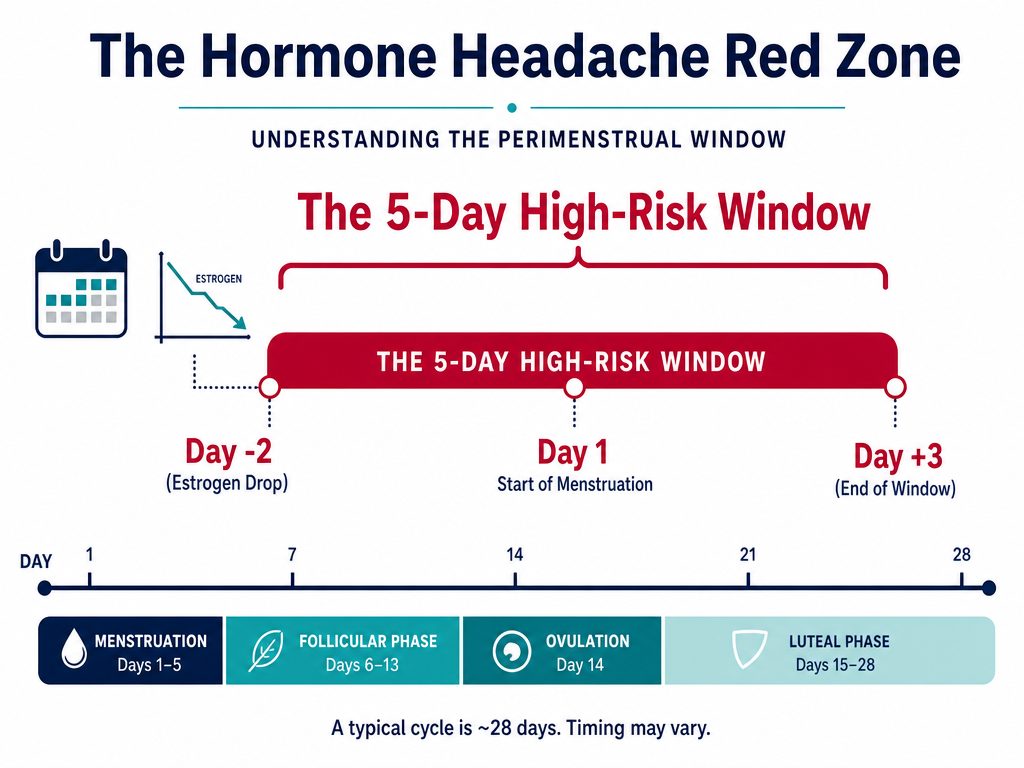 Understanding the 'Red Zone' - the five-day window where estrogen withdrawal is most likely to trigger a migraine - helps you provide support before the pain peaks.
The Five-Day Red Zone: When to Expect Them
The menstrual cycle has four phases - menstrual, follicular, ovulation, and luteal - and hormones rise and fall on a predictable schedule through each one. But for headache prediction, you only need to focus on one critical window.
VibeCheck App
Download Free on iOS →The "perimenstrual window" for hormonal migraines is defined as the 5-day window starting 2 days before menstruation through the 3rd day of bleeding. This is when estrogen withdrawal hits hardest and the brain is most vulnerable to pain signaling.
Here's what that looks like in practice:
- Day -2 (two days before bleeding starts): Estrogen levels begin their sharp decline. Some women start experiencing prodrome symptoms - subtle warning signs like food cravings, neck stiffness, or mood changes.
- Day -1: The estrogen crash accelerates. This is often the highest-risk day for a migraine to start.
- Day 1 (first day of bleeding): Estrogen is at its lowest point. Many women notice PMS-like symptoms in the days before their period, and the headache may already be underway.
- Day 2-3: Estrogen begins to stabilize, but the migraine can persist for 24-72 hours from its initial trigger.
In clinical studies, 3% of women reported migraine attacks strictly between day -2 and day +2 of the cycle, meaning their headaches only happen in this narrow window - nowhere else in the month.
Keep in mind: a "normal" cycle varies a lot between women - menstrual bleeding can start anywhere from every 24 to every 38 days. Day -2 for her might be Day 25 in one cycle and Day 30 in another. Tracking a few months of data will show you her personal pattern.
The Environmental Scouting Checklist
Your most powerful move happens before the headache even starts. Forty-eight hours before the red zone begins, walk through your shared space and eliminate every sensory trigger you can control. Think of this as defusing landmines before she steps into a minefield.
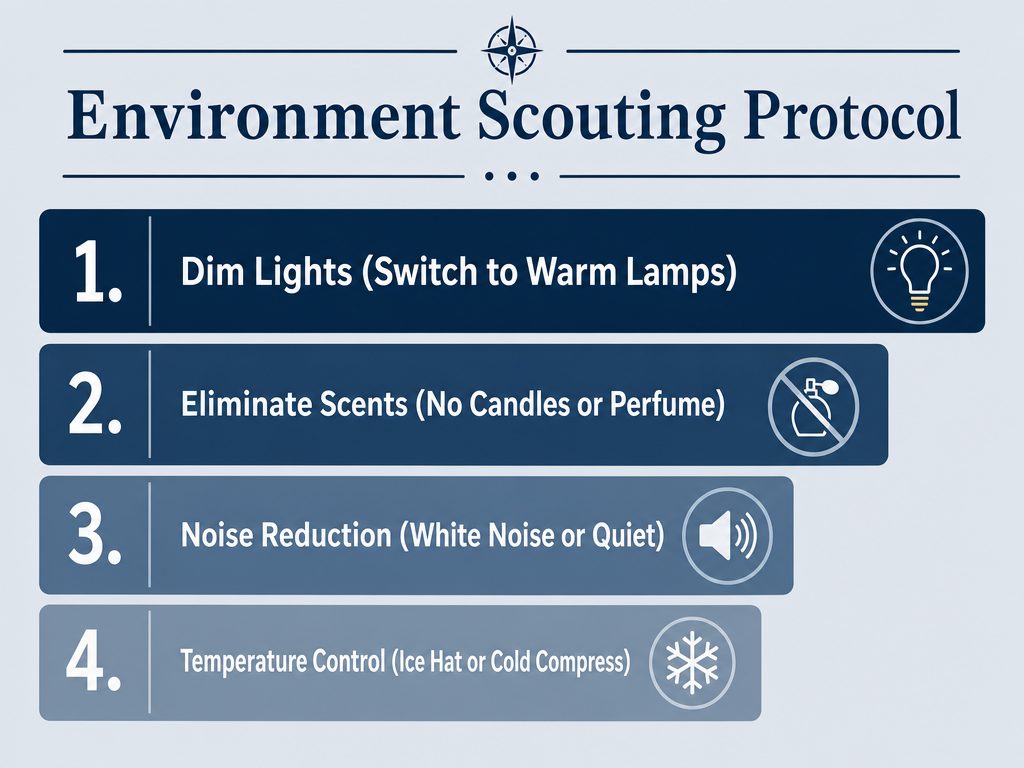 Use this environment scouting protocol to scan the home for potential triggers like bright LEDs or strong scents 48 hours before her window begins.
Lighting
Replace harsh white LED bulbs with warm-toned lamps. Overhead fluorescents are particularly brutal during a migraine - if you can't replace them, have a plan to avoid rooms with that lighting. Blackout curtains in the bedroom aren't optional; they're mission-critical. If she needs to rest during the day, full darkness can make the difference between a manageable headache and a multi-day shutdown.
Scent Control
This is where most partners fail without realizing it. Scented candles, air fresheners, cologne, strong-smelling cleaning products, even the fabric softener you used three days ago - all of these can amplify nausea and pain sensitivity. Two days before her window, switch to unscented everything. If you normally wear cologne or aftershave, skip it. If you're cooking, avoid foods with overpowering smells (garlic, fish, heavily spiced dishes).
Noise Reduction
Sudden loud sounds - a slammed door, a garbage truck at 6 a.m., the TV turned up too high - can feel like physical blows when she's already in pain. Identify recurring noise sources in your home and address them now. Noise-canceling headphones or a white-noise app can help her create a buffer when complete silence isn't possible.
Temperature Control
Some migraine sufferers need cold compresses on the head and neck. Others need warmth. Ask her which works for her body, then have ice packs in the freezer or a heating pad charged and ready to go. Don't wait until she's already in pain to scramble for these items.
Understanding how to help your girlfriend during period mood swings starts with recognizing that physical pain and emotional sensitivity often overlap during this window. Creating a calm environment reduces both.
The Recovery Kit: What to Have Ready
When the headache hits, she shouldn't have to ask you for basic relief supplies. Stock a "migraine kit" in an easy-to-reach spot and keep it refreshed each month.
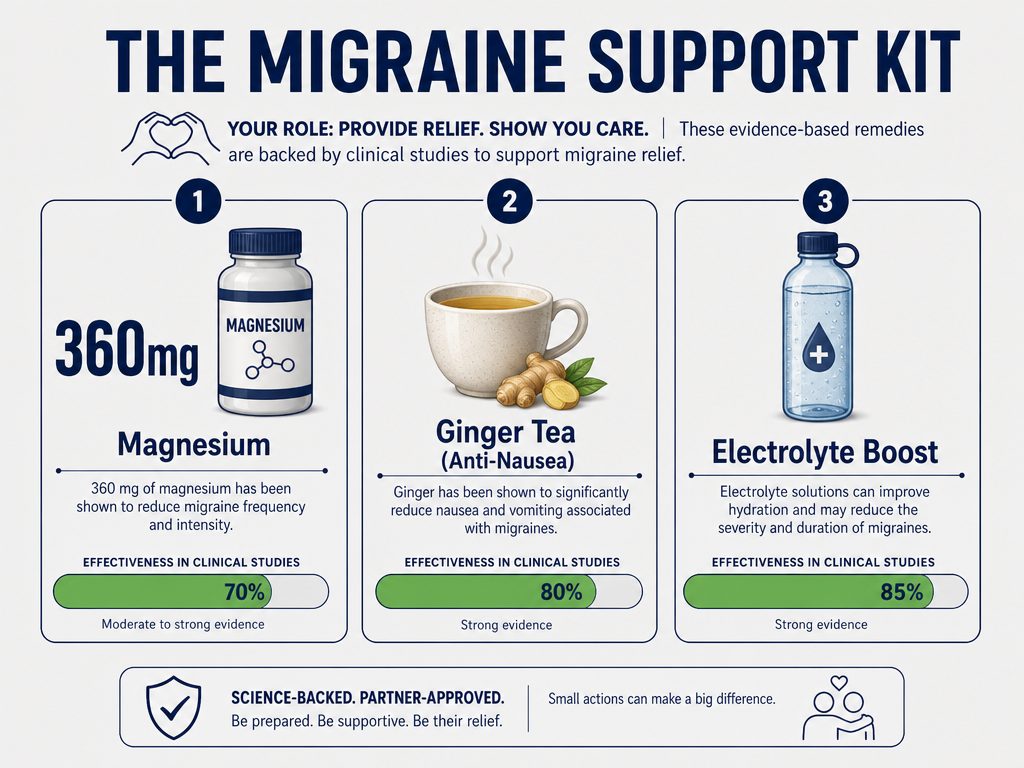 Being prepared with a 'Support Kit' containing Magnesium and Ginger allows you to offer relief without her having to ask during a painful attack.
Magnesium
Magnesium prophylaxis (360mg daily) starting on the 15th day of the cycle has been shown to significantly reduce the number of headache days. This means starting magnesium supplementation about two weeks before her period can decrease the severity and frequency of attacks. Magnesium glycinate or magnesium citrate are generally better absorbed and gentler on the stomach than magnesium oxide.
Talk to her about whether she wants to try this approach. It's not a cure, but it's one of the few supplements with real clinical backing for menstrual migraines.
Ginger for Nausea
Ginger tea or ginger chews can help with the nausea that often accompanies hormone headaches. Have both on hand. Fresh ginger steeped in hot water is ideal, but pre-packaged ginger tea bags work in a pinch.
Hydration and Electrolytes
Dehydration makes migraines worse. Keep electrolyte drinks (not sugary sports drinks - look for low-sugar options with sodium, potassium, and magnesium) in the fridge. Plain water is good; water with balanced electrolytes is better.
Ice Packs and Heating Pads
As mentioned in the environmental section, know which she prefers and have it ready. Gel ice packs that conform to the head and neck are more effective than hard ice cubes in a bag.
Over-the-Counter and Prescription Medications
If she has a go-to medication (ibuprofen, acetaminophen, or a prescription triptan), make sure it's stocked and not expired. Don't make her get up to hunt through the medicine cabinet when she can barely open her eyes.
Learning how to support your girlfriend during ovulation mood changes involves similar preparation - understanding her biological rhythm and having the right tools ready before she asks.
The Task Rabbit Protocol: Taking the Mental Load Off
Physical pain is only half the problem. The other half is the guilt and stress she feels about everything she can't do while she's down. Your job is to eliminate that mental load completely.
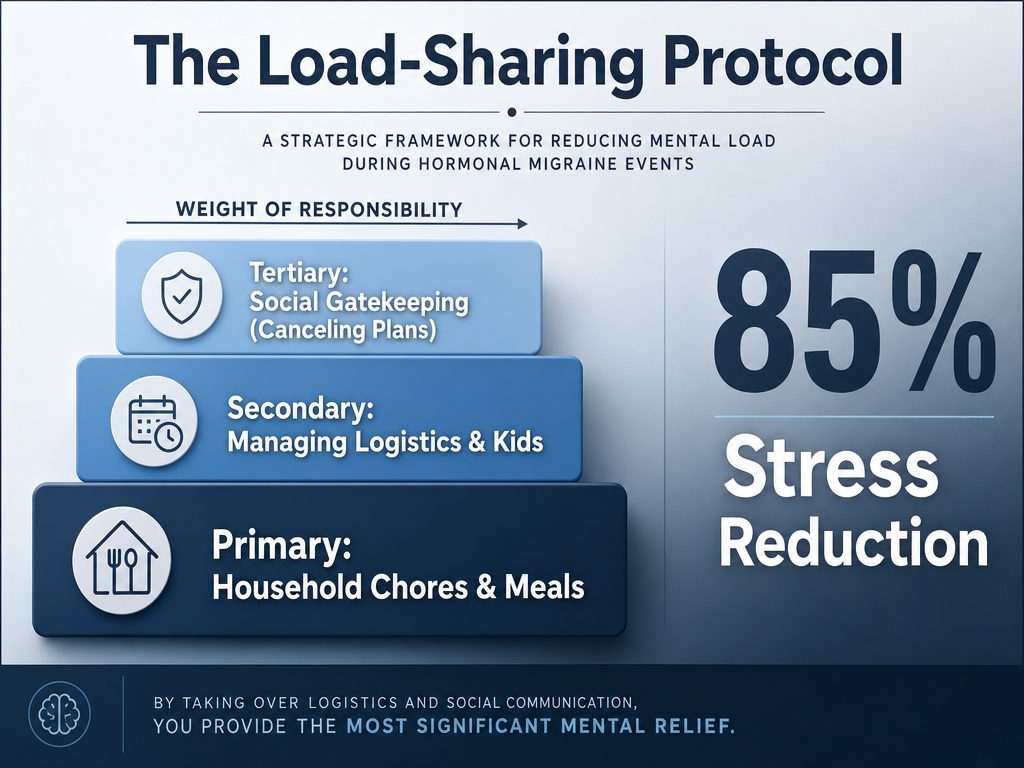 The most powerful support you can offer is removing the 'mental load.' Handling chores and social cancellations allows her to focus entirely on recovery.
Take Over the Basics
Dishes, laundry, meal prep, pet care, kid duties - everything on the household checklist is now yours. Don't wait for her to ask. Don't make her manage you while you do them. Just do them. When a partner is struggling emotionally, responding with genuine empathy and taking concrete action tends to help more than trying to "fix" the problem or offer silver linings.
Be the Social Gatekeeper
If you had dinner plans with friends, cancel them yourself. Don't make her text the explanation or deal with follow-up questions. A simple "She's not feeling well, we'll reschedule soon" is all anyone needs to know. Taking this task off her plate removes the guilt she might feel about "letting people down."
Offer Food Without Interrogation
Ask once what sounds tolerable to eat. If the answer is "nothing" or "I don't know," bring simple, bland options (crackers, toast, broth, bananas) and leave them nearby. Don't hover. Don't ask every 20 minutes if she needs something. Check in once, provide what you can, then let her rest.
Respect the Dark Room
If she's retreated to a dark, quiet room, don't interrupt unless it's urgent. Texting is better than opening the door. Silence is better than texting. She'll come out when she's ready.
Understanding how to comfort your girlfriend during PMS includes recognizing when active support (doing tasks) is more helpful than verbal reassurance.
What Makes Hormonal Headaches Worse
Certain triggers can turn a moderate headache into a severe, multi-day migraine. Knowing what to avoid is just as important as knowing what to provide.
Caffeine: A Double-Edged Sword
Some migraine sufferers swear by caffeine for relief - it can constrict blood vessels and reduce pain signaling. Others find caffeine makes their headaches worse or triggers rebound headaches the next day. Don't assume. Ask her specifically what her history with caffeine is. If she doesn't know, don't experiment during an active attack.
Skipping Meals
Low blood sugar can intensify migraines. Even if she has no appetite, small amounts of food every few hours can help stabilize her system. Offer simple carbs and protein - a piece of toast with peanut butter, a banana, crackers with cheese.
Bright Screens
Phone screens, computer monitors, and TV glare all worsen light sensitivity. If she's trying to distract herself by scrolling, suggest a podcast or audiobook instead. If she insists on screen time, help her enable night mode or blue-light filters to reduce the intensity.
Strong Emotions and Stress
Fights, tense conversations, or emotionally demanding situations spike cortisol and can make pain worse. This isn't the time to bring up relationship issues, ask her to make decisions about future plans, or push her to "power through" social obligations. Lifestyle approaches that can help ease PMS symptoms include regular aerobic exercise, smaller/more frequent meals, less salt/caffeine/alcohol, adequate sleep, and stress-reduction practices like deep breathing or yoga. Reduce external demands and let her conserve energy for healing.
Certain Foods
Nitrates (found in processed meats like bacon and deli meat), MSG, aged cheeses, and artificial sweeteners are common migraine triggers for some people. If she already knows her food triggers, respect them. Don't bring home takeout that's loaded with the exact ingredients she's avoiding.
Recognizing signs your girlfriend needs space during her cycle includes understanding when pushing for interaction will backfire.
Long-Term Support Strategy
One-time fixes won't cut it if she's dealing with recurring hormone headaches. Your role shifts from reactive responder to proactive partner.
Track Patterns Together
Tracking your own (or a partner's, with her participation) symptoms and mood changes across the cycle for a few months is a legitimate, medically endorsed way to identify real patterns and timing. Use a shared period-tracking app or a simple calendar where she logs headache days, severity, and any noticeable triggers. After three months, you'll have enough data to predict the red zone with accuracy.
A period tracker for partners like VibeCheck can send you alerts a few days before the high-risk window begins, so you're never caught off-guard.
Encourage Medical Intervention When Needed
If she's experiencing more than two severe headaches per month, or if over-the-counter medication isn't touching the pain, it's time to see a healthcare provider. Prescription triptans, hormonal birth control adjustments, or preventive medications can make a significant difference. You can't force her to see a doctor, but you can offer to help schedule the appointment, drive her there, or research specialists in your area.
Build a Migraine-Friendly Routine Year-Round
Don't wait until the red zone to implement healthy habits. Regular sleep schedules, consistent meal timing, adequate hydration, and stress management all reduce baseline migraine risk. Support her in building these habits daily, not just when she's in crisis.
If she's interested in cycle-aware lifestyle changes, learning how to understand your girlfriend's hormonal cycle can help you both make strategic adjustments to diet, exercise, and social plans throughout the month.
Recognize When It Might Be PMDD
PMDD (premenstrual dysphoric disorder) is a real, clinically recognized condition that affects roughly 1 in 10 people who menstruate. If her symptoms go beyond physical pain and include extreme mood symptoms - marked irritability, anxiety, or hopelessness intense enough to disrupt daily life - she may need specialized treatment. PMDD isn't "bad PMS" or something she can willpower through. It's a disorder listed in the DSM-5 and it responds to specific treatments.
Understanding the difference between PMS and PMDD can guide you toward the right kind of support and medical care.
Frequently Asked Questions
How long does an estrogen withdrawal headache last?
A hormone-triggered headache can last anywhere from a few hours to 72 hours, depending on severity and how quickly she's able to treat it. The earlier she can take medication or implement relief strategies, the shorter the duration tends to be. If a headache persists beyond three days or worsens despite treatment, she should contact a healthcare provider.
Can a drop in estrogen trigger migraines?
Yes. The sharp decline in estrogen that happens right before menstruation is one of the most well-documented migraine triggers. Estrogen affects many body systems, including brain function, and when levels drop suddenly, the brain's pain pathways become more sensitive. This is why hormonal migraines cluster in the perimenstrual window.
What does an estrogen headache feel like?
An estrogen withdrawal headache often feels like intense, throbbing pain on one or both sides of the head. Many women describe it as worse than a typical tension headache, and it's frequently accompanied by nausea, sensitivity to light and sound, and sometimes visual disturbances (aura). The pain can be severe enough to make normal activities - work, driving, conversation - impossible.
What helps with hormonal migraines?
Treatment varies by individual, but common strategies include over-the-counter NSAIDs (ibuprofen, naproxen), prescription triptans, magnesium supplementation starting mid-cycle, caffeine (if it doesn't trigger rebound headaches for her), cold or heat therapy, dark and quiet environments, hydration, and rest. Preventive measures like consistent sleep, reduced stress, and avoiding known triggers also help. If over-the-counter options aren't working, medical intervention is essential.
How to break a hormonal headache?
Breaking a hormone headache in progress requires a multi-pronged approach: early medication (the sooner, the better), hydration, eliminating sensory triggers (light, sound, smell), rest in a dark room, cold or heat therapy as preferred, and sometimes anti-nausea medication if vomiting is an issue. For severe, recurring headaches, prescription medications specifically designed for migraines - like triptans or CGRP inhibitors - are often more effective than over-the-counter options.
Why does my girlfriend get headaches all the time?
If headaches are truly constant (multiple times per week, not just clustered around her period), the cause might extend beyond hormones. Chronic migraines, tension headaches from stress or poor posture, sleep disorders, dehydration, caffeine dependency, or underlying health issues could all be factors. Encourage her to see a healthcare provider for a thorough evaluation. Tracking when the headaches occur and what symptoms accompany them will give the doctor useful data.
How many migraines a month is too many?
If she's experiencing more than two severe migraines per month, or if migraines are disrupting her ability to work, socialize, or function normally, it's time to see a specialist. Frequent migraines can often be managed with preventive medications, lifestyle adjustments, or hormonal therapies, but that requires medical guidance.
What period tracker app can I share with my boyfriend?
Many period-tracking apps now offer partner-sharing features. VibeCheck is specifically designed for partners - it translates cycle data into actionable daily guidance for you, so you're not just looking at a calendar but actually understanding what to do. Flo offers a "Partner Mode" that lets her share cycle data and moods with you. Clue has "Partner Connect" for data sharing, though the free version is limited. Choose an app based on what kind of information you both want to see and how much privacy control she needs.
Can the Flo app be shared with a partner?
Yes, Flo has a feature called "Partner Mode" that allows her to share cycle information, symptoms, and mood data with you. You'll receive notifications about upcoming periods and fertile windows, but the depth of shared information depends on her privacy settings. Compare options like Flo for Partners and VibeCheck to see which app structure works better for your relationship.
Hormonal headaches aren't a mystery you have to keep solving from scratch every month. Once you understand the five-day red zone, prepare your environment, stock the right supplies, and take the mental load off her shoulders, you shift from reactive to strategic. She'll notice the difference - and so will the quality of your relationship during what's often the toughest week of her cycle.
Tags

Related Articles
Continue reading to deepen your understanding

How to Understand Your Girlfriend’s Social Battery and Hormones
Does your girlfriend suddenly cancel plans or seem withdrawn? This guide explains how her cycle impacts her energy so you can support her like a pro.

How Your Girlfriend’s Emotional Needs Change During Her Cycle
Does your girlfriend’s mood seem unpredictable? Learn how her emotional needs shift on a biological loop and how to support her through every phase of her cycle.

What to Buy When Your Girlfriend Has Hormone Cravings: A Support Guide
Stop wondering what to pick up at the store. This guide explains the science behind cycle cravings and provides a specific list of foods and comfort items she needs.

Your Girlfriend’s Mood Shifts Throughout the Month, Explained
Ever wonder why her energy and moods change so drastically each week? Understand the four hormonal phases and how to be the partner she needs during every stage of her cycle.

How to Support Your Girlfriend When She’s Crying Because of Hormones
Watching her cry when hormones hit can feel overwhelming. Learn the biological why behind the tears and use these proven scripts to provide the support she actually needs right now.

How to Help Your Girlfriend with Hormonal Mood Swings Without Arguing
Understand her cycle and learn tactical scripts to handle tension. This guide shows you how to support her through hormonal shifts without getting into unnecessary fights.

When to Feed Your Girlfriend: Understanding Hangry Hormones
Does your girlfriend get irritable when she hasn’t eaten? It’s not just in her head. Learn why hormones cause hanger and the specific times her body needs more fuel.

The Boyfriend’s Guide to Supporting Your Partner Through PMS
If your partner is suddenly irritable and exhausted, it’s biology, not you. Learn about the luteal phase and how to provide meaningful support without walking on eggshells.